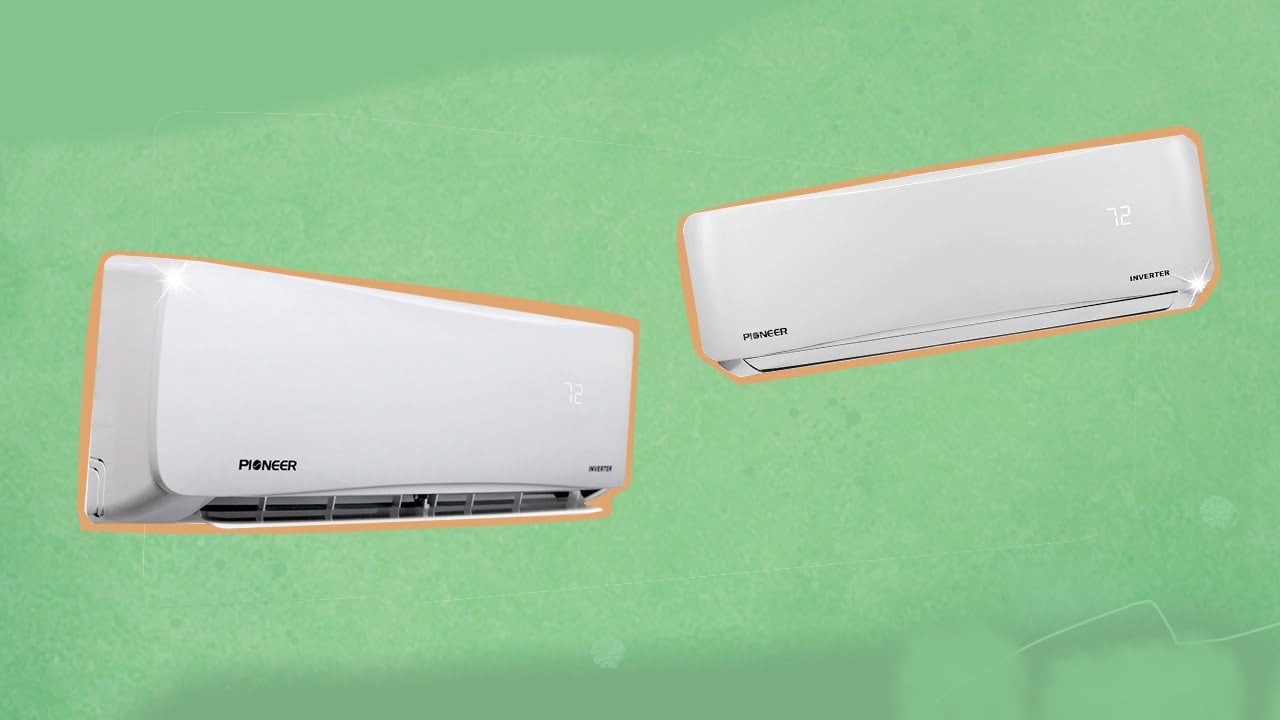
Inspiring Ideas for Modern Home

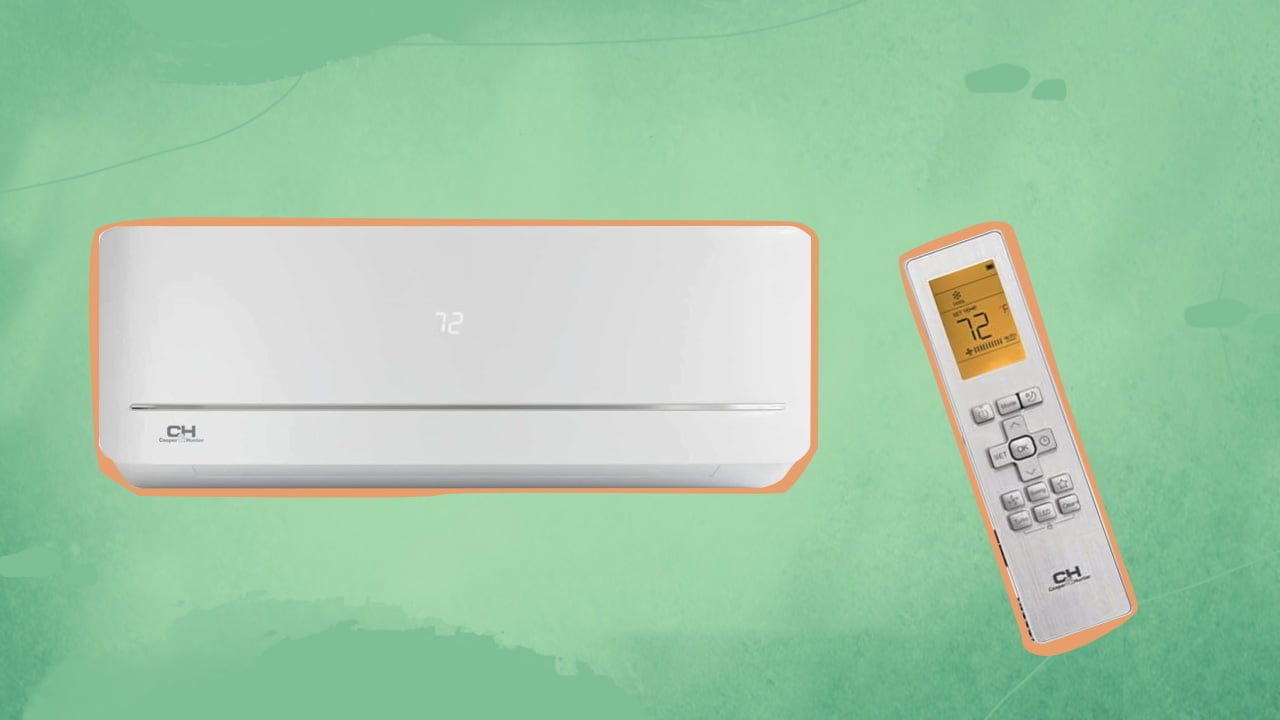
The CEER rating measures the energy efficiency of the AC, representing the ratio of cooling output to power consumption. It considers both the normal operation power consumption and standby/off-mode power consumption. By considering the CEER rating, consumers can make informed decisions about their energy consumption.

CEER, or Combined Energy Efficiency Ratio, is used to evaluate the energy efficiency ratings of air conditioners.

Understanding CEER is crucial for consumers making informed decisions when choosing an air conditioner. The higher the CEER rating, the more efficient the system will be, potentially saving you money on your energy bills in the long run.

In this guide, I will explain what CEER rating is and what makes it a significant indicator for ACs.

Defining The Term CEER

Defining The Term CEER

CEER (Combined Energy-Efficiency Ratio) is a key energy-efficiency metric used to evaluate the amount of electricity used for room air conditioners. The CEER rating is a more comprehensive metric than the more popularly used EER and SEER ratings for mini-splits. 
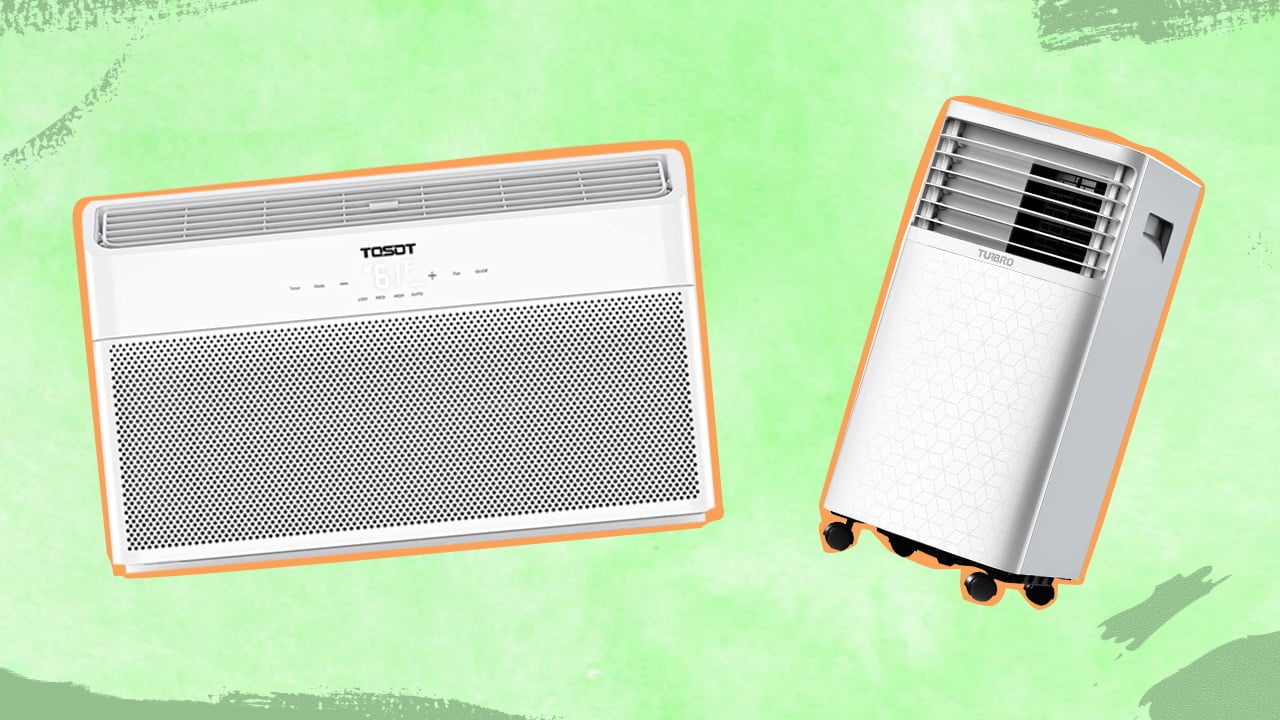
It is defined as the ratio of measured cooling output (in BTU per hour) to the measured average electrical energy input and standby/off-mode power consumption. Basically, CEER measures how much output the cooling system of an air conditioner generates as against the power it consumes, both during normal operating conditions and during standby/off-mode. 
By taking into account both normal operation and standby/off-mode power consumption, the CEER rating provides a more accurate assessment of the energy efficiency of the window units. Accordingly, consumers can make informed decisions when choosing energy star-certified best battery-powered AC units.

Comparing CEER, EER, And SEER?

SEER, EER, and CEER are all energy-efficiency metrics used to evaluate the best air conditioners. EER (Energy Efficiency Ratio) measures the cooling output of an air conditioner in BTU per hour against the power it consumes during normal operation in Watts. 

SEER, or Seasonal Energy Efficiency Ratio, extends the measurement to a typical average temperature range over an entire season rather than just a single temperature. CEER, or Combined Energy-Efficiency Ratio, goes one step further by also taking into account the power input of the air conditioning unit during standby/off-mode.

It provides a more comprehensive evaluation of energy efficiency. It's important to note that a higher EER and SEER rating may indicate a more energy-efficient unit.  On the other hand, the CEER rating helps users understand the full energy usage of the unit.

Tip

When deciding on an air conditioner, it's recommended to consider all three ratings to make an informed choice.

How Does The DOE Calculate CEER Rating Of An Air Conditioner?

The United States Department of Energy (DOE) calculates the CEER rating using a standardized testing procedure. The test involves measuring the cooling output of an air conditioner in BTU per hour while measuring the power consumption during both normal operation and standby/off-mode. 

The BTU output is then divided by the sum of the normal operation power consumption and off-mode/standby power usage to arrive at the CEER rating. This rating is then used to compare the combined efficiency of different air conditioner models and make it easier for consumers to make informed decisions. 

Moreover, the testing procedure is conducted in a controlled laboratory environment, using strict guidelines established by the DOE to ensure accuracy and consistency. By following this standardized testing procedure, the DOE can provide consumers with reliable and accurate CEER ratings for air conditioners.

What Is The Difference Between Standby And Off Power?

Standby power and off power refer to the power consumed by an air conditioner when it is not in use. Standby mode is the power consumed by the unit when it is turned off but still connected to the electrical supply. 

In this mode, the unit remains powered on but does not perform any cooling or heating functions. 

On the other hand, off power refers to how much power is consumed by the unit when it is completely turned off and unplugged from the electrical supply. The distinction between standby and off-power is important because the CEER considers the power consumption of all types of air conditioners during both normal operation and standby/off-mode. 

Considering the power consumed by the unit even when it is not in use, the CEER rating provides a more comprehensive assessment of the energy efficiency of a window AC.

How Is CEER Expressed?

CEER, or Combined Energy-Efficiency Ratio, is expressed as a ratio of cooling output in BTU per hour to power consumption in Watts. The CEER rating provides an overall realistic energy efficiency of an AC, with a higher number indicating greater efficiency.

Why Is It Important To Check The CEER Rating?

Why Is It Important To Check The CEER Rating?

Checking the CEER rating of an air conditioner is important because it provides valuable information about the energy efficiency of the unit. By considering both the normal operation power consumption and standby/off-mode power consumption, the CEER rating provides a comprehensive evaluation of the total energy used by the air conditioning unit

This information can help consumers make informed decisions about their energy consumption and reduce their energy bills over time. 

In addition, using an air conditioner with a high CEER rating can help reduce the carbon footprint and contribute to a more sustainable future. Furthermore, checking the CEER rating can also ensure that a consumer is purchasing a high-quality air conditioner that will provide reliable cooling performance for years to come. 

In short, checking the CEER rating of an air conditioner is a simple and effective way to make informed decisions about energy usage and sustainability. 

What Is A Good CEER Rating For AC Units?

A good CEER rating for an air conditioner varies, depending on the AC unit type and its intended use. Generally, a CEER rating of 14 or higher is good for residential window air conditioners, while a rating of 12 or higher is adequate for commercial or central air conditioners. 

The higher the CEER rating, the more energy-efficient the central air conditioner and the lower the energy bills. However, it is important to note that the CEER rating should not be the only consideration when purchasing an air conditioner. Other factors, such as the size of the unit, cooling capacity, and local climate, should also be taken into account. 

Ultimately, the best CEER rating for an air conditioner will depend on various factors, and it is important to do thorough research and make an informed decision.

Final Words On Understanding CEER Rating

Final Words On Understanding CEER Rating

It is a common misconception that the larger an air conditioning unit, the smaller the CEER number. In reality, the unit size has no direct relationship with its CEER rating. 

The CEER rating measures energy efficiency and is determined by the ratio of cooling output to power consumption. 

Factors such as the type of refrigerant used, the quality of the components, and the design of the unit can all impact the CEER rating, regardless of the size of the unit. When shopping for an air conditioner, it is important to consider the CEER rating and other factors such as cooling capacity and local climate. 

This will help ensure that the unit is appropriately sized for the space and provides the desired level of energy efficiency. 

And with that, I come to the end of this article. If you liked this informative guide, I recommend checking out my recent article titled “What is a MERV rating?” 

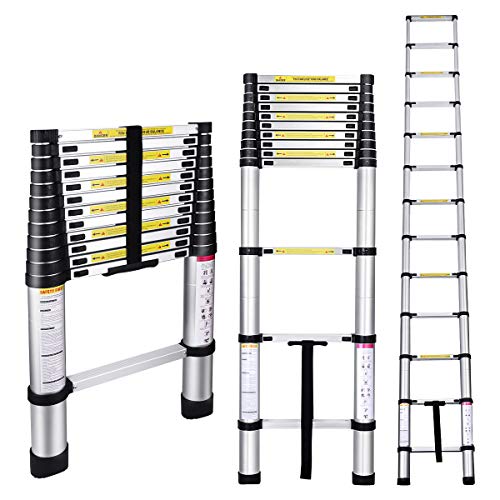
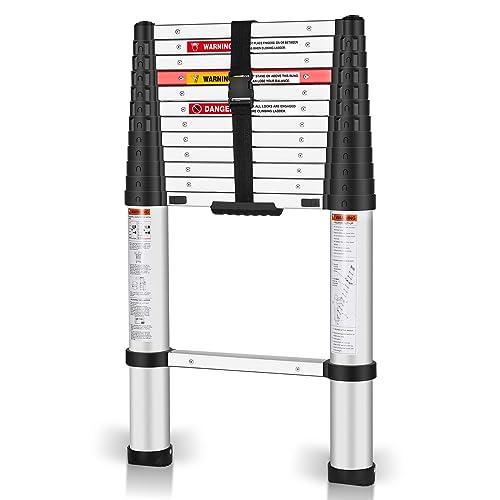
We agree- climbing ladders for mundane tasks like cleaning and replacing fixtures is far from being exciting.

Still, most of us wouldn’t mind having some help to facilitate both accessibility and safety while dealing with those corners near the ceilings. Yes, you have guessed it right; it’s telescoping ladders that we are talking about.

That’s why it comes as no surprise that they form an integral part of every homeowner’s tool arsenal. But given the plethora of similar-looking and functioning models, picking just one from the lot can leave you all confused.

As such, we take it upon ourselves to help you out by putting together this list of the 13 best telescoping ladders up for grabs. Additionally, we have included a buyer’s guide towards the end so that our readers can make a fully-informed decision.

Let’s start, then!

Best Telescoping Ladders

Best Telescoping Ladders

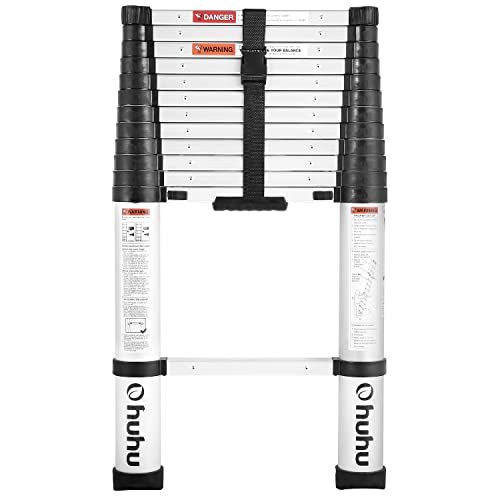
  1. Ohuhu Y17-80100-07

One of our top recommendations is the Y17-80100-07 Telescoping Ladder from the house of Ohuhu. This lightweight and easy-to-carry unit has a sturdy aluminum construction that accounts for its longevity and stability. What’s more, the host of user-friendly features make it easy to use for novices and pros alike.

Aluminum Telescoping Ladder, Ohuhu Upgraded 12.5 FT ANSI...
  • One Button Retraction: Convenience is key! That’s why...
  • America National Standards Type I Ladder: Ohuhu extension...

Why Did We Like It?

Before anything else, we were encouraged by the positive customer feedback to try this unit, and we are glad we did. Firstly, it’s made from high-quality aluminum alloy, which makes it extremely sturdy without adding on to the weight. With a maximum extension of 12.5 feet, it can easily carry up to 330 pounds. On top of that, the non-slip end cap prevents it from slipping on different surfaces.

Talking about the extension, the design uses a one-button retraction mechanism on both sides for seamless operation. All you have to do is press down the buttons and extend the steps. 

Likewise, press the two red buckles located under each rung to collapse one rung at a time. The slow retracting system allows users to decide on the desired height while reducing air resistance for reinforced stability. Plus, it negates the chances of pinching your finger. Last but not least, the portable carry handle facilitates easy mobility.

What Could’ve Been Better?

Perhaps our only complaint is that the package may arrive with slight damages; although it may not impact the ladder inside. Nevertheless, it’s one of the most cost-effective ladders on the market, making everyday DIY tasks a breeze!


Pros

  • Intelligent locking pins for secure extension
  • Strengthening footboard
  • Adjustable height
  • Non-slip and easy to carry
  • Cost-effective


Cons

  • Packaging may get damaged during shipping


  1. WolfWise FBA

Impressed with the utility of our previous pick, we decided to try its lookalike, viz., the WolfWise  Telescoping Ladder. Its compact structure and robust construction make for a convenient climbing experience, be it for pruning trees or those occasional DIY coloring jobs indoors.

WolfWise 15.5FT Aluminum Telescoping Ladder with Stabilizer,...
  • Safety: Stabilizer bar and non-slip mat improve the...
  • One-Button Retraction: New upgraded internal structure, no...

Why Did We Like It?

First things first, this telescoping ladder is made from an aerospace-engineered 6061 aluminum alloy for reinforced sturdiness. Moreover, the clean-touch anodized finish makes the frame resistant to rust and corrosion, which could otherwise have been one of the significant problems while using it outdoors.

It can be extended up to 12.5 feet, and like the Ohuhu Y17-80100-07 Telescoping Ladder, it has a one-button retraction mechanism that takes only 5 to 8 seconds for full retraction. 


Besides, the smart-close system makes the steps fall slowly so that users don’t pinch their fingers during retraction. Once retracted, its length accounts for only 1/4th of the maximum height to make for easy storage in cramped spaces. Complete with the heavy-duty closing strap, storing it won’t make you rack your nerves.

We should also mention that it comes in three maximum height variants (12.5 feet, 10.5 feet, and 8.5 feet), each of which can carry up to 330 pounds. 

What Could’ve Been Better?

We’d recommend cleaning the steps and hinges before the first use to ensure seamless opening and closing of the ladder. This is mainly due to the packaging materials getting stuck in the corners, which can hinder the overall operation. Other than that, we have nothing to complain about.


Pros

  • Quick and safe retraction
  • Wide steps
  • Rubberized feet
  • Compact and easy to store


Cons

  • Light cleaning required before first use


  1. Little Giant Ladders 15422-001

The Little Giant Ladders 15422-001 Ladder is a multi-purpose model that will come in handy for a variety of DIY tasks around the home and workshop. Sporting a compact and sturdy design, it has earned rave reviews for its long-lasting sturdiness.

Little Giant Ladder Systems, Velocity with Wheels, M22, 22...
  • THE ORIGINAL MULTI-POSITION LADDER Little Giant Ladders...
  • ONE LADDER. UNMATCHED VERSATILITY. A-frame. Extension....

Why Did We Like It?

Getting straight to the design aspect, this telescoping ladder is made from a special Aerospace-grade aluminum alloy, making it sturdy enough to hold up to 300 pounds. But the apparently heavy-weight construction doesn’t make it heavy. Plus, it meets and exceeds all the necessary OSHA and ANSI standards so that users can rest assured about safety.

Its lightweight build is well complemented by the tip and glide wheels to facilitate smooth portability.

The model we opted for can be extended up to 22 feet, which is more than what you’d need for regular household tasks. But you can also choose from the other height variants according to your requirements. 

Each model is equipped with rock lock adjusters that control the height configuration by locking the frame into the required rung tube. Similarly, you can convert it into an A-frame, trestle-and-plank, or 90-degree staircase using the hinge locks located on the exterior frame.

Lastly, you can choose to get different accessories like project trays, work platforms, etc., along with the ladder.

What Could’ve Been Better?

We were a bit disappointed to see the poor packaging, which may make the ladder prone to damages during shipping and delivery. Thankfully, the unit we ordered didn’t encounter much damage except for slightly brushed wheels, but this is an issue that the brand should definitely look into.


Pros

  • Supports 5 different configurations
  • Smooth wheels
  • No maintenance required
  • Backed by a lifetime warranty


Cons

  • Poor packaging


  1. Luisladders Telescoping Ladder

If portability sits high on your priority list, then the Luisladders Multi-Use Telescoping Ladder may be your go-to unit. Built from a high-quality metal alloy, its practical design has the right mix of durability and stability for years of uninterrupted use.

No products found.

Why Did We Like It?

Much like its predecessor, this unit is also made from superior-grade aluminum alloy that makes it capable of withstanding up to 330 pounds. The anti-slips rugs can be easily adjusted with 1-inch increments using the inward side latches. Besides, the protection spacers prevent accidental bumping and friction between the steps.

We also appreciate the one-button easy close mechanism that reduces the risk of users pitching their fingers while retracting the ladder. This is made possible by the one-button easy close system, where all you have to do is keep the switches on the steps closed and then press the button. The ladder will descend slowly and gradually to ensure optimum safety.


As far as the storage is concerned, it has a durable strap that holds the frame in place when fully collapsed. Moreover, there’s a comfortable grip handle that facilitates portability without putting too much strain on the hands. And it comes in as many as three maximum height variants, i.e.,12.5 feet, 12.46 feet, and 8 feet.

What Could’ve Been Better?

Some buyers have reported that the rungs tend to get jammed, especially when collapsing the ladder. Although we didn’t face the issue, you may try applying a little oil on the hinges for easy opening and closing. Apart from that, we don’t have any other significant complaints.


Pros

  • Corrosion and rust-resistant frame
  • Non-pinch hinges
  • Anti-slip steps
  • Heavy-duty strap for durable storage


Cons

  • Hinges may get jammed


  1. Xtend & Climb Pro Series 785P Plus

True to its brand name, the Xtend & Climb Pro Series 785P Plus Telescoping ladder is a robust and durable unit built for professionals. That said, it can be the perfect addition to your residential tool arsenal without burning a hole in your pocket.

Xtend & Climb Pro Series 785P+ Telescoping Ladder, Blue
  • Meets new 2019 ANSI/OSHA standards for safety compliance and...
  • Aerospace Engineered using airplane grade aluminum alloy for...

Why Did We Like It?

We were intrigued by its familiar appearance to the Luisladders Multi-Use Telescoping Ladder and wanted to see if it performs as well. And thankfully, we weren’t too disappointed. 

Its “aerospace engineered” frame is built from airplane-grade aluminum alloy for optimum durability and long service life. Plus, it meets the new 2019 ANSI standards for safety compliance and duty rating, thereby reassuring users of the quality of construction. 

We absolutely loved the extension range on offer, meaning the ladder can reach a height up to 15.5 feet and retract to a mere 36.5 inches. Unlike a lot of other models that use hands, the extension system can be activated by the foot to extend and lock it in place. At the same time, the angled thumb release ensures proper and safe hand position.

It’s finished off with slip-resistant steps and double over-molded feet so that it maintains the right amount of traction on varied surfaces.

What Could’ve Been Better?

The retraction could’ve been slow and more gradual as users almost always run the risk of pinching their hands. In that sense, it’d be better if the ladder is carefully held by two people on the sides, away from the rungs. Besides, the brand doesn’t specify the maximum carrying weight.


Pros

  • Compact retraction
  • Integrated carrying handle
  • Clean touch anodized finish makes it easy to clean
  • Double over-molded feet


Cons

  • May pinch the fingers during retraction
  • Maximum carrying weight not specified


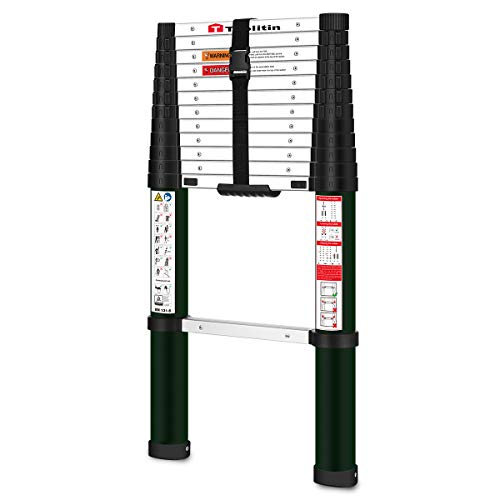
  1. Toolitin TL-20190928-125G

Toolitin has made a name in the workshop tool industry, and the TL-20190928-125G is a good example of that. Engineered from a combination of metal and heavy-duty plastic components, it provides a prolonged service life with minimal maintenance.

Toolitin Telescoping Ladder,12.5 FT One Button Retraction...
  • ★ UPGRADED MATERIAL : The Toolitin telescopic Extension...
  • ★ INTELLIGENT LOCKING MECHANISM DESIGN : We have upgraded...

Why Did We Like It?

This Toolitin telescoping ladder is built from a mix of premium aluminum alloy and durable plastic. While the aluminum surface is oxidized to prevent the formation of rust and corrosion, the plastic parts are reinforced with nylon fiber to improve the overall load capacity without weighing too heavy. Here, we should mention that it has a maximum load capacity of 330 pounds.

The adjustable height mechanism comprises an intelligent locking mechanism where each rung is equipped with two red-colored push buttons underneath. Simply press them together to collapse the rungs till you reach the desired height (maximum height is up to 12.5 feet), and the rungs will get automatically locked in place.


This feature also makes the retraction pinch free as each step falls smoothly and gradually. Once fully retracted, it measures only about 34 inches long, so you can store it conveniently under the bed or behind any door. And it’s also available in two other heights, viz., 8.5 feet and 10.5 feet.

What Could’ve Been Better?

Honestly, we are bummed out about the fact that despite having rubber-equipped footing, the ladder lacks stability on slippery surfaces like marble floors. Hence, you might want to avoid it if you’re planning to use it on such surfaces as we didn’t face any issues on rugged surfaces.


Pros

  • Resists rust and corrosion
  • Automatic locking system
  • One-button easy retraction
  • Can be stored in compact spaces


Cons

  • Not adequately stable on certain surfaces


  1. Archom Extension Telescoping Ladder

Now that we are almost halfway through the list, here’s the Archom Extension Telescoping Ladder making an entry. Featuring a familiar design to that of some of our other recommendations, it’s one of the most affordable units that come in multiple heights.

ARCHOM Telescoping Ladder 9.5 FT - Aluminum Telescopic...
  • 【High-quality Telescoping Ladder】: Our telescoping...
  • 【Safety of Use】: Experience ultimate safety with our...

Why Did We Like It?

For starters, the durable frame is constructed from aluminum alloy, which makes it resistant to both corrosion and water-related damages. Hence, you can use it anywhere, be it indoors or outdoors. The unit we got can be extended anywhere between 25 inches and 9.5 feet, but you can always choose the longer variants (10.5 feet, 12.5 feet, 13.5 feet, and 15 feet). 

Owing to the inward sliding latch, users can adjust the height of the rungs in 1-feet increments, which negates the risk of injuries. You can extend it by supporting the bottom pedal with one foot and pulling out the topmost section while ensuring that the switch clips underneath each step are securely locked.


The frame culminates into the non-slip feet with big and grooved rubber covers that maintain stability on almost any surface. Not only that, but the strap attached to the last step can also be tied to the bottom pedal for extra stability.

What Could’ve Been Better?

We felt that the frame is somewhat flexible, meaning it can wobble a bit when extended to the maximum height. However, it’s nothing to be concerned about as the rubber footing does a great job of keeping the ladder stable even for the maximum load capacity.


Pros

  • Waterproof and corrosion-resistant
  • Complies with EN131 safety standards
  • Securing strap on the bottom
  • Non-slip feet


Cons

  • May wobble a little


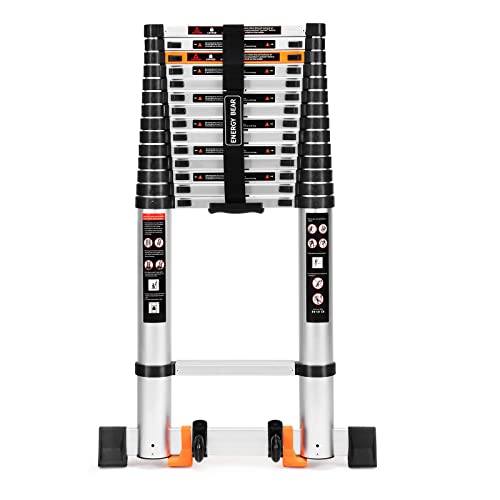
  1. Energy Bear Telescoping Ladder

With a decade-long experience in the telescoping ladder industry, Energy Bear has attempted to raise the bar with its multi-purpose telescoping ladder. Integrated with several user-friendly and safety features, it can carry up to 330 pounds while remaining stable on almost any surface.

Telescoping Ladder Extension Multi-Purpose 18.5 FT Aluminum...
  • ✪ NON-SLIP BLOCK+MOVABLE ROLLER WHEELS---In order to...
  • ✪ WIDENED PEDAL+THICK ANTI-AIR ALUMINUM ALLOY---The first...

Why Did We Like It?

At first glance, we were really impressed with the sleek yet durable structure that assures users about the safety on offer from the get-go. In hindsight, it’s the thick, anti-air aluminum frame with oxidized finishing that takes care of stabilizing the ladder on almost any indoor or outdoor surface. 

Moreover, the four non-slip blocks on the bottom balance bar reinforce friction on the ground. It also consists of two moveable auxiliary wheels for seamless portability. You can easily attach the bar to the base of the ladder using some mounting screws.

Speaking of the extension capabilities, it can extend up to 18.5 feet, making it one of the tallest models on our list. The wide, rugged steps ensure that your feet can maintain a firm hold even with thick sneakers on. 

Furthermore, each rung has two safety lock buttons on either side for securely customizing the height as required. It measures just 3.7 feet when fully collapsed, so storage in compact spaces won’t be an issue.

What Could’ve Been Better?

For some reason, the steps have a peculiar angle, which makes it difficult to stand on the ladder for prolonged periods. This can especially be more problematic when it doesn't have a wide supporting surface throughout, like when trimming the branches of smaller trees. Hence, you may want to avoid the ladder for such tasks.


Pros

  • Thick plastic parts to reduce overall weight
  • Mechanical locking with twin buttons on each rung
  • Corrugated non-slip foot pad
  • Secure fastening strap


Cons

  • Angled steps are difficult to stand on for long


  1. Handvoll Telescoping Ladder

The Handvoll Telescoping Ladder is a versatile unit that’s suitable for both professional job sites and residential DIY projects. Its solid construction is backed by a robust aluminum frame and is EN131 certified for better peace of mind among users.

Handvoll Telescoping Ladder 15.5ft Aluminum Extension...
  • ⛑Step By Step! From professional construction sites to...
  • ⚙A Quick Adjustment! Hanging a picture frame and...

Why Did We Like It?

First and foremost, this unit can be manually extended anywhere between 3 feet and 15.5 feet by simply lifting the rungs. Once lifted, the secure-locking spacers will automatically lock the  steps, and so will the latches on the support polls. Each step has an anti-slip rung ridged design that prevents the feet from sliding.

Collapsing the ladder isn’t a herculean task either, as all you need to do is press down the thumb buttons. Since each rung is equipped with these buttons, the retraction mechanism won’t pinch your fingers. And much like its predecessor, there’s a balance bar with L-shaped rubber feet for added security and stability.

We appreciate that the design makes room for a pair of removable hooks above the topmost rung, which will be beneficial both while working with it and during storage (users can hang it). Besides, the fastening straps keep the ladder adequately compact so that it doesn’t occupy much space in the tool cabinet or the back of the car.

What Could’ve Been Better?

It may be helpful to know that this telescoping ladder requires some assembly, but some users have reported that the brand doesn’t provide sufficient instructions for the same. Furthermore, weighing almost 55 pounds, it isn’t the most lightweight unit and doesn’t have wheels for easy portability.


Pros

  • Individual locking buttons for secure retraction
  • 4 anti-slip feet
  • Ridged step design
  • Removable hooks on top


Cons

  • Doesn’t have adequate assembly instructions
  • Heavy and doesn’t have wheels


  1. Gimify A726411

Another versatile unit that will suit commercial as well as residential or DIY projects is the Gimify A726411 Telescoping Extension Ladder. Available in multiple sizes with advanced features, it can hold up to 330 pounds and requires almost zero maintenance even with daily use.

Gimify Telescoping Telescopic Extension Ladder 12.5 FT...
  • 【Premium Telescoping Ladder】Features an impressive...
  • 【Safety & Quick to Use】Safety comes first! Every step...

Why Did We Like It?

Similar to all of our other recommendations, this ladder is also made from durable aluminum alloy that has an anodized finishing for optimum resistance against rust and corrosion. While we tried out the variant that can be extended up to 12.5 feet, you may also choose to get the 10.5 feet variant. Beyond that, there’s another 12.5 feet model that comes with several advanced features.

Coming to the utility factor, every step has an independent double-height latching lock that controls the extraction and refraction of that particular rung. As a result, users have precise control over the height adjustment without worrying about pinching their fingers.


For a ladder that can carry up to 330 pounds, it only makes sense for the frame to have non-slip end caps, and this unit doesn’t miss out on that. Lastly, the lightweight structure folds down to as little as 24 pounds to facilitate easy portability and storage.

What Could’ve Been Better?

Some users have complained that the base doesn’t feel sturdy enough on some surfaces, even with the anti-skid footing. We think it’d have been better had there been a balance bar for the base or at least a couple of mounting holes to add one. 


Pros

  • Rust-resistant frame
  • Extra-wide steps
  • Anti-pinch latch locking system
  • Lightweight and compact when retracted


Cons

  • Lacks stability on some surfaces


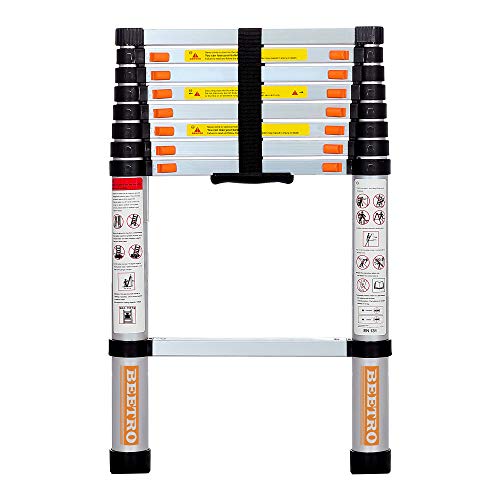
  1. BEETRO TC0338

As we near the end of the list, we found the Beetro TC0338 Telescoping Ladder to be worth including in our list. Its space-saving design is meant to make for convenient storage while the sturdy extension mechanism facilitates various DIY tasks like cleaning, changing lights, etc.

BEETRO 8.5ft Aluminum Telescoping Ladder, Extension Folding...
  • SELECTED MATERIAL -The telescoping ladder is made of...
  • MAX CAPACITY - The maximum load-bearing capacity is up to...

Why Did We Like It?

Starting with the construction, it’s made of high-quality aluminum with plastic for latches and spears as well as rubber for the foot caps. Not only does the design extend its service life by resisting the formation of rust and corrosion, but it also makes the ladder capable of holding up to 330 pounds. 

The retraction and extension mechanism is similar to that of some of the models mentioned earlier. Each step has latches on either side, which need to be unlocked while extending or retracting. And once you have the desired height, lock the latch to secure the steps in place. 


With a maximum height of 8.5 feet, it’s more suitable for residential DIY jobs like cleaning windows, hanging pictures, or installing light fixtures. While the rubber protection spears on the side ensure that your walls don’t develop any unwanted marks from the edges of the frame, the rubber fitting maintains sufficient traction on even marble and ceramic surfaces.

What Could’ve Been Better?

Some people may find it annoying to lock the latches manually, without which the rungs will invariably collapse. Moreover, the all-aluminum body makes it one of the heaviest ladders on our list, and the absence of wheels hampers its portability to some extent. That said, the compact structure upon complete retraction can fit in cramped spaces.


Pros

  • Strengthening step design for better stability
  • Rust-resistant structure
  • Individual locking latches
  • Secure strap


Cons

  • Manual locking may be time-consuming
  • Heavy, not equipped with wheels


  1. SUNCOO Extension Ladder

The Suncoo Extension Ladder is a portable and versatile unit that has an effortless retraction and extension mechanism. Its GS and EN131 certified design has a maximum load-bearing capacity of up to 330 pounds with a host of features for a safe climbing experience.

No products found.

Why Did We Like It?

To begin with, the Suncoo Extension Ladder is made from thickened airplane-grade aluminum alloy for optimum strength and durability. Additionally, the clean-touch anodized finishing makes it waterproof and corrosion-resistant. For maintenance purposes, you can simply wipe it down with a soft and dry cloth to get rid of dirt and debris.

Furthermore, every rung has an independent locking mechanism that comprises two steel locking pins for manual locking. This also ensures anti-pinch technology since the steps can be adjusted individually. Besides, the extra-wide, textured rung surface keeps your feet stable even when the ladder is fully extended up to 12.5 feet.

The frame is finished off with a pair of non-slip rubber caps to maintain stability and friction on both indoor and outdoor surfaces. Last but not least, the heavy-duty, adjustable secure strap helps keep the ladder closed for storage purposes. 

What Could’ve Been Better?

Despite having an anti-pinching retraction mechanism, we felt that the rungs tend to fall faster than some other models. Hence, we’d strongly recommend “closing” one step at a time by unlocking the pins. Also, make sure that you don’t have your fingers placed on the edge or the middle of the rung.


Pros

  • Spring-loaded locking system
  • Lightweight and portable
  • Anti-slip wide steps
  • Thick aluminum tube for extra stability


Cons

  • Falling rungs may pinch fingers


  1. Yvan Multi-Purpose Telescoping Ladder

Before wrapping up the list, we’d like to talk about the Yvan Multi-Purpose Telescoping Ladder. One of the brand’s premium models, it’s engineered with ultimate user convenience in mind and doesn’t compromise on quality or versatility.

Yvan Telescoping Ladder,12.5 FT One Button Retraction...
  • Premium Materials: Yvan‘s telescoping Extension Ladder is...
  • One Button Retraction: While guaranteeing the quality, our...

Why Did We Like It?

One of the first things that grabbed our attention was the oxidized-finished aluminum surface that accounts for both durability and appearance. Beyond that, the plastic parts are reinforced with nylon fiber for better wear resistance and load capacity. It can easily accommodate up to 330 pounds without flexing. 

Each rung features an intelligent locking mechanism that’s marked by independent red locking buttons for securely locking the steps. The maximum height on offer is 17 feet, which is sufficient for accomplishing regular household tasks and DIY hobby projects. And with the angled, anti-skid rubber footing, you don’t have to worry about stability.

Thanks to the one-button retraction system, all the rungs collapse one after the other without user intervention. We loved the slow “falling speed,” which ensures that the steps don’t fall on the user’s hand to cause injuries. 

Last but not least, the secure strap holds the “collapsed structure” for compact and convenient storage. 


What Could’ve Been Better?

As we have already mentioned, this ladder is one of the premium models manufactured by the brand. Hence, the price may be a significant constraint for potential buyers. At the same time, we’re a bit disappointed that the design doesn’t include wheels, especially considering that some of the more affordable models have a wheeled base.


Pros

  • Stabilizing bar at the base with rubber padding
  • Simple and safe retraction
  • Secure locking mechanism
  • Plastic edges to prevent slipping and marks on the walls


Cons

  • Expensive
  • No wheels


Telescoping Ladder Buyer’s Guide

By now, you must have figured out that there are some features common to almost all telescoping ladders. However, making the right choice requires more than knowing just the advantages of the best options on the market. Unless you factor in your requirements, there’s a good chance of ending up with the wrong model despite spending a hefty sum of money.

So, we have curated this extensive buyer’s guide that will help you with all the information you need to know before making the purchase. Read on….

  1. Height And Maximum Carrying Capacity

Without a doubt, the first thing to consider is the height of your preferred telescoping ladder. In this regard, we’d suggest going for one that can be extended at least up to 12.5 feet for daily household jobs. Likewise, you may opt for a higher model for intense DIY projects or using it in the workshop.

While at it, keep an eye on the working height, which is often not the same as the maximum height of a ladder. This is because most brands recommend users not to use the first two or three steps, thereby affecting the feasible height.

As far as the carrying capacity is concerned, always go for a ladder that can hold a minimum of 330 pounds.

  1. Locking And Retraction Mechanisms

During height adjustment, users would want to make sure that the steps are locked securely to prevent the ladder from accidentally collapsing. That’s why all telescoping ladders have locking pins on each rung, which either get locked in automatically or have to be pushed manually. But we’d strongly recommend checking even the automatic locks to ensure complete safety.

In case of retraction, a lot of models have a one-button retraction, meaning all the rings will fall one after the one one the press of a button or tab located at the bottom. If you plan to buy such a ladder, go for a slow retraction speed so that even if the rungs fall on your hands, there won’t be any severe injuries.

  1. Rubber Footing

Rubber capped feet are your best bet to ensure sufficient traction on different surfaces, ultimately resulting in better stability. You will also find many models that have an additional stability or balance bar that has extra rubber padding to reinforce stability.

  1. Portability

The portability factor will largely depend on the build material. However, modern telescoping ladders have advanced construction so that even heavy-duty metal (like airplane-grade aluminum) bodies don’t strain your muscles when you carry them around. We’d advise getting one with auxiliary wheels to make portability an absolute breeze.

  1. Rust Resistance

Since a majority of users would want to use their telescoping ladder both indoors and outdoors, a frame that resists rust and corrosion without requiring much maintenance is much sought after. Aluminum or aluminum alloy bodies with anodized finishing can be easily cleaned with a soft, dry cloth and are the ideal choice to prevent rust and corrosion.

  1. Safety Strap

Finally, a safety strap is a good feature to hold the ladder once it’s retracted completely for hassle-free storage, especially in compact spaces.

Woman repairs. Girl at home. Woman in a white overalls.

Verdict

Now that you know about the best telescoping ladders, you can quit delaying replacing the ceiling lights. Just go ahead and pick one according to your needs and budget.

We hope our efforts will eventually lead you to your “perfect match.” But if you’re still in two minds about taking the right pick, then allow us to help you by naming our top three favorites from the list.

The Ohuhu Y17-80100-07 Telescoping Ladder takes first place on the podium for being one of the most cost-effective units on the market. And for the second position, we have the WolfWise FBA_LP230943 Telescoping Ladder, complete with its smart locking mechanism. 

Lastly, the  Little Giant Ladders 15422-001 Ladder is a good choice if you’re looking for a wheeled base model.

We’d love to hear about your verdict in the comments section below. Till the next time, take care!


Related Articles

9 Best Folding Ladder

7 Best Home Fire Escape Ladder [Reviewed & Buyer’s Guide]

13 Best Telescoping Ladders to Climb

11 Best Ladder to Climb

13 Best Step Ladders to Climb This Year 

A BTU calculator helps calculate the temperature requirements of a room, allowing you to choose the right heating or cooling system. Several factors, including room size, ceiling height, type of room, and the number of people, affect BTU requirements.

British Thermal Unit, or BTU, is a measurement of heat that is used to classify an appliance's heating or cooling capacity. It is extensively used in the United States and the United Kingdom as a basic unit of measurement. A BTU calculator for air conditioners helps determine how much heat the AC unit can remove from a space.

AC BTU Calculator

AC BTU Calculator

Results

Heating BTU Calculator

Heating BTU Calculator

What Is BTU?

British Thermal Unit (BTU) is a unit of energy measured as the heat required to heat one pound of water by one degree Fahrenheit. 1 British Thermal Unit equals 252 calories, 1,055 joules, 0.293-watt hours, or the energy released by a burning match.

In other words, 1 watt is equal to 3,412 BTU per hour. This is important because knowing the British Thermal Unit value helps compare different fuels. But you might wonder how it is possible to relate BTU with fuel because these are physical objects quantified by barrels or volume.

However, I found that you can convert fuels to BTU based on the heat content or energy in each barrel. And given that all fuels are a source of energy due to their intrinsic properties, it’s much better to use BTU than a physical quantity. For instance, you can compare oil and natural gas better using British Thermal Units.

Another important application of BTU is the measure of the electrical energy generated by electrical appliances like air conditioners. If an air conditioning unit has a higher BTU, its cooling capacity will also be higher.

You should note that for air conditioners, BTU refers to the amount of heat an air conditioner can remove from the room. 

What Is A BTU Calculator?

A BTU calculator helps determine the cooling needs of a room or house. So, this calculator will help you choose the right window air conditioner or central air conditioner needed for your home. 

You must input the various values into a BTU calculator, including:

  • Size 
  • Ceiling height of the room
  • Type of room
  • Number of people occupying the room
  • Sun exposure 
  • Insulation condition
  • Climate 

What Is The Purpose Of A BTU Calculator?

The basic purpose of a BTU calculator is to help you choose the right size air conditioner by determining the BTUs needed to cool or heat a room. You can calculate the desired temperature change by determining the increase/decrease from the outdoor temperature to achieve the necessary indoor temperature.

For instance, a home in Boston can experience temperatures as low as -5 degrees Fahrenheit in winter. To survive such harsh conditioners, you can use a heater BTU calculator to find a rough estimate for keeping your home warm. In most instances, indoor temperatures should be 75 degrees Fahrenheit, which means an overall increase of 80 degrees Fahrenheit. 

What Are The Factors That Affect BTU?

In this section, I have shortlisted many factors that affect the results of a heater or air conditioner BTU calculator.

1. Insulation Condition

When objects are in a state of radiative influence of thermal contact, it may lead to lower heat transfer, known as thermal insulation. If you remember middle school science, heat always flows from a warmer to a cooler region until there’s no temperature difference between these areas.

Keeping in mind this principle, BTU requirements will be lower when heat loss is less, owing to proper insulation. Thanks to stricter building codes and state-of-the-art technology, modern homes have better insulation, while old homes suffer from poor insulation.

But that doesn’t mean you have to switch homes, as it’s possible to upgrade the insulation of the whole house and lower energy consumption. Most importantly, it increases the valuation of the entire house.

Note that every material has an R-value, which is the thermal resistance of the material to heat flow. How much heat transfer occurs in a material depends on the R-value; a higher value guarantees greater heat resistance.

So, when choosing insulation material for your home, opt for products with a higher R-value, even though they cost more because they will result in less energy transfer.

To determine how many BTUs you need, input a general value in the “insulation condition” field - good, bad, or average. Rooms with many windows have poor insulation because walls have a higher thermal resistance. So, you can install a double-glazed window to prevent heat loss.

2. Ceiling Height And Size

A larger room will require more BTUs to cool or heat compared to a smaller room. To calculate the BTU usage and the subsequent air conditioner size, simply figure out the volume of the space.

Based on the room size, this chart highlights the BTU range corresponding to the area (square feet) to help you choose what size heater or air conditioner you need.

Area (square feet) to be cooled Capacity (BTUs per hour) needed
100-150 5,000
150-250 6,000
250-300 7,000
300-350 8,000
350-400 9,000
400-450 10,000
450-550 12,000
550-700 14,000
700-1,000 18,000
1,000-1,200 21,000
1,200-1,400 23,000
1,400-1,500 24,000
1,500-2,000 30,000
2,000-2,500 34,000

3. Desired Temperature

To enter the desired temperature increase /decrease into the calculator, find the difference between the target and outdoor temperatures. For me, a comfortable temperature range is between 70 and 80 degrees Fahrenheit. 

Let me explain this further with an example. Winter temperatures in Atlanta can fall to 30 degrees Fahrenheit but on average, the mercury hovers around 45 degrees Fahrenheit. If you want to achieve a desired temperature of 75 degrees Fahrenheit, the required increase in temperature would be 75 - 30 = 45 degrees Fahrenheit.

BTU usage will be higher when homes are situated in areas with higher temperature fluctuations. So, you will need a unit with a higher BTU rating for heating or cooling a home in Alaska than a house in Honolulu.

Additional Points To Remember

Other factors that determine the BTUs needed for heating or cooling a single room or the entire house include:

1. Location Of The Cooling System Condenser

The position of the current air conditioner condenser is critical, and you should place it in a shady area, preferably toward the east or northern side of the house. When a condenser is exposed to direct sunlight, it works harder and uses more BTUs to efficiently cool a room because the surrounding air temperature is higher.

Moreover, placing the condenser in a shady area increases the lifespan of the unit, along with reducing the energy needed to cool a room. You can try planting shady trees surrounding the condenser, but that might hamper the airflow. In some cases, trees present in the vicinity choke the condenser and block airflow into the unit.

2. Ceiling Fan

Ceiling fans increase efficiency and make your home comfortable by improving air circulation and lowering BTU usage. Every room has areas with less airflow, known as dead spots, like a bathroom with no vent, the back of the couch, the back corner of the room, and the laundry room. 

If the thermostats are placed in dead spots, you won’t have a comfortable temperature in the space. But using ceiling fans ensures the temperature is evenly distributed across a room.

3. Number Of People

The number of people in a room determines how much the AC needs to work to lower indoor temperatures. Since every individual dissipates body heat into the surrounding area, you will have to use a unit with more BTUs lower the temperature. On the flip side, you will need fewer BTUs to warm the room. 

4. Air Conditioner Size

The air conditioner size is crucial for cooling a room or the entire home just as you want. If the air conditioning unit is too big, your home will cool rapidly, and the unit won’t run many of the intended cycles. Hence, this will reduce the longevity of the air conditioner.

But when you use a small air conditioner compared to the room size, it will run throughout the day. So, use an AC BTU calculator to choose the right size air conditioner. 

5. Shape Of Your Home

A narrow house with more walls will face more heat loss than a square house with the same square foot area. So, it would help if you choose an air conditioner or heater depending on the shape of your home.  

6. AC Unit Lifespan

When an air conditioning unit is nearing the end of its lifespan, efficiency will naturally go down. The lifespan of an air conditioner depends on several factors, including your property’s location, usage, maintenance, etc.

Moreover, when the amount of refrigerant in the unit is running low, an air conditioner might operate at 50% less capacity.

Relationship Between BTU and kW

As I have mentioned earlier, BTU/hr is used only in the US and UK. Other countries in Europe and around the world use kW to measure the cooling power of an air conditioner.

Kilowatt is a measure of the energy that an appliance consumes at any given time. In heating, ventilation, and air conditioning (HVAC) systems, Kilowatt measures the amount of heat the appliance gives out. For your mini split or window air conditioner, Kilowatt measures the cooling potential of the unit in an hour. 

Note

I must add here that Kilowatt is actually a derivative of the watt, which is the standard unit of power as per the International System of Units (SI System). Thus, one Kilowatt is equal to 1,000 watts. 

BTU to kW Air Conditioning Calculator

1 kWh is equal to 3412.14 BTU per hour, which is a figure you derive by entering the kWh value into the BTU calculator. Alternatively, one BTU is approximately equal to 0.00029307107 kWh. You can easily get the conversion of BTU to kW by multiplying your AC's BTU rating by this number, or by using our BTU to kW conversion calculator.

Tip

While you are trying to make these conversions, it is best to use a calculator. In fact, a calculator comes in handy when you are trying to understand the various aspects of your air conditioning unit. 

For instance, the electrical current used by your HVAC system can be determined using a watt-to-amps calculator. Similarly, you can get a better understanding of the energy efficiency of your appliance by using a calculator for converting between EER and COP numbers.  

BTU Calculator Final Words

Conclusion

I suggest using an air conditioner BTU calculator to estimate how much heating or cooling capacity you need to achieve the desired room temperature, a BTU to kW can help if you know the BTU and just need the conversion to kW.

Tip

Although you might ignore it, the color of the roof is crucial to keep your home cool or warm. A dark-colored roof will absorb more radiant energy than a light-colored surface. Plus, you must keep the roof clean because even a dirty, white roof is less effective than a cleaner surface.

Moreover, sun exposure, climate, and available insulation play a crucial role in determining the cooling capacity or heat output of the model. With a BTU calculator, you can also find out whether a mini-split AC would suffice or if you need a high-capacity air conditioning unit.

So, punch in the numbers and leave the rest to the calculator to use the right air conditioner! 

For any art lover, a pack of good-quality art supplies is a must to ensure they’re able to express their ideas just the way they want. 

However, choosing a gift for them requires more than just picking some colored pencils or paintbrushes. In fact, zeroing in on a good product can be challenging, given that there are a plethora of art supplies out there. Plus, there are loads of brands to choose from, so figuring out a reliable one only adds to the confusion.  

That’s why we’re here to help you out. In this guide, we’ve reviewed the ten best art supplies from Derwent. This century-old brand is trusted worldwide for its varied range of quality art supplies, so it has something for every art lover out there. As a bonus, we’ve included a buyer’s guide to help you make a well-informed decision. 

So, without further ado, let’s get started!  

Best Derwent Gift Sets

The colorful multicolored pencils for drawing and painting, color variations

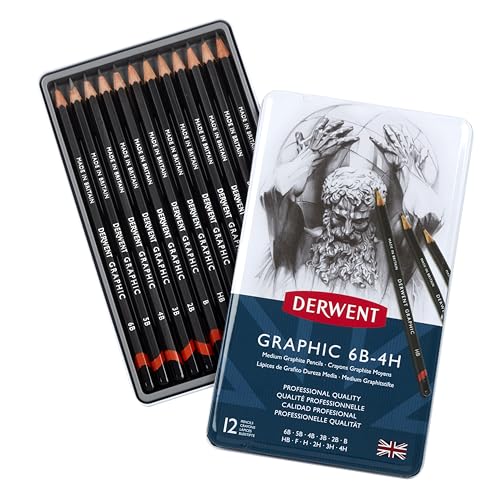
1. Graphic Drawing Pencils Set

For a seasoned artist who loves to create detailed sketches of professional standard, this gift set is no less than a match made in heaven! It can help them draw portraits and recreate landscapes with the ultimate precision and would provide a significant boost to their creativity.

Derwent Graphic Drawing Pencils, Medium, Metal Tin, 12 Count...
  • STURDY PRECISION – With a hexagonal barrel, you gain...
  • BROAD RANGE – Choose the pencil that works for you....

Why Did We Like It?

First and foremost, each pencil in the set comes in an efficient design to enable better accuracy for all your drawings. While the hexagonal barrel shape facilitates smooth drawing, the core of each piece is made differently to suit different drawing needs

Notably, hard degree (H) pencils with a 2.2mm core are ideal for drawing sharp lines. But those with a 3.5mm soft degree(S) core are better suited for drawing softer lines.

Furthermore, this set contains a combination of hard and soft pencils of 12 different degrees to express your artistic vision in your own way. That’s why they’ll work equally well for shading, blending, or various kinds of illustrations.  

You can even sharpen the core to a fine and long-lasting point to emphasize the smaller details precisely. So, you’ll never have to worry about the core breaking apart as with ordinary pencils.  

What Could’ve Been Better?

The tin enclosing these pencils might arrive a bit damaged sometimes owing to the use of poor-quality packaging material. Note that this makes the contents prone to damage during delivery, which is why you must check the product carefully soon after receiving it.  


Pros

  • Design enables better accuracy
  • Versatile set of pencils
  • Sharp core
  • Durable structure


Cons

  • Poor packaging


2. Colored Drawing Pencils Set

Looking for a pencil set that provides the same accuracy but offers several color choices to unleash the creativity of your little ones? Then this pack of colored drawing pencils will be an ideal pick. It’s also equally suitable for adults, which is why it will be a great Christmas present for a friend who has an artistic streak. 

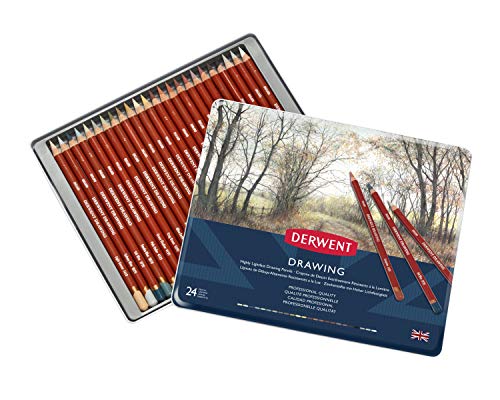
Derwent Colored Drawing Pencils, Metal Tin, 24 Count...
  • The perfect medium for sweeping landscapes to detailed...
  • 8mm diameter pencils have soft, creamy round 5mm leads

Why Did We Like It?

The best thing about these colored pencils is the characteristic creamy consistency, which lends a soft velvety finish to your artwork. Adding to this is a soft, round, thick core with high pigmentation to create dense color for all illustrations. 

These qualities make it perfect for creating vibrant and detailed wildlife paintings and sweeping landscapes. Moreover, art students can also use it for their portraiture and nature studies. 

Coming to the specifications, each pencil has an 8-mm barrel and a thick 5-mm core that are ideal for ensuring lightfast drawings for all your projects. These wax-based pencils are also quite durable and can be used with equal efficiency in both water-soluble and dry mediums. 

Last but not least, identifying the core color of each piece is effortless since the pencil top is colored in the same shade.  

What Could’ve Been Better?

A slight drawback of these pencils is that they might not fit in all sharpeners, especially the manual ones. However, you can deal with this issue by using an Exacto knife for the purpose, and this method is also quite easy. 


Pros

  • Drawings get a velvety finish
  • Highly versatile
  • Enables lightfast drawing
  • Easy color identification


Cons

  • May not fit all sharpeners


3. Graphitint Pencils

Another great pick is this set of colored pencils that can help graphite art enthusiasts effectively introduce some color to their drawings. Coming in a comprehensive range of 24 appealing colors, this fine-point pencil set comes in a secure and sturdy metal tin. To know more about this product, move on to the next few sections. 

Derwent Graphitint Pencils, Metal Tin, 24 Count (0700803)
  • Graphitint Pencils appeal to artists looking to add...
  • Soft and smooth and can be blended to produce an endless...

Why Did We Like It?

Interestingly, when you use these Graphitint pencils in their dry form, they provide a subtle colorful touch to the painting. This is especially useful for adding dimension to any graphite drawing. On the other hand, if you wish to use dense and vibrant colors in any artwork, adding water can help you achieve the hue with utmost perfection. 

These pencils are also quite smooth and soft, which is why you can blend them effortlessly to create a beautiful array of soft shades. 

Plus, you can remove or modify the colors by just using clean water and an eraser. This is why you can correct slight smudges or drawing mistakes quite easily. 

They even come in a perfect size, that is, with an 8 mm barrel and a 4 mm core that together provide appreciable precision in all your graphite drawings. Additionally, these pencils are available in a set of 12 pieces.  

What Could’ve Been Better?

Some customers pointed out that the color tabs on the top of the pencils seemed slightly confusing, making it difficult to identify the colors correctly. Thus, in case you face a similar problem, it will be best to use the colors on a rough sheet first so that you can be sure about the shade. 


Pros

  • Can add dimensions to a painting
  • Offers vibrant color
  • Easy to erase or modify
  • Can create an array of soft colors


Cons

  • Color identification is slightly difficult


4. Inktense Pencil Set 

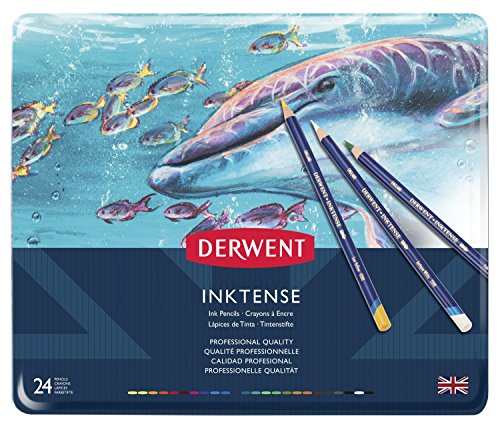
Next up, we have this water-soluble ink pencil set that’s perfect for creating a translucent effect in your drawings. Users can also combine them with other media once they’ve dried out. In fact, these pencils can provide endless possibilities for exploring your creativity.

Derwent Inktense Pencils 24/Pkg, Colors may vary
  • Pure, vibrant watersoluble ink pencils that combine the...
  • Use them to create strong vivid tones then wash over with...
 

Why Did We Like It?

Artists who are fascinated by the intense hues of traditional ink pens will surely be in awe after using these pencils. After all, they offer a very similar visual appeal while blending easily and can be smoothly applied over a large area. That’s why this pencil set can be great for those looking to recreate bright visuals on the canvas. 

Washing the colors with some water also adds a translucent look aside from intensifying the shades. And like some of our other recommendations, this one comes with a durable 8mm round barrel and 4-mm core to facilitate efficient usage. 

Even the wax content of the core is on point, which makes sharpening these pencils much easier than average products. Plus, the colors are easy to identify as the color tabs on the top match the core perfectly.  

What Could’ve Been Better?

You won’t get many lighter shades in this watercolor pencil set. So, if that’s what you require, you may have to use another set of colors or paints. You might even have to blend quite a few colors to get the exact shade needed. 


Pros

  • Create intense hues
  • Add translucent effect
  • Easy to sharpen
  • Easy color identification


Cons

  • Comes with fewer light shades


5. Drawing Pencils and Accessories Set

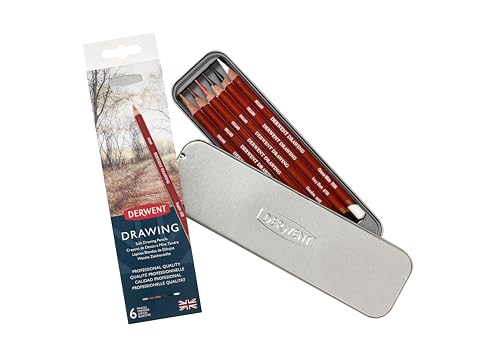
Halfway through our list, we’ve picked this set of six drawing pencils and a sharpener that can help art lovers create expressive and loose tonal drawings with ease. In fact, they can use it to recreate anything on their canvas ranging from nature and wildlife to portraits and landscapes.

Derwent Drawing Pencils and Accessories, Soft, Metal Tin, 6...
  • Perfect medium for wildlife and nature studies, as well as...
  • Round 8mm cedar barrel is stained rich brown
 

Why Did We Like It?

We loved the classic design of these pencils, especially the external structure painted in earthy red that beautifully represents the feel of the entire set. Even the colors displayed at the bottom portion of the pencil are easy to identify, so the users are least likely to land in confusion. 

Coupled with the appealing design is the efficient round barrel of 8mm that makes drawing the different tones effortless and minimizes the chance of mistakes. Plus, the 5-mm thick core can effectively handle the pressure exerted while drawing so that you can make narrow or broad sweeps smoothly. 

As for the color range, it consists of brown ochre, chocolate, Chinese white, sanguine, sepia red, and ivory back. All these colors can work well to lend an earthy feel to the illustrations, which makes them perfect for artists focussing on nature studies.  

What Could’ve Been Better?

Some customers complained that the metal tin housing the pencils is a bit flimsy, which makes it more prone to damage due to regular use. But apart from that, most of them were quite satisfied with the quality of the pencils and the color selection. 


Pros

  • Appealing classing design
  • Effortless drawing
  • Durable core
  • Lends an earthy feel to all drawings


Cons

  • Flimsy metal tin


6. Lightfast Coloured Pencils

Another dependable option for adding vibrant color to any illustration is this colored pencil set consisting of 72 different shades. Its pencils are designed to provide professional-grade perfection to any artwork that requires using a variety of colors. With this set at their disposal, artists can even create different effects in their drawings. 

Derwent 2302722 Lightfast Coloured Pencil Tin (Pack of 72)...
  • 100% LIGHFAST – Revolutionary oil-based core creates rich,...
  • REVOLUTIONARY CORE – The core is resistant to prolonged...

Why Did We Like It?

The single biggest advantage of these pencils is their oil-based core that helps artists produce rich colors effortlessly on paper. Also, the core is highly resistant to color change over time, ensuring that your artwork doesn’t fade away. It even comes with a long-lasting point suitable for the heavily detailed drawings or layering work. 

Adding to the efficiency of these pencils is their strong and durable round barrel that facilitates 100% lightfast drawing. The colors even have a very creamy texture which allows you to blend them on the page to create an effect similar to paint, which is ideal for still-life illustrations.

Speaking of the color laydown in the set, the range of opaque colors can be used to create different kinds of bold and expressive drawings.  

What Could’ve Been Better?

Like one of our previous recommendations, the packaging material used for this set is much weaker, which is why the package might arrive damaged sometimes. In some cases, it might cause one or more pencils to break on the way. As such, you must check the product carefully soon after it’s delivered to ensure it’s in perfect condition. 


Pros

  • Produces rich color
  • Facilitates effective color blending
  • Prevents artwork from fading away
  • Ensures 100% lightfast drawing


Cons

  • Poor packaging


7. Blender and Burnisher Pencil Set

This small set of pencils is specially designed for blending and burnishing any artwork to create a smoother look for a paint-like appearance. As such, you can combine it with any other set of colored pencils to create illustrations that require blending a variety of rich colors with utmost perfection. 

Derwent Blender and Burnisher Pencil Set, Drawing, Art...
  • The blender pencil is soft and colorless and allows you to...
  • The burnisher is a hard colorless pencil that provides a...

Why Did We Like It?

First things first, this set consists of two pairs of colorless blender and burnisher pencils along with a plastic sharpener and an eraser. While the blender pencils have a soft core that lets you blend two colors easily and effectively, the burnishers provide a glossy and rich finish. 

You can use these variants to create different effects such as layers, streak-free areas of a single color, or a very strong shade in a part of the artwork. 

As for the two included accessories, they also work with the desired efficiency so that you can keep the pencils adequately sharp and correct any mistakes easily. Together, such features make this set a great alternative to blending tortillons and stumps. 

This set even comes at an affordable rate, so you can complete your collection of art supplies cost-effectively.  

What Could’ve Been Better?

A point of caution is that sometimes these pencils might smear if you try applying water over them. Keep in mind that this especially happens while working on watercolor paper. That’s why it’s best to use these pencils on other varieties of paper in case you plan to use water to amplify the paint-like effect.  


Pros

  • Easy and effective blending
  • Can create a glossy and rich finish
  • Good-quality sharpener and eraser
  • Cost-effective


Cons

  • Not ideal for use on watercolor paper


8. Inktense Paint

Watercolor paints that can deliver the right color intensity in any artwork are a rarity these days. And this Inktense paint pan from the brand is among the few that fit the bill perfectly. Its unique formulation allows artists to express their ideas just the way they desire. As such, it has been appreciated by art lovers across the country. 

Why Did We Like It?

What we liked the most about this product was the high pigmentation of the colors, which guarantees a vibrant finish in every artwork. And this color stays fixed after it dries up to ensure your creation retains its charm in the long term. 

Another great advantage is that the pigments are designed for quick drying once they are washed out and become permanent after drying. This lets you place or layer the contrasting colors next to one another without having to worry about color bleeding. 

This property even makes the paint suitable for a variety of surfaces, including silk, clay, vellum, and parchment. As such, art lovers who are fond of everything DIY can use this paint pan to design DIY gifts for their friends. 

We also found the design of this set to be really convenient to use as it includes a durable mini water brush, five mixing palettes, and a sponge.  

What Could’ve Been Better?

The range of colors provided in the palette is somewhat limited. That's why you might require more mixing and matching to create different shades as per your needs. Naturally, this can seem a bit of a hassle to all art lovers. But quality-wise, we have no complaints about this product. 


Pros

  • Produces a vibrant finish
  • Suitable for a variety of surfaces
  • Dries quickly
  • Convenient design


Cons

  • Limited range of colors


9. Watercolor Pencils

Towards the end, here’s a durable and versatile pencil set that combines the control of pencils with the beauty and vibrancy of watercolors. Both these properties can together help art lovers achieve the precision that they want in their paintings. Read on to know more about all its features. 

Derwent Colored Pencils, WaterColour, Water Color Pencils,...
  • STURDY PRECISION – Easy to sharpen, break-resistant...
  • WATER SOLUBLE – Combine the control of a pencil with the...

Why Did We Like It?

The most noteworthy feature of these Derwent watercolor pencils is their efficient, break-resistant structure that’s ideal for hours of extensive use. Plus, features such as the hexagonal barrel and the 3.4mm core facilitate the much-desired accuracy for detailed illustrations. 

Even the water solubility of these pencils is on point, providing artists the versatility they desire without affecting the quality of the paintings. Thus, they can easily create textured lines with their wetted tips or use damp paper to achieve bright colors with soft edges. 

The core colors also have a softer formulation, which helps create layers and blends easily. As such, they help create a variety of effects ranging from delicate watercolor washes to bold colors. Another advantage is that the shades can be adjusted by adding water as per the need since the colors aren’t permanent.   

What Could’ve Been Better?

We were a bit disappointed to find that these pencils lost their sharpness faster than other products. As such, users will have to sharpen them more frequently. But apart from that, we feel it’s a fairly reliable choice considering the durability and precision offered throughout.   


Pros

  • Break-resistant structure
  • Suitable for detailed illustrations
  • Highly versatile
  • Easy layering and blending


Cons

  • Require more frequent sharpening


10. Charcoal Pencils

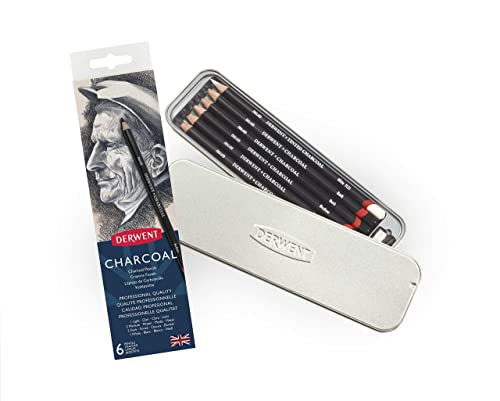
We’ve also included this small set of charcoal pencils that can be used to create intriguing pieces of charcoal art effortlessly. These offer the right balance of convenience, durability, and precision, ensuring all your paintings turn out just the way you want.

Derwent Charcoal Pencils, Metal Tin, 6 Count (0700838)
  • Easier to sharpen than traditional charcoal sticks
  • Tone is similar to graphite

Why Did We Like It?

Made using a super-effective combination of fine clays and charcoal particles, these charcoal pencils can provide the right tonal value to any drawing. Plus, the rich and smoothly textured core helps make the strokes effortlessly, thereby facilitating greater accuracy for all projects. 

In comparison to the traditional charcoal sticks, these pencils are also much easier to sharpen and ensure reduced mess. Even the sharpener provided in the set functions smoothly to enable fast and smooth sharpening. 

Apart from this, the pencil set can easily be used to blend different colors and comes in a smooth laydown that’s suitable for most drawings. Note that the set includes one light, two medium, two dark, and one white or tinted charcoal pencil. 

Among these, the tinted charcoal variety can be of great help in adding dimension and depth to detailed drawings.  

What Could’ve Been Better?

Several customers pointed out that this pencil set came with some pieces damaged, which made them difficult to use. That said, a few of them expressed their relief over the prompt and efficient customer service offered as it ensured the box was replaced within a few days.  


Pros

  • Provides the right tonal value
  • Facilitates greater accuracy
  • Helps in easy blending
  • Adds dimension and depth


Cons

  • Few pieces might be damaged in the tin


Derwent Gift Sets Buying Guide

To choose a set of good-quality art supplies, you’ll need to consider some common characteristics of these products that will determine their effectiveness in the long run. 

As such, going through the specifications of the leading options on the market won’t suffice. That’s why we’ve compiled this guide to the key factors you must keep in mind before making a choice. 

1. Type

Products used for artwork can be of different types, including drawing pencils, paints, colored pastel pencils, graphite pencils, blenders and burnishers, and many others. Some types, such as paints and drawing pencils, come in various color intensities, color ranges, and variants.  

Now, as you’re purchasing the art supplies set as a gift for a close one, you must have an idea about their preferences with regard to such products. That’s why one of the primary considerations is to determine the type of art supplies suitable for that person. 

For instance, a person who’s fond of sketching landscapes or portraits will like a set of drawing or charcoal pencils more than watercolor paints or pastel pencils. But if they’re fond of experimenting with their artwork, a set of blending and burnishing pencils will provide them with great scope to explore their creativity. 

So, make sure you go through the product details thoroughly and read through some customer reviews, too. That way, you’ll be able to know about its applications and overall quality. 

2. Pencil Specifications

If you’re planning to buy a pack of drawing or colored pencils, it’s a must to check the specifications of the product. Among these, the most important ones are the barrel size and shape and the core texture and size. While the core is the part generally made from graphite and used to draw or write, the barrel or shaft is the wooden casing surrounding the core. 

Now, keep in mind that a wider barrel and a thinner core will help users make smoother and sharper strokes effortlessly. But in case the core is thicker and softer, the pencil will be more suited for making lighter strokes. 

Additionally, in the case of drawing pencils, the core texture will determine whether the pencil is suited for lighter or darker strokes, that is, the degree of the pencil. And since you'll have to use both light and dark strokes for most sketching projects, it will be best to buy a set that includes pencils of different degrees. 

3. Quality Of Watercolors

To purchase a set of watercolor paints or pencils, you’ll have to consider the intensity and water solubility of the constituent colors. And for that, you’ll need to go through some customer reviews of the product you’re considering. 

This will help you understand whether the colors are suitable for making vibrant illustrations and experimenting with different kinds of artwork. For instance, colors that are easy to blend or burnish can be used to create different effects in any artwork. 

4. Accessories 

The availability of good-quality art accessories such as erasers and sharpeners in a set of art supplies will naturally make it more valuable to an artist. That’s why it’s important to check whether the set comes with such accessories and they’re of the desired quality. Again, you’ll have to go through the customer reviews to be sure about their quality. 

Best Derwent Gift Sets

Derwent Gift Sets Verdict

On that note, it’s a wrap for today. 

We hope you enjoyed reading about the best art supplies on the market as much as we enjoyed reviewing them. Now, you’ll surely be able to decide on the present you’ve been planning all this while for that art enthusiast friend. So, go ahead and make your pick! 

But before we bring down the curtains, let us quickly take you through our favorites from the list. The Graphic Drawing Pencils Set is perfect for people fond of sketching whatever they see around them. 

On the other hand, the Colored Drawing Pencils Set is ideal for art enthusiasts interested in nature studies who love to add a touch of color to their paintings. 

With that, we’ll call it a day. But watch out for this space, as we’ll be back soon with more interesting guides. 

Related Articles

13 Best Sharpener For Colored Pencils

15 Best Electric Pencil Sharpeners

11 Best Colored Pencils for Beginners & Professional Artists

9 Best Cheap Colored Pencils

11 Best Adult Coloring Books That Will Color Your Mood

7 Best Electric Pencil Sharpener For Colored Pencils

10 Best Paper For Colored Pencils 

Learn How to Shade With Colored Pencils Swiftly & Correctly

12 Colored Pencil Tips & Tricks to Enhance Your Skill

Learn How To Use Colored Pencils

6 Best Erasable Colored Pencils Right Now

You Won’t Believe What Colored Pencils Are Made Of!

10 Colored Pencil Techniques to Enhance Your Drawings Swiftly

Learn How To Blend Colored Pencils Correctly Fast

13 Best Watercolor Pencils and Water Soluble Art

57 Beautiful Colored Pencil Drawing Ideas

High humidity is detrimental to your home construction, insulation, moisture-sensitive equipment, and even your overall well-being. Running an air conditioner during hot and humid weather can help reduce humidity levels in your home and improve air quality to tackle these issues.

In simple terms, air conditioning is the process of creating and maintaining certain temperature levels, relative humidity, and air quality indoors. It removes excess heat and moisture by taking the warm air into the system and disperse cold air. This is why it is important to install air conditioning in homes and offices since increased levels of moisture lead to mold growth and pollute indoor air.

So, I've curated a guide to help you understand how an air conditioning system can hemp reduce humidity. Read on.

Understanding Humidity

Understanding Humidity

Humidity, often referred to as relative humidity, is the concentration of water vapor present in the air. Water vapor, in scientific terms, is water in its gaseous form, which is invisible to the human eye, yet we feel in terms of how ‘sweaty’ we are or how ‘wet’ the climate feels.

While mild humidity is mostly harmless except for the discomfort it causes, excess humidity can be detrimental to people with respiratory illnesses like asthma, bronchitis, COPD, pneumonia, etc.

We usually use relative humidity (a ratio of absolute humidity to maximum humidity present in the air, measured in percentage) to determine the weather and chances of precipitation. When relative humidity exceeds 50%, moisture-related issues such as poor insulation and mold growth may occur. Especially in winter, you should ensure humidity levels are low to prevent condensation and damage to the construction and insulation of your home.

Factors That Affect Humidity

Two main factors affect the relative humidity in the air: temperature and pressure of the system of interest. As the temperature rises, the moisture levels in the air also increase. Likewise, the relative humidity drastically reduces in cold temperatures as the moisture condenses.

Moreover, relative humidity is indirectly proportional to the air pressure. So, when there’s an increase in air pressure, the moisture levels decrease gradually. That’s why it’s more difficult to keep your upper floors cooler on a hot day since the air pressure decreases with elevation.

Effects Of High Humidity

High humidity levels can harm the human body and air conditioning systems more than dry air. Some of its effects are as follows:

1. Overheating Of The Body

Surprisingly, excess humidity fools the body into thinking the temperature is high. This makes your body produce excess sweat to cool down and may often lead to heat exhaustion or stroke. That’s why many medical practitioners recommend not staying outdoors for prolonged periods in summer and having a dehumidifier or AC unit with a dehumidification feature at home.

2. Asthma And Allergy Symptoms

If the indoor humidity of your home is high, your existing respiratory illnesses will worsen. You’ll likely experience symptoms like difficulty breathing, panic attacks, headaches, violent coughs, sinus infections, etc. But putting the air conditioner on when there’s extra moisture in the air can help prevent this.

3. Excessive Sweating

As mentioned before, high humidity will trigger your body to produce sweat. At the same time, the increased levels can prevent efficient moisture evaporation, so the sweat will remain on your body, making you feel uncomfortable.

4. Damaged Equipment

Excess moisture is known to cause damage to mechanical equipment and temperature-sensitive materials. Anything that runs on motors, pistons, or any movable technology can be affected by moisture - this is especially true when it comes to an AC system. HVAC specialists also agree that high humidity can affect the efficiency of air conditioners and increase energy bills even though they can remove humidity.

5. Mold Growth

If you have high indoor humidity levels, there is a high chance that your home will develop mold and mildew. Indoor mold growth can affect your home’s insulation and absorb cool air, making it difficult for your cooling system to achieve the set temperature. This is why energy bills run high in places with excess heat and humidity, even if the frequency of AC operation is relatively lower.

Moreover, areas like the bathroom and kitchen are more susceptible to mold growth, as they have higher relative humidity.

Signs of High Humidity

There are common signs that will help you determine whether your indoor humidity is high:

  • Condensation on windows in the form of water droplets or fog
  • Excess mildew in the bathroom, kitchen, ceilings, or walls
  • Mold growing on surfaces like closets and basements
  • Cracking, blistering, or peeling paint on the exterior or interior of the house
  • Dust mite population, which causes dust allergies and respiratory problems
  • Musty or moldy smells in your home

Having an air conditioning system running is, therefore, extremely important in areas with high humidity. Even though air conditioners need to work longer to reduce humidity, they can go a long way in preventing damage to your home’s structure, material, and insulation.

So, investing a little more in your energy bills on hot, humid days can actually save you renovation expenses in the long run! Further, there’s no point in compromising indoor air quality since it can directly affect your physical well-being.

How Does An Air Conditioner Work?

Before trying to understand how an air conditioner removes humidity in your home, it is important to understand how it actually works.

An air conditioner lowers the temperature, right? But how does it do it? Well, the warm, indoor air from the room is first sucked through the grilles located on the lower side of the machine. This air moves through chiller pipes filled with a refrigerant that helps to cool it down.

The air then passes over an evaporator coil which contains a cooling agent circulating throughout the air conditioning system, changing from its liquid to gaseous form or vice versa when required. When the air passes over it, this cooling agent absorbs the heat and moisture - this is where a heat transfer takes place. After this absorption is complete, the excess condensation drips onto the condensate pan beneath the coil.

Tip

Remember to clean out the condensate pan frequently to avoid the chances of the moisture evaporating and going back into the indoor air.

Then, this air passes over a heating element, which, when turned up during winter, produces more hot air, making the AC unit act as a heater. However, this feature might not be available in all portable AC units, so check the product description if you’re going for this type.

Then, an AC fan blasts this air into the room through another grille or duct. If the heating element is turned down, the incoming air is much cooler, and the cooling cycles are more efficient. Similarly, the higher the set fan speed, the faster the incoming air will be projected into the room. Thus, the fan speed determines how fast the room will be cooled down or heated.

So, as you can easily understand, an air conditioner can both cool and remove humidity in your home, thereby improving indoor air quality.

Does AC Reduce Humidity?

As already discussed, air conditioners lower humidity using their evaporator and condenser coils. The refrigerant that cycles between indoors and outdoors facilitates the functioning of an air conditioner; however, its main function is to cool the indoor air while the fan cycles it into the room. And the fact that air conditioners lower humidity is rather a side-effect of the condensation process.

Since the indoor coils are very cold, more moisture from the indoor air condenses on them. The moisture then condenses into water, which is expelled through a drainage hose, condensation tank, or air exhaust hose (depending on the air conditioner type). This cycle continues for some time and effectively lowers the indoor humidity levels in your home.

How Much Humidity Can Air Conditioners Remove?

An air conditioner is mostly purchased for heating, ventilation, and air conditioning; however, it can also control humidity levels. This feature is known as dehumidification, and you can check the ‘dehumidification rating’ on the specifications sheet of an air conditioner. Expressed in Pints per hour (Pt/h) on the specs sheet, it tells you how much humidity your AC unit can extract from the air per hour.

For example, if a 1400 BTU AC unit has a maximum dehumidification rate of 4.0 pt/hr, then your unit can, in ideal conditions, extract more than 100 pints (or 15 gallons) of water from the air per day. Long story short, you can avoid purchasing a separate whole-house dehumidifier if you invest in a high-quality AC system.

Benefits Of Reducing Humidity

A. Improved Indoor Air Quality

Since humidity constitutes condensed water vapors, it allows dust and debris to cling to the water droplets, thereby lowering indoor air quality. What’s more, high humidity levels can absorb harmful chemicals from home appliances and materials, increasing pollution. 

Running an air conditioner in dehumidification mode can help reduce humidity and eliminate these pollutants. This will also make your home environment unfavorable for pests like cockroaches, silverfish, spiders, etc. So, besides reducing mold and mildew formation on your walls and providing cool air, low humidity can reduce the chances of pest infestations and damage to your home insulation. 

B. Health Benefits

The various health issues that come with high humidity are the number one reason I prefer to run my air conditioning system to remove moisture, even if it’s cold outside.

Low humidity levels will help you cope with several respiratory diseases, including asthma, COPD, pneumonia, etc. Since a designated dehumidifier or AC removes humidity and prevents mold and bacteria, there’ll be fewer triggers in your home that can worsen these symptoms.

Moreover, lowering the humidity level can help manage skin diseases such as acne, eczema, and psoriasis, which are easily triggered in hot and humid conditions. All in all, a balanced humidity level has several health benefits.

Tip

If your air conditioner has a clogged filter, its dehumidification capacity and ability to remove impurities from the air reduces significantly. That’s why I recommend cleaning the AC filter thoroughly at least once a month to maintain good indoor air quality.

C. Increased comfort

Of course, if the indoor air is clean and you reap health benefits from it, your comfort levels will also increase. Not having to deal with pest infestations and moldy walls can eliminate a lot of hassle regarding pest control and renovations. Moreover, having low humidity levels can make your home more comfortable for children and pets. 

Generally, your home will feel more comfortable at humidity levels ranging from 30 to 50% . You can measure this level using a thermostat with humidity control to help set the AC at the right temperature or setting.

Other Ways To Reduce Humidity

Running the air conditioner is usually sufficient to bring down the humidity levels below 50% in humid climates. However, if the cooling system still seems to be insufficient in case of extreme humidity, here are some other ways through which you can tackle the problem.

1. Proper Ventilation

Running the exhaust fan when you shower, clean, or cook in the kitchen, bathroom, or laundry is important to ensure proper air circulation. Spot ventilation will tackle humidity at its root by reducing moisture in those particular areas. If there's pleasant weather in your area, consider opening all the windows instead to save electricity.

2. Wipe Off Any Standing Water

Any water vapor accumulation on surfaces can contribute to high humidity levels. So, if you see water on kitchen counters, shower tiles, or floors, quickly wipe it off until completely dry to prevent mold and mildew.

3. Adjust the AC Fan

It takes time for your air conditioner to expel the condensation from the evaporator coils - that’s why running the AC fan continuously can direct moisture back into your home. The best way to avoid this is to set the AC fan to ‘auto’ so that it runs only during the cooling cycles.

4. Change the AC Filter

HVAC specialists recommend changing the air filter at least once every month to reduce humidity and maintain indoor air quality. A clogged filter traps dust and debris and often harbors mold and bacteria, if it remains wet for prolonged periods. This, in turn, blows mold spores and humidity into your room, increasing your discomfort.

5. Clean The Evaporator Coil

If your air conditioner is having difficulties reaching the set temperature and dehumidifying properly, the evaporator coil probably needs cleaning. A dirty coil prevents efficient cooling and traps moisture within its system, so it’s essential to clean it regularly. However, don’t try cleaning it yourself and call a professional as  any improper handling can lead to mechanical malfunction or compressor failure.

6. Upgrade Your AC System

If your air conditioner is not able to remove humidity efficiently, it’s time for a replacement. And when purchasing a new AC system, look for advanced features, like a thermal expansion valve (TXV), variable fan motor, dehumidifier settings, etc. While a TXV delivers a specific amount of refrigerant depending on the set temperature, the variable motor facilitates adjusting the fan speed. Both features help improve cooling and dehumidification.

Final Thoughts

Air conditioning is really important to control humidity and maintain optimal temperatures for comfortable living. Besides these obvious functions, using an air conditioner to reduce humidity has several benefits, including mold and mildew prevention, increased comfort, and alleviation of respiratory diseases. 

Even in extremely hot and humid climates, ACs can successfully eliminate excess moisture in the air. However, if an air conditioner is not working for you, there might be some problem with its mechanical parts or air filter. In this case, follow the simple techniques that I’ve mentioned above.

With that, it’s time for me to wrap up. See you next time!

An air exchanger is an HVAC system that replaces stale air inside your house with fresh air from outside. Its heat exchanger technology can improve heating, ventilation, and air conditioning by reducing excess humidity, heat, moisture, and air pressure.

Even the best air conditioners cool and heat the same stale indoor air, thereby filling your home with various allergy stimuli and pollutants, like dust, pet dander, bad odor, etc. And with the advent of building insulation in home construction, the moist air inside your home cannot escape. 

According to the United States Environmental Protection Agency, this can lead to mold growth and higher air condensation, increasing the risk of respiratory disease. But an AC air exchanger can help, and I will tell you how.

How Does An AC Air Exchanger Work?

How Does An Air Exchanger Work

For several years, I’ve been noticing excess moisture and stagnant air in my home despite installing very efficient air conditioners. However, after hours of research, I discovered that installing an air exchanger is the safest way to ensure good air quality. So, if you’re breathing toxic, stale air daily, I recommend buying an air exchanger. But before you do that, let me tell you how they function. 

To put it simply, an air exchanger is a box with two input and two output ports through which stale air is eliminated and fresh outdoor air is brought in. Inside the box, there are two fans–one that helps suck in the fresh air, and the other that blows indoor air out of the exhaust ports. If you look at it as a whole, it resembles the average battery-powered AC unit, more so because it uses ductwork installed in the walls and ceiling to function. 

Working Of An AC Air Exchanger

Coming to its indoor components, a ducted air exchange system has two ends–a fresh air distribution grille and a stale air exhaust grille. The former is usually located in every room of the house, close to the location of the furnace, especially in the kitchen, bedroom, living areas, etc. Meanwhile, the exhaust grilles are installed higher, usually close to the ceiling, where hot air, high humidity levels, debris, and other pollutants accumulate. 

Some air exchangers use the existing heating and cooling system and pass enough fresh air through the air conditioning ducts. They also facilitate portable AC units to reduce heating and cooling costs, especially if they’re ventless

Tip

It’s best to look for heat exchangers that are compatible with your existing central air conditioning; otherwise, you will need a dedicated ductwork installation. And this separate installation will further increase the overall cost of the unit. 

How Does Heat Exchange Take Place Through Air Exchangers?

Typically, air exchangers work to replace the warm air indoors with cold air from outside for energy-efficient ventilation. Air conditioning experts accomplish this by installing a concentric steel cylinder that is connected to the ducts running through the whole house. 

The warm air and accumulated heat from the rooms pass through the indoor cylinder installed along with the air exchanger, leading to a heat exchange. During this process, the heat transfers to the outdoor cylinder, which is simultaneously bringing in outside air into the house. Some heat exchangers also use plate-and-fin structures like window AC units to achieve better ventilation.

What’s more, the same exchanger systems can act as heat recovery ventilators during winter by storing the heat and transferring it to the fresh, incoming air. This way, the air exchanger does the job of an air filter and reduces indoor air pollution and its possible health consequences.

Heat exchangers are generally classified into various models based on how the air moves. For instance, counter-flow exchangers facilitate  hot and cold air entering and flowing parallel to each other in opposite directions. On the contrary, the interior and exterior air move perpendicularly in cross-flow units. However, some axial flow units use a large wheel with a heat pipe unit, which is powered by a refrigerant like R-22.

Benefits Of Air Exchangers

Air exchangers not only provide fresh air but also eliminate various pollutants such as smoke, radon gas, off-gassing from carpets, etc., while reducing cooling and heating costs. Besides air exchangers can:

  • Help provide an odor-free space with efficient fan and air filters
  • Act as a dehumidifier to reduce moisture in the air, thereby reducing chances of allergy and respiratory illnesses
  • Function as energy recovery ventilators to speed up the air exchanging process for efficient energy use
  • Decrease mold and mildew growth by reducing humidity
  • Reshuffle the air around the house for a drier environment to live in
  • Prevent window condensation by bringing in the cool air
  • Prevent interior paint from deteriorating due to excess air pressure which makes dust particles stick to the paint
  • Reduce the need to frequently clean air conditioner coils

What Is An AC Air Exchanger Final Thoughts

Final Thoughts

Most new homes don’t have an air or heat exchanger; however, its varied features and benefits call for an installation. Besides generating new air through vents, it can help improve the overall health of your family by eliminating harmful pollutants from your living rooms. However, air exchangers alone cannot address severe ventilation and air pollution issues, even though they provide support to your evaporative coolers.

So, it’s best to consult licensed home conditioning experts if you notice too much humidity and debris build up in your indoor air. Until next time, take care!

In theory, you should not recharge your AC as the unit is not using the Freon in the cooling process. This being said, most units require a refrigerant charge once every 2-5 years, the lower the number the bigger need to replace the AC unit, as with refrigerant leaks comes great environmental responsibility, and danger to health because Freon (refrigerant) is a toxic substance. Plus, recharging your home AC is just a temporary fix, as your unit may eventually leak again.

For most homeowners, an air conditioner is the only saving grace when the temperatures are soaring.

But what if it gives up on you on a sultry hot afternoon? Absolute horror!

That’s when you may wonder if you need to recharge the air conditioner unit. Accordingly, you may also want to know how often the cooling system is recharged.

To help you with that, I have curated this brief yet informative guide discussing when and how often to recharge your AC unit.

How Often Do You Need To Recharge Your Air Conditioning System?

How Often Do You Need To Recharge Your Air Conditioning System

You might be surprised to know this, but you don’t need to recharge your AC unit. Even if a technician says that your AC needs more Freon (refrigerant), it doesn't mean the substance gets used up like gas in a car. Rather, the refrigerant absorbs heat from the surroundings and expels it from your house. So, it transforms from liquid to gas and back to liquid form but never diminishes during the cooling process. 

Besides, most air conditioners only need to be recharged once every 2-5 years unless you face a refrigerant leak. In case of a leaking refrigerant, the AC system will cease to function efficiently. So, you may notice a dip in its cooling capacity or hear the compressor operating more frequently than it usually would. 

Now, if your central air conditioning unit is low on refrigerant, know that you shouldn’t recharge it yourself. The reason is that AC refrigerant is a hazardous substance. 

Warning

If you’re not trained to handle refrigerant lines, you shouldn’t handle any related repairs since direct contact with Freon may cause lung damage or even sudden death.

Not to forget, recharging the refrigerant levels is only a temporary solution, as it is bound to leak again. So, you’ll only have to recharge the AC unit more often, which will obviously cost more money. 

Lastly, recharging your central air conditioner after a refrigerant leak will void your manufacturer’s warranty. Hence, to be on the safer side, it is best to consult a licensed technician to handle the job.

How To Detect A Refrigerant Leak

The most common problem homeowners face with their AC units is a refrigerant leak. Even the best air conditioners from brands like LG, Hitachi, or Whirlpool Corporation are bound to face cooling, voltage, or other electric issues. 

Hence, below are some of the tell-tale signs of a leaking refrigerant.

1. Frozen Evaporator Coils

A refrigerant leak usually occurs on the evaporator coil, causing it to freeze or develop ice buildup. A professional should address this immediately to prevent any health issues among people exposed to the leak. 

2. Compressor Runs More Frequently

As mentioned earlier, when the central air conditioner requires more refrigerant, it means that the system is not able to cool the air as it should. Consequently, you will notice the inverter compressor working harder and may even produce more noise and vibration. 

3. Inefficient Cooling Capacity

One of the obvious signs of a refrigerant leak is the lack of cooling in the surroundings. However, a low refrigerant charge may not be the only culprit behind a malfunctioning AC. 

For instance, your AC unit may have a dirty air filter or a faulty thermostat preventing you from enjoying a cool and comfortable room temperature. 

But regardless of the issue, you must consult a licensed service technician to check the AC unit as soon as you notice the aforementioned signs. Especially in the case of a refrigerant leak, it is best to take quick action since if left unchecked, it can eventually damage the unit. And the worst part is that you may end up with high energy bills, even though your AC is not working optimally.

What To Do If Your Air Conditioning System Has Low Refrigerant Levels

  • Turn off the air conditioning system from the breaker box
  • Call a professional technician as soon as possible
  • Check the exteriors of your AC for any visible signs of damage
  • If you have an outdoor unit, remove the cover to look for any problems
  • Inspect inside your house for visible signs of water damage
  • Switch on your air conditioning system and ensure there are no unusual smells and sounds in the vicinity 
  • Always check your monthly electric energy consumption for any discrepancies 

How Does An AC Technician Perform A Refrigerant Charge

1. Assessing The AC

First, the technician may check the air filter and thermostat to determine whether the AC is malfunctioning due to a leak or not. Thereafter, they may proceed to check the indoor unit as well as the outdoor unit to detect any AC problems.

All these steps are taken to determine the reason behind low refrigerant levels. Accordingly, they will be able to decide if their leak readings are correct or not.

2. Explain The Issue And Suggest Solutions

In case of a refrigerant line leak, the technician may inform you about what is causing the leak and how to fix it. They may suggest any one of the following two methods…

A. Fixing The Refrigerant Leak

Fixing the leak requires electronic equipment along with UV dye or a bubbling agent. Using these materials, the technician can detect the location of the leak. Accordingly, they will drain the cooling system, fix the leak, and recharge your central air conditioner.

To be on the safer side, make sure that they test the system before leaving.

B. Recharging The AC Without Fixing The Leak

If this is the first time you’ve experienced a refrigerant leak, simply recharging the AC may do the job without fixing the root cause of the problem. However, I recommend doing so only if you plan to get a new unit soon.

Recharge Home AC Conclusion


Recharge Home AC Conclusion

That’s all for today, folks! With these simple tips, you can increase the efficiency of your conditioner while ensuring the safety of your loved ones. So, while it may be tempting to DIY certain electrical fixes and save some money, it’s best to let the experts handle it. 

For more information on heating, ventilation, and air conditioning, I suggest reading my latest article, “What is a MERV rating?” And if you want to practice efficient energy consumption, I suggest checking another one of my informative guides, What is a Dual Inverter Air Conditioner?”

MERV stands for Minimum Efficiency Reporting Value, which is used to predict the efficacy of air filters in removing contaminants from indoor air. As such, a filter with a high MERV rating can filter out finer contaminants better than one with a lower MERV rating.

Understanding your air filter’s effectiveness is a crucial first step in ensuring clean, allergen-free indoor air to breathe in. And its MERV rating is one such factor that can help you in this regard.

But what is a MERV rating, and what are its implications in the long run? Dive in to learn about it all!

What Is A MERV Rating?

What Is A MERV Rating?

MERV, an acronym for minimum efficiency reporting value, is a rating system first developed by the American Society of Heating, Refrigeration, and Air-Conditioning Engineers (ASHRAE) in the 1980s. Simply put, this rating system was established to help people gauge the efficacy of the air filters used in a building’s HVAC system.

A higher MERV rating of an air filter enhances its ability to trap and remove contaminants like dust, pollen, smoke, and other airborne particles. This also means that a filer with a high MERV rating is more efficient at trapping finer particulate matter than one with a low MERV rating. In hindsight, a higher MERV rating can help improve your indoor air quality drastically.

The MERV Rating Chart

MERV filter ratings are industry standard, meaning you can use them to compare filters irrespective of their size and brands. Moreover, these ratings typically appear in a numerical chart from 1-20, but for the sake of convenience, they are often grouped together.

So, in the following section, I will quickly take you through the different groups and how each of them is suitable for different situations. 

1. MERV 1-4

An air filter with a MERV rating between 1 and 4 can efficiently remove particles measuring up to 10 microns. Although they aren’t the best for filtering tiny particles, they can still be used to remove dust mites, textile or carpet fibers, and sanding dust, among other things. As a result, these MERV filters are generally preferred for installation in places where people are prone to dust allergies. 

Air filters rated between MERV 1 and 4 are considered more suitable as furnace filters in residential furnace (central heating) systems, window-mounted ACs, as well as pre-filters in commercial spaces.

2. MERV 5-8

Air filters with MERV ratings from 5 to 8 are better at removing smaller particles measuring between 3 and 10 microns. These air filters can be used in spaces like industrial workplaces and paint booth inlets, which are usually susceptible to mold, spores, dust lint, and cement dust, in addition to the pollutants mentioned above.

Not only that, but MERV 5 to 8 air filters can also help improve indoor air quality of commercial and residential buildings. Or, you can use them as pre or final filters.

3. MERV 9-12

Designed to filter out dust particles measuring between 1 and 3-micron, these air filters can remove both large and small particles, like pollen, house mites, and even Legionella bacteria. Besides, they can be used to filter out different types of dust particles, like:

  • Cement dust
  • Lead dust
  • Sanding dust
  • Humidifier dust
  • Coal dust
  • Nebulizer dust

These air filters are largely considered the threshold of high-efficiency particulate air filters and find widespread use in big residential and commercial buildings, hospital labs, and as pre and final filters.

4. MERV 13-16

MERV filters rated between 13 and 16 can remove more than pollen, dust mites, and sand, as they can trap particulates measuring between 0.3 and 1 micron in size. As such, they are employed as final filters in surgery rooms, smoking lounges, inpatient care rooms, and commercial buildings equipped with multiple heating and cooling machines.

These high MERV-rated air filters can efficiently remove:

  • Tobacco smoke
  • Pet dander and lint
  • Copier toner discharge
  • Insecticide dust and fumes
  • Sneeze nuclei
  • Hair spray
  • Powder makeup particles like face powder or setting powder

5. MERV 17-20

As you may have already understood, air filters with a MERV rating between 17 and 20 are considered the best of the lot, as they can remove small particles to the tee. To give you a better idea about their efficacy, these filters are used in air conditioners and HVAC systems to eliminate:

  • Combustion smoke
  • Radon progeny
  • Microscopic allergen particles
  • Carbon dust
  • Virus carriers
  • Other contaminants measuring less than .30 microns in size

What Are Pre And Final Filters?

What Are Pre And Final Filters?

Pre-filters facilitate the initial stages of filtration, capturing the contaminants before the air reaches the expensive final filters. This method is generally used for multi-filtration level HVAC systems to protect the final filters from wear and tear and extend their service life.

Final filters, on the other hand, constitute the last stage of filtration in both single and multi-filtration systems. When used in the former, they serve as the primary stage of filtration. They can also be combined with multiple pre-filters to reinforce the efficacy of the HVAC unit.

How To Choose The Best Filter For Your Home Or Office?

You may be thinking that understanding the MERV scale alone will help you pick the right air filter for your needs. However, this isn’t the case, as there are a few other factors to consider.

Aside from indicating filtration efficacy in removing contaminants, your filter’s rating can help you figure out its power consumption in the long run. From what I have seen over the years, higher MERV ratings almost always translate to higher energy bills.

This is because a higher MERV-rated filter will trap more particles, putting more strain on your HVAC or ventilation system, thereby increasing your energy consumption. Long story short, the highest MERV-rated filter may not always be the solution to your problem.

For best results on energy efficiency, you should check the CEER rating of your AC as well. However, people who need only occasional cooling without intensive air filtration needs often choose battery-powered units. You can learn more about these portable versions in my other readers.

So, how to select the right filter rating for your needs? The recommended MERV rating for residential use is generally between 8 and 13. However, since industrial settings produce more contaminants than most households, you can opt for a higher rating between 14 and 20.

The same is true for establishments like a hospital laboratory or surgical room, which can produce toxic air contaminants not usually found in residential spaces or offices.

Mid to Lower MERV Rating [8-13]

Higher MERV Ratings [14+]

What Is MERV Rating

Do HEPA Filters Come With MERV Ratings?

Yes, HEPA (high-efficiency particulate absorbing) filters come with MERV ratings, just like standard filters used in heating, ventilation, and air conditioning systems (including portable units). In fact, HEPA filters with the best MERV rating are designed to remove very small contaminants from indoor air (measuring 0.3 microns).

Hence, HEPA home air purifiers have become extremely popular for removing dust, pollen, smoke, and other particles that can cause allergies or any respiratory disease like asthma. You will also find air conditioners compatible with HEPA filters for the same reason. However, it’s important to note that these filters won’t last for eternity and should be changed regularly.

Tip

If your HVAC or air conditioning system is making unusual noises or taking more time to produce cool air, it may be time to change the filter. Contact an HVAC technician to diagnose the issue and fix it at the earliest.

What Is MERV Rating

Final Words

Honestly, the MERV rating is just one aspect to ensure the energy efficiency of your air filters. Unless you’re maintaining them properly and replacing them when needed, the filters will be exposed to undue pressure, which can cause the energy bills to rise exponentially.

So, if you’re experiencing restricted airflow from your HVAC or ventilation system, it’s making unusual noises, or there’s sudden indoor air pollution, then it may be time to change the filters. I’d strongly recommend availing the services of a qualified and licensed professional to get the job done. Otherwise, you may end up damaging the filters or the overall system irreparably.

Moreover, it’s important to ensure regular maintenance of your ACs and ventilation systems so that they have a prolonged service life.

R22 or chlorodifluoromethane is an air conditioning refrigerant that was once extensively used in air conditioners, car AC systems, heat pumps, and other refrigeration devices to absorb and remove heat. However, in recent years, it has been declared as a global environmental hazard.

If your cooling systems were installed in or before 2010, they likely use R22, also known as Freon. This greenhouse gas, which goes by the chemical name of hydrochlorofluorocarbon 22 (HCFC-22), has become a cause of serious concern as it results in global warming and depletion of the ozone layer.

So, if your HVAC units use an R22 refrigerant, this article is for you. Here’s your complete guide on this coolant.

Why Do You Need A Refrigerant?

Why Do You Need A Refrigerant?

Before I delve into details, I’m sure some of you are wondering what the purpose of a refrigerant is. Well, let me tell you more about it. 

A refrigerant is a chemical inside the HVAC unit’s compressor that changes from gaseous to liquid form and vice versa. It is responsible for the heating and cooling which occurs in your heating, ventilation, and air conditioning systems. 

R22 Freon has been one of the most popular refrigerant options, used extensively in central air conditioners and heating systems. However, as of January 2020, the Environmental Protection Agency (EPA) banned the production and import of this substance as it was found to be detrimental to the Earth’s ozone layer. 

Companies that repair units containing R22 were asked to use only repurposed or recycled ones to maintain the AC unit. Without refrigerants, your HVAC systems wouldn’t function properly. So, if there is any problem with your refrigerant, it is best to let an EPA-certified HVAC technician handle it. 

Why Was R22 Banned From The United States?

In 1987, several global agencies around the world, including the United States Environmental Protection Agency, created the Montreal Protocol. According to the terms of the agreement, a timeline was established to phase out the production and import of harmful chemicals. 

This was done to protect the ozone layer, which forms a barrier between harmful UV radiation and the Earth. The rise in greenhouse gases combined with ozone depletion spells danger for the planet, as it can result in skin cancer, reduce agricultural productivity, and disrupt marine life. 

R22 Freon is considered highly toxic and if it leaks, it can damage the environment. As a result, from 2010 onwards, there was a ban on using R22 as a refrigerant in any heat or air conditioning system. 

Thus, to protect the ozone layer and mitigate the adverse impact of global climate change, the import and manufacture of R22 has become entirely illegal. 

Is R22 Still Available?

The Montreal Protocol and the Clean Air Act (United States) have prohibited companies from manufacturing R22. Hence, R22 is available today only in reused and recycled form. 

However, homeowners have not been asked to discard their systems containing R22. The presence of R22 in air conditioning units is not a problem in itself. But, the problem arises in case of a leak since this refrigerant is released into the environment. 

So, homeowners are advised to service existing air conditioners and hire experienced EPA-certified technicians for repairs if the system malfunctions.

How To Find Out Whether Your HVAC System Uses R22?

Now that you know what is R22 and why it is so dangerous for the environment, it is time to check whether your air conditioning system uses this refrigerant. How? I’ll tell you all about it. 

1. Check The Owner’s Manual

Look around in the cupboard for your device’s manual, which usually carries all the information. If the R22 refrigerant is used in the unit, it will be labeled as HCFC-22. 

2. Inspect The Unit

The outdoor unit or compressor of the air conditioner will have a nameplate with all the details about it. So, check it out. 

3. Hire A Technician

An experienced HVAC technician will inspect your unit and figure out whether it uses R22. The best part about hiring a technician is that they can answer all your questions about the refrigerant used in your existing equipment and how it carries global warming potential. 

What To Do If Your System Uses R22?

If your existing system uses R22, it may be a cause of concern, given the Freon ban. However, let me ease your worries. A typical air conditioner is a closed system and the refrigerant passes through a well-secured loop. It doesn’t deplete like gas depletes when the car runs. As a result, you won’t need a new R22 refrigerant at regular intervals.

That being said, if there is a refrigerant leak in your HVAC system, it can lead to a bit of trouble. If your air conditioner or heat pump is not functioning properly and you consistently incur high energy bills, it is a sure-shot sign of a refrigerant leak. 

Generally speaking, you will have two available options in case of a leak:

  • Buy a new air conditioner
  • Add R22 to the existing system

What Are The Alternatives To R22?

If you look at some of the best air conditioners manufactured after 2010, you will realize that they use a relatively safer alternative to R22. These environmentally friendly refrigerants do not have ozone-depleting properties and are not detrimental to the environment.

Let me take you through some of them.

1. R-410A

R-410A is used in the cooling system of residential areas. It has all the specs of R22 refrigerants and is EPA-certified. It is also a top refrigerant option for portable air conditioners.  

2. R407C

R407C is also among the acceptable refrigerants. It is a blend of 1,1,1,2-Tetrafluoroethane, pentafluoroethane, and difluoromethane. It can be used in new equipment or may be used to replace R22 used in existing HVAC units.

What Is Retrofitting?

What Is Retrofitting?

In retrofitting, your HVAC unit is retrofitted to use a new refrigerant. So, you can replace the R22 refrigerant in your refrigeration equipment with a more environment-friendly option. 

This process involves replacing certain primary components of your HVAC system with newer ones that are compatible with the safer refrigerant. However, the replacement must be carried out by an experienced technician because if it is not done properly, it can damage your system and also compromise any warranty you may have on it. 

Warning: Although replacing R22 with an EPA-approved refrigerant is possible, it is an expensive and long-drawn-out process. This is because your AC system is designed to work with only a particular refrigerant type, and replacing it will require you to replace several other parts of the machine. As such, it is best to invest in a new device altogether.

Environment-Friendly Alternatives To Air Conditioners

If you are looking to replace your R22 system or want to do away with the hassle of replacing the refrigerant in case of leakage, there are some eco-friendly alternatives to air conditioners available. Let’s check the others out.

1. Evaporative Cooler

Evaporative coolers cool the air in the house with the help of a pump instead of a refrigerant. They contain water-saturated pads over which hot air from outside is passed. These units work best in areas that do not experience a very hot temperatures.  

2. AC Air Exchanger

Let me briefly tell you what an AC Air Exchanger is. The air exchanger uses a vent and fan system to suck out the stale air from inside your house and replace it with fresh outside air. 

Its purpose is not to cool the house but ensure a continuous supply of fresh air. Perhaps the only disadvantage is that these systems must run at all times. 

3. Battery-Powered Units

You can also opt for a ventless portable air conditioner or a battery-powered AC unit, both of which do not use refrigerants. While portable air conditioners use water instead, battery-powered AC units operate with the help of batteries.  

What Is R22

Final Words

Nothing compares to the sheer relief an air conditioner brings on a scorching summer day. I get it!

If you plan to buy a window air conditioner, understanding the CEER rating is important. CEER is an acronym for combined energy-efficiency ratio. It understands the energy efficiency of a window air conditioner, both in standby mode and when the unit is running. As such, the higher the rating, the better the system and the fewer units it will consume. 

But, let’s be honest, an AC unit comes with its share of troubles. If your existing HVAC system contains the R22 refrigerant, consider investing in a new unit. A system replacement may be expensive, but it provides a long-term solution and saves you from high-priced repair costs in the future. 

While tower AC units have a higher cooling capacity to cool a large space and even larger rooms, portable ACs are known for their compactness and low electricity consumption. Both have pros and cons; however, the choice mostly depends on individual needs and budget.

Most people rely on air conditioners for heating, venting, and air conditioning, so there are various options to choose from, including window air conditioners, mini splits, portable units, tower ACs, etc. But towers and portable air conditioners are now in vogue as they are energy efficient and convenient to maintain.

That’s why I will walk you through these two types of air conditioning and its benefits and shortcomings to equip you with enough knowledge to make an informed decision. Let’s dive in!

What Are Tower Air Conditioners?

What Are Tower Air Conditioners

Since the invention of air conditioners, tower ACs have been largely overshadowed by window air conditioners and split ACs. And even though they are quite the underrated AC units, they can effectively cool larger rooms at a low electric energy consumption. Similar to split ACs, they have an internal unit and an external compressor to circulate the refrigerant to the condenser.

But how does a tower air conditioner really work? Much like splits, they use refrigerants that run through a condenser coil to produce cool air and blow the air using a built-in fan. But since the internal and external units are connected via ducts in a tower air conditioner, it is difficult to move it around. 

However, since it is a floor unit, you can conveniently change the angles of the grilles through which the cool breeze comes out to achieve a comfortable temperature. Besides, a tower air conditioning system is equipped with high cooling outputs, such as 2 or 4 tons. 

What Are Portable Air Conditioners?

A portable air conditioner is a popular air conditioning solution for temporary cooling in home and office spaces. Unlike traditional window AC units that need to be fixed on double-hung windows, a portable unit is a freestanding appliance that you can set up anywhere in your home. 

Plus, portable units remain indoors entirely as they don't have an external compressor–all one comes with is a hose and a window kit for installation.

Besides being easily portable, these AC units offer various features that help maintain temperature and moisture levels even in bad weather. These include digital controls, customizable timers, carbon filters, turbo fans, and many more. Facilitated by these features, a portable AC unit takes the hot air from your home, cools it, and then circulates it.

Some expensive portable air conditioners have two hoses–one pulls in fresh air from outside, and the other discards excess humidity and warm air from the room. Moreover, a portable air conditioner can benefit those with multiple rooms but aren’t keen on buying multiple split or window units. 

So, if you're looking for an air conditioner for occasional use or a large portable AC that you can swing back and forth between different rooms, consider opting for a portable unit.

Tower AC VS Portable AC

Now that I have highlighted some of the defining features and distinguishing traits of a tower and portable air conditioner, it’s time I delve deeper. For your benefit, I’m going to compare some key factors in both tower and portable AC units and see who has it better!

1. Cooling Capacity

Tower AC

Even though tower ACs are larger in size, they can maintain the room temperature in an energy-efficient way by circulating cool air throughout the room. Unlike traditional air conditioners, tower ACs have less electric energy consumption as their compact internal components circulate the air faster. Moreover, the various features a tower AC unit offers, including timers and speed settings, help you further navigate its energy efficiency abilities. 

Portable AC

Portable air conditioners are as energy efficient as tower ACs, if not more. They work with a similar technology as a window unit, drawing hot air from the room and circulating it through chilled condenser coils. 

By doing so, the hot air is cooled down and blown into the space as fresh, cool air. This process is very energy efficient and can help maintain an optimal temperature in extreme weather.

A portable unit also has various features to help you navigate its cooling power– from programmable timers to the digital and remote control– there’s plenty to choose from. 

2. Electricity Consumption

Besides checking an air conditioner’s cooling power in terms of British Thermal Units (BTU), most people are also concerned about its power consumption. Both of these factors contribute to energy bills, and knowing about them properly can give you an idea of their running costs.

Tower AC

Although tower air conditioners are becoming increasingly popular because of their cooling capacity, style, and functionality, they are high on power consumption. 

Generally speaking, tower ACs use twice as much electricity as compared to other units, such as portable and window ones. Since tower ACs generate large amounts of cold air simultaneously, they usually lead to higher costs in terms of energy bills. 

They place a significant electric load and consume more energy; however, tower ACs are still more energy-efficient than many other cooling solutions. If you learn to use it more judiciously, you can reduce electrical consumption and save money.

Portable AC 

Ideal for cooling a small space like a bedroom or office room, portable air conditioners also use a significant amount of energy, depending on their BTU rating. Since a portable unit can put some strain on your home’s electrical system, you should consider installing some blow fuses or triple circuit breakers if you go for these units.

However, a good trick to ensure your portable units are energy efficient is by checking the SEER and BTU ratings before purchasing. If you manage to find one with a good rating, you’ll be able to save money on energy and utility bills.

3. Space Saving

Tower AC

A tower AC usually has a considerable size and weight, and on top of that, it will have ducts running throughout the room, so it’s not exactly very space-saving. 

These ACs are usually popular for their elegant and substantial exterior, so opt for tower units if you want to show off your AC in a living space or hall. But it might not save you much floor space, given it’s installed on the floor itself.

However, the best tower air conditioners are portable if the ducts connected to the units have enough leverage. 

Portable AC

If you want space-saving features, portable air conditioners definitely top the list. They are compact and lightweight options that you can easily move to different rooms as and when needed. Its portability also saves you a lot of money, as you no longer need to buy multiple AC units–just bring the portable AC unit into the room you’re in and enjoy the fresh air! Plus, you can put it inside a storage shelf or cupboard to save floor space when not in use.

4. Price

Tower AC

Of course, like most household appliances, the price of tower ACs increases with more accessible features, energy efficiency, installation and placement options. What’s more, you’ll find freestanding and mounted window AC versions at different price ranges. However, despite the various benefits and options, tower units are usually more expensive than other cooling units.

Such a higher price range is usually due to the advanced technology, higher cooling capacity, digital control panel, and self-cleaning programs.  

Portable AC

Although portable air conditioners are usually more affordable than tower units, their price greatly varies depending on several important factors. The size and cooling capacity determine its price range, so larger and more powerful units will cost more than the compact ones. This is also because a larger portable air conditioner is better at controlling temperature and humidity.

Other factors like the brand, design, special features, and accessibility contribute to different price tags, so it's best to do your research and choose only those features you need to stay within budget.

5. Maintenance

Tower AC

Tower units require regular maintenance- from cleaning the air filters to checking the condenser lines–so it is a frequent, time-consuming investment. However, it is very easy to clean the filters yourself to ensure that there’s no dirt and debris build-up blocking the air path. But when it comes to checking other mechanical parts, it's probably best to hire a professional.

Moreover, checking and taking proper care of the turbo fans and valves are very important to help the tower unit function efficiently. But, keep in mind, it can be quite expensive to hire professional maintenance services all the time.

Portable AC

A portable air conditioner is comparatively easier to maintain on your own, mainly because the internal mechanism isn’t very hard to figure out. You just need to clean the unit inside out, replace the air filters or empty them regularly, and check the air vents, so nothing is blocking the airflow.

Tip

Try using a chemical substance like isopropyl alcohol to remove the dirt from the vents to prevent any build-up. You can also purchase a degreaser if you find grease accumulating in the grilles. 

However, if you’d rather not clean the vents regularly, opt for ventless portable units that remove a lot of maintenance needs your way. Simply follow the basic maintenance steps, and you can enjoy cold air all summer!

Portable & Tower AC FAQs

  • Can You Move A Tower AC?

    Tower ACs are movable and comprise of two components – an external and internal unit. While the internal unit can be placed anywhere in the room or house, the external unit has to be fixed at a particular place outdoors. So, simply speaking, tower ACs are more movable than mini splits and window ACs, but they aren’t as dynamic as portable ones.

  • Are Tower ACs Better Than Mini Splits?

    Both the AC units are quite similar to one another: both have two distinct units where one is installed outdoors to vent the warm refrigerant gas. However, tower ACs occupy floor space unlike mini splits that are affixed on the wall. Moreover, mini splits are usually more energy efficient, but tower ACs are preferred for their aesthetic value and movability.

  • What Are The Disadvantages Of A Portable AC Unit?

    Even though portable ACs are compact and easy to use, they often use more energy to cool the same square foot area compared to other units. This is because most portable ACs do not have a high energy efficiency rating or an Energy Star certification. So, if you’re looking for an AC that will keep your utility bills under budget, then consider opting for other types.

  • How Long Can Portable ACs Run?

    Similar to other AC units, a portable unit doesn’t have any limitations related to its running time. However, many products have shut-off mechanisms or automatic thermostats that turn off the AC when the ideal temperature has been reached to reduce energy usage. If your portable AC doesn’t have such settings, consider switching it off once the room feels comfortable.

  • How Good Is The Coverage Of A Tower AC?

    Tower ACs have a significantly wider coverage since their air outlets blow out cold air at a 90-degree angle. This, combined with the longer height of their blower fan, helps tower ACs cover a much wider area in less time. 

  • Tower AC vs Portable AC To Sum It Up

    To Sum It Up

    Tower and portable ACs have quite a few pros and cons that require careful consideration. Both can be energy efficient and offer smart cooling; however, they differ in installation, portability, and running costs. If you’re willing to invest in a unit that will quickly cool larger rooms but have higher running costs, a tower AC might work for you.

    However, if you have smaller rooms requiring more floor space but would rather not buy multiple cooling solutions, consider portable units. Another thing to consider is noise level- tower ACs have low noise levels, but portable ones are notorious for making louder noise while generating cold air.

    That brings me to the end of my detailed comparison- just tick the factors that most affect you and decide which one suits your cooling needs best.

    Until next time!

    A device that draws in hot air from the outside, cools it by passing it over evaporative pads and releases it indoors is known as a swamp cooler. Such units are capable of reducing air temperature by 15°F to 40°F.

    Running central air conditioners to beat the summer heat will skyrocket your utility bills, straining your finances. An excellent alternative to traditional air conditioners is a swamp cooler– a small and portable unit to cool a space using moisture.

    But, will a swamp cooler be ideal for cooling small spaces? To figure this out, you need to understand what swamp coolers are and how they operate, so my guide explains just that.

    What Is A Swamp Cooler?

    What Is A Swamp Cooler?

    Also known as an evaporative cooler, a swamp cooler is a device that relies on a fan to recirculate the air within a room via wet evaporative cooler pads. A while later, the unit releases the moist air back into the space, thereby providing a cooling effect. 

    How Does A Swamp Cooler Work?

    Despite being around for centuries, not many know how swamp coolers work. 

    Evaporative coolers are quite different from traditional air conditioning systems, which relies on absorption refrigeration cycles or vapor compression to cool the air of the space. Based on the time-honored and age-old process, swamp coolers rely on the evaporative cooling process to cool the warm air inside a space. 

    In an evaporative air conditioner, water is filled at the base and the water supply valve keeps filling it up until the float touches the predetermined level. As soon as it’s filled with water, the water pump of the swamp cooler transports the water to the evaporative cooling pads through distribution lines. 

    When the evaporative pads are dampened, the blower motor draws the warm outside air, filters, and cools it by passing it over the wet swamp cooler pads. Subsequently, the warm air is turned into cool air via the evaporative cooling process, which is then forced through the ductwork or vent. This way, a swamp cooler works to lower the relative humidity of the space, thereby cooling it. 

    Although it doesn’t rely on refrigerant gasses or chemical processes to supply cool air, you will have to keep your door and windows open. Or regulating the flow of cooler air will become challenging. 

    Even opening a window partially will do the trick, and it will provide more effective cooling than your DIY air conditioners. 

    Where central air conditioners are closed systems, evaporative coolers are open systems. What that means is they need a steady flow of clean outside air in order to supply cold air indoors. Also, shutting down doors and windows of other parts of your home will allow the cooler to work more efficiently, cooling your room by lowering the air temperature quickly. 

    Benefits Of Using A Swamp Cooler

    Besides cooled air, an evaporative cooler offers numerous benefits– and they are as follows:

    1. Energy-Efficient

    The primary reason some people prefer swamp coolers over portable air conditioners or central air conditioning systems is their energy efficiency, also known as efficient energy use. What that means is these units consume less energy compared to other cooling solutions offered on the market. 

    It is the absence of a compressor and a refrigerant that makes an evaporative cooler energy-efficient. And remember, the lesser energy swamp coolers consume, the lower will be your utility bills. 

    So, this makes them an ideal option for people who want to keep themselves cool during the sweltering summer season without increasing electricity bills. 

    2. Filters Dust, Allergens, And Other Impurities

    Sure, you know that swamp coolers draw in air from the outside, cool it and distribute it as cold air across the space. But did you know that it cools the incoming air before releasing it indoors?

    When an evaporative cooler pulls the outside air, dirt, allergens, dust, and other impurities come along with it. Before releasing the cooled air into the space to reduce excess humidity, it filters the air by trapping these allergens and impurities. 

    As a result, fresh and clean air is circulated in the space; therefore, you need not worry about inhaling dirt or dust. 

    Remember that air conditioners are designed to supply cold but dry air to a space, whereas evaporative coolers supply clean air constantly by recirculating the air. With an evaporative cooler, the humidity levels can also be balanced if the doors and windows are kept open. 

    3. Cost-Effective Alternative To Air Conditioning Systems

    There’s no denying that air conditioning systems– central or window– cost a lot of money. Aside from the cost, the price to install them is also high, while they consume a lot of energy, adding to the electric bills. 

    In comparison, swamp coolers are a cost-effective alternative to air conditioning systems. Not only are they sold at relatively low prices, but their installation costs are also low. 

    Most evaporative coolers, unless they are large, take very little time to set up. Only large units require a little bit of labor for installing  the vents and ducts, but it isn’t a challenging task, so you can do it yourself. 

    4. Healthy And Eco-Friendly Cooling Solution

    I’ve already made it clear that swamp coolers supply cool air by evaporation. That means the air supplied to the space is somewhat moist, so the air won’t be excessively dry. 

    Best of all, evaporative coolers rely on eco-friendly and non-polluting technology, unlike compressor air conditioners, which are equipped with HFCs (hydrofluorocarbon) and CFCs (chlorofluorocarbon). In conclusion, evaporative cooling is an eco-friendly cooling solution, ideal for climate-conscious people. 

    Types Of Evaporative Coolers Or Swamp Coolers

    Types Of Evaporative Coolers Or Swamp Coolers

    Several types of evaporative coolers are available on the market, with some models being portable and others mountable. Keep in mind that every evaporative cooler works on the same principle of evaporative cooling. 

    The hotter the outside air, the better the device will operate. And understanding each type is crucial for every individual planning to use them for the summer season. So, I’ll discuss each of the 8 types of swamp coolers in this section. 

    1. Direct Evaporative Cooler

    Otherwise known as single-stage evaporative coolers or mechanical evaporative coolers, direct coolers are arguably the most popular type of swamp cooler you’ll find on the market. Such coolers use an electric fan to draw hot air from the outside via a dampened membrane. After converting the warm air into cooler air, it is expelled indoors to make your home cozy and comfortable. 

    Since these coolers increase humidity, people living in humid climates might refrain from using them. The only obvious way to reduce humidity levels is to run them alongside ventilation fans and, of course, open the doors and windows. 

    Or you can place them in the window for consistent airflow. 

    Often inexpensive and portable, a direct evaporative cooler is low maintenance, saving owners a lot of their precious time and effort. What’s even better is that it is ready to use out of the box, meaning users won’t have a tough time setting it up. Simply unpack the unit, plug it into the electrical outlet, fill the water reservoir, and turn it on! 

    2. Indirect Evaporative Air Cooler

    Though using the same principles as the direct evaporative cooler, the indirect coolers are ideal for places with humid climates because they don’t add to the humidity. 

    Indirect evaporative coolers are able to reduce the humidity levels because they isolate the evaporatively cooled air from the inside air, which is later treated and pumped inside. Usually, this happens when air is cooled by passing over a series of damp pipes, which in turn makes the inside air cold, running through the interior pipes. 

    As it doesn’t increase the humidity of the room, it’s recommended for wet spaces. But one significant downside of such evaporative coolers is that they are larger than other swamp coolers and priced slightly higher. Nevertheless, they are still more affordable than air conditioning systems. 

    3. Window-Mounted Swamp Coolers

    As is understood from the name, window-mounted swamp coolers are mounted on the wall, roof, or window. They are often categorized as permanent or semi-permanent cooling solutions. 

    Of course, these coolers aren’t easy to transport like most window-mounted units because of their heavy weight. Once mounted on the wall, they are secured with bolts or fasteners to ensure they remain in place. 

    4. 2-Stage Evaporative Coolers

    Combining direct and indirect evaporative cooling technologies, 2-stage evaporative coolers cool air more efficiently than two coolers. However, the downside is that this technology isn’t widespread. 

    Coming to its workings, it draws the outside air via an indirect cooling system. Through the direct evaporative membrane, the air is cooled further and the humidity of the inside air is raised up to 65%. 

    5. Central Ducted Swamp Coolers

    Such swamp coolers are installed outdoors to supply cool air throughout a building. 

    The unit on the outside is either mounted on the roof or placed on the floor. After the installation, it is connected to the duct (flow) system to supply cold air to a large space. 

    Much like every other swamp cooler, they draw warm air from the surrounding area and move it across the wet evaporative components to cool the air. Later, the cold air is blown into the space via the duct attached to the unit. 

    Central swamp coolers are available for both residential and commercial spaces. 

    One thing to mention is that the ducts of the central swamp coolers must be larger than those of refrigerant-based AC systems. So, you cannot just connect a central evaporative cooler to an already installed duct system. You will have to call an HVAC system professional for consultation before installing one on your property. 

    6. Portable Swamp Coolers

    Because these swamp coolers are small and easy to move, they are named portable swamp coolers. 

    Like portable air conditioners, they come with a wheeled base, so moving them from one room to another won’t be a hassle. On top of that, they are easy to store because they don’t require much space– simply roll them and place them in your storeroom during the cooling season. 

    Plus, almost all portable evaporative coolers use direct evaporative technology. 

    7. Tanked Or Pipe Evaporative Coolers

    All evaporative coolers need water to supply cool air to whichever space they are placed in. 

    Some coolers on the market can be connected to a pipe, water hose, or tank for a constant supply of water. Such coolers are known as tanked or pipe evaporative coolers. 

    Out of the 2, tanked evaporative coolers require constant supervision because water must be filled in them regularly. However, installation isn’t much of a task and DIY enthusiasts like me will be able to pull it off with ease. 

    Piped swamp coolers, on the other hand, do not need to be filled with water regularly. But in comparison to tanked evaporative coolers, they aren’t easy to install. Furthermore, they are likely to leak after a period of time, which would be a problem. 

    8. 2-In-1 Evaporative Coolers

    The 2-in-1 evaporative cooler doubles as a fan; hence, the name. I found the 2-in-1 evaporative cooler a highly convenient machine because you can run the fan even when the cooler isn’t being used. Because of the presence of the fan, this cooler distributes fresh air across a space better than others on the list. 

    Installation 

    Installation 

    So far, I’ve covered the basics of swamp coolers, but now, I will proceed to discuss the installation and maintenance of these units. Whether you should DIY install them or hire a professional to set up a unit is your call. 

    I’d say they are easy to install and most homeowners will be able to pull off the task with ease. Swamp coolers can be installed in 2 ways: they can be connected to duct systems or positioned in a central location. 

    When connected to a duct system, a swamp cooler will distribute air to multiple rooms of your home, so this method will be feasible for large apartments. Meanwhile, central-location installations are done for small spaces, as such installations cool one room at a time. 

    At times, units with evaporation cooling technology are fixed on the roof in a down-flow arrangement. Such placements are common for residential buildings. 

    Many experts, nevertheless, suggest mounting horizontal units on the ground because of 2 reasons:

    • Maintaining ground-mounted units is easy
    • Risk of leaks is low than when installed on the roof

    As for the window installation, small horizontal-flow coolers are preferred to cool a small room or a section of a large room. Although such swamp coolers aren’t ideal for a more humid climate, it’s best to use them in areas with moderate climates. 

    Portable swamp coolers are much sought-after in the western part of the United States, where summers are mild. Generally, such coolers can lower the temperature of a space by 5 or 15 degrees Fahrenheit. 

    And as I mentioned above, the majority of brands sell swamp coolers with wheels for easy portability. However, one significant downside of such units is that their cooling capacity is affected by the humidity levels of your space. Considering that, such swamp coolers only deliver a slight cooling effect. 

    Maintenance

    Although installation isn’t that much of a challenge with swamp coolers, maintaining them is high-intensive labor. 

    To ensure your swamp cooler functions efficiently for years to come, cleaning the unit regularly is important. Minerals and sediment build up inside the unit can tamper with the functionality of the cooler. Removing them periodically will save you from spending hundreds of dollars every year on the maintenance of the unit. 

    Once in a while, preferably every year, a thorough cleaning is recommended, followed by routine maintenance multiple times over the cooling season. 

    As a rule of thumb, the number of maintenance sessions depends on the usage of the cooler. If a unit is used more often, it needs to be cleaned after every few weeks. But in the case of a swamp cooler that is rarely used, you need not clean it as regularly. 

    There are a few parts of a cooler that needs attention to ensure the unit functions properly for the coming years. For swamp coolers, which are operated for prolonged hours in places with humid climates, you need to check the evaporative cooling pads, water pump, reservoir, and filters once every month. 

    Besides, make sure to replace the swamp cooler pads every cooling season, preferably twice. Or if the swamp cooler is being operated continuously, replacing them once every month will be the best bet. 

    Tip

    If your wet evaporative cooler pads are made of synthetic or paper, you can clean them with mild acid. But before you do that, I suggest checking the instructions manual to know if they are acid-tolerant. Alternatively, you can clean them with lukewarm water and mild detergent. 

    Also, whenever you change the evaporative cooler pads, don’t forget to clean the filter for maximum efficiency. 

    Swamp Cooler FAQs

  • Is a swamp cooler suitable for all climates and environments?

    Although usable in all kinds of environments, swamp coolers work well in a hot and dry climate, more like desert climate. 

    In the United States, swamp coolers are particularly useful in southwestern or arid western parts of the country like Arizona. The reason that they work well in areas with low humidity is that they utilize evaporative cooling technology to cool a space. 

    By moving the warm yet fresh outside air over saturated evaporative cooler pads, they cool the air and distribute it across the space. 

  • Are there any health concerns associated with using a swamp cooler?

    A swamp cooler whose components are cleaned thoroughly won’t pose any health risks. 

    However, if not maintained regularly, it will allow mold and mildew to thrive, which could be troublesome. What allows mold and mildew to grow are the wet cooling pads or humid climate. 

    If there’s an infestation of mold and mildew in the unit, they will spread across the space whenever the unit is turned on. This can pose a threat to the well-being of your family, irrespective of whether they are allergic to mold spores or not.

    When mold is present in the indoor air, it will be inhaled by people in the room. Therefore, it may lead to breathing issues, especially among those already suffering from respiratory conditions. 

    In regards to swamp coolers, the only solution to prevent mold spores from infesting is to keep the moisture level in check. While opening windows will help, a HEPA air cleaner will be a better option. 

    If you suspect mold growth within the unit, clean it before turning it on. However, I’d suggest calling for professionals, given that mold is harmful to human health. 

  • How long does a swamp cooler typically last?

    Surprisingly, swamp coolers come with a longer lifespan and can last as much as 25 years, provided you maintain them properly. Although cleaning the filters and cooling pads can be done yourself, make sure the unit is serviced by professionals at least twice a year. Regular maintenance and consistent care will prevent system breakdowns. 

  • Can a swamp cooler be used in commercial buildings and large spaces?

    Yes, swamp coolers are usable in large industrial spaces and commercial buildings. However, your small and portable swamp cooler won’t work; you’ll have to use an industrial evaporative cooler or central swamp cooler for the space. 

    Much like residential coolers, they work on evaporative cooling technology, but the only difference is they are equipped with a powerful centrifugal fan. 

  • What is a swamp cooler Conclusion

    Conclusion

    To recap, swamp coolers are affordable alternatives to traditional air conditioners to beat the heat during the summer month. 

    What’s more, they do not run on refrigerant cycles like air conditioning systems; instead, they cool a space via evaporative cooling technology. And that’s why they consist of evaporative pads, which cool the humid outdoor air and distribute it across the space. 

    Unlike air conditioners, they do not cool an entire space but only people sitting in front of them. Also, they increase the humidity levels of a space, which could be problematic for some. 

    However, they are a reliable option if you cannot afford to spend hundreds of dollars on a portable AC or central air conditioning system. Just remember, they require frequent maintenance; otherwise, they won’t cool a room efficiently. 

    Despite the structural and operational similarities between window ACs and wall ACs, differences like the installation method, running cost and cooling efficiency separate the two. Window ACs are more affordable and have versatile cooling capabilities, while wall ACs are quieter and more energy-efficient.

    Window and wall air conditioners are two of the most widely used AC types on the market for personal use.

    Both AC types serve well as the primary cooling device, but there are several differences that make them better for one use-case over another. This makes choosing between them quite the complex affair, as each air conditioner has its benefits and drawbacks.

    So, let’s explore both AC types in great detail to see which one fits your needs the best!

    How An Air Conditioner Works

    How An Air Conditioner Works

    To understand what makes window and wall air conditioners more preferable, it would be better to know how an AC works first. At its core, the purpose of an air conditioner is to reduce the ambient temperature and humidity in a room.

    The way it achieves this is by using a liquid refrigerant as a coolant, which is run through coils known as evaporator coils. AC units typically have a fan set up behind the evaporator coils that blow the cold air produced by the refrigerant into the room. At the same time, the liquid refrigerant absorbs the heat from the room.

    This turns the refrigerant into a gas, which is then redirected towards the compressor. Next, the compressor compresses the refrigerant into a high-pressure gas, after which it flows through the condenser coils. Here, another fan blows over the refrigerant to reduce its heat which turns it back into a liquid, ready to be reused.

    Window Air Conditioners

    Window air conditioners are one of the simplest air conditioning solutions, usually mounted on a window. This AC type comes with all the complex working parts of the air conditioner housed in a single unit, which simplifies the installation process.

    How A Window Air Conditioner Works

    There aren’t many things that separate a window air conditioner from others in terms of its way of operation. The largest differentiator here is that the air conditioner is a single unit, which makes understanding its working process simpler.

    The Inner Components Of A Window Air Conditioner

    A typical window air conditioner comes with a double-shaft fan motor that has fans affixed to both sides of the motor. These fans are positioned at the evaporator and condenser sides, which enables the cooling effect of the fan.

    Located at the front of the air conditioning unit is the evaporator side that expels conditioned air into the room. This is where the cooling coil, evaporator blower, operation panel with digital controls, filter drier, and drain pan are located. Most of the heavy lifting when it comes to cooling happens here.

    At the back of the AC unit is the condenser side that lets out hot air. The back of the air conditioner includes components critical to air conditioning, such as the compressor, propeller fan, condenser coil, and fan motor.

    If you’ve ever peeked at the inner workings of a window AC, you may have found an insulated partition that separates the two sides. This parting keeps the warm and cool sides of the air conditioner completely isolated from one another. In turn, both sides of the window air conditioner work in tandem to keep your home cool.

    The Advantages

    1. Affordable Cost

    Window air conditioners tend to have a low purchasing price and cost less to operate. This is in sharp contrast against other AC types like a wall-mounted air conditioner. They are known to be expensive to buy and run on a monthly basis.

    The reason for this is two-fold: the low installation costs and relatively simple construction. Owing to a simple installation process, the charges for having a window unit installed are quite low. 

    And since all the working parts of the unit are assembled in a single box, the overall cost of the unit reduces drastically.

    2. High Energy Efficiency

    Few air conditioner types can match the energy efficiency of a window AC. The Energy Efficiency Ratio (EER) of most window air conditioner units is usually quite high, meaning that they consume less power to run effectively.

    Some ACs also come with an Energy Star rating that denotes how energy efficient the device is. You will be saving a lot of money on electricity bills by using a window AC over other air conditioner types.

    3. Versatile Cooling Capabilities

    Window units generally offer a high cooling capacity, ranging from 5,000 to 12,500 British Thermal Units (BTU). And combined with their low running cost, they give you the biggest bang for your buck. These are often more powerful than other air conditioner types.

    Additionally, they can serve as a low-cost addition to your existing HVAC (Heating, Ventilation, and Air Conditioning) system as a supplemental cooling unit. You can use central air conditioning to regulate the temperature of the entire house with a window AC to keep a specific room cool.

    The principle behind using a window air conditioner for supplemental cooling is to reduce the load on the HVAC system. What this does is it causes the HVAC system to consume less power, dramatically reducing your overall energy costs. 

    And combined with the already low energy requirements of a window AC, you may see a sharp decline in your overall electricity costs.

    4. Saves Floor Space

    Window Air Conditioners don’t take up any floor space inside or outside your house. The indoor unit remains out of the way and doesn’t need to be moved to create space. And there is no outdoor unit that takes up valuable space on your roof.

    If you’re looking for an air conditioner to install in a smaller space, a window AC will serve just fine. You won’t need to reorganize an already cramped space to make room for the cooling device.

    The Disadvantages

    1. Noise Levels

    Window AC units tend to be quite loud due to the way they are constructed. Other air conditioner types have some sort of extended separation between the evaporator and condenser sides, whereas window units don’t. 

    If you’re a light sleeper, the noise produced by window units can be quite troublesome.

    2. Reduced Natural Light

    A window AC is not exactly small, which means that it will occupy a significant portion of your window. Not only will this obstruct your outdoor view, but it will also prevent natural light from entering the room.

    If you’re fond of the morning sunshine pouring through the windows, a window AC may not be the best option.

    Wall Air Conditioners

    At first glance, wall air conditioners appear similar to window air conditioners, except that they are installed directly into an exterior wall. The area around the inner unit is sealed with a robust trim, preventing cool or fresh air in the room from escaping.

    Due to their constructions being so similar, both wall and window units share many advantages and disadvantages.

    The Inner Workings Of Wall Air Conditioners

    Much like window air conditioners, through-the-wall units are a single unit that includes both the condenser and evaporator sides. And since they have similar basic construction, wall air conditioners work the same way as window AC units.

    Both have inner units that contain the cooling coil, operation panel, filter drier, evaporator blower, and drain pan. And they have outer units with a compressor, propeller fan, condenser coil, and fan motor.

    Installation location aside, the largest difference between window and wall ACs is that through-the-wall AC units vent only through the back of the ACs. Window units, on the other hand, can vent from the back and sides of the outer unit.

    The Advantages

    1. Unobstructed Window

    Since these are installed directly onto an external wall, your window remains free of a large unit blocking it. Wall air conditioners sit in a pre-set sleeve made into the exterior wall specifically for this purpose, which keeps it secure and out of your way.

    The view from your window will remain as gorgeous as ever with a wall air conditioner installed.

    2. Quiet Operation

    During installation, the wall sleeve is sealed thoroughly to prevent air from leaking and keep the air conditioner efficient. As a consequence, the exterior unit is left on the other side of the wall, which dampens its noise quite a bit.

    Light sleepers may not be disturbed by the running noises of the wall air conditioner.

    3. No Ductwork Required

    Ductwork can become quite expensive when installing an AC, particularly when ducts have to run through every room. Not only can it burn a hole through your pocket, but it is also extremely inconvenient for your family.

    The pre-installed sleeve aside, wall ACs require no major changes to the construction of your house. So, skipping out on ductwork can be a major boon to your wallet and the tranquility of your home.

    4. Better Temperature Control

    You have a greater degree of control over the ambient temperature with a wall air conditioner through a cool or heat mode. A wall air conditioner is capable of heating or cooling a single room effectively, making it cooler or warmer than the rest of the house.

    The Disadvantages

    1. Relatively High Installation Cost

    A wall AC can’t simply be set up on a window frame. If you don’t have a wall sleeve installed in an exterior wall already, having a wall air conditioner fitted can become quite expensive. The installation will involve making room on an external wall for the sleeve and then proceeding with the regular installation process. This is both time-consuming and expensive, which can quickly lighten your wallet.

    Additionally, some wall AC models don’t include a wall sleeve, requiring you to purchase one separately. This can further add to the professional installation costs.

    2. They Are A Permanent Fixture

    It takes a great deal of effort to replace a wall air conditioner with another. And if you’re thinking about replacing it with a different AC type, you may also have to think about the giant hole in the wall.

    Even replacing wall conditioners with one of the same type is a hassle. Unless you purchase the same model, the new AC will likely not fit in the wall sleeve and will require additional modifications.

    Tip

    Through-the-wall air conditioners are a long-term commitment. So, if you’re looking to buy a wall AC, it’s best to think twice.

    Comparing Both AC Types

    Comparing Both AC Types

    Despite both air conditioners being quite similar in construction and operation, they have major differences with their own unique advantages and disadvantages. Because of these specific pros and cons, picking one over the other is not an easy task.

    Let’s compare a few aspects of window ACs against wall ACs to see which one comes out on top.

    1. Cooling Capacity

    Window air conditioners have a higher cooling power, cooling down rooms as large as 1,500 square feet. Through-the-wall ACs, on the other hand, are capable of effectively cooling areas up to 700 square feet in size.

    2. Efficient Energy Use

    The use of an air-tight seal around wall air conditioners makes all the difference when it comes to energy efficiency. Thus, through-the-wall ACs consume less energy than window air conditioners, provided that both units are equivalent counterparts of one another.

    3. Ease Of Installation

    Installing window ACs is a job that requires no more than one technician to set it up in a specified window space. The same can’t be said about wall ACs, giving window air conditioners a clear win in this category.

    4. Noise Levels

    Window air conditioners are noisy, but wall ACs have a way of mitigating the noise. Thus, through-the-wall air conditioners would be preferable for quieter operation.

    5. Cost

    Overall, wall units are more expensive to set up and operate. Additionally, since they require permanent installation, they need to be able to withstand the weather which necessitates periodic maintenance.

    Window ACs, being more portable and highly affordable to buy and run, are better in this category.

    Air Conditioner Maintenance

    AC maintenance is a key part of the longevity of any cooling unit. As such, the ease of maintenance becomes a significant point of discussion when purchasing an air conditioner.

    What follows is a brief overview of the maintenance process of each air conditioner type.

    1. How To Maintain Window ACs

    Maintaining a window AC unit is not a highly involved process. As a general rule, you would want to have the unit serviced at least once a year in addition to regular cleaning. The former is best left to a professional, while you can do the latter on your own.

    Cleaning a window unit involves the following steps:

    • Cleaning the washable air filters
    • Clearing the coil fins
    • Realign any bent fins
    • Clean the fans and the drain pan

    Tip

    Be sure to use a rag with a bit of warm, soapy water for cleaning your window air conditioner. And once summer is long gone, consider unmounting and storing the air conditioner until it arrives again. You may keep the AC in a safe spot like a backyard shed or garage during the winter. This will help keep it in good shape for years to come.

    2. How To Maintain Wall ACs

    The cleaning process of wall AC units is similar to that of window ACs, with the only difference being the cleaning frequency. Since wall ACs are a permanent fixture, you will need to maintain them more often. And due to their immovable nature, they can be a bit finicky to clean. 

    Should you ever run into an issue with your through-the-wall air conditioner, do not hesitate to contact a professional for help.

    Window And Wall AC Related FAQs

  • Can a window or wall AC unit be left running all day?

    Leaving either a window or wall air conditioner running all day is not an ideal proposition. By doing so, the air conditioning unit will run for a long time, consuming more energy and increasing the electricity bills. Moreover, you risk overloading the AC and eventually causing it to malfunction.

  • What are the lifespans of window and wall ACs?

    A window AC will serve you consistently well for eight to ten years on average. Depending on the build quality and maintenance frequency, it may last even longer.

    On the other hand, a wall unit will last up to 10 years with proper care. This is easier said than done, though, since wall air conditioners require more maintenance than window ACs.

  • Window AC vs Wall AC Conclusion

    Conclusion

    There is quite a large overlap in the functionalities and purpose of window and wall air conditioners. They share a near-identical structure and several benefits, but a few key points make all the difference when picking one over the other.

    If you’re looking for a cooling device that is easy to run and has low overall costs, a window unit will serve you well. It will continue to run for nearly a decade, so long as you maintain the unit properly.

    But if you want long-term savings and don’t mind a permanent cooling device in your room, a wall AC could be the way to go. It will be highly energy-efficient throughout its lifespan and run quietly until it runs its course.

    At the end of the day, the right air conditioner pick here depends on your cooling needs.

    The wattage of window AC units can be a versatile tool to gauge their cooling effectiveness and energy efficiency. Low wattage results in less energy consumed, and solutions like weather stripping and regular maintenance help maintain low power consumption.

    Wattage is a measurement of how much power a device consumes. For window air conditioners, this can allow you to gauge both the cooling capacity and the electricity bill. And these factors will heavily affect which air conditioner unit you choose.

    Follow this comprehensive guide to understand all about AC wattage, how to measure it, and what factors affect it. With this knowledge, you will be able to keep the electricity bill in reins, ensuring they don’t lighten your wallet much.

    Understanding Window AC Wattage

    Understanding Window AC Wattage

    1. Wattage And Energy Consumption

    In the most elementary terms, wattage is simply the rate at which any electrical device consumes energy per unit of time. A watt unit can be defined as one joule of energy consumed by the device in a second. 

    Of course, each individual watt is not enough to measure the energy consumed by several large devices. This is why you will find the energy cost in kilowatts instead of just watts.

    Wattage informs you about the cooling power of AC units, be it a window or central air conditioner. AC units with higher cooling capacity will naturally consume more power, and vice versa. By looking at its wattage, you can avoid choosing the wrong AC size.

    And depending on the type of window AC, you may find its energy consumption listed in either watts or kilowatts. Smaller window air conditioners use less than a kilowatt of power per hour, making watts preferable as a measurement over kilowatts. 

    On the other hand, larger window air conditioners use 5,000 watts or more power when installed in locations like large halls. In such cases, you may want to use kilowatts as the primary unit of energy consumption.

    2. How Many Watts Does A Window AC Unit Use

    The wattage of a window AC is often listed in the specifications list. That said, depending on where you live, the cooling capacity or power consumption of the device may be in another unit.

    If you run into a unit other than watts or kilowatts, you needn’t fret. There are two other ways you can determine how many watts a window AC unit uses, as detailed below.

    A. Using Amperes And Volts

    A volt is the potential energy in any two points of a wire when 1 ampere of charge emits a watt of power between them. To put it simply, it is a measurement of the strength of an electric current.

    On the other hand, an ampere (colloquially known as an amp) is a measurement of electric current in the International System of Units (SI). Consider it to be the rate of electron flow in an electrical conductor like copper wire.

    You will find these units listed in the specifications sheet of a window AC unit. The multiplication of both of these measurements will produce the wattage of the device as a result.

    For instance, a 15-amp device with 150 voltage will have a wattage of 2,250 watts.

    B. Using BTU And EER Rating

    I. BTU

    The British Thermal Unit (BTU) is one of the most common units that denote the window air conditioner’s cooling capacity. One BTU is defined as the amount of energy required to raise the temperature of 1 pound of room-temperature water by 1 degree Fahrenheit.

    Moreover, some window air conditioners use BTU per hour as a unit of measurement, which can be considered the rate of energy transfer. The greater the BTU per hour rating, the more powerful and energy-consuming the AC will be.

    II. EER

    EER (Energy Efficiency Ratio) is another measurement of the cooling capacity of an AC for a particular amount of electricity. Most ACs like window and portable air conditioners are assigned this value, and the higher the rating, the more energy efficient the AC will be. This makes its inclusion in the conversion formula much more significant, as it results in a more accurate representation of the wattage of a device.

    Some regions also use an Energy Star rating for determining the energy efficiency of an appliance. A high Energy Star Certified rating is given only to energy-efficient window ACs, which often includes low wattage window AC.

    III. Formula To Measure Wattage Using BTU And EER

    To find out the wattage of a window air conditioner, use both of these units in the following formula:

    W = BTU/EER

    To convert this into kilowatt-hour, simply divide the result obtained by 1,000.

    Another point of consideration is the SEER rating which is sometimes used instead of EER. Like EER, it is the measurement of the cooling power of an AC per unit of electrical input. The only difference here is that SEER is calculated during the summer only, which is why it stands for Seasonal Energy Efficiency Ratio.

    Tip

    A general rule of thumb to know the EER of your cooling device is to multiply the SEER rating by 0.875. And you can input this value in the equation detailed above to derive the wattage of the window air conditioner.

    3. Comparing BTUs To Wattage For Measuring Cooling Capacity

    The reason there are two units for gauging the cooling capacity of an air conditioner is due to the different measurement systems. BTU is a product of the British Imperial System of Units, while watt is the standard unit of power from the International System of Units. Intriguingly, the United Kingdom uses the metric system, while the United States of America continue to use the British Imperial system of measurement.

    On a fundamental level, BTUs and wattage denote different things. BTU measures the amount of energy consumed, while wattage is the rate of energy transfer. The former is typically limited to heat transfer rate or air conditioning, while the latter has a wider range of applications.

    Since your monthly electricity bill is likely to be in kilowatts (kW), it may be preferable to use wattage as the primary unit for cooling capacity. Gauging the impact of your new window air conditioner on the energy bills becomes much simpler because of this simple reason.

    And while the BTU is a perfectly good representation of measuring cooling capacity, it only denotes the power of the unit. Nothing more or less, which may make it more complex to know if a typical air conditioner has a drastic effect on your bills.

    That said, there is a direct equivalence between BTU and wattage when considering both units in a vacuum. Every watt is equal to 3.412 BTUs per hour, and multiplying this number by 1,000 will net you the kilowatts the device consumes.

    What Affects Window AC Wattage

    Ideally, a window air conditioner should use as little energy as possible while cooling your room down sufficiently. Of course, the AC unit alone isn’t responsible for consuming more or less power than what is necessary. 

    There are several factors that govern the wattage of a window air conditioner, such as AC size, room layout, and more. Let’s take a look at each of these factors to see how they increase or decrease the wattage of an AC.

    1. AC Unit Size And Power

    If an AC is too large or too small for a room, it will consume more watts of electricity than what is necessary. This will have a noticeable impact on your electric bills, and the larger the size disparity, the higher the money spent will be. The reasons behind this are quite simple.

    Air conditioners designed for large rooms consume more power to cool down the given space. When such a unit is installed in a smaller room, it consumes the same amount of power to cool the room down. The issue here is that a smaller air conditioner would achieve the same while consuming a fraction of the power.

    Conversely, an air conditioner that is too small for a large room will have to work considerably harder to cool it down. It will take longer to have a cooling effect, if any, than what an appropriately large AC would.

    An energy efficiency indicator known as CEER (Combined Energy Efficiency Ratio) will help you determine the correct AC size. The higher this ratio, the higher the AC efficiency.

    2. The Size And Layout Of The Room

    The size and layout of a room is equally as important when determining how much electricity an AC consumes. After all, not all rooms have a box-like structure, and some areas, like the attic, often have a slanted ceiling. Factors like sun exposure also affect how much electricity an AC consumes.

    Due to this variation in size and layout, an air conditioner that doesn’t match the cooling requirements of the room will consume more power. To avoid paying more on your electric bill, you can look for the maximum recommended cooling area in the manufacturer’s specifications. Even for rooms with an unorthodox layout, this is a sound practice. 

    3. Regional Climate And Temperature

    Warmer climates and higher local temperatures will have your window air conditioner working double-time to cool your home down sufficiently. The AC compressor has to work for longer and consistently at full throttle to compensate for the ambient temperature. Naturally, this leads to a marked increase in power consumption, something that is far from desirable.

    While this is largely out of your control, you can mitigate it somewhat by running the air conditioner at 78 degrees Fahrenheit. And if you find 78 degrees a little too warm, consider starting here and gradually lowering it until you reach the preferred temperature.

    How To Calculate Window AC Wattage

    How To Calculate Window AC Wattage

    1. Calculating The Wattage Needed For A Specific Room Size

    Let’s assume that a typical room has a ceiling that is about 8 feet high. To properly cool this room down, a window AC unit would require at least 20 BTU per square foot of living space. So, for a room with 250 square feet of living space, the AC will need to have a cooling capacity of 5,000 BTU.

    Consider the following circumstances that can increase or decrease this value:

    • 10% less cooling capacity for shaded rooms
    • 10% more cooling capacity for rooms exposed to the sun
    • Add 600 BTU per additional person if more than two people occupy a room
    • Increase the cooling capacity by 4,000 for kitchens

    Once you have determined the correct BTU rating for your room, use the formula detailed earlier to convert it to watts. And since both units are directly proportional, the higher the BTU value, the more wattage the window AC unit will need.

    2. The Importance Of Choosing The Right AC Size

    For energy savings and cost-cutting, there are several reasons why you should choose the right AC size. These include power usage, cooling efficiency, frequency of repairs, and longevity of the window AC unit.

    Since cooling efficiency and power usage have already been a point of discussion earlier on, let’s go over the other two.

    A. Repair Frequency

    If an air conditioning unit has to work too hard for cooling or if it’s short-cycling frequently, it’s more likely to break down. Repairs do not come cheaply for a window air conditioner, or even portable air conditioners and central air conditioners, for that matter. And having to repair or replace parts on the system will quickly become expensive.

    Not only is it a hefty blow to your wallet, but it is also extremely inconvenient for you and your family. You can take two preventive measures to avoid such a scenario: size your AC properly, and maintain the HVAC (Heating, Ventilation, And Air Conditioning) system regularly.

    B. Improved Lifespan

    An air conditioning unit is a hefty investment and naturally, you’ll want it to work well for as long as possible. 

    But if your window air conditioner is oversized and short-cycling, it will draw in extra power to start each time. The frequency at which this occurs can be damaging to your air conditioning unit. Similarly, if your AC is too small and running constantly, it will strain the cooling system enough to damage it in the long run. Having to recharge your window AC unit with refrigerant repeatedly is far from ideal.

    You can avoid this by choosing the proper size for your air conditioning units. Be sure to look up all the pertinent information before you make the purchase!

    Tips For Reducing Window AC Wattage

    Tips For Reducing Window AC Wattage

    1. Air Conditioner Maintenance

    Window air conditioners are complex devices with several moving parts that make them work. In the event of a part working in a sub-optimal condition, it will consume extra watts of electricity. And instead of working quietly, the window AC unit may begin emanating unusual noises.

    To avoid this, you can have a professional perform routine maintenance on your cooling unit once a year. By having your AC serviced, you will notice an improvement in the cooling efficiency and power consumed by the system.

    Additionally, be sure to clear out any dirty air filter to keep the airflow unimpeded. By doing so, your window AC will not have to work harder than it needs to, keeping it in good condition for a long while.

    2. Have Your Walls Insulated

    Wall insulation is a great way to reduce the wattage of your window or portable AC units. This results in cool air being trapped in the room so that the AC doesn’t have to consume as much power for temperature maintenance.

    You will reap the most benefits from wall insulation during the summer when the temperatures are at their peak. Window, central and portable air conditioners all benefit from insulation.

    3. Draw Your Curtains And Blinds

    Direct sunlight can quickly warm up a cool room, effectively reducing the efficiency of your window air conditioner. By drawing your curtains, window blinds, or solar screens, your room will cool down quickly. Thus, your AC won’t consume as many watts of electricity to maintain the ambient temperature.

    4. Install Portable And Ceiling Fans

    Once your air conditioner has cooled your room down sufficiently, it will turn off until the temperature rises again. This can be mitigated somewhat by circulating the air inside the room, and what better way to achieve this than by using a fan! 

    By using a portable or ceiling fan to spread the cool air inside the room, your air conditioner will have some of its workload reduced. And since fans consume few watts of electricity to keep running even at the highest speed setting, you may save about 40% on the utility bill.

    Tip

    Consider turning the AC off completely once the room is cool enough and turning the fan on instead. You will notice that the room remains cooler for a significantly longer period when the fan is on.

    5. Use A Programmable Thermostat

    A programmable thermostat can help you reduce the wattage of your window air conditioner, effectively lowering the estimated yearly energy cost. You can use it to create schedules for your AC or program it to turn on or off when the room temperature reaches a certain point.

    Smart thermostats can sense when a room is not in use, which is when it will turn the air conditioner off. Or, if you so wish, it can keep the AC running on low power to cool the room down until your return.

    6. Install Weatherstripping

    Weatherstripping is a low-price solution to plugging air leaks in your home. This involves using one of several kinds of strips made from wood, rubber, or foam to insulate the house, improving its efficient energy use.

    The main goal of weather stripping is to prevent cold air from leaking out of your home. Once all the primary leakage points, like cracks, doors, and windows, are all sealed, your air conditioner will work a lot more efficiently.

    7. Don’t Use Heat-Producing Devices

    Home appliances like stoves, dishwashers, and ovens create a lot of heat as they work, which can increase the room temperature. As a result, the AC has to draw more electric power to compensate for the increase in room temperature, increasing your electricity costs.

    You can mitigate the electric energy consumption of your devices by using them when the temperature isn’t as high. With this, your AC won’t be overloaded, improving its performance and keeping it working well for a long time.

    Wattage Of Window AC Related FAQs

  • How many watts does a window AC use?

    Typically, a window AC wattage ranges from 400 watts to 2,425 watts, depending on the size of the room. An average-sized room may only require a 900-watt or 3070-BTU window air conditioner.

    Using this air conditioner for around 8 hours every day requires about 200 kilowatt-hours of power per month.

  • What is tonnage in air conditioning?

    Unlike the measurement of weight, a ton denotes the cooling capacity of the air conditioner rather than its weight. It is calculated with the size and layout of the room being the primary considerations.

    A simple way to calculate the tonnage of your window AC unit is to divide its BTU rating by 12,000. For instance, an 18,000 BTU AC would have a tonnage of 1.5 tons.

  • Window AC Wattage Conclusion

    Conclusion

    Learning about AC wattage may seem daunting at first, but the core concept is simple to understand. It can be a great way to gauge the performance and energy efficiency of an air conditioner, something that remains useful even after purchasing one.

    Window air conditioner wattage is dependent upon several factors, the primary of which is the size of the cooling unit. Be sure to size your air conditioner appropriately when purchasing one, as it can dramatically affect your electricity consumption and costs.

    And lastly, you can take steps both significant and simple to reduce the AC wattage. The number of ways of optimizing the energy efficiency of your cooling unit is endless, and using them pays massive dividends in the long run.

    Excessive humidity has a negative effect on air conditioning systems as it impacts the capacity of your device to offer sufficient cooling. In fact, high humidity levels affect heating systems as well, making it difficult to attain optimal temperatures within your house.

    For achieving optimal indoor comfort, you will need HVAC systems that have humidifiers and dehumidifiers installed to keep the temperature and humidity levels in check. Ideally, the humidity level should be below 60%, but this is seldom possible since temperatures fluctuate throughout the year. In this guide, I will be telling you how humidity affects air conditioning and what you can do about it.

    Let's begin.

    What Is Humidity?

    What Is Humidity

    Before I can tell you more about how humidity affects heating and cooling systems, it is important to have a concrete idea of what humidity is.

    Humidity is nothing but the amount of water vapor present in the air at any given point. If the amount of water vapor is high, the humidity will subsequently be high. When the air is holding a high volume of vaporized water, it cannot hold anything else, and as a result, it becomes very sticky as your skin is unable to dissipate sweat.

    Humidity is usually expressed in terms of relative humidity. By definition, relative humidity is a measure of the amount of moisture present in the air when compared to the amount the air can hold at the same temperature. It is always expressed in percentage.

    Needless to say, the excess moisture in the air can have an adverse impact on your day-to-day life. Not only does it lead to lethargy, but it also results in the malfunctioning of household electronics (including HVAC systems) as well as mold and mildew formation.

    Ideally, the relative humidity levels inside the house should be between 30% to 50%. However, during scorching summer months, humidity levels spike way above that, and your air conditioning system becomes ineffective in dealing with this rise. As a result, it is unable to effectively cool the indoor air.

    How Does Humidity Affect Air Conditioning?

    The work of an air conditioner is to cool the indoor air by eliminating excess heat and moisture. Before I can help you understand how high humidity affects air conditioners, let me tell you a little about how AC systems work.

    The refrigerant present in your AC system collects and drains the condensation that is produced as a result of water vapor in the air. The warm air passes over the evaporator coil, and cool air is then released into your home. So, the air conditioner removes not just excess heat but also lowers humidity levels inside your space.

    That being said, air conditioners have to work harder when the humidity levels are high. If your system does not offer enough cooling capacity, it won't be able to function effectively. As such, you will be sitting in a humid, suffocating home environment while your electricity bills continue to rise.

    Signs Of High Humidity Levels

    There are a few common signs of increasing humidity that you should watch out for. These are:

    1. Clammy Air

    If the air inside your home feels moist, to the point where even your skin feels clammy, then it's a sign of humidity inside the house.

    2. Foggy Windows

    When vaporized water in the air is suspended with no route for escape, it tends to get bottled up inside the premises and fog up the windows.

    3. Musty Odor

    A musty smell around the house is a common sign of high humidity. This is because high indoor humidity results in dampness in the house, which causes this problem.

    Problems Caused By Low Humidity

    Both high and low humidity wreaks havoc on your heating, ventilation, and air conditioning (HVAC) system. While high humidity levels will make it difficult for the air conditioning system to cool your house, if humidity levels drop dramatically, it affects heating systems during winter.

    During winter, humidity levels are usually low, and the relative humidity inside the house is low as well. As such, your home will feel a lot cooler, and this will put a strain on your heat pumps or furnace, affecting its heating capacity.

    Thus, both high and low humidity levels are responsible for making the indoor air uncomfortable. The ideal home temperature should be between 70 to 78 degrees Fahrenheit. However, when humidity levels rise or fall below the ideal level, it becomes difficult to maintain this temperature, and it, in turn, changes the apparent temperature inside the house.

    Humidity Control In HVAC Systems

    Humidity Control In HVAC Systems

    It is possible to control the humidity in your home by installing a humidifier or dehumidifier on the HVAC system. Let's learn more about them.

    Role of Dehumidifiers

    The work of a dehumidifier is to pull moisture from the air before it is passed through the ducts of your home. The dehumidifier can be paired with your air conditioner and operated with a remote control. Some latest air conditioning systems not just cool the air but also humidify, dehumidify, and purify it.

    Role of Humidifiers

    If the humidity levels in your house fall low during winter months, installing a humidifier on your HVAC system is the perfect solution. It adds moisture to the air that enters your home and thus keeps the relative humidity around 50%, which will make your home feel warmer and more comfortable.

    Tip

    I highly recommend using humidifiers in colder regions. As the device adds more moisture, your place will feel warmer, thereby reducing your energy bills.

    Importance Of Proper Humidity Levels

    When indoor humidity levels are well within control during peak summer months, your air conditioner is able to do its job effectively, and its cooling capacity is maximized. As such, you will feel more rejuvenated and cooler.

    Besides, issues such as musty odor, clammy air, or foggy windows will be eliminated. The cherry on the cake would be your energy bills, which will drop down as your AC system wouldn't have to work as hard to cool the house.

    When humidity levels are extremely low during winter months, your house can feel cooler than usual, and this puts unnecessary pressure on your heating system. Getting a humidifier installed will stabilize the humidity levels in the house and make low temperatures more bearable.

    Tips To Manage Humidity In Your Air Conditioning System

    To ensure that your HVAC system operates efficiently and your house remains comfortable, no matter the weather outside, install a hygrometer. The work of a digital hygrometer is to monitor humidity levels.

    Besides, you should get a dehumidifier installed to remove moisture from the air in your home and keep the air conditioning system running properly. You should also get a humidifier installed that increases humidity levels.

    In addition, there are certain ways you can manage extreme humidity in your cooling system. Let me tell you more about it.

    1. Install A Correctly Sized Air Conditioner

    First things first, make sure your air conditioner is correctly sized. If the capacity of your air conditioner is larger than needed, it won't remove moisture as effectively and will cause high humidity.

    This happens because more powerful air conditioners have compressors that don't need to run for long and turn on and off frequently. So, the system never runs long enough to remove as much moisture as necessary from the air. To fix this problem, I recommend installing an appropriate-sized system.

    2. Regular Maintenance Of HVAC Systems

    You should get your air conditioning systems checked and serviced by an electrician regularly. They will inspect your system, particularly the evaporator coil and air filter, and remove excess dirt if it has accumulated on them.

    3. Proper Ventilation And Insulation

    You can install exhaust fans, especially in the kitchen, as they help to remove excess moisture from the air. Similarly, properly insulating your house also keeps humidity levels in check and helps maintain an optimal temperature in the house.

    4. Do Not Use Fans And Air Purifiers

    In hot and humid climates, fans and air purifiers have no real use as they do not help lower humidity. Although fans move the air, they do not remove humidity. Similarly, air purifiers do not remove excessive humidity from your room and only work towards removing contaminants and purifying the air.

    Note

    A lot of households use ventless portable air conditioners, but although these work well in dry climates, they are not designed for humid areas. However, if you do have a ventless portable AC system, particularly one without a hose, you can make it functional by mounting it on the window sill.

    How Does Humidity Affect Air Conditioning Final Words

    Final Words

    Now that you know how humidity affects the heating and cooling systems of the house, I'm sure you will consider investing in a humidifier and dehumidifier. Most HVAC systems today are equipped with cutting-edge technology that can ensure optimal temperature and humidity levels in your house.

    Remember, high humidity affects an AC system negatively since it cancels out its cooling effect. Therefore, even if you keep your air conditioner running, you will not get nearly as many benefits, and the house feels a lot warmer than it is.

    You must take sufficient steps to ensure the humidity levels remain normal throughout the year, no matter the weather outside. This is particularly important if people in your house suffer from allergies or respiratory illnesses.

    My suggestion would be that you get in touch with an HVAC expert who can upgrade your heating and cooling systems. As such, you can enjoy more energy savings and a comfortable, relaxing home environment.

    A musty smell from your air conditioner can be due to dirt, and a DIY cleaning session can usually fix it. However, chemical or burning odors from your smelly air conditioner need more immediate attention and technical repair from a trusted professional.

    Air conditioners aren't supposed to smell like anything. If everything is functioning correctly, they should cool, dehumidify or heat your room without any noticeable changes in what the central air conditioner smells like.

    Therefore, if you notice your air conditioning system giving off an unusual odor before reaching the end of its lifespan, it's always a sign of a problem that needs addressing.

    There are different kinds of central air conditioner smells, which arise from various internal and external issues. So, don't just spray room freshener and hope for the best. You should permanently and safely fix the problem.

    Thus, let's explore why your air conditioner smells bad and how to eliminate the odor, but do note preventive maintenance will help you in the future.

    Why Air Conditioning Smells Bad And Their Causes

    Common Air Conditioner Smells And Their Causes

    1. The Smell Of Rotten Eggs

    Description

    Your air conditioner smells bad and revolting, making you feel nauseated and have a headache if you breathe in it too long. If you're lucky enough to be unfamiliar with the smell of rotten eggs, it can also come from rotten, standing dirty water sometimes.

    Chemically speaking, this smell is usually an indicator of Hydrogen Sulfide in the air. Also, energy gas manufacturers usually add some of this chemical substance to your gas supply so that the gas smell immediately alarms you about a leak.

    Reason

    A rotten egg odor emanating from your air conditioner can have two reasons: primarily, it can be a gas leak.

    Another possibility is that a small, dead animal like a rodent, raccoon, cat, or pigeon made its way into one of your vents and died there. It's sad and disturbing to some, but you need to find where the carcass lies and get the area disinfected. Aside from being pungent, the rotten smell indicates that your home is filled with germs.

    2. The Smell Of Burning Plastic

    Description

    Have you ever accidentally left a PET bottle or plastic spoon too close to the oven? It smells quite pungent, similar to gunpowder, and makes you cough. 

    The unpleasant air conditioner burning smell that emerges is similar to burning plastic. Other places you might have encountered this burning smell are rubber car tire combustion and overheated electric wires. It can also be a bit similar to tobacco smoke or stale cigarette smoke.

    Reason

    As you can guess, burning plastic AC smells signify nothing good for your air conditioner. Its most common cause is a fire in the air conditioning system circuits.

    A printed circuit board can overheat for several reasons, ranging from overuse to unregulated voltage fluctuation. Thus, you should take immediate steps when your air conditioner smells like this. 

    First, use a plastic or wooden object to switch off your AC - do not touch any part of it with your naked hands or a metallic object. Then, you should contact an electrician and check your other appliances for similar smells. 

    3. Body Odor

    Description

    At first, you think you're the problem, and taking a shower will remove the unpleasant odor from your room. However, you soon realize that the indoor air quality is ruined by a sweaty air conditioner smell whenever you turn on your AC, regardless of who's in the area.

    This is the most common answer to “Why does my air conditioner smell bad?” But it’s the most difficult to spot, especially when it's mild. 

    So, instead of ignoring a consistent stench of sweat in your room, determine if it's coming from your air conditioner. The best method is to leave it running in an empty, disinfected, and closed room for about 20 minutes. If the air conditioner smells like sweat after this, you know it's not you.

    Reason

    The odor from smelly socks and sweat doesn't stem from the body itself. Instead, they're gasses released by the germs that thrive in the moisture. Therefore, these same germs can infest your AC interiors, and the air conditioner smells terrible.

    As you can see, this smell signifies a clogged-up air conditioner, and you should check the appliance to find the affected areas and clean them.

    4. Sweet Chemical Smell

    Description

    This bad smell seems unnatural but not as unpleasant as the others. At worst, your air conditioner smells like paint or glue. Therefore, this makes it more dangerous because you're more likely to ignore a severe situation.

    This can be the result of a refrigerant leak. This refrigerant gas usually helps your air conditioner lower your room temperature. However, the coils and chambers storing the coolant fluid sometimes corrode, leading to a leak.

    Refrigerants are not meant to be inhaled and might even be a fire hazard. Additionally, depending on your air conditioner's age, it can cause significant damage to the environment. ACs manufactured before the Montreal Protocol use R-22 chlorofluorocarbon refrigerant, and a sizable leak can seriously affect the ozone layer and contribute to global warming. It also makes your AC stop cooling your room.

    Reason

    Corrosion creates cracks in the copper coil, but it's not the only way a leak can happen.

    Air has rare formic particles that create pinholes in metal when they touch it. If your air conditioner encounters one of these particles, even a tiny hole will be enough space for the high-pressure coolant to hiss out.

    Another reason behind refrigerant leaks is the condenser movements. These chambers rotate rapidly to cool the air, and they can create heavy vibrations in the surrounding parts. It can cause physical damage to the refrigerant coil.

    5. Strong Vinegar Smell

    Description

    Vinegar smells strong, pungent, and sour. If you get this kind of AC smell, it leads to poor indoor air quality and makes the room almost impossible to inhabit.

    Acidic organic compounds are released when bacteria respond anaerobically, i.e., without oxygen. Thus, it's unlikely that your air conditioner reeks of actual vinegar, but similar compounds can make you think of the smell.

    Reason

    Anaerobic bacteria thrive in suffocating, moist, and dirty areas. A buildup of debris and grime on your air filter will invite germs to proliferate and fill your room with pungent gasses.

    Another cause of this smell is condensation. Have you ever noticed little droplets on your window if you turn your AC on too high on a humid day? This can also happen inside the air conditioner and air ducts, and it's more challenging to wipe off. As this water collects, all kinds of bacteria and fungi fester.

    6. Mildew Or Ammonia Odor

    Description

    This is another common air conditioner smell, and it's one of the deadlier ones. Mildew has a musty smell, similar to rotting vegetables, sewage, or a skunk. However, it can also start smelling stronger, resembling a dirty public toilet.

    This bad smell is similar to ammonia, and you should address this air conditioner smell immediately. Ammonia is harmful enough to your body on its own. If you're exposed to it for too long, it can cause headaches, dizziness, and suffocation.

    Reason

    Your air conditioner has an evaporator coil, and this area absorbs the humidity from the air when you turn on the dehumidifier settings. However, atmospheric water typically isn't pure. Tiny microbes and mold particles cling to the molecules.

    But that's not all. If you have mold, mildew, or bacteria growth inside your AC, they're releasing certain substances that have an unpleasant smell, like ammonia or cat pee. These are known as mycotoxins, which are the microbes' waste materials. 

    How To Fix Common AC Odor Problems

    How To Fix Common AC Odor Problems

    Now that you know why your air conditioner smells bad, you can address the root cause. Below are the methods of solving the common issues. You can do it yourself, but serious problems require professional help. 

    1. Refrigerant Leak

    Besides the sweet Freon smell, you can check for some other symptoms of a refrigerant leak. It will leave tiny icicles on your air conditioner pipe and dehumidifier. Also, you might hear some unexpected air conditioner noises, like pulsating or buzzing sounds. Your AC smells bad, and you’ll find water leaks. Your electricity bills might also get higher.

    A refrigerator leak needs to be fixed by an experienced mechanic. It's best to call your air conditioning brand's customer helpline and explain the situation.

    However, this is also an excellent opportunity to ask about the coolant type and get it replaced. If your AC still uses the old freon refrigerant, consider asking for an upgrade to a greener coolant that'll keep you safer in the future and reduce air pollution.

    2. Natural Gas Leak

    Exhaust gas accidents and leaks don't usually originate from the air conditioner, but they're more noticeable when the home air conditioner runs. Natural gas leaks are detrimental to your health, and people have died from exposure to it.

    Your first reaction to the sulfur smell should be to gather your family members and pets and leave the house. Now, while you wait in a safer area, a plumber from your gas company or fire department will fix the leak.

    This professional plumber will find the leak, clean all the pipes surrounding it, and seal it with epoxy. Your home should be safe to enter after the seal solidifies and the residual gas flows away naturally.

    3. Dirt Collection

    Your AC parts gathering dust is unavoidable - a simple consequence of regular use and entropy. So, cleaning it now and then keeps the most common air conditioner smells away.

    Usually, the air filter gathers the most dust and is also the simplest to clean. Follow the instruction manual to take it out safely, and then brush off the excess dirt. You can hold it under running water to finish the job, but let it dry completely before putting it back in the AC.

    4. Mold And Mildew Growth

    Mold is more difficult to clean up than dirt because some microbes can stay behind even after you wash the air filter, and they'll just grow into a smelly colony again. If your air conditioner smells like rot, but it’s pretty mild, you can try using disinfectant when you clean your air filters. 

    However, if the smell persists after this or you smell ammonia, it's a more serious mildew issue that requires professional help. A technician will scrub every inch of your AC and comb your home for other places this mildew could be growing. It's necessary to eliminate the possibility of dangerous gasses and black mold.

    A man holds a dirty napkin in his hand against the background of an air conditioner. Split system maintenance. Conclusion.

    Conclusion

    Hopefully, you can identify where your air conditioning smell is coming from and DIY a solution or get it fixed with outside help. Some air conditioner smells are from problems in your HVAC system and lack of maintenance, while others stem from problems throughout your house.

    Gas leaks are always dangerous. They smell like sulfur to warn you, but their real danger is the odorless carbon monoxide that suffocates you slowly without many symptoms. So, always pay attention to this problem and treat it like a fire.

    However, if the source of the pungent air conditioning smells lies in your AC unit and doesn't go away after repairing it, you should be compensated by the heating and cooling company. These recurring issues are serious health hazards, and they’re abnormal. Thus, the air conditioning company should provide you with better repairs or a replacement based on your warranty.

    Running an air conditioner under 65 degrees can help you combat the cold and improve indoor air quality. However, it comes with several risks that may cause damage to the internal parts, including the compressor, evaporator coil, and heat pump.

    So, you want to run your air conditioner in cold weather to maintain optimal temperature without investing in an electric heater? Well, that’s a totally plausible option, given air conditioners these days have heating and dehumidifier features in addition to basic cooling.

    But it’s wise to remember that you can cause irreversible damage to your AC unit if it runs at low temperatures for a long time. However, there are ways you can minimize the risks and improve the unit’s overall longevity. Read on.

    Benefits of Running AC Under 65 Degrees

    Benefits of Running AC Under 65 Degrees

    Even though there’s a high chance of inflicting cold weather damage if you run air conditioners below 65 degrees Fahrenheit, there are some benefits you can gain from it. They are:

    A. Improved Comfort Levels In The Home

    While it’s essential to keep your home cool in the summer, cold weather calls for some warm air to protect you from the freezing outdoor temperature. And during cooler weathers, an air conditioning system can help promote air circulation, reduce humidity, and increase indoor temperature by a few degrees. This way, you can improve the comfort levels at home without having to buy a separate unit for heat production for the colder months.

    B. Potential Cost Savings On Energy Bills

    Using an air conditioning unit during low temperatures below 60 degrees Fahrenheit can remove the need to buy a room heater. And heating appliances have higher energy costs than air conditioners, as they don’t have energy efficiency ratings or smart compressors. 

    I’ve been immensely relieved to find that my energy bills have been reduced after I stopped using the old-school, chunky electric heaters during winters.

    C. Protection Of Sensitive Equipment Or Materials

    Besides improving your comfort levels, an air conditioner can protect sensitive equipment and materials like musical instruments, books, weather-sensitive machines, plants, etc. Some of these things need to be kept at a comfortable temperature in order for them to survive or function properly. And running your air conditioning system at cooler temperatures can help you maintain them for prolonged periods.

    Drawbacks of Running AC Under 65 Degrees

    Any temperature below 60 degrees Fahrenheit is not the ideal AC temperature and can cause damage to most units. Moreover, some units aren’t meant to be turned on during cooler temperatures. For example, an AC with an outdoor condensing unit may suffer severe damage in cold weather, as the outside temperature is usually much higher. That’s why ventless portable air conditioners are better suited for these weather conditions.

    However, if your air conditioner uses lighter-grade oil, it can function even in low temperatures; but this may affect its cool air production in the summer, as it won’t thicken as much. For your better understanding, here’s why running air conditioners under 65 degrees is a bad idea:

    A. Increased Risk Of System Failure

    Typically, the lubricant of AC units is specifically designed to help heat pumps function during the summer. When the outside temperature is below 60 degrees Fahrenheit, this liquid thickens, preventing the heat pump and evaporator coil from properly functioning. It's the same situation as when your car doesn’t have enough fuel to lubricate the pistons.

    In this instance, your air conditioning unit has to work twice as hard, which can cause internal wear and tear, leading to mechanical failure.

    B. Reduced Lifespan Of The AC Unit

    Besides the obvious potential of compressor damage, there’s the issue of weather sensors. Most HVAC manufacturers include this sensor in their units to help you conserve more energy and save money. However, this feature may not allow you to turn on your air conditioner on colder days when the temperature drops below 65 degrees.

    If you have an older model that doesn’t have this sensor, you’ll be able to run the AC, but it will damage the unit and prevent liquid migration if the temperature is too cold. 

    C. Higher Energy Consumption And Associated Costs

    Even if your air conditioner is working well in winter months and removing cold air from the space, the indoor coils may freeze up and form ice particles in the refrigerant. What’s more, the Freon gas will have a hard time circulating in the unit, causing severe damage to the system.

    Factors to Consider Before Running AC Under 65 Degrees

    Factors to Consider Before Running AC Under 65 Degrees

    A. Climate And Humidity Levels

    When operated at an ideal ‘ambient temperature,’ you can efficiently use an air conditioner for heating, ventilation, and air conditioning. This is a technical phrase used to denote the recommended temperature for the compressor and coils to function properly. As a general rule, running air conditioners at 65 degrees or lower is not advisable due to its various drawbacks.

    Moreover, it's important to check the humidity levels in your room before you operate the AC. But don't air conditioners also help decrease humidity? Yes, they do, but excess moisture in the air can cause issues like rust and malfunctioning of the liquid refrigerant. If you want to avoid this, it’s best to reduce the humidity to a certain level - using ceiling fans (or box fans if you prefer high-speed airflow) before turning on the AC.

    B. Type And Age Of The AC Unit

    Older units run a higher risk of damage since their internal compressor and other mechanical parts may be already worn out with usage. In contrast, new air conditioners will work better in cooler temperatures, as they’re more powerful and can run on lower amounts of refrigerant.

    When it comes to functioning in cold weather, the type of AC unit must be considered. For example, portable units where the entire system is inside your home will last longer in colder weather, as they aren’t exposed to the outdoor temperature. Meanwhile, mini splits with their outdoor units may risk damaging their internal system.

    C. Level Of Insulation And Sealing In The Home

    Home insulation and sealing prevent heat transfer in and out of your home, reducing heating and cooling costs. Since these act as barriers between indoors and outdoors, your room will be much warmer in the cold months and cooler in the warm season. This way, you won’t have to run your air conditioner at 65 degrees for a long time to balance the temperature inside.

    Tip

    It’s advisable to get your home insulation checked by professionals before every winter - this ensures heat retention during the season, so you wouldn’t need to use the air conditioner as often.

    Tips for Running AC Under 65 Degrees Safely and Efficiently

    A. Regular Maintenance And Inspections Of The AC Unit

    By conducting regular inspections, you can limit the damage caused by running an air conditioner under 65 degrees Fahrenheit. It’s better to call a professional service to clean the internal machine and refill the oil or refrigerant if needed. This way, you can stop the damage at the roots and prevent it from spreading.

    B. Use Of Programmable Thermostats To Regulate Temperature

    Another way you can save money and energy is by purchasing AC units with programmable thermostats. Simply set it at 60 degrees or above so that it stops the compressor fairly quickly once the desired temperature is reached. This helps prevent air conditioners from running too long and consuming energy unnecessarily.

    C. Proper Insulation And Sealing Of The Home

    Check your home insulation and sealing to see if there’s any unwanted air leakage. If you haven’t revamped the insulation for years, consider getting it done before the winter so you won’t have to rely on air conditioners for long.

    Running AC Under 65 Degrees

    Final Thoughts

    Running an air conditioner under 65 degrees helps maintain good indoor air quality and keeps you comfortable throughout the day. It also aids in maintaining weather-sensitive equipment and materials that require a particular temperature and humidity range to survive. However, there are various downsides to this practice - and honestly, the damage can be quite severe.

    This is why you should carefully consider the cooling and heating capacity as well as the different features of your air conditioner to see if it can function at such temperatures. And if you’re going to run it anyway, always take precautions and use the energy-saving tips to avoid damaging your air conditioning unit.

    If you liked this informational guide, stick around for similar updates. Until then, goodbye!

    The amps or ampere rating of an air conditioner measures the amount of electric current it draws and how much electricity travels through the machine at any given time. The average amp rating for portable ACs is 3.1A to 12.8A

    With summers right around the corner, air conditioners are bound to be used quite frequently. However, most homeowners remain unaware of how many amps their cooling system uses. This can lead to problems such as an expensive power bill and, worse, power overload.

    So, understanding the amp usage of your machine is necessary, so let's take a look at how many amps a portable air conditioner uses in detail.

    Air Conditioner Amperes

    Air Conditioner Amperes

    Amperes in air conditioners define the amount of electricity that travels from one particular point to another in a given time frame. When a device "draws amps," it generally talks about the amount of electric power needed to run the system. 

    If the machine draws more amps than necessary, it can result in an overload or a circuit breaker trip. If such is the case, immediately remove the AC from that particular circuit breaker. 

    How Many Amps Do Portable ACs Use?

    On average, portable air conditioners use about 3.1A to 12.8A, with 12A being the most common portable AC amps. By looking at any reliable air conditioner amperage chart, I can derive that the higher the BTU (British Thermal Units), the more the amperage. However, there are a few exceptions to this case. 

    There are some portable air conditioners with low amps and high BTU (British Thermal Unit) that have become quite popular. An example of this is the Costway Portable Air Conditioner. 

    Most portable AC units draw amps at a level that falls on the higher side of the scale. After comparing the most popular portable air conditioners on the market, it was found that a majority of portable ACs draw 9A or higher. Similarly, only few portable AC units tend to draw around 6A to 8.9A. 

    Portable Air Conditioner Amps Considerations

    The ampere of a portable air conditioner will be provided by the manufacturer. Ideally, this number would be the maximum amount of amperes that the air conditioner can and should draw when being used. 

    However, several other factors can heavily influence the number of amps drawn by the air conditioning unit, including the cooling stage, settings, input power supply, and cycle. Generally, portable air conditioners can effortlessly run on basic circuits found in most homes, like 15A and 110V circuits.

    These traditional circuits and breakers tend to provide for startup surges. Due to this reason, the ampere of a portable air conditioner is not a significant concern for most American residents that run their device from the mains power or a standard household outlet. 

    However, for those who run their air conditioning units on generators or batteries, the ampere of a portable AC can be of more concern. If your power system does not efficiently provide for portable air conditioner startup amp surges, it can threaten the device and cause damage. 

    A common rule of thumb is that startup surges are typically twice or thrice higher than the running amps of an air conditioner. Before you set up your appliance, it is recommended to contact a licensed electrician to gain clarity and run the AC system without any problems or risks. 

    A. High Amps Portable Air Conditioner

    A startup surge does not necessarily happen when the device is turned on for the first time. Most portable air conditioners with components like condensers, compressors, and evaporators tend to cycle through on and off during each functioning period. 

    When these components keep cycling through on and off, the air conditioner draws in more power than necessary. However, this sudden spike in the number of amps drawn drops significantly once the startup power settles down. 

    The portable AC unit also tends to draw many low levels of amps, lower than the listed level, when it is not actively cooling your home. To further reduce the overall amperage drawn by the air conditioning unit, you can alter the power settings, increase the temperature settings or change the cooling mode. 

    For instance, the Eco mode on portable air conditioners is an energy-efficient option that minimizes the number of amps used.

    B. Low Amp Portable Air Conditioner

    Portable air conditioners with a lower amperage level tend to draw around 3.1A or up to 6A. Approximately, a small percentage of portable air conditioning units that were compared fall under this low ampere category. 

    An example of a portable air conditioner that draws low amps is the Costway EP24041 air conditioner. But similar to their higher amp counterparts, low amp air conditioners tend to go through startup power surges. This factor, along with a few others, are critical consideration for the amperage of a portable air conditioning system. 

    How To Calculate The Amps Usage Of An Air Conditioner

    To calculate the ampere required to run your air conditioning system, it is necessary to take these factors into consideration. 

    1. BTU Rating

    The BTU (British Thermal Units) rating of an air conditioner determines the amount of heat it can pull out from a room at a given period of time. If the BTU units are higher, it results in a better cooling power of an air conditioning unit, especially in a larger space. 

    Tip

    To identify the BTU rating of your air conditioner, refer to the label attached to the side of the device. Usually, BTU ratings can range anywhere from 5,000 to 28,000 BTU. However, some manufacturers specify the cooling capacity of the device using tons. For better reference, remember that 1 ton equates to 12,000 BTU. 

    2. EER Rating

    EER rating, or the Energy Efficiency Ratio, is an efficiency measure of an air conditioner that uses electricity to cool down a specific space. Generally, the energy efficiency rating of the device is mentioned on the same label as the one where the BTU rating is mentioned. Ideally, the energy efficiency rating of most air conditioners ranges from 13 to 25.

    3. Voltage Capacity

    Voltage ratings measure the electric current flowing from one particular point to another. The higher the voltage rating, the faster the current moves through the circuit. Based on the model of the AC unit and the size, the average voltage of an air conditioner can range anywhere between 100V and 280V. 

    To find out the voltage of your air conditioner, refer to the label that is located outside the condensing unit. In case the voltage is not mentioned, it can still be calculated using your air conditioner's BTU rating. 

    Typically, a 5,000 BTU air conditioner will have a voltage of 120V, whereas average central air conditioners have voltages around 230V. 

    How To Convert BTU And EER Rating To Wattage

    To calculate the wattage of your air conditioning unit, all you have to do is simply divide the BTU rating by the EER rating. 

    Or to be specific, AC Wattage = BTU/ EER.

    For instance, let's take a 15,000 BTU air conditioner along with an EER  of 16. 

    Hence, the wattage would be:

    = 15,000/ 16 

    = 937.5 watts 

    How To Convert Watts And Volts To Amps

    To calculate the amp usage of your air conditioning system, simply divide the unit's wattage by its voltage rating. 

    In simpler terms, Amps = wattage/ volts 

    For instance, let's take a 5,000 BTU air conditioner, along with an EER rating of 13 and 120 volts. 

    As mentioned above, you can find the wattage using the formula: wattage = BTU/ EER 

    = 5,000/13

    = 384.6 watts 

    Now, to find Amps, I can use the formula:

    Amps = wattage/voltage 

    =  384.6/ 120

    = 3.2 amps 

    If you find calculating the ampere rating by yourself a tedious task, you can easily use an AC amps calculator that is available online on Amazon. Now that you know all about calculating amps for your portable air conditioner let's look at the amperage of other types of air conditioners. 

    How Many Amps Do Window Air Conditioners Use?

    A window air conditioner is generally preferred to cool a small to medium-sized room, with a floor space of up to 550 square feet. On average, a window AC comes with a BTU rating that ranges between 5,000 and 12,000, while the voltage of a window AC ranges between 115V and 220V. 

    Before using a window AC, it is important to know how many amps the window AC uses. This is because window air conditioners generally consume much higher amps when compared to that other air conditioners or electrical appliances. Based on the BTU capacity of the device, a window air conditioner usually draws anywhere between 4 and 20 amps in the United States. 

    How Many Amps Does A Central Air Conditioner Use?

    A central AC unit is the most commonly found AC type in most residential spaces. These devices come in two different varieties - a full package system comprising a single unit and a split air system with two units located indoors and outdoors. 

    Central air conditioners are used to cool a larger space or a house with several rooms. Based on the size of the device and the model, a central air conditioner can draw around 15 to 20 amps. 

    Portable AC Amps Final Words

    Final Words

    Ending up with an air conditioner that does not match the energy requirement of your home and uses more energy is a frustrating experience. This is why knowing how many amps your device uses is essential. 

    Furthermore, you can have an estimate of the energy consumption as well as the costs you may incur. So, refer to my article to know more about the air conditioner capacity and the amperage rating to make an informed decision for efficient energy use. 

    When it comes to buying a new dehumidifier for the bathroom, you might feel overwhelmed since a lot of factors must be taken into consideration. 

    Nevertheless, you can simplify the search by asking the right question while choosing them. One of the most critical questions you must consider is, “What size dehumidifier is appropriate for my bathroom?” 

    Yes, you heard us right; size and capacity play a crucial role in choosing the suitable dehumidifier for your bathroom. For instance, a small dehumidifier will fail to get the job done if you have a massive bathroom with ample space. 

    Besides this, they are designed to absorb a specific moisture unit within a day. This unit of moisture is known as PPD or pint per day. Therefore, choosing the right model requires you to measure the amount of humidity in your bathroom. 

    However, other factors can influence the model you require for your bathroom. On that note, we have compiled this guide so that you find the appropriate dehumidifier for your bathroom. 

    How Do I Select The Right Size Dehumidifier

    Modern humidifier and air purifier, place for text. How Do I Select The Right Size Dehumidifier.

    As we have mentioned earlier, two important factors play an important role in deciding which dehumidifier is ideal for your bathroom. 

    In this section, we will focus on different room sizes and which dehumidifier will be appropriate. Before we begin, you will need to measure the area of your bathroom in sq. ft. measurement. You can follow these steps to measure your bathroom: 

    • Begin the process by measuring the length of the bathroom in feet unit
    • Repeat the same process while measuring the width of the bathroom
    • Multiply both of the measurements to get the area in sq. ft.

    In addition, some owners prefer to move the dehumidifier around their house. In this situation, we recommend measuring the largest room in your house so that you can purchase a large dehumidifier. Besides this, you can use the following tips to decide which dehumidifier is compatible with your bathroom. 

    1. Large Spaces ( Approx 2,500 Square Feet)

    In case you are living in an area that experiences high humidity, you might require a whole-house dehumidifier. Moreover, it can be ducted to the HVAC system of your house, making it easy to install. You can use a whole-house dehumidifier to prevent mold and mold odor in your room. 

    Initially, you might view this as an expensive investment since whole-house dehumidifiers are more costly than portable units. However, it is manufactured to cover large areas of 3000 sq. ft. or more. This makes it a cheaper alternative since you don’t need to purchase multiple models for your house for a long period. 

    Apart from this, it can be used to enhance the efficiency of your AC since it can provide cool and dry air, which is soothing for the skin. 

    2. Small Spaces (Approx 100 To 250 Sq Ft)

    When it comes to small rooms, it is tough to install a 70-pint dehumidifier since it takes up most of the space; therefore, it leaves less space for moving around. Besides this, it can create a lot of noise while drawing moisture from the air. Hence, we recommend using a mini dehumidifier. 

    Generally, a mini-humidifier is designed to cover a space of 100 to 300 sq. ft. Therefore, it doesn’t create any noise and effectively balances the moisture level in your room. In addition, it is ideal for small bedrooms, nurseries, and children's rooms since it is easy to move around and compact. 

    Nevertheless, it does have one minor drawback, which is it can’t retain excess moisture due to its small water tank. 

    Most brands nowadays design mini dehumidifiers to turn off once the reservoir is full automatically due to its small pint capacity. This ensures that the device doesn’t get spoiled due to an overload. 

    3. Cool Environment

    For those who live in a cold region that experiences cold weather throughout the year, we suggest not purchasing a dehumidifier since it will not work. In fact, the water in the reservoir can end up freezing, which causes it to waste more energy than usual. Eventually, the unit can get damaged internally, and you might require to spend a lot of money to repair it. 

    Instead of using a regular dehumidifier, you can opt for a desiccant dehumidifier to help you with the humidity problem. Desiccant models have a fitted rotor filled with sheets as the main component. These sheets are made from desiccant material which makes them extremely porous and highly absorbent. 

    Therefore, as soon as the fan draws the air into the unit, it passes through the rotor sheets, and the moisture is absorbed. 

    Notably, a desiccant dehumidifier is quieter since it doesn’t require a compressor. Furthermore, it offers better energy efficiency while keeping your room dry. 

    4. Hot Environment

    For those who are living in the southern part of the world, you will require a larger dehumidifier since the humidity levels will not go lower than 70%. As such, a refrigerant model is ideal since it can extract high moisture levels from the air. Moreover, it works in hotter temperatures, whereas desiccant models fail to draw moisture from the air. 

    The refrigerant models draw moisture from the air through the fans and convert them into cool air through coil sets. Besides this, the refrigerant liquid circulating through the model in the form of gas plays a very important role in keeping the air cool and retaining moisture. Hence, you balance the moisture levels at your place while it keeps the rooms cool. 

    However, refrigerant models are usually bulky, which makes it hard to move around. Therefore, you should only purchase them if you have plenty of space. 

    How To Choose The Right Dehumidifier Capacity Model To Absorb Excess Moisture

    As we discussed earlier, area coverage is one of the most important factors to consider while picking a dehumidifier. In the same way, you must check the humidity levels since it can greatly influence the model you will require. Most owners use humidity meters to check the humidity levels in the house, but this is not needed. 

    Keeping this in mind, here are a few key signs you should consider while selecting the different types of dehumidifier capacity. 

    A. Moderately Damp Spaces

    When it comes to moderately damp areas, you don’t need a bulky or large-capacity unit since it has low moisture levels. Therefore, it doesn’t require too much energy to extract moisture from the air. On that note, we recommend using a 30-pint dehumidifier for a large space of 2,500 square feet. In fact, this unit can easily absorb all the moisture without creating too much noise. 

    On the other hand, smaller areas ranging from 500 square feet to 1000 square feet will require a ten or 20-pint dehumidifier. Moreover, it is designed to be extremely compact so that you can store them in a small corner without any difficulty. 

    B. Very Damp Spaces

    If you notice damp spots all over the place, it is a clear sign that your house requires a higher capacity unit to absorb all the humidity and bring down the humidity levels. Large areas ranging from 1000 to 2500 sq. ft. will require a 50-pint dehumidifier to get the job done. Moreover, it can draw out humidity without getting overwhelmed by excess power consumption. 

    In contrast, smaller areas with high humidity will require a 30-pint unit. Since it will be compact, you don’t have to worry about storing them. 

    C. Wet Spaces

    While checking the moisture levels, if you notice wet spots in the entire house, you will require a strong humidifier to absorb the excess humidity from the air and the environment. Hence, we suggest using a dehumidifier model with an absorption rate of 50 to 70 pints. A 70-pint unit can easily remove all the moisture from your house in no time. 

    However, they tend to be a bit noisy; therefore, you should only keep them on for a short period. 

    In case you are living in a smaller space that ranges from 500 to 1000 sq. ft., we recommend a 50-pint unit. It might look bulky for a small space, but it will get rid of the excess moisture while preventing mildew and molds from occurring. 

    D. Extremely Wet Spaces

    Lastly, if you notice standing water in different parts of your room, we recommend getting an LGR dehumidifier. This unit is specifically designed to get rid of the moisture while it helps to dry the place and prevent water damage. However, LGR units are extremely bulky and expensive. 

    Instead, you can opt for a 70-pint dehumidifier for large spaces and a 50-pint unit for small spaces. Both of these units can reduce the moisture levels provided you let them run for a long period. If you are wondering, “where to place a dehumidifier in a bathroom?” we recommend installing it far away from a tap or water source. 

    Other Factors To Consider While Choosing A Dehumidifier

    Dehumidifier with touch panel, humidity indicator, uv lamp, air ionizer, water container works at home in bathroom. Air dryer. Other Factors To Consider While Choosing A Dehumidifier.

    Apart from room size and humidity conditions, several other factors can greatly influence the choice you make while selecting a dehumidifier. In addition, different households may not have the same factors and weather conditions, so you must carefully examine each of these factors before making your final choice. 

    Here are a few examples you must look out for: 

    1. Pets

    If you are a pet owner, it is crucial to keep the humidity levels low since dogs, and other furry pets tend to feel extremely hot in a high humidity climate. Moreover, if your dog has thick fur, it will take them a long time to cool down, which can cause them to develop heat strokes and other medical problems. 

    On that note, we recommend using a whole-house dehumidifier or a larger humidifier since it will reduce the excess moisture in the air. This will ensure your furry friends have a comfortable space to live and move around. In case you are short on money, you can use cat litter as a dehumidifier since it works well in absorbing moisture. 

    2. AC

    Having an air conditioning unit can significantly enhance a dehumidifier's performance since both home appliances work similarly. If you like to use the AC often during the summer, we recommend getting a small dehumidifier to accompany it. In fact, it will remove any moisture remaining in the air while using less energy. 

    By working together, these home appliances can create a cool and dry environment that will soothe your mind and help you to feel comfortable while relaxing. Nevertheless, you must ensure to turn off the unit as soon as the room gets cold. 

    3. Humid Climate

    In case you are living in a region that experiences a humid climate throughout the year, the relative humidity will be slightly higher indoors. One of the most effective ways of choosing the right unit for this type of situation is by adding ten pints to the model you prefer. For instance, if you were thinking of using a 50-pint unit, we suggest using a 60-pint unit instead. 

    This will allow the dehumidifier to remove the excess humidity present in your room. 

    4. Nearby Dryer And Washer

    When it comes to small apartments and townhouses, the dryers and washers are usually placed near your living space, which can cause the humidity to spike up in your house. Therefore adding an extra 5 pints to the model you are planning to choose will compensate for the excess moisture present in the air. 

    How Big Of A Dehumidifier Do I Need For My Bathroom FAQs

    How Big Of A Dehumidifier Do I Need For My Bathroom FAQs ?

    Is It Better To Purchase A Bigger Dehumidifier For Your Bathroom?

    Technically speaking, there is no harm in purchasing a bigger dehumidifier for a small bathroom since it will work faster to draw out all the moisture from the air. Hence, you can save energy since you don’t need to keep it on for a long time. 

    However, a bigger dehumidifier tends to be noisy and a lot more expensive. 

    Which Size Dehumidifier Will Be Ideal For The Basement?

    While choosing the appropriate size dehumidifier for your basement, you must consider two important factors, which are as follows: 

    • Area of the basement
    • Level of humidity

    For instance, most basements tend to be damp; therefore, choosing a large-capacity dehumidifier will ensure the job is done. Besides this, you must calculate the area of the room in sq. ft. since it will help you to determine if the room is small or big. This will help you choose the right dehumidifier for that space. 

    Do You Require A Dehumidifier For Each Room?

    Ideally, you should install a dehumidifier in each room if you live in a humid region, but you must take into account two factors. Firstly, if you live in an apartment and all the rooms are close to each other, you can use a single large dehumidifier to draw air from all the rooms. Just make sure to keep the entrance of the rooms open so that the dehumidifier can access the rooms easily. 

    Secondly, if you live in a multi-story building, you must purchase a whole-house dehumidifier for each story in the building. You can opt for an easy-to-carry dehumidifier since it is extremely portable and easy to carry around. 

    Is There Any Harm In Using A 70-Pint Dehumidifier When Your Room Requires 30-Pints?

    You can install a 70-pint dehumidifier for your room since it will absorb all the moisture in the air in no time. Moreover, you can save energy since you don't need to turn it on for the whole day. 

    However, it does make a lot of noise if you install it in a small area. Nevertheless, you can ignore this drawback if your primary goal is to save more energy and money in the long run. 

    How Big Of A Dehumidifier Do I Need For My Bathroom Final Words

    How Big Of A Dehumidifier Do I Need For My Bathroom Final Words

    With that, we have come to the end of our extensive guide. Before logging off, we want to summarize a few points to make your search for a dehumidifier easy and simple. 

    Firstly, you should always consider the size of a bathroom since all brands design their dehumidifier for a specific space and size. You can measure the area of your bathroom by multiplying the width and length of the space. 

    Apart from this, you should consider the level of humidity in your bathroom. If your bathroom is constantly wet, you will require a dehumidifier with a moisture absorption rate of 50-pint to 70-pint. 

    Checkout our previous article on how to properly use colored pencils to gain information on painting and sketching. This article is off topic for people searching for the right dehumidifier for bathroom, but can be helpful for other uses.

    That said, it’s a wrap. See you next time! 

    The need for a dehumidifier for the bathroom becomes apparent with all the steamy hot showers you take, leaving tiles and other surfaces untidy. 

    The moist environment of a bathroom can make use of a dehumidifier that can clean the excess moisture from the air and make it pleasant to breathe. And the cherry on top? It will also dry out the bathroom, which is excellent for someone in line to enjoy a relaxing bath after you. 

    There are a lot of perks of using a dehumidifier in the bathroom, and we have tried covering all of them today. So, leave all your clammy worries aside and see what a bathroom dehumidifier can do. 

    Can You Use A Dehumidifier In The Bathroom?

    Dehumidifier with touch panel, humidity indicator, uv lamp, air ionizer, water container works at home in bathroom. Air dryer. Can You Use A Dehumidifier In The Bathroom.

    Installing a dehumidifier in a house seems like a plan to many, even though some might not actually require one. The main purpose behind installing a dehumidifier is to remove the excess moisture in the air as opposed to humidifiers, and people who live in moist climates can’t go a day without one. 

    But why does it sound so odd when a person says, “Oh! I left my bathroom dehumidifier on?” 

    Is it so weird to install dehumidifiers in the bathroom? Well, it isn’t so. You can and, in fact, should install a bathroom dehumidifier, and there are plenty of reasons behind that. You use the bathroom multiple times a day, be it for washing hands or taking a nice hot relaxing bath. 

    That’s why the air in the space needs to be clean and easy enough to breathe for your sake. Not only the bathroom but other spaces like a laundry room or the crawl space also need a dehumidifier to maintain breathable air.

    A dehumidifier can provide a breathing space for people with asthma or allergies, as moist air can trigger some alarming issues making their condition worse. Dust mites thrive in areas with a relative humidity level of 65% or over. They can do a full family planning if the levels stay that way which can cause sneezing, wheezing, and worse, trigger existing allergies. 

    Therefore, dehumidifying the bathroom to safe humidity levels of 30-50% is ideal and should always be maintained to ensure your bathroom’s air is breathable and doesn’t cause issues. 

    Common Reasons To Install Bathroom Dehumidifiers 

    The hot air in the bathroom after a hot shower increases the humidity, and it grows further if you put wet clothes or dry your laundry in the same. The problem escalates if the bathroom is all but a tiny space with no windows whatsoever. This makes it hard for air to circulate, which deteriorates the air quality causing health concerns like breathing problems.

    This excess moisture in the air needs to be cleared out regularly, and that’s what a bathroom dehumidifier does. It works as an air purifier and as an air filter which rips the air off its excess moisture, which can bring a dynamo effect of problems if left untreated. 

    If you don’t know what these problems are or why a dehumidifier is the only option for some homeowners or renters, then take a look below. 

    1. Low Ventilation With No Windows

    Most people might be wondering, “Why a dehumidifier when windows could just do the job?” Well, that’s because some bathrooms aren’t lucky enough to have a window which reduces ventilation and air stays stuck in one place without moving around. For people with such bathrooms, there’s no other option besides a bathroom dehumidifier which will clean damp air and maintain its breathability. 

    Besides, even if you have windows in the bathroom, will you be willing to open them in the chilling winters? Sounds blasphemous, right? That’s why dehumidifiers stay the only option with bathrooms having low ventilation. Now, if you’re worried that a humidifier will hoard a large chunk of space in your bathroom, then fret not.

    Portable dehumidifiers work like a charm for people with tiny bath spaces, and they do an excellent job of moisture removal and are on par with an exhaust fan. 

    On that note, if you’re wondering, “how big of a dehumidifier do I need for my bathroom?” then know that it all depends on the size of the bathroom. Other than that, it also depends on the level of humidity it experiences, and on that basis, you can get a unit that will successfully solve the problem. 

    2. No Bathroom Extractor Fan

    Many people get baffled when they realize that there are some bathroom units with no bathroom fan to clean out all the steam after a hot shower, and they should be. That’s because exhaust fans are great for removing moisture from the air, and bathrooms with low ventilation especially need them. They vent out warm, moist air and help in air circulation, maintaining its quality.

    And units with no exhaust fan face issues with moist air more often than one with one. So, if yours doesn’t have a bathroom fan and you’re a renter at that, then getting a bathroom dehumidifier is an ideal solution. As exhaust fan installation may cause some damage, a portable dehumidifier without any necessary pleading or requests to the owner is great.

    Now, as we’re discussing air vents and their importance, there’s an ongoing debate regarding dehumidifiers vs bathroom vents and what people should go for. The answer is quite simple for that; it all depends on the persistence of moisture in your bathroom. If it’s occasional, then a bathroom extractor fan is enough, and if the moisture is persistent, then a dehumidifier is great.

    3. Condensation On Bathroom Tiles, Mirror, And Other Surfaces

    People often complain about crying or sweating bathroom walls, especially during winters when steam from hot showers condenses. This happens when hot air comes in contact with a cold surface and ends up condensing on the walls or other surfaces to cover it with water droplets. 

    This is quite problematic as increased exposure to such condensed water particles on surfaces like mirrors or wallpapers can end up destroying it. Additionally, these water droplets not only reduce the aesthetic and décor of the bathroom but also lead to mold growth, especially black mold, which is harmful. To counter this issue of condensation, bathroom dehumidifiers are necessary, especially if the bathroom has poor ventilation. 

    4. Mold And Mildew

    Another growing concern among renters with excess moisture in the air is the growth of mold and mildew in bathrooms. An area with moist air and low ventilation is heaven for unpleasant mold and mildew, which thrive in such an environment. And sadly, our bathrooms happen to be such havens for them. 

    They grow in cracks that experience frequent moisture, like around bathtubs, showerheads, and caulking, and taint the ambiance of the whole place. This growth can end up destroying essential appliances in the bathroom and lead to other health concerns. Thus, bathroom dehumidifiers become important to counteract their growth and protect the safe environment of your bathroom.

    5. Respiratory Issues

    Excess air moisture is a curse for people who suffer from respiratory issues like asthma, bronchitis, or other allergies as it can trigger the symptoms causing them. Under extreme circumstances, it can also lead to issues in breathability and deteriorate the overall air quality as organisms thrive in warm moisture-ridden air. 

    Therefore, dehumidifying air from time to time is vital to maintain proper air quality and avoid issues that can cause your underlying health problems to relapse. Besides, if you have elders at home, then a bathroom dehumidifier is extremely important to ensure your bathroom air remains clear. 

    6. Musty Odor

    Lastly, the musty odor that moist air carries is highly unpleasant, and you might end up spraying lots of freshener to tackle this issue which usually only worsens the situation. Likewise, moist air feels sticky on the skin, and you might want to take baths again and again to feel refreshed, which is quite troublesome. 

    This is why dehumidifiers are necessary, not only in bathrooms but also in the house, especially in places that experience lots of humidity. Furthermore, the thing about moist air is that it takes a turn for the worse in rainy seasons, which only adds up to the headache. 

    Therefore, installing a dehumidifier is a wise choice as you can plug it in, set a dehumidification setting to an optimal level, and just forget all your damp worries. They make cleaning moist air efficient, inexpensive, and less cumbersome. 

    Things To Consider While Installing A Dehumidifier In The Bathroom

    Things To Consider While Installing A Dehumidifier In The Bathroom

    Once you have identified the need for a dehumidifier in a small bathroom with poor ventilation, next comes educating yourself a bit about dehumidifiers and their types. Some people blindly opt for dehumidifiers without knowing a thing about their functioning, which poses problems later on. 

    That’s why we’ve created a brief buyer’s guide on bathroom dehumidifiers and what you should consider before buying the same. 

    1. Drawbacks Associated With Dehumidifiers

    Dehumidifiers are great for reducing humidity, preventing mold, and maintaining the quality of air in poorly ventilated units. However, they have their fair share of drawbacks too, which makes people think twice before incorporating them into their HVAC system. If you don’t know what these are, then find more on them below.

    A. Expensive

    One of the significant drawbacks of dehumidifiers, as opposed to exhaust fans, is that they are expensive, and the more advanced one you go for, the extra it will cost. Though they are an excellent one-time investment, some people don’t feel the need to spend over $200 when an inexpensive option in the form of an exhaust fan exists.

    Still, you should know that though they are expensive, they are extremely easy to set up and require minimal installation. In that sense, their installations are cheap, unlike ceiling exhaust fans, which need rewiring, breaking, and prior permission from the owner if you’re renting.

    B. Take Up A Lot Of Space

    People with small bathrooms don’t like the thought of their valuable bathroom space being hoarded by a dehumidifier which is quite troublesome. If you’re planning to install a bathroom dehumidifier permanently with a hose for emptying the sucked-up moisture, then extra space to accommodate the unit is crucial. 

    Though a small dehumidifier doesn’t take up too much space, it won’t work efficiently either if your bathroom is large and faces persistent humidity issues. Hence, if you’re planning to install a dehumidifier, then it’s better to prepare your heart for the valuable space that will be taken up by the unit.

    C. Regular Maintenance 

    We all know that a bathroom exhaust fan needs to be cleaned and regularly maintained for proper functioning, and in the same manner, a dehumidifier needs proper maintenance too. In fact, if you’ve opted for a tank dehumidifier that stores moisture inside the tank, then this tank needs to be drained manually and cleaned, if not daily.

    But this issue can be countered if you don’t want to manually drain water from the dehumidifier by opting for a high-efficiency dehumidifier with a drain hose. A tankless, tamper-proof dehumidifier with a continuous drain option is great for hands-off humidity control featuring a control panel for better control, and you should definitely go for it.

    D. Noise 

    Many people are of the idea that dehumidifiers don’t make noise, unlike exhaust fans which can be quite loud while performing their regular job. However, they don’t know that dehumidifiers are noisy too, and in units with loud compressors, the problem becomes worse. That’s because dehumidifiers work like refrigerators and make somewhat the same kind of noise.

    You can hear the noise of the compressor, dripping water, and the condenser fan while the dehumidifier is working. But don’t worry, as this can be easily tackled if you choose the right dehumidifier. 

    People with a Tosot dehumidifier have no issues with noise as it’s very quiet even in the highest setting (52 decibels) and just 48 on the lowest. It carries a white noise which isn’t so problematic or irritating, so you can go for it too.

    2. Electricity Cost

    Most bathroom dehumidifiers work on electricity and need to be constantly plugged in if the moisture problem is persistent. This will shoot up the electricity cost inevitably and if you aren’t ready for that, then consider your options well.  

    Though dehumidifiers don't cost much in terms of electricity compared to other household appliances like refrigerators or ACs, they still run 24/7, which can add to your electricity bill. But this can be tackled as most dehumidifiers today are energy star certified. And if you go for high-efficiency dehumidifiers with high dehumidifying capacity, then it will be more energy efficient. 

    3. Kind Of Dehumidifier To Install

    Another thing that you need to consider before buying a dehumidifier is the kind of dehumidifier that will work best according to your current circumstances or needs. Here, you need to pay close attention to the brand, dehumidifying capacity, type, and the right size of dehumidifier that best fits your bathroom. 

    There are many types and brands of dehumidifiers available on the market today, and each one of them vows to be the best. But that’s for you to decide after closer inspection into your needs. For example, if you face persistent humidity issues in the bathroom, then getting a dehumidifier with great dehumidifying capacity would be excellent. 

    It won’t only save energy but will remove moisture and ensure the air is dry enough. On that note, if you have a large bathroom, then getting a large dehumidifier with optimum capacity is ideal. While deciding on the size of the dehumidifier, you should closely inspect your bathroom size and then get one with the right capacity to store water after dehumidification. 

    If you’re planning to get a dehumidifier featuring a water tank, then choosing the right tank size and tank capacity to hold water is important. Though it’s suggested to get one with a continuous drain hose as it doesn’t require manual draining, which seems like a hassle to many.

    Also, you should always get a dehumidifier with a washable filter which can be cleaned once every month for better performance and durability. 

    White dehumidifier in the bathroom of the apartment. Close-up, selective focus. Dehumidifier In The Bathroom Frequently Asked Questions.

    Can You Use A Dehumidifier In The Bathroom Frequently Asked Questions ?

    Where should I install the dehumidifier in the bathroom?

    As a dehumidifier is an electrical appliance, it’s better to install it in an area in the bathroom with less splashing. However, you should also place it somewhere close to the drain-source if your unit features a drainage hose.

    Is it a good idea to install bathroom dehumidifiers?

    Yes, installing a bathroom dehumidifier is the right decision, as bathrooms face high humidity and moisture after hot showers. They need to be dehumidified regularly to prevent the growth of mold and mildew and ensure air remains dry and fresh.

    Which is better - the bathroom dehumidifier or the exhaust fan?

    Bathroom dehumidifiers and exhaust fans have the same goal of dehumidification, and they both have their own perks and usage. In bathrooms that experience persistent moisture problems, bathroom dehumidifiers are good, whereas an exhaust fan is great for occasional problems with humidity. 

    Other than that, a ceiling exhaust fan has a complicated and costly installation compared to a dehumidifier. However, the latter tends to be an expensive purchase than the former. So, you should consider these factors before buying an exhaust fan or a bathroom dehumidifier. And go for the one that best suits your needs. 

    Does a dehumidifier work when windows are open?

    Windows should be closed when the dehumidifier is on. Otherwise, it won’t be able to work efficiently. 

    Can You Use A Dehumidifier In The Bathroom Final Remarks

    Can You Use A Dehumidifier In The Bathroom Final Remarks

    Bathroom dehumidifiers are great for preventing the problems caused by damp air, like the growth of mold, condensation, poor breathability, and others. They act as an air filter and improve the quality of air while also drying the clammy bathroom after you’re done showering. 

    So, don’t be shocked when you hear someone using a dehumidifier in the bathroom, as a room, basement, lobby, or laundry aren’t the only places that suffer from excess humidity. Try installing the same in your bathroom and see how all your underlying moisture problems wash away after using them. 

    Do you feel uncomfortable inside the closed bathroom of your home? It is probably due to moisture that makes the air heavy and promotes the growth of bacteria and molds. Thankfully, you can get rid of the humidity with a dehumidifier for bathroom spaces or an exhaust fan vent. 

    The water vapors become trapped within a closed bathroom, due to which it becomes hot and humid inside. That is why it is recommended that you install an exhaust vent or a dehumidifier in your bathroom. 

    Both of these options can effectively remove all the ambient moisture from a closed bathroom space. But now you may ask - what is the better option among these two? Well, they have their respective pros and cons. While a dehumidifier is portable and easy to install, an exhaust vent is relatively cheaper and space-saving. 

    In this guide, we have addressed the differences between each of them so that you can decide what’s best for you. So, let’s get going then, shall we? 

    What Is A Bathroom Dehumidifier?

    Dehumidifier with touch panel, humidity indicator, uv lamp, air ionizer, water container works at home in bathroom. Air dryer. What Is A Bathroom Dehumidifier.

    A bathroom dehumidifier is an appliance that eliminates the excess moisture from your bathroom. When you use it, the machine pumps out the humid and stagnant air inside and replaces it with fresh air. 

    Most bathroom dehumidifiers operate in a manner similar to an air conditioner or a refrigerator. They suck in the air from your bathroom and remove the moisture via condensation. The condensing moisture is drained away while the dry air is cycled inside your bathroom to give you a comfortable environment. 

    Many dehumidifier models may also simultaneously cycle outside air to keep your bathroom fresh. If the unit uses a refrigerant, you can get cool air from the dehumidifier, which is a bonus, especially if you live in areas with a warm climate.

    There are some dehumidifier models that work with the help of a desiccant. This is a specialized substance that is extremely effective at absorbing water, even in the smallest amounts. Therefore, it absorbs all the moisture from the air to give you a fresh and dry ambiance inside the bathroom.

    Silica gel is the most common and well-known desiccant that is used in such dehumidifiers. You might have come across silica gel since they are used inside computer cabinets, storage areas, and wardrobes to keep them free from moisture.

    The moist air of the bathroom is cycled through the desiccant to keep the moisture levels under control. And once the desiccant becomes saturated, it is reactivated by passing warm air through it.

    Regardless of the type, you will find that they are extremely effective in removing moisture build-up from the bathroom, even when you are taking a shower. As such, dehumidifiers prevent mold growth inside the bathroom for a hygienic environment. 

    Bathroom Dehumidifier Pros

    There are numerous advantages to using a bathroom dehumidifier, as we have discussed below.

    1. Provides Precise Humidity Control

    These electrical appliances come with a precise humidity sensor or a humidistat that can control the moisture levels with exceptional accuracy. This feature helps ensure that your bathroom is neither too humid nor too dry. 

    2. Can Be Used For Long Periods

    Modern dehumidifier units are highly energy-efficient, which allows you to use them for extended periods without ramping up your energy bills. Because of that, they can keep your bathroom dry and fresh throughout the day. 

    This is even more of an advantage if you live in humid climates where the bathrooms can become exceedingly moist and uncomfortable. If you can use the dehumidifier throughout the day, it will keep all the moisture out. 

    3. Highly Convenient Usage

    Bathroom dehumidifier units are often equipped with automatic controls, which eliminates the need for manual intervention altogether. So, all you need to do is turn it on and set a target humidity level, and the machine will do the rest. 

    It will automatically turn on once the humidity rises or falls below the specified levels. Conversely, once the target moisture level has been achieved, it will turn off on its own, thereby conserving electricity. 

    4. Easy To Install

    Most dehumidifier units come with detailed installation instructions so that you can get them up and running without a hitch. Even if they don’t, manually setting them up beside the bathroom window or outlet is incredibly easy. Take the machine out of its box, plug it into the nearest power outlet, turn on the switch, and you will be good to go. 

    Additionally, you don’t have to worry about drilling holes or running electrical wires either, which makes it even more convenient to install. 

    5. Portable

    A majority of dehumidifier models come with portable design elements, such as wheels and carry handles. Thus, you can conveniently carry the unit with you and install it elsewhere. 

    This is highly advantageous if you are planning to move out of your current home. Besides, it allows you to remove the dehumidifier from the bathroom in case you are planning a renovation or a periodic maintenance routine. 

    6. Low Maintenance

    Dehumidifiers require very little maintenance, even after extended periods of usage. So, you won’t need to clean it every few months, which means that you save a lot of time and money on its upkeep. 

    Bathroom Dehumidifier Cons

    While it is obviously a great choice to remove moisture from your bathroom, a dehumidifier does have its drawbacks, as discussed below.

    1. Expensive Purchase

    Dehumidifier units are relatively expensive to purchase compared to appliances, such as exhaust fans. Besides, the more features there are in the appliance, the higher the price tag becomes.

    This is a major reason why many people shy away from them, as the costs for purchasing one may exceed their budget considerably. And although there are many cheap dehumidifiers available for purchase today, they may not be of good quality. Eventually, they may encounter issues that will increase long-term expenses.

    2. Occupies Space

    Despite being portable and easy to install, dehumidifier units take up a lot of floor space in your bathroom. This can be a major inconvenience, especially if you have got a small bathroom, as in such a case, you will be left with little room to move around.

    Moreover, there is a chance that water from the shower may fall directly on the appliance, which can lead to disruptions and short circuits if it is not waterproof. So, unless you have a spacious bathroom, you might want to reconsider getting a dehumidifier.

    3. Require Periodic Drainage

    While most of the operations of a modern dehumidifier machine are automatic, there are some tasks that need to be done manually. One of them is emptying the drain condensate from the tank from time to time.

    Unless your dehumidifier has auto-drainage features, the liquid water from the condensation process will accumulate in a storage tank below the machine. You will need to empty it manually to avoid the water from overflowing from the tank and making a mess everywhere.

    Luckily, if you attach a pipe to this tank, you can bypass this process. But then, you will need to maintain the drainage pipe so that it doesn’t become blocked by debris.

    What Are Exhaust Vents?

    Close up man hand installing vent cover from ceiling Mounted Air Conditioner. What Are Exhaust Vents.

    Exhaust vents are openings on the bathroom wall that serve to provide adequate ventilation to the room. Installing a vent is a tried and tested method of removing humid air from your bathroom. The system consist of an exhaust fan at the end that helps to remove humid air from the bathroom, thereby keeping it dry. 

    In this regard, the exhaust fan is the core component in a bathroom vent. Without it, there will be no means to channel the air through it. The fan rotation is directed in such a manner that it sucks in air from the interior and expels it outwards.

    That said, the fan’s rotation can be reversed to supply fresh outdoor air inside the bathroom. Not only that, but it also helps circulate the bathroom air such that it doesn’t become stagnant. The bathroom exhaust vent always needs to be open when the fan is turned on, or else it will fail to circulate the air and reduce bathroom humidity. 

    In addition to moisture removal, an exhaust vent fan eliminates other materials suspended in the air, such as mold spores, dust, and smoke. Thus, a bathroom exhaust fan has a lot more uses than just humidity control. However, you might need to install multiple fans for this purpose.

    Bathroom Exhaust Fan Pros

    There are several advantages to using bathroom exhaust fans, and some of the major ones have been discussed below.

    1. Highly Versatile

    An exhaust fan installed in the bathroom vent is highly versatile since it can be used for a range of other benefits. As we have stated above, the fan removes smoke, dust, and mold spores from the air, providing a dry and hygienic environment within the bathroom.

    On top of that, it removes any foul odors from the bathroom. So, a person, especially a guest, entering the bathroom will not have to withstand any foul stench.

    2. Considerably Cheaper

    Compared to a dehumidifier, a bathroom fan is relatively cheap, which is why it is preferred by many people. Of course, if you want to spend more money, you can get some of the pricier options that have additional features and a premium feel. But if you are looking for a standard fan with basic functionalities, you can easily get one without breaking your bank. 

    Even if you install multiple fans for your bathroom vent, the price that you will need to pay will be less than a typical dehumidifier. 

    3. Quick Action

    An exhaust fan in your bathroom vent acts fairly quickly than a typical dehumidifier. It starts sucking out the moist air from the bathroom almost instantly after you switch it on.

    This is a significant advantage if your bathroom is used frequently. The fast action removes the moisture and odors from the bathroom while you are using it. So, the next person in line does not need to wait long before using the bathroom.

    4. Can Be Mounted On The Windows And Walls

    Unlike a dehumidifier, which can only be kept on the floor, the exhaust fans can be mounted on a wall or a window. In fact, window exhaust fans are relatively easier to set up than wall fans.

    Either way, you will have more space in your bathroom, which will make your life easier when using the shower. You will have plenty of room to move around. And, the fan will remain protected from water splashes since it will be at a considerably higher level than most of your bathroom fixtures.

    Bathroom Exhaust Fan Cons

    Despite its versatility and affordability, there are certain disadvantages to using an exhaust fan in your bathroom:

    1. Difficult To Install

    The installation process for an exhaust fan is fairly complicated, especially when compared to a dehumidifier. You need to put in a lot of effort in preparing the vent, wiring, and mounting the fan. In fact, adjustments to ensure the fan has been properly installed will require even more time and effort.

    So, if you are not as qualified or don’t feel like putting in the effort, getting a professional to do it for you is your best bet. But be ready to shell out quite a bit of money if you decide to do that because professional installation services do not come cheap. Most of the time, the costs of installation will be almost as high as a standard dehumidifier.

    Therefore, the price advantage that you get with an exhaust fan will be completely lost in this case. And because of this, many people may find it inconvenient to install a bathroom exhaust fan.

    2. Blocks Your Window

    If you decide to mount the exhaust fan on your bathroom window, it might be a bit cheaper than mounting it on the wall or ceiling. But it will completely block out the window, which can be considered as a disadvantage.

    You won’t be able to use your window normally, especially when using the fan. Furthermore, it will prevent sunlight from entering your bathroom. This can be problematic if you use the window as the primary light source during the daytime.

    3. Requires Frequent Maintenance

    The blades of a bathroom exhaust fan are generally exposed, due to which dirt and grime may accumulate on them pretty easily. Over time, this will make the blades heavier, and as a result, their spinning speed will decrease. Meaning, the overall efficiency of the fan will be negatively impacted.

    Besides, the accumulation of dirt may clog the blades, in which case you won’t be able to use the fan at all. To avoid such issues, you will need to clean the fan regularly, which can be a hassle. 

    4. Not Very Accurate

    Unlike a dehumidifier, an exhaust fan does not come with a humidity sensor, so it isn’t easy to control the moisture levels. You can try using a separate humidistat in your bathroom to complement the exhaust fan, but even then, the results will not be as accurate as a standard dehumidifier.

    5. Creates Negative Air Pressure

    When you use an exhaust fan conventionally, it expels the air inside the bathroom outwards. As more air gets expelled, the air pressure inside your home will decrease compared to the ambient air pressure outdoors. This will create negative air pressure inside your home, which will cause unfiltered air from the outside to seep in through cracks and crevices.

    In order to compensate for this, your HVAC system will need to work harder than normal. Not only will that increase your energy bills, but it will also overload the HVAC system, eventually leading to issues and breakdowns.

    6. Allows The Entry Of Bugs And Other Critters

    Exhaust fan vents are generally open to the outside world to allow the passage of air. But when the fan is not in use, the vent outlet allows the passage of bugs and small critters inside your bathroom. And soon enough, you will have to contend with a bug infestation in your household.

    So, if you do not want to see roaches or spiders while taking a shower, we suggest that you install vent flaps. That will close off the fan outlet when it is not in use, thereby keeping most of the bugs out. However, it is not a foolproof solution since smaller bugs, such as ants and mites can still get through.

    Bathroom Dehumidifier Vs Bathroom Vents: Which Is Better For You?

    Now that we have discussed the pros and cons of both dehumidifiers and vents or exhaust fans, the question automatically arises - which one is a better fit for your bathroom? Well, answering this question is not as simple because it depends on a lot of factors, such as the frequency of usage, size of your bathroom, budget, and so on.

    Both of these appliances are highly effective at removing moisture. But your decision to get one over the other should be based on the factors that we have mentioned above. For instance, if your bathroom is used throughout the day or you live in a humid climate, a dehumidifier is a better option. 

    Conversely, if you have a smaller bathroom, you will be better off with an exhaust fan. But in that case, you will need to take into account the aspects of installation and maintenance, which can be inconvenient.

    Additional Suggestions For Keeping Your Bathroom Moisture-Free

    In this section, we have provided some suggestions and tips that you can follow to complement these appliances and keep your bathroom free from mildew growth. So, if you are curious, keep reading below.

    1. Use Cat Litter As A Dehumidifier

    Yes, you read that correctly - you can use cat litter as a form of a homemade dehumidifier. Cat litter is typically made from clay and silica gel, and the latter is a powerful desiccant, as we have discussed before.

    If you are now wondering how to use cat litter as a dehumidifier, it is pretty simple, actually. All you need to do is place some of the cat litter in an open container and keep it in one corner of your bathroom. 

    2. Use Mildew-Resistant Paint

    In case you are planning to renovate your bathroom, you should consider using mildew-resistant paint on the walls. Such paints actively prevent the growth of mildew so that you can maintain a hygienic environment in your bathroom.

    3. Use An Enclosure Around The Shower

    If you use an enclosure for your shower, the water will not splatter all over the bathroom. Instead, most of the water will be confined to a single area, which will reduce the load on your exhaust fan or dehumidifier.

    Ideally, you can use plastic curtains to enclose your shower and prevent the water from splashing all over. But if you want more sophistication and privacy, you can use sliding glass panels.

    4. Fix Any Leakages

    Leakages are one of the biggest reasons for excessive moisture inside your bathroom. It creates persistent humidity inside the bathroom, due to which you will need to run the dehumidifier or vent for longer. Aside from that, a leaky bathroom fixture can ramp up your water bills significantly.

    So, it is in your best interests to get them fixed as soon as possible. If you sit on the problem, it might get even worse, which will cause a lot of trouble for you later on.

    Dehumidifier with touch panel, humidity indicator, uv lamp, air ionizer, water container works at home in bathroom. Air dryer. Dehumidifier Vs Bathroom Vents Frequently Asked Questions.

    Dehumidifier Vs Bathroom Vents Frequently Asked Questions ?

    How big of a dehumidifier do I need for my bathroom?

    The sizes of dehumidifiers are usually measured in pints, and it denotes the volume of water that is removed in 24 hours. Taking that into consideration, how big of a dehumidifier you need depends on the square footage of the bathroom and the relative humidity levels. 

    For instance, a 20-pint dehumidifier will be sufficient for a 300 square feet bathroom with relative humidity levels of 50 to 60%. So, once you measure these variables, you can consult a suitable dehumidifier size chart to determine the most suitable option.

    What is the ideal relative humidity level for your bathroom?

    The humidity levels in your bathroom should preferably be maintained between 30 and 50%. That way, there will be very little moisture in the air, but it won’t feel too dry either.

    Can you use an exhaust fan and dehumidifier at the same time?

    Yes, you can use both of these appliances at the same time, as the combination will considerably speed up the dehumidification process. But if you have a small enough bathroom, or the relative humidity levels outside are low, running them both at the same time can be redundant.

    Can you control the speed of the exhaust fan?

    Most exhaust fan models typically do not come with speed controls, so you can’t control their speeds. That said, there are some brands that provide speed control mechanisms for their fans. Therefore, it would be best if you refer to the product documentation to learn more about this aspect.

    Dehumidifier Vs Bathroom Vents Final Words

    Dehumidifier Vs Bathroom Vents Final Words

    Now you know about the comparative differences between a bathroom dehumidifier and an exhaust fan vent. We are hoping that we have been able to satisfy your curiosity with this guide. 

    Keeping the bathroom fresh and dry is of utmost importance for a homeowner. And both of these options provide you with the means to do that. But if you are not as experienced in such matters, it is quite natural to feel confused. 

    That is why you should make a well-informed decision so that you don’t have any regrets later on. The decision should be based on objective measurements and facts, and if you have gone through our guide, you will know what these are. 

    Until next time! 

    Being a good painter is no guarantee of achieving greatness if you don't use the best colored pencils

    It means that even if you know how to paint and draw realistic portraits, there's no surety of people appreciating the artwork. This is because everything from the type of pencil to the paper quality determines how the final drawing looks. 

    That's what separates good painters from great painters, so we will offer a helping hand in today's guide. We will explain why you should draw with colored pencils on canvas to make your artwork unique. 

    Can You Use Colored Pencils On Canvas?

    Can You Use Colored Pencils On Canvas

    While some people shy away from drawing with colored pencils on canvas because they aren't the easiest surface to sketch on, all you need is practice. And it's important to choose a suitable pencil depending on the medium to draw precise strokes.

    Drawing with a colored pencil is different since the drawing surface has to absorb the color from charcoal or graphite. So, preparing the surface and using a durable pencil that won't warp with time is essential.

    Once you have the right pencil, look closely at the surface, and you will find harsh crossovers. This means applying only a little pressure is enough to get the accurate shade because as the surface sinks, the color is likely to sink as well.

    We recommend using soft-grade pencils on an unprimed canvas for the best results. But if needed, you can prime the canvas slightly to take advantage of its unique toothy texture.

    Also, note that drawing with colored pencils on a canvas surface is pocket-friendly, and when you learn how to add layers, the colors appear more vibrant and life-like. The only downside is that the surface chips away at the pencils quickly; that's why a smooth drawing surface will prove more convenient, which we discuss in the next section.

    Why Should You Use Colored Pencils On Canvas?

    Colored pencil drawing on canvas isn't straightforward because it doesn't offer a very smooth drawing surface compared to other mediums. The toothy texture means soft colored pencils wear out quickly since the surface rapidly absorbs the color pigments. 

    So, there are 2 things to keep in mind - you will have the sharpen the pencils frequently and be careful while applying the strokes. For everything else, read the following points:

    1. Durable Support Canvas

    The great thing about drawing on canvas is that you can create bold drawings that are difficult to replicate on other mediums. Since it's tougher than paper, even heavily primed canvas can handle more erasing and burnishing, which makes it easy to correct both major and minor changes. 

    If you were wondering how to erase colored pencil from canvas without affecting the artwork, now you know.

    2. Saturated Color

    Because canvas isn't a smooth surface, and you will find weave patterns on the medium, it quickly absorbs the color from the pencils. The best color pencil paintings on canvas are vibrant and highly saturated, so sharpen the pencil for the desired effect. 

    Greater vibrancy will increase the chances of the pencil blunting soon; that's why don't forget to keep a sharpener with you. But what if you don't want a vibrant effect? Is that possible? 

    It certainly is, and all you need is to gently sketch with the pencil for the white texture of the medium to show ever so slightly. This creates an airy feel, perfect for painting atmospheric environments or skies.

    We should mention that it's difficult to achieve the desired vibrancy on primed canvas, and it would be best to leave it unprimed. In other words, smoothing the canvas makes it behave more like paper which you wouldn't want in this instance. With experience, you can prime the canvas properly to the desired texture for the painting to stand out.

    3. Realistic

    Colored pencils on canvas deliver a more realistic effect than paper, provided you have a suitable solvent. It's possible to make the necessary adjustments depending on your painting, with drawn and painted looks making the portraits more eye-catching. 

    Overall, canvas is better for achieving a painted look which gives it a unique appeal.

    4. Versatile

    One of the main advantages of canvas is its versatility, and you can apply gesso to get a smoother surface. A gesso spread surface reduces the coarseness of canvas based on the quantity you apply. This is important for artists who want to portray details through their paintings and make minute changes. 

    Things To Consider Before Drawing On Canvas?

    Just knowing about the qualities of canvas isn't enough to become a successful artist. You must consider whether you want to use charcoal pencils, hard-graphite pencils, stretched canvas or oil paints.

    We have listed 2 basic points in this section to help you get the desired finish.

    1. Pencil Selection

    Even though some people are confused about the best color pencils for canvas, let us tell you that the obvious choice is a soft-grade pencil. Considering that you can alter the toothy surface of the canvas to a smoother medium, remember that it can tear, break, and be damaged when you apply too much pressure.

    Although you will get a lighter shade with such a pencil on canvas, it will keep the surface safe and free from harm. Moreover, as the surface thread won't tear easily, you can use these pencils for sketching, shading, or drawing.

    2. Apply Gesso

    While some artists prefer the rough texture of canvas, others use gesso to shade on a smoother medium. If you are intrigued, apply this light acrylic paint thinner and watch how the surface becomes stiff and hard. 

    Since the surface is now completely even, the chances of making mistakes decrease considerably, and you can sketch or shade easily. But especially pleasing is the fact that gesso acts as an added layer of protection by keeping the surface free of debris and dust accumulation.

    Can You Use Colored Pencils On Canvas Frequently Asked Questions ?

    Which colored pencils are suitable for drawing on canvas?

    Before drawing on canvas, you must have thought - what are colored pencils made of and which colored pencils are the most suitable? You should ideally look for durable and soft-grade pencils, among which the Faber-Castell Polychromos Colored Pencil Set is the best.

    These pencils have the highest order of pigments, and you can paint, draw, or sketch with aplomb without compromising speed or precision. The best part is that you can blend the colors well, which gives Faber-Castell the edge over other brands. 

    That's why seasoned artists and first-timers can easily use this set, ensuring that the charcoal shades look nice on the medium.

    Can you use colored pencils with acrylic paint?

    Yes, colored pencils and acrylic paints are a perfect match which ensures you can draw multiple layers, shades, and borders for greater efficiency and attractiveness. Moreover, this combination makes it easier to use colored pencils, as it guarantees precise control for the best results.

    The primary reason artists use acrylic paints with colored pencils is that they help portray an aesthetic vibe that is challenging to achieve otherwise. And there are hardly any chances of ruining the canvas, so you can get a unique finish with practice.

    Are harder-grade graphite pencils suitable for drawing on canvas?

    While some artists like the texture and color of hard-graphite pencils, it would be wise not to use them. These pencils have the maximum chance of damaging the texture of canvas because the medium is made of soft-threaded lines. 

    These pencils can tear the interlinking threads no matter how careful you are. Even light pressure can result in the pencil penetrating the canvas, which ruins the painting.

    Can you use oil-based or watercolor pencils on canvas?

    It's possible to use watercolor and oil-based pencils on canvas, but it would be best to choose products with a solid core for the latter. The harder the cores, the better the results on unprimed canvas, which will allow the colors to mix and blend easily.

    Similarly, you can work with watercolor pencils on canvas, regardless of the type of primer and quality of the medium. In most cases, these color sets are suitable for adding light shades without paints.

    Can You Use Colored Pencils On Canvas Conclusion

    Can You Use Colored Pencils On Canvas Conclusion

    You can't become an overnight success, and it will take years of practice before you master the art of using colored pencils. 

    But our guide showed you how you could do it, so keep learning various techniques and art forms to stand out. As Ralph Waldo Emerson said, "Every artist was once an amateur," and after reading our guide, we hope you have a better idea of what pencils to use. 

    Once you have the right equipment and understand the intricacies of painting on canvas, it won't be long before the art world takes notice of your paintings. 

    For seasoned artists, who play around with the highest grade oil paints effortlessly, it’s exciting to work on new or basic oil paints techniques. No matter whether you’re a budding artist or have been in the field for a couple of years, mastering the oil painting process is definitely on your bucket list. 

    But we understand that there are many considerations to make while approaching any oil painting, such as learning essential oil painting techniques. Each oil painting technique can be used to determine how long do oil paints last of different genres, or in other words, to create magic on the canvas! 

    Today we’ve compiled this extensive guide to make you aware of the oil painting styles to try out. Things will surely seem simpler after you give it a read. 

    Oil Paints Techniques

    Oil Paints Techniques

    To learn the art of applying different oil painting techniques to your artwork, you’ll first need to know about the different tools needed for the purpose. If you’re keen to use oil paints, make sure you know how to blend oil paints and have all the supplies ready for use. 

    The Tools You’ll Need

    1. Paint Brushes

    While choosing the paint brushes for painting, search for brushes that are specially meant for use with oil paints. Based on the subject of your painting, it’s best to choose brushes of different sizes and shapes as they will be required for various oil painting styles. 

    2. Canvases And Paint Sets

    At the start, a basic oil color set will be enough for working on your projects. Birchwood or Masonite canvases are generally preferred by beginners since the linen variety can be expensive. 

    These basic canvases work well for an extended period, provided you prime them properly before painting. But over time, you will be more inclined to purchase professional-grade paint sets rather than costly canvases. 

    3. Brush Cleaners

    You’ll need a good-quality cleaning solution to wash the brushes when you’re done painting for the day. Solvents like turpentine are pretty effective in this regard, and you can also utilize them for thinning pigments while painting. On a side note, you should use them only in well-ventilated spaces as they have a strong odor that can be suffocating. 

    4. Palette Knife

    While you’re combining colors, it’s best to utilize palette knives as such a tool will help you mix different colors evenly and prevent the brush from getting too pigmented. Moreover, you can apply palette knives to paint the artwork structurally as they add to the paint texture. 

    5. Paint Palette

    Generally, melamine or plastic palettes are quite easy to use and are the conventional palettes for oil paints. But in case you’re searching for the quintessential curved palettes, wooden boards having thumb holes are a great option. Just make sure you’re conditioning the surface using linseed oil to keep the colors from seeping through. 

    Oil Paints Techniques

    The Top 13 Oil Painting Techniques You Can Apply

    1. Blocking In

    To start with, we’ll be discussing this technique which literally requires blocking in the general shapes and colors applied on the canvas. 

    Blocking means to apply the colors and create the general composition without worrying about minute details. Using this technique, painters can develop an idea about where the artwork is headed. 

    Typically, thinned paint and large brushes are applied for this technique, as it will result in a no-frills artwork, which you can see by squinting your eyes for a moment. You can start adding the details and making all adjustments from then on. 

    To block in, you’ll have to begin by toning down the main color you’re using. Once that’s done, you can build up the color saturation as required in the course of the painting. 

    Keep in mind that if you block in a color with high saturation, the painting might end up being overwhelmed with too many hues. Consequently, you’ll have to spend a large fraction of your time toning it down again. 

    At times, a large section of the blocked area is kept exposed in a finished artwork. Blocking is one of the most popular techniques applied for plein air artwork as it lets you cover the canvas much faster by following a general color harmony and layout. 

    2. Underpainting

    A monochromatic underpainting can be utilized to create light and dark tones on the canvas before applying color. Those new to the oil painting genre might have difficulty applying colors to an empty canvas at the beginning. 

    Underpainting is a way of resolving this problem, as it serves as the first paint layer on a canvas prior to adding color. It’s more of a guide on the areas you would like to concentrate on while completing your painting. Note that this helps remove the fear of making an error when you ultimately start painting. 

    To use this method, you’ll first need to sketch a rough structure of your artwork using a thin paint layer. Subsequently, block off the area where you’d like to apply certain color tones and elements. 

    This ensures you have a basic idea for the composition as it acts as a map that you can refer to. Hence, you can start with the painting in a planned manner. 

    3. Impasto

    Know that this technique of textural painting might require additional patience and practice. Impasto painting is especially suitable when you wish to add dimension to your paintings. 

    The traditional impasto painting style involves making thick paint strokes on the canvas, with every mark added intentionally. Notably, this style of painting is often regarded as bolder than many others, as the brushwork is visible after you’re done painting. 

    An advantage of the impasto technique is that the colors can be combined directly on a canvas, so the more striking areas attract the attention of the beholder. This thicker paint style lets you enhance the three-dimensionality of your work since you can alternate between a palette knife and a brush to bring about this depth. 

    The sole method to use in this regard is to apply paint to the brushes liberally and then spread it freely on the canvas. Beginners in oil painting should start by applying thick foreground paint and then thin it out gradually. This method can help create an illusion of distance, and you can enhance this by adding paint blobs to the close-up portions of the painting. 

    4. Glazing

    Glazing is another widely used technique when it comes to oil paintings, with glazes being applied on top of opaque paint layers that have been dried. In art, the word glaze implies a semi-transparent, thin paint layer. 

    Usually, monochrome underpaintings are created with opaque colors, and the glazes are built up on top, which allows every layer to dry in the meantime. But this technique is quite time-consuming owing to the greater drying time of oil paints. Based on the layers of glaze you’re using, the time taken to produce an oil painting can be anywhere between a couple of weeks and a few years. 

    While glazing, you should ideally use more translucent paints. For instance, white isn’t very appropriate for glazing since it’s quite opaque. As the glazes are applied in different layers the different colors blend optically, but the pigments aren’t actually mixing. As a result, interesting effects are created that can be very useful for portrait painting. 

    As painting involves multiple layers of colors, you should take care to follow the fat-on-lean rule for the process. Every subsequent paint layer should contain more oil than the previous one to prevent the paint from cracking. 

    Several painters apply both impasto brushwork and thin glazes to give rise to variations in the artwork. Notably, the areas where impasto is applied will look as though they’re slightly protruding in comparison to the soft glazes. 

    5. Alla Prima

    The Alla Prima, or wet-on-wet technique, is a direct painting style where you apply the paint without letting the earlier layers dry out. Artists employing this method can complete their artwork as quickly as within a single painting session. 

    This method is different from the traditional strategies used for painting layer by layer by letting the paint dry in between. Artists often create lots of layers, sometimes more than 50, prior to completing the painting. This was naturally a quite time-consuming painting technique, as the paint would take anywhere between a couple of days to a few months to dry completely. 

    Several great impressionist artists adopted the Alla Prima method, as they could use it to capture elusive light as fast as possible. Some famous painters who applied this technique were Claude Monet, John Singer Sargent, Joaquin Sorolla, and Vincent van Gogh. 

    6. Blending

    In the blending technique, two different colors are blended together while they’re slightly wet, which results in a smooth transition between different hues. Note that the transition hue will be produced after the two colors blend together, so if you’re blending yellow into blue, the transition color will turn out to be green. 

    This technique falls among the most overused painting techniques by people who are new to oil painting, as they wish to create realistic and smooth artwork. But excessive blending can easily cause the painting to develop an overly-refined and plastic appearance. 

    On the contrary, blending is more effective when applied sparingly wherever necessary. The colors and brush strokes should be left undisturbed otherwise. 

    While you’re looking at it from a close distance, it might look rough, but on stepping back, the broken colors and brush strokes will merge, creating an illusion of form. So, don’t try to make the artwork look perfect from a close distance. 

    We’d advise going through some of the paintings by John Singer Sargent. They appear to be a mess of colors and bold strokes when you’re viewing them closely, but the painting comes together when you take a step back. 

    7. Grisaille

    This term refers to monochrome artwork that’s executed only using a gray tone or different gray shades. Interestingly, “Gris” is the French word for gray, and while brown-scale paintings are called Brunaille, the green-scale ones are known as Verdaille. 

    Grisaille was widely utilized during the Renaissance as a stand-alone painting technique to mimic sculptures. You can also utilize this method as a preliminary painting phase, whereby grisaille serves as an underpainting that can be glazed later on. 

    However, as the Alla Prima technique is more prominent nowadays, this method has taken a backseat. 

    8. Scumbling

    Next up is another interesting technique which involves applying the paint in a thin amount using a brush with stiff bristles, creating the impression of a broken glaze. It also provides a textured look that causes the underpainting to remain exposed to some extent. 

    Scumbling is, in effect, a dry-brush method that requires little or no use of an additional medium. It’s different from glazing in that artists don’t wish for smooth paint application over the whole surface. They will rather want a broken application that leaves certain areas exposed. 

    This method is ideal for producing an impressive atmospheric depth in a painting. For instance, you can go through some paintings by the artist Turner, who employed scumbling to produce an atmospheric feel in many of his artwork. 

    9. Chiaroscuro

    A technique originated in Italy, Chiaroscuro means “light-dark” in Italian and is basically all about creating a structure and balance of light and dark in the painting. 

    This also came into being in the Renaissance period when artists would produce strong contrasts between dark and light to render a dramatic effect to produce 3D forms. Some prominent artists who have used this method include Giovanni Bagilone, Rembrandt Harmenszoon van Rijn I, and Michelangelo Merisi da Caravaggio. 

    Caravaggio ultimately became a leading figure in the art movement known as Tenebrism, where the Chiaroscuro technique was applied using violent light-dark contrasts. Rembrandt also employed this method to produce several dramatic portraits. 

    10. Sgraffito

    Sgraffito is created by applying decoration to wet paint by eliminating some portions of the paint film to make the lower layer prominent. 

    Apply the handle end of a brush to scratch the surface, as that will help achieve the finer details. Rembrandt applied this method in a few of his portraits to create fine highlights in the hair of the subject. 

    If you need to scrape off larger portions of the paint, utilize the side of a palette knife. Notably, this method will produce different results if you’re working on textured surfaces, like canvases with prominent weaves. 

    That’s because a portion of the paint will then settle in that weave, and you wouldn’t be able to remove it by scraping. Ultimately, it can create a more grainy or uneven effect. 

    11. Oiling Out

    In this technique, the oily part sinks into the underlying layers of an artwork, which reduces the vitality of the upper layers. Sinking often takes place in patches and not over the entire painting owing to the different drying times of the paints applied. Keep in mind that certain colors dry quicker than others. 

    However, this method isn’t essential for beginners, as it’s rather an advanced technique and not imperative for learning to oil paint. 

    If you consider the practical part, oiling out involves dabbing an artist quality oil medium in a thin amount over the portions of a painting that have sunk in. You should only apply this step once the painting has dried out, as you wouldn’t want the colors to mix and create a mess. 

    12. Imprimatura

    This term stands for “toned ground” and is a technique whereby a color stain is used on a prepared canvas. It’s often applied as the first stage while developing any painting. 

    Notably, there are quite a few benefits of using this technique, but, mostly, it makes establishing dark and light tones quite easy while you’re using a mid-toned surface. Another advantage is that not all the paint layers would be opaque depending upon your painting style. There might be some transparent areas in the painting where the imprimatura technique can be allowed to shine. 

    Alternatively, you can use this method to seal the underdrawing, which can make it easier to trace over later on. Just like underpaintings, artists generally use earth pigments for imprimatura as they dry faster. However, even transparent pigments that can help achieve mid-tones will work well. 

    13. Sfumato

    In Italian, Sfumato means “soft as smoke” or “softened.” Developed by the world-famous artist Leonardo Da Vinci, this technique can be seen in certain darker parts of his artwork, such as Virgin on the Rocks. 

    This technique involves creating shape transitions and gradual color, with the outlines appearing hazy and soft and the shapes blending into each other. It aims to imitate the eyes’ perception of out-of-focus subjects – the artist lets you focus on a certain area by creating sharper details there. Note that this is slightly similar to blending but is employed for producing a stylistic effect. 

    Oil Paints Techniques Frequently Asked Questions

    Oil Paints Techniques Frequently Asked Questions?

    What are the basic rules of oil painting?

    To achieve the best results in an oil painting, artists generally apply 3 tried and tested principles that serve well for any subject: 

    • Thick On Thin

    When you’re painting with heavy color, you should always apply the thicker layers over thinner layers because the latter dries out more quickly. If you are fond of the Impasto style with its bold and thick brush strokes, it’s essential to keep in mind that the thicker layers should be painted on top. Thin layers painted over impasto layers will eventually crack. 

    • Fat-On-Lean

    Every successive layer should be more flexible compared to the one underneath it. You can achieve this by adding oil paint mediums to each layer that will provide it with greater flexibility than the earlier layer. The painting will be protected from cracking, so you can also regard this rule as “flexible on non-flexible.” 

    • Drying Slow Over Drying Fast

    It’s best to continuously apply colors that dry fast as the underlying layers. If a fast-drying layer is put on top of a slow-drying one, the painting might crack. That’s because the slow drying layers twist and pull the layers above as they start drying, resulting in a crack in the painting. 

    Should you wet the brush before beginning with an oil painting?

    When you’re working wet-on-wet, the paints will blend, which is highly useful for producing gradients or transitions. But a dry brush will provide a more textural effect that’s ideal for painting dirt or brick. 

    Oil Paints Techniques

    Oil Paints Techniques Final Thoughts

    We hope you enjoyed knowing all about the different oil painting techniques, just as we enjoyed curating this guide. So, what are you waiting for? 

    Gather all the essential painting supplies and start painting your latest art piece using the technique you liked the most. Remember to consider your proficiency level in using oil paints while opting for a suitable technique. 

    But before we bring down the curtains, here’s a pro-tip for you. While applying oil paints, use both sides of your brush differently to control the strokes, thereby improving your adaptability and speed during painting. 

    Plus, turning the brush on one side will let you produce finer lines than simply applying the flatter end of the brush, that’s ideal for wider strokes. 

    It’s time to wrap up our guide, but we’ll be back soon with more informative content on painting techniques. So stay tuned. 

    Getting a dehumidifier for the bathroom has become quite common in areas experiencing excess humidity. 

    Besides, bathroom dehumidifiers are excellent devices for promoting air circulation and preventing airborne bacteria, mold, and mildew. And since the primary function of a bathroom dehumidifier is to remove moisture from damp bathrooms, many wonder if it can help dry used towels. 

    Now, we know drying damp towels may not sound like a major dilemma, but it becomes a challenging task for those living in areas with high humidity levels. The problem becomes worse if you’re living in a small apartment with no open and airy space for drying wet towels. 

    That’s when a bathroom dehumidifier that won’t take up too much space can save the day by drying towels hanging in the bathroom within a few hours. Not only that, but your towels will be free from the unpleasant musty smell caused by bathroom humidity. 

    So, without further ado, let’s see how else can a bathroom dehumidifier help keep your bathroom dry and fresh! 

    What Is A Bathroom Dehumidifier And What Is Its Main Purpose?

    What Is A Bathroom Dehumidifier And What Is Its Main Purpose

    A bathroom dehumidifier is nothing but a high-efficiency version of the good old dehumidifier you may use in any other room. The term “high-efficiency” means that the dehumidifier is small yet powerful enough to remove moisture from the bathroom and prevent excess condensation.

    As such, most models for bathrooms are small dehumidifiers, and they get to work as soon as you plug them in.

    Can You Use A Dehumidifier In The Bathroom?

    Yes, a dehumidifier is a must-have to improve the overall air quality of your bathroom. In fact, it maintains a humidity level that is suitable for your health as well as the environment. 

    Plus, if your bathroom does not have any windows and you share it with multiple people, it becomes all the more important to invest in a good quality bathroom dehumidifier. With the help of a small dehumidifier, coupled with a bathroom fan, you can enjoy a fresh and clean bathroom even after a steaming hot shower.  

    However, you must be careful about the placement of the dehumidifier in the bathroom. Since it is an electronic device, you must ensure that it does not come in direct contact with water. So, do not keep it near the bathtub or under the shower. 

    Things To Keep In Mind Before Using A Bathroom Dehumidifier

    1. Number Of Bathroom Users

    A bathroom that is used by multiple members of the family is generally more humid than one that is used by a single person. This is because it is used more frequently, whether the users want to take a shower or relieve themselves. Regardless, the plumbing fixtures will be used, the bathroom floor will get wet, and the towels will get damp. 

    Hence, to prevent mildew issues and health problems among your loved ones, it is best to place a dehumidifier in the bathroom.

    2. Number Of Bathroom Windows And Vents

    If your bathroom lacks windows and vents, it is more prone to high humidity, which results in mold and mildew build-up. Additionally, if the bathroom does not have a ceiling fan or a vent fan, the lack of air circulation will worsen the humidity levels. 

    As a result, you may notice musty smells in the bathroom, and any damp clothing will not dry and instead emit the same musty odors. 

    In such a case, too, a bathroom dehumidifier can eliminate moisture from the air. You can even keep the bathroom door open to allow ventilation so that the clothes and towels can dry faster.

    3. Location Of The Bathroom

    The location of the bathroom also plays an important role in determining the bathroom humidity level. For instance, if the bathroom is located at the center of the entire house, with other rooms surrounding it, again, you will experience excess humidity and condensation.

    To combat the issue, you must opt for a small-size dehumidifier in the bathroom and preferably in the surrounding rooms as well. Doing so may prevent mold growth and dry out any pools of excess water on the floor, bathroom counter, etc. 

    4. Cause Of Musty Odors In The Bathroom

    A. Damp Towels

    Towels in the bathroom are bound to be used by multiple people after showers, using the toilet, washing their faces, and more. And with high humidity levels in the bathroom, the towels may end up damp or wet for extended hours, resulting in musty smells. Not to forget, the excess moisture creates the perfect breeding ground for bacteria and fungi.

    So, to safeguard the health of your loved ones and ensure the bathroom smells fresh all day, getting a high-efficiency dehumidifier is recommended.

    B. Toilets

    It is no surprise that toilets can smell nasty at times, and the odor is impossible to eliminate without bathroom vents, air fresheners, etc. However, if you live in a small house or apartment, it may not be possible to ensure good ventilation in the bathroom.

    Things get worse if your bath and the toilet are located in the same room. This is because flushing the toilet expels bacteria-filled water droplets from the toilet bowl into the surrounding area. Needless to say, these tiny droplets contain bacteria, germs, and microbes.

    Consequently, your bathroom turns into an unclean and unsafe environment for those suffering from asthma, allergies, low immunity, etc. That’s when a small bathroom dehumidifier helps dry the bathroom floor and walls and removes odor trapped in the moisture-filled air.

    C. Drains

    Last but not least, the drain system of your house can collect dirt and debris, thereby emitting foul odors. Now, in this case, a dehumidifier can get rid of the odor but not the root cause of the problem. 

    So, we recommend cleaning the drain pipes regularly or getting them inspected by a professional plumber. You could also make a quick DIY drain cleaner by mixing a quarter cup of baking soda or a cup of white vinegar with hot water. Simply pour this mixture down the drain to clear any foul-smelling blockages. 

    How To Prevent Problems Caused By Bathroom Dehumidifiers?

    1. Electrocution 

    Some dehumidifiers, mostly larger units, are equipped with a power cord that needs to be plugged into a nearby electric outlet. Such models increase the risk of electrocution since the bathroom is a place that is prone to being wet. And all of us know that water and electricity together can cause fatal mishaps.

    Hence, if you use a dehumidifier in the bathroom, ensure that it is placed farthest from the wettest spots. Also, make it a point to wipe the electric outlet with a dry towel every time you notice some condensation around it. 

    Other than that, we always recommend opting for rechargeable dehumidifiers for the bathroom. Notably, these non-electric dehumidifiers work for about 20-30 days on a single charge. So, you neither have to worry about charging it frequently nor about electrocution. 

    2. Disorganized Cords

    Since the bathroom floors are usually wet and slippery, disorganized cords will only make the conditions more dangerous. However, placing the dehumidifier on the bathroom counter can solve the issue to a great extent. Do check that the unit is not placed too close to the edge to prevent it from dropping on the floor and getting damaged. 

    3. Lack Of Bathroom Space

    Usually, bathrooms aren’t very spacious, making them more prone to humidity and mold growth. Consequently, adding a dehumidifier will cramp up the area even more.

    Hence, we recommend opting for smaller units or mini dehumidifiers. You can place them in any corner of the bathroom and enjoy some much-needed ventilation without compromising on space.

    Alternatively, you could get your hands on a dehumidifier with a hook. The appliance can be hung anywhere, making it a space-optimizing option. 

    Does A Dehumidifier Help Dry Towels In Bathroom Frequently Asked Questions ?

    Dehumidifier vs bathroom vents - which one is better?

    Dehumidifiers, bathroom vents, exhaust fans - all of these can help eliminate moisture from the air. But when it comes to a dehumidifier vs bathroom vents, it is best to invest in the former. This is because even with a bathroom vent or window, your bathroom is prone to staying humid during monsoon or winter months. 

    But a bathroom dehumidifier can significantly speed up the process of drying and freshening up damp bathrooms. And if your main aim is to make towels dry faster, a dehumidifier is your best bet!

    For how long should you leave the bathroom dehumidifier on?

    You can leave the bathroom dehumidifier running for 24 hours to do away with the hassle of repeatedly turning it on and off. However, in most cases, letting it run for 15-20 minutes after each shower will improve the air quality in the room.  

    Can you use a dehumidifier while taking showers?

    You must have noticed how the bathroom mirror ends misty after a hot shower, and you can hardly see a thing. To avoid such cases, you can use a dehumidifier in the bathroom while taking a shower. 

    But keep in mind that while showering with a dehumidifier on will help prevent excess condensation, it may not lower the humidity levels effectively. This is because when you take a hot bath, the rate at which your body releases moisture is higher than the speed of the dehumidifier while drying the area.

    You can, however, increase the fan speed of the bathroom dehumidifier and place it strategically to prevent mold and other repercussions of high humidity. 

    Does A Dehumidifier Help Dry Towels In Bathroom Final Words

    Does A Dehumidifier Help Dry Towels In Bathroom Final Words

    So, all this time, if you’ve been thinking about whether a bathroom dehumidifier is worth it or not, we hope this guide has helped you make a wise decision!

    Dehumidifiers work to keep your space dry and fresh, thereby keeping mold, mildew, and bacteria away. And by ensuring clean air within the room, you’ll also be investing in your family’s health and well-being.

    However, while buying a dehumidifier, make sure you check the size of its water tank and opt for one according to the level of humidity in your bathroom.

    That said, we’ll be signing off now. See you next time!

    The DeLonghi Pinguino is an excellent portable air conditioner, despite not having heating functionality. It has a powerful cooling and dehumidification function to make up for it. Also, it has a silent operation, even when the fan is used at the highest speed. And best of all, it is cheap and consumes less energy.

    An air conditioning machine is a necessity for modern households. I mean, how else can you combat the high pollution, heat, and humidity levels nowadays?

    Different types of air conditioning systems are available today, such as mini-split, window, portable, and even wearable options. In this regard, portable air conditioners are particularly sought after, thanks to the cooling and convenience they offer. And the DeLonghi portable AC is one of the most popular picks that you can get.

    That’s why I have reviewed this product here, and if you want to know what I thought of it, then keep reading!

    What Is A Portable Air Conditioner?

    No products found.

    Before I get into the main review, I would like to provide a brief discussion on what portable air conditioners are. If you are not as experienced in these things, you might find the information here to be helpful.

    Simply put, a portable air conditioning unit is an HVAC system that is portable (hence the name). Unlike conventional mini-split or Window ACs, they are not fixed to a single spot and, therefore, can be moved around freely. 

    On that note, some manufacturers include additional windows kits with their portable ACs, which allow you to use them like window air conditioners. This adds a fair bit of versatility to the appliance, which is always a desirable aspect. 

    A typical portable AC unit has a compact design, which further adds to the convenience. Moreover, they have a lightweight build quality and often come with features like wheels and carry handles, which allow you to move them from one place to another. 

    However, these air conditioners take up floor space in your room since they cannot be mounted on the walls or the windows like conventional ACs. Although, you won’t have to worry about this issue if your AC unit comes with a window kit.

    What Are The Benefits Of Using A Portable Air Conditioner?

    There are several other advantages of using a portable AC besides its portability. Sure, the ability to move your AC between different rooms is a major selling point of these home appliances. But that’s not the only reason why these air conditioners are popular among consumers.

    For starters, these ACs are not as expensive to purchase as traditional mini-split or window units. So, if you are a bit short on funds, you will find the lower price point of a portable AC to be quite attractive.

    Apart from that, these air conditioners provide effective climate control for small spaces. For instance, if you have a small apartment room, the cooling, and heating provided by a portable AC can be a lot more effective than a mini-split or window unit. The latter types are generally intended for use in larger spaces, which means that they would be overkill for your small apartment room.

    In that context, portable ACs can be used to provide directional cooling and heating. For example, if you are using only one side of a large room, you can conveniently turn your AC unit to face that side. That way, the AC will not have to cool the entire room but rather just a part of it, which is a lot more efficient by comparison.

    Speaking of efficiency, you will notice that portable ACs consume a lot less energy than regular window or mini-split ACs. That, in turn, will help to keep your monthly energy bills in check. As a result, you can save a lot of money in the long run.

    And lastly, portable ACs are a lot easier to install than other types of ACs. This is all thanks to their simple and lightweight design, which allows you to set them up even with little to no prior experience.

    Are There Any Drawbacks To Using Portable Air Conditioners?

    The short answer to this question is - yes, there are some drawbacks to using a portable AC. On that note, I have already mentioned that it occupies floor space in your room (unless it comes with a window mounting kit). As such, you can easily bump into it, which can damage the machine. 

    Apart from that, these ACs normally have a lower cooling capacity, which makes them unsuitable for use in medium or large-sized rooms

    DeLonghi - A Brief Overview

    Now that you know about portable ACs and their benefits and drawbacks, let’s get into the review, starting with a brief description of the brand. DeLonghi (or De’Longhi) is renowned for its range of high-quality espresso machines, as well as other similar types of appliances, such as coffee makers, coffee grinders, and so on.

    Despite being around for quite a while, the brand has made its foray into the market of HVAC systems fairly recently. Likewise, the Pinguino portable air conditioner is one of its most popular offerings. In fact, it is regarded by many to be one of the best portable air conditioners available today.

    But is it really as good as everyone says? Well, let’s find out!

    DeLonghi Pinguino Portable Air Conditioner Review

    What Are Some Of The Key Features Of The DeLonghi Pinguino?

    Here, I have listed some of the most notable features of the DeLonghi Pinguino portable AC. It’s because of these features that the product has become so popular among consumers today.

    • Good cooling capacity
    • Silent operation
    • Great energy efficiency
    • Balanced temperature and humidity control
    • Convenient to use
    • High-quality build
    • Reliable operation

    What Functionalities Do You Get With The DeLonghi Pinguino?

    The AC comes with a 3-in-1 functionality, which offers a good degree of versatility to the appliance. It includes a cooling unit, a dehumidifier, and a fan, which should be enough to meet your air conditioning needs. 

    This air conditioner utilizes the brand’s Cool Surround technology, which gives you convenient cooling at all times. Thanks to this feature, the unit is able to monitor the ambient temperature and humidity levels continuously. Based on that, it adjusts the dehumidifier and cooling unit to a desired target temperature, thereby giving you a comfortable room environment.

    Here we should mention that the Cool Surround sensors are not built into the AC unit, but rather the smart remote control. This makes the AC unit even more convenient to use. However, it does come with a conventional electronic control panel as well. So, you can control the AC unit directly from there if you wish.

    That said, this model does not come with heating functionality, which means that it is not suitable for use in colder climates.

    How Does The DeLonghi Pinguino Perform?

    I was pleasantly surprised by the performance of this particular DeLonghi air conditioner. For a portable unit, it performs exceptionally well, which makes it one of the best options that you can buy. 

    The air conditioner has a powerful cooling output, which makes it a great choice for medium or large rooms up to 700 square feet. As per the SACC standards, the cooling output of this unit is 8,600 BTU (British Thermal Unit), while it is 14,000 BTU according to the ASHRAE standards. 

    This sets it apart from many other portable AC models available today, which have considerably low cooling outputs and can only cool small or medium-sized rooms. As a matter of fact, its high cooling output makes it comparable to a regular mini-split or central air conditioner. 

    Besides, the fan comes with three different speed settings, which help to circulate the cool air uniformly inside the whole room. At the highest speed setting, it pumps out a powerful stream of cold air that provides quick cooling. And despite such a powerful performance, the air conditioner is incredibly quiet, which makes it the perfect choice for your living areas like bedrooms. 

    This dehumidifier unit is also pretty powerful, and it can remove high volumes of moisture from the air. In addition, it features the unique Eco Real Feel technology, which provides energy-efficient cooling and dehumidification. That, in turn, makes it an excellent choice for hot and humid climates.

    How Has The DeLonghi Pinguino Been Designed?

    The design and build quality is an important factor to consider since it determines the durability of the machine. In that context, I was impressed with the design of this AC. The Pinguino is a well-built appliance that exemplifies the quality that DeLonghi is known for.

    There is a window kit included with the AC, which allows you to mount it up on your window. Additionally, it comes with a long and flexible exhaust hose through which you can remove the waste water and hot air from the room. Here, you can utilize its auto-evaporate function to eliminate or recycle the condensed water automatically, thereby enhancing convenience.

    Furthermore, it features a motorized louver that directs the airflow to give you even cooling throughout the room. Besides, it includes a washable air filter that keeps out dust and pathogens to give you clean and fresh air at all times. You can easily remove and wash the filter under the faucet, which makes it easy to maintain in the long run.

    Weight: 72 lbs. | Dimensions: 17.5” x 15.35” x 31.7” | Cooling Power: 8600 BTU (SACC)/14000 BTU (ASHRAE) | Maximum Square Footage: 700 sq. ft. | Maximum Noise Level: 52 dB | Refrigerant: R410a | Fan Speeds: 3 | Operation Modes: Cooling, dehumidification, fan | Voltage: 115 V

    If you have liked this review so far, be sure to check out my review of the Honeywell portable AC, which is yet another worthy cooling option for your home.

    Final Verdict

    That brings me to the end of this detailed review. So, the question that arises now is - should you get the DeLonghi Pinguino Portable AC? Well, if you ask me, I would say - yes, you definitely should.

    You can use this AC for large, medium, and small rooms, which adds a good bit of versatility. Yes, I understand that it doesn’t have heating functionality, but if your city experiences a moderate climate, this should not be an issue.

    On top of that, it is easy to operate, and it uses considerably less energy than other similar portable ACs. And last but not least, the AC comes at a relatively affordable price, which gives you excellent value for your money.

    With 3 fan speeds, a programmable 24-hour timer, and a 10-hour sleep mode, the Honeywell Portable Air Conditioner is an excellent option, you get an in-built fan and dehumidifier with this unit without spending a lot of money. 

    Considering the hot summer temperatures in the USA, owning an air conditioning unit has become a necessity. 

    And since a central air conditioning system is quite costly, it is beyond the means of those living on a steady income, with even a window unit proving expensive. Hence, I find portable air conditioners a more suitable option, and the Honeywell air conditioner has certainly helped me survive the scorching summer heat! 

    Honeywell Portable Air Conditioner Review

    No products found.

    A. Accessories And Parts: Comes With Everything Needed For Installation

    Unlike most heating, ventilating and air conditioning systems, the Honeywell Portable Air Conditioner is supplied with each and every accessory that will be needed for setting it up. So that when the unit arrives, the only thing you will have to do is choose the right window for installing it. 

    Here's what the Honeywell Portable AC is supplied with:

    • Honeywell MO Series unit
    • Window kit
    • Exhaust hose
    • User manual 
    • Remote control 

    B. Setup Process: Not Much Of A Hassle

    What makes it the best portable air conditioner, in my opinion, is the setup process. 

    Despite being a portable unit with in-window installation and an exhaust hose, the Honeywell Portable air conditioner required very little setup. Weighing about 13.5" D x 14.6" W x 27.7" H, this portable unit is more lightweight than other portable air conditioners I've tested. 

    I took out the unit from the packaging and placed it in my office space, where I decided to run it. Once the unit was positioned properly, I connected the exhaust hose to the rear and routed it via the window. Then, I quickly skimmed through the instructions and sealed the window kit to the casement. 

    As soon as the window kit was installed, I double-checked the hose and the kit. When everything seemed fine, I plugged the unit into an electrical outlet and turned it on. 

    C. So, Is The Honeywell Portable AC Easy To Install?

    For DIY enthusiasts like me, installation won't take much time, and the unit is ready for use in less than 15 minutes. 

    Although it's a fairly easy process, people with little to 0 DIY knowledge may face issues. In that case, going through video tutorials online may help. Or, if possible, ask for a helping hand to make sure you install the window kit correctly from the get-go. 

    One of the significant downsides of this great unit is that the package lacks sealing foam tape. And that's what separates it from other units, like a central air conditioner or a split system. Since I already owned sealing foam tape, I didn't have to wait to set up this unit. 

    So, if you don't own one, getting one will save you the trouble of running to the store during the installation process. But a positive aspect of this portable air conditioner is that the window kit relies on wing bolts rather than screws. That made installing the window kit easy, as I just had to slide the edges into place and tighten the bolts. 

    D. Design: Simple, Sleek, And Space-Saving With A Modern Touch

    Sitting on 4 caster wheels, the Honeywell Portable Air Conditioner boasts a slim and compact profile. Towards the top is a digital control panel equipped with an LED that adds to the user-friendliness of the unit. 

    On the front is an air vent to distribute cool air throughout the space while filtering dust, pet danders, and other particles. Because this Honeywell portable air conditioner includes an exhaust hose, it needs to be placed near a window like most portable AC units. 

    Towards the rear coil to absorb warm air or heat from indoors and expel it outdoors. And since it has a wheeled base, this portable unit is easy to move. Further portability is enhanced with its lightweight design, which allows people to transport the unit from one corner of the house to another.

    E. Performance: Powerful Unit That Doubles As A Dehumidifier  

    Despite being small and compact, the Honeywell Portable Air Conditioner packs quite a punch. 

    I say so because it's a 3-in-1 unit, meaning you get a fan, air conditioner, and a dehumidifier in one device. Operating within the temperature range of 61°F to 89°F, this portable air conditioner cools my office space of about 250 square feet in 30 minutes. 

    However, since its cooling power is 8,000 British Thermal Units, it can be used to cool spaces up to 350 square feet. Speaking from experience, I placed it in my dining room of about 400 square feet, and it did a reasonable job, thanks to the 3 fan speeds. 

    And on those evenings when I prefer relaxing in my basement, I wheel the unit to the space and switch to dehumidifier mode. Its built-in dehumidifier eliminates up to 44 pints of moisture per day. 

    For longer unattended dehumidification, this unit comes with a continuous drain option, which is rarely found in portable units. When used as a dehumidifier, you can set it up within minutes and go about your day without worries. 

    F. Noise Level: Quiet Operation 

    Despite being such a powerful unit, this portable air conditioner is surprisingly quiet. This portable air conditioner relies on dual motor technology to supply cold air to a space. 

    When compared to Delonghi Pinguino Portable AC, I discovered that the unit generates about 50 to 53 dB (decibel) of sound at the highest setting. Although it isn't as quiet as a whisper, it is similar to the sound produced by an electric fan. So, you can sleep, work on your laptop, and even read a book without any disturbance, even when it is in cooling mode. 

    G. Maintenance: Relatively A Low-Maintenance Unit

    One of the reasons I opted for the Honeywell Portable AC for my office space is the fact that it's a low-maintenance unit. Unlike other air conditioning systems, you need not call professionals to clean the filters or for any sort of maintenance-related chore. 

    The exhaust hose, the vent, and the air filter are the three main areas to keep an eye on. I'll give a clear picture of each of these components. 

    1. Exhaust Hose

    The exhaust hose of this Honeywell Air Conditioner doesn't feature a grill cover or a plate. That means dirt, debris, foreign particles, and even small animals can settle in them. You need to be careful more so, if you place the unit near an exterior window. 

    To make sure animals don’t make a home inside the hose and affect the efficiency of the unit, you will have to keep checking the exhaust hose regularly. 

    2. Vent 

    With regular usage, debris, and dirt could settle in the vent of the Honeywell Air Conditioner, so it's equally important to check it regularly. Checking them isn't the only task– you will have to clean the vent along with the coils to prevent dust and debris from accumulating. In case you don't clean them often, remember the buildup will affect the performance of the AC unit. 

    3. Air Filter

    Besides circulating cooled air in your space, the air conditioning unit keeps the indoor air clean by trapping foreign particles. And the air filter is in charge of purifying the indoor air by trapping dirt, pet danders, and other impurities. 

    Nevertheless, I found that cleaning the air filter is very easy, as it's washable. And every homeowner can do it themselves without calling for professionals every few months. 

    H. Extra Features: Energy-Saving Timer And Sleep Mode 

    With this portable air conditioner, you get additional features that separate it from the competition. 

    Among them, what deserves mention is its energy-saving feature. Unlike a central air conditioning unit, the Honeywell Portable Air Conditioner consumes less energy. 

    At first, I didn't believe its claims of saving energy, but contrary to my expectations, there wasn't much increase in my utility or electricity bills. So, if you're hunting for an AC unit that will help you survive the heat without mounting electricity bills, the Honeywell Portable Air Conditioner is a great machine. 

    Further, the efficient energy use of this AC unit is enhanced by the "sleep" mode. When I run the AC for more than 3 hours, I switch to the "sleep" mode, which reduces energy consumption to a great extent. 

    In "sleep" mode, the AC unit adjusts the humidity and room temperature automatically, making the space cozy and comfortable by distributing cold air across the space. One word of warning: the temperature decreases by 0.5 to 1 degree each hour for up to 2 to 3 hours. 

    Another noteworthy feature is the 24-hour timer that allows users to set the number of hours they want to run the AC unit for. To test the timer function, I tweaked the setting to turn the unit off at 5 PM in the evening, and the air conditioner responded accurately.

    I. Safety: Shuts Off To Prevent Accidents

    Safety is yet another feature I was looking for when searching for the best portable air conditioners, and guess what? The Honeywell Portable Air Conditioner promises extra safety by offering thermal overload protection on the compressor motor. 

    Not many know why such a mechanism is installed on the motor– basically, it's a protection device that turns off the motor in case it overheats. Technically, it is installed to keep the motor safe from burning to prevent accidents. 

    That means even if you run the unit continuously for long hours, you can rest assured there is no way the motor will burn or get damaged. 

    J. Controls: Intuitive And Responsive

    Tweaking the settings was also convenient on this unit, thanks to the remote control and the LED soft-touch control panel. 

    What I liked about the digital panel is that it's located at the top, not on the front or either side. And this ingenious placement makes it easy for me to adjust the settings without having to move from my office desk or bed. 

    The digital control panel of this portable air conditioner has buttons for: 

    • Power on/off
    • Setting timer (up to 24 hours)
    • Switching fan speeds (3 modes)
    • Adjusting temperature from 60°F to 90°F
    • Switching modes– fan, air conditioner, and dehumidifier

    You can change the settings as often as you want without any hassle, especially since the touch controls are intuitive. Like, when I had to adjust the fan speed, I simply used the "fan” button and adjusted it to the "III." Then, I adjusted the temperature using the up and down buttons. 

    On this air conditioning unit, the temperature is displayed in both Fahrenheit and Celsius, adding to its user-friendliness. Except for "sleep" mode, the digital control panel features all the settings, unlike other air conditioners. So, you will have to use the remote control to activate the "sleep" mode. 

    Like the digital control panel, the remote control is easy to use, meaning you won't have to go through the hassles of setting it up or pairing the unit via Wi-Fi. 

    Honeywell Portable AC Things to Consider

    Pros

    Here's why the Honeywell Portable Air Conditioner would be an ideal pick for your space:

    1. Compact

    Until now, I have never come across a portable air conditioner as compact as this AC unit from Honeywell. It boasts a sleek and slim design, which doesn't occupy much floor space and is ideal for small spaces. 

    2. Multifunctional

    Rarely are portable air conditioners multifunctional, but this unit from Honeywell is a 3-in-1 device. Besides using it to pump hot air from the room, you can use it as a dehumidifier and reduce humidity. 

    3. Easy To Set Up

    As the unit comes pre-assembled, you need not break a sweat to install this unit, unlike other AC units. After unpacking, all you need to do is position it near a window, install the window kit, and that's it! 

    Cons

    Here's why you shouldn't opt for the Honeywell Portable Air Conditioner:

    1. Not Ideal For Large Spaces

    For spaces larger than 400 square feet, the Honeywell Portable Air Conditioner wouldn't be the right choice. That's because it has a cooling power of 8,000 BTU, which will prove useful in cooling a small to medium-sized room. 

    2. Isn't Energy Star-Rated

    Even though the unit is integrated with energy saver timer and sleep mode features, it isn't Energy Star-rated. So, if you're looking for AC units that are Energy Star-certified, there are better choices than this one. 

    Manufacturer: Honeywell | Model Number: MO08CESWK | Item Weight: 54 lb. (mass) | Product Dimensions: 13.5" D x 14.6" W x 27.7" H | Maximum Air Flow: Not Listed | Room Coverage: 250 to 350 sq. ft. | Warranty: 1 Year Limited Warranty | Capacity: 44 pint | Exhaust Hose Length: 12” to 47” | Voltage: 115 Volts | Noise Level: 54 dB | Color: White/Black

    Wrapping It Up

    Coming with a wheeled base, the Honeywell Portable Air Conditioner is one of the lightest yet most versatile units available on the market today. Although its 8,000 BTU cooling power makes it an excellent choice for small spaces, it doesn't do such a good job of cooling large spaces.

    Nevertheless, this portable AC unit scores high on versatility as it can be used as a fan, dehumidifier, and air conditioner– now that's a new one!

    Hopefully, my detailed review has helped you figure out if the unit is the right pick for you. Just keep in mind that finding an AC unit that serves as a dehumidifier and fan, too, at this price point is challenging.

    So, if you're looking for a product that would beat the heat and suck in the humid air, this unit will fit the bill!

    Ever been astonished by the sheer number of options on your visit to an art supplies store? 

    Well, you aren't alone, as it's quite bewildering to see the development in the area of painting mediums. Even though we appreciate the choices, they can often end up being intimidating for a beginner. 

    One of the most challenging decisions is to choose between acrylic paint vs oil paint. Both the mediums are equally popular, and you can find proponents on either side who swear by the paints and their advantages. To make your choice a tad easier, we have come up with a guide laying down the differences between top grade acrylic paints and its high quality oil paints counterpart. 

    So, without further ado, let's get started! 

    Essential Differences Between Oil And Acrylic Paints 

    Acrylic Paint Vs Oil

    1. Composition

    When you're getting to know paint mediums, one of the first things to focus on would be the composition of a particular paint. Before beginning, we would like to point out that the composition or formulations vary between brands. So, even though a popular brand may list the ingredients used in the paint, they won't be open about their particular quality. 

    On observing popular oil paints closely, we found that most of them have an oil base, color pigments, and a binding agent. The oil of choice is usually linseed or safflower, but it may differ based on the price of the paints. These natural oils are responsible for providing the paints with a smooth and creamy texture, helping them glide on the canvas. 

    We were surprised to know that most acrylic paints have a very similar composition to oil paints except for the use of an oil base. Instead, the binder used in acrylic paint is an acrylic polymer that holds the pigments and turns into a protective film once the water has evaporated. 

    Water is also added as it acts as a binder between the polymer and pigments, leading to an acrylic polymer emulsion. Overall, the presence of water instead of oil makes the acrylics fast drying and safe for almost everyone, including children, if the paint has non-toxic pigments. 

    Both acrylics and oil paints can be used for diverse projects and applied on different surfaces. However, before using oil paints, it's advised to apply a primer so that the oil doesn't get soaked or affect the surface. 

    2. Drying Time

    We can start with oil paints and then see how long acrylic paints take to dry

    When it comes to the oil paint medium, one of the advantages often highlighted is the slow drying time. As we have already mentioned, it comes from the presence of an oil base which takes more time to dry. 

    If you prefer to work on a piece for long and have the flexibility of correcting mistakes, then oil paints are the way to go. However, it means that you'll need to be much more patient and careful while working with the paints. Layers need to be applied with precision following the thin-to-thick method and left to dry in-between to get the right outcome. 

    Coming to acrylic paints, they do have a bad reputation for drying too quickly. It's not really a negative as the paint is more versatile and can be applied on a number of surfaces where the quick drying time minimizes the chance of mistakes. Nevertheless, when working with acrylics on a canvas, it's best to use a combination of retardants and wet palettes to keep the paint fresh. 

    These days you can also find relatively slow-drying acrylics, which can help get an experience similar to working with oil paints. Still, the threshold of making mistakes is quite low with acrylics, so you need to plan well before starting to work on a big project. 

    3. Blending And Mixing Colors

    Professional painters often rave about using oil paints due to how easy it is to blend colors. Most of them prefer to have a limited color palette consisting of primary colors, along with brown, black, and white. It's said to be sufficient for creating numerous colors in various tones and shades. The creamy texture of oil paints and their slow drying time also contribute to the comfort of mixing colors. 

    Moreover, the presence of fewer binding agents lets the different paints come together and blend into each other creating the typical soft effect. The colors remain fresh on the canvas for a longer time, so you can come back to the painting and blend a layer to fix any mistakes or add textures. 

    Another popular blending technique for oil paints is wet-on-wet which lets you achieve some of the smoothest transitions. It especially comes in handy while painting portraits owing to the subtle shadings that need to be added. 

    Your painting experience is going to be quite different with acrylics as the paints tend to dry quickly. So, you need to be fast in mixing colors when working on a large canvas. Besides, acrylic paints from other brands may at times not work with each other due to the presence of different binders. 

    4. Color Shift

    Have you ever experienced a color-changing entirely after it has dried? This phenomenon is known to be quite familiar with acrylics, so it's advised to test out a color before working on a big project. The culprit is usually the white binder used in acrylic paints, which can change color when dry. 

    However, you can easily avoid this problem by getting paints with a clear binder. Another option is to splurge a bit more before you start acrylic painting to get artist-quality paints that don't have the problem of color shifts. 

    The problem of color shift isn't usually seen for oil paints when they are of a good grade. But, if you aren't careful while priming the canvas, it can soak oil from the paint, making a color appear dull. To avoid this, make sure to prime the surface adequately and refrain from using too much solvent with the paints. 

    Nevertheless, apart from the immediate color shift, you may even see the color of a painting becoming dull or yellow with time. It's usually due to the poor lightfastness of the pigments or oxidation of paints. 

    The problem is more apparent in oil paintings, where some bright colors may turn yellowish with time as the oil dries and oxidizes. To make your paintings long-lasting, make sure to check the lightfastness rating of your oil-based paints. You may want to get oil paints with inorganic pigments as they are less prone to getting dull with time. 

    Artists using acrylics have an advantage regarding lightfastness as most of the excellent quality paints have been extensively tested for being long-lasting. Some acrylic paints even guarantee to last more than 200 years without getting dull. You can test the phenomenon yourself, as the vibrant colors of acrylics retain their quality even after drying. 

    5. Layering

    For a beginner artist, the concept of painting in layers can be a bit challenging to grasp initially. On observing famous paintings closely, you're bound to notice that most of them are composed of multiple layers. The masters spend countless hours perfecting the application of the paint layers with paintbrushes. To be a good painter, you'll need to learn the techniques based on the paint medium. 

    For instance, the oil medium is thought to be quite forgiving as the paints take time to dry completely. So, the painters have more time to blend the layers or fix mistakes. Painters may choose to work with thick paint layers, but they must wait for the subsequent layers to dry before moving forward with a painting. 

    Having said that, the slower drying times of oil paints can also be frustrating, especially as they can vary based on the pigments used in a particular color. You may choose to add a siccative to slow drying paints to accelerate the process. 

    When it comes to acrylic paints, most artists like the flexibility of acrylic paints that can be laid in thin or thick layers. In fact, many people prefer to work with acrylics and a palette knife to create elaborate impasto art pieces with thick paint layers. And the great thing is that the layers of acrylic dry quite quickly, letting painters finish projects within a day. 

    Besides, you can even thin down acrylic paints with other mediums or simply water to create transparent glazes or watercolor-like washes. The only downside is that acrylics can easily crack when exposed to extreme temperatures or contaminants, so you have to let them dry in a cool, dry place. 

    6. Finish Of Paintings

    When you're choosing between two painting mediums, you'll also need to consider the expected finish of the painting. While oil is known to provide a high gloss finish, the most common acrylics may leave a matte finish. 

    But, thanks to the availability of mediums, you can now purchase high-gloss or matte additives to change the finish of your painting. You can even get mediums to make your oil paints thick to get an opaque texture. 

    7. Availability Of Space

    If you didn't know already, oil painting needs to be done in a well-ventilated and spacious area due to the presence of fumes in some of the colors. This is usually due to the oil base used in paint or the use of a medium like turpentine while painting. Moreover, white spirit can especially irritate the skin, so you need to be careful about handling the substance. 

    Even though most painters may think that oil paintings can't be made inside, that isn't necessarily true. You'll need to find a space that gets enough air so that the fumes wouldn't be able to affect your body. Otherwise, it's better to take your work outside in an area that doesn't receive direct sunlight. 

    If you want to enjoy painting using oil paints without worrying about the harmful fumes, try using non-toxic colors and an odorless solvent for the purpose of mixing. However, some artists note that odorless solvents aren't great at cutting through the paints, unlike solvents like turpentine. 

    Those who have limited space and want to avoid the hassle of spending time prepping can opt for acrylics which are much more manageable. You can easily mix the paints with just water and begin to paint. Besides, most acrylic paints are completely safe for children, so you can use them when they're close to your workspace. 

    Irrespective of the paint of your choice, it's important to invest in high-quality paints and check their composition before making a purchase. This is especially true for oil paints, as high-quality oil paint will seldom let you down, and they have premium pigments that aren't harmful. 

    Also, check your acrylic colors to see if there's any mention of trace amounts of ammonia which may require you to use the paint in a well-ventilated area. 

    8. Cleaning Painting Materials

    Along with spending a lot of money on the paints, you'll also need to buy other painting supplies to start creating your art pieces. So, the last thing you'll want to witness is a paintbrush ruined with dried paint. To avoid this, you'll need to clean your painting tools routinely. 

    The cleaning process is pretty simple with water-based paints like acrylics, as all you need to do is place your brushes and palettes under running water. You can even use a bit of soapy water to get rid of the stubborn colors. Just make sure not to let the acrylic paints dry on your brushes, palettes, or other art supplies, as removing the colors would be tough. 

    Compared to acrylic paints, removing oil paint from art tools and other surfaces is pretty hard. As they aren't water-soluble, you'll need a medium like linseed oil or walnut oil to dilute the paints for easy removal. 

    After you're done painting, dip the brushes in your choice of oil and wipe them on a paper towel. You may need multiple passes before the brushes are clean and free from color residue. Next, run your brushes under warm water and clean them with a bit of soapy water to remove any staining. 

    Remember to wear gloves while handling oil colors and supplies used for an oil painting to remain safe from any harmful elements. Also, never leave a brush sitting idle in a solvent or paint thinner for too long as they may hurt the bristles and the handles. 

    Acrylic Paint Vs Oil

    Painting Tips

    As we have said already, using acrylic and oil paints is much more than just applying the colors on a canvas. So, we would like to share some painting tips that we came across while researching different painting mediums. These will surely help you become a better painter by enhancing your skills with paints, be it acrylic or oil. 

    1. Tips To Work With Oil Paints

    Here are some tips to know before you start an oil painting: 

      • Spend time looking for suitable solvents or paint thinners for oil paints
      • Picking colors is an important aspect of oil painting, so decide your palette beforehand
      • Mix colors with a palette knife as it provides more control than brushes
      • When painting with oil paints, let a subsequent layer dry before applying a new color
      • As oil paints stay wet for longer, remember to carefully handle the canvas
      • An oil painter should always start by applying thin layers, gradually moving to thick
      • If you plan to paint the next day, keep your paintbrushes dipped in solvents overnight

    2. Tips To Work With Acrylic Paints

    Here are some tips to know before you start an acrylic painting: 

      • There's no need to purchase acrylic mediums for your first art piece as the paints are water-soluble
      • To keep the acrylic paints fresh in the palette, you can occasionally spritz them with water
      • Once you have started painting, don't rush to finish the piece; instead, work in sections as acrylics dry fast
      • After the drying process is over, make sure to apply a sealant or fixative to your acrylic paintings to make them last longer
      • Instead of throwing away your leftover wet colors, store them in small airtight containers to use in later paintings

    Acrylic Paint Vs Oil Frequently Asked Questions

    Acrylic Paint Vs Oil Frequently Asked Questions ?

    Is oil paint better than acrylic?

    Even after learning about the key differences between the two painting mediums, people still want to know which one is better. Well, the answer varies based on the preferences of whoever is using the paints. Someone who has just started to paint and has little to no skills would definitely appreciate a versatile and quick medium like acrylic. 

    On the other hand, those who have spent some time perfecting their techniques or know the basics of painting may prefer oil paints. One of their common reasons behind it is the flexibility offered by oil paints due to their slow drying time. 

    In the end, we would advise you to try out both mediums to see which one suits your style the most. If you're a total beginner, try using heavy body acrylic paints, then slowly graduate to more accessible oil paints. 

    Can acrylic paint be directly applied to a canvas?

    Unlike oil paints that require you to prime the canvas, acrylics don't demand it. You can very well begin by applying the paints on a canvas, paper, or even board. Having said that, to get a better outcome, it's always best to prep your canvas with gesso. 

    All you need is to apply a double layer of gesso on the canvas and let it dry. Or, you can buy primed canvases that have already been treated with gesso to reduce your tasks. 

    One of the reasons artists prefer to use primed canvases is that the colors appear much brighter and smoother. In an unprimed canvas, the paints may sink into the weaves of the fabric leading to a textured and dull appearance. 

    Do professional painters use acrylic paints?

    A common myth you'll come across as a beginner is that professional artists don't prefer to use acrylic paints. But, it's far from the truth, as the choice of painting medium often depends on the outcome a painter is trying to achieve. Even though oil paint is a pretty popular medium among professionals, there are plenty of people who like using acrylics. 

    Moreover, with the advancement in technologies, it has become easier to bridge the gap between the two paints. The foremost complaint about the quick drying time in acrylics can be easily fixed with a retarder or slow drying medium. Plus, artists often state that layering is easier with acrylics, along with the simplicity of using the medium. 

    Some famous artists who have preferred using acrylic paints include Andy Warhol, Robert Motherwell, Mark Rothko, and Bridget Riley. 

    What is the best surface for oil paints?

    As a beginner, one of the first things that you need to figure out is the surface to use for your art pieces. In the case of oil paintings, the surface of choice is usually primed and stretched canvas. Earlier, the canvases needed to be stretched and primed by the painter, but now readymade canvas options are available online and in stores. 

    Essentially, you need to make a surface non-porous so that it doesn't soak up the oil from the oil paints, which can lead to cracking once dried. Another pretty popular option is the canvas board, which is more economical and takes less space than stretched canvases. You can also try painting on MDF boards after prepping them adequately with proper primers meant for oil paintings. 

    Even though paper may appear an unlikely choice, you can find papers meant for oil paints. Try looking for heavyweight papers with canvas texture or oil painting pads as they are excellent options and may not require the use of gesso. 

    Acrylic Paint Vs Oil

    Acrylic Paint Vs Oil Final Words

    That's everything we had to tell you about the differences between acrylic and oil paints. We hope that this guide will come in handy for you to choose between the two paints when you're thinking about investing in a new art project. 

    Irrespective of their differences, there's a learning curve associated with both mediums. So, even though you may find it challenging at first, you'll get comfortable using the paints with time. 

    Also, ensure to invest in decent quality painting materials as they can make quite a bit of difference in the outcome of an art piece. We recommend trying out both acrylic and oil paints before settling for one. This will ensure what acrylic paint is for and for oil paints too. 

    All things considered, we'll suggest a beginner to side with acrylic painting as it's less daunting and an easier stepping stone. Additionally, the water-based paints dry faster, letting you spend time on multiple projects. 

    Until next time, take care, and happy painting! 

    As with other coloring mediums, finding the best colored pencils can often be a complicated task. 

    This is not only because of the wide range of options from different manufacturers but because of the difference in their construction. What may surprise many people is that colored pencils do not contain lead, unlike regular ones. 

    Instead, they generally include pigments, binders, and other substances, which directly affect their quality and the user experience. And since these pencils cater to both professional artists and hobbyists, you can find extremely pricey as well as economical options on the market. 

    Finding the right one, however, requires some knowledge about how they are made and what materials are used for the process. And in this guide, we’ll be sharing this information so that it becomes easy to select the most suitable option and eliminate hassles. 

    So, without further ado, let’s get started! 

    Colored Pencils - Origin And History

    Colored Pencils

    The first use of wax-based mediums for art was during the Golden Age of ancient Greece, as recorded by Pliny the Elder. And while wax and oil-based colored pencils for artistic purposes came into being during the 20th century, such pencils were already in use for marking and checking much before that. 

    A colored pencil or pencil crayon generally contains a core of pigment in a wood casing, with the pigment being either oil or wax based. The first companies that started manufacturing colored pencils included Faber-Castell, Caran d’Ache, and Berol Prismacolor. 

    Over time, the popularity of such pencils kept increasing and reached its peak during the 1990s, leading to the establishment of the Colored Pencil Society of America (CPSA). This organization promotes the use of colored pencils and also sets the standards for lightfastness. Other similar organizations are present in countries like the UK, Canada, and Australia. 

    And even though many artists prefer using other mediums like paint over colored pencils, the range of such pencils available has never been greater. This is mainly due to the variation in the quality and quantity of the materials used to manufacture them. 

    Substances Used To Manufacture Colored Pencils

    1. Wood

    Traditionally, the casing of a colored pencil used to be made from wood that has been hollowed out from the inside, making space for the core. However, in recent times, woodless colored pencils are becoming more popular, which use sustainable sources for the barrel. More and more companies are shifting to such materials instead of using regular wood. 

    2. Pigments

    The pigments present in colored pencils determine their quality and performance and can vary widely among brands. Also, there can be a lot of differences in colors depending on the pigment used. That is why it is the main factor that separates costly high-end options from low-cost ones. High-quality pigments are present in expensive options and result in more vibrant colors. 

    Also, a single pigment can result in multiple colors, and pure pigments provide brighter, more vivid colors than others. For artists, such information comes in handy as it can help find colored pencils containing the same pigments and also makes it easy to combine appropriate colors. 

    Apart from that, the lightfastness rating of a set of colored pencils depends upon the pigment used. This rating determines how quickly the color will fade when exposed to light. Generally, it is extremely difficult for colored pencil manufacturers to develop products with superb lightfastness ratings, mainly because of the chemical nature of the organic pigments.

    Reputable brands that professional artists choose, such as Caran d’Ache, usually provide information regarding the pigments used and their lightfastness rating. 

    Some pigments fade faster than others, and the standard lightfastness ratings are:

    • I - excellent lightfastness  
    • II - very good lightfastness
    • III - fair lightfastness
    • IV - poor lightfastness
    • V - extremely poor lightfastness 

    Lightfastness can also be determined using the blue wool scale, but most colored pencil brands on the market do not follow these guidelines. 

    3. Binders

    Binders, also known as resins, are responsible for keeping the pigments in place after they are combined together. They ensure that the pigment is distributed evenly along the core of the pencils. Manufacturers can use different types of binders, such as paraffin wax, oil compounds, gum arabic, and others.  

    The type of binder used in a colored pencil determines its performance when the pigment interacts with the paper. 

    4. Extenders

    Extenders are used along with binders and help make sure that the core has a firm, solid structure. Whether a colored pencil feels rigid or soft depends on the extenders used. Also, a greater amount of extenders can reduce the pigment and binder required, helping lower the price of the pencils. 

    Differences Between Lead Pencils And Colored Pencils

    Apart from having a core that is not made from graphite, colored pencils have some other features that distinguish them from lead ones. 

    In most cases, these pencils are highly resistant to water and hence do not smudge easily, unlike graphite pencils. They also offer greater control and precision, making them easier to work with, and can be easily damaged by light and heat, thus requiring greater care. 

    Types Of Colored Pencils

    Types Of Colored Pencils

    Unlike regular lead-based pencils, colored ones do not contain any graphite but can still be divided into different grades. The main grades of colored pencils include:

    1. Artist Grade

    Artist-grade colored pencils are higher quality pencils with well-pigmented colors, which makes them more vibrant and resistant to UV rays. They also have a wider color range and tend to be more durable. Artist-grade pencils are also resistant to water and are available as individual pencils or in sets. 

    2. Student Grade

    Student-grade colored pencils are generally inferior to artist-grade ones since they are generally meant for classroom or informal use. However, that does not mean that they are of poor quality and can deliver great performance for hobbyists and students while also being more affordable. 

    These pencils also do not have a lightfastness rating and have a color range limited to 36 or 24 colors. However, due to lower quality pigments used in such pencils, you can even get erasable colored pencils which can be great for beginners.  

    3. Mechanical Pencils

    Mechanical colored pencils are not manufactured like standard colored pencils and are similar to mechanical graphite pencils. The only difference is that they contain colored pigments instead of lead. 

    4. Watercolor Pencils

    Watercolor pencils or water-soluble pencils come with pigments that can dissolve in water and are usually used to create a watercolor effect. But they can also be used like regular colored pencils without water. 

    5. Pastel Pencils

    Like hard pastels, pastel pencils can be used separately or with various mediums and may be wet, dry, or blended. The main use of pastel pencils is for creating rough sketches or for details. 

    Colored Pencils Subsets

    Besides the various grades of colored pencils, there are some subsets based upon their construction, which include:

    1. Wax Based

    Wax-based colored pencils are one of the most popular types and are so named because they have a core made from wax. These pencils help create a smoother, slicker appearance and are most commonly used by artists for blending. It is also possible to layer different colors easily using such pencils.  

    The feature that makes wax-based colored pencils a favorite choice for many is that they can easily be used with solvents. This helps dissolve the pigment onto the paper very effectively and makes the pencils easy to work with. Artists generally use solvents like xylene or baby oil with colored pencils. 

    Some blending pens are also made using xylene, which counteracts the paraffin wax used in colored pencils and is generally a better choice leading to cleaner artwork. The only downside to using such pencils is the high possibility of wax blooms, which happens when the wax starts to oxidize over time.

    Fortunately, dealing with this problem is easy and only requires wiping your artwork with a clean, dry cloth. And to prevent it from happening again, simply seal off the drawing which will block the surface from interacting with air. 

    2. Oil Based

    Oil-based colored pencils are less common than wax-based ones, and very few brands offer them. That said, these pencils can provide more vivid colors and a softer, smoother appearance than waxed-based ones. They also need solvents, such as turpentine or mineral spirits, to dissolve properly. 

    When using oil-based pencils, it is best to avoid xylene or baby oil, as these can spoil the paper and your artwork. 

    Colored Pencil Techniques

    If you’re wondering how to use color pencils, here are some common techniques to try out. 

    1. Layering

    Generally used during the initial stages of coloring, layering can be used to provide finishing touches. Several primary colors are used in multiple layers to build up different tones, which provides the completed artwork with a grainy, textured appearance. 

    2. Burnishing

    Burnishing is generally used on a drawing that has already been colored and requires the application of a light-colored pencil or colorless blender. It results in a shiny surface since the colors get deeply embedded into the grain. 

    3. Roughening

    This technique involves placing a rough paper underneath the artwork and rubbing the drawing with a smooth object to create textures. It is followed by drawing on these textures to complete the artwork. 

    4. Scoring Patterns

    Scoring patterns is a technique used for creating highlights by using a sharp pen and transparent or tracing paper. Place the tracing paper over the section of the drawing to be impressed and create the desired pattern or line over it. 

    5. Color Fusing

    Similar to blending, this technique combines the color pigments with a colorless blender, solvents, or both. It can also be done by combining all the colors into a single one. 

    What Are Colored Pencils Made Of Frequently Asked Questions ?

    Is it possible to create colored pencils using DIY techniques?

    Manufacturing colored pencils is a highly specialized process involving combining pigments, binders, and extenders together and placing them into molds. It requires a lot of tools and training and hence cannot be accomplished using DIY methods. 

    Can colored pencil marks be erased?

    If you’re wondering how to erase colored pencil marks, the first thing to remember is that not all colored pencil markings can be erased. Only those made using erasable pencils allow doing that since they use pigment that can easily be removed from the paper. 

    So, make sure to get such pencils if that is an important requirement. 

    How long do colored pencils last?

    While the lifespan of colored pencils depends upon factors like their quality and how they are stored, in most cases, they last from two to five years easily. And when stored properly in a dark and cool place, they can last for as long as ten years. 

    What Are Colored Pencils Made Of Final Thoughts

    What Are Colored Pencils Made Of Final Thoughts

    Whether you’re a professional artist or a hobbyist who loves to draw, knowing about the tools used can greatly impact your experience and the quality of the work. 

    And in the case of mediums like colored pencils, this becomes even more important as there are lots of poor-quality options on the market. Now that you know what colored pencils are made of, finding the most suitable options should be easier. 

    Just make sure to consider various factors such as lightfastness and erasability and your personal requirements before making a choice. Doing so will ensure that you end up with the option most suitable. 

    With that said, it is time to conclude this guide. Until next time! 

    Imagine living in a hot region where the humidity is at its peak! Sounds like hell? Well, you can counter this problem if you invest in a high-quality dehumidifier for the bedroom

    Dehumidifiers come in all shapes and sizes, which makes them one of the most versatile appliances you can get for your house. In fact, some brands offer a wide variety of dehumidifiers that can be used for different purposes. 

    For instance, an energy-efficient dehumidifier is designed to save energy so that you don’t have to pay a high electricity bill. Similarly, a portable dehumidifier can be used in any room since it is compact and easy to move around. 

    Furthermore, a versatile dehumidifier comes equipped with all types of features, such as humidity control, energy efficiency, and portability. Therefore, we have compiled this guide to help you find the best dehumidifier for your bedroom. 

    Where Should You Place A Dehumidifier In Your Bedroom

    Where Should You Place A Dehumidifier In Your Bedroom

    If you are wondering where to put a dehumidifier in the bedroom, there are plenty of options to look forward to. For instance, you place the dehumidifier right in the center of the room to remove most of the moisture from the air. However, you must be careful since installing it too close to the bed can cause massive inconvenience. 

    Besides this, you must not install the dehumidifier near the laundry rooms since the excess moisture can cause the unit to malfunction. But you can place it beside a cooling system as it will aid the appliance and help the room cool down faster than usual. 

    In case you are planning to install a dehumidifier near your bathroom, we recommend fixing all leakages and broken pipes since the excess moisture can interfere with the machine. If you plan to install a whole-house dehumidifier, you can directly connect it to the home’s HVAC system for better coverage. 

    Benefits Of A Dehumidifier In A Bedroom

    Placing the dehumidifier in the right place can have several advantages. One of the benefits of a dehumidifier in a bedroom is that it can improve the air quality since it collects all forms of dust and contamination. This helps people who are suffering from asthma and other respiratory problems. 

    Apart from this, it can be used to prevent pests from entering your room since most pests prefer a humid and warm climate to survive. In addition, most brands have an integrated energy factor control designed as a part of the main feature. This ensures that the energy usage is lower than a cooling system. 

    Similarly, you can prevent mildew and mold from growing in your house with a dehumidifier. This is because it can remove moisture which plays an important role in fungal growth. 

    Seven Most Energy Efficient Dehumidifiers

    1. HomeLabs

    HomeLabs is one of the most versatile and energy-efficient brands on the market. It specializes in making high-quality dehumidifiers, microwaves, air-conditioners, and kitchen appliances. Amongst the various dehumidifier models, the HomeLabs Energy Star Dehumidifier is one of the best sellers. 

    The 50-pint energy-saving unit is ideal for those people who want to save on energy consumption. Moreover, the unit is specifically designed to remove moisture from a 4500-square feet room. 

    Apart from this, the brand has included an automatic shutoff feature in all its models that turns off the appliance as soon as the tank is full. In fact, all the units come with a continuous drain option which prevents the tank from overloading. 

    2. Vremi

    Vremi is a brand dedicated to making dehumidifiers that can extract high humidity levels from the air. This ensures you don’t have to worry about dehydration or irritation in your throat and skin. It also specializes in making kitchen accessories such as silicone food storage containers, refrigerators, colanders, and many more. 

    When it comes to the dehumidifier, it has a 50-pint capacity which is capable of removing excess humidity from a 4500-square feet room. 

    Most dehumidifier units under this brand come equipped with wheels and handles so that you can easily love them around your house without facing any difficulty. Just make sure to adjust the preferred moisture level, and it will get the job done. Plus, it has a drain hose outlet which aids in emptying the tank. 

    3. Midea

    Unlike most brands that design dehumidifiers with high noise levels, Midea specializes in making dehumidifiers with low noise compressors. This prevents the unit from reaching the maximum noise levels while it absorbs humidity from the air. It is also one of the largest producers of major home appliances since its main objective is to make friendly solutions to solve household problems. 

    Midea dehumidifiers are known for their compact design, ideal for small spaces. They also work well in damp spaces as long as the room has an area of 1500-square feet. Therefore, you can use them in the kitchen and bathroom as well. 

    Besides this, you can try other Midea appliances such as refrigerators, air conditioners, and freezers since all of them boast efficient features and durability.

    4. Black + Decker

    Black + Decker is one of the oldest American brands that design energy-star certified dehumidifiers for residential and business purposes. It also manufactures other products such as hardware, power tools, home appliances, fastening systems, accessories, and many more. Moreover, all the dehumidifier units are compact and powerful enough to cover an area of 3000-square feet. 

    The brand also provides a removable and washable mesh filter which makes it easy to maintain the dehumidifiers. 

    Besides this, the environmentally-friendly refrigerant coil ensures the product doesn’t contribute to global warming by releasing harmful greenhouse gas. Additionally, the units have an audible alert system that notifies the users whenever the tank is full. 

    5. Honeywell

    Honeywell is an American multinational corporation that specializes in four different business sectors. When it comes to safety and productivity solutions, its dehumidifiers are one of the best on the market. In fact, this is one of the few brands that offer wifi connectivity along with their units; hence you will get timely alerts whenever the tank is full. Also, users can control the unit by using their phones to issue commands. 

    Typically, a Honeywell dehumidifier features a 20-pint tank capacity, detachable water tanks, and a continuous drainage outlet. Apart from this, all the units are energy-star rated so that you can pick the most energy-efficient model for your bedroom and save money in the long run.  

    6. Frigidaire

    Frigidaire is a brand that specializes in manufacturing high-quality kitchen and laundry appliances that are energy-efficient and extremely reliable. Besides this, it produces home appliances such as dehumidifiers, air conditioners, accessories, and many more. 

    The 50-pint Frigidaire dehumidifier comes with a built-in pump that is designed to empty the water tank automatically. Therefore, you don’t have to apply any labor while cleaning the tanks after they get full. Apart from this, the unit has a custom humidity control option that allows users to set the right humidity level for their house. 

    In addition, it provides all the units with caster wheels so that you can easily move the appliance around the house without any inconvenience. It also produces small and compact dehumidifiers of 20 and 30 pints in case you run short of storage space in your house. However, these units take a longer time to absorb the moisture in the air. 

    Most Efficient Brand Dehumidifier For Bedroom Frequently Asked Questions ?

    Can You Use The Water Collected By The Dehumidifier For Personal Use?

    Normally, we don’t recommend using the water collected by the dehumidifier since it is considered greywater or a form of wastewater. The water is usually collected from areas such as sinks, dishwashers, baths, and showers; therefore, they might contain some contamination. 

    However, some people prefer to use this water for cleaning windows by adding bleach and vinegar to turn it into an antibacterial solution. Moreover, you can use it to water your garden plants by spraying the water through a garden hose. 

    How Often Should You Clean The Dehumidifier? 

    In general, you must clean the dehumidifier filters regularly since dust and other forms of debris can affect the appliance and cause it to malfunction. On that note, some brands offer a permanent or washable filter along with their units, allowing users to clean them easily.

    In contrast, some dehumidifiers come with disposable filters, which must be replaced once it has collected all the dirt and moisture from the room. We highly recommend going through the cleaning instructions since some brands provide a strict cleaning process. 

    Can Energy Efficient Dehumidifiers Be More Efficient Than Air Conditioners? 

    Technically speaking, there is not much of a difference between air conditioners and dehumidifiers since they both work in similar ways to reduce humidity in the air. However, dehumidifiers are more energy efficient than air conditioners. 

    You can use an air conditioner and a dehumidifier simultaneously if you want to lower the overall cost of energy. The AC will cool down the place while the dehumidifier will extract all the moisture from the air. Hence, you can maintain a comfortable temperature in your room. 

    man's hand turning on a dehumidifier in the entrance of a house or office. To prevent joint pain. Most Efficient Brand Dehumidifier For Bedroom Final Words .

    Most Efficient Brand Dehumidifier For Bedroom Final Words

    As mentioned earlier, dehumidifiers are one the most effective ways of reducing moisture from the air. Besides this, you can improve the average efficiency of the unit by following a few key points. 

    Firstly, always make sure to buy a dehumidifier according to the size of your room. Large rooms require dehumidifiers with higher pint rates, while smaller rooms require a low pint unit. Similarly, if your home experiences high relative humidity, we suggest going for a higher pint model since it will absorb most of the moisture from the air. 

    On the other hand, if you are living in a cold region, a normal dehumidifier might not give you the best results. Instead, you must go for a versatile dehumidifier that is designed for all types of weather conditions. 

    While working with clay for sculpting is fun, it can be truly disappointing to find your unused clay all dried up. 

    Now you need to remember that air-dry clay and water-based clay will easily dry if you leave them exposed to air for a few days. But you may have bought a lot of clay that cannot be used at once. 

    So, we are here to tell you the right way to store clay so it stays moist. You will need very basic materials for the job, which will be mentioned below. Just read through this guide carefully, and you’ll be able to store your clay for a long time in the right manner. 

    Let’s get started. 

    How To Keep Clay Moist

    How To Keep Clay Moist 

    This section is divided into two parts, the first talks about keeping clay that you have partly molded moist so that it can be worked with later. And the second part talks about how to store clay blocks. 

    The materials needed for this job include

    • Small container
    • Water
    • Sponge
    • Paper towels 
    • Sealable plastic bag
    • Lidded bin 

    Storing Clay That You Are Working With

    1. Keep A Sponge And A Water Spray Bottle

    First of all, take a small bowl of water and keep a sponge near you. The water will keep the clay moist as you work with it or store it. 

    2. Occasionally Wet The Clay

    If you are working with clay, then ensure that you make it moist occasionally. To do that, take the sponge and put it in the water bowl. Then wring out the excess water and gently pat the clay from all sides. Do not use excess water, which may lead to very wet clay. 

    You can alternatively use a spray bottle to spray on the clay from all sides. Also, if you wish to store clay that you are molding for a few days, it is essential to spray water once in a while to prevent it from drying. 

    3. Wrapping The Clay

    Also, when you are not using the clay, you can wrap it in a damp paper towel and store it. Just moisten some paper lightly and ensure that they do not tear. Then use them to wrap the clay piece well. 

    You can also follow this process and wrap clay in a wet towel if you are to store clay for some time. This can be while working on other parts of your sculpture. 

    4. Storing in a Plastic Container

    After you have wrapped the clay in a damp cloth, it needs to be stored in plastic bags. You can use sealable plastic bags or ziplock bags, for that matter. Ensure that the paper is not very wet before putting the clay inside the plastic bag. 

    Also, if you are using a ziplock bag, take the air out by gently pressing the sides. Then place the wrapped clay inside and seal it immediately. 

    The moisture is then trapped inside the paper towel, and the bag and the clay will remain moist for longer. Also, it will remain moldable until the next time that you find it. 

    You can also use plastic cling wrap as an alternative if you do not find a ziplock bag. 

    5. Keep In A Cool, Dark Place

    The bag needs to be kept away from any sources of light. You can keep it in a cool place, like a dark storage cabinet. Just remember never to store clay pieces inside the freezer. The freezing temperatures can dry clay and remove and freeze all the water in it, which can lead to fracturing or flaking of the clay. 

    Similarly, never leave the clay in direct sunlight, as that is detrimental to the clay. It can remove all the moisture content, and the high temperature can lead the clay to crack and dry out completely. 

    Now, if you are wondering where to store clay other than a cabinet, the cellars or the basement are good places. They generally have a lower temperature, and the water content of the clay can be preserved. 

    However, if you plan to work with clay a lot, keep it inside a clay storage cabinet. These are special pieces of furniture that are made to keep ceramic and art supplies along with the clay. 

    Storing Blocks Of Clay

    1. Spritz With Water

    If you have a block of clay, then spritz some water on it. Ensure that the water is clean and cool before spraying. 

    2. Seal The Clay

    You will have to take a plastic bag that is bigger than the block of clay. Then place it flat on a surface with the opening facing towards you. Keep the block of clay near this opening, and then roll the clay in the plastic packet. You will need to roll it in the opposite direction from you like a burrito. 

    Then you can tuck both the corners towards the bottom and seal the packet. For this job, any kind of plastic can be used, including garbage bags, trash plastics, and yard waste bags. 

    3. Place The Clay In A Lidded Container

    You can take any lidded container and keep the clay wrapped in plastic. After you keep it inside, the lid should be tightly placed on top. We recommend cutting a large amount of clay into small pieces so that you can only take out the amount needed. 

    This will protect the rest of the clay from being exposed to outside conditions. 

    4. Store In A Cool, Dark Place

    You will have to keep the clay in a dark and cool place away from extreme weather conditions. Heat and extreme cold can be detrimental, and the cellar, basement, and storage cabinets act as the best storage places. 

    How To Revive Dried Stored Clay

    If you have left clay in the open for a long time, then it can dry up completely, but there is a way to revive it. You can take some water and soak a paper towel in it. 

    Then wrap the clay with this towel and store it in a cool and dry place for the next few days. Also, for storing large amounts of clay, you can cut the clay into small bits using a wire cutter. Then wrap them up and store them inside plastic bags, and this should make them moist again. 

    Alternatively, you can poke holes in large pieces of dried clay as well. Then pour water into the holes, and that should restore the moisture in the clay block. 

    Tips To Remember

    1. Storing Air-Dry Clays

    If you do not keep air-dry clay and water-based clay moist, then they are susceptible to cracking. That would mean you will have to make the clay moist and start the work all over again. You may also need a new clay block if the previous one is damaged beyond repair. 

    2. Modeling Clay And Polymer clay

    When considering modeling clay v/s polymer clay, know that modeling clay can be bought if you want to practice sculpting with clay. It is self-hardening and is an air-dry clay that you should not keep exposed outside. It is best to store it in a damp box with plastic wrap, as the process mentioned above. 

    Also, you can lightly spritz it with water to help it stay moist and remain in a workable state. However, polymer clay is different as it is made from polyvinyl chloride. This is known to be versatile and can be baked to cure permanently. 

    3. Wetting The Clay

    When wetting the clay, make sure you do not add too much water, as that can destroy it. Just dampen paper towels or a cloth towel and use it to keep the clay moist. Also, if you are stopping in the middle of clay projects, then store the clay immediately in the same process that we mentioned above. 

    How To Store Clay Frequently Asked Questions ?

    Can hardened clay be revived and stored?

    Yes, you can use a damp piece of napkin to wrap the hardened clay and keep it inside a plastic bag. Leave it for a few days, and then remove this napkin. The clay should have absorbed moisture and softened by then. 

    How to store oil-based clay?

    There is no need to worry about oil-based clay as it will not dry up with time. You can easily keep it anywhere and mold it as and when needed. Only water-based clays are prone to drying and cannot be exposed to air for long. 

    How To Store Clay Final Words 

    How To Store Clay Final Words

    By now, we hope you have the answer to “how to make modeling clay soft again?” So, you should be able to store all kinds of clay properly. Just remember to keep water-based clay sealed tightly with moisture, and it should be ready for future work sessions. 

    Also, we recommend removing the original packaging that the clay comes in to preserve it better. This is because the plastic container/packaging will only keep your clay well until opened. Then you will have to cut it into smaller pieces and store them in containers. 

    Now you are ready to be creative and work with clay. If you are just beginning out, know that there are multiple tutorials that you can check out on YouTube. 

    Also, if you liked going through this article, watch this space for more informative guides. 

    You can also checkout our exclusive article on removing paints from concrete to get an idea on painting on concrete surfaces.

    Until next time, bye! 

    To be honest, looking for the best paint for furniture is more challenging than it seems, especially for wooden furniture. 

    Most people think they need to buy expensive wood paint or stains to give their furniture a refreshing look. While that can be true in some instances, you can also experiment with paints already present in your home. 

    One such option has to be acrylic paints which are quite versatile and can be used on a number of surfaces. However, they aren't the most common options for painting wooden furniture. That's why we thought of creating this guide to let you know whether it's worth the effort to paint furniture with acrylic. 

    This guide should also give you a better idea of things to remember while painting wooden furniture, so without further ado, let's get started! 

    Can You Paint Furniture With Acrylic Paint?

    Closeup of female having thin brush in hand carefully painting old cupboard in red color. Home workshop for renovation of furniture. New life for old things. Can You Paint Furniture With Acrylic Paint.

    Yes, acrylic paints can very well be used for painting furniture, particularly those made of wood. In fact, options such as acrylic latex paint and acrylic chalk paint have been the go-to paints for homeowners. You just need to use a proper primer and prep the surface of the furniture before painting to make the acrylic paint long-lasting. 

    Apart from wood, acrylic paints can be used for other furniture materials like metal, plastic, and wicker. If in doubt, buy an acrylic paint that's manufactured for use on furniture to get expected results. Many professionals actually like acrylic paints on furniture as they're typically water-based, which makes cleaning up and fixing mistakes easier than other paint options. 

    It's even better that brands have got on the trend of using acrylic paints on furniture and have formulated paints that can be used to paint outdoor furniture. They are perfect for painting wooden porch or lawn furniture that are regularly exposed to rain, snow, and harsh sunlight. You can find multiple indoor-outdoor acrylic paints online. 

    Steps To Follow While Painting Wooden Furniture

    It's not the best idea to paint directly on wooden furniture; that's why we will let you know about the steps to follow to get the desired results. This will surely help you revamp any furniture piece even if it isn't in the best shape. 

    1. Select The Right Acrylic Paint

    Believe it or not, the type of acrylic paint you choose for the furniture will make a big difference in getting the desired look. One of the best things about acrylic paints is that they are available in a number of finishes and colors, so you'll never run out of options. 

    An essential factor to remember while picking suitable paint types is whether the furniture will be placed outdoors or indoors. It’s recommended to pick an acrylic latex paint or other acrylic paints meant for outdoor use for furniture kept on porches or lawns as these are durable paints. 

    You should also spend some time deciding on the finish, as at times, a matte paint works better than the usual satin sheen of acrylics and high gloss paints. We recommend looking up things like how to paint furniture with Farrow and Ball before selecting an acrylic paint to ensure it's easy to use for DIY projects.

    2. Clean The Wooden Surface

    Before you can proceed to paint any furniture, it's essential to get the surface as clean as possible. So, use warm water and soap to get rid of any dirt, debris, and oil stains. Sometimes, outdoor furniture may have tough stains, but you can easily remove them with a strong detergent and a scrubbing sponge.

    3. Sand The Wood

    The next step is to sand the surface of your furniture to achieve a smooth texture. Applying acrylic paint on wood can often highlight even the most minor damages, but light sanding will help remove dents, nicks, or scratches. Sanding is also a great technique to remove old paints from painted furniture. 

    In case there are more significant dents or cracks, use a wood filler to smoothen the surface. And remember to sand again afterward so that the entire surface of the furniture is even. 

    4. Apply A Primer

    We know that prepping wood furniture takes a lot of time, but believe us when we say that the outcome is pretty impressive. Don't skip on this step and ensure to coat the entire surface of your furniture with a good-quality primer. 

    A primer is essential when using acrylic chalk paints as it can hide blemishes. Moreover, a wood primer will help the paint colors to shine through without you needing to apply several coats. You should also prime furniture as it guarantees that the paint will last longer. 

    5. Apply The Paint

    Needless to say that this is the most crucial step when you want to paint any furniture. Remember to get high-quality paint brushes as they help to avoid brush marks, especially when using homemade chalk paint. Always apply the paint in even brush strokes with slight overlaps to achieve a smooth and durable finish. 

    If the furniture is quite large, use a paint roller as they are easier to maneuver for beginners, and the job takes less time. Also, read the instructions to know how many coats of paint are required to avoid applying too many layers. We recommend leaving the first coat to dry for 24 hours before you return to check if it requires any touch-ups. 

    6. Finish With A Sealant

    If you want to protect the look of smooth surfaces and ensure the paint lasts for a long time, never forget to use a sealant. A top coat of transparent sealant works best on both indoor and outdoor furniture to preserve their look after a paint job. 

    Moreover, remember to let the paint dry completely before applying the sealant with a paint brush or roller for a lasting finish. A paint sprayer filled with sealant may also work well for applying the final coat on a large piece of furniture. 

    Paint Furniture With Acrylic Paint Frequently Asked Questions ?

    Can you paint raw wood with acrylic paints?

    Technically speaking, you can use water-based paint like acrylic paint on raw wood. But, we wouldn't recommend doing so as the finish wouldn't be the best. It's best to prime wooden furniture before painting to achieve the best result because priming ensures that the paint job will last for a long time, especially with a sealant. 

    Furthermore, painting on raw wood with acrylics isn't recommended as it often delivers a patchy finish. 

    Can acrylic paint be used on stained wood?

    In many cases, a piece of wooden furniture is stained to highlight the wood grains and protect it from termites. You can proceed with painting stained wooden furniture, but make sure to follow the steps of wood preparation properly. 

    When the stain is glossy, a little bit of sanding should get rid of the shine while it would also let you smoothen uneven spots on the wood. A few coats of primer can even help subdue dark stains to provide an accurate finish with the acrylic paint. 

    Can you use acrylic wall paint on wood furniture?

    When it comes to painting outdoor furniture, many people prefer to paint them to match the color of a particular wall. The good thing is that you can actually use the same acrylic wall paint on the wooden surface of the furniture to get an even finish. 

    We especially recommend chalk-style paint due to its matte finish, which many people use to create a chic look. Remember to check out how to use chalk paint for furniture to achieve a smooth finish. Other than that, you can also find acrylic latex paints that work for walls and wooden furniture. 

    Paint Furniture With Acrylic Paint Final Words

    Paint Furniture With Acrylic Paint Final Words

    All in all, go forward with the furniture project if you have been wondering whether to use water-based acrylic paint instead of the usual furniture paint. We hope that this guide will help you get the desired finish. 

    In case you're still wondering if the acrylic paint lying in your garage is going to work, consult a professional. They may also help you figure out whether your wood furniture would benefit from a coat of oil-based paints. 

    Other than that, whenever you're working with paints, ensure to follow the instructions mentioned on its packaging and use protective gear. If it's your first time in furniture painting, we recommend using a non-toxic acrylic paint. 

    Want to read more articles on paints and painting like this article? Check out our next article on how to erase a colored pencils drawing to gain more knowledge on the subject.

    Until next time, goodbye, and have fun painting! 

    The heating system in your house may break and release cold air instead of hot air. This could be because an incorrect thermostat setting is keeping the air running despite turning it off. Alternatively, your heating system may malfunction because of a broken vent.

    A heating system in the house is necessary when it's cold, as it can heat the room and maintain a comfortable temperature. However, sometimes the heating systems can break down and release cold air instead.

    When that happens, it will cost more money and waste electric energy. Therefore, you will have to fix it as soon as possible. So, here’s a complete guide for you when your vent is blowing cold air.

    How To Fix Furnace Blowing Cold Air Coming From Vents

    How To Fix Furnace Blowing Cold Air Coming From Vents

    There could be multiple reasons for your furnace blowing cold air. I have gathered some possible reasons for that and how to fix it.

    1. Cold Air Blowing Because Of Incorrect Thermostat

    The thermostat in your home is a small device that is a crucial part of the heating or cooling system. This is because, with a press of a button, you can set the temperature range and comfortably stay warm.

    So, when the furnace is blowing cold air from the vent, the first thing you should do is check the thermostat setting. As you do that, see if the device is set to "ON." If so, the problem could be because of that, as it keeps the fan running despite you turning the heat off. As such, simply change the setting from "ON" to "AUTO."

    Once you do that, the fan will automatically turn off when the heat is turned off and will not blow cold air.

    2. Broken Or Dirty Flame Sensor

    Cold air can also blow because of a broken or dirty flame sensor located inside the furnace. The flame sensor is a device that detects flame and burns natural gas, maintaining the heating cycle. Moreover, when the device is broken or dirty, it can automatically turn the heat off so that natural gas does not leak into the house. Along with that, the fan could still blow cold air into the vent.

    Accordingly, you will have to clean or replace the device. For that, I suggest calling a professional instead of trying your hand at it.

    3. Issues With Ignition And Pilot Light

    Another reason your furnace is blowing cold air could be due to a broken ignition system. In such a situation, the fuel in the heater will not ignite and will not be blowing hot air. Instead, it will release cold air only.

    When that happens, check if the pilot light is on; if not, you will have to fix the device. If you want to do it yourself, you can use the manual that comes with the device and follow the instructions. When you are done, reignite and see if the flame goes out in a few minutes. If that happens, you might have a bigger problem, and you will need professional help.

    Furthermore, if you cannot relight the pilot light, check the gas supply to see if it is a gas furnace. See if the gas valve is turned on; if it is, clean the gas valve properly for continuous supply.

    Warning: When you relight the pilot switch, turn off the gas valve so that there are no leaks while you repair it. This is crucial because you can start an accidental fire with leaks and harm yourself.

    4. Dirty Or Clogged HVAC Filter

    The HVAC filter is an important part of your heating system. Since it helps in filtering dust particles, it maintains good air quality and keeps you healthy. However, it's a device that can get dirty and clogged and will need cleaning from time to time. Otherwise, the air will get blocked inside the furnace, and that can cause overheating, further leading the heater to auto-turn off.

    With a dirty air filter, only cold air will come out of the air duct. An easy solution to this is to clean or replace the HVAC filter from time to time.

    5. Low Refrigerant Charge In The AC System

    A low refrigerant charge in the air conditioning systems can also be one reason cold air comes out of the vents. The cause of low refrigerant can be due to leaks in the coil or heat pump. Moreover, with low refrigerant, you will also lose the capacity and airflow of the heater. Whenever you realize that the first thing you can do is charge the refrigerant. If there is a leak in the heat pump system, call your HVAC expert to fix the leak.

    6. Holes and Cracks In The Vents

    The vents connected to your HVAC system direct warm air out of the air ducts. However, it can break and crack for several reasons, like rust, earthquakes, etc. If there are cracks in vents, it will draw cold air and feel like the furnace blowing cold air.

    So, troubleshooting such a problem will require checking the vents, probably located in the attic, for cracks and holes. If you notice any crack, small or big, you will either have to patch it up or replace the whole section.

    7. A Broken Compressor

    The compressor of your heating system is located inside the heat pump, and it makes everything run smoothly. However, with time the compressor can break for several reasons. For instance, you could have over or undercharged it, or maybe there is a faulty motor. Moreover, it could be due to a dirty evaporator and coil or a faulty run capacitor.

    When that happens, your heater will not work properly and impact the heating process.

    8. A Broken Limit Switch Can Also Be The Problem

    The limit switch is also another important device inside your heating system. Since the device automatically turns the burner off when the heat exchanger gets too hot, it is an important safety feature. However, it can malfunction and keep blowing hot air overheating the heat exchanger or turn the burner off continuously and stop the heating cycle.

    9. Faulty or Broken Fan Or Motor

    The blower fan and the inductor draft motor inside your gas furnace help in blowing hot air when it's in heating mode. The blower fan can malfunction when it is too old or has high static pressure. Moreover, it can go out because of inadequate ductwork. That’s when you can fix the problem by lowering the static pressure. If that does not work, you can replace the blower.

    Besides, the inductor draft motor also works inside the furnace to remove exhaust gas. If the device gets faulty, the heater will push air that is filled with exhaust gas which is obviously dangerous for your health.

    Now, the cause of a faulty draft motor could be due to a blocked flue pipe or some other restrictions. To fix the problem, you can try cleaning the blockage or restrictions or installing a new motor.

    Why Is Cold Air Coming From Vents When Heat Is Off

    Final Words

    Educating yourself on the heating and cooling system in your home is important. I say this because it maintains the temperature of the room, keeping you comfortable. However, it can break and not work optimally.

    When that happens, follow the instructions above, and you can fix the problem at the earliest. But, as furnace repair can be tricky, you will have to get professional help to diagnose and fix the problems.

    From military subterfuge to religious decorations and more, face and body art has been used in countless ways over the centuries. Either it’s homemade or professional body paints, you’ll see them everywhere around the world with many cultures. 

    It has been used during festivals, conventions, and even to highlight various causes. While originally practiced by the indigenous people of Africa and Australia, it is now most commonly used as a form of entertainment. But like other forms of art, selecting the right tools is necessary for getting the best results. 

    Since the paint will be directly applied to the skin, it is important to find options that are completely safe. That is why it is recommended to use paints that are specially developed for the purpose, such as any water-based or alcohol-based formula. Our face and body are not like our home wall or ceiling; there also you cannot just use any types of paints. In fact, painting ceilings is not at all an easy job, they need skill sets and the right kind of paint that’ll stick to the ceiling without peeling off. 

    Besides these, there are some other options, so let’s look at them in detail. 

    Origin And Evolution Of Face And Body Art

    Origin And Evolution Of Face And Body Art

    Nowadays, there are several paint options for the face and body. However, this type of art dating back to the paleolithic age had humble origins. The first items that were used as a face and body paint were pigments made from plants, animal by-products, ashes, and similar materials. 

    During the hunting-gathering phase of human evolution, body painting was used by tribal warriors for practical purposes like identification and camouflage. Such paint was also used for ceremonial rituals and inciting fear in enemies. Later, it became popular as a decorative item, used to enhance one’s appearance, similar to how makeup is used today.  

    However, the problem with many of the materials that were used for face and body painting in the earlier days was that they were not safe. Pigments made from rocks, plants, and animals often turned out to be toxic for the human body.

    Even most of the options available currently, like acrylic paints, are not meant for use on the human skin, as they can cause allergic reactions and skin irritation. That is why you should make sure to select the right type of paint for body art. Supposedly on Halloween, acrylic paints are only good on Halloween paintings and decorations ideas and not on human skin. 

    Body Painting In Modern Times

    Modern-day body and face painting mainly involve creating a living piece of art by decorating a person’s body, usually for purposes like:

    • Promotional or marketing activities
    • Costumes or part of costumes for parades, conventions, and similar events
    • Competitions and festivals

    Body painting also includes glitter tattoos, temporary tattoos, and other types of art usually created using various mediums. 

    What Does Body Painting Symbolize?

    Various cultures associate different things with body painting, and these are different from body art done for ceremonial purposes or events by indigenous people. Indigenous people utilize body painting as an art form for special occasions like weddings, funerals, right of passage ceremonies, and other celebrations. For such events, various colors and patterns have different meanings.

    In contrast, modern body art focuses on expressing an emotion or idea and is generally about the art itself. Body art is also used for celebrations but does not have any spiritual meaning and has a more decorative purpose, that of enhancing beauty. 

    Body Painting And Safety

    Generally, body and face painting is completely safe if the right type of paint is used and proper instructions are followed. So, craft paints, which are not meant to be used on the skin, should be avoided at all costs. These include acrylic paint, regular spray paint, tempera paints, and others which can cause skin irritation, allergic reaction, or even chemical burns. 

    That is why you should always use paint specifically designed for the purpose, as these are completely safe. 

    The Best Types Of Paint For Face And Body Art

    1. Water-based Paint

    Water-based body paint is among the safest options if you’re going for face and body painting. Such paints need to adhere to certain quality guidelines and are properly regulated as they may also be used by kids. Besides being completely non toxic, they are easily washable and can be applied using several methods and tools. You can use a sponge, paintbrush, or toothbrush for the purpose. 

    However, keep in mind that water-based paints can easily be rubbed off and are susceptible to cracking. That is why they may not be the best option if you use them for professional purposes, like modeling. 

    2. Metallic Body Paint

    If you’re trying to achieve a shiny, glossy look, metallic body paints might be an excellent option. These paints contain real metal powder blended with a synthetic liquid for application but they should be used cautiously. Since the powder is made up of real metal, it can cause skin irritation, which is why it is best for special occasions. 

    Compared to water-based paints, metallic paints do not rub off easily and last longer. 

    3. Alcohol-Based Paint

    Generally used for making airbrush tattoos and for special effects applications, alcohol-based paint can resist heat and moisture for prolonged periods.. 

    Being waterproof, these paints do not crack easily due to sweat and have to be removed using rubbing alcohol. Keep in mind that it may take some time for the paint to remove and you should do the same in a well-ventilated area, as the fumes can be toxic. 

    4. Latex Body Paint

    Regular or liquid latex is another fantastic option for body art and is often used by cosplayers because it is more affordable than custom costume designs. One of the best things about this paint is that it does not leave any residue, unlike most other options. That said, it may not be ideal for those with latex allergies, as it can cause irritation and allergic reactions.  

    Latex paint is also not recommended for use in extreme heat, as it can cause heat stroke by blocking the perspiration process. And like many other types of paint, avoid applying it to damaged skin areas.

    Another thing to keep in mind is that latex paint works just like wax when it comes to skin application, meaning that it can pull the hair out during removal. So, you should shave the areas where the paint has to be applied to minimize the pain when removing it. 

    5. Henna

    One of the traditional body paints, henna is commonly used in Asia and coastal areas of Africa for body painting. Extracted from plant dye, it’s a reddish-brown pigment used for many purposes. In coastal African cities, women often use henna as decorative paint and body paint for when they are about to get married. 

    This is one of the safest types of body paint and can be used by kids and adults without worrying about any harmful effects. Being a temporary paint, it fades away naturally over time, but you can exfoliate your skin to speed up the process. However, unlike regular henna, black henna should be avoided since it contains chemicals that can cause allergic reactions and irritations. 

    6. Commercial Body Paint

    You can find commercial body paint from different manufacturers for various purposes. These are generally available in containers or spray bottles and are nontoxic. They also do not contain any latex, making them a worthwhile option for those with latex allergies. 

    7. Markers 

    In addition to body paints, special markers can be used for body and face painting. Like commercial body paints, most such markers are non toxic and can be used by both children and adults. However, some may specify the areas of the body where they should not be used, so make sure to read the packaging before use. 

    The Process Of Body Painting

    The Process Of Body Painting

    Finding the right type of paint is vital for creating highly impressive body art, but that is not the only thing that requires attention. Before you can start, it is important to understand the process to ensure the best results. 

    Whether you are opting for face painting or both face and body painting, it will involve multiple steps and requires considerable effort and time. 

    1. Planning The Painting

    Proper planning is the first and most important step in body painting and, in most cases, involves creating a sketch of the design you intend to paint. A sketch makes it easy to see whether various parts of the design work well on the areas of the body they will be painted on. Plus, it serves as a guide during the painting process. 

    However, it may not be required if you opt for a free-spirit look.

    2. Preparing The Model And The Skin

    It is important to ensure that the skin is completely clean and oil-free for the paint to stick to the skin. And the first step in this regard is to use a gentle soap to clean the skin. Avoid exfoliation or abrasive skin treatments, as they may damage the skin.

    Once done, dry the skin using a towel and avoid the application of any lotions, creams, or other skincare products. This is because they can affect the ability of the paint to stick to the skin. 

    But you can use a barrier spray on the skin before painting, which will shield the skin from oils or sweating and prevent the paint from smudging. 

    3. Creating The Right Setup

    Both face and body paintings require a lot of time to be completed, which is why creating a comfortable setup for the model is essential. For standing models, providing them with a soft cushion to stand on can be helpful. Similarly, depending on the temperature, you may need to provide a heat source since the model will be almost completely naked in most cases. 

    Ensure that the model stays well hydrated and maintains circulation by moving the legs as required. You will also need to provide the model time to take refreshments and breaks, as the process can be quite tiring.

    4. Applying The Body Paint

    The application process of body paint will depend upon its nature, as body paints are available in various formats such as water activated paints or liquid body paints. 

    A. Applying Water Activated Solid Body Paints

    Water activated solid body paints are among the most popular options and are generally available in cake form. They may either be dry and hard or have a clayey consistency and are usually applied with water using a brush or sponge. 

    Start by moistening the sponge or brush and rub it across the body paint. When the paint acquires a creamy texture, it is ready to be applied as required. When you use a sponge, tap the surface repeatedly to get good coverage. You can also use a dry blending or stippling effect to create various textures. 

    Alternatively, you can make circular motions using a body brush or a kabuki brush when using. And use a nice selection of face painting brushes that includes filbert brushes, round brushes, and flat brushes to get those intricate details. 

    B. Applying Liquid Body Paints

    Applying alcohol-based or liquid body paints is not very different from applying solid ones and can be done using a brush or sponge. If the paints are adequately thin, you can use an airbrush or thin them out first if they are not. An airbrush has three basic components, an airbrush gun, a hose, and an air compressor. 

    Put the paint inside the container provided on the airbrush and point the device towards the area of the body to be painted. Use the trigger to apply the paint onto the skin, and the distance between the airbrush and the skin will determine the effect. Hence, learning how to use an airbrush can take some time but it can be advantageous in helping speed up the painting process. 

    For this method, look for an airbrush compressor and guns designed for body painting, as regular ones can be quite strong for the skin.

    Tools Required For Body Painting

    1. Brushes

    Body painting requires high-quality specialty brushes, mainly including a one-inch flat brush, a ¾-inch flat brush, and a medium size filbert brush. You will also need round brushes in sizes zero, two, three, and five, a ¾-inch angle brush, a smaller brush, and a kabuki style brush.

    Also, keep in mind that brushes with synthetic bristles work better for body painting than those with natural hair. 

    2. Sponges

    Almost all body painting projects require high-density sponges since they allow you to cover large parts of the body easily and quickly. You can find them in varying sizes, shapes, colors, and densities. The best options are half or full-circle sponges because they provide the largest painting surface. 

    Avoid using regular makeup sponges since they do not work very well with water-activated face paints. They are different from body painting sponge,  which are made from reticulated polyether foam. 

    3. Setting Spray 

    This is an optional resource that can be very useful in certain cases. Apply a makeup sealer to the body paint to help increase its resistance to sweat, smudges, and water and ensure that it lasts longer. However, it will not make the body paint smudge-proof, sweatproof, or waterproof. For that, you need to use alcohol-based paints.   

    Removing Body Paint

    Compared to the application process, the removal process of the body paint is easier and does not require as much time or effort. The longer you wear the paint, the easier it is to remove later. And while removing body paint, it is common to stain various surfaces, so it is best to be prepared. 

    1. Removing Alcohol Or Water-Based Body Paints

    Alcohol or water-based paints can be easily removed using a face and body art soap, a rag, sponge, and warm water. Add some soap to your rag or sponge and gently scrub all of the painted areas. Once the pigment becomes loose, rinse with warm water. Repeat the process as required. 

    If some faint stains are left, put some lotion on the skin and leave it for about 30 minutes. Then scrub with the rag again and rinse with water. In the case of acrylic, though a water-based paint, it tends to last long when it becomes dry and becomes harder to remove from skin. Thus, another reason why it’s not suitable for body art. 

    2. Removing Oil-Based Body Paint

    Unlike water or alcohol-based paints, oil paints should be removed using oil-based products or special removers. In this case, use lotion or baby oil to loosen the pigment and wash it off with soap and water. However, most people do not use oil-based paints for body and face painting. 

    Getting Good Quality Body Paint

    Getting Good Quality Body Paint

    While finding body and face paints is easier than ever before, it is important to get paints that are of good quality. These are easier to work with, offer vibrant colors, and provide the best results. But finding such paints can be a bit tricky, so keep these things in mind:

    1. Reputable Stores

    When buying face paints, always go with reputable stores that are known to provide good quality products. Avoid purchasing from stores that only appear around Halloween, as they offer poor-quality paints that are difficult to use and do not provide the desired results. 

    2. Known Brands 

    Go with well-known brands that have been on the market for a long time and offer the best body paint. Such paints are generally safer, easier to apply, and last longer. Even if some newer brands can offer reliable products, finding them may require greater effort and time. 

    3. Good Customer Service 

    Purchasing from stores that offer specialized customer service can take your body painting process to the next level. Their staff includes body painters who can provide ideas, tips, and suggestions to improve your body painting experience. 

    What Type Of Paint Can Be Used For Face And Body Art Frequently Asked Questions ?

    How Long Does Body Paint Last?

    There is no standard time for which the body paint will last, and the period can range from a few hours to a couple of days, depending on the paints used. Products like henna can last up to two weeks with proper care, while alcohol-based paints can last for two to three days.

    On the other hand, water-based paints do not last more than a day since sweat and contact with various surfaces can easily remove the pigment. And glitter tattoos can last for about a week. 

    What Is A Good Substitute For Face Paint?

    You can use this DIY technique to create an excellent substitute for face paint. 

    Mix equal amounts of white cold cream or face lotion with cornstarch to make a lotion. Use water to thin the cornstarch or add more cornstarch to thicken it as required. You can also add a quarter teaspoon of vegetable oil or baby oil to make the paint smoother and prevent caking. 

    Can You Use Watercolor As Face Paint?

    Watercolor is generally considered safe for face painting, especially children’s watercolor paints. These are generally safer than other types of watercolor because they are nontoxic and thus, can be safely applied to the face. 

    Is Acrylic Paint Safe For Skin? 

    Acrylic paint is usually used for painting purposes on surfaces like canvases and is a water-based solvent. It contains acrylic, color pigment, and a colorless liquid called MMA. Artists use acrylic paint because it is easier to clean and safer than oil-based paints. ‘

    But it is not meant to be used on the skin since it stiffens upon hardening. This reduces the flexibility of the skin and prevents it from breathing, which can cause skin irritations. Additionally, it may contain harmful chemicals like ammonia, lead, and formaldehyde that should never be put on the skin. 

    What Do Cosplayers Use For Body Paint?

    For cosplaying purposes, the best paint would be regular water-based face and body paints or airbrush body paints. Water based paints, when wet, can be easily mixed to create new colors, which helps get the right shade. 

    Airbrush paints also offer several advantages for cosplayers. They can be easily applied to various areas of the skin and can be easily diluted and mixed to create various shades. 

    What Type Of Paint Can Be Used For Face And Body Art Final Thoughts

    What Type Of Paint Can Be Used For Face And Body Art Final Thoughts

    While the purpose of body and face painting may have evolved over the years, the art itself remains quite popular today. You can see some great examples of body art at conventions, cosplays, birthday parties, and other such occasions.

    So, if you’re a beginner looking to try out this form of art, there has never been a better time as there are lots of paints and designs to choose from. However, when starting out, it is a good idea to go with simple designs that are easier and can be completed quickly.  

    Now that you are ready to find the type of paint most suitable for you, it is time to conclude this guide. Until next time!

    Humidity is an unfortunate by-product of the lovely rains, which can be mitigated by getting a dehumidifier for your bedroom.

    A dehumidifier can help reduce the humidity level of a room, but there is one small catch to them: figuring out the right setting. Since these appliances come in many models and sizes, picking out one that suits your room and residential temperature becomes vital to their success.

    So, what should the ideal temperature setting be for your bedroom? The ideal setting should be between 70 and 90 degrees F for residential refrigerant dehumidifiers. But there are other factors that need to be looked into - which is why we have curated this guide. 

    Relative Humidity

    The term ‘relative humidity’ refers to the amount of moisture present in the atmosphere in relation to what would be present in saturated air. If the temperature is high, the amount of moisture the air can hold is also high, and vice versa.

    Every part of your home will have a different relative humidity depending on where they are situated. If you live close to a forest or a beach, you’ll experience a higher level of humidity, making a dehumidifier all but necessary.

    The relative humidity level will contribute to your decision of getting a dehumidifier, if it hasn’t already.

    How Does A Dehumidifier Work

    Air purifier , Business woman use filter for clean room in a living room. How Does A Dehumidifier Work.

    To put it simply, a home dehumidifier reduces the relative humidity of the air by either refrigeration or absorption/adsorption. The two methods are equally effective in stopping the rise of humidity levels in your home.

    1. Refrigeration

    Most dehumidifiers use refrigeration as their primary way of reducing the relative humidity in your home by letting in warm air through a fan in the device. The warm, moist air passes over pipes containing coolants, condensing the moisture in the air, after which the air is allowed back into the room. This improves the air quality in addition to lowering the moisture levels of the room.

    2. Absorption/Adsorption

    Some dehumidifiers reduce the moisture levels of the room by absorbing the water content out of the air. It involves drawing in air through a duct, which is then passed through a rotating wheel that absorbs the moisture. Dry air is then allowed back into the room.

    The way absorption and adsorption differ is that absorption involves water soaking into a material, while adsorption has the moisture content picked up on the surface of the material.

    Utilizing Dehumidifiers

    If your house feels very humid during the summer, you can put a dehumidifier to good use and trap the moisture in the air. There is no clear-cut temperature value you can set on your dehumidifier to keep the humidity perfectly at bay. However, you can use it to keep the moisture in the air low enough to ensure an optimal comfort level.

    The objective of using a dehumidifier is to increase your comfort and remove issues born of humidity, such as pests, odors, and mold.

    1. Sizing Your Dehumidifier

    There is no such thing as a dehumidifier that is perfect for every room.  Dehumidifiers come in all kinds of shapes and sizes, catering to the kind of space they’ll be used in. 

    Too small and your dehumidifier will not be effective at all. Too large, and you may end up drying out your skin and hair because of the excess drying agents. Not to mention you’ll end up wasting your money and space on something that can be achieved with a smaller device.

    For reference, a dehumidifier as large as a smoke alarm is fine for a bathroom, but too small for a bedroom.

    2. Placing The Dehumidifier

    The right location to keep your dehumidifier is in the middle of the bedroom. This will allow the device to reduce humidity levels much more efficiently than when placed in the corner.

    Close your doors to maximize the dehumidification and cool the room down to save your device from excess load. It’s also a good idea to have an air conditioning unit working in your bedroom with the dehumidifier to distribute the energy expenditure.

    3. Maximizing The Efficiency

    Remember to turn the device off after a while, as the aforementioned drying agents may have an unintended consequence. It’s important to utilize your dehumidifier in moderation and run it alongside your air conditioner.

    4. Maintenance

    You’ll need to remove the moisture reserves of the appliance once in a while. Once a month would suffice, if you use your dehumidifier regularly.

    Some dehumidifiers will signal you to empty the reserves once full, as they’ll turn off automatically if you don’t.

    Ideal Settings For Bedroom Dehumidifiers

    Dehumidifier settings vary based on a number of factors, such as the room temperature, humidity levels, and size of the room. Let’s explore these settings in detail.

    1. Temperatures

    Differences in room temperature will require the dehumidifier to work harder in order to maintain cooler air and a comfortable level in the room. This is because the inside of the condenser will have to be cooler than the surrounding atmosphere to properly condense the humidity. Meaning, if the temperature drops, your dehumidifier will struggle to keep the room temperature low.

    Residential dehumidifiers ideally work in the range of 70 to 90 degrees Fahrenheit. Other kinds of dehumidifiers, for example Low Grain Refrigerant or Desiccant dehumidifiers, work more efficiently in different temperature ranges.

    2. Humidity Level

    You can perform a simple test for humidity levels to know if you should turn the dehumidifier on. If it is excessively high, using your dehumidifier is a no-brainer. You can keep the device on 30-50%, which is considered by most to be the right humidity level.

    Test The Humidity Level Of Your Bedroom

    To find out the relative humidity of your room, you can perform the ice cube test. While this will not give you the exact figures of the moisture content of your bedroom’s air, it will give you a general idea.

    Simply put a few cubes of ice into a glass of water, stir, and wait for a few minutes. If there is no moisture on the outer side of the glass, your room has dry air, which may mean you need a humidifier. 

    In case the condensation on the outer side of the glass is high, the air has high moisture content and will require you to use your dehumidifier.

    Safety Precautions

    The combination of water and electricity is quite the safety hazard, which is why you should read the safety guidelines of your dehumidifier before operating it. You can follow these precautions in addition to the manufacturer’s guide to minimize any risks of dehumidifier-related accidents:

    • Always plug the device in a three pin socket
    • Remove dust build-up from the dehumidifier
    • Wash air filters regularly
    • Check drainage passages for debris
    • Keep the appliance away from the walls, furniture, and curtains
    • Turn it off when not in use
    • Be vigilant for any burning smell or unusual noises

    Health Benefits Of Using A Dehumidifier

    The benefits of a dehumidifier in the bedroom extend beyond making your afternoons more comfortable, even though they do make the humidity pretty tolerable. They have tangible health and hygienic benefits that can significantly improve your quality of life. Not to mention the elimination of musty smells.

    Excess moisture carries with it bacteria and microorganisms that may enter your body when you breathe in. Not only that, but pests like dust mites and cockroaches also thrive in areas with moist air, which are hygienic hazards that must be terminated quickly. You will even see a rise in mold growth in a damp environment.

    Dehumidifiers eliminate the very source of the problem by reducing high humidity levels and keeping the temperature low. With dust mites and mold growth in check, you’ll also have lowered chances of an allergic reaction or asthma.

    What Temperature Should I Set My Dehumidifier In Bedroom FAQs ?

    How long should I run a dehumidifier in my bedroom?

    You can safely run a dehumidifier for around 12 hours every day for maximum reduction of your bedroom’s humidity level. This will keep your room feeling fresh for far longer than otherwise.

    But, it isn’t a good idea to keep it running 24x7, as it will cause the dry air to have an effect on your skin and hair.

    How much energy do dehumidifiers consume?

    Dehumidifiers remain turned on for a long time, resulting in their relatively low wattage and hourly electrical usage racking up.

    Some dehumidifiers can consume up to 23 kWH of electricity per day, making their electrical consumption a substantial hit on the wallet.

    How does a dehumidifier prevent mold growth?

    Mold thrives in the presence of warm air and moisture, and the fungi will spread as long as they are in a moist environment. While dehumidifiers don’t kill mold directly, they stop their primary method of transmission and reproduction, thus stopping them from ever taking root.

    Should I keep the windows open while using a dehumidifier?

    No, you should keep the windows closed while your dehumidifier is running. Open windows invite more moisture, meaning more work for your dehumidifier. Not only does it increase the electrical consumption, but it also keeps the humidity levels from dropping.

    Asian woman turning on and using the modern air purifier while staying in the living room, air purifier is a popular appliance - household electricity. Air purifier can help to purify the air. What Temperature Should I Set My Dehumidifier In Bedroom Conclusion.

    What Temperature Should I Set My Dehumidifier In Bedroom Conclusion

    By keeping the room temperature and bedroom size in mind, you’ll be able to maximize the reduction of indoor relative humidity in your bedroom. If you live in a tropical climate and are on the fence about purchasing a dehumidifier, think of all the sweat and discomfort that high humidity brings.

    Scrutinize in great detail the most efficient brand of dehumidifiers for the bedroom and consider looking into the device. Not only will it reduce the humidity level of the room, the indoor air quality will also increase. 

    The benefits of a dehumidifier are plenty, and with the best setting, you’ll eliminate discomfort before long.

    In most cases, an AC unit should have 350 to 400 CFM per ton of cooling for the most effective results. But sometimes, the number of CFMs required may be more or less depending on certain factors like humidity and HVAC unit size.

    If you’re planning to get a new air conditioner installed, the CFM rating is one of the most important things to consider.

    People generally assume an AC unit with a higher CFM rating offers better cooling. But this is not always the case, which is why learning about how many CFM per ton of cooling you require is quite essential.

    And that’s just what this detailed guide can help you do. So, let’s start!

    What Does CFM Refer To In Air Conditioning?

    What Does CFM Refer To In Air Conditioning?

    CFM, or cubic feet per minute, is a measurement unit that determines the amount of air that an air conditioning unit can move in a minute. A higher CFM means that your air conditioner can move a larger amount of air in that time. Generally, you require 350-400 CFM for every 12,000 British Thermal Units or BTUs for optimal cooling.

    BTU is the measurement unit used to measure the cooling power of an air conditioning system, and 12,000 BTUs are equal to one ton. It is a common misconception that a higher CFM offers better cooling. In reality, there are other factors, such as BTUs, that determine how effective your air conditioner is.

    The cooling capacity of air conditioning systems installed in homes generally ranges from 18,000 BTUs to 60,000 BTUs, or 1.5 to 5 tons. Other factors that can affect cooling include the climate, home size, installed insulation, and humidity level.

    CFM also applies to heating capacity in the same manner. 350 to 400 CFM per 12,000 BTUs provides adequate airflow to help circulate the heated air through the supply ducts. It also pulls cool air back to the air handler or furnace.

    A 3-ton HVAC system should have around 1050 to 1200 CFM, while a 3.5-ton one should be able to move 1600 CFM at the very least. But as I mentioned before, this can vary depending on various factors. For instance, if you reside in an area with a hot and humid climate, an HVAC system capable of moving 450 CFM per ton might be a better option.

    In contrast, households that are insulated properly may only need an AC unit with a capacity of 350 CFM per ton. I recommend consulting an HVAC technician who can provide accurate information regarding the exact amount of CFMs required for your home.

    Calculating CFM

    The CFM of a blower depends upon the size of its centrifugal fan and the horsepower capacity of its motor. Every blower fan assembly is given a rating when it is manufactured. And this rating determines how many cubic feet of air it can move in a minute, depending on its speed.

    The CFM per square foot depends on the following factors:

    • HVAC system size
    • Blower CFM rating
    • Size of the area where the system is installed

    You can use this formula to determine the correct CFM required for a particular room - Tonnage x CFM of the blower / Number of square feet. For instance, a 2000 square foot room that has a 4-ton AC unit with a blower with a 400 CFM rating will have a CFM of:

    4-ton AC x 400 CFM blower / 2,000 square feet = 0.8 CFM per square foot. However, including the number of air changes per hour or ACH would require additional calculation. Let’s take another example for this purpose.

    A room with an area of 1600 cubic feet and a height of eight feet would need the air to be changed every ten minutes at 160 CFM. This means that the air will need to be changed six times every hour.

    For more frequent air changes, a larger amount of air will need to be supplied to the room, and there should also be another return air vent. Calculating the CFM can also be done through various websites that provide tools like online calculators where you just need to enter the data regarding the room and HVAC size.

    CFM And HVAC Size

    A larger heating, ventilation, and air conditioning system can deliver more CFMs, but this also depends on the size of the blower. Knowing how many CFMs your system can deliver can make it easy to know the CFM requirement of the room it is installed in. It can also help you know how much time it takes to change the air.  

    For instance, a 1-ton AC unit has a CFM rating of 350 to 400, while that of a 1.5-ton one will range from 525 to 600. Similarly, a 2-ton AC unit will have a CFM rating ranging from 700 to 800, and a 2.5-ton one will have a rating between 875 and 1000. A 3-ton AC unit can deliver 1050 to 1200 CFMs, and a 3.5-ton one can deliver 1225 to 1400 CFMs. 

    Finally, a 4-ton unit has a CFM range of 1400 to 1600 CFMs, while for a 5-ton unit, the CFM can range from 1750 to 2000. Now, let’s look at the furnace capacity, which can also be very useful for airflow calculation. 

    A 60,000 BTU furnace generally has a CFM rating ranging from 1750 to 2000, while an 80,000 BTU one will have it between 2320 and 2250. For a 160,000 BTU furnace, this rating lies between 4670 and 5350.  

    Standard CFM Rates

    As I’ve explained above, when it comes to cooling capacity, 400 CFM per ton is the industry standard. Other flow rates depend on the cooling system you use to lower the room air temperature. 

    How Many CFM Per Ton Of Cooling

    For High Latent Heat Systems

    Latent heat cooling systems use a cooling medium that can change its state depending on the temperature. Such a medium is usually a refrigerant that can change from liquid to gas during the cooling process. For such systems, 350 CFM per ton of cooling capacity is ideal.

    Sensible Heat Systems And Heat Pumps

    Often heat pumps do not send air through the evaporator or cooling coil but around them. This air is called bypass air, and these systems require 500 CFM per ton of cooling capacity for the best performance.  

    Why Do More Humid Climates Require AC Units With Less CFM?

    Many people wonder why humid climates require air conditioning systems with less CFM, assuming that more CFMs will be required to cool the environment. However, the reason you need fewer CFMs is related to how an air conditioner operates to remove hot air from its surroundings. 

    When an air conditioner cools down a room, it also removes moisture from the area. Cooler air cannot hold as much moisture as warmer air and, therefore, has a lesser amount of latent heat. The process by which HVAC systems remove moisture from the air is called dehumidification, which is also important for removing heat. 

    As a rule of thumb, such systems will work much harder in humid climates to get rid of the heat and moisture. But they do not need to move a large amount of air for effective cooling.

    Why Do Drier Climates Require More CFMs?

    You may think that AC units installed in drier climates will require fewer CFMs since dry air is easier to cool. But in reality, the higher latent heat in dry air makes it harder to cool than air in humid climates. Because of this, an HVAC system is unable to remove as much moisture from the air.

    With more moisture, the air still has some heat left remaining, which is why your AC will need more CFMs to cool the house properly. 

    Situations Where A Higher CFM Is Needed

    Here are a few situations where you may require more CFMs than is needed on average.

    1. A Large Sized Home

    A larger home will require an air conditioner with a bigger cooling capacity and more CFMs. This is because the air conditioner will have to move a larger amount of air so that all the rooms in the house are cooled properly.

    On the other hand, those with smaller houses may not need as many CFMs for effective cooling. 

    2. Having Improper Insulation

    In the case of houses that are not insulated properly, the cooling system has to work harder to maintain a lower temperature. The building insulation may be poor due to the use of inferior quality insulating materials used in its construction. Similarly, the attic may not be insulated properly, or there may be gaps in windows and doors, allowing air to pass through.  

    If your home does not have proper insulation, more CFMs will be required to keep it cool.

    3. Residing In A Hot Climate

    Households located in areas where the climate is hot will require more CFMs to get rid of moisture. But if the humidity is high and the air contains a lot of moisture, the number of CFMs required may not be as much, as I explained above.

    When humidity levels are around 50%, 500 to 600 CFMs per ton will be required.

    What Happens If You Do Not Have An Adequate Number Of CFMs?

    Having an adequate number of CFMs is crucial to ensure that your AC can function optimally. In the absence of an appropriate number of CFMs, certain issues may arise, which can include:

    • Improper cooling
    • Stuffy and hot rooms
    • Higher power bills
    • Short-cycling of the AC unit
    • More frequent breakdowns
    • Shorter lifespan of the unit

    When it comes to the question of how many CFMs are required for a room, there is no standard answer. The ideal number of CFMs will depend on how frequently the air needs to be changed. You can use the room size per square foot to calculate the number of CFMs needed for two air changes per hour or 2 ACH.

    A room with an area of 200 square feet will require 53 CFMs at 2 ACH, while one with 500 square feet will need 133 CFMs. Larger rooms, such as those with 2000 or 3000 square feet, will need 533 and 800 CFMs, respectively. 

    Air Circulation And Cooling Efficiency

    Proper air circulation is also an important factor that should be considered when determining the cooling efficiency of your HVAC system. The reason is that if air cannot circulate properly, such as in a locked room that does not provide any space for air to escape, air pressure builds up inside.

    This means that it cannot accept any more air coming from the air conditioner, and there will be no temperature drop, leading to ineffective cooling. To prevent this from happening, you can install a door that is slightly trimmed at the bottom, providing a gap for air to pass through. Ideally, this gap should be ¾ inches for best results.

    How Many CFM Per Ton Of Cooling

    What Is Better, High CFM Or Low CFM?

    To ensure better indoor air quality and more effective cooling, having the right number of CFMs is vital. But the number of CFMs required for different-sized homes can vary, with some needing a higher CFM while others may require a lower one.

    Issues With A Higher CFM

    Sometimes, having an extremely high CFM can lead to certain problems. One of them is that such a CFM will result in a breeze blowing through your home, which may not be comfortable at all times. This is especially true in winter when you need better heating instead of cooling. 

    Similarly, higher CFM can worsen the humidity in very humid climates. Apart from removing heat from the air, your AC unit removes humidity from the air by passing the air over its evaporator coil. This coil is very cold, because of which condensation occurs and turns the moisture in the air to water, which passes through the wastewater pipe and goes into the drain. 

    However, when the CFM is too high, air passes over the evaporator coil very quickly without allowing the moisture to condense. Thus, the overall humidity in your home will increase, leading to problems like mildew and mold growth.  

    Problems With A Lower CFM

    HVAC systems generate a huge amount of heat while operating. If the CFM is too low, proper air circulation cannot take place, and this heat has nowhere to go. When this happens, rooms located near the system can become extremely hot, while those further away will get uncomfortably cold in winter. 

    However, during summer, the reverse will take place, with the living space closer to the furnace becoming colder and areas further away becoming hotter. That is why having the right number of CFMs is ideal, which is generally 350 to 400 CFM per ton. 

    Indoor air quality is affected by several factors, such as the number of occupants in a room, how the room is used, and others. In some rooms, such as the kitchen, the air contains a lot of moisture and different odors. Similarly, a room used as a home workshop may have a lot of dust.

    Rooms with more occupants, such as the dining room, will also have inferior indoor air quality. In all these situations, you will need to change the air more frequently, and that is why the CFM should also be higher.    

    Ductwork, CFM, and ACH

    To ensure that your rooms get enough CFMs, the size of the ducts making up the HVAC duct system should be large enough. As is obvious, a smaller-sized duct will allow a smaller amount of CFMs to pass through. However, the size is not the only consideration, as the shape also affects how many CFMs are delivered through the HVAC ductwork. 

    One of the most challenging tasks for HVAC technicians is determining the most suitable duct size for a specific room. To make the task easier, they generally rely on computer programs that consider factors like the room size, CFM rating of the blower, size of the HVAC system, etc. 

    An important factor that can affect how well the HVAC ducts work is static pressure, which refers to the amount of pressure present while the blower fan is in operation. When this pressure is higher, the system has to work harder to supply air and ensure proper air circulation

    Tip

    When selecting the ductwork size, you need to consider the amount of CFM that has to move through it. 4-inch ducts deliver 20 CFMs, 6-inch ones deliver 75 CFMs, and 8-inch ones deliver 160 CFMs. Keep in mind that the total duct runs should not be more than the CFM output of your AC unit.

    Application Of CFMs To Different Types Of HVAC Equipment

    All types of HVAC fans come with a rating for CFMs, which lets you know about the ideal CFM for the machine. Both the required ACH and recommended CFM ratings should be considered when looking for components like air purifiers, heat pumps, ductless air conditioners, and others.   

    Such ratings are also present for whole-house fans, ceiling fans, dehumidifiers, garage heaters, portable ACs, and attic fans. 

    The Relation Between Air Velocity, CFM, And HVAC Equipment

    Air velocity is closely related to CFM and should be considered when determining how many CFM per ton is required for lowering the air temperature in a room. It is defined as the quantity of air that is moved per unit of time and is measured in liters/meters per minute (LPM) or feet per minute (FPM). 

    This varies significantly for different components of your HVAC system and can determine how effective it is in cooling a particular space. For standard air ducts, the recommended air velocity or air flow ranges from 700 to 900 FPM for residential structures. But it is considerably higher for commercial and industrial systems, generally ranging from 1000 to 1800 FPM.  

    For replaceable air filters, the recommended airflow is 700 to 750 FPM, while that for low-velocity disposable ones is 300 FPM. Similarly, the airflow for a washable high-velocity air filter is 650 FPM. A heat pump or condensing coil should have an FPM of 1000, while for the evaporator and cooling coils, it ranges from 400 to 600 FPM. 

    Finally, the maximum recommended airflow for a heating coil is 700 FPM.

    How Many CFM Per Ton Of Cooling

    Final Thoughts

    With that, this guide has come to an end, and hopefully, now you know how many CFM per ton of cooling is required. In most situations, 400 CFMs per ton of cooling will be more than adequate, but there may be instances where you need a higher or lower amount of CFMs.

    If you’re not sure about the number of CFMs required for proper cooling in your home, I recommend talking to an HVAC professional. Such professionals can perform an inspection of the house and recommend the most suitable system that can provide the required number of CFMs.   

    This will help make your home comfortably cool without worrying about the technical aspects. 

    As a beginner drawing with colored pencils, you are bound to make mistakes, and you will have to erase several times before completing a picture. 

    While the standard pencil erasers may not do the job well, there are a number of options that are designed to remove colored pencil marks. Some common erasers that you can try, include - 

    • Plastic erasers
    • Electric eraser
    • Vinyl eraser
    • Kneaded eraser

    But before you do so, it is essential to know the right method of using these erasers. Also, you need to work on high-quality paper to ensure it does not tear or crinkle easily when erasing. 

    There are some other alternatives that we have discussed as well if you do not have colored pencil erasers. Read on to learn all about them. 

    How To Erase Using A Colored Pencil Eraser

    School, education. Book with pencils on the table. How To Erase Using A Colored Pencil Eraser.

    Step 1- Choosing The Right Colored Pencil Eraser 

    You need to get your hands on the right colored pencil eraser before you begin the work. Such type of erasers are cheap, and you will not have to pay more than $5 for a product. 

    Step 2- Test The Colored Pencil Erasers 

    Before erasing colored pencil marks, test the eraser on a small portion of the paper. To do so, you can start by erasing a corner of the pencil marks. Check to see if you notice streaking while erasing and make circular motions with the eraser. We always recommend beginning from one corner so that it does not affect the main picture. 

    Step 3- Using The Colored Pencil Erasers 

    Remember that even if it is premium-quality paper, the colored portions will be fragile, and it is best not to apply too much pressure on the paper. Colored rubber erasers are thick, firm, and coarser than normal erasers and can tear the paper easily. 

    Hence, do not apply the same pressure as you would when using a normal eraser. Rub on the colored area gently and check for streaking marks so that they can be removed as well.  

    Is Using A Vinyl Eraser A Good Idea? 

    You can always use a vinyl eraser to remove colored pencil marks if a colored pencil eraser is not available. Follow the steps below to do it properly. 

    Step 1: Find Vinyl Erasers 

    Vinyl erasers are available in different shapes, and you can purchase one on the basis of your needs. You will find these erasers online and they can be used to erase pigment from a colored paper. We will recommend getting the eraser pencil versions since they are easy to hold, and you can work on smaller areas as well as large surfaces. 

    Step 2: Test On A Small Area 

    Before you erase the entire picture, we will recommend erasing a small area. You may have purchased erasable colored pencils, but this eraser may or may not work well on them. So, choose a small area and rub in circles to test the product. If you notice too much streaking or the color does not fade, then you will have to use a different eraser. 

    Step 3: Erase The Colored Pencil Marks

    Vinyl erasers are very stiff and are considered to be the hardest among all other options. Hence, you will have to be very careful so that you do not tear the drawing paper. Rub gently and take your time with the process to ensure you have removed all the unnecessary details before coloring on the paper again. 

    Can You Use Kneaded Erasers Instead Of Colored Pencil Erasers? 

    Top view of a set of school supplies with copy space. Colored Pencil Erasers.

    Kneaded erasers are made of a sticky substance that looks like putty. These are easy to shape, and you can shape them depending on the area that needs to be erased. For detailing on small areas, the kneaded eraser can be made pointed, while for large areas they can be stretched to erase colored pencil drawings quickly. 

    Kneaded erasers are easily available online, and purchasing them should not be tough. But know that a kneaded eraser will not erase colored pencil marks completely as it will only lighten the marks to help you color over them. A kneaded eraser works like wall putty, and you will get a similar effect. 

    Moreover, you can begin by using a kneaded eraser over a small area. Test it before to see how the paper reacts, and always begin from a corner so as not to destroy the entire image. After testing, start rubbing the eraser gently to remove colored pencils marks without streaking. 

    Now you may be wondering how much pressure to apply While kneaded erasers are soft, you should always refrain from applying too much pressure. Rub and fold the eraser as you work your way through the drawing. It will keep picking up color pigments, and you can fold over that section. 

    After you are done, remember to clean the kneaded eraser well. To do this, stretch the eraser and then rub it on another surface to get the pigments out. 

    Making Use Of An Electric Eraser 

    Sometimes black lines are difficult to remove with normal erasers, but an electric eraser can do the job well. It can lift pigments from the top, making a region brighter and cleaner. But before you use an electric eraser, make sure to add a little solvent to the desired region. This loosens the pencil marks making it easier to remove them. 

    It is best to test the solvent on a small area to see what happens to the paper. Then you can continue erasing the other parts of the drawing. 

    Using Tape: An Alternative Method 

    Before you use scotch tape, take a standard eraser and rub it gently on the paper without applying a lot of pressure. You will just need to lift the color for the tape to be effective. 

    Step 1: Cut A Small Strip Of Tape 

    If this is your first time working with scotch tape, then begin by cutting small pieces of tape. You can also use clear tape, artist tape, or masking tape for the job. 

    Step 2: Testing The Tape

    As we have already established, it is essential that you erase a small portion to get the hang of the process. Also, the tape can damage the paper, and you will have to test it first to see if the paper can withstand it. 

    Attach a small piece to one of the corners of the picture and then rub gently over it. There is no need to apply a lot of pressure as it may damage the picture when you peel the tape off. 

    Step 3: Using A Pen 

    You can use a sharp pencil to write on top of the artist's tape by using a normal pencil sharpener. Also, make sure you apply even pressure on all the areas with the pencil, and that should make the pigment stick to the tape. Most colored pencil artists use this method to easily remove pencil marks from high-quality paper. 

    Step 4: Peel Off The Tape 

    After the pigment sticks to the tape, peel off the tape slowly but firmly. Most colored pencils leave marks that come off with tape, but there is a chance that the paper may rip. So, do not repeat the process over the same area as the paper becomes thin and more vulnerable to tearing.

    After it has peeled, you may still see some color remaining, for which you can use a standard eraser to eliminate the marks.

    How To Erase Colored Pencil Frequently Asked Questions ?

    It is essential to learn about how to organize colored pencils and erasers as well when you are working with them.  We will always recommend taking them out of the pack and lining them up according to shades. 

    This will ensure you have access to all the colors when needed and you can keep the eraser of your choice beside the colors. Moving on, we will talk about some of the frequently asked questions about colored pencils in this section, so keep reading.  

    Can colored pencil marks be removed without an eraser? 

    There may be times when you do not have a colored pencil eraser to erase colored pencil marks. You will be surprised to know that bread can help you in the process. 

    Yes, take some bread without the crust and then create a small ball with it. Use it just like a kneaded eraser and then rub it gently to erase colored pencils. 

    Another method is to use a rubber band for this job, as you can roll a rubber band and then rub it over the surface. Anything rubbery should do the job in case proper materials are not available. However, ensure that you do not end up smudging the colored pencil marks. 

    We will also talk about one more alternative, and that is flip-flops. You read that right, flip-flops are made of rubber, and the sides can be used to rub remove pencil marks. But they are big, and we will recommend cutting a small portion of the flip-flops before using them. 

    Why do some pencil erasers become hard over time? 

    Erasers are made of rubber, and rubber becomes hard and brittle when exposed to continuous sunlight. You can restore their quality again by sprinkling some water on them. 

    How can you learn to use color pencils? 

    If this is your first time coloring, watch a few beginner videos to learn how to use color pencils. You can learn about the process of using different shades and blending them perfectly with each other. Also, keep practicing so that you can get better with time. 

    How To Erase Colored Pencil Final Words

    How To Erase Colored Pencil Final Words

    While some erasers are specifically designed to remove colored pencil marks, you will still need to test them before using them on the paper. While choosing colored pencils, check the back of the pack to see if they are erasable. 

    Additionally, do not use a number of different erasers together but opt for just one and check if it works for your drawing. In case it does not, you can try another type for the job. 

    Using the right tools is essential to protect the paper. We believe that a white eraser is a better option to choose than the traditional pink eraser as it can often be too firm, damaging the paper easily.

    If you like this article on erasing colored pencils, checkout our previous article on furniture paints and can you use acrylic paints on furniture to gain an outstanding look to your drawing room or any other part of your home.

    Acrylic paintbrushes require care and attention, especially when it comes to cleaning them after you’re finished with the painting.

    Unlike watercolors, acrylic paints have a tendency to stick to the brushes, which can cause long term damage and render even the most expensive brushes useless.

    Today we’re going to look into the causes of such damages, and help you avoid them.  

    First off, we’ll describe the process of getting your brush as close to the store-bought condition as possible.

    Then, we’ll look into common causes of damage to your brushes, and help you mitigate these damages to the maximum extent possible. Finally, we’ll cover a few common questions you might have regarding care and cleaning. Without further ado, let’s begin!

    How to Clean Acrylic Paint Brushes Step by Step

    Once you’re done reading this section, you won’t go back to your general methods of cleaning - for very valid reasons, too. With that in mind, next up is the walk-through.

    Method 1 | No soap, simple rag/paper towel and water

    1. Wiping the excess paint left over using a dry cloth rag or paper towel 

    While there’s no absolute need to perform this step, doing so can help you avoid damage later. Indeed, this step will take you some time - but that time will be well spent in caring for your brushes. Wrap the dry cloth rag or paper towel around the brush and get the excess paint out.

    This has to be performed as soon as you’re finished with the painting. The only thing to keep in mind is to not delay this process under any cost - else it might be too late.

    1. Using a paper towel or a cloth rag, gently glide over the surface of the paintbrush 

    Until you notice the brush not making marks anymore, brush the bristles of the paintbrush with a paper towel or a cloth rag. You’ll remove all the excess paint this way.

    1. Take a cup of water and swish the brush around in it until the brush is clean 

    You do not need to perform this step for too long, but until the time you have a significantly cleaner brush. Make sure you keep the brush straight and that the bristles do not get bent in any case. For this purpose, the water that you used while brushing (if you did use water) is good enough, you only have to get the remaining excesses out of the brush.

    Method 2 | Soap and water-based cleaning

    1. Use lukewarm running water to clean the paintbrush 

    Hold the paintbrush under a medium strength faucet with both the hot and cold faucets engaged, until the water is mildly warm. Hold the paintbrush for around ten seconds to rinse it, while rotating the brush so as to hit all different sides of the bristles. The pressure definitely helps you in dislodging any leftover paints from dry cleaning the paintbrush.  

    1. Use your fingers or a fine comb to gently pinch through the bristles to get rid of paint

    You’re best off using a fine-toothed comb since blunt nails and fingers are not as likely to get those small pesky bits of paint out of the paintbrush. Do remember, however, that the paint isn’t yet fully clean, though it may appear to be so. Your best bet is to continue the water cleaning as described in step 1 of this method.

    1. Use gentle soap on the bristles of the paintbrush to clean it thoroughly 

    Turn off all the faucets, and take some smooth, preferably pH-neutral soap (or shampoo of similar quality), and get to work with gently massaging the bristles with the soap.  For larger brushes, make sure you get the soap into all the different size bristles, whether large or small.

    When you’re working the soap through the paintbrush, you should get the soap to the metallic part joining the bristles and the body of the brush, known as the ferrule. The ferrule needs to be cleaned regularly, otherwise you the bristles get hardened over time and eventually the shape of the bristles of the paintbrush changes.

    1. Run the paintbrush through lukewarm water again 

    This step follows the entire cleaning process as described above. You have to work your fingers through the water stream above, up until the soap has been completely rinsed off from the surface of the bristles and the ferrule.

    1. Take some soap and gently swirl it on to the bristles 

    You have to swirl the brush through a few drops of soap you’ve taken in one hand while holding the brush in the other hand. This is done to exactly copy the movements your brush makes while painting. Make sure you reach the bristles near the ferrule as well.

    1. Now, rinse the brush out 

    This step should be done under the same lukewarm temperature of running water that we’ve discussed earlier. This should result, ideally, in there remaining no bristles left with residual amounts of soap.

    1. Dry the brush thoroughly yet gently 

    The brush has a tendency to adapt the same shape it has for long periods of time, whether dry or wet. Consequently, you should take care that you dry the brush with a gentle cloth or paper towel, making sure there’s no residual water left. However, once your brush is sufficiently dry, you should stop at this stage. Take a breath - you’ve successfully cleaned your paintbrush!

    This wraps up our section on the best methods to clean your brush properly. Now, we proceed towards the next part of our discussion - common mishaps and pitfalls to avoid when dealing with acrylic paintbrushes.  

    Common Pitfalls to Avoid While Dealing with Acrylic Paintbrushes

    This part of the article deals with avoiding mistakes one is likely to make while dealing with the care of paintbrushes. Let’s begin with the first such mistake:

    1. Letting acrylic paint dry on a paintbrush

    Among the cardinal sins which one could commit against their paintbrushes, this comes up near or on the top. Your brush must, at all times, be either wet or at least moist when it comes in contact with the paint. A dry paintbrush means the harder it becomes to remove all the residual paint which accumulates on the bristles and near the ferrule.

    To avoid this, always have a cup of water nearby which can help you keep the brush relatively moist if not fully wet. If you’re not using the brush, you should keep it on the rim of the cup.  Also, it’s not as if brushes which go crusty have no use - there’s just some effort involved in reviving the paintbrush and getting it to good-as-new condition.

    1. Resting your paintbrush with bristles down in the water

    This is a common mistake people tend to make while painting. This is by far the easiest way to kiss your perfectly new paintbrush a fleeting goodbye. This causes the hairs to go all wonky and frizzled, and there’s no way to undo this damage. Even if you can get away with this because of cheaper brushes, we recommend not doing it just the same.

    1. Getting paint stuck on the ferrule

    This is another problematic situation you want to avoid. The ferrule is the silver, metallic part of a brush which connects the bristles of the brush with the body (wooden or otherwise). The problem with getting paint on the ferrule is that even after washing the ferrule, some paint will remain stuck between the bristles and near the joint.

    This wraps up the top few ways in which artists tend to take their paintbrushes on a one way journey to the bin. Avoiding these takes actively participating in care for your tools, and realising that caring for your paintbrushes is equally important as is being involved in the painting process.

    Coming now to the final part of today’s discussion - questions you have regarding the process. Now, we will cover a few important questions artists tend to ask regarding brushes and cleaning in general.

    We start off with ruined brushes.

    How to Clean Acrylic Paint Brushes FAQ

  • If my brush is ruined should I throw it away?

    Absolutely not! You can find a number of uses even for the most crusty and sticky of brushes. If you find yourself having to paint abstract art or know someone who does, these brushes are perfect for rough usage in this way. You can also use these brushes for any artwork which does not require many intricacies or complex detailing.

  • What if I have to attend to a situation while painting?

    Take 10 seconds and rotate your brush in water very gently yet quickly, and then squeeze out all of the excess paint on a paper towel or cloth rag. Swish it gently as before and then leave it resting across the rim of the water cup. This process generally takes anywhere between five to ten seconds.

  • Read More on Acrylic Painting

    10 Best Paper for Acrylic Paint in 2022 | Artist and Beginner Grade

    10 Best Canvases for Acrylic Painting | Student & Artist Grade

    8 Best Palettes For Acrylic Paint & How to Choose What You Need

    Learn How To Make An Acrylic Painting Waterproof Right Now

    Acrylic Painting Materials That You Really Need In The Studio

    13 Best Acrylic Paints for Beginners & Professionals Reviewed

    10 Best Acrylic Paint Brushes for Artists & Students Reviewed

    Learn How To Get Dried Acrylic Paint Out Of Brushes Successfully

    Learn How to Make Acrylic Paint in Your Studio

    Painting on Paper with Acrylics & 5 Paper-Like Surfaces to Consider

    Learn How to Thicken Acrylic Paint Correctly Right Now

    Painting Surfaces For Acrylics | Acrylic Prepping 101

    Best Cheap Acrylic Paints – Strength and Weakness of Brands Compared

    22+ Delicate Beautiful Acrylic Painting Ideas To Try

    Learn The Basic Acrylic Painting Techniques for Beginners- Ideas and Projects

    20 Oil And Acrylic Painting Ideas For Enthusiastic Beginners

    Getting a good night’s sleep after spending a long day at work surely feels like bliss. That is why you should make all the arrangements to make it as comfortable as possible. This includes getting a good dehumidifier for bedroom spaces. 

    However, we have come across many people who feel a bit skeptical about using a dehumidifier in their bedrooms. And if you count yourselves as one of them, then you will be glad to know that a dehumidifier can be used in the bedroom without any issue.

    Although, if you being skeptical try cat litter as dehumidifier for bedroom or any other places. They comes handy as dehumidifier, but have issues. Checkout our exclusive article on the particular topic to know more. 

    If anything, using a dehumidifier has a lot of advantages, some of which you might not be aware of. So, if you feel like your curiosity has been piqued by that sentence, then you are in luck because that’s what we have addressed in this article. 

    Let’s get started then, shall we? 

    Dehumidifiers And Their Types

    Modern air purifier in the bedroom by the bed, place for text. Dehumidifiers And Their Types.

    Before we get to the meat of the article, let us discuss a bit about what dehumidifiers actually are. If you are not as savvy in these matters, you might find this information helpful. 

    As the name suggests, a dehumidifier removes moisture content from the air. More than one type of dehumidifier exists today, and each type has a distinct mode of operation. 

    The refrigerant type dehumidifier uses a refrigerant to cool a metal plate. In turn, the plate captures the moisture from the air by the process of condensation. The dried air is then cycled back into the room. 

    Likewise, the desiccant type dehumidifier uses a special substance known as a desiccant. This is a substance that actively absorbs moisture from the air. Silica gel is used in these dehumidifiers, given that it is one of the most well-known and powerful desiccants. 

    There are other types of dehumidifiers too, such as membrane dehumidifiers and heat pump dehumidifiers, but they are not as common as the ones mentioned above. Regardless of the type, the basic principle and functions of this appliance remain the same. 

    Dehumidifiers Vs Air Conditioners

    Contrary to what some people might believe, a dehumidifier is not the same as an air conditioner. An AC removes moisture from the air and provides a flow of hot or cool air as required. On the other hand, a dehumidifier only helps to remove the moisture content from the air. It does not regulate the temperature inside the room in any way. 

    Yeah, we know what you might be thinking right now - if an AC can accomplish whatever a dehumidifier does and more, then why get a dehumidifier in the first place? Well, then allow us to tell you why.  For starters, it is significantly cheaper. 

    Compared to a conventional air conditioning unit, a dehumidifier comes at a relatively lower price. Not only that, but it is also way more energy-efficient, which helps keep your energy bills in check. 

    Should You Have A Dehumidifier In Your Bedroom?

    Yes, you should definitely have a dehumidifier in your bedroom since it will eliminate excess moisture and make it comfortable for you to get uninterrupted sleep. Thanks to its energy efficiency, you can safely run it for the whole night (and even throughout the day, if you wish). 

    A bedroom dehumidifier helps to considerably improve the air quality inside your bedroom. And despite not being able to make the air hot or cool, it does help in combating unpleasant room temperatures to a great extent. 

    In any case, the several benefits of having a bedroom dehumidifier have been discussed in greater detail in the following section, so we suggest you keep reading. 

    Advantages Of Having A Bedroom Dehumidifier

    1. Allows You To Control The Humidity Level

    The biggest and most obvious advantage of a bedroom dehumidifier is that it allows you to achieve the desired humidity level for your bedroom. Most dehumidifiers come with an in-built humidity sensor or humidistat that monitors and regulates the ambient humidity levels. 

    In that context, modern dehumidifiers come with automated controls that monitor and adjust the humidity levels on their own. You could control it manually as well but in this case, you need to know about the optimal measures for relative humidity. 

    Very little or no moisture in the air can be equally undesirable as high moisture content. High humidity inside your bedroom will make you feel sweaty and uncomfortable, while very low humidity can make your skin feel dry, which is equally uncomfortable. It can also cause respiratory problems by drying out the nasal passages and throat. 

    Therefore, the overall humidity level should be kept such that it is neither too moist nor too dry, which is where the dehumidifier becomes helpful. All you need to do is adjust the settings of the unit, and the appliance will keep all the humidity problems at bay while you sleep. 

    2. Removes Mold And Mildew

    It is a well-known fact that harmful microorganisms, such as mold, bacteria, and mildew love to thrive in moist environments. As such, the high moisture content in the bedroom poses a lot more problems for you than just being uncomfortable. 

    The growth of such organisms can cause respiratory problems, such as asthma, cough, and irritation of the eyes, nose, or throat. In extreme cases, it may trigger allergic reactions or other similar health conditions. All of this can make it a nightmare (no pun intended) to sleep in your own bedroom. And if you have a family, the situation can become even worse. 

    That is why using a dehumidifier is always a wise decision. Since it helps remove humidity from the room, it indirectly prevents the growth of mold and mildew, which could otherwise pose a serious health problem. 

    3. Removes Dust And Mites

    Besides removing moist air, a dehumidifier is capable of removing dust from the air as well. Dust accumulation inside the bedroom is never a good sign, as it causes respiratory problems. Moreover, the dust and moisture provide a favorable environment for dust mites to thrive. And in case you are not aware - dust mites are responsible for causing allergies and other health issues in humans. 

    Thankfully, a good dehumidifier takes care of these problems. There are a few fans inside a typical dehumidifier unit that continuously sucks the air inside the machine. Along with the humid air, all the suspended dust particles get sucked inside and ultimately get removed via the exhaust pipe. 

    This makes the machine relatively more versatile and eliminates the need for getting separate air purifiers for your bedroom. And since there is no dust inside the room, you won’t need to worry about dust mites either. 

    4. Removes Dank, Musty Odors

    Surely, you would not want to sleep in a room that has a repulsive, musty smell, right? That is why you should keep a dehumidifier in the bedroom since it can effectively get rid of these odors. 

    These smells usually emerge because moist air has a tendency to trap odors. It can also be due to a build-up of mold, which, in turn, grows in humid environments. Dehumidifiers remove moisture, giving you fresh, clean air free from odors. 

    5. Portable And Convenient

    Most dehumidifier models come with portable features, such as wheels, carry handles, and so on. They do not require separate installation either, so you can simply plug them into a wall outlet and start using them. 

    And because of these features, you can conveniently carry them around to another room as and when required. For instance, if you spend the evenings with family in the living rooms, you can shift it there and set it up. Similarly, you can move it back into the bedroom before going to bed. 

    Such features are also very convenient if you have to move around a lot. Unlike air conditioners, you can simply pack a dehumidifier up in your car and take it to your new house. There again, you can place it in your bedroom without needing to worry about installations. 

    In addition to the portability, they include features that make them easier to use as well. For instance, with features like timers, auto-start-ups, and shut-downs, you can sleep peacefully, knowing that the appliance will handle the operations on its own. 

    6. Easy Maintenance

    Many dehumidifiers today come with top-loading filters and easily accessible compartments so that you can quickly open them up and access the internal components. These features make maintaining the unit a breeze. 

    Every few months, you can open up the compartments and clean out the filters, which will keep your appliance working in top condition for a long time. On top of that, this aspect will help save a lot of time and elbow grease in case the unit’s reservoirs need to be manually drained. 

    Factors To Consider When Using A Bedroom Dehumidifier

    Factors To Consider When Using A Bedroom Dehumidifier

    As you can see from the discussion above, using a bedroom dehumidifier is a wise decision indeed. However, you do need to figure out certain aspects of your bedroom to get the best results. That is what we have discussed in this section, so if you want to know what these aspects are, then read on. 

    1. Placement

    One of the most important things to keep in mind is placement. As a general rule, the appliance should be placed in a spot where there is good air circulation. That way, it will take a considerably shorter time to recycle the air inside your bedroom. 

    Also, make sure to keep it slightly away from walls and corners. If you keep the dehumidifier too close to the wall, it might block the air outlets and vents, which can be detrimental to the machine. And if possible, place your dehumidifier near one of the windows or the door. This makes it easier to take out a drainage pipe and prevents making a mess. 

    Typically, we would suggest that you place it in a spot near the bed. That way, if you need to make some manual adjustments, you can do it from your bed without getting up. 

    2. Dehumidifier Size

    When looking to use a dehumidifier in your bedroom, the size of the unit is another major factor for consideration. The size of a dehumidifier is measured in pints, which indicates the amount of moisture that it can remove in a day. 

    To determine what size dehumidifier will best suit your needs, you need to consider two things - the size of your bedroom and the ambient humidity levels outside. If you live in an area with high humidity, then you will need a larger dehumidifier. Conversely, if you live in a dry region, a small dehumidifier will be sufficient for your needs. 

    In the same vein, a small dehumidifier will be sufficient for a small or average size room. That will allow you enough living space without feeling too congested. However, if you prefer, you can opt for a medium-sized dehumidifier for the latter. 

    For large rooms, though, a medium to large-sized dehumidifier is a must. If you get a smaller unit here, it will not be able to provide efficient dehumidification. Not only that, but it will also overload the unit beyond its capacity, which will affect its function in the long run. 

    If you want better clarity, we would suggest that you consult a dehumidifier size chart when making the purchase. Most dehumidifier brands provide a size chart based on both of these factors, so you will find it helpful when deciding. 

    3. Temperature

    We have discussed the sizes and humidity levels, so now you must be asking yourself - “at what temperature should I set my dehumidifier in the bedroom?” Well, to be honest, a dehumidifier can’t really control the room temperature, like we have stated before. But you do need to consider the temperature ranges within which you can safely use a dehumidifier. 

    You should never use your dehumidifier if the outside temperature is below 60 degrees Fahrenheit. In such a situation, the moisture collected on the cooling coils may freeze up, which will eventually damage the appliance. 

    On the other end, you should try to use the dehumidifier less when the ambient temperatures become higher than 100 degrees Fahrenheit. Using the unit continuously when it is so hot outside may cause it to overheat, which is never a good sign. 

    Should I Have A Dehumidifier In My Bedroom Frequently Asked Questions ?

    What is the ideal humidity level for your bedroom?

    According to experts, the ideal levels of relative humidity for any living space, including the bedroom, should be around 30 to 50%. Thus, you should adjust the humidistat on your dehumidifier to any value within this range to ensure optimal comfort.

    Should you keep your windows open when using the dehumidifier?

    Open windows draw in unfiltered air from outside, which can hamper the functions of the dehumidifier. So, you should never keep the windows open when the unit is running. That said, you can keep it slightly ajar to make room for the drainage pipes if there are any.

    Should you use an AC or a dehumidifier for your basement?

    Wondering what is better for a basement - bedroom air conditioner or dehumidifier? We would suggest that you go with a dehumidifier. The versatility of a dehumidifier makes it better suited to handle the environment of your bedroom, as well as your basement. And since it is not a living area, using a bedroom air conditioner for the basement won’t be worth it.

    Should I Have A Dehumidifier In My Bedroom Final Words

    Should I Have A Dehumidifier In My Bedroom Final Words

    A dehumidifier is probably one of the most useful appliances that you can get for your household. Not only does it keep out the sweaty humidity, but it also provides you with fresh, clean air.

    Thanks to its versatility and portability, you get a dehumidification solution for the entire house, including your bedroom. Once its turned on, you will get a comfortable and dry environment within minutes, which will help you fall asleep faster.

    And that brings us to the end of this article. We hope that it could clear out any skepticism you had about using dehumidifiers in your bedroom.

    Art is a form of expressing one's feelings. 

    It has transcended across time, becoming a part of our daily lives. Wherever we go, we always get to see various forms of art. Take a look at your wallpaper. Isn’t it a form of art created by some artist? Or it may be a strategically clicked picture by a renowned photographer. Or it’s a selfie, and well, you are a work of art, too! 

    If you take a closer look, art is limitless, and so are the different artistic techniques and methods associated with art. So, can you paint oil over acrylic? Don’t worry beginners tend to get lost in the world of art and aesthetics. That’s where we come in. 

    After extensive research, we have curated this blog to guide you on the various oil paints for professionals, especially acrylic and oil paints techniques, as well as complete oil paints how to guides for beginners so you can bring life to your artwork. 

    FUN FACT | Did you know, there is a type of paper called yupo, which modern painters are shifting to from traditional paper? We have an existing article on how to paint on yupo paper to curb your curiosity. 

    So, you can relax and enjoy this read. 

    Types Of Paints

    Can you paint oil over acrylic

    Paints have the ability to transform any room or canvas into an artistic masterpiece. But have you ever wondered what the different types of paints are? There is a variety to choose from, and we are here to guide you. 

    Based on our research, paints are divided into two main categories - oil paint and acrylic paint. Here’s a simple informative guide on the two most commonly used paints and their applications: 

    Oil Paints

    Oil paint is a type of slow-drying paint formulated by mixing pigment particles with drying oil such as refined linseed oil. Linseed oil is well known for being flexible and highly resistant to cracks, making this oil best suited for making oil paints. 

    Moreover, one can change the viscosity of the paint by modification. In most cases, solvents such as turpentine or white spirit are used to make the paint more resistant and durable for a longer period of time. In order to improve the glossiness, some artists prefer to add varnish to the oil-based paint. 

    Applications And Tips To Remember While Choosing Oil Paints:

      • Oil-based paints offer a rich finish, boast water-resistant properties, and are long-lasting and durable.
      • It is highly recommended for trim work.
      • It is best suited for walls, windows, metals, doors, and stained surfaces for durability.
      • It is also easy to apply and use.

    Benefits Of Using Oil Paints:

      • Attractive glossiness
      • Ideal for high moisture rooms (ex. kitchen and bathroom)
      • Long-lasting

    Acrylic Paints

    In contrast to oil paint, acrylic paints are well known for being a fast-drying paint as they are made of pigments suspended in various other solvents like stabilizers, silicone oil, deformers, and many more, as well as acrylic polymer emulsion. In general, acrylic paints are a kind of water-based paints, but some tend to resist water when they dry up. 

    Moreover, the final acrylic work can either resemble a gouache, a watercolor, or an oil paint, depending on the amount of water diluted with the acrylic paint. Modifying the paint with acrylic gels, acrylic medium, acrylic gesso, and paste can also alter the dynamics of the paint. 

    Applications And Tips To Remember While Choosing Acrylic Paints:

      • Acrylic paints have strong adhesion to a wide range of materials such as wood, masonry, metals, and plastics.
      • It can dry very fast (it tends to take 5-20 minutes).
      • It can also retain color and resist the harmful effects of UV rays and the Sun.
      • Acrylic paints have a creamy, water-based consistency and smoothness.

    Benefits Of Using Acrylic Paints:

      • Water-soluble
      • Affordable
      • Quick-drying
      • Versatile as you can mix it with different mediums to get different results.

    Can You Paint Oil Over Acrylic?

    Over the last few years, artists have debated whether they should paint oil over acrylic or not. After years of research and testing, it has been proven that high-quality acrylic gesso and paints provide excellent adhesion to oil paints.

    Additionally, adhesion is rarely an issue when it comes to mixing oil paints with acrylic gels, gesso, and mediums. Keeping this in mind, we still recommend carefully modifying the two paints to get better results for your artistic photos and images on your canvas. 

    Guidelines To Remember While Using Oil Over Acrylics

    Here are some methods and techniques to remember while using oil over acrylic to get the best results on your canvas:

    1. Protect Natural Fiber Substrates

    While painting, we recommend applying three to four coats of acrylic gesso or two coats of acrylic medium. Papers, canvas, and linen tend to soak the oil from the oil paint, and this could result in premature deterioration of natural fibers. Wood substrates are highly resistant to oil penetration, but we still recommend applying acrylic sizing between the wood substrates for better protection against absorption. 

    2. Let The Acrylic Layers Dry Fully Before Applying An Oil Coat

    Based on our research, acrylic paints take a longer time to dry based on the number of coats an artist has applied to the surface. Thinner coats can dry easily within three to four days, while thicker coats tend to take a longer time to dry. We recommend waiting till the coats have completely dried up before applying the oil paint. 

    3. Avoid Using Any Soft Or Spongy Acrylic As A Base

    Since acrylic paints have the ability to stay flexible for an indefinite period, layers of oil paints on top can become fragile over the decade. Further, soft or spongy acrylic paints take a longer time to become rigid, and therefore it is recommended to avoid them as the base for oil paints. 

    4. Stay Away From Textures And Sharp Peaks

    Just like the previous point, gels and paste can soften if exposed to increasing temperatures. Moreover, ridges, sharp peaks, and pointy mounds could compromise the flexibility of the acrylic paints and make the oil overcoat brittle. 

    5. Multiple Layers = Better Stiffness

    Increasing the stiffness of the base has proven to be highly beneficial for oil paints. Adding multiple layers of acrylic paints can increase the stiffness of the base and improve the rigidity of the oil paints for a longer period. This is especially important while working with flexible support and thinner acrylic paints. 

    6. Matte Or Gloss Surfaces? 

    During our research, we observed excellent adhesion toward both surfaces. But in most cases, a matte surface provides better adhesion and toothing for any system. For better results, we recommend using matte acrylics over a glossy acrylic base for additional toothing and adhesion to your oil paint coat. 

    7. Avoid Highly Absorbent Acrylic Paints

    Lastly, some acrylics have a higher tendency to be absorbent such as the Golden Absorbent Ground. Such paints can easily draw out the excess oils from the top coat, leaving the layer more matte and friable. Moreover, this could result in potential cracking or flaking. Applying a layer of thinner acrylic or thinner oil paints could help in reducing the absorbency of these surfaces while making them more desirable for oil paint use. 

    Paint Oil Over Acrylic Frequently Asked Questions

    Paint Oil Over Acrylic Frequently Asked Questions?

    In this section, we will cover some of the most frequently asked questions related to acrylic paints and oil paints. 

    Is It Possible To Paint Acrylic Paint Over Oil-Based Paint?

    Under most circumstances, acrylic paints or water-based paints can easily peel off from the oil-based paint base, and therefore it is advisable to avoid such a method. The formula of acrylics doesn’t bond well with oil-based paints. Taking the right precautions and steps could help in achieving the right outcome. 

    Which Is The Most Commonly Used Support Medium for Oil Painting?

    In most cases, linseed oil is commonly used as a support medium for oil painting. The chemical structure and composition of linseed are best suited to achieve the desired results, but certain precautions should be taken. We recommend a certain amount of thinning of the solvent or the use of cold-pressed linseed oil to reduce drag and achieve a smooth finish. 

    What Types Of Medium Can Be Used With Oil Paint?

      • Turpentine
      • Oils from walnuts
      • Oil from linseed which is an excellent source for omega-3 acids
      • White spirit
      • Environmental-friendly solvents

    What Steps To Keep In Mind While Painting Over Acrylic Paints?

    Here are some steps you should follow while painting over acrylics… 

      • Before painting over acrylic paint, make sure to dry it completely
      • Remember to sand out any texture you want from the acrylic paint
      • Use multiple coats for better stiffness and firmness
      • Always wait till the humidity falls down and then dry the first coat
      • Always use small containers to store your gesso

    How Often Should You Clean Your Paint Brush?

    Based on our research, we recommend washing your paintbrush as often as possible for better longevity. Make sure to clean them thoroughly every time you decide to paint something new. Watercolors and acrylics can be easily removed with water. On the other hand, it is recommended to use chemical solvents to clean oil-based paints from your brush. 

    What Colors To Get As Beginners?

    As a beginner, we would recommend getting red, yellow, and blue along with white. Make sure to pick a warmer and cooler version of the primary colors, as it would give you better results once you start mixing them. In this way, the color combinations are limitless, and you can experiment to your heart's content! 

    What Should You Paint On?

    Painting has no limits, and you can paint on any surface as long as it provides proper toothing and grip to your paint. Acrylics are best suited for canvas, paper, wood, cards, and many more. The use of primer is mandatory while using oil paints since they tend to deteriorate the paper or thread of the canvas. 

    Which Paint Is More Affordable?

    Generally, oil paints tend to have a higher maintenance cost than acrylic paints. Acrylics, however, are easier to use, and painting mediums are not mandatory. 

    But on the whole, oil paints require various painting tools and solvents, which add to the maintenance cost. In addition to this, you will need to get a primed canvas or primer if you want to use oil paints. 

    Which Paint is Best Suited For Craft Projects?

    Based on our research, Acrylic paints are best suited for paintings and craft projects. Also, they are well known for drying fast, and you can apply them on most surfaces. 

    Can you paint oil over acrylic

    Paint Oil Over Acrylic Final Verdict

    Now that we are nearing the end of our informative blog, we hope you have a better idea of the different techniques and methods of painting your art. Different paints add to various dynamics of your art, and they can bring life to your imagination if used correctly. 

    But before we wrap up, let us summarize a few observations when it comes to acrylic paints and oil paints. Acrylics are easy to use and require less maintenance cost. Plus, they are well suited for quick craft projects. 

    On the other hand, oil-based paints are highly water-resistant and durable for a long period. But, we also suggest taking a few precautions and steps while painting oil over acrylic paints. 

    That said, we’ll be signing off now, but stay tuned for more informative articles. Until next time! 

    When recreating landscapes on a canvas, painting grass lawns or meadows the right way can make all the difference. 

    But this is an area where amateur artists often struggle, as they can’t always recreate the different intricacies of a clump of grass accurately, even if they use the best professional  watercolor paints. Plus, there are several other important considerations, such as the shades to use, the variations to create based on the type of landscape, what to paint in watercolor landscapes, compostion, etc. 

    If you aren’t fully aware of such details, the quality of the painting might fall short of your expectations. That’s why we thought of compiling this guide on how to paint grass with watercolors to know about painting grass with watercolors, this will work with watercolor paints In tubes sets as well as watercolor pans. 

    Let’s start painting! 

    How To Paint Grass With Watercolors

    How To Paint Grass With Watercolors

    Characteristics To Consider While Painting Grass

    To draw or paint anything, it’s essential to observe it and identify some features that will guide your art. Here are the features of grass that you’ll need to take into account: 

    1. Lines

    While painting grass, the first thing to consider is the type of lines you’ll have to draw. Make sure to draw lines that are thicker at the lower portion and narrower towards the top. 

    2. Direction Of The Strokes

    All grass doesn’t grow in the same direction; some might be shorter, damaged, or bent. 

    3. Color

    You should try to add subtle color variations through different brush strokes instead of using just one shade of green, a mistake that beginners tend to make. 

    The Color Scheme

    Though grass can be other colors, like yellow or red, artists paint them green for the majority of their creations. 

    But they often combine several other colors with green so that the painted grass resembles real grass as closely as possible. The most widely used color scheme for painting grass of different shades is as follows: 

    • Lighter shade: lemon yellow + permanent light green
    • Darker shade: Prussian Blue + Emerald Green
    • Add a tinge of umber to get a brown shade

    At the start, make sure you have the light green, dark green, and umber paints ready for use. You will need two round brushes for the job — one of size 8 and the other of size ½. 

    Painting Grass With Watercolors - The Technique

    The wet-on-wet method is the simplest and most widely used option for painting grass and requires pre-wetting the lower portion of the canvas lightly beforehand. It can be useful both for painting simple scenes, such as long grass clumps growing near a lake, or more detailed landscapes, like an expansive meadow surrounding a farmhouse.

    The steps to follow for the purpose are described below: 

    Step 1

    Firstly, dab the light green color along the lower part of the painting to create the base. Then draw dense vertical brushstrokes a little towards the top that resemble the typical shape of grass blades. Keep in mind that you won’t need to go into the details at this stage. 

    Step 2

    Next, dab the dark green shade with the help of the brush point. But you shouldn’t cover up the first paint layer completely — remember when we talked about the importance of adding variations to the color? You’ll need to blend the colors in such a way that slightly darker grass blades are visible among the lighter blades. 

    Step 3

    At this point, you should switch to the smaller brush. Paint thin linear strokes using the lighter green shade initially, then switch to the darker shade later. Also, the lines should tilt in different directions and be of varying lengths. 

    Step 4 

    After you’ve painted the vertical strokes, the grass will seem as though it’s floating. To make it look like it’s growing from the soil, softly dab light and dark green shades towards the bottom. This will help combine the dark and light green colors while the paint is damp. 

    Step 5

    You can follow this by adding grass flowers on the top. It just requires painting dots around the tip of some grass blades. 

    Step 6

    Proceed to paint the soil by dabbing the burnt umber paint softly and blending it at the lower portion. 

    Step 7

    Now, you’ll have to enhance the depth of the grass by combining a little bit of burnt umber with dark green. Paint short vertical lines at the lower portion for this purpose. 

    Some Basic Tips To Follow While Painting Grass

    In place of the above method, you can also apply some fundamental theories and ideas for painting grass in different types of landscapes:

    1. Apply Directional Brushwork

    A simple yet effective method is to use brushwork that matches the movement and form of the grass. In case you want the grass to point upward, use upward brushwork. Likewise, if a strong wind is blowing the grass to your left, work the brush in a similar way. 

    Legendary artists like Vincent Van Gogh used vertical, strong brushwork to draw grass on a calm day, creating a strong stylized effect. 

    Alternatively, you can adopt a subtler approach with such brushwork, keeping the strokes vertical at the low portion of the sketch and flattening them over a distance. Then the painting might offer a better perspective. 

    2. Utilizing Underpainting Or Stained Canvas

    Some artists deliberately begin their paintings by staining the canvas using an earthly, dull tone such as burnt sienna, yellow ochre, or raw umber. Such a strategy provides them with the alternative to leave portions of the stained canvas more exposed in the final painting. It’s especially useful for painting different types of grass since the earth tone of the canvas mimics plants, rocks, dirt, etc. 

    3. Identifying Some Basic Shapes 

    The challenge of painting grass lies in the details it provides to the painting, that is, the different colors, highlights, shadows, lines, etc. You can overcome this difficulty by simplifying the grass down to some abstract and basic shapes. That way, you can recreate the form and structure of the grass in a better way. 

    The best examples of such art pieces are those where the grass is painted using the basic tones of dark and light. Remember that such artwork lacks finer details. 

    4. Applying Broken Color

    The term broken color is given to the method of building up a number of colors in different layers on a canvas, which makes the lower layers exposed. Such a technique generally involves painting the canvas with small color dabs until it’s filled. 

    When it comes to painting grass, this method lets you create the illusion of numbers without having to draw every grass strand separately. The great French artist Claude Monet had mastered this technique and used distinct color strokes that seemed like plants, rocks, grass, etc., in his paintings. 

    On a side note, applying broken color doesn’t mean you have to use several hues every time. You could also use a limited range of hues but create variations through their saturation. Thus, the green color could be made of several tones, such as dark, dull, and light greens. 

    5. Use Points Of Interest

    Another useful strategy is the application of flat color planes and the addition of small points of interest on the top. For example, in the Cremorne Pastoral watercolor painting by Arthur Streeton, the artist has depicted flowers, small plants, rocks, etc., that provide context and direct attention to the painting. Note that this technique can also wonderfully spruce up an otherwise bland area. 

    6. Identifying Important Portions

    While painting grass, you won’t require drawing each grass strand, as identifying and focusing on some important areas can be much more effective. For example, many famous artists have used remarkable details for the foreground in their landscape paintings but have kept it simple when painting the bushes in the background. 

    7. Utilizing The Physical Texture Of The Paint

    Apply the physical texture of the colors to mimic the grass texture you want to paint. You can build up thick and textured paints to create a rough foreground.

    This technique can be especially effective when it’s combined with certain contrasting strategies like:

    • Thick hues for highlights and thinner alternatives for shadows
    • Thick hues in the foreground and thinner paints in the background
    • Thick hues for warmer shades and thin paints for the cooler ones

    While using thicker paint, the small marks formed by the bristles of the brush can depict individual grass strands. But this will be more effective when created with brushes having firm bristles rather than those with weak and thin bristles. 

    Things to Consider While Using Watercolors

    Now that you know about the nitty-gritty of painting grass, we’ll touch upon some basic precautions to take while using watercolors for the purpose:

    • Buy specialized paper watercolor
    • Plan the colors beforehand
    • Keep the pencil sketch light
    • Protect the lightest areas
    • Allow the layers to dry
    • Clean the brush between colors
    • Replace the water regularly 

    Paint Grass With Watercolors Frequently Asked Questions ?

    What other colors can you use to prepare a grass green color? 

    To mix light greens, you can apply light blue hues like Cerulean Blue and a light yellow like Cadmium Yellow. The resultant color can also be made lighter using Titanium White. 

    As for the darker shades, you will need to combine a gray shade, such as Paynes Gray, with the above mixture of yellow and blue. Notably, Paynes Gray is a mixture of black and blue. 

    In case you wish to make it warmer, use equal proportions of Paynes Gray and New Gamboge in the mixture. 

    Does the color of grass vary with the location and the season? 

    Yes, both the texture and color of grass will vary with the location and season. While young shoots are green during early spring, long grass that’s scorched by the sun takes a light brown or ochre shade. So, keep in mind that the grass in a painting depicting a spring scene shall be different from that in a fall landscape. 

    Another point worth noting is that you should use strong colors as accents in the foreground instead of creating flat color blocks; otherwise, the grass might look artificial. 

    Can a fan brush be of any help in painting grasses? 

    Firstly, know that fan brushes have thin bristles spread out by a ferrule. They are particularly useful for blending colors, so you can apply them while painting grasses using the wet-on-wet technique. 

    How To Paint Grass With Watercolors

    Paint Grass With Watercolors Final Words

    We hope you enjoyed this colorful journey through the world of landscape paintings. So, gather the right paints and brushes, and let the magic unfold on your canvas! 

    Before we call it a day, here’s another tip for you: to create a unique texture when drawing grass, add some kosher salt just after you’ve painted it. Keep in mind that you’ll need quite a bit of paint to create the desired effect, as it would then mix with the salt to produce the necessary texture. 

    See you next time! 

    Contemplating whether to buy a dehumidifier for the bedroom

    Chances are that you’ve had to wake up due to sneezing fits in the middle of the night or may have observed mold growth on the bedroom furniture. The excess moisture in the air is the probable culprit and can be detrimental to your sleep cycle and long-term health. 

    Dehumidifiers are specifically designed to remove excess moisture in the air, so they’re an apt choice for homes with humidity issues. 

    But can these air conditioning devices improve the ambiance of a bedroom in such homes? You'll need to look at several vital aspects to get a clear answer to this question. 

    So, we’d recommend reading through this guide before making the purchase. 

    Benefits Of a Dehumidifier In Bedroom

    Benefits Of a Dehumidifier In Bedroom

    Your bedroom might already have an air conditioner that's keeping the air cool and 'comfortable.' So, it’s completely natural for you to wonder - why should I have a dehumidifier in my bedroom?

    Here’s why we’ll tell you to go ahead and install one: 

    1. Reduces Mildew And Mold Growth

    Excess moisture content in the air might cause extensive growth of mildew and mold, no matter whether your region experiences heavy rainfall or is relatively dry. While mildew growth occurs on top of a surface, mold might penetrate beneath the surfaces of any household item. 

    Some common spots where you may observe such fungal growth include wood, ceiling tiles, windows, carpet, upholstery, paper, or even drywall and wallpapers. So, if you don’t provide adequate protection to bedroom furniture, carpets, and walls, they might degrade and lose their appeal over time. 

    Know that fungal growth also poses the risk of health issues such as wheezing, irritation, congestion, and more. Moreover, it becomes more difficult to tackle with the passage of time, so you should prevent such growth by keeping a check on the moisture content of the air. That’s why using a dehumidifier can improve the air quality of your indoor space. 

    In comparison, an AC may not always be able to prevent mold growth as it doesn't come with strong dehumidifying properties. 

    2. Alleviates Symptoms Of Allergy

    The spring season often triggers allergies from pollen, dust mites, pet dander, and mold. As such, you might experience allergy symptoms, including dryness, runny nose, watery eyes, itchiness in the nose, throat, or eyes, and congestion. 

    Making the indoor air less humid can help prevent or reduce traces of allergy-causing particles. Ultimately, the air will be healthier, and you’re unlikely to sneeze and sniffle from allergies, which will help provide a sound sleep. 

    3. Reduces Pest Issues

    You shouldn't ignore pests infesting the bedroom- they're bound to cause health issues if not tackled on time. As per Pest Control Services Inc, a humid environment is one of the most likely causes of pest infestation. 

    That’s because termites and pests extract the water to survive — even water in very small amounts can help them survive for longer periods. Plus, remember that many pests can enter a home by chewing damp wood. 

    Removal of excess moisture from the air using a dehumidifier helps create a balanced environment, making your home healthier in the long term. 

    4. Lowers Energy Costs

    As dehumidifiers make the air less humid, you won’t need to run the air conditioner as frequently as before. The cooling equipment in the AC will also require less energy to maintain the temperature at the desired level in the house. 

    Notably, Energy Star Certified dehumidifiers are a step ahead in this regard, using much less energy while they run and letting you save more during summer. In fact, you can sometimes enjoy a relaxing night’s sleep with just the dehumidifier put on. 

    5. Reduces Dust Mites

    Considering the dust that homeowners need to tackle daily, the dust-reducing action of a dehumidifier is a significant benefit. Dehumidifiers are powerful enough to filter out the dust particles floating in the air. 

    When the air has less moisture, dust mites and bacteria can no longer thrive and spread in your bedroom. This will naturally result in a reduced level of pests such as dust mites, in turn reducing the chances of developing dust allergies. 

    6. Improves Respiratory Problems

    Did you know that too much moisture in the air can make it difficult to breathe? Excess moisture activates the nerves in the lungs to narrow the airways, which can naturally lead to breathing difficulties. Plus, the air becomes stagnant and starts trapping allergens and pollutants like mold, smoke, dust mites, dust, and pollen, which can set off respiratory issues such as asthma. 

    That’s why installing an indoor dehumidifier can enhance the breathing comfort of any space. In fact, dehumidifiers can be of great help to individuals struggling with symptoms of asthma. Healthline recommends maintaining the humidity level indoors between 30 to 50% to control asthma symptoms effectively. 

    7. Prevents Musty Odors

    A foul or musty odor in the bedroom is the last thing you’d want — it will not only disrupt your sleep but may also lead to long-term health issues. This is especially true for regions with damp climates or high moisture content in the air. As a cold surface comes in contact with the humid air, it might cause musty odors and condensation. 

    Dehumidifiers work by extracting the excess water in the air to bring the humidity levels back to normal. Thus, it won’t be long before the foul smell is gone after you’ve installed one in your bedroom. 

    8. Cleanup After Water Leakage Or Flooding

    Leakage or flooding of water is one of the most common issues faced by households. If the bath attached to your bedroom has a leakage, some of the water might make the floors slippery or flood the floors in the worst case.  

    A dehumidifier can come to your help in such situations, reducing the hassles, time, and stress of tackling the mess. This appliance can double up as a vacuum cleaner by drawing in the moisture and extra water to speed up the drying process. 

    Furthermore, it can help you deal with the immediate as well as long-term after-effects of flooding. A dehumidifier prevents mildew or mold growth throughout, which helps retain the durability and appeal of the walls and floors of the bedroom. As such, it’s highly useful for people living in areas with a rainy climate. 

    9. Dries Clothes Faster

    Sounds surprising? Indeed, dehumidifiers speed up the drying process by drawing excess water from the air and your clothes. This makes them a super-convenient option for drying all the laundry quickly. So, you can have your favorite outfit ready just a while after washing it. 

    Benefits Of A Dehumidifier In Bedroom Frequently Asked Questions ?

    What’s the best spot for a dehumidifier in a bedroom?

    You’ll have to decide where to put the dehumidifier in the bedroom based on the room size. However, the appliance is generally placed in the center and, if possible, close to the plug to enable proper air circulation around the unit. 

    It’s also worth noting that larger bedrooms will benefit more if the dehumidifier is placed close to the source of moisture. 

    What do you need to consider while choosing a dehumidifier?

    The model you choose will depend on the space where you plan to keep it and the humidity levels in your home. A small dehumidifier will naturally be enough for a small room, while you’ll require larger models for spacious areas such as basements or large bedrooms. 

    Also, make sure the model you choose is easy to operate and maintain. Homeowners with more unique and specific needs should consider purchasing a model with specialized features. 

    What are the signs that your bedroom requires a dehumidifier?

    Apart from suffering from allergy symptoms, you might want to consider some other signs of high humidity levels in your bedroom, including: 

    • The room doesn’t have enough ventilation 
    • The ceiling or walls have water stains 
    • The room smells of mildew 
    • Frequent condensation on the windows 
    • Black spots on the walls or areas having high humidity 

    Are dehumidifiers very loud?

    It’s no secret that appliances that use fans will produce some amount of noise — the higher the fan setting, the more noise you should expect. Dehumidifiers also work with a compressor, making them slightly noisier than ceiling fans. 

    Note that if you put the appliance in a lower setting, the noise will be insignificant. Anyhow, good-quality models won’t be so loud as to disrupt your sleep. 

    White air purifier in an apartment. Close-up, selective focus. Benefits Of A Dehumidifier In Bedroom Final Words.

    Benefits Of A Dehumidifier In Bedroom Final Words

    So, how about getting a dehumidifier for your bedroom now? 

    It will help you steer clear of the unhealthy air affecting your sleep quality and long-term health. Ultimately, you’ll feel healthy and rejuvenated from within. 

    Finding a budget-friendly model isn’t a problem either, provided you’ve figured out your needs. Make sure you read through some reliable guides to find the right choice. Also, scan some customer reviews of the model you’re considering to have a clear idea about its performance. 

    On our trips to art museums, most of us would have had the desire to paint like the Renaissance masters. 

    Most of them used best quality oil paints, a medium that doesn't appear to be that approachable compared to something like acrylics. But there's no need to worry, as the easy availability of oil paints and other art supplies today has made starting with oil painting rather simple. 

    In fact, oil mediums are making a comeback as many contemporary artists opt for their rich and versatile qualities. That's why we thought of creating this guide to familiarize you with painting using oil paints, especially if you're a beginner. We hope our step-by-step approach will help you create an art piece in a few sessions. 

    FUN FACT | Do you know that acrylic paints dry way faster than oil paints? 

    Thus, choosing oil over acrylic paints is a wise decision in this aspect. Check out our exclusive article how long acrylic paints take to dry to find out more on this topic.

    So, without further ado, let's get started with oil paints how to guide! 

    Step By Step Process Of How To Oil Paint

    Oil Paints How To

    The general conception is that it takes a lot of courage to start oil painting and pick up the numerous techniques to blend oil paints required to make the piece look good. 

    However, most artists state that oil painting is not that hard with a bit of practice. It does require a lot of patience as the composition of oils and pigments gives the paints a slow drying time. So, a painter needs to apply the paint in layers, often leaving gaps of a few days to avoid messing things up. 

    With time you'll surely begin to get habituated to the distinctive nature of oil paints. Nevertheless, we wanted to highlight some initial steps that can make the process of oil painting a tad simpler for you. So, let's begin! 

    A. Preliminary Steps

    1. Choosing Your Paints

    One of the first things you need to take care of is acquiring suitable quality paints. Like most other art supplies, oil paints are available in different grades. We suggest you steer clear of student-grade colors as they are of inferior quality, which can make your painting experience quite frustrating. 

    Instead, try purchasing mid-budget paints from brands like Winsor & Newton and Gamblin with good reviews. High-quality paint also ensures that you will get the expected vibrancy and blend-ability in a single coat. 

    Coming to the colors, you don't need a whole lot of them. A set with primary colors, along with black, brown, and white, would work just fine. The most common colors recommended by artists are cadmium yellow, yellow ochre, alizarin crimson, burnt sienna, cadmium red, ultramarine blue, titanium white, and mars black. 

    You can mix these paints in different combinations to create any shade for painting. Do stock up on white as it usually gets used up the quickest. 

    Before you jump to the step of creating a whole art piece, it can be useful to spend some time getting familiar with the paint. Playing with the colors will help you get a better idea of their vibrancy, thickness, texture, pliability, and drying time. 

    2. Gather Other Supplies

    Here's a comprehensive list of supplies that you'll require to create oil paintings: 

    • High-quality hog hair and synthetic paint brushes
    • Dropcloth
    • Primed stretched canvas
    • Solvent and linseed oil
    • Mixing palette
    • Palette knife
    • Paper towels
    • Easel
    • Apron

    These are the basic things you will need to have when planning to create an oil painting. One of the common mistakes made by people is to use the wrong brush with a specific painting medium. That's why we suggest you get brushes designated to be used with oil paints. 

    Most artists use hog hair and synthetic brushes while painting with oil colors. While hog hair helps add texture to the artwork, synthetic brushes let you create smooth layers of paint. You'll most likely require both variants to create a full-blown art piece. 

    However, there's no need to go out and purchase a big set of paintbrushes. Rather spend on some high-quality brushes with round, square, and fan-shaped bristles in a couple of sizes to experiment with oil colors. 

    Originally, artists had to stretch and prime their own canvases. But, these days, you can easily find pre-stretched and pre-primed canvases on the market. Even though it isn't necessary, we suggest getting an easel as it lets you set the canvas at a proper angle for painting with comfort. 

    Another essential thing to get is a solvent like white spirits or turpentine, which will help to thin out the thick paint. Always remember to wear latex gloves or nitrile gloves and a mask while using a solvent as it can be toxic for your body. 

    3. Set Up The Work Area

    Here are some of the things to keep in mind while setting up an area for oil painting: 

    • Choose a well-ventilated space in your home or work outdoors.
    • Be careful about opening a tube of oil paint as it may have fumes, and wear protective gloves made of latex or nitrile.
    • If possible, use non-toxic and water-mixable paints made without harmful chemicals.
    • Handle solvents with extra care and avoid getting them on your skin.
    • Set up your easel and canvas away from direct sunlight.
    • Select a proper position for your easel that isn't uncomfortable or hurts your back.
    • When painting indoors, you may also want to prep the floor by covering it with old rags or a plastic sheet to prevent oil paint stains.
    • Keep the drop cloth with you to clean spills or lift abrupt layers of paint.
    • Wear old clothes that cover your skin to prevent contact with oil colors.
    • If your skin gets in contact with oil paint, immediately wash it off using vegetable oil and dish soap.
    • Put long hair in a ponytail or bun to avoid it from getting in touch with the colors.

    4. Preparing The Canvas

    As you may know, most artists prefer to prime their canvas with a layer of gesso before starting to apply oil paints. That's because if you apply colors directly to the canvas, the porous material can soak up the oil, ruining the paint. 

    However, if you apply a thin layer of gesso before starting to paint, the colors will stay on the surface and last longer. The gesso also helps to make the application of the paints much smoother than painting directly on a bare canvas. 

    Gesso is nothing but a mixture of chalk, gypsum, and pigment that painters use to prime the boards before applying acrylic or oil paints. Usually white, gesso is also available in various colors, including black. 

    All you need to do is take a flat brush and apply a layer of gesso on the bare canvas. Wait an hour for it to dry, and top it off with a second layer if required. 

    B. Evaluating Your Painting

    As a beginner, you'll want to start with the basics of oil painting. We recommend choosing a relatively small object like a fruit or a vase as your first subject. Now, take an appropriately sized canvas and think about how to fit the object in the available drawing area. Let's check out some steps that can help you make the preliminary decisions for the painting. 

    1. Create A Rough Sketch

    One of the extremely helpful painting tips provided by professional artists is to always start with a rough sketch. If you don't feel comfortable beginning on the canvas, try drawing on a sheet of paper. 

    Try to compose your subject in a way that looks proportional to the canvas. It's best to start by sketching dominant lines, shapes, and focal points onto the surface with a hard pencil or charcoal. Remember not to apply too much pressure as it may leave an impression, which isn't desirable. 

    While sketching the subject on the canvas, make sure to leave enough negative or empty space for it to stand out. The areas may seem empty at first, but you can use them to add details later. Also, having a few overlapping shapes in an oil painting adds depth and makes it look realistic. 

    2. Figure Out The Light Source

    Those familiar with the oil paintings of renowned artists will know that one of their distinct painting techniques was to play with light and shade. On witnessing the artworks of Johannes Vermeer and Rembrandt, you may almost feel where the light source would have been. 

    As a beginner, finding the angle of light might seem a bit challenging for the first few paintings. But, we suggest you keep on practicing placing the highlights and shadows to get a more realistic outcome. Try using real objects as your initial subjects to grasp how light and shadows are formed and can change based on positioning. 

    Keep in mind that highlights or shadows may not be extremely bright or dark. You'll find a range of values rather than a strong definition in most cases. When you can depict that on a canvas, your oil painting is bound to become more lifelike. 

    3. Choose The Color Palette

    We asked you to purchase a limited number of oil paints because a new painter can quickly become overwhelmed by the task of choosing colors. By using the colors suggested by us, you'll be able to mix and create most shades. However, they may not be quite accurate at first. 

    It's best to observe the actual color of the object and check its nuances, especially under natural light. You may notice that the color needs to be darker if the painting is set in the evening or night compared to a sunny day. 

    4. Note Any Movements

    Does your sketch have any movements like rustling feathers or leaves? If yes, you may need to prepare to add brush strokes to create a sense of motion. We found making proper brush strokes was easier for those who have experience painting with other mediums like acrylic. 

    Oil Paints How To

    C. Beginning To Paint

    1. Mixing Your Paints

    Before you can layer the colors on your prepped canvas, you'll need to mix the shades. Oil paints are often known as a forgiving medium as they take several days before beginning to dry. So, you have a much longer time to work with them than other mediums like acrylic, which dry almost instantly. 

    It can be tough to mix the same shade twice, so we recommend mixing large batches at once and storing them in jars to use between painting sessions. Also, it’s advisable to mix oil paint using a palette knife to get an even shade and also avoid wastage of color. 

    New painters prefer to use color wheels as a reference for mixing their shades as they are quite handy. The wheels will guide you through creating primary, secondary, and tertiary colors by mixing the right paints. You can also refer to the brand website of your paints as it may contain more information on mixing colors. 

    One of the basic things you need to remember is that pure hues are colors that are yet to be mixed with white or black. So, you can add either of them to lighten or darken the hue. 

    To create a tint or a pastel shade, you need to add white to the color. On the other hand, mixing black will create a darker shade. You can then add white to the shade to create a new tone, which are colors primarily used to paint everyday objects. 

    2. Apply The Colors

    Yes, it's finally time to start with your oil painting. As we have told you already, the golden rule of oil painting is to start with thin washes of color and move on to thick layers. That's why you won't be able to finish a painting in a single sitting, as the layers need to dry in between sessions. 

    The average wait time is around three days before you can add a second layer. However, the duration may vary between brands, especially when using heavy body professional paints that may take weeks to dry. 

    Follow the thin-to-thick method and start filling the obvious shapes of your canvas. Use linseed oil or turpentine as thinning mediums, but don't go overboard and add small portions at a time to get the right consistency. 

    3. Try Out Oil Painting Techniques

    This is the best time to get your hands on different oil painting techniques as a beginner. So, let's have a look at some of them. 

    I. Scumbling

    In this technique, you take a small yet thick portion of color and apply it to the canvas with short strokes to add texture. For scumbling or dry brushing, you can take the color straight from the tube and apply it to the canvas without adding a thinning agent or medium. Many artists use this to soften the edges of their oil paintings as well as to add specific details. 

    II. Alla Prima

    Don't be fooled by its name, as this is nothing but the well-known wet-on-wet technique cherished by artists like Rembrandt. In this technique, the subsequent layers of an oil painting aren't allowed to dry, letting you get done with the piece sooner. Painters using this technique are commonly known for finishing a project within a single session. 

    III. Impasto

    This is primarily a technique used by painters to add textures as it requires you to apply the paint with broad and quick brush strokes. It's commonly used to create shadows, as well as add highlights and depth. Rather than using oil paint brushes, palette knives are often used for the impasto technique for a more defined outcome. 

    IV. Sfumato

    Hailing from the Renaissance era, sfumato is the direct opposite of impasto, as the technique adopts a much softer approach. The transition between colors is well-blended and often lacks distinct lines or borders. 

    A soft and clean brush is commonly used to apply new colors for optimal blending. Leonardo da Vinci frequently used this method, the most obvious example being the use of sfumato to paint the eyes of the Mona Lisa. 

    D. Finishing Your Painting

    1. Correct Mistakes

    A great thing about using oil paints is that you get around three to four days to fix any mistakes and wipe excess paint before the colors have dried. Use this time efficiently and make changes only after observing the painting for a considerable time. 

    2. Don’t Forget To Save The Paints

    Do you still have some colors left after your painting is over? Rather than throwing them away, scoop up the excess color into small jars to use for another painting. You can also use saran wrap to cover your palette and keep the paints fresh. 

    3. Clean Your Paint Brushes

    One of the common mistakes of new painters is to forget about cleaning their oil paint brushes. Letting the oil paint dry on them can be detrimental, especially if they are natural hair brushes. 

    Hence, make sure to clean the brushes with turpentine or paint thinners and a paper towel after you have finished painting. Follow it by rinsing your brushes with warm water and mild soap, then air-drying to retain their health. 

    4. Be Patient And Apply Varnish

    As we have said already, you need to learn how to be patient when beginning oil painting. Depending on the size of an art piece, you may need to wait for weeks or months for it to dry. A much longer drying time is needed for paintings with several layers of thick paint. 

    Remember to put your painting in a clean, dry place free from any disturbing elements to avoid damage. Once the painting is completely dry, add a coat of high-quality varnish to preserve the brilliance of your painting. 

    Oil Paints How To Frequently Asked Questions

    Oil Paints How To Frequently Asked Questions ?

    Do you need water while using oil paints?

    In the case of common painting mediums like watercolor, gouache, or acrylic, it's a must to have a pot of water by your side. But, that isn't true for oil painting, as water repels oil. Instead of using water, you'll need to stock up on solvents like turpentine and linseed oil which will help get a thinner paint for layering on the canvas. 

    Why does your oil painting appear dull?

    At times, even after investing in the best quality oil paints, a painting may end up looking dull or lackluster. This is due to a phenomenon called sinking, where the oil of later layers gets absorbed by a previous layer. It can happen for several reasons, including improper priming of canvas, using an excessive amount of solvent, or using too little medium. 

    To avoid dull areas in your area, make sure to prep your canvas well, and allow a layer of paint to dry before adding more layers. You can also try to fix the sunken or dull areas after they have dried by lightly treating them with a painting medium. 

    What is underpainting?

    One of the oil painting basics is knowing how to apply a very thin layer of paint on the canvas. This single shade acts as a background on which you can build up the other colors and thicker layers. The underpainting technique can also help an artist portray layers added to create depth and shadows. 

    Oil Paints How To

    Oil Paints How To Final Words

    That's everything we had to tell you about, starting with oil painting. We hope the guide will help you find your footing in the medium and clear any remaining doubts on oil painting basics. 

    As we have said already, remember to use the "thin to thick" or "fat over lean" method to ensure that your painting comes out good and doesn't develop cracks. Also, wait for enough time to let the painting dry before applying the varnish to prevent smudging of colors. 

    If you're still a bit confused about where to start painting, we recommend purchasing canvas boards and begin practicing the oil paint techniques. This will help you get better acquainted with oil paint qualities and paint texture. 

    Until next time, take care and have fun painting! 

    Ah, the joys of scribbling away with colored pencils! Nearly all of us can recollect fond memories from our childhood when we used them to create artistic masterpieces. 

    In fact, some of us do it even as adults, either professionally or as a pastime. Besides being a viable source of income, it is a great stress buster. And it allows you to bond with your own children as they set out on their imagination journey. 

    But while doing that, it is crucial to keep the colored pencils in order so that you can find them whenever needed. You can store each set in a separate container and sort them by color so that they are easily accessible. 

    We have expanded on the above point in this detailed yet simple guide. So, if you or your child is having trouble keeping your colored pencils organized, this will help. 

    Let’s go! 

    How To Organize Colored Pencils

    How To Organize Colored Pencils

    As we have stated before, organizing colored pencils requires sorting the colors and storing them in separate containers. Additionally, you may need to consider the place where you keep them, especially if they are used often. 

    Regardless, we have expanded on each of these aspects below so that you can keep your colored pencil collection neatly arranged and easily accessible. 

    Sorting The Pencils

    The first step to organizing the pencils is to sort them out properly - either individually or in a group. Likewise, if you need any help with the sorting process, you can consult downloadable charts and color wheels. Or, simply create your own color swatches. They are great organizing tools for any type of coloring supplies, including colored pencils.

    There are different approaches you can take to accomplish this task, as we have described below.

    1. Sorting By Color

    In this technique, you will need to sort every colored pencil based on its general color family. For instance, you can separate all the red tones, like crimson, maroon, and other similar colors. You can do the same for the blue, green, yellow, or any other tones as well. 

    Make sure that each pile is separate and there is no intermixing, as it can mess up the sorting process. You can even make a separate pile for neutral colors, such as black, white, gray, or brown. To better ascertain the color and make the sorting process convenient, you can prepare individual color swatches for every pencil. 

    2. Sorting By Temperature

    The color temperature is another method of categorizing different color shades. When we say temperature, we usually refer to the two most common categories as depicted on any color wheel or chart - warm and cool colors. Generally, orange, red, and yellow hues are identified as warm colors, while blue, green, and purple hues are considered cool colors. 

    On that note, some of the neutral colors, such as black, brown, white, and gray shades have their separate category. This is because they cannot be considered to be warm or cool. But, you can put them in either of the two groups for convenience. And if you face any difficulty during sorting, you can consult different color charts. 

    3. Sorting By Color Intensity

    You can also sort the different pencils by color intensity. To do this, keep all the brighter colors, such as red, violet, or indigo, in one pile. Subsequently, you can sort the lighter pastel shades, like yellow, cyan, or lime, into their own stack. 

    As for the neutral colors, like black and white, keep them in their separate pile. Once you have sorted them, keep the bundles separated from each other to prevent intermixing. 

    4. Other Sorting Techniques

    Apart from the above techniques, you can sort the colored pencil sets based on their type or brand. This is especially helpful if you possess multiple sets of colored pencils. On the other hand, it may require more time and effort than the previous techniques. 

    Sorting by brands is relatively easy since the brand for each colored pencil is typically engraved on its body. Besides, different brands may use distinct designs and shapes for their pencils, which can also help with the sorting process. 

    There are two broad types of colored pencils - water and wax-based. So, if you want to sort the pencils by their type, you may need to refer to the packaging, as the type is normally mentioned on it. This is where things get a bit complicated since the packaging may get damaged, or you may have disposed of it soon after purchase. 

    In these cases, you might need to do some research online to determine the type. Some brands may mention the type on the pencils themselves, in which case, you can consider yourself lucky, as it will make the sorting process easier. 

    Colored Pencil Storage

    Colored Pencil Storage

    After you have sorted the colored pencils, you should store them in a suitable container. Now, there are different types of storage solutions for colored pencils, so you can choose any one according to your preferences. If you are feeling a bit creative, you can even make some DIY solutions for storing your colored pencils. 

    Anyhow, we have discussed some of the easiest and most convenient options below, so we suggest that you keep reading. 

    1. Cardboard Box

    In case you have lost the original packages of the pencils, then this is the best and simplest alternative. Cardboard boxes come in different shapes and sizes, so you can pick whichever suits your needs the best. 

    If you use small cardboard boxes, you can store each pile of colored pencils separately. But if you have a large box, you can create smaller compartments inside it by using cardboard cutouts, which will make it convenient to store the pencils. 

    2. Plastic Containers

    Using plastic containers to store colored pencils is another simple option that you can go for. Like cardboard boxes, plastic containers are also available in different shapes and sizes. So, you can get a box that best suits your needs. 

    You can store separate piles of colored pencils inside each box. We recommend that you use transparent containers for this purpose, as it makes it easier for you to see the contents inside. As such, you won’t need to fumble around with the boxes while coloring. 

    3. Mason Jars

    The shape and size of mason jars make it convenient to store colored pencils. Like the previous options, you can keep a different pile of sorted pencils in each jar. 

    In this regard, simply store them in these jars, or you may get a little creative. For the latter, you can join multiple mason jars in a staggered fashion with the help of sticking tapes or adhesives. Then lay them on their sides to create an attractive display of jars in your art studio. 

    4. Pencil Stands

    Pencil stands are a very convenient option for a table or desk. These stands often have a minimalistic design and come with prebuilt compartments for storing all of your art supplies. 

    You can also get stylish pencil stands that have distinctive designs for enhancing the appeal of your craft room. Likewise, you can go with different colors to match its décor. For instance, if you work on a wooden table, you can get wooden colored pencil stands to complement it. 

    5. DIY Pencil Caddy

    If you are seeking a bit of originality, make a DIY pencil caddy out of cardboard pieces or used toilet paper rolls. Using adhesives and sticking tapes, you can put cardboard pieces or toilet paper rolls together to create a custom storage solution for your colored pencils. You can even color the caddy for a more personal touch. 

    6. Pencil Carousels

    A pencil carousel can be considered to be an upgraded form of the simple caddy, with larger and more compartments. So, apart from colored pencils, you can easily store other coloring supplies like gel pens, paintbrushes, pastels, normal pencils, and so on. 

    You can get pencil carousels from any online craft store, or simply go the DIY route. To make it more unique, you can make a rotating carousel that will considerably enhance the appeal of your craft room. 

    7. Pencil Wraps

    Another interesting storage solution for your colored pencils is a pencil wrap. These are highly convenient pencil cases that are usually made from fabric or nylon. You can even make your own wrap with some cloth and a sewing machine. 

    On the inner side, there are numerous elastic flaps or pouches in which the pencils can be stored. Once you put all the pencils in it, roll the wrap into a cylindrical shape and carry it with you. The wrap is typically held together with a string or a Velcro strap.

    8. Zipper Bags

    Like pencil wraps, zipper bags are another convenient solution for storing and organizing your colored pencils. The bag’s exterior may be made from fabric or toughened polyester for enhanced durability. There may also be a strap included so that you can easily carry it with you. 

    Inside, there may be one or more compartments for storing your colored pencils, as well as other supplies. In some zipper bags, the compartments may be arranged like the pages of a flipbook, making it even easier to organize your colored pencils. 

    9. Drawers And Cabinets

    If you are looking for an all-in-one solution for storing your colored pencils and other drawing supplies, you should get a drawer or a cabinet. These are generally large wooden boxes having multiple compartments. 

    The compartments may be designed to store the pencils either in a pile or in a single file. Personally, we prefer the latter, since it makes organizing the pencils more convenient. Also, you can keep it separately or attach it to the wall like a display cabinet. 

    Accessibility Of The Colored Pencils

    Once you have sorted and stored the colored pencils, you need to determine where they should be kept. If you use them frequently, then the ideal place to store them is your art station. 

    Even if they are not used frequently, you should keep them in a place where you have easy access and can remember easily. That way, you won’t have to search high and low for your pencils if you feel like doing a bit of drawing and coloring. 

    Usage Of Colored Pencils

    Besides proper storage, you need to use your colored pencils carefully, or else they may get misplaced or lost. To avoid that, we would suggest that you pay some attention to the pencils when using them. 

    See to it that you take out only one or two pencils at a time from the pencil organizer. Likewise, make sure that you place them back into it once you are done with the project. 

    Also, you should only place the pencil back into the storage container to which it belongs and not some other place. You might find this easier to do if your boxes, jars, or bags are properly labeled. 

    How To Organize Colored Pencils Frequently Asked Questions ?

    Can you use colored pencils on canvas?

    Yes, you can use colored pencils on canvas, but not all colored pencils produce viable results when used on canvas. That’s why we’d suggest that you use oil-based pencils with harder cores. 

    Can you purchase individual colors if you misplace or lose a pencil?

    The ability to buy individual colored pencils may vary from brand to brand. That is why it is best to consult the brand’s website to learn more about this aspect. On that note, you might find individual colored pencils, but they might not be from the same brand you require it to be. 

    How To Organize Colored Pencils Final Words

    How To Organize Colored Pencils Final Words

    That is all we have to say about how to organize colored pencils. If you keep your art supplies in order, it will bring you a lot of satisfaction, not to mention the time it will save while working on an art project. 

    The best colored pencil brands like Prismacolor, Faber Castell, or Crayola use decent packaging right out of the box. And it is a good idea to retain the packaging boxes since they can make the organization process more convenient. 

    But it is fine if you want to use your own methods for this purpose, which is where you will find this guide helpful. And if you follow it correctly, you won’t need to worry about losing any of your colored pencils ever again. 

    Now it is time for us to wrap it up over here. Be sure to check out this space for any future updates. 

    Adios! 

    Colored pencils are some of the simplest coloring media to pick up and use in the world of fine art. Everyone who has ever learned how to write started with pencils, for one very simple reason: accessibility. 

    You can experiment with them wildly and even create photorealistic portraits with the right color pencils. But, before you leap into photorealism and all the wonders of fine art, you have to start at the basics. Don’t skip the basics - after all, you can’t learn how to run before knowing how to walk first. 

    Have your colored pencils ready, prepare to step into their marvelous world, and take your artistic skills to the next levels by mastering them. 

    Using Colored Pencils For Making Fine Art

    Using Colored Pencils For Making Fine Art

    1. Introduction To Colored Pencil Art

    A. Sharpening Colored Pencils

    What you must remember about colored pencils is to sharpen them regularly. A dull pencil won’t be nearly as effective at applying the techniques you are about to learn in the following sections. 

    Sharpened pencil points will enable you to modify the pressure you apply with each stroke to a greater degree. Moreover, the color they leave behind embeds itself more readily. With a fine point, lighter strokes are more easily visible and there are no chances of white streaks being left behind due to a dull tip. 

    Colored pencils are made out of wax or oil-based materials, which makes sharpening them an easy task. You can use an artist’s knife to sharpen your pencils’ tips, but do so with care, or else the tip may end up snapping off. Alternatively, the safer and often preferred method of sharpening colored pencils is to use a regular pencil sharpener. 

    B. Tip Hardness

    You can find three distinct types of colored pencils based on tip hardness: soft, hard, and specialty colored pencils. The cores of soft pencils are made from wax or clay, while those of hard pencils are derived from oil-based materials. As for specialty colored pencils, their cores are derived from graphite, the same material used in regular ones. 

    Core hardness determines the fragility of a colored pencil. Soft colored pencils are prone to snapping easily, while it is much more difficult to break hard ones. 

    3. Colored Pencil Techniques

    One thing that remains consistent in every colored pencil technique is uniformity. The aim of colored pencil techniques is to teach you how to keep your pencil strokes uniform, without varying pressure mid-stroke. Many artists often advise beginners to fill up entire pages with these exercises to further polish their skills. 

    There are three basic colored pencil techniques that will develop your muscle memory and improve your strokes while making art pieces. These double as shading techniques as well, making them invaluable to an artist’s repertoire. 

    A. Hatching

    Hatching involves drawing short parallel lines going in the same direction. The goal is to maintain the distance and length between each line with minimal variation. You can use hatching to convey a specific kind of texture (skin, cloth etc.) as well. 

    B. Cross-Hatching

    Cross-hatching is a series of hatchings overlaid on top of another, resulting in a crisscross pattern, hence the name. This technique is often used in art pieces to convey shadows and depth in an object, as well as textures. Cross-hatching is the bread-and-butter of colored pencil art. 

    C. Stippling

    Think of stippling as hatching with dots. Stippling serves as an excellent warm-up exercise before you begin practicing your art. Being uniform is not as important here, as controlling the exact shape and size of a point while being fast is not easy. 

    D. Back And Forth Stroke

    You can define this technique as hatching without lifting your pencil at all. It’s the universal technique, one that nearly everyone has used in their childhood. As someone looking to master colored pencils, you can use this technique to further increase your pressure control and uniformity. 

    Helpful Tips For Drawing With Colored Pencils

    Helpful Tips For Drawing With Colored Pencils

    Now that you’re well-acquainted with the basic colored pencil techniques, here are a few points to consider throughout your journey to mastering the medium. These are basics that you can build your fine art around, as they remain important even after you’ve fully mastered the usage of colored pencils. 

    1. Consider Pencil Type

    If you’re a complete beginner, you may be able to get away with using low-quality colored pencils. But, as you grow more proficient in the art, you will need to seek higher quality ones so that they provide the desired results. 

    Try to avoid low-quality pencils altogether, if at all possible. The kind of pencils you use will have a massive impact on the art you produce. If you are in it for the long haul, the comparatively steeper price point of the best colored pencil brands is well worth paying. 

    2. Paper Quality

    Next comes paper quality and how a colored pencil point performs on it. To practice the basic techniques, you can use low quality paper without hesitation. In fact, some would even insist that you fill up dull sheets of paper with hatchings, cross-hatchings, and stippling as they directly improve your skill. 

    But, when it comes to creating finished artworks, always use high-grade paper. Now, you may be wondering what determines the quality of a paper. The answer is simple: the texture and tone of the paper. 

    A. Texture

    More textured surfaces absorb more of the color from your pencils and vice versa. A rougher texture may limit your detailing capabilities at first, but once you adapt to it, the paper will help enhance your finished artwork. 

    The opposite is true when it comes to smoother paper. You’ll initially have an easier time detailing on a smooth paper but lose out on multiple color applications for more complex pieces. 

    B. Tone

    White paper seems a no-brainer when approaching art, but you’ll be forced to use darker shades in order to convey depth. If you use a toned paper instead, you’ll be closer to both ends of the spectrum and have an easier time with highlights as well as shadows. 

    3. Practicing Pencil Pressure

    The techniques mentioned in the previous section help you achieve a uniform stroke. To practice pencil pressure, you should start by varying how hard you press the tip of your colored pencil. By adjusting the pressure applied to the sheet of paper, you’ll have a higher degree of control over what color values you want to use. 

    Pencil pressure can make or break the depth of an artwork. Conveying lighter hues becomes much more difficult if your hand isn’t trained to uniformly apply pressure. The converse is also true, as a darker color would require a lot of constant effort from an untrained hand. 

    3. Blending Your Colors

    Blending is the process of creating a seamless transition between two different color values. It’s done by overlaying one color on top of another in a slow, methodical manner. This process is crucial to painting in general, not just colored pencils. 

    There are plenty of ways to blend colored pencils, and each method gives a different look to the blended area. You can use kneaded erasers to erase the seam between colors, use colorless blender, apply the lighter color over the darker shade, carefully smudge multiple colors together- the list goes on. 

    Furthermore, you can opt to blend colors together at any point during the workflow. All you need to do is ensure that you don’t accidentally transpose the hues somewhere they don’t belong. 

    4. Layering Your Colors

    Layering colors provides more depth to any artwork. Be it portraits or elaborate landscapes, the manner in which you distribute colors matters a lot to make your piece feel more natural. 

    In portraits, layering can often be difficult to achieve since the human face only has so many color variations. The shades you can work with are fewer and you will have to work intricately with shadows to create the necessary contrast, depending on the lighting setup. 

    Landscapes have enough variety in shades to not have as much of a problem. That said, a scene may lose all of its depth if the wrong values are chosen. 

    In either case, remaining vigilant is important to succeeding with your artwork. 

    5. Work Your Colors Up Slowly

    Any lighting setup can be segregated into three parts: highlights, shadows, and midtones. Now, these parts have subcategories that work in tandem to create a natural, realistic artwork. But, initially, you must not worry about those aspects at all. 

    Lay out your colors one step at a time, after which you can begin refining your piece. With colored pencils in particular, you’ll be able to use the additional pressure control to further enhance these aspects of the work of art. 

    6. Stroke Direction Determines The Flow

    Consider the drawing of a cylinder with winding lines going down its length. Note how it directs your eyes downwards, and it is all because of the stroke direction and where the lines taper off. 

    Stroke direction gives the viewer an idea of the form of an object. As an artist, your objective is to create an illusion of depth and bring a natural quality to a flat drawing. With a medium such as colored pencil, there’s a lot more freedom in expressing your flow with the way you shade objects. 

    Mastering this will make you a seasoned artist in no time. 

    7. Burnishing

    When using a colored pencil, you may have noticed that it leaves behind white dots in the midst of the color. This happens when the ‘tooth’ of your paper pops out of the surface. 

    Burnishing is the process of pushing these teeth down and transforming your colored pencil artwork into a true painting. The irregularities disappear and your artwork is complete. 

    You can get specialized tools for burnishing to add a finishing touch to your artwork. 

    7. Detailing Is The Last Step

    It’s a mistake a lot of beginners make, which is to concern themselves with the details from the get-go. If you start adding intricate details to your artwork right away, it’s a surefire way to end up with a difficult-to-fix mess later on. 

    The first step should always be to sketch, i.e. to plan ahead. It’s in this stage that you make the most changes and do most of the heavy lifting. Once you know what the finished artwork may look like, start applying flat colors, followed by lighting setups, blending, and refining. 

    Once you have your colors ready and figure out how light hits the subject, you can start detailing. It is the most time-consuming part of the drawing process, but by no means is it the most difficult. Develop your colors and values one step at a time, and before long, your artwork will appear gorgeous and full of life. 

    8. Remember To Be Patient

    An important tip to remember is to be patient with your progress. It is said that an average person needs several hours of practice to master something. With a medium that demands a meticulous approach, like colored pencils, you should remain patient through the learning process. Learning how to organize colored pencils will also streamline the process. 

    It will take time before you start seeing leaps and bounds of improvement. But, all that hard work will be well worth the result. 

    How To Use Color Pencils Frequently Asked Questions

    How To Use Color Pencils Frequently Asked Questions ?

    How do I make my colored pencil look more solid?

    With colored pencils, heavy pencil pressure will create a more solid or brighter look. 

    If you’re overlaying the color on top of another, you may consider swapping to a different contrasting color that would achieve the same result. This is because the base color quickly blends with the one you lay over it. 

    What is the difference between blending and layering?

    Layering is what you do at the beginning of a project, just after the sketch. Essentially, it is a color map of your artwork and conveys a sense of depth to the image. 

    Blending, on the other hand, is the refinement of all the colors you’ve applied in an artwork. It’s one of the last stages of your piece and it adds to the finer details of a drawing. 

    Mastering both is key to the success of any artwork, so it’s a good idea to practice them regularly. 

    How can I apply more layers to a finished colored pencil art?

    You can use a small amount of solvent over your existing base layer to add multiple layers of color once it has dried. It has the added benefit of making your pencil artwork resemble paintings. To put it concisely, it is a fast tracked version of burnishing. 

    However, solvents can dissolve or fade the colors on your canvas. So, apply a light layer of it on your art to prevent it from causing any damage. 

    How To Use Color Pencils Conclusion

    How To Use Color Pencils Conclusion

    Simple to use, difficult to master: such is the way of colored pencils. We develop a natural affinity towards pencils because of our early experiences with them. Because of this, it always feels as if we’re covering known territory when using them. 

    However, it would be wise to not expect instant expertise with them. Like every field, colored pencil techniques demand time and patience from your end. It’s a gradual process, one that will eventually lead to a moment of epiphany when everything falls into place. 

    Art is a culmination of the artist’s experiences. The moment it clicks and you find that direction, you will become unstoppable. 

    Like our article? Checkout our next article on other topic such as, comparing size of dehumidifier for bathrooms to get a perfect balance. Dehumidifiers are helpful for artists who needs climate control to paint their way to excellence.

    The forest is not just the usual definition of a large space of tree signifying the untamed beauty and power of nature. Because this sublime beauty of a forest holds the secrets of time and the evolution of beings that were there when no humans existed.

    But have that time really passed into oblivion or are the mysterious woods really that uninhabited? Or, are they actually doorways to the realm of unimaginable wonders?

    Artists have actively sought to capture this enigmatic forest aura in numerous art forms since time immemorial, but not a single depiction seems to have failed to amaze us. The developments of the digital art mediums have redefined the effects depicting the forest environment, opening up an enormous scope for stunning new designs!

    And if you’re looking to create just the thing, then your search ends here! Because we have brought you a list of 51 breathtaking ideas for the enigmatic forest concepts for your art!

    So sit back and go through what we have to tell you about them all!

    Forest Concept Art

    1. The Forest of Tree-dwellers

    The concept of houses made in the trees is usually a pretty fun thing to think about, probably connecting us to our childhood memories. However, over here the idea is to create a forest that is entirely consisted of cottages built on trees. The structures look like a bit inspired by the Japanese art style. The digital work lays the foundation of an unusual rural setting beautifully with the world of the rest of the forest inhabitants.

    Image via artstation.com

    1. Of the Mythical Beings

    The mystical forest of the untamed forces manifests to those who feel their presence with the deepest emotions of love and reverence for their abode. The forest draws you in and makes you a part of itself revealing its wonders to you. The feeling is probably that of fear initially which gives way to an awe-inspiring, yet at the same time, a humbling experience. To depict this takes for one to play with varying depths of colors and incredible layout pattern.

    Image via Tumblr

    1. Forest Lights

    To depict the enchanting lights in a darker sylvan environment, a scheme of darker colors should be allowed to unfold naturally on a layout that accentuates the levels of saturation showing the variations for these tones. Once you’ve created the layout, etching out the positioning, the figures are going to be fairly easy. The formation of lights will take a bit of patience and experimentation with positions and proportions.

    Image via Pinterest

    1. Tunnel-vision of the green

    A forest done in absolute green tones could stand for many things- the good, the beautiful or dangerous elements. A streamlined vision of the path winding through such a place could evoke the most profound sense of mystery if done using just the correctly balanced-out color palette. Complimentary earthy tones will emphasize the natural hues of the forest making an incredible overall visual impact. The order for light-to-dark tones will depend on the symmetrical positioning of the spaces in the scene.

    Image via Pinterest

    1. Snow-toned

    A snowy forest with medieval elements could be a tad bit tricky to manage than most natural scapes. The colors to balance out the natural white tones can be tough but with little understanding of the cool and neutral-toned palette is going to help you immensely in creating the snowy forest. Natural depths of gray and blues contrasted with the warmth of the morning colors(since it isn’t night) is just what you need in the right proportions to fill up the many layers of this particular scene.

    Image via artstation

    1. The sun-filtered forest

    The effects of sunlight filtering through the dense foliage and dropping to the forest-floor in strands of brilliantly green gold can absolutely hypnotize the eye and captivate the heart. The play of stunning greens and gold tones set against a more darker, and somewhat “haunting” setup of ominous looking forest realm will bring about the kind of balance that the world would rarely have witnessed. This balance is the true magic line that divides the spheres of mystique and drab reality.

    Image via creativeuncut

    1. Earth and warm-toned primal forest

    The earthy colors to paint an old and primitive forest require a well-studied and thought-out approach with the overall design and layout. The fundamental structure of the forest will provide you with an idea of the saturation levels of the colors. This decides the effect that the darker and the lighter tones will create. The setting depends entirely on what order you follow with the varying color intensities. The positioning of the trees will give a decisive touch to the element of mystery in such a setting.

    Image via blogspot

    1. Watercolor effects to draw a forest mystical

    One of the most attractive creations in the department of enigmatic forest creations is that of the watercolor effect that you could easily achieve using the digital art medium. The effects that the blend of such colors will provide can give you all the scopes of developing further on the theme of enigma and mystery to accentuate the visual impact of the scene. The elements of magic in this image will depend significantly on the proportions of the object depicted. That is what is going to tell the story.

    Image deviantart

    1. An unusual forest village

    The secret village of mysterious beings in an equally enigmatic forest setting that can be one of the most stunning ideas for cryptic forest concept art. The mystery of the inhabitants further intensifies with the effect of the green, swampy setting that is lighted up with this beautiful colony that looks not of this world. The brilliance of the layout is coded in the color scheme and an idea that follows the division of the realms of the humans from that of those who aren’t.

    Image via Facebook

    1. The secret forest temple

    The legend of the secret temple hidden deep within the recesses of the primitive forest evokes the kind of primal sense of fear mixed with a sublime feeling of absolute awe in the wake of the magnanimity of the structures and the history of the beings that constructed it. The human amidst this is a foreigner, but they will respect his feelings, expecting the same for him. The forest is not his territory and to portray this in art will take more than just the dead-set rules and expected plan of action.

    Image via conceptartworld

    1. The Darker Forest Ground

    The darker parts of the jungle would no doubt pose a challenge for the artist. The color scheme for these areas should be panned out on the kind of layout that allows you to coordinate them with the natural tone of the jungle. The immediate requirement to create such a design is a technique of comparing the levels of saturation and contrast between the naturally darker tones of the forest. The cohesive element for the structure is contained within the calculated dimensions of the layout itself.

    Image via concepartworld

    1. The Futuristic Forest World

    Next up we have an image that immediately strikes us being pretty futuristic-almost like a prediction of how our familiar world will change in the upcoming times. This kind of a forest setting almost displays the intrusion of something foreign into the area of something that used to be uninhibited, wild and raw in essence. The proliferating alien colonies in the forest look breathtakingly beautiful and yet at the same time present a viciously fearful setting that might just spell doom for the rest of the human race.

    Image via 3dtotal

    1. Blue Horizon

    The experimentation with the calmest hue in the color spectrum for creating the mysterious forest concept could give you simply spectacular results. If you’re trying to define a multilevel forest structure that also demarcates a border between the entrance or familiar grounds of the forest and a deeper level that marks the beginning of a more mysterious realm, this kind of a blue color scheme that mixes seamlessly with every tone of gree, could work wonders for your  creation.

    Image via deviantart

    1. The solitary forest waterfall

    The lonely waterfall in the dark recesses of the forest stands to be enigmatic is its sheer origin. It could be the visiting grounds for god knows what kind of creature, but at the same time it looks hauntingly beautiful is whichever way you want to look at it.  The structure and the proportions of the overall design are almost set ablaze with the beauty of the tiniest ray of glimmering daylight that is sparked off the water intensifying the mysterious aura of the setting even more.

    Image via Tumblr

    1. The mutant forest

    The setting for the otherworldly mutant forest setting almost reminds you of something straight out of a Lovecraft or Stephen King book. Trees like no normal forest trees rooting around huge glowing orbs monstrously can draw the unsuspecting wandering in, closing off the exits to this perpetual maze, ending all hopes for the human figure all at once. This eldritch setting could be depicted fantastically well if you laid out a calculated pattern for the overall structure. As long as you get the pattern right, the color scheme is not going to pose much of a problem.

    Image via inprnt.com

    1. The Secret of The Snowy Forest

    Although we have previously discussed the techniques which you could use to get a snowy forest, this one could be a challenge to the artist, owing to the textural variations. The image is undoubtedly created on a digital platform but the textures achieved are those of acrylics and oil paints. This could be easily achieved with the modulation and manipulation of the textural settings on whatever software you’re using.This balance between the cool and warmer tones accentuating the darker tones and impressionistic touches for the scene is the key factor creating this visual enigma.

    Image via blogspot

    1. The Ultimate Gothic Forest Setting

    The Gothic forest is probably the most beautiful and stunningly spectacular setting when it comes to enigmatic concept art for forests. If you have the just the perfect play of colors going on with the natural dark forest tones, then this is a concept you can seldom go wrong with. The gigantic figure of the weeping angel that you do see in the image is the focal point on the picture with the ultimate enigma being the presence of the burning lantern in her hand regarding the origin of it.

    Who lights it every day in the forest? What does the relic signify? All of the lives of the inhabitants of this forest seem to be going around it, and it almost seems like a protective figure to them for that reason.

    Image via Pinterest

    1. The Hermit’s Cottage

    The solitary cottage in the dark depths of the forest is one of the widely popular themes for the enigmatic forest setting. The literal sense of fear that it might evoke on the mind is the feeling that this image seems to stand for. The color scheme is evidently all dark for this one, the real deal with this is the kind of layout you have to decide on for the environment surrounding the structure. If it is placed towards the mouth of the forest, it’s not gonna be that impactful. To signify the dark recesses of the forest to signify the location will require a more controlled way of depicting the colors, for instance, the forest mists and the green glow of the creek.

    Image via deviantart

    1. The fun treehouse in the woods

    We have already discussed one of the enigmatic concepts regarding treehouses earlier. This is a more relaxed and a more traditional depiction of our familiar treehouse. This one actually carries a fun tone and is not that serious in the kind of visual impact it creates. This is why it gives you a certain degree of freedom when it comes to playing with the colors than the rigidity found in traditional layouts and schemes. The residence of the unknown inhabitant of this forest is surrounded by an almost “fairy-tale”-ish aura that makes a wonderful overall visage.

    Image via jeromino

    1. The Forest Nymph

    The Nymph of the sylvan world is an incredibly beautiful figure that holds her reign over numerous legends, stories, and lores. The forest of this spirit-figure is as her beautiful as she is. Although there can be a wide range of interpretation regarding the nature of the figure, this kind of an image creates a mystery that further deepens with an equally enigmatic silhouette of the “seeker” going towards the nymph. The color is kept in a surreal texture that easily mesmerizes the eye, and the entire scope is warped a bit inwards to accentuate the “zen”-like feeling evoked by the setting.

    Image via Tumblr

    1. The mystical fireflies

    The depiction of the fireflies in the forest is the traditional depiction of a mysterious setting that is depicted in an endless number of fanarts. The play of colors can be kept to just the very basic that won’t require much experimentation on your part if you want to keep it simple. However, placing the dots to create the fireflies could be something that you have to be aware of, especially at places you want to throw in a bit of sun-rays for that matter. The saturation of the dot colors should stand out boldly against your forest setting, accentuating the enigmatic leading pathways inside the forest.

    Image via conceptartworld

    1. Depicting forest animals

    The animals of the forest could be a challenge as it requires for you to portray both the essential beauty and spirit of the forest as well as the vital energy of the life forms that inhabit this beautiful realm. The proportions and dimensions of such a forest scape should no doubt be a sprawling one that sustains the life forms and majestically displays them in their natural situations to the human eye. The structural cohesion and integrity will require for you to invest the major part of your focus to details of the overall form and design.

    Image via conceptartworld

    1. The grandeur of the forest temple

    The image of the lost temple in the forest that could be viewed from atop a hill or a plateau is a famous concept for enigmatic forest art. This structure that seems to belong to the Mayans or the Incas is depicted as being situated near a huge waterfall deep into the jungle. The tribal designs and patterns for the jungle are of the utmost importance when etching out such a design. The epic design and the grandeur of the whole scene will depend on how well you position the different structures and the pathways to the temple through the forest as well as the overall view of it.

    Image via blogspot

    1. The cabin in the snowy woods

    The image of the lonely cabin in a clearing surrounded by deep, lush forest areas in a winter setting evokes an incredibly serene and calm feeling. The mountain range coupled with the snowy white visage on a lonely knight stirs up a deep sense of romantic mysticism in the heart. But, the only element of utter shock in the entire picture is the splintering of the ice grounds on which it stands without no visible boundary separating it from the waterbody.

    The uncomplicated color pattern for this could be brought about beautifully, especially using digital software which can give you any sort of texture for portraying the beauty of the setting.

    Image via behance

    1. Surrealistic magnificence

    The utter beauty of the surrealistic forest setting captivates the eye in a way that no other art form can. The vivid colors contrasting the glowing effects can pan out stunningly, given that you grasp the requirements of the overall layout which may be tricky to understand, especially because of the mystical, otherworldly figures you’re supposed to represent. This mysterious forest is unlike any other and has an unstoppable brilliance that pervades into the sensual realm of whoever beholds the scene.

    Image via tumblr

    1. The Glowing Forest Waterworks!

    The depiction of lively, cheerful, brooks and creeks cascading through the upturns and features of the forest and merging into great fall, can make anyone give up on the drab human existence in the city and become a prisoner of its beauty for the rest of their lives. The depiction of this setting of marvelous beauty, complemented by jutting, imposing features, going up to the sky, showcase a unique balance between the elements of nature. The only thing about this one is the positioning of these features and the control that you have to exercise to depict the waterways.

    Image via deviantart

    1. The Silhouettes of The Forest

    This image is one of the simplest one to recreate or develop upon. Unlike the intricate layers of textures that generally go on to create an elaborate forest setting, this kind of a layout is going to give all the scope etching out a brilliant image for an enigmatic forest image. The simple dark layers forming the silhouettes are accentuated by the vivid red veins that mark the tree branches pooling out into a glaring forest pathway that guides the curious wanderer deeper into its realm. The entire thing is set against a beautiful tone of green background that intensifies the riddle for us.

    Image via Tumblr

    28.The forest of the Titans

    This is a unique concept of the forest that can evoke raw feelings of fear and awe in equal measures when transcribed in visual art. The titanic, earthbound, frighteningly humanoid relic structure with their palms outstretched and glimmering in a single strand of sun ray and set against a colossal cascade is something that creates a haunting the atmosphere for every human eye.

    You may only think that the only beings that can fearlessly tread this ground are the mysteriously glowing figures of the mystical beings, but there might be so much more for the mind to explore. The challenge lies in sketching the intricate pathways that connect the almost tipping boulders that form this realm.

    Image via kotaku

    1. The Impressionistic Touch

    The great thing about digital art media is the numerous kinds of textures that one could create when it comes to depicting natural scapes. The variations in the colors and tone that you could achieve from the default slots as well as customize upon is literally endless in this. What we have over here is an impressionist rendition of a beautiful forest area depicting spring colors in full bloom. The touches for creating the texture specifically create an intense, romantic feeling that tugs at your imagination and makes you want to be the lonely wandering figure inching towards their idealistic quest.

    Image via instagram

    1. The Forest of the Wendigo

    Well, whether the Wendigo is just an urban legend that keeps campers from sleeping, we cannot tell, neither can we say that the lonely traveler has ever had the ill-fate of coming across one. But what we can say is that the awesome concept of this monster figure can create a spectacularly haunting forest atmosphere. The key factor to set the scene is the subtle depiction of the monster figure-only the silhouette-coming out of the dark forest at night to meet the lonely camper. It is taller than the trees.

    The only popping visual in this entire setting is the vividly colored tent and the silhouette of the camper inside, ignorant of his fate. This play of silhouettes is what sets the story for the sequence and the setting.

    Image via vk

    1. Down the Forest River

    The forest river is a fantastic concept for depicting the real mysterious realm of the forest. The green aura of the atmosphere reveals a rare tone of the color when it hits the light, reflecting back off the surface of the water. And this is exactly what you have to reveal when you go for the concept. The character that is sailing down the river is the cohesive element for all of the elements of the scene to come together in unison, irking the curiosity of the viewer. The statistics for the layout is extremely essential to create this kind of an image.

    Image via blogspot

    1. Arthur's Eden

    King Arthur’s destiny was set in the stone from which he had pulled out the Excalibur. But the concept of the riddling circumstances amidst which he became the ultimate Knight figure has been repeatedly projected in art since the birth of the legend itself, portrayed in a million different styles, toggling between traditional and digital art forms. The enigmatic forest setting with the Sword in the Stone, waiting silently for its claimant is an exceptionally charged emotional visage for an enchanting forest concept.

    Image via visualart

    1. Classic digital forest lights

    There are numerous stunning ways to depict forest lights and mystical forest realms using the digital art media. The layouts for creating such spectacular designs are fairly uncomplicated. The only thing that is required is a deft hand at layering up and controlling the saturation levels of the colors.

    The scene can be given a surrealistic touch by changing the dimensions and proportions of the setting, which could include warping, manipulating the structure and modulating the tonal variations. The silhouettes of characters provide a depth to the scene, intensifying the mystery of the setting.

    Image via instagram

    1. Forest Joojoos

    As had been discussed earlier, the depiction of mythical characters and figures require an understanding of the kind of aura that you are aiming to create in relation to the nature of the beings you want to create. Rather than looking like vicious creatures emerging from the dark, “joojoos” can look pretty adorable and in all possibilities, can turn out to be the “good guys” if you obeyed the rules of their forest realm.

    Image via blogspot

    1. Acrylic strokes on digital media

    Acrylic strokes or oil-paints effects are one of the coolest effects to work with when you want to etch out nature sketch in the digital medium. This provides a free play of all kinds of brush strokes available by default in the software, or you can customize your own strokes for that matter. It also provides an excellent scope for experimentation with natural colors bends for trees or foliage in general. The mix of color attained by this medium is truly remarkable.

    Image via deviantart

    1. The kingdom of the forest spirits

    To portray an entire kingdom and civilization of the unnamed beings of the forests takes for one to decode the complexity of the structural layout. The grandeur achieved in the style, form and the overall structure of each of the elements in the scene can only be replicated when the artist can exercise complete control over the handling of the cohesive factors while depicting such an epic concept in color. The only simple factor in the entire concept is probably the color scheme, but that too needs to be manipulated according to the requirements of the tone and atmosphere of the setting.

    Image via artstation

    1. The Enchanted Forest!

    The mystical environment of the enchanted forest lit up with the floating, glowing orbs and specks creates an absolutely hypnotic environment for the human eye and soul. The mystery of the entire setting deepens when the question regarding the nature of the tiny “winged-beings” who can be glimpsed through the dark foliage is questioned. The magnificence of this setting is expressed with carved monoliths with beautiful haunting designs and the presence of the unaware human forms on the horizon of the boundaries.

    The depiction of the entire setting runs on an extremely intricate layout devised on meticulous calculations of the tiniest details. This could the most spectacular challenge for any artist.

    Image deviantart

    1. Where the elemental force abounds

    To etch out the true spirit of a realm that is controlled entirely by the raw, elemental forces staying in mutual harmony with the mortal beasts of the place is the highest form of art. One has to understand the fact that it isn’t just the depiction of the animals, trees, rocks or the immediately comprehensible facets of the setting that holds the central place. What essentially matters in such a setting is the vital balance of the auras belonging to both the worldly and the otherworldly elements residing in the forest, that is reflected in the astonishing, powerful visual impact created by the image.

    Image via Pinterest

    1. The Revolt of the Monstrous Roots

    The theme of the evil or monstrous trees is an incredibly popular theme that is depicted in literature and art of all forms alike that include both textual and visual representations found in books, movies, and stills. The mysterious forest path going through the glowing, slimy green trunks of gigantic trees creates an aura of suspense and doom. The portrayal of the human figures has been made to look tiny, being drawn in by sheer curiosity to this vicious form, which seals the fate for them and sets the tone of story for us.

    Image via tumblr

    1. The heart of the forest

    The fascinating thing about portraying the structure of trees in any kind of art medium (be it traditional or digital) is that you could give it your own interpretations expressed through all kinds of forms and designs. What we have here is an epic structure of trees in the forest that looks like a gateway to a different world against an electrifying shade of neon light blue. This natural portal beckons the protagonist of the story deep into the mystical world of heavens know what residing on the other side to it.

    Image via designm

    1. The Forest Cove

    Following the unusual fairy lights through the deep recesses of the mystical woods, the solitary wanderer finds a gigantic cove exuding a shocking blue glow that is reflected off the turquoise waterway in the forest. The setting is eerily beautiful even with the ominous sense of foreboding in the human mind regarding the nature of whatever lies in the cove. This perfect balance of dynamically powerful feelings that are evoked upon witnessing such a scene spells the level of grandeur of the concept itself.

    Image via Tumblr

    1. Lively Greens!

    A forest done in resplendent, radiant shades of green provide the artist with two main benefits- first, the scope to experiment enormously with the natural colors and textures of the wood; and second, the ease to confidently set the aura of the atmosphere as they work on it. To accentuate the mysticism of such a structure, the artist can play with proportions by adding the element of mysterious creatures and the draw out a layout of immense dimensional difference between the figures and the forest.

    Image via pgntree

    1. Setting the position of the view

    Positioning the view for the onlooker's eye is unquestionably the most significant aspect of any art piece, especially for a visual still in both traditional and digital forms. The present image of a lotus fall cascading through a forest opens up the view from a lower angle in the foreground that focuses on the effect of the texture of water and the elements in it, rather than the epic fall in the background itself, that is placed in relation to what we immediately see when we see the image.

    Image via Pinterest

    1. Playing with single colors and monochromatic textures

    The experimentations with single colors for a natural scape fundamentally requires for the artist to be extremely well-read and skilled in playing with textures as well as the saturation and opacity of the chosen color. The portion done in a brilliantly or shockingly bright color looks twice a much beautiful against a black and white setting than a piece that consists of several things going on with bright lights.

    To add a sense of awe, over here the gold color has been used to depict the human and the supernatural figure going at it. The visual drama is created with proficient handling of controlling the levels of saturation of the colors.

    Image via twitter

    1. The theme of the relic in the forest

    A popular style of depicting a riddling setting of a forest or solitary mountain range is adding the element of a seemingly strange structure-a relic that apparently hints at the presence of a similarly unknown civilization that had lived in the past or may still be dwelling in the recesses of this realm. The requirement for portraying this well lies in the positioning of the relic in the forest and the positioning of the view that will emphasize the aura of this enigma for the viewer.

    Image via Pinterest

    1. The roof of the hut in the forest

    This present image somewhat adds a contemporary touch to it, in the sense that it is almost photographic and interprets the significant portion of the theme through just a slice of personal space, like that of a small part of the interior of a forest-dweller’s home. The immediate effect and question created are about the origin and ownership of this place. Who lives here? The atmosphere of suspense intensifies with the depiction of a lush, untamed growth of forest foliage on the bamboo roof of this makeshift place.

    Image via Pinterest

    1. Guardian of the Forest

    The figure of the ultimate guardian spirit of the forest is one that demands the portrayal of all other elements of the image to be in a perfectly cohesive structure around it. It’s almost like a build-up where each of the elements of the forest is created in a way that anticipates a final mega and ultimate expression in the figure of the guardian spirit. This can be a breathtaking forest visage concept that works entirely and solely on the factor of extreme control exercised while creating the overall setting.

    Image via heartit

    1. Miyazaki’s Forest!

    For those acquainted with the brilliance Hayao Miyazaki’s and Studio Ghibli’s creations have probably tried to depict Princess Mononoke’s realm and put Totoro and No-Face from “Spirited Away” in it! But nevertheless, this is one concept that stands to be one of the greatest forms of inspiration for creating the forest realm of riddles since its creation. But the icing on the cake for this one? Of course, the adorable figures of the forest spirit beckoning you towards their home!   

    Image via Pinterest

    1. The Ethereal Glow of the Sublime Forest Realm

    Portraying the true forest atmosphere is indeed one of the daunting tasks when it comes to the enigmatic forest concept art factor. Apart from the importance of moderating the textures of the scene in the appropriate levels, the tonal changes and variations of the colors should be in accordance with the emotions that you’re trying to depict. The solitary human figure stands for the myriad emotions that anyone would feel on witnessing the utter magnificence of such a place.

    Image via Pinterest

    1. The doorway in the forest

    The portal to a world beyond that which you know reveals itself to those who can feel the power of the forest entirely with their own power of true emotions. The lonely wanderer or the forest dweller might catch a glimpse of the residents of that other world and the sparkling glory of their visage from a distance, but they know that that is sacred ground and obeys the rules of the forest. The depiction seems to express the harmonious existence of these two worlds and the mutual respect that their residents have for each other.

    Image via Pinterest

    1. In unconventional colors

    An enigmatic forest setting can be depicted in a spectacular way using unique colors and textures. The variations of the colors and the balance that is achieved between the play of colors and textural cohesion owing to the manipulation of the saturation of hues in the different layers is the fundamental aspect of the image that the artist should focus on. The mythical feature of the centaur glimpsed poised on in the setting evokes a haunting sense of mystery and the yearning towards getting acquainted with that sort of preternatural beauty.

    Image via Tumblr

    Conclusion

    So that was what we think are some of the most stunning ideas for a mysterious forest art concept. We did try to decode the techniques for you to learn up on them more. We hope you liked our efforts.

    Till next time!  

    53 Best Medibang & FireAlpaca Brushes & Textures For Digital Artists

    25 Best Free GIMP Brushes for Drawing & Painting Digitally

    20 Free FireAlpaca Brushes for Digital Painting & Drawing

    21 Best Manga Studio & Clip Studio Paint Brushes [Free Download]

    Best Free Aseprite Tutorials For Pixel Artists & Game Designers

    21 Best Paint Tool SAI Brushes and Textures 

    Speed Paintings 101 |What It Is, Tips, Tricks, Tools & Video Tutorials

    54 Best Photoshop Brushes | Best Drawing & Painting Brush Packs

    80 Best Procreate Brushes for the Realm [Free & Premium Brush Sets]

    14 Amazing Free Krita Brushes and Brush Packs for Digital Art

    11 Best Color Theory Books for Artists Everywhere

    13 Websites With Copyright and Royalty Free Art to Consider

    Types of Digital Art Right Now Explained

    25 Best Concept Art Books for Artists Everywhere

    8 Best Cartooning Books For Artists Today

    5 Types of Concept Art to Consider Today

    10 Epic Tips & Tricks for Concept Art Portfolios Today

    67 Surreal Castle Concept Art Depictions to Surge Inspiration From

    16 Best Pixel Art Programs and Software | All OS

    77 Epic Knight Concept Art To Inspire You

    As a painter, you have a huge plethora of mediums to paint on for all your artistic endeavors. Many artists have even used unconventional methods like sand and plastic to show off their craft.

    But that’s not what we are going to talk about in this article. Today, we are going to talk about the good ol’ art medium that has been used by thousands of professional artists around the globe and throughout the history of mankind - oil paint.

    From Da Vinci to Magritte and from professional studio artists to outdoor street artists, many creators have chosen this medium as the vessel to portray their creativity.

    And in this article, we are going to discuss why. So, go ahead and give it a read!

    How is Oil Painting Different From Other Mediums

    Objective Reasons

    The following are some features of oil paint that set it apart from other conventional mediums like watercolor and acrylics.

    These features give immense control, freedom, and versatility that stay unrivaled to this day.

    Gorgeous appearance

    Oil paints have a higher pigment count than most other mediums. Because of that, oil paint produces rich and luminous colors that produce amazingly vibrant paintings.

    The artworks made with oil paint have unparalleled beauty, elegance, and life-like resemblance only because the medium gives immense freedom when it comes to saturation and contrast.

    Gradual drying process

    Oil paints dry up significantly slower than any other medium. Many artists consider this as a serious downside even though you can cut down a substantial part of the process if you take some simple measures.

    Anyhow, there are some notable advantages of the slow drying.

    For one, it gives you incredible control over the process. Since you paint in layers with oil colors, you can choose when to apply the next layer depending upon the kind of mix you want.

    Another benefit shows when you commit an error. Because of the time the paint takes to dry up, you can easily scrape off the paint from the area of mistake and redo it again.

    Blending

    The kind of amazing blends you can get with oil paint is simply not possible with any other conventional medium.

    The brush strokes come out perfect with the least amount of effort and the colors mix evenly and seamlessly.

    Because of the excellent blends, oil paint can achieve life-like lighting and texture that is simply not possible with anything else.

    Great flexibility with Medium

    Oil paint can be mixed with many kinds of solvents and mediums which help it to achieve unparalleled versatility.

    You can control every feature of oil paint using some sort of a medium. Crucial factors like texture, saturation, drying-time, flow, blending, etc. can all be manipulated using mediums.

    Even other painting mediums like acrylic can be used alongside oil paint seamlessly to get some interesting results.

    No other medium like watercolors and acrylic can achieve this level of control like oil paints.

    oil painting artist selling art

    No need for framing

    Oil paint artworks are good to go right after finishing. If you use a stretched canvas with a wooden frame, you wouldn’t even need a frame to hang it up.

    Oil paint by nature is very durable and corrosion-resistant after drying up. Dust, light, and water can’t put any kind of blemish on paintings done with oil paints.

    The durability that oil paint has is astounding and that is why most of the classical paintings which seem to immortal have been made using oil paints.

    What benefits do you get from oil painting?

    Till this point, we have discussed that oil paint is better than other mediums of painting. But now, we are going to talk about how Oil Painting can help you grow as a person and can make you happy.

    Creative outlet

    Painting has always been an amazing vessel to store your creativity in. Almost everyone agrees that painting is one of the most, if not the most, incredible ways to give structure to your creative mind.

    But when it comes to oil painting, things are a little different. On average, the artist has to wait for significantly more time to finish the painting. This causes the artist to practice something that we could refer to as “structured creativity”, i.e., creative splurges in a controlled and thoughtful manner.

    This is an important exercise, especially, if you plan on to use your creative side more for professional purposes.

    Concentration

    As we have already mentioned before, oil painting is a time-taking process. And in that kind of an intense creative process, you’ll have to be focused.

    Hence, oil painting is an amazing way of improving your concentration. Even if you are not a professional, you should try oil painting just because of how good it is at improving concentration, while still being an overall enjoyable activity.

    Problem-solving

    When you try to design some artwork of oil paint, you’ll not only have to decide what you want to paint but also decide how to paint it.

    Oil painting is required to be done in layers and these layers have to be planned very carefully to make a compelling piece of art.

    Hence, there’s a hint of problem-solving in this art form that is unique and needs thoughtfulness and patience. Painting with oil colors is, therefore, an interesting problem-solving practice to say the least.

    Not only that, when you make any mistake, you’ll also have to carefully plan how to correct it. How’s that for problem-solving?

    Self-Confidence

    Painting is a work of patience, skill, and wit. Every stroke of the brush, when done correctly, ushers a small wave of confidence in your heart.

    And after hundreds and thousands of such methodical brushstrokes, when you finally finish a work of art, you get a sense of accomplishment that can barely be matched by any other similar hobby.

    Painting with oil colors demands you to spend time with your artwork. Even if you want to rush through it, you can’t. You have to live with it for hours, days, months and even years if you are dedicated to it.

    So, it skyrockets your confidence when you finally make something beautiful with your perseverance.

    Conclusion

    So that’ll be all for this article.

    In this article, we briefly discussed all the various things that make oil painting amazing, as both an artistic medium and as a hobby.

    We hope that this piece was meaningful to you and helped answer your concerns.

    With that, we wish you well and thank you for reading!

    10 Best Canvases for Oil Painting | Beginner & Artist Grades Reviewed

    8 Best Oil Paint Brushes of 2022 Reviewed

    11 Best Oil Paints for Beginners & Professionals Artists Alike

    Learn What is the Best Surface for Oil Painting Right Now

    How Long It Will Take Oil Paint To Dry  & How to Speed It Up

    Oil Painting for Beginners Basics & How to Use Oil Paints

    Learn How To Dry Oil Paint Faster Overnight

    12 Oil Painting Supplies That Every Oil Painter Needs in the Studio

    11 Best Palettes for Oil Painting Reviewed

    5 Things You Should Know Before Painting Oil Paint on Glass

    Learn How to Make Oil Paints Dry Faster

    A character is a tool that helps you tell your story. Character designers work hard to make great characters memorable. A well-designed character makes a lasting impression on the audience, whether it’s a character from television, video game, or a movie.

    The protagonist should have a unique personality that should also be visually stimulating, which makes the audience connect. Character design is a complex process, with ample room for growth. Each piece of art focuses on being prepared with unique technicalities kept in mind, starting from the shape to the character, then emotion, back story, colors, and attitude.

    Illustration Courtesy of Nikita Solovyov

    Every artist has their own style, but being able to make and break different molds of designs reflects the work of a good character designer. It is essential to be adaptable by blending into different styles of work, which helps an artist grow. The essence of the art of character designing is to hone an individual's sense of style, which relies on intrinsic motivation and practice.

    What is Character Design & Creation Process

    Here is a list of 14 tips for creating a character design:

    1. Focus on your subject idea

    You might think that you know enough about your subject, by just reading the description. But that is not correct because serious research is the only way to present your ideas in the original light. If you try and neglect the research aspect of creating the character then it will be reflected in your work.

    The focus should be on learning every aspect of your character, and not just the anatomy. The quality of your design will improve with a higher amount of time that you invest in learning about the subject. Avoid rushing and instead persevere, because as you keep practicing the design, it will get better eventually.

    2. Character

    When we say character, it is not just about the description of the physical aspects such as their age, occupation, gender, and body structure. But the primary focus needs to be on the psychological aspects of your characters such as their mood, personality, and motivation traits. To get the design perfect, you cannot afford to focus only on the physical aspects but instead, look at the situation from the characters point of view.

    Once you have completed your design get someone to give you feedback, and don’t tell them the plot. Instead, you should be asking them to say what are the emotions that the character is reflecting. In this way, you will understand whether you have met the character descriptions of the assignment given to you or not.

    You need to consciously, understand the emotion and the character of each piece that you are trying to create. Instead of just doodling around, you need to focus on the persona of the character. Otherwise, you will be wasting a lot of time, and the character design will not turn out to be perfect.

    Keep challenging yourself to get the emotions right in your character; it helps to conquer your limitations and makes you advanced in your field instead. Focus on the back story to understand how the subject has come to existence, rather than the generic emotion at present.

    When you give priority to understanding where your character has come from, and whether they have faced any life-changing events, it helps to solidify the ground that you’re trying to present. All these factors will help you understand what the attire, the emotions, and the body language should be for the character.

    3. A good silhouette

    A silhouette is a black shape, which is the outline of your character. It is vital to ensure that your silhouette is readable, irrespective of whether it’s a simple and basic design or a highly complex illustration.

    When you’re trying to create a silhouette you need first to understand how their posture can help you emphasize the emotion of the character. Ensure that the limbs are not overlapping, and they are separate. If there is a time when you are not happy with the posture of the character, then your first approach should be to look into your silhouette.

    You should create the design in such a way that it allows you to reflect the characters actions, attire, gender, and age. You need to convey these things in the absence of any color, lighting, details of an individual's features, or a shadow. It might be impossible sometimes to create entirely distinct shapes, but your goal should be to develop key poses that will tell your story.

    By the end, you need to create a design that does not require any explanation as it will get conveyed through your image. You need to be able to feel the pose and accordingly push your creativity to make a design which can tell the story in an effective manner.

    4. Posture

    Getting an attitude in the right place will make the character design stand out. The pose of your character and their expressions play a huge role. Getting active poses is essential to understand how the body is balanced.

    The essence of the character will be clear from their poses, which showcases their personality. To get the poses right, you need to know the nature of the character well. For example, hyperactive characters will have wild, expressive, and bold poses; they might be kicking their legs out and running around with excitement.

    Even when a character is standing still, they have a form of expressing themselves, creating the right posture reflects their personality. While drawing the pose, you need to try out different angles before finalizing on one. Choose the pose, which any person can draw and appears the same from all the different angles.

    5. Line of action

    This aspect helps to understand the direction and force of movement. It is an invisible line, which shows the audience the motion of the body. You can create dynamic and expressive imagery when there is a motion line showing a powerful action.

    When you create an active line of action, then it also complements the character's posture. Even if a character is sitting down, there will be a particular arc which helps to understand their present situation and behavior. Movements should be the primary focus when you start making the design, following which the other details (emotions, color, and attire) will eventually be drawn into place.

    Try practicing different facial expressions in front of the mirror, and watch how each part of the face changes as you evoke mixed emotions. It will help you to a great extent to draw the lines on the face correctly. You need to understand the situation and the plot in detail to be able to present your character distinctly.

    6. Role of color

    Choosing the right color is essential to showcase the personality of the character. For instance, a subject who is adventurous and a risk taker is shown in red, while a character who is calm, empathetic, and caring can be shown in blue. In the movie, Finding Dory the portrayal of colors with their primary characters has been shown correctly, this helps to connect with the audience.

    While selecting a palette, you need to ensure that there is a contrast between the chosen colors. As you start creating a palette, start with the primary colors (blue, yellow, and red), then focus on the secondary and tertiary colors. It is also essential for you to understand the relationship that exists between different colors as it helps to maintain the balance.

    Do not put in too much of color, as it distracts the viewers. Some of the famous characters like Winnie the Pooh, Scooby Doo, Dexter and Donald Duck have very few colors used on them. Each color has a different connotation in character design. In general, dark colors portray the evil characters, while good fellows are associated with light colors.

    7. Attitude and accessories

    It is important to portray the character in the correct frame of attitude. There should always be an element of personal truth to the character so that the audience can relate to the situation.

    The importance of accessories also helps the artist to bring out the attitude of the character. The balance should be done very carefully, as they can complement each other. There should also be a proper focus on the background of the character. If a character belongs to an impoverished environment, then the artist will probably make the character wear shabby clothes. On the other hand, if a character is from a wealthy background, they might be wearing the right amount of jewelry.

    Getting to portray the correct attitude of the character is crucial. The attitude should be shown in such a way that it can convey the character's personality in an expressive and relatable manner. The attire also helps to show their personality and mood, while the characters have also been remembered for their accessories. For instance, the square pants of Spongebob then the long cape of Elsa from Frozen.

    8. Shapes

    The characters should be recognizable, even from the shapes, so it is important to keep them exciting. You can experiment with shapes; artists usually use smooth and round shapes for the friendly characters while sharp angles can be used for the edgy character. The focus should also be in creating simple shapes, and they should be recognizable.

    9. Audience

    As you create a character, you need to think about your audience. If your audience is children, then your designs should focus around primary colors and basic shapes. You need to break down the core features of the characters and their personality, which will further help you make the designs. If your character is big and muscular then highlight their big muscles, it helps the persona of the character to stand out.

    You need to understand how to make your characters unique, to attract your audience to the storyline. If you can relate to your audience than you will be able to create the ideal personality that they will be excited to watch.

    10. Keep it simple

    Even if the entire character design is intricate, but you need to ensure that each you can break down each part of the work efficiently. It is evident that when you are creating this piece of art, there is a ton of trial and error, but once you present it, the design should appear simple for the audience.

    While making the design, you need to keep practicing the same characters several times. If the design is too complicated for you to create than it is a clear rejection, it can appear intricate altogether, but the character needs to be readable and easy to develop for even a toddler. Make sure that you avoid patterns that are too elaborate because it will be difficult to duplicate.

    11. Exaggerate Defining Features

    No matter what the character might portray, but you have to exaggerate the features that define them. The use of this technique in animation does not tend to look absurd, and you have the liberty to push things by showing exaggerated emotions. For instance, the role of Johnny Bravo is shown as a cool and energetic character; hence, he was given those oversized muscles and sunglasses.

    12. Keep the character Unique!

    You need to focus on creating a unique character. With that said, focus on the size of the character's eyes, the shape of their nose, the neck, posture, height, their limbs, and their ears to make a design  that is relatable and unique for the audience.

    We do not advise you to focus on their accessories, hair or attire as such a trend can change with time. But it is the main traits of the character that you should focus on, as this will help you to personalize their body shape.

    13. Research

    It is important for you to research on your subject, to understand the elements of the character's anatomy that needs to be played down and the ones that need exaggeration. Research also helps you to learn about the different ways to give your character more depth. The focus should be on creating a design through which the characters entire personality is reflected.

    If there is any particular design that you are not able to get right, then the internet is your dictionary. Look up online to see the different images that were made before, to find your inspiration. Research not only helps to get your creative thinking fuelled up, but it also shows you how to get designs done correctly.

    Every character has been previously inspired by a single idea, no matter which character we keep in focus. For instance, E.C. Segar, who is the creator of Popeye, has based his character in real life local sailor man from his hometown known as a bruising fighter. Who had once fought with five men and he came out victorious even without a can of spinach. The character resemblance is evident with their bald heads and their strong fondness for the cigar.

    To mold each version of your character, you need to do a significant amount of research. It helps to create a completely authentic design. For instance, if a character belongs from Japan, then an appropriate amount of study needs to be done to understand the environment, and the local culture to be able to portray the character in the right setting.

    14. Feedback

    Get feedback for the design that you are creating; this is not for learning whether the other person likes your designs or not. But this gives you the ability to emphasize the gaps that are present and to understand if the audience can relate to it or not. In the process of creating a great piece, you have to follow the worth of feedback while every criticism should be acted on to make the character evolve.

    Getting constructive feedback helps to remove the guesswork out of your design. However, you also need to analyze your work critically; take a break, and then get back to see the same piece. It is an exhilarating experience as you will be a better judge for the character you are trying to design, and the gaps will be filled in correctly with a fresh mind. It works to your benefit by training you to develop a right eye for design.

    Final Words

    In the end, every story is complete only when its characters are strong and continues to move towards a specific goal. Use this guide to create your exciting new character design. Always remember that great artists are born only when they borrow ideas from different places, but twist it to make it their creation!

    Did you know that cat litter, also called kitty litter, is an excellent moisture absorbent and can be used as a dehumidifier for bathroom

    Honestly, you can use it as a dehumidifier anywhere inside and outside your home. You can even put it in your car to remove extra moisture and deal with odor (if there’s any). So people who is still thinking if you should install dehumidifier for your bedrooms; they can consider cat litter. But as easy as it might sound, turning your cat litter into a dehumidifier requires you to take note of certain things. 

    You will have to find the right containers to store the cat litter so that it can absorb unwanted moisture and keep the air dry. Also, you will need to replace it often so that its absorbing capacity is always top-notch. 

    If you want to know more about the steps to follow, read on! 

    Can Cat Litter Be Used To Absorb Moisture?

    Cat tray filler from pressed sawdust isolated on white background. Can Cat Litter Be Used To Absorb Moisture.

    For absorbing excess moisture in a room, you will need desiccants or a dehumidifier. These involve materials having properties that allow them to absorb moisture present in the air. 

    Keeping your room free of moisture is essential as it helps prevent condensation on windows and increases the longevity of electronics. There are many materials that can be used for dehumidifying. And you would be surprised to know that your kitty litter works as a great desiccant as well. 

    Kitty litter is mostly made of clay and comes with a high surface area, which gives it drying properties. You can even consider adding silica gel to the litter to enhance its moisture-absorbent capacities. Once added, you can rest assured that the air in your room will feel dry and devoid of excess moisture. 

    How To Make Silica Gel Kitty Litter?

    There are plenty of ways in which you can make silica gel cat litter. You can get an apparently cheap kitty litter from the market and add potassium permanganate and silica gel to it. The silica gel in the mix will absorb all the moisture in the room, while the potassium permanganate will prevent mold and mildew from forming. 

    In order to make this dehumidifier, you will first need to get your hands on an airtight container. Then mix equal parts of the two elements into your cat litter, and you are good to go. 

    When it is not in use, it is best to store it in a dry and cool place. And if the cat urine turns too smelly, you can add a few drops of essential oil for odor control. 

    How To Make A Regular Cat Litter Dehumidifier?

    To make a cat litter dehumidifier, you will first need to find shallow open containers. How big the container should be, depends on the space that you have. A small container will do that job if you want to keep it in a closet. However, if you are going to place it in a medium-sized room, it is best that you use at least a 2-gallon container. 

    Pro tip: Try to find containers that go under the bed to avoid storage hassles. 

    After finding the right container, place it right in the middle of the space where you plan to keep it and fill it with cat litter. You can even add silica cat litter to it.

    After a while, you will notice that the litter box will start to smell, and the crystals will appear damp. That’s when you should replace the content; otherwise, it will no longer be able to absorb moisture. 

    If you are planning to make a dehumidifier for small spaces like your drawers or closet, get a pantyhose or cotton sock and put the cat litter in it. Just make sure that you tie it well so that the content does not come out. This is great for absorbing moisture in tents and sleeping bags too!

    Now, in case you are wondering- "does a dehumidifier help dry towels in the bathroom?" Let us tell you that it cannot entirely at once. If you want to make sure that dehumidifiers absorb excess moisture in the bathroom, you will have to install a bathroom fan as well. 

    Confused about where to place dehumidifier in bathroom? We suggest placing it close to the source of moisture. Honestly, placing it near the shower is the best idea.

    Can Cat Litter Help Stop Condensation?

    You have most definitely noticed water droplets forming on the inner side of the windows. This is called condensation, and it happens when hot air hits the cold surface of your window. While it might not seem to be a big problem apart from reducing visibility, it can cause severe damage to your home over time. 

    If left untreated, it can lead to mold and mildew growth. And we have one unusual tip to help you deal with this problem. No points for guessing, but you can use kitty litter as it absorbs water. You can consider putting a layer of clay litter around your window sill to help prevent condensation and keep the glass surface dry. 

    This is a great and inexpensive method to keep your rooms, especially the windows, moisture-free. 

    How To Use Cat Litter For Outdoor Moisture Control?

    You would be surprised to know that you can use a cat litter box for moisture control outside the home. What we are saying is that it can save you from garage spills or moisture issues in RVs, boats, and so on. You can simply put cat litter in an open container and place it strategically. 

    Because these are open spaces, it is best that you use a few open containers and not just one. The cat litter will reduce humidity and damp issues in your RV while making sure it does not smell bad. 

    However, in case your area is receiving heavy rain,  cat litter will not be able to absorb excess moisture if it has been there for a while. To avoid this issue, it is best that you replace the litter from time to time to ensure that it is effective. 

    How To Use Cat Litter For Indoor Moisture Control?

    As we have mentioned earlier, you can use cat litter to remove high levels of moisture inside your home. 

    Sometimes, you might notice that the bottom of your trash cans is getting moist. Consider putting a layer of cat litter at the bottom of the cans in that case to see immediate results. 

    When humidity is excessive, like in your basement, it is best that you use open containers and store cat litter in them to trap moisture. You can also consider putting a small container of cat litter in your refrigerator to remove odor and excess moisture. 

    How To Use Cat Litter As A Dehumidifier Final Words

    How To Use Cat Litter As A Dehumidifier Final Words

    That's all we have for you today! 

    We have listed down all the ways you can use cat litter to deal with moisture issues inside and outside your home. And we hope the suggestions are of help to you. But before we bid you goodbye, we would like to tell you that cat litter can be used in other interesting ways too. 

    For example, you can put it in your shoes to trap odor and moisture. And you will never have to worry about smelly feet. You can also use cat litter to absorb fresh spills in driveways. This is a handy and inexpensive option that will keep moisture troubles at bay. 

    Until next time! 

    Oil paint is a versatile art medium that offers you endless opportunities. But, before you get started, it's better to get acquainted with the paint. 

    As a slow-drying paint, it's easier to mix and use old paints for your portraits as you get more time to play around with the colors. Plus, you don't have to worry about the paint changing tones once it's completely dry. But, what about the expiration date of the paints? How long do oil paints last? How to know if the oil paint is good enough to use or is it too old? 

    If you buy containers of the best oil paints, you'll notice that it doesn't come with a clear expiration date like acrylic paints. Does that mean oil paints don't expire? Or, Can you paint oil over acrylic

    We have a pretty interesting story here that we plan to unravel in this article. Without wasting any more time, let's get our paints out! 

    Some Basic Info About Oil Paints

    How Long Do Oil Paints Last

    As the name suggests, oil paints are oil-based, where color pigments remain suspended in natural or vegetable oils. The most commonly used oil for preparing oil paints is linseed oil. Compared to acrylic paint or watercolor paint, oil paint has a thicker consistency that feels like butter and takes more time to dry. 

    The oil binding the pigment particles lead to the slow-drying of this paint in a tube and on canvas. Since the drying time is more, it's an excellent choice for developing elaborate artworks without worrying about blending fresh colors every time you're painting. Furthermore, the colors don't lose their intensity or depth once they are completely dry. 

    While water-based paints, such as watercolors and acrylic paints, dry through evaporation, oil paints react with air through oxidation that hardens and locks the colors on your canvas. While the colors don't lose their luster or intensity, they can grow hard and brittle with time, creating cracks in the painting. 

    It's essential to properly store and maintain oil paints so that they can stand the test of time. 

    Do Oil Paints Come With A Shelf Life?

    Oil paint tubes don't come with any fixed expiration date, and if they are kept sealed properly, you can use them for a long time. If the tubes are left unsealed, oil paints tend to harden inside them. 

    Linseed oil can expire quickly or oil paints can develop mold with time on canvas if the painting lacks maintenance. But, generally speaking, oil paints have the longest shelf life compared to other paints. If you store the paints under the right conditions, they can easily last up to 30 or 40 years without going bad. 

    In contrast, watercolor paints only have a shelf life of about three years, and acrylic paint can last up to five years. Even though oil paints may expire, their long shelf life makes them more convenient to use than other paints. 

    What Causes Oil Paints To Degrade Over Time?

    Isn't it heartbreaking to see your favorite oil painting turning yellow or its oil cracking and breaking over the years. The chemical bondings inside oil paints make them dry out and become hard and brittle. 

    If you are an art enthusiast, it's only natural to wonder what happens to oil paints as they grow old. So, in this section, we will highlight three primary reasons that can cause oil paints to degrade with time. 

    1. The Quality Of Oil

    Linseed oil is usually the main oil ingredient used in these paints, but it has poor adhesion quality, causing separation of the color pigments from the oil. When the pigments separate from the oil, the chemical alteration damages the color. 

    Some pigments, such as titanium oxide, can prevent the polymeric binder inside these paints from working properly. Hence, many artists prefer using alumina to lengthen the lifespan of their oil paints to avoid fading and cracking. 

    Also, high amounts of color pigments can make oil paintings stiff, leading to premature shrinking and cracking. So, check the oil and pigment ratio while determining whether your oil paint has degraded. 

    2. Chemical Reactions

    The chemicals inside your oil paints continue to react constantly with the surroundings. This ongoing chemical process causes minute changes to the chemical bondings of the paint, making it brittle and delicate with time. 

    The quality of each paint layer applied on canvas eventually degrades. Furthermore, vegetable oils usually act as the binding agent in oil paints, so when the oil starts to dry out with time, the paint shrinks on the canvas. This causes the oil painting to crack and you can notice visible raggedy lines sprawled like spider webs all over the canvas if the oil painting is quite old. 

    3. Humidity And Direct Sunlight

    If you use oil paints of archival quality, they will last on the shelf for years. But the moment your oil painting is exposed to high humidity, the paint will start to peel off the canvas. 

    Strong sunlight and ultraviolet rays will ruin the color of oil paintings. Also, temperature and humidity can make your oil paints lose their texture and consistency if you are not careful about storing the paints. 

    How To Store Oil Paints?

    All art materials require proper storage if you want to keep them in top condition and use them for a long time. When oil-based paints are stored correctly, they can easily last over a decade without any damage. 

    The first thing you need to know about storing oil paint tubes is to keep them properly sealed at all times except when you're using them. Air is the enemy of oil paints, and if they are exposed to air for a long time, the paints become hard and brittle. It's best to store oil paint tubes in an airtight container by tightly screwing the tube caps. 

    If you have loose paints, you can also store them in leakproof containers. Furthermore, keep the paints in a dark place where they won't be subjected to direct sunlight. In that way, you can prevent the ultraviolet light from the sun from ruining the color and luster of the paints. 

    And store the oil paints under cold temperatures to maintain their texture and consistency. Some artists prefer to store their oil paints in freezers so that they don't dry out. You can even cover the paint on your palette with aluminum foil or some plastic wrap to prevent them from going bad. 

    Moreover, the oil will start to separate from the pigment over time as your paint becomes old. As the color pigments are denser than the oil, they will settle at the bottom when the oil starts to separate from them. If you are using oil paint tubes, you can lengthen the lifespan of the paint by storing them upside down. 

    How Can You Know Whether The Oil Paint Has Gone Bad?

    Usually, you can tell whether the oil paint has expired just by looking at it. As mentioned, when the oil separates from the pigment particles the quality of your paint degrades. And if the oil gets completely separated from the pigments, the paint will harden and dry due to lack of oil. 

    You can't use this dried paint for coloring anymore. There are also some other signs that indicate that your oil paint has expired and gone bad, so let's take a look! 

    1. Mold Growth

    While you can't detect mold growth if the oil paint is inside a tube, it's quite easy to identify when you store the paint in a container. When you have a big paint container, you need to check it for mold growth to determine whether the paint has gone bad. 

    Mold growth will appear in district black patches over the paint inside the container. If you don't store the oil paint in a dry place, it's exposed to moisture, resulting in the growth of mold and mildew. When you notice such black patches of mold on your paint, it's time to throw it out and buy a new batch of oil paints. 

    2. Foul Smell

    Even though mold growth usually causes your paint to smell weird, you can also get a foul smell from the paint container without mold growth. So, if you get a foul smell every time you open the paint container, toss it out irrespective of whether there's any mold growth. 

    In good condition, oil paints have a strong chemical smell because the oil and other chemicals act as a polymeric binder to bind the oil to the color pigments. The chemical smell of your oil paint indicates that the chemicals inside the paint are working properly. 

    However, if you get a foul smell coming from the paint container, it means that the chemicals have expired. 

    3. Puffed Container

    If your paint container has puffed up, your oil paint has expired. The container will puff up due to the release of gasses by the actions of microorganisms as they consume and degrade the oil paint. 

    So, if you notice that your paint container has swollen or puffed up, don't bother opening it and throw it out straight away. 

    4. Discoloration

    When your oil paint attains a different color than it's supposed to, your paint has probably gone bad. Old paints that are kept in poor storage conditions turn yellow or might appear different because of heat, moisture, or other foreign chemicals. 

    Say if you mix the oil paint with a paint thinner or other chemicals while painting but don't clean the paint properly before storing, it will discolor. Hence, if you notice that the color of the old oil paint has changed, you need to replace it. 

    But before tossing out the paint, test it first to check whether you can revive it. In some cases, you might find that the paint is blending properly and its glaze is intact, following which you can use certain tricks to revive the old paint. 

    How Long Do Oil Paints Last

    Can You Revive Old Oil Paints?

    Even though it might seem that you need to toss out the oil paint if it goes hard, there's still a way to revive the old paint. You might be able to reactivate and reuse oil paints by making them softer. 

    It'll require some mixing and blending of the paints using a paint thinner while you stir it into a paint mixer to restore its thick, buttery consistency and uniform color. You'll also need some tools and equipment to revive your old paint, such as: 

    • Work gloves
    • Face mask
    • Paint thinner, like turpentine
    • Large plastic container
    • Paint mixer

    Once you've gathered all the necessary items, it's time to get down to business. So, let's roll! 

    Step 1: Put On Your Safety Gear

    While working with oil paints, you'll be exposed to several chemicals, including turpentine, acting as the paint thinner. Hence, always remember to gear up to avoid any health hazards. 

    As you quite well know, it is not safe to use your bare hands when dealing with turpentine, so put on protective rubber gloves when working with it. Moreover, you'll be exposed to toxic fumes from different chemicals present in the oil paint and it's best to always wear a face mask to avoid breathing troubles. 

    Step 2: Pour The Oil Paint

    Once you are all geared up, grab your old oil paint and pour it out into a large plastic container. If you use a large container, you won't need a separate container for mixing the turpentine with the paint. 

    Be careful while pouring out the paint to avoid splashing it. Also, it's best to use an old plastic container because you won't be able to use it again to eat or cook once you mix the turpentine in the container. 

    Step 3: Apply Turpentine

    Now, it's time to add turpentine to your old oil paint to thin it. While turpentine is the best option, you can always go for any other oil-based paint thinners, but you might ask - what is turpentine? 

    It is a solvent that thins and dissolves your old oil paint so that it can become soft again. Turpentine dilutes the oil paint to make it easier to blend and mix during revival. You can also use turpentine to clean your paintbrushes while oil painting. 

    Furthermore, turpentine is quite effective in art restoration and maintenance of old oil paintings. You can simply pour some turpentine into an old rug to dab gently on the canvas to prevent the paint from hardening and cracking. And it becomes easier to fix errors by softening the dried paint on the oil painting using turpentine. 

    But turpentine is known to be mildly toxic and can pass through your skin, causing allergies. It can also lead to headaches, vomiting, and dizziness if you inhale the fumes. That’s why always wear your rubber gloves and face mask while using turpentine, and make sure you're working in a space with good ventilation. 

    Step 4: Stir The Paint

    After you've added the paint thinner to the container, it's time to stir in the old oil paint and mix it well. You can mix in the paint manually, but if the paint is too hard, using a paint mixer can make the process a lot easier. 

    Start by adding a bit of the turpentine solvent to your hardened oil paint and stir it for a few minutes. If the paint remains hard even after stirring, add some more turpentine and continue the stirring process. 

    The paint thinner will slowly act on the paint to dilute it and make it thinner. You can repeat the process as many times as you need because the turpentine will eventually evaporate without affecting the quality of the paint. 

    Step 5: Test Your Paint

    After stirring the paint in the turpentine for a while, it's time to test the paint. Apply the paint using a brush and check whether it's blending smoothly and glazes over the canvas. If the paint has that smooth and buttery consistency and maintains a uniformity in its color, you've successfully reactivated the oil paint, and it's perfectly usable. 

    But when there are small lumps while blending and applying the paint to the canvas, add more turpentine and stir it for a few more minutes. Keep stirring the paint till it has the right consistency and color. 

    Is It Okay To Use Old Oil Paint?

    You don't need to buy new oil paints every time you take on a new painting project. In fact, the long shelf life of the paints makes it quite easy to use old paints for new paintings. You can even use oil paints that are more than a decade old if they are in good condition or can be successfully revived. 

    However, it's always a good idea to check the paint before you use it for your painting project. The first thing you need to check is whether the paint is properly sealed when you come across an old can or tube of leftover oil paint on the shelf. 

    Nothing ruins oil paints more than air, so if you see that the paint wasn't properly sealed, don't use it. But, if the sealing is perfectly intact, it should be fine even if the paint is 30 years old. 

    The second thing that you must consider while using old oil paints is whether they contain lead. Many old varieties of oil paints have lead as their base, especially white oil paints. 

    As you know, lead is a toxic heavy metal that you must not inhale or ingest. Usually, paints containing lead are available in a tin can with clean warning instructions. So, if you are using old oil paints, make sure it doesn't contain any lead by carefully reading the instructions on the paint can. 

    In addition to this, check the texture and consistency of the old oil paints before using them. If you notice that the oil has separated from the pigments, the paint is expired, and you need to toss it out. Thus, when you are determined to use your old paints, be sure to look out for the factors we just mentioned. 

    How To Use Oil Paints Directly From The Tube?

    Using oil paints directly from the tube is a great idea to avoid mixing and blending paints on the palette. But, you need to know about some painting techniques to apply oil paints on the canvas directly from paint tubes. 

    If you are a newbie, you can work on mastering the thin brushing technique, which is an easy technique to use oil paints straight from their tubes. You need to have better control over your paintbrush to master this technique. 

    There's another technique called Alla prima that includes layering wet paint on top of another wet paint layer without letting the bottom layer dry out. However, if you want to apply this method by using oil paints directly from the tube, make sure to complete the painting in one session. 

    You can also use a palette knife to apply oil paints straight from the tube to the canvas. A palette knife is excellent for creating thick layers and visual texture while oil painting. Hence, you can quite conveniently use oil paints directly from their tubes by mastering any of these painting techniques. 

    How Long Do Oil Paints Last

    Tips To Make Your Oil Paint Last Longer On Canvas

    Now that you know how to lengthen the shelf life of your oil paints, it's time to talk about making the oil paints last for a long time on a canvas. Here are some tips and tricks that can help you do just that. Let's check them out! 

    1. Mix The Paints Carefully

    The more you dilute your oil paint, the more it peels off from the substrate. By making the canvas wet, it becomes less sticky, so it's more difficult for the paints to adhere to it. Thus, make sure that your canvas is dry before applying the first layer of oil paint. 

    Iron blacks and carbon oxides are great pigments to improve the wearability of your oil paints as they act as UV screens on your painting. You can use these pigments for mixing oil paints to ensure that your oil painting doesn't shrink or crack. 

    2. Select Stretched Canvas

    Oil paints tend to flake off more easily under alkaline conditions, so it's best to steer clear of using oil paints on surfaces with high levels of alkalinity. 

    The best substrate for using oil paints is a linen or cotton canvas but art restoration can be a bit difficult if you are using a cotton canvas. Instead, go for artist-grade stretched canvases that are made from jute or hemp to prevent the oil paints from peeling off any time soon. 

    3. Proper Layering Of Pigments

    You can prevent premature cracking of the oil paints on canvas by layering slow-drying pigments over the fast-drying ones. In that way, you can play and experiment with more shades and create an oil painting that lasts longer. 

    Basically, each layer of paint needs to have more oil than the previous layers so that the paints don't shrink. Furthermore, you can use some varnish and white spirits to spray over the paints in gradual intervals to ensure that the painting doesn't dry out and crack over time. 

    Spraying an additional layer of linseed oil over the paints can also prevent them from cracking. 

    4. Avoid Oil Paints Having Bad Lightfast Rating

    As mentioned earlier, oil paints and sunlight don’t go well together. The lightfast rating highlights the ability of oils to withstand long-term exposure to light. 

    For instance, fluorescent colors have a lower lightfast rating and fade more quickly when exposed to sunlight compared to vibrant colors. Hence, avoid oil paints having a low lightfast rating for your oil painting. 

    How Long Do Oil Paints Last

    How Long Do Oil Paints Last Final Thoughts

    Oil painting is one of the most exquisite forms of artwork due to the richness and depth of oil paint. However, if you don't know how to start oil painting and properly store or maintain oil paints, the story won't be so beautiful. 

    After going through our informative guide, we hope you understand that even though oil paints have a long shelf life, they can expire and go bad quite easily. You need to use the tips and tricks we've mentioned above to make the paints last longer on your oil painting to prevent them from drying up or cracking. 

    And with that, we wish you all the best as you embark on an artistic journey in the world of oil painting. Stay creative, and see you next time! 

    It goes without saying that DeWalt is one of the best tool manufacturers in the world. But how do you choose between two of their most outstanding table saws?

    DeWalt has been a favorite of professional woodworkers and enthusiasts alike. Plus, when you are looking for an option that is fast and portable, you are most likely to end up with either DW745 or the DWE7480. 

    Honestly, both these products are incredibly well-built and robust. And if you acquire the correct expertise, you can easily get the sharpest and the most refined cuts with these two devices. But if given a choice, which one do you pick?

    Today, in this guide, we take you through the features, what’s good and what’s bad, and also help you compare the two products. Our goal is to help you make an informed choice, one without any biases.

    So, without any more delay, let’s check them out!

    EDITOR NOTE | Both of these products are now discontinued and the latest model is the Dewalt DWE7485 which greatly outperforms the previous models.

    DW745 vs. DWE7480

    Before diving right into comparing the two products, it is essential that we give you a brief overview of the features of these two items. Some of you may be using table saws for the first time. So, to make this choice simpler for you, we will discuss their basic features before moving on to the comparison. 

    Let’s take a quick look at the products!

    A Glance At DeWalt DW745

    The DeWalt DW745 has been a favorite of many users for the last few years and has been a go-to option for many who prefer robust and sturdy table saws. It has been in the market before DWE7480 and has won the trust of many woodworkers with its sharp performance. 

    Now, let’s move on to why we called it powerful. This machine runs on a 15-amp motor and can easily generate speed as high as 3,850 RPM. Now that’s not the highest that you get on the market; however, it is more than sufficient for the typical cutting and chopping required of a table saw. 

    Moreover, it comes with a high-tech railing system that enhances the portability of your everyday woodworking tasks. So, it allows easy attachment of any application of your choice to increase the accuracy and efficiency of work. The lightweight design further adds to its convenience. 

    Also, many DIYers are pretty impressed with how it enables you to perform a 0 to 45-degrees bevel cut with much ease. The adjustable rear feet make it super simple to keep the machine well-balanced on any surface. 

    A Glance At DeWalt DWE7480

    DeWalt has tried and improved the shortcomings of DeWalt DW745 in their upgraded model, DWE7480. This item comes with a brilliant metal construction that makes it one of the best heavy-duty table saws currently available on the market. 

    The 15-amp motor is highly efficient and delivers a speed of up to 4,800 RPM. This is what allows you to experiment with unique cuts that are often not possible with standard machines. 

    With our research, we found out that the professional woodworkers are pretty impressed by the large rip capacity of this item. All these features combined make it possible for the cuts to be on point. It also makes the process much smoother and faster. All thanks to the telescopic fence rail system, you can efficiently perform 0 to 45-degree bevel cuts. 

    The overall design of the device allows high portability and ease of movement according to your tasks and requirement. 

    DW745 vs. DWE7480 Compared

    Now that you have a slight idea about the design and basic features of these products, we guess you are prepared to delve right into the comparison. 

    Both these DeWalt products are excellent choices, but you need to know what really sets them apart if you have to select one. And in this section, we will discuss the crucial factors you should watch out for when picking between the two.  

    1. Power

    At first glance, the power difference between the two does not seem to be too big.

    For instance, both the devices use the same kind of motor that produces a power of 15 A. But after testing both, we can say that due to its sturdier inner construction, DWE7480 gets an edge over DW745. It can easily spin the 10-inch carbide blade better and at a speed of 4,800 RPM. 

    Now, this is relatively faster as compared to the 3850 RPM speed that DW745 manages to produce. So, if your requirement is for a high-powered table saw that offers excellent speed, DWE7480 is any day a better option. We cannot overlook the difference of almost 1,000 RPM speed. 

    You might be wondering what a higher speed implies. Let us break it down for you! It means that DWE7489 is better equipped to produce much cleaner cuts when working on the hardwood. It also makes it easier for you to cut through thicker pieces of wood with much ease and comfort. 

    Other than earning high scores for its ease of use, it is significantly faster too! Unfortunately, this implies that this power-packed device is quite noisy. But we excused this issue since you are most likely to be using this in a workshop or a garage, where noise is not too much of a problem. 

    1. Machine’s Weight And Size

    When it comes to the size, we have to say that both the devices are again pretty much similar. However, DWE7480 is a little larger than DW745 and is also comparatively slightly heavier. So, if portability is your major concern, it is pretty evident that DW745 is a better bet any day. 

    Some professionals need to shift from one workshop to another quite often, and unless their table saws are portable, it becomes a huge fuss. DW745 comes with a compact design and weighs about 45 lbs, making it quite convenient to move and store. 

    DWE7480 is around 48 lbs., which is not too heavy either. But its construction is a little cumbersome, which is a major deterrent when it comes to storage. Unless you have a big workshop where you can easily keep your appliances, it might become difficult to store this item. 

    1. Accuracy And Simplicity Of Use

    In this category, DWE7480 outshines its competitors because of its much larger rip capacity of 24.5 inches. For those who are not familiar with rip capacity, it is basically the space available on the table saw’s surface that can be used to cut different types of wood. 

    So, a larger capacity simply means that you can fit bigger wood pieces on the surface to work on them. This allows you to become experimental and offers enormous versatility when you engage in woodworking and sawing tasks. 

    However, both the devices come with a telescopic and high-quality rail system that makes them very easy to move around. So, when it comes to the issue of portability, both the products get a good score.

    Moreover, both have a significantly large measurement indicator placed on their surfaces that allows you to make the cuts more accurately. It helps you adjust the fence guard properly, quickly and efficiently as and when required. 

    But what gives DWE7480 an edge is that it comes with a specially coated surface. When you’re using this device, you can rest assured that it will not get scratches on the surface. This also ensures that the wooden pieces do not get stuck to the surface and glide smoothly. 

    This factor, combined with the high RPM offered by its motor, makes it a stellar choice when it comes to accuracy and the ease of operating DWE7480. 

    1. Arbor Size

    After testing both the items, we realized that we should shed some light on how similar these two are on certain grounds. Both of these come with the same arbor size of 5/8-inches. 

    It is true that not a lot of woodworkers actually put much emphasis on the arbor size. But if you are a professional in the field, knowing about this factor can be crucial. In case you are likely to make an adjustment to your table saw, it is essential to know the capacity. Since the arbor size is the same, you can understand that the blade used in both devices are of the same size. 

    So, if you plan on upgrading from a DW745 to DWE7480, instead of buying a new blade, you can transfer the old blade. However, we suggest that you do this only when the old blade is in good shape. 

    1. Size Of The Blade

    If you have worked with table saws before, you would know how vital the blade size is in determining your work quality. What kind of wood a saw can cut is highly dependent on the size of the blade that the device comes with. 

    Small 8-inch blades are not very suitable to cut large wood pieces. However, if you would like to opt for a larger than a 12-inch blade, you must keep in mind that the device should also have a powerful enough motor to support it. 

    DeWalt, as you know, is an old player in the market and they take good note of this aspect. Both these options are equipped with a 10-inch blade which is suitable for professionals and DIYers alike. The size is especially perfect because it can handle thicker wood logs without having the need for an extremely strong motor. 

    And it is not just the size but also the build, which makes the blades incredible. They are both constructed of carbide, and that is one strong material! The durability is significantly high and keeps the blade sharp for a long time. Additionally, the blades are equipped with 24 teeth, which further adds to their versatility of their performance. 

    1. Maximum Depth Cut

    With the same motor strength and the same blade size, it is pretty evident that the max cut depth will also be the same. Or, at least, something close.

    When kept in a vertical position, the blades on these two devices offer a cut depth of 3 ⅛ inches. However, when it is placed at a 45-degree angle, the maximum cut depth that you can expect is 2 ¼ inches. 

    While it is true that these are not the deepest cuts that you can make with table saws, for compact devices like these, the capacity is pretty decent. Plus, after our research and understanding of the woodwork DIYers indulge in, it is highly unlikely that you will require deeper cuts than this. 

    1. Bevel Angle

    If you manage to get your hands on either of these two devices, there will be no need to ever buy a separate machine for making bevel cuts. Both the devices are equipped with bevel capacity. 

    For those who are not familiar with what bevel capacity is, we’ll explain it to you. This feature enables you to adjust the blade between 0 to 45 degrees, depending on the cut that you want. And as we have mentioned before, both come with high-quality blades, which makes the bevel cuts much more manageable and smoother. 

    1. Maximum Rip Capacity

    This is one area where the devices end up differing from each other. DW745 offers you a maximum rip capacity of 20 inches on the right side of the blade and that of 12 inches on the left. On the other hand, DWE7480 comes with a rip capacity of 12 inches on the right side of the blade. It has an edge over DW745 on the blade’s left side, where the rip capacity is 24 inches. 

    Honestly, their performance is incredible as compared to other products in their class. We recommend that if rip capacity is of major concern to you, it’s better to go for DWE7480, even if it costs you a few extra bucks. 

    1. Accessories

    Coming to accessories, both DE745 and DWE7480 pretty much come with the same sets of tools and accessories. In the package, you will find a miter gauge, a blade guard, and a push stick. 

    If you are new to using table saws, let us explain how using these tools will make your woodworking task a lot easier. You can use the miter gauge to fix the blade at a certain angle and lock it down. This will enable you to cut the wood in any manner you like and give it a precise edge. 

    The push stick lets you maneuver the wood parts that you are working with. You can consider this more of a safety device as it keeps your hands away from the blade. Additionally, the blade guard is what protects you from accidentally hurting yourself when the blade is not in use. It also makes sure that the blade stays sharp even when you do not use it for a long time. 

    1. Dust Port

    If you have engaged in woodworking before, you know the amount of cleaning that is needed after the work is completed. And this seems to be a headache for many. So, in order to save time, DeWalt has included a dust port in both DW745 and DWE7480. This helps you save a lot of effort and time that you otherwise have to spend on cleaning the wood curls. 

    As we mentioned, both the items come with a 2.5 inches dust port that stores all the dust generated as you work on the table saw. The size is quite sufficient to capture all the dust. On top of that, the size is ideal for getting adjusted on all types of shop vacs. So, most likely, you would not be required to use an adapter or any other kind of modification. 

    After testing, we have to say that both the products are pretty efficient when it comes to managing dust.

    1. Warranty and Price 

    When buying a decent table saw, price should be the last consideration unless you are on a very modest budget. Instead, things like product performance and durability should determine your decision. 

    Coming to price and warranty, DW745 clearly wins on both grounds. Irrespective of where you look, DW745 is slightly cheaper as compared to DW7480. However, it is a little smaller, and the motor is not as powerful. 

    So, it is pretty justified that the price is relatively affordable. However, we have to say that for a compact product, DW745 provides excellent versatility and power capacity at an affordable price. 

    But the real and significant difference gets visible when we consider the warranty. In this case, the difference becomes quite evident. DW745 offers a 3-year extended limited warranty covering issues of replacements and repairs and basic manufacturer's defects.

    Moreover, it provides you with an additional year of service and a 90-day money-back guarantee. From the customer's viewpoint, that's an incredible amount of protection for an affordable product like this one. 

    On the other hand, DWE7480 only offers a 3-year limited warranty to the customers. We are not complaining here, but we have to agree that it is simply not as good as the protection provided by DW745. To conclude, we can say that in order to get the best of the manufacturer's support, DW745 is an impressive and inexpensive choice. 

    Why Did We Like DW745?

    When it comes to DW745, the first thing to catch our attention was the durable construction. It offers a powerful internal structure that allows you to easily engage in heavy-duty woodwork. Every component of this item reeks of sturdiness that helps it last for a long time, and makes it suitable for a variety of projects. 

    Moreover, its compact build and lightweight design makes the device not only portable but also very easy to store. So, you can travel with it without worrying about its bulk and space.

    Additionally, the motor capacity is also quite remarkable. To compliment that, the in-built miter gauge and bevel adjustment help you carry out a range of unique cuts on wood. Because of the accessories and tools included in the package, you can achieve a high level of accuracy and precision. 

    To be honest, with fencing and guards as excellent as what is offered by this item, we can safely say that it is excellent for professionals and enthusiasts alike. You can safely practice your skills without any major worries.

    What Could Have Been Better With DW745?

    After using this item on a variety of wood, it is safe to say that the rip capacity calls for improvement. The 20-inch capacity is not much to fit in large chunks of hardwood and can restrict your options of experimenting with a variety of wood. 

    Moreover, the blade comes with 24 teeth, which is not the most suitable number to make precise and refined cuts. However, you can always add a new blade to your system in order to combat this drawback. 

    Why Did We Like DWE7480?

    We agree that the construction of DWE7480 is slightly bigger and heavier than DW745. However, as compared to other standard options available on the market, this item is relatively lightweight and portable. Also, considering the incredible motor function that it offers, secondary factors like size and weight shouldn’t define the worth of this product. 

    What needs a special mention is the enhanced RPM. The 4800 RPM is extremely powerful and increases the smoothness of your woodcutting activity. It also helps you achieve more delicate and refined cuts. 

    What Could Have Been Better With DWE7480?

    We have noticed that the more traditional woodworkers complain how the portable version like this one is often restrictive when it comes to project-specific work. Another minor drawback is the fact that this device is costlier than many of its contemporaries. 

    DW745 vs. DWE7480 Frequently Asked Questions

    We understand that you might still have some doubts and queries regarding the two products that we are discussing today. Here, in this section, we are talking about a few of the most commonly asked questions. Let's take a look!

    How To Replace The Blades?

    As we have mentioned before, the package comes with all the essential tools that you might need while changing a blade on either of these table saws. All you need to do is to adjust the wrench fitted on the side of the saws and loosen or tighten them as required.

    It might sound easy, but we always recommend that you use proper gear while adjusting the blades. Also, make sure that you switch off the machine before you start replacing the blades. For more details on how to replace the blade, go through the user manual carefully.

    Are The Machines High-Maintenance?

    Working with wood is one messy affair, but with the built-in dust collecting mechanism, you won’t have to spend too much time on maintenance. Post-work cleaning is minimal, and all you need to do is clear out the dust collection tray.

    Similarly, both the items require little to no maintenance. Thanks to their durable construction, wear and tear will be at an all time low.

    Are Stands Included in the package?

    DW745 doesn't come with a stand included in the package. However, if you are going for the DWE7480, you can add a stand while purchasing the unit. It helps to achieve better stability and also makes it quite convenient to store the item.

    How Can The Fence Be Adjusted?

    The unit comes with a built-in gauge in the front portion of the machine and knobs that make it convenient to adjust the fence. You can modify the knob settings to make sure that the fence is exactly how you want it. Again, we would suggest that for more detailed instruction, you should refer to the user manual included in the package.

    Final Words

    When it comes to table saws, the most important thing is quality and performance, and DeWalt is a pro on both grounds. We hope that after reading this comprehensive informational guide, you will be able to decide which option to pick. 

    While it is true that DW745 is more compact and portable than DWE7480, not everyone actually looks for lightweight designs. For some, a powerful motor like the one offered by the latter might be more crucial. 

    Honestly, we have to say it is a tie! DeWalt has put immense effort into making both the items incredible in their own ways. However, it goes without saying that both come with their own set of demerits too. The quest is to figure out your needs first and select an item that would best suit your requirements. 

    That's all for today, folks! Keep a watch on this space for more such interesting reads. And we’ll see you next time.

    Until then, take care!

    EDITOR NOTE | Both of these products are now discontinued and the latest model is the Dewalt DWE7485 which greatly outperforms the previous models.

    Different Types of Saws & How to Use Them

    12 Best Contractor Table Saws

    7 Best Cabinet Table Saws

    9 Best Hybrid Table Saws Under $1000

    13 Best Portable Table Saws for Fine Woodworking

    7 Best Bandsaws for Resawing

    11 Best Table Saw Fences

    Bosch 4100-10 Jobsite Table Saw

    9 Best Compact Circular Saws

    10 Best Table Saw

    Maintaining an art portfolio is often a very personal hobby than a professional formatting for many. It so happens that even for the most gifted artists, it sometimes becomes an immense challenge to create an art portfolio that they could present easily and quickly when required. 

    This is mainly because most of us aren’t really aware of all the brilliant ways technology could help us create a marvelous format for all our artwork in order to showcase them.

    On these lines, we could also say that it becomes increasingly difficult to create a definite portfolio, especially if we’re dealing with concept art. This is because it can take you quite a while to sequence your concept art when it comes to categorizing them.

    A portfolio is something that is so much more than just a physical or digital folder of your artwork. It is a reflection of your dedication to your work, your potential, and a true indicator of your professionalism.

    And this is why we’re going to give you some pretty useful tips and tricks that will transform the entire facade of your portfolio! So, sit back and go through what we have to say about it!

    Featured Artwork Courtesy of Lois van Baarle 

    Tips & Tricks for Concept Art Portfolios

    Artwork Courtesy of Andreas Rocha

    1. Focus on your best work

    One of the most foolproof ways to manage a portfolio is to focus on that area which you know best and are completely adept at. In other words, what we mean is, the first and primary section that you display should be your strongest point.

    This is quite a significant factor that we often miss out on. This is because we often think of impressing the viewer first with what we think they’ll like the most, instead of proudly showing off our best works.

    So, what you could do is start emphasizing a very personal and individual statement right from the beginning. So even while selecting a theme or designing your own, emphasize your work on the homepage. This way, visitors could browse through your folio quickly and understand what you are best at.

    Make a small gallery of your best works on the homepage for all to look through. This saves everyone’s time, which is obviously what your recruiter would expect you to follow.

    1. Use a clean, straightforward pattern

    A pattern or design that is uncomplicated to study and analyze holds a definite charm to itself. Also, when you’re an artist, you should ditch out on too many words and let your art do all the talking for themselves.

    Try keeping a very clean, uncluttered, and simple approach to your portfolio. Concentrate on making your artworks the focal point in your folio (as they obviously should be), and cut back on all the extra bit that may hamper navigation.

    If you think about it, you’ll see that there are only 3 main things that would serve the entire purpose of introducing your artwork to the world:

    • Your contact page
    • About the artist
    • The entire portfolio gallery

    For example, James Paick’s portfolio is created in such a way that you’d be able to find every page in the top navigation with high contrast links. The content could be skimmed through quickly, and it’s pretty easy to locate all the important works and details on the layout. Some of the links even come with dropdown menus for other sub-pages, and the gallery page is divided into categories of different works.

    However, by this, we don’t mean that you should have a bland and boring folio design, as that could be a different kind of problem altogether and people might think you’re not serious about your portfolio at all. A balance between functionality and aesthetic appeal is what you should aim for. 

    1. A simple navigation is a winning point

    A basic portfolio site might consist of 2-5 pages. You could place these links near the top and leave them there without any hassle.

    However, some portfolios might require dropdown menus for sub-pages, categories, and links so that one could navigate further and get to know the artist and his ways better.

    Many artists also run their own blogs, which may consist of links for tags and categories. It is absolutely okay to add a lot of pages or links to your site, as long as you keep top navigation uncluttered and simple to move around.

    Also, if you have many pages, for example, 10-12 pages, it probably won’t be possible for you to link each one of those right from the top. In such cases, creating dropdown menus could work really well.

    Again, to give you an example: Jake Parker’s website is amazingly done with a brilliant layout for web copy, basic links, and clean dropdown menus. You get an idea of how beautifully simple it is made to be even if you just skim through the layout real quick.

    And this is exactly what you should aim for while creating the pathways around your website. Always remember that it’s meant for the convenience of all the viewers of your profile. If you aren’t designing all that much, then take your time deciding on what kind of theme would be ideal for your website.

    1. Adding a personal touch

    The key to making a good impression through your portfolio is to put a good bit of yourself out there with ease and confidence. This establishes a personal and friendly connection between you and all of your viewers, providing them with a place where they could confidently and freely communicate with the artist and get to know them better.

    Be willing to add a bit about yourself, your inspiration(s) behind your art, your story or education, or whatever it is that you’re comfortable sharing with your viewers. This will also give them a scope to understand that you’re an authentic and honest artist.

    The portfolio site of Scott Brooks stands to be a good example of how one should put in a personal touch to their website. You could see that the tone, color, and layout are coordinated and balanced perfectly with the adorable nature of the content. This provides a single unified, coherent structure that’s charming and attractive for all who want to look around a bit.

    Treat your portfolio site as your sweet little online residence where on feels invited and gets to know a little more about you, your tastes, what you’re good at, and all of your best works. This way, they could potentially find ways to approach you for job inquiries.

    1. Launching a custom domain

    This is a significant point to keep in mind while creating an online portfolio site. Owning a domain name could transform the entire appeal of your website. The website domain could be whatever you choose, the .com or other TLD.

    When you buy a domain, then that requires to be hosted by a web server hosting company such as HostGator or Bluehost. The total expense that you incur for the domain plus for the hosting site could amount up to around $150 per year for a simple and basic portfolio.

    One thing that you should avoid doing is building your portfolio on free services such as Tumblr or Blogger. These are way more difficult to customize and, in all honesty, their URLs don’t really look all that professional.

    Launching your site under your own domain could be a pretty challenging feat to achieve, no matter how easy it looks initially. You can get numerous free WordPress setup guides that teach you how to install the platform on any server environment correctly. And, once you purchase the domain and hosting you’ll come across several how-to guides on the FAQ page of the web host.

    Also, many theme markets such as ThemeForest offer a ton of portfolio themes which you could buy for around $20-$50. These can be installed easily and without much hassle.

    You could set up a portfolio website in a day if you follow some basic tutorials that are easily available online. And once you get it done right then, you could just let it be there to do all the further work for you. You could remove or add any old piece or change any text from it easily by using WordPress.

    The benefits of owning and using a domain are immense. And fortunately enough as WordPress is free, it helps you to edit easily and with a cleaner layout than what is offered by most other free services.

    1. Spell-checking, formatting, and briefing

    This is one of the fundamental things that you’re required to keep in mind at all times. No matter what design, pattern, layout, approach or text you go for, you will have to make sure it is laid out in the correct format and is absolutely free of spelling or grammatical errors.

    We know that this might sound like the most obvious thing ever. But, you’d be amazed to know how many people royally mess this part up unknowingly and then face scathing criticism at interviews.

    A correct format and error-free layout that contains all your works, info, contact number and every other vital thing not only makes it easier for others to reach you, but it also reflects a sincere, clean and professional approach towards your work that is admirable for anyone.

    It is always advisable for you to do a thorough proofread and check for spelling and/or grammatical errors before you get your portfolio out there for the world to see.

    Beyond that, even after all the checks have been made, the clarity and conceptual values of the words chosen must be check, re-checked and checked once more, imagine you have to use just three words to describe somehow the work of an art project that took three months, or even better three years, we cannot use words randomly right?

    The legendary work of Lois Van Baarle is presented in just a couple of words, more often than not, in one word, on her portfolio website. Cast a glance over this legendary talent, what do you think?

    Although, it is not really difficult to rectify a mistake even if you have already set your website up, but it is always commendable to make a sincere effort of rectifying your mistakes before someone else has to point it out to you. This makes for a good impression and image.

    You could use many proofreader websites to get the job done, or you could simply ask someone else to do it for you, an extra site of eyes is priceless, especially if they have the same background as you do!

    Finally, make your approach a short and sweet one while communicating about your work to others through your online portfolio. It should not take much time to go through your work. Make it crisp, short, and to the point. A witty or humorous take could work wonders. But DO NOT go overboard with it. Also, avoid using vulgar or profane language at all costs even if you mean it in a light-hearted tone.

    1. Your portfolio should fit the kind of work you’re looking for

    When you’re applying for a certain opening, do make sure that your work is relevant to it to and fits the criteria. For instance, if you want to work on a specific team, say: a story team, you’d be required to present your storyboards in your portfolio. Portfolios should, in fact, consist majorly of storyboards as these prove your authenticity, prowess, and caliber in the field.

    Your portfolio should, by all means, contain those works you’re most confident of and not anything that is irrelevant to the subject. So if you are looking to apply as a character designer, do not clutter your portfolio with tons of logo designs or doodles. You should have sufficient specimens of character art that you have created in your portfolio.

    Cast a glance over Julia's portfolio here and you will notice from in a glance, just from the slideshow what sort of illustrations fuel her, her art is out of this world, insanely beautiful whilst maintaining the artistic signature of the extraordinary mind behind it.


    Never submit work that does not pertain to the subject, in the hope of getting lucky with an opportunity. This sort of mindset is not only insincere but also deceitful to an extent.

    Be patient with creating a good portfolio, customize it well, and go for that opening with confidence. This will save everyone’s time as well as make a good first impression for you, always.

    1. Editing | Cutting out on all the extras

    As we have already mentioned, a simple, organized, and uncomplicated layout will fetch you greater points than a messy one. Knowing what to chop out is an important factor when it comes to making a concept art portfolio. It can be really tough to decide and select amongst your best and favorite works, but that’s a tough call you’d eventually have to make anyway.

    A minimal layout that consists of only the very best of your works would stand out in a crowd that is trying too hard to impress and get noticed.

    Editing and customizing your website will take time and sound knowledge of how to develop a professional approach if you’re applying for a job.

    Avoid crowding and cramming the pages with art and images. And, do not use too much page, to begin with. If you think you do not have enough work to showcase, then go for a smaller portfolio.

    The point over here is to project more, describe elaborately, and make a strong impression with less. More often than not, it makes for a very confident approach that speaks of your knowledge and grasp over your field of work.

    Jon Foster's portfolio showcases this brilliantly, no clutter, no hesitation, in the homepage you have absolutely everything that one might need in an extraordinarily neat format, naturally populated with jaw-dropping artwork!

    1. Always remain very professional in your approach

    Well, it might sound that we’re messing with your natural flow of creating or customizing your own profile and portfolio, but maintaining a formal, crisp approach to a certain degree might just help you get through to a desirable job prospect easily.

    A professional approach and layout will help you get easily noticed by recruiters who might wanna stop by your website and have a look around if any of your works catches their eye.

    And if you’re gearing up for a job interview which will require for you to showcase your work, then it will save you a lot of time if you already have a formal portfolio ready at hand.

    Also, if you want to create something that could be used for both formal and informal purposes alike, then you could make separate categories and divisions within the same layout which you could display according to the requirement. This could work quite well for those who want to keep all of their favorite works on a single portfolio , again, do not crowd all your artworks in one.

    Maintaining a formal attitude and approach in your portfolio, especially if you want to land a professional project, could get you a step closer in that very direction.

    However, if you’re not keen on settling for anything professional as such, then you can go right ahead and create your portfolio however you like and stun the world with your talent!

    1. Be very straightforward with your intent 

    At times, it so happens that some may lose sight of what they’re actually looking for, out of sheer desperation or urgent need of anything to hold on to. Wow! That was way too intense for life in general. Wasn’t it? But the same applies for even your portfolios as well.

    At times you might feel like adding or writing too much information about yourself for grabbing attention or impressing the recruiter. However, this might do just the opposite of what you expect.

    Always have a very sharp, straightforward, and honest approach in communicating your requirements and intent. Confidence is key in this regard.

    Always remember that an lack of confidence or a desperate attitude is easily discernible by interviewers and recruiters, and that is far from being attractive or impressive or even trustworthy.

    Keep your portfolios easy and simple. Explain well and confidently and leave the rest up to the artwork in your portfolio, just like Raphael Lacoste's portfolio above, the artwork and the two simple titles he proudly displays white on black are sufficient. Who can contest the phenomenal conceptual art of this Senior Art Director and Illustrator?

    Conclusion

    So this was it for all that you should know and remember about making concept art portfolios. It could be challenging initially to understand how to go about it, but with patience and a bit of online research on the topic, you’d end up with fantastic results!

    We hope you liked our effort as much as we loved making it for you!

    Thanks for giving it a read!

    53 Best Medibang & FireAlpaca Brushes & Textures For Digital Artists

    25 Best Free GIMP Brushes for Drawing & Painting Digitally

    20 Free FireAlpaca Brushes for Digital Painting & Drawing

    21 Best Manga Studio & Clip Studio Paint Brushes [Free Download]

    Best Free Aseprite Tutorials For Pixel Artists & Game Designers

    21 Best Paint Tool SAI Brushes and Textures 

    Speed Paintings 101 |What It Is, Tips, Tricks, Tools & Video Tutorials

    54 Best Photoshop Brushes | Best Drawing & Painting Brush Packs

    80 Best Procreate Brushes for the Realm [Free & Premium Brush Sets]

    14 Amazing Free Krita Brushes and Brush Packs for Digital Art

    11 Best Color Theory Books for Artists Everywhere

    13 Websites With Copyright and Royalty Free Art to Consider

    Types of Digital Art Right Now Explained

    25 Best Concept Art Books for Artists Everywhere

    8 Best Cartooning Books For Artists Today

    5 Types of Concept Art to Consider Today

    51 Enigmatic Forest Concept Art That Will Amaze You

    67 Surreal Castle Concept Art Depictions to Surge Inspiration From

    16 Best Pixel Art Programs and Software | All OS

    77 Epic Knight Concept Art To Inspire You


    Acrylic paints are the most versatile media that could achieve brilliant effects on almost everything you put it to. Fabric, wood, cloth, stone, even metal?

    You name it!

    Not only can acrylic look beautiful on objects placed indoors, but they could also be used on things that could be kept outside as premium quality acrylics could also be resistant to weather fluctuations.

    Acrylics are thick and bright in texture and color-essence. While they might stick to a lot of surfaces when wet, these could actually get washed off with water before they dry out completely.

    And this could be that one thing which can completely ruin your artwork in a matter of seconds, leaving out patches in its wake.

    Now the good news is you could actually make your acrylic painting waterproof right away! Want to know how? Simply continue reading to know more!

    How To Make An Acrylic Painting Waterproof

    What Exactly is Acrylic Paint?

    Acrylic paint is created by mixing pigment with acrylic polymer emulsion.

    For those who are not acquainted with the what acrylic polymer emulsion is, it’s just a serious word for “water-based paint.”

    Acrylic polymer emulsion also makes the acrylic paint to dry out quickly. This is because as it is a water-based paint, the water evaporates away quickly leaving the paint to dry and harden on the surface of the medium.

    Why Should You Waterproof Your Painting?

    Why Should You Waterproof Your Painting?

    Although acrylic paints can be quite resilient and tough in nature providing great adherence to any surface while they’re wet, it could get washed off, ruining whatever medium it’s used on.

    If you accidentally spill water on your painting or if it gets ruined by raindrops or any water-source for that matter, the water will rapidly dilute the paint, separating the pigment from the emulsion and forming tiny bubbles all over the surface.

    Artworks ruined this way cannot be recovered, restored or repainted on to reverse the damage.

    Although dried acrylics can seldom get ruined by water, it is always a good idea to waterproof it nevertheless.

    You could do it with either a varnish that is a unique acrylic gloss or any other sort of protective top coat finish designed for acrylic paintwork.

    How can varnishing work?

    Varnish puts a sealing layer on your artwork protecting it from external solvents and contaminants.

    Varnishing also makes your painting waterproof to a considerable degree. This means you could keep your painting near a water source if you want to without worrying too much about getting it all messed up.

    One other benefit of varnishing is that it protects the paint from fading away with time as it’s exposed to bright light over a prolonged duration.

    What makes varnish waterproof?

    Varnish is made using oil, resin, solvent, and or driers. Whereas oil and resin are known as water-repellents, solvents and driers make the finishing tough and resistant to the onslaught of water.

    All of these ingredients combine to make the varnish a perfectly water-resistant paint protector.

    You could also get different types of varnishes with varying amounts of these substances meant to be used on different kinds of paints such oil paintings etc.

    How can you efficiently varnish your painting?

    Fortunately, varnishing is not at all a difficult feat to achieve! However, it should be done correctly and patiently to get the desired results, ensuring to cover all areas evenly. Do not sit to varnish if you are in a hurry. Make sure to have enough time on hand to do it just right way.

    Since, the procedure to varnish will depend on the kind of material and surface you are putting it on, the steps to do it will vary for different media.

    That is why we have discussed the steps to the procedure of varnishing with respect to the different kinds of materials in the following slots. Have a look!

    How can you efficiently varnish your painting?

    1. Varnishing acrylic on canvas

    Canvas is the most popular media for any and every kind of paintwork.

    You could prime the surface of your canvas with Gesso. Although it’s not a mandatory step to follow as such, this helps to bind the paints on your canvas surface strongly.

    You could get a variety of online varnishes for canvas.

    All you have to do is apply the varnish (such as polymer) coats with a clean brush evenly on the canvas once the paint is absolutely dry and free of any dried paint particle or dirt.

    Once you’ve applied the final coat to the surface, leave it aside overnight to bind the layers of paint, fabric, and varnish together. This will provide you with the kind of results you want.

    1. Waterproofing acrylic on metal

    Acrylic paints can stick to metals really well. This is why acrylics are often deemed as the best, non-reactive colors for putting on metals.

    Everyday objects and fixtures found at home such as lamp-bases, picture-frames, handles, and doorknobs are often and can ideally be painted with acrylic pigments.

    You could use Poly Varnish or other kinds of metal varnishes easily for these purposes.

    Unlike canvas or other fabrics that usually require multiple coats of varnish, you could get all of the varnish job done for metals at just one go, giving it a single coat.

    1. Varnishing wood

    Woods can be very efficiently varnished. One of the most exciting facts about varnishing wood that it can transform the sheer look of the wooden object as soon as put varnish on it, providing a darker, absolutely stunning color tone to it, along with glossy, polished texture.

    After you’re done painting on wood, you could use a polymer varnish to put a protective sealing layer on top of the painting.

    For this purpose, you’d have to put two coats over the wooden surface. You can either use a polymer varnish or any other wood varnish for that matter.

    But no matter whatever you use, you should wait at least a day in between before applying the second coat after the first one.

    This way, the sealing agent will bind well to the entire surface making it resistant to accidental spillage or other any other damaging consequence involving liquids.

    1. Varnishing Acrylic on Masonite

    Masonite is a kind of wood that is formed of wood fibers compressed incredibly thin. To varnish, masonite is as easy as varnishing your normal wood as it involves almost the same steps. Use polymer varnish to seal your acrylic work on the masonite surface.

    In the case of masonites, try going with a single layer of varnish as the material could be a tad bit more delicate than your regular wood.

    Due to the same reason, avoid being too rough with the surface while painting or varnishing. Use a softer brush and ensure the paint is entirely dried out before putting varnish on it.

    1. Waterproofing Acrylic On MDF

    MDF or Medium-Density Fiber is another kind of wood. It is similar to the texture and almost in density to Masonite. However, the only difference between MDF and Masonite is that MDF has a harder surface, where's Masonite is more delicate.

    MDF is more often considered a better medium for crafts and especially for working with liquid pigments than Masonite, owing to its more concrete and harder composition.

    It is also used for various other decorative elements as it can be easily cut and designed according to preferences.

    However, we would advise you to first prime the surface of your MDF canvas with anything such as Gesso or some other primer so that the paints can stick well to the surface. Priming the MDF surface will also help the varnish to apply well and last long on this material.

    You can use Poly Varnish to waterproof your acrylic work on the MDF surface. You would just require one coat or so to varnish your MDF canvas.

    1. Water Protecting Acrylic on Plastic

    And did we also mention that you can efficiently paint plastic with acrylics? Because, yes you can! Although not many kinds of paints will stay put on materials like plastic, acrylics do last on such surfaces for a substantial period of time.

    However, while painting on plastic, do know that you will have to put quite a few coats to get the job done correctly; otherwise, the paints might peel or scrub off easily and quickly.

    And once you have got the paint job done on plastic, you can proceed on to varnishing the surface with a quick coat or two. This will seal in the paints for good and make it resistant to spillage.

    How to Waterproof Acrylic on Glass?

    Glass is an exclusive and novel surface for art and craft projects, to begin with, and so can be the ways of working with it as well! Do take proper measures of application of paints on glass surface and dry it over the span of a day or two before you proceed with the waterproofing or varnishing procedures.

    A particular way of varnishing glass is to simply leave it aside for 3 weeks after you put the first coat on it.

    A second way of sealing the acrylic paint on the glass surface is to put it in the oven. You can proceed on to “bake” the glass for approximately 30-45 minutes with the oven cranked up to about 350 degrees.

    But very careful during this procedure as this time will depend on the type and quality of the paints you apply. Because although it can be a quicker method, it might also cause nasty fumes.

    Baking a glass that has as a coat of varnish will create fumes that can fill and coat your oven. If you use this method, make sure to thoroughly cleanse and air out the oven after baking the glass.

    As both of these methods could take a lot of time, you can either decide to go the long route to ensure proper waterproofing for your glass and acrylic project or can get the job done up in other quicker ways that might involve meticulous cleaning afterward.

    Special tools for varnishing

    Even though there aren’t any “special” tools as such for applying varnish, you could go for a soft foam poly brush for the purpose. This is considered to be an appropriate application tool as the foam can absorb the varnish to help apply it evenly on to the surface.

    Be careful to paint even strokes and avoid keeping the brush for long on a specific area as this will be visible through the varnish.

    Also, avoid putting your hand on your fingers on the surface during the process as it can damage the varnish. Make sure to keep the surface steady at all times.

    So, although you needn’t have any special tool for varnishing, make sure to have something underneath the surface during the application process to secure it from damage.

    Can the varnish ruin your brush?

    Acrylic paints and varnish are pretty sticky and dry out rather quickly. And if you do not wash your brushes thoroughly right after use, these can damage the bristles.

    However, contrary to what you might think, it only requires for you to clean your brushes thoroughly with water and to dry them off properly after each use to ensure their longevity.

    Another amazing thing is that varnishes also come as sprays and could be used in place of a brush any day. Yet, you do have to spray quite a few layers to get a proper coat if you opt for one.

    Types of Varnishes for Acrylics

    A wide range of varnishes is available for acrylics. Although the gloss-finish varnish is often used for a number of arts and craft projects, you could also avail these in matte and satin finishes.

    While a matte varnish will impart a bit of shine to the overall finish, satin varnishes can protect the pigments from sun damage apart from giving it a gleaming finish.

    Pro tip

    Although it’s not necessary for you to prime the surface of your canvas before painting or varnishing, doing so can actually get you better effects, especially if you’re going to varnish it.

    Priming can not only help the pigments remain neatly composed on the surface, but it can also impart an additional shine to the varnished finish.

    Conclusion

    This is was all on how you could effectively waterproof your acrylic painting right away!

    If you follow the steps mentioned above and procedures correctly not only will you be able to save your precious artwork from water damage but it will also provide a lasting finish to your creation!

    And we’ll be back with more on such subjects!

    Till next time!

    Read More on Acrylic Painting

    5 of The Best Paint for Canvas Today

    Painting Surfaces For Acrylics | Acrylic Prepping 101

    Painting on Paper with Acrylics & 5 Paper-Like Surfaces to Consider

    Acrylic Pour Painting [All You Need To Know]

    20 Oil And Acrylic Painting Ideas For Enthusiastic Beginners

    Learn The Basic Acrylic Painting Techniques for Beginners 

    22+ Delicate Beautiful Acrylic Painting Ideas To Try

    Learn How to Use Acrylic Paint as Fabric Paint Right Now

    Learn How to Thicken Acrylic Paint Correctly Right Now

    Learn How to Clean Acrylic Paint Brushes Brilliantly

    Learn How to Make Acrylic Paint in Your Studio

    Learn How To Get Dried Acrylic Paint Out Of Brushes Successfully

    Acrylic Painting Materials That You Really Need In The Studio

    Acrylic Paint Thinner 101 | How to Thin Your Acrylic Paints Correctly

    Best Cheap Acrylic Paints – Strength and Weakness of Brands Compared

    8 Best Palettes For Acrylic Paint & How to Choose What You Need

    Best Canvas for Acrylic Painting | Student & Artist Grade

    13 Best Acrylic Paints for Beginners & Professionals Reviewed

    10 Best Paper for Acrylic Paint 

    103 Best Acrylic Painting Ideas [Reviewed]

    Best Acrylic Paint Brushes for Artists & Students Reviewed

    Best Canvas for Acrylic Painting | Student & Artist Grade

    Getting acrylic paints from the store regularly when you’re a hobbyist, a student or a professional may be an arduous task.

    They are expensive to buy, and the ones in the store might not have particular colors a professional might require. Hence, there’s a strong need to create your own paint. Also, it’s a lot of fun if you don’t mess up the steps!

    You can also reduce the toxicity of the paint you create yourself. This means any harsh reactions you may be having due to your current paint will simply disappear!

    Today, we’ll be walking you through the process of making your own paint for inside activities. Then, we’ll introduce some of the common materials used for the process of paint-making. Then, we’ll explain the importance of certain other materials you could add to your paint to improve it even further.

    So without further ado, let’s begin with today’s discussion.

    How to Make Acrylic Paint

    The first thing you need to know is the list of supplies that are needed to mix up your own acrylic paint. The list is not exhaustive, but these items are enough to get you started:

    1. Glass surface to mix your pigments and base on
    2. Pigments for your paints
    3. Alcohol or water as the base
    4. A steel spatula or glass muller to mix these
    5. A binder or a medium to join the different liquids and give it the finish of your choice    

    Now that this list is out there, it’s time to go get these supplies. The rest of the discussion assumes you now have the above materials ready to go.                                                         

    Step 1| Add some of the pigment to the liquid base on the glass surface

    This step begins your process of creating the perfect color for your art. You should ideally have a half-to-half mixture of the pigment of your choice, as well as the base you are using. Alcohol is generally preferred, but you may use water as well. This is because pigments disburse in a better way in alcohol, due to the lower density of alcohol with respect to water.                                                 

    Step 2| Grinding the Pigment

    The grinding process takes place by taking the now-disbursed half to half mixture of base and pigment and using the spatula or the muller to mix these components thoroughly. The objective here is to remove any traces of lumpiness or inconsistency which are present in the mixture. During the mixing process, you may desire adding more pigment to thicken the mixture.

    You may also require the base if you feel you’ve taken too much pigment in solid form. You may stop once you’ve gotten a thick-ish consistent mixture.

    At this juncture, we would like to point out that you can choose to skip the above steps with pre-dispersed mixtures of pigments and bases available on the market.

    The problem is that this is basically the same as buying paints from the store, because the real change between store bought paint and your own paint is derived from all the steps you’ll be performing. This is why we’ll advise you to not skip the above two steps unless you’re running out of time or cannot get your hands on raw alcohol and pigments.

    Step 3| Mixing the mixture with a medium 

    This step is done when you’ve gotten a consistency which you can work with. This particular step is the one where you can introduce a medium of your choice, in terms of your desired finish - chrome/matte/metallic or any other finish you may desire. Hence, you must first choose your finish of choice, and then go in for mixing the medium with the aqua-dispersion from above.

    Step 4| Store the fruits of your labor

    You are now required to store all the paint(s) you’ve just created from the pigments direct. You may choose tubes, small bottles or glass containers for this purpose. Always use sealed caps or coverings because these paints are known to dry up faster than other kinds of paint.

    That wraps up the process of creating Acrylic Paint right in your studio! We now move on to a number of tips and reminders which will serve you well while creating your own paint. Making sure to keep these in mind can go a long way in increasing the longevity and hence reducing input costs for your craft.

    1. Ventilation

    Ventilation is extremely necessary while working with paints, binders and other chemicals. You may expose yourself to often foul-smelling materials, and it’s best to get rid of that smell as soon as possible. Also advisable is to keep animals, and other people out of the place you’re making your paints in. It’s a wonderful end result, but the process isn’t the most flattering.

    1. Always use breathing masks

    In line with the point above, dealing with chemicals can have adverse consequences on your health if you’re not careful. Hence, always use a breathing mask while dealing with chemicals.

    The pigments also have fine dust, which can have potentially catastrophic consequences for your health if taken for granted. Therefore it’s best to stay protected.

    1. Be careful with the toxicity of the chemicals 

    You may not be aware of any allergies you may be having against the chemicals you might be experimenting or working with. Hence, be extra careful with the chemicals you’re dealing with.

    Now that you’re done with making acrylic paint and aware of the things you need to take care of, it’s time to make your paint even better. We achieve this by adding either a glazer or a retarder which have different benefits with respect to the paint you’ve just created.

    What are Glazers and Retarders?

    Glazers

    Glazers are great for giving the artist more time, and getting a more luxurious finish in fine art painting. It dries slowly, allowing the artist extended periods of working time. The acrylic medium improves brushability and is useful for wet-in-wet blending. You don’t need to mess around with too much quantity of paint - small droplets are enough.

    Glazers have the double benefit of giving a glazed and shiny finish to your artwork, as well as giving you more time to you while you’re painting. Acrylic paint is notorious for getting dry all the time, but the addition of a glazer certainly goes a long way.

    Retarders

    Retarders, on the other hand, are not at all concerned with the finish of the acrylic paint. What they are concerned about, however, is the delaying of the drying process that the paint goes through. In essence, retarders have the capability of letting the paint dry at a much slower rate than you’d normally get.

    The decision between going for glazers and retarders depends entirely on the finish you are trying to give to the artwork. If a glazed or a photo-realistic effect is what you’re gunning for, glazers should be the de facto choice. However, for other effects, you’re likely to get a better finish with the retarders.

    Conclusion

    This wraps up today’s discussion on how to create the best acrylic paints right at the comfort of your studio. The raw materials, the process, and certain tips to take care of were discussed. Further, a comparison between glazers and retarders was also made, with the strong and weak points of each being highlighted. We hope you enjoyed our discussion - happy painting!

    Read More on Acrylic Painting

    5 of The Best Paint for Canvas Today

    Painting Surfaces For Acrylics | Acrylic Prepping 101

    Painting on Paper with Acrylics & 5 Paper-Like Surfaces to Consider

    Best Canvas for Acrylic Painting | Student & Artist Grade

    Acrylic Pour Painting [All You Need To Know]

    20 Oil And Acrylic Painting Ideas For Enthusiastic Beginners

    Learn The Basic Acrylic Painting Techniques for Beginners 

    22+ Delicate Beautiful Acrylic Painting Ideas To Try

    Learn How to Use Acrylic Paint as Fabric Paint Right Now

    Learn How to Thicken Acrylic Paint Correctly Right Now

    Learn How to Clean Acrylic Paint Brushes Brilliantly

    Learn How To Get Dried Acrylic Paint Out Of Brushes Successfully

    Acrylic Painting Materials That You Really Need In The Studio

    Learn How To Make An Acrylic Painting Waterproof Right Now

    Acrylic Paint Thinner 101 | How to Thin Your Acrylic Paints Correctly

    Best Cheap Acrylic Paints – Strength and Weakness of Brands Compared

    8 Best Palettes For Acrylic Paint & How to Choose What You Need

    Best Canvas for Acrylic Painting | Student & Artist Grade

    13 Best Acrylic Paints for Beginners & Professionals Reviewed

    10 Best Paper for Acrylic Paint 

    103 Best Acrylic Painting Ideas [Reviewed]

    Best Acrylic Paint Brushes for Artists & Students Reviewed