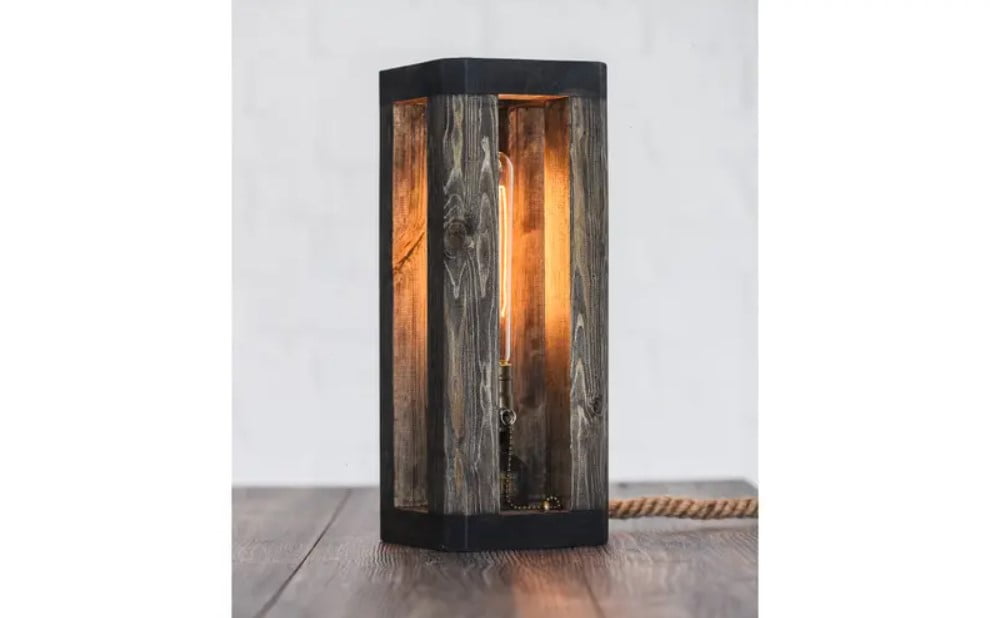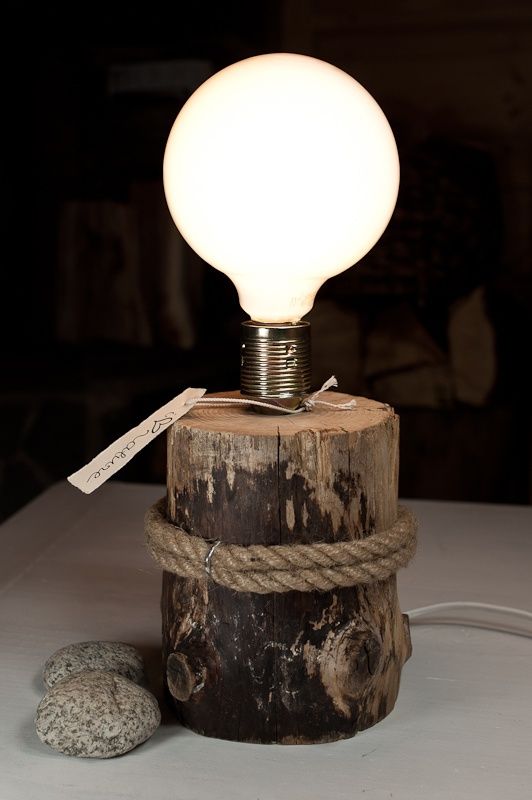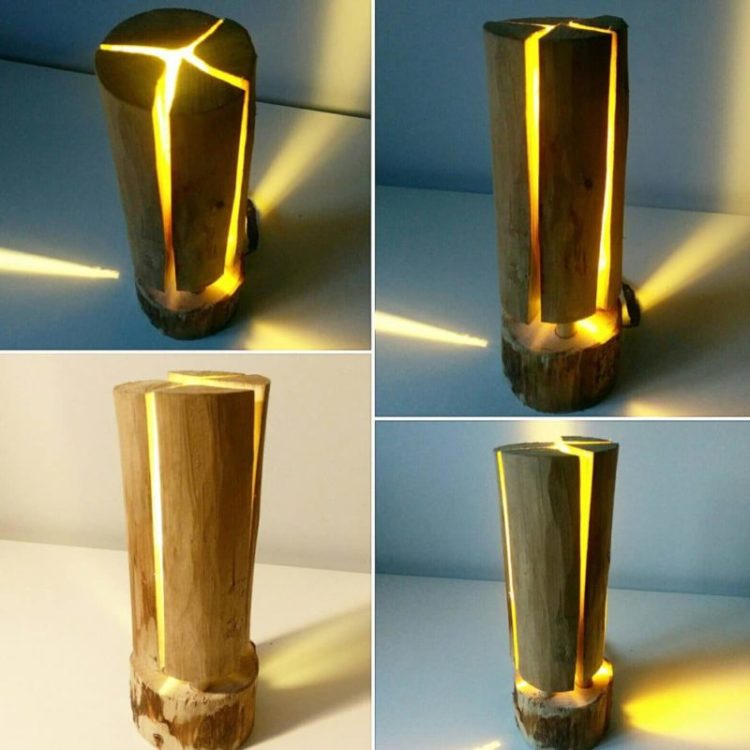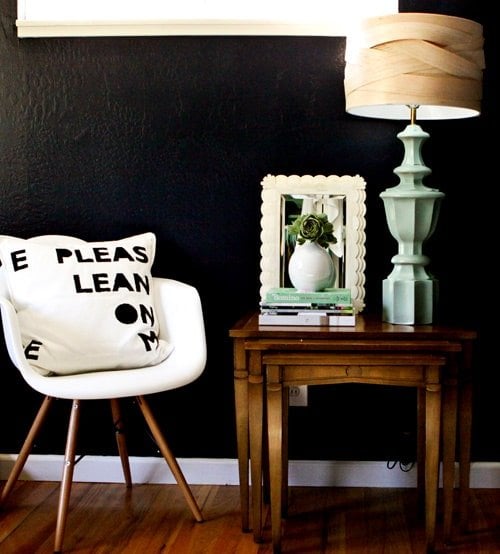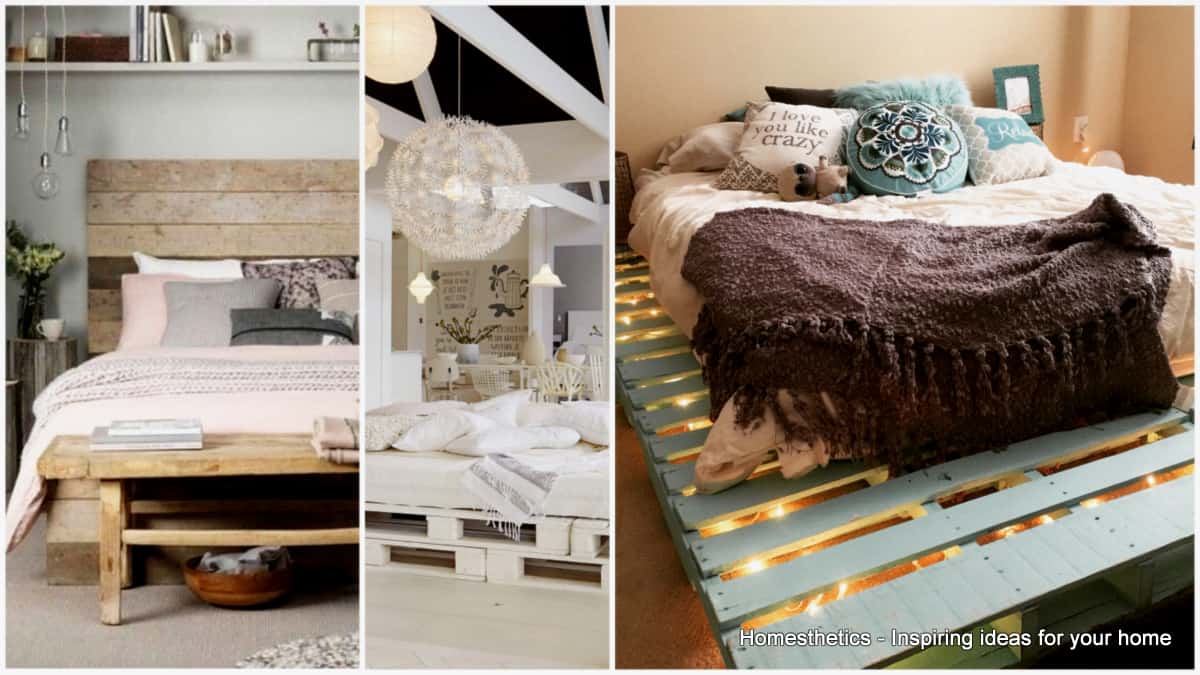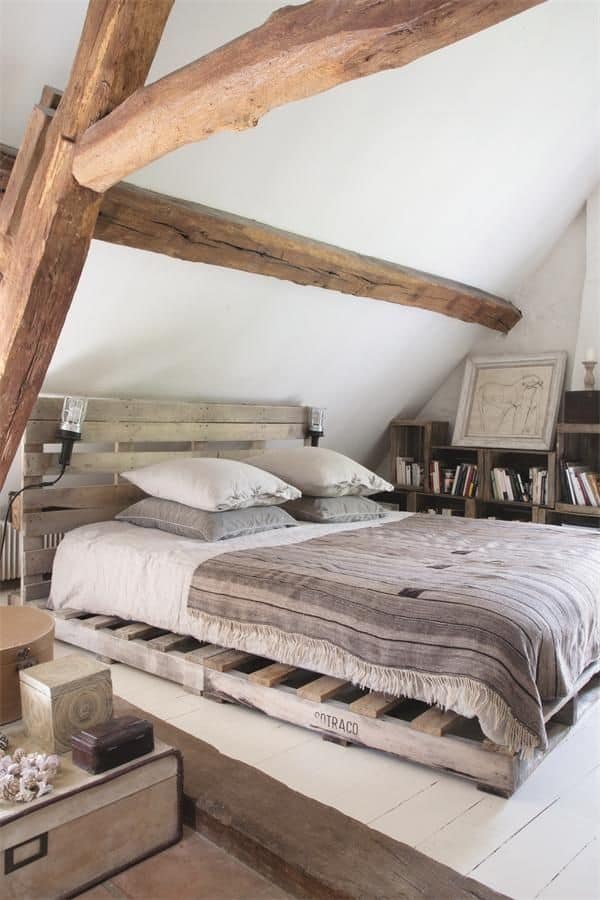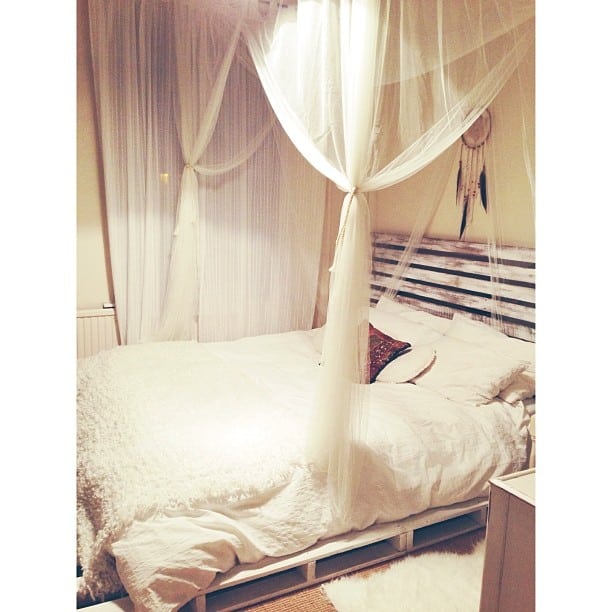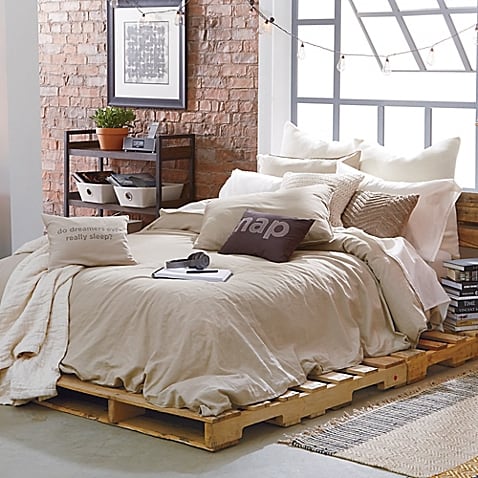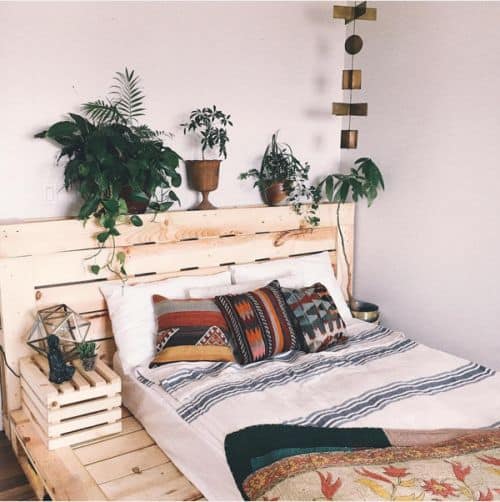
Inspiring Ideas for Modern Home

Red accent walls occupy the most psychologically powerful position in any interior design decision — a color clinically shown to elevate heart rate, increase metabolism, and heighten emotional response, which is precisely why most homeowners avoid it and why the ones who use it correctly create rooms that are impossible to forget. If you've been considering a red wall but aren't sure which room can absorb it, how to balance its intensity, or which shade works without overwhelming the space, this collection spans kitchen and dining applications, hallway installations, bedroom feature walls, and living room accent configurations across dozens of real interiors. Adjacent territory includes red-and-white contrast builds, earthy tone balancing strategies, gallery walls on red backgrounds, natural greenery pairings, pattern-and-texture combinations, and light management techniques for rooms where red risks reading as dark. The detail most red wall guides skip: saturation level matters more than hue — a deeply saturated primary red demands significantly more natural light and white balance than a muted brick or crimson tone, and choosing the wrong saturation for your room's light conditions is the single most common reason red walls fail in practice. Whether you're working with a sun-flooded kitchen, a narrow hallway, or a bedroom that needs energy without anxiety, beginner-friendly red accent wall ideas for every room type are represented throughout this collection.

Before You Start
Red paint looks entirely different on a wall than it does on a chip, and that gap is wider with red than with any other color family. Saturation is the variable most people get wrong — a deeply saturated primary red in a room with limited natural light reads as dark and enclosed rather than bold and warm, while the same red in a sun-flooded room reads entirely differently by mid-afternoon. Test the actual paint on the wall in a 60 by 60 centimeter (24 by 24 inch) patch and observe it at morning light, midday, and under artificial evening light before committing. The color you see on the chip under store lighting bears almost no relationship to what you will live with. Undertone is the second decision worth getting right before purchasing: red paint pulls either orange-warm or blue-cool depending on its pigment base, and the wrong undertone against your existing flooring or furnishings creates a visual tension that no amount of accessory styling resolves. Hold the chip directly against your largest fixed surface — the floor, the sofa, the cabinetry — not against a white wall. Primer matters more with red than with any other color because red pigment has low opacity; skipping a tinted primer means three or four coats to achieve even coverage, which adds cost and time the chip never warned you about.

Red Accent Wall Ideas

Red Kitchen and Dining Wall Accents

Red in the kitchen and dining room has a functional logic beyond aesthetics — the color is associated with appetite stimulation and social energy, making it one of the few paint choices that actively supports what the room is designed for. Balanced with white surfaces, sufficient natural light, and warm wood tones, a red kitchen wall moves from overwhelming to genuinely invigorating. The designs below demonstrate the full range of what that balance can look like.
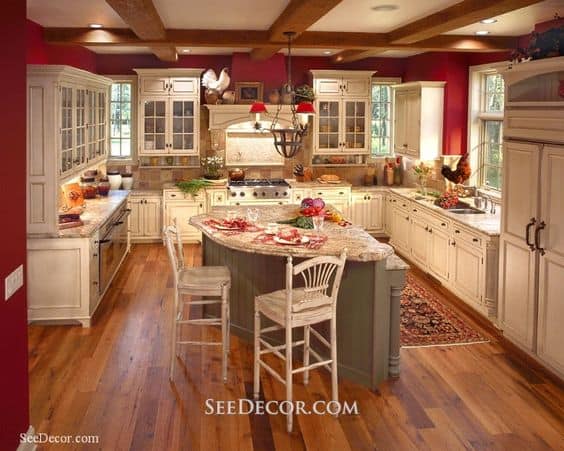
Red Accent Wall in a White Kitchen Balanced With Natural Light

Red confined to a single wall and balanced by white cabinetry, sufficient light, and clean lines stays energizing rather than aggressive. The proportion of red to white here is the key decision — the wall provides the emotional charge while the surrounding surfaces absorb it.

via seedecor.net
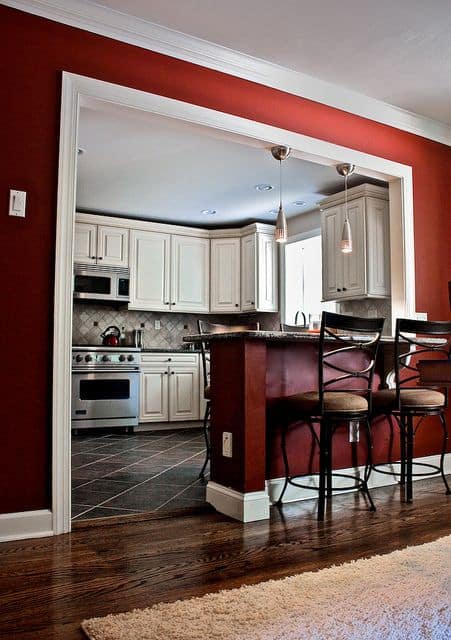
Red Bar Wall Framed in White With Gray and White Kitchen Beyond

The bar wall receives the full red treatment, framed cleanly in white trim — while the kitchen beyond retreats into white and gray. This zoning approach lets you use the color at full intensity in a social area while keeping the functional workspace visually calm.

via flickr.com
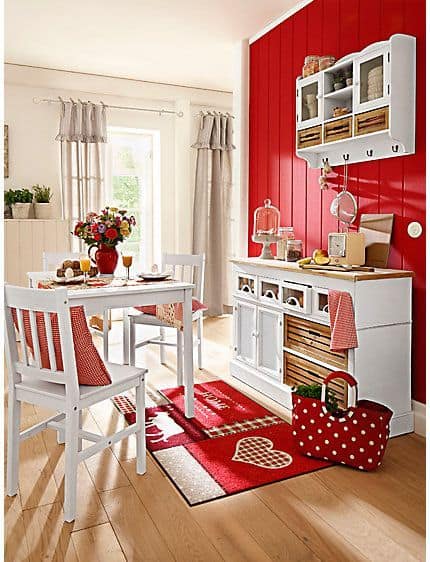
Scandinavian Kitchen With Red Accent Wall and Polka Dot Detail

A Scandinavian setting that uses red alongside polka dot detailing demonstrates how pattern can distribute a strong color across a surface, reducing its visual weight while maintaining its energy. The minimal furniture keeps the composition readable.

via ourcosyhome.ru
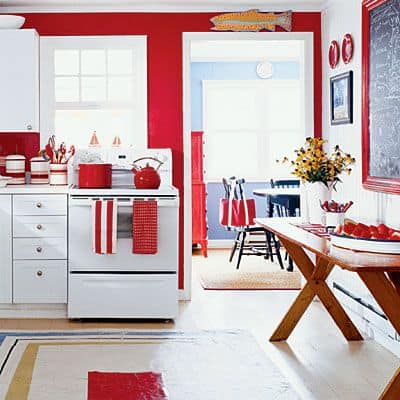
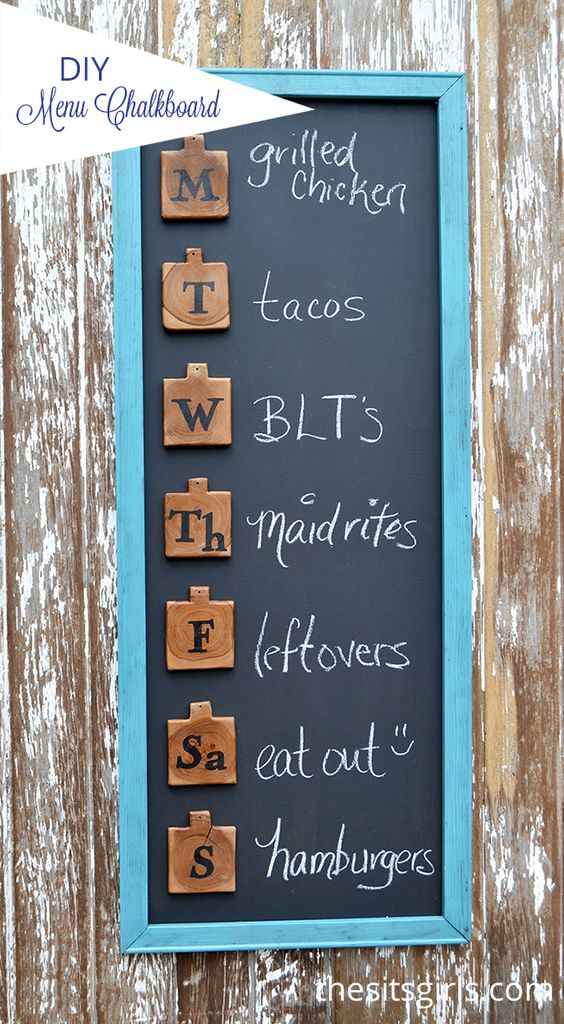
Red Framed Chalkboard on White Kitchen Wall

A chalkboard in a red frame mounted on a white wall creates a contained, high-contrast focal point that references the red accent wall concept without committing to it fully — an effective approach for kitchens where full wall coverage feels like too strong a commitment.

via coastalliving.com
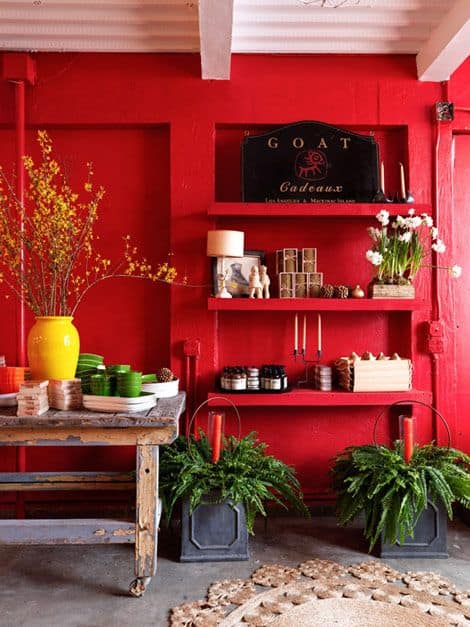
Red Kitchen Wall as Background for Sculptural Objects and Collectibles

A deep, saturated red wall functions as a stage backdrop — it pushes everything placed in front of it forward, creating the depth of field effect that makes sculptural objects, ceramics, and kitchen collectibles read as curated rather than simply stored.

via journal.homepolish.com
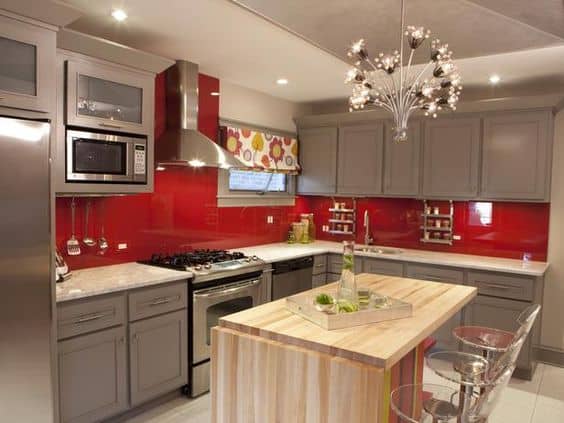
Red and Gray Kitchen With Wooden Island Accent

The taupe and gray palette here works in concert with a restrained red accent to pull the wooden island forward as the room's primary focal point. The red doesn't dominate — it directs attention, which is arguably the more sophisticated application of the color.

via HGTV
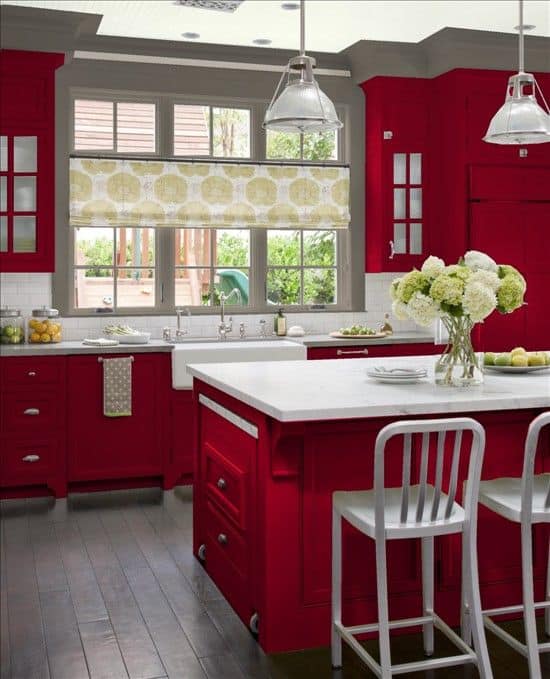
Red Kitchen Furnishings and Cabinetry With Natural Light

Red furnishings rather than red walls represent a more permanent and considered approach — harder to change than paint, which means the decision requires greater confidence in the color. Sufficient natural light is non-negotiable here; without it, red furnishings read as dark and oppressive rather than warm and energizing.

via bhg.com
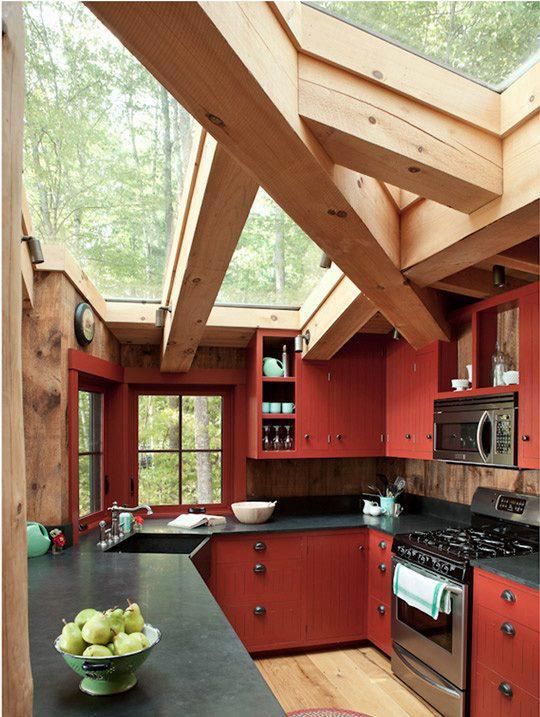
Red Kitchen With Exposed Wooden Beams and Black Countertop

Full red furnishings, a black countertop, and exposed wooden beams is a composition that demands exceptional light management to avoid feeling heavy. The extraordinary volume of natural light flooding this room is what makes the combination work — the light literally bleaches the red's intensity and allows the wooden structure to dominate visually.

via thekitchn.com
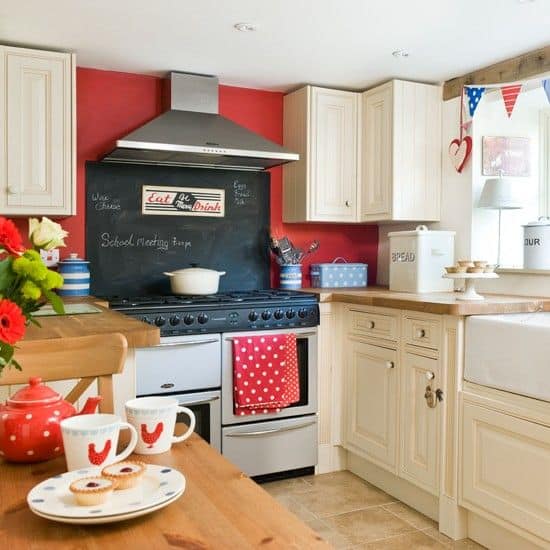
Single Red Accent Wall With Black Chalkboard and White Kitchen

One red wall against a black chalkboard and white surrounding furnishings demonstrates the classical red-black-white triad — a combination with enough contrast energy to make a small kitchen feel considerably larger and more dynamic than its dimensions suggest.
via acultivatednest.com

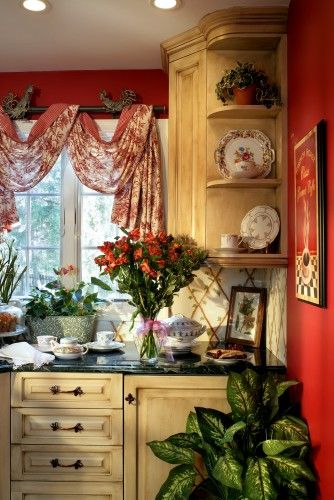
French Cottage Kitchen With Red Walls and Greenery

A French cottage kitchen relies on the natural complementary relationship between red and green — the aged red wall and the fresh greenery resolve each other's intensity, producing a warmth that neither could achieve alone. This is one of the most reliable color pairings available to anyone working with a red wall in a kitchen setting.

via houzz.com

Red Kitchen Wall Highlighting Cabinet and Furniture Silhouettes

Red used as a paint color behind cabinetry highlights the silhouette of every piece in front of it — the contours of shelves, handles, and open frames all read more crisply against a warm saturated background than they ever would against white or gray.

via hgtv.com
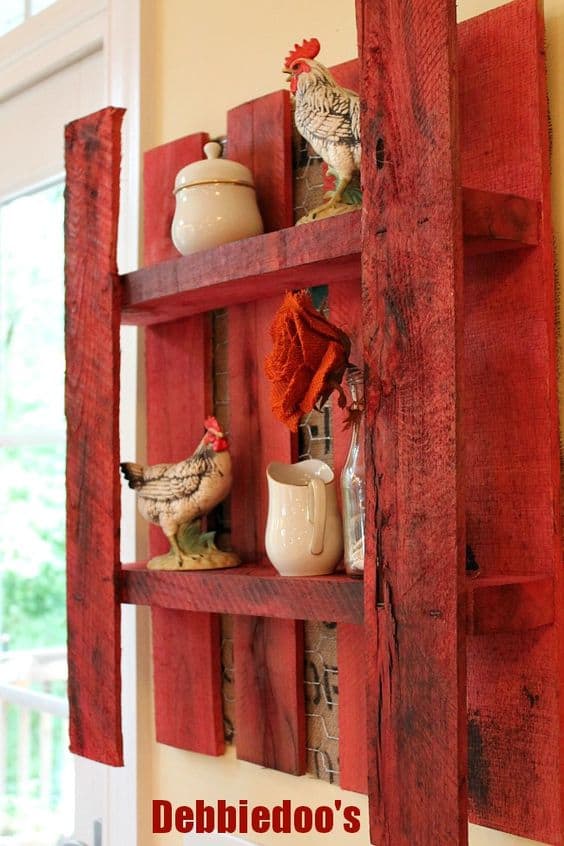
Red DIY Pallet Shelf in Kitchen With Rustic Vibrant Feel

A red-painted pallet shelf brings the rustic energy of a rural outbuilding indoors without requiring any structural changes to the kitchen. The color here is applied to the object rather than the wall, which makes it a reversible and low-commitment way to test red's effect in a space before committing to full wall coverage.
via debbie-debbiedoos.com

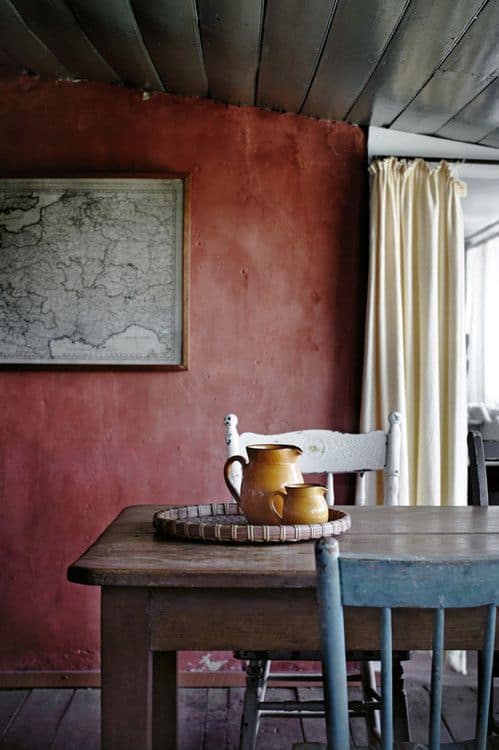
Aged Red Kitchen Wall With Weathered Time-Worn Finish

An aged, time-worn red surface demonstrates that the color's intensity can be dialed back significantly through finish choice — a distressed or matte application reads as warmer, softer, and more historically grounded than a fresh high-sheen coat of the same hue.

via homelife.com.au

Red Hallway Accent Walls

The hallway is arguably the highest-impact room for a red accent wall — it is the first space a guest experiences, it is typically narrow enough that a single wall dominates the entire field of view, and it is also the room where the energy of red is most appropriate since it is a transitional space rather than a place of rest. The designs below show the full range of what a red hallway can achieve.

Red Hallway Accent Wall With Gallery Display and Collectibles

A red hallway wall energizes guests from the moment they enter and provides an immediately powerful backdrop for a gallery display. The color amplifies the impact of framed art in a way that white walls simply cannot — every frame reads as more intentional, more considered, more worth stopping to look at.

via centsationalgirl.com
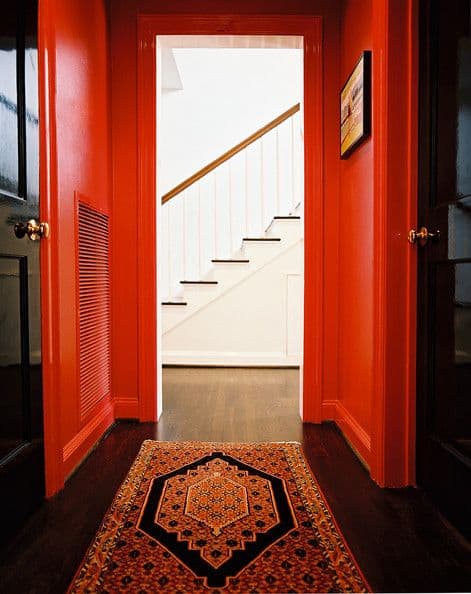
Red Hallway With White Opening and Two Black Doors High Contrast

Intense red framing a white opening beyond, flanked by two black doors — this is a composition that requires precise execution but produces extraordinary results. The contrast between the red enclosure and the white space beyond creates a visual tension that makes the hallway feel longer and the destination feel more significant.

via lonny.com

Red Hallway With Subtle Hue Variation Creating Depth and Dimension

Subtle hue variations across adjacent red surfaces create a depth that the eye registers before the mind processes — the space feels dimensionally richer than a flat single-color application without any additional decorative elements required.

via matthewwilliamson.com

Red Hallway Accent Wall Interior Design

via ruthburts.com

Elegant Red Hallway with Classic Interior Design

via elledecor.com

Gradient Gallery Hallway Starting Red Darkening Toward Light Opening

A gradient gallery hallway that opens red at the entrance and deepens toward a lit opening at the far end uses the color to create a deliberate journey — the visitor moves from warmth and energy into light, which is a narrative effect most paint choices are entirely unable to produce.

via saffronandsilk.blogspot.com

Personal Memory Display on Red Hallway Accent Wall

A personal memory display on a red wall reads as a statement of identity rather than decoration — the color behind the photographs and mementos amplifies their significance, making this one of the most emotionally resonant applications of the red accent wall in any room type.

via crafalski.tumblr.com

Dining Room Red Accent Wall

In the dining room, red functions as both a social and appetitive stimulant — two qualities that are entirely appropriate for a space centered on shared meals. The key design challenge is managing the color's intensity so it enhances the atmosphere of a meal without competing with the food, the table setting, or the conversation happening around it.

Dining Room Red Accent Wall With White Wood Paneling

White wood paneling in a room using multiple red hues does essential work — it breaks the red into zones, prevents it from becoming visually monotonous, and reinforces the sense of spatial depth. The result reads as considered and formal rather than simply painted.

via thisoldhouse.com

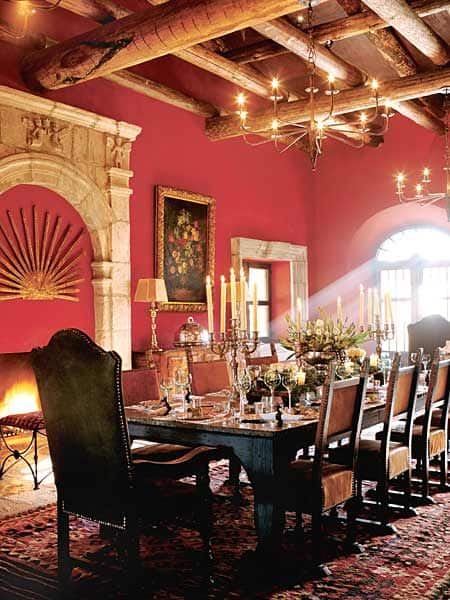
Dining Room With Textured Red Wall and Wood Contrast Flooded by Light

The contrast between natural wood grain and a textured red wall in a light-flooded dining room creates a warmth that neither material achieves alone. The texture of the wall surface adds further visual interest by varying the way the red absorbs and reflects light across the day.
via architecturaldigest.com

Dense Dining Room Setting With Red Accent Wall Tying Elements Together

In a densely furnished dining room with competing patterns, textures, and materials, red on the wall functions as the unifying element — it provides a consistent warm background tone that ties disparate objects together without requiring any of them to match each other directly.

via Jeremy Samuelson; designed by Rachel Horn
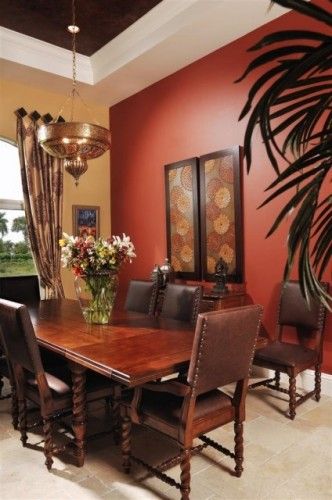
Dining Room Red Feature Wall

via houzz.com

Red Single Accent Wall in Open Dining Space

A single red wall in an open or ambiguous space requires careful consideration — without strong architectural framing or sufficient surrounding contrast, one accent wall in an ill-defined room can feel arbitrary rather than intentional. The lesson here is that the wall's context matters as much as the color itself.

Source Unknown
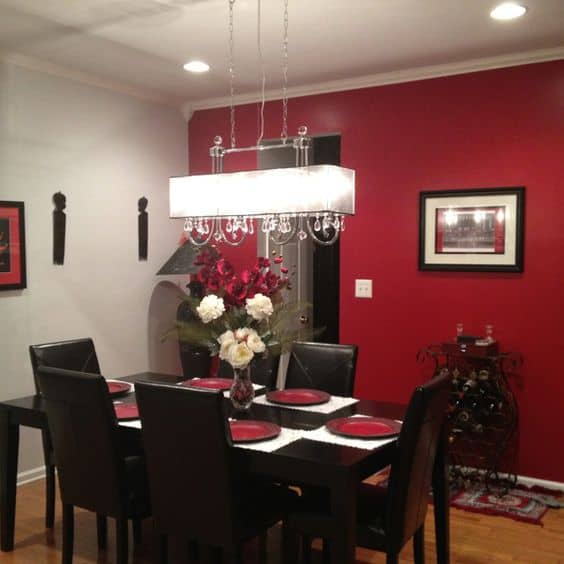
Red Dining Room Accent Wall Interior

Source Unknown

Red Accent Wall in the Bedroom

Red in the bedroom is the most contested application of the color in residential design — its energizing properties are exactly what makes it both compelling and problematic in a space meant for rest. Used on a single feature wall behind the bed, at a muted or aged saturation level, and balanced with soft neutrals in the bedding and flooring, red can create a bedroom that feels sensual and grounded rather than agitated. The examples below demonstrate both the possibilities and the boundaries.

Bedroom Red Accent Walls

Red Bedroom Accent Wall Feature Behind Bed

via weheartit.com

Bedroom With Multiple Red Hues Creating Manageable Chromatic Space

Multiple red hues used within the same bedroom create a chromatic space that feels layered and considered rather than flat — the variation between tones prevents the color from becoming monotonous while the consistent warm family keeps the room visually cohesive.

via debbietravis.com

Stark White and Pure Red Bedroom Creating Maximum Contrast

Stark white bedding and furnishings against a pure red wall create the maximum possible contrast within a warm palette — the white acts as visual relief, allowing the eye to rest between encounters with the intense wall color. Without it, the same red would read as considerably more oppressive.

via realsimple.com

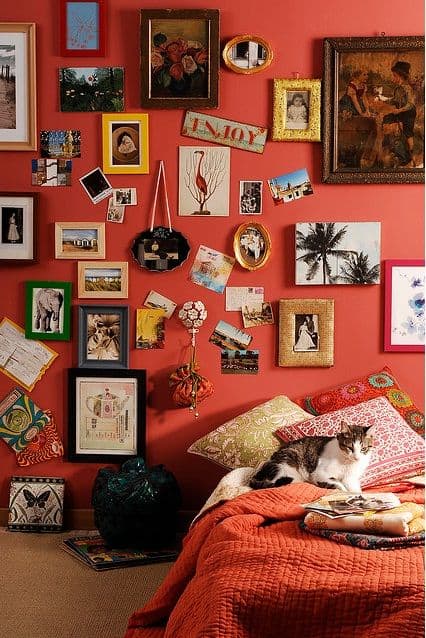
The Right Red Bedroom Wall Shade That Needs No Introduction

There are reds that simply announce themselves — not aggressively, but with complete confidence. When you encounter the right shade for your room's light conditions and furnishings, the decision will feel obvious rather than considered. This is one of those shades.
via soniadaigle.blogspot.com

Red Bedroom Accent Wall Supporting Gallery and Memory Display

A red backdrop makes a personal gallery wall — photographs, prints, and collected objects — feel curated and deliberate. The same collection on a white wall reads as casual; on a red wall it reads as a considered statement, which changes the entire emotional register of the room.

via pinterest.com

Red Bedroom With Deep Serene Atmosphere and Soft Furnishings

A red bedroom can achieve serenity — not despite the color but because of how it is applied. Deep, muted red with soft furnishings and controlled lighting produces an atmosphere closer to a private sanctuary than the energized, active space that brighter reds create.

via bohemianspirit.tumblr.com

Red Bedroom Wall With Depth Through Hues and Balance Through Light

Depth created through layered red hues and balance achieved through considered lighting — this bedroom demonstrates that the management of light within a red room is as important as the paint choice itself. The same red in poor light would read entirely differently.

via eudecoro.com.br

Red Bedroom Accent Wall with Natural Furnishings

via cowboyreflections.com

Red Bedroom With Heart Detail Above Bed Disrupting Color Tension

The small heart detail above the bed does something technically important here — it introduces a softening element into a high-contrast palette, breaking the tension between red and white just enough to shift the room's emotional register from bold to genuinely warm. It is the kind of finishing detail that determines whether a decorated space feels complete.

Source Unknown

Black and Red Bedroom Interior Design High Contrast Bold Combination

Black and red is not a combination most designers recommend for bedrooms, but when executed with confidence it produces a boldness and contrast that no other pairing achieves. It suits a very specific aesthetic sensibility — and for those who share it, no alternative will ever feel as right.
via peytondawn.tumblr.com

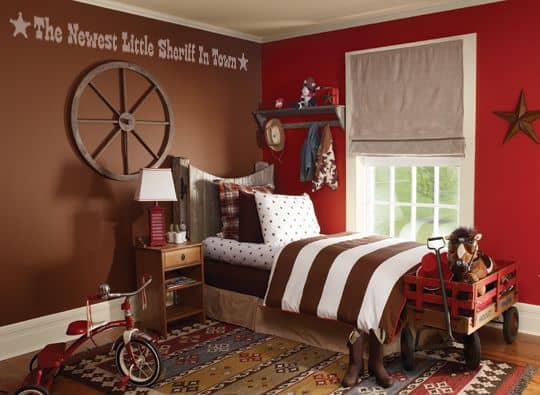
Western Cowboy Themed Children's Bedroom With Red and Brown Wall

The red-and-brown combination in a child's room reads as rustic and dated rather than vibrant — the two warm tones absorb each other's energy instead of creating contrast. What redeems this particular space is the red wall paired with the playful toy cart, which introduces enough visual separation to make the color work independently of its problematic pairing.

via singingmommy.hubpages.com

Red Accent Wall in the Living Room

Find Balance Through Simple Elements

Red Living Room Accent Wall Balanced by Simple Elements

Simple, well-chosen furnishings in a red living room demonstrate that the color doesn't require elaborate styling support — it provides its own visual energy and asks only that the objects placed in front of it be allowed to stand on their own rather than compete with each other.

via plascontrends.co.za

Red Living Room Feature Wall Modern Interior

via lonny.com

Use Intricate Pattern Detailing

Red Background Supporting Intricate Pattern and Frame Gallery

Red is one of the few background colors that can absorb a complex pattern or a densely framed gallery without the composition collapsing into visual noise — the color's warmth holds disparate elements together rather than fragmenting them.

via christinefife.com

Red Accent Wall Bringing Forward Intricate Furnishings and Objects

Used as a support element, a red accent wall earns its place by amplifying what is placed in front of it — the color recedes into a supporting role while the intricate furnishings, textiles, and objects it frames become the primary focal points.

via ladolcevitablog.com

Use Simple Shelving to Display Memories
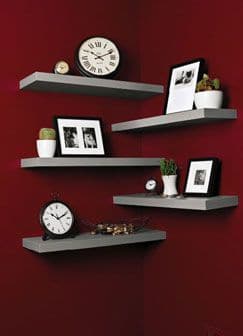
Simple Floating Shelves on Red Living Room Accent Wall

Source Unknown

Gold Frames on Red Accent Wall Gallery Living Room

Gold frames on a red wall is one of the most classically considered combinations in residential interior design — the warmth of both materials reinforces each other, and the contrast between the frame's reflective metallic surface and the matte wall creates exactly the visual separation needed to make each piece legible as an individual artwork.


via thisivyhouse.tumblr.com

Red Living Room Accent Wall With Curated Art Display

via Robinson Interiors

Red Feature Wall Living Room With Gallery and Furniture

via vonderhude.de

Chromatic Balance With Earthy Tones

Red Living Room Accent Wall Balanced With Earthy Tones and Natural Materials

Earthy tones — terracotta, tan, warm beige, natural wood — reduce red's intensity more effectively than cool neutrals because they share the same warm undertone. This chromatic relationship means the room feels cohesive rather than in conflict, and the red reads as the most saturated member of a family rather than an intruder from a different palette.

via cotemaison.fr

Modern Living Room With Red Accent Wall and Sculptural Modernist Furnishings

Modern interiors with sculptural, low-profile furnishings handle red remarkably well — the clean geometry of modernist pieces creates enough visual breathing room around the color that it reads as a bold design choice rather than an overwhelming one.

Source Unknown

Break the Impact With Light

Red Living Room Wall Broken by Natural Window Light

Natural light entering through a large window changes the character of a red interior more dramatically than any other single variable — the same wall that reads as dark and enclosed in artificial light becomes vibrant, warm, and alive when flooded with daylight. If you are considering red for a room, assess it at multiple times of day before committing.

via bhg.com

Red Living Room With Wood Burning Stove Creating Magical Warm Atmosphere

A wood-burning stove or fireplace in a red room creates a layered warmth that goes well beyond the visual — the association between red walls, flickering fire, and the smell of burning wood produces one of the most atmospherically complete interior environments possible. This is red at its most elemental and most justified.

via loveatpsychedelicvelocity.tumblr.com

Create a Red Focal Point on the Wall
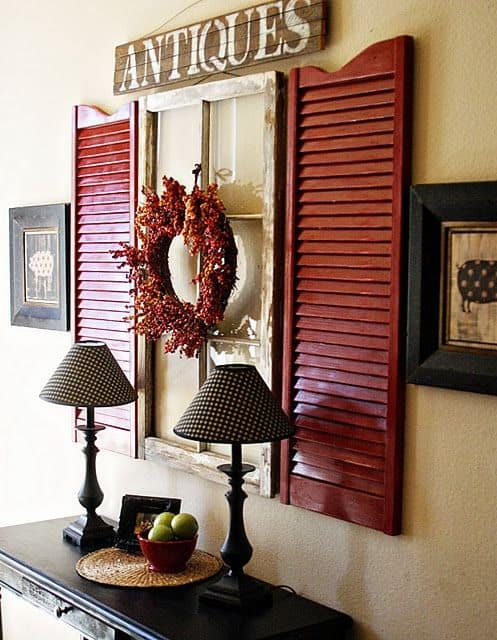
Red Wall Focal Point With Unusual Upcycled Element Breaking the Pattern

Introducing an unexpected object — a repurposed window frame, an oversized clock, an architectural salvage piece — onto a red wall breaks the color's dominance at a specific point and creates a focal element that the eye navigates toward naturally. The red becomes the context rather than the subject.

via dishfunctionaldesigns.blogspot.com

Natural Green Complementing a Red Accent Wall

Greenery Complementing Red Accent Wall Natural Complementary Color Pairing

Green and red are complementary colors on the color wheel — the chromatic relationship that produces the most natural-looking contrast available. Plants and foliage against a red wall resolve the color's intensity without competing with it, and the organic naturalness of living greenery softens what might otherwise feel like a formally composed interior.

via books.google.com

Complementing Texture and Patterns

Red Accent Wall Supporting Complementary Textures and Patterns Living Room

The right background color allows every texture and pattern placed against it to perform at full strength. Red, used as that background, gives textiles, wallpapers, and layered furnishings the visual support they need to read as intentional rather than busy.

via picsdecor.com

Red Living Room Accent Wall With Rich Layered Textures and Furnishings

via allexincasa.ig.com.br

Red accent walls are most powerfully used as support elements — a background that amplifies the things placed in front of it rather than competing with them. The homeowners who use red most successfully understand this distinction: they choose the color to serve their furnishings, their collections, and their light, rather than expecting the color alone to do all the work. Which room in your home could benefit from that kind of bold, considered background? Share your thoughts in the comments below.
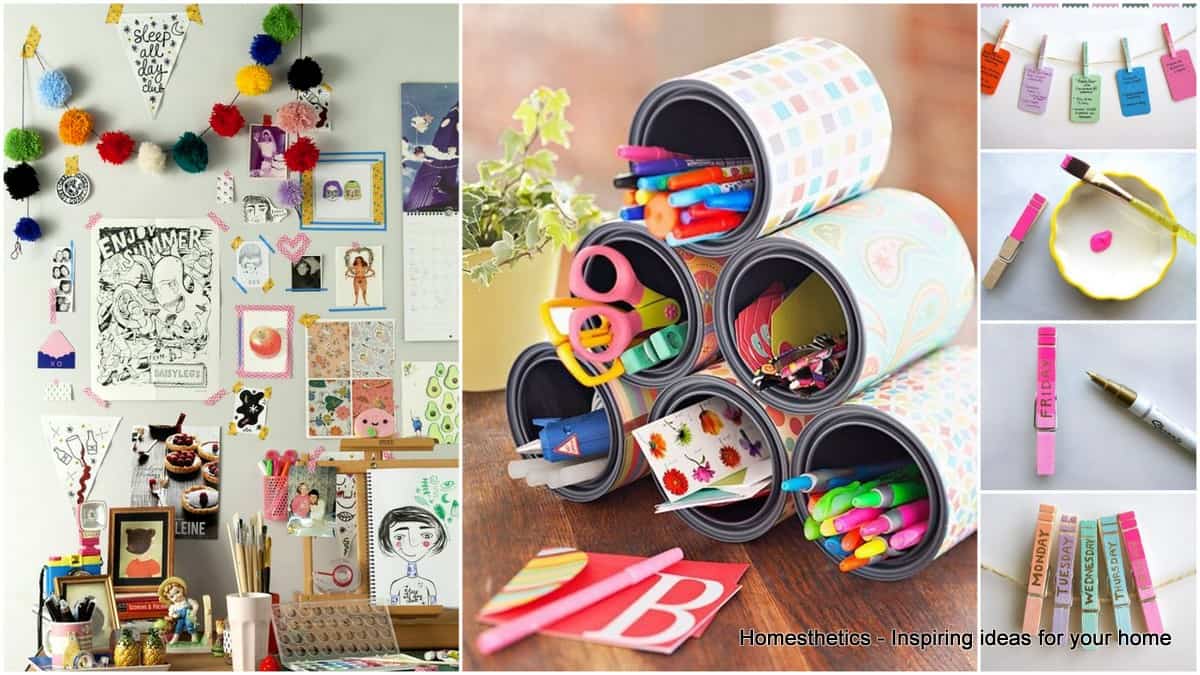
DIY desk decor is one of the highest-leverage small investments available to anyone who spends significant time at a desk — a category where a mason jar, a sheet of cork, a tin can, or a handful of clothespins can shift a workspace from visually draining to genuinely motivating without touching the furniture itself. If your desk feels functional but impersonal — or if you're working in an environment where you have limited control over the layout — this collection of 31 projects spans tassel garlands, chalkboard jar organizers, succulent bookends, photo displays, ombre calendars, triangle modular organizers, copper accent accessories, and a full farmhouse desk build for under $80. Adjacent territory includes corkboard pinboards, marble-effect magazine holders, monitor risers with integrated storage, clothespin note displays, painted rock faux cacti, and string light styling for stark white setups. The detail most desk decor guides overlook: visual weight distribution — not color or style — is what determines whether a decorated desk feels calm and productive or cluttered and distracting, which means grouping items in odd numbers and varying heights matters more than matching everything to a single palette. Most projects here require only cardboard, paint, basic adhesive, or repurposed containers, making beginner-friendly DIY desk decor ideas the practical starting point for anyone personalizing a workspace on a tight budget.

Before You Start
Desk decor fails most often not because it looks wrong, but because it was placed before the working zone was defined. Every desk has a primary reach zone — roughly the arc your forearms cover when your elbows are at your sides — and anything placed inside that zone competes directly with the work itself, not with the other decorative items. Map that zone first: sit at the desk in your normal working position and mark the natural reach of both hands. Everything functional stays inside it; everything decorative goes outside it. The monitor height decision belongs in this same planning stage — a screen below eye level pulls the neck forward and makes every hour at the desk progressively more uncomfortable, regardless of how well considered the surrounding accessories are. A monitor riser that brings the screen to eye level also creates the most useful hidden storage on the desk, which is worth building before any organizer or display is placed. Define the working zone, set the monitor height, then decorate outward from there — the projects in this list will all look better and cause considerably less frustration when the ergonomics are settled first.

1. Shape a Playful Tassel Garland

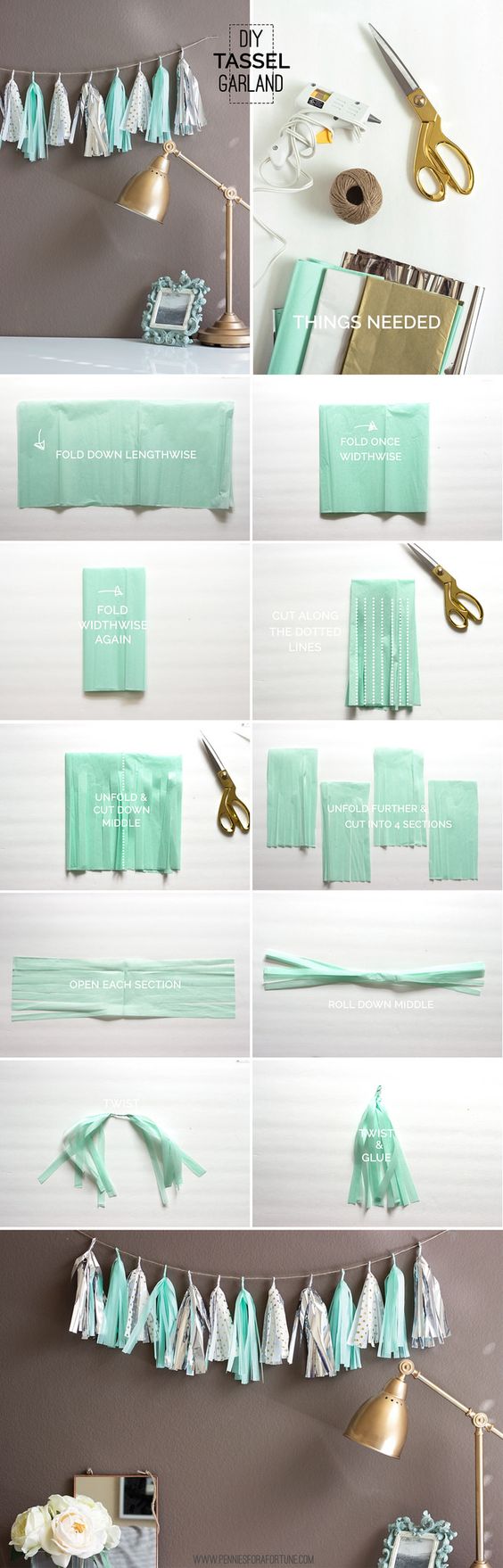
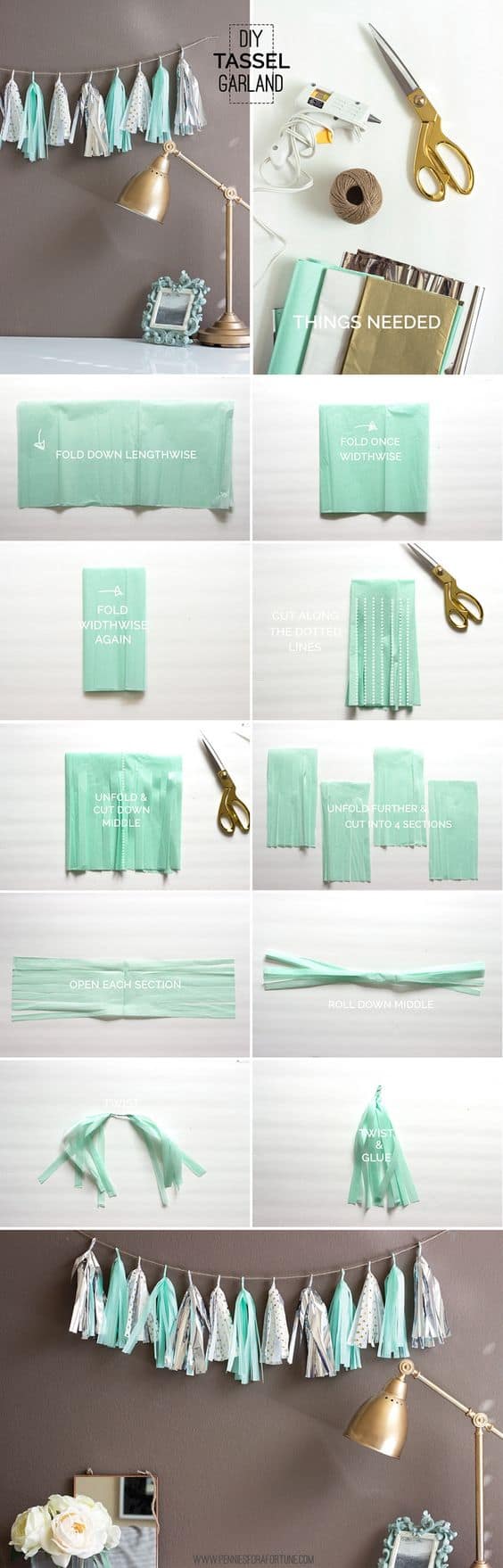
DIY Tassel Garland Desk Decor

A tassel garland is one of the fastest possible desk upgrades — cut strips of your chosen paper, fold and tie them onto a length of string, and you have a colorful backdrop that changes the entire feeling of a workspace in under an hour. The real advantage is how easily it can be swapped out: change the paper color with the season, the mood, or the project without spending more than a few dollars each time.

via penniesforafortune.com

2. Create a Photo Display Defined by Elegance

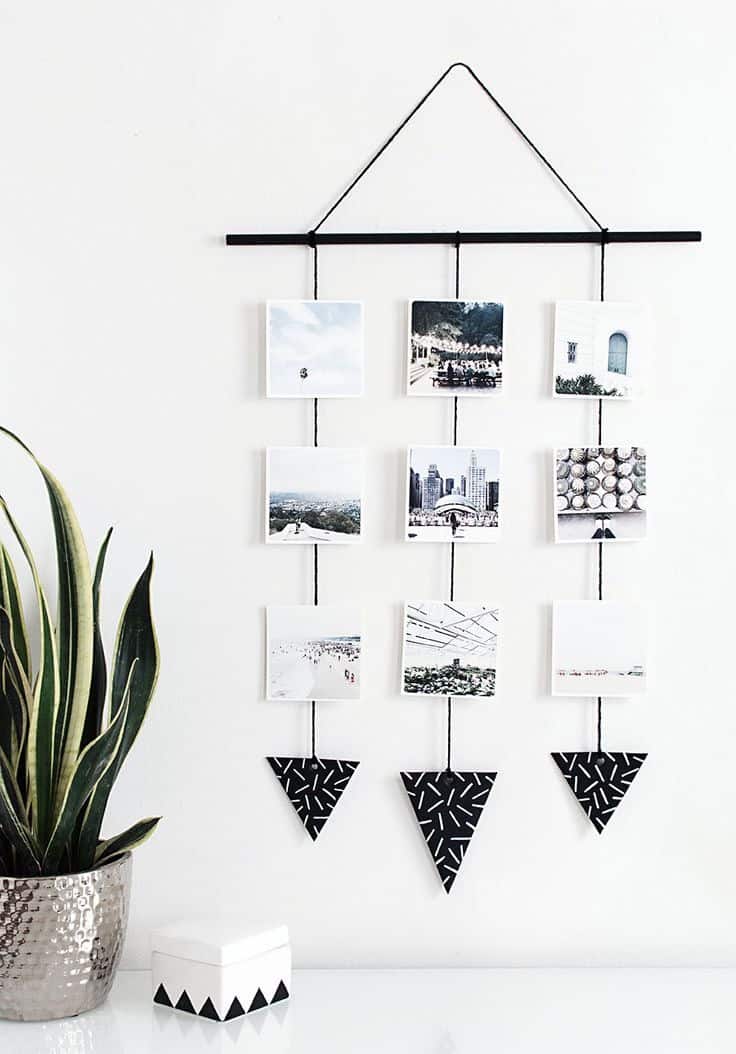
Elegant DIY Photo Display for Desk

The black and white framing components here do the design work — they pull every image forward without competing with it, while the weighted arrow at the base points subtly toward the work surface below. The result is a display that motivates without distracting, which is a harder balance to strike than most photo wall tutorials acknowledge.

via Homey Oh My!

3. DIY Mason Jar Tissue Holder

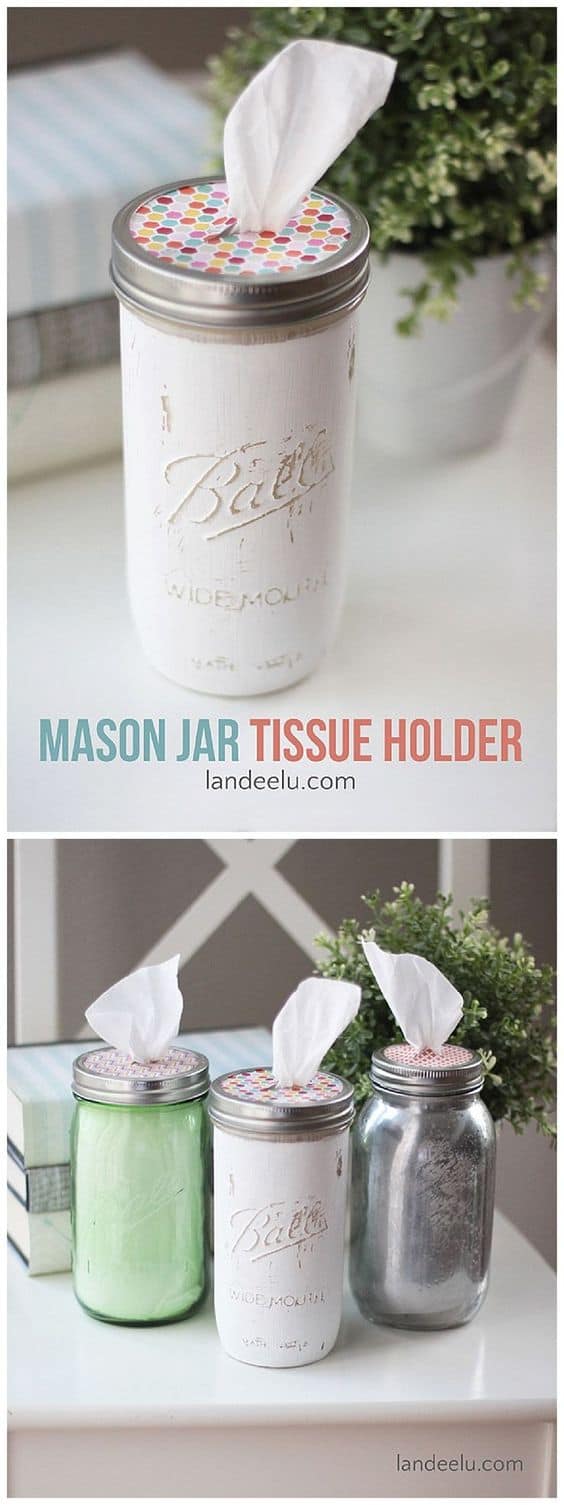
DIY Mason Jar Tissue Holder for Desk

A mason jar tissue holder solves a small but persistent desk annoyance — a tissue box that never matches anything — by replacing it with a glass vessel you can paint, wrap, or label to fit your exact palette. The jar diameter accommodates standard folded tissues comfortably, and the weight keeps it stable on even a busy working surface.

via landeeseelandeedo.com

4. Swift Simple Framed To-Do List

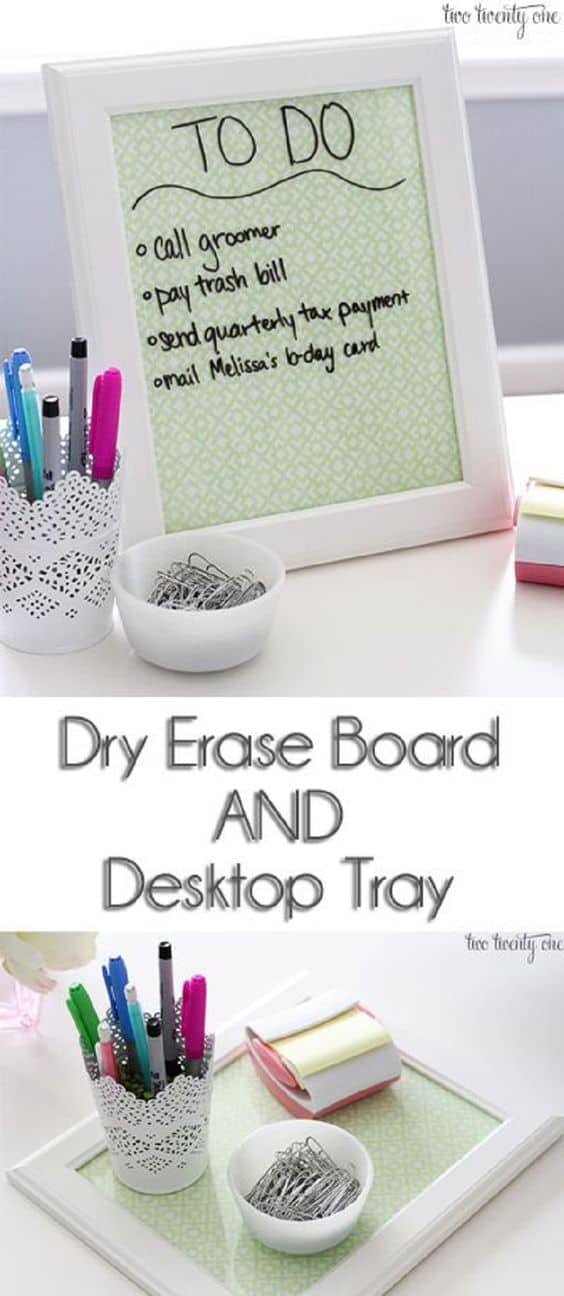
Framed DIY Dry Erase To-Do List for Desk

A dry-erase surface inside a decorative frame gives you a to-do list that functions as desk décor rather than a utilitarian afterthought. On days when the list is empty, the frame reads as a pattern display — choose a background print you genuinely like, because you will be looking at it every day whether the list is full or blank.

via twotwentyone.net

5. Tailor a Custom Cork Mouse Pad

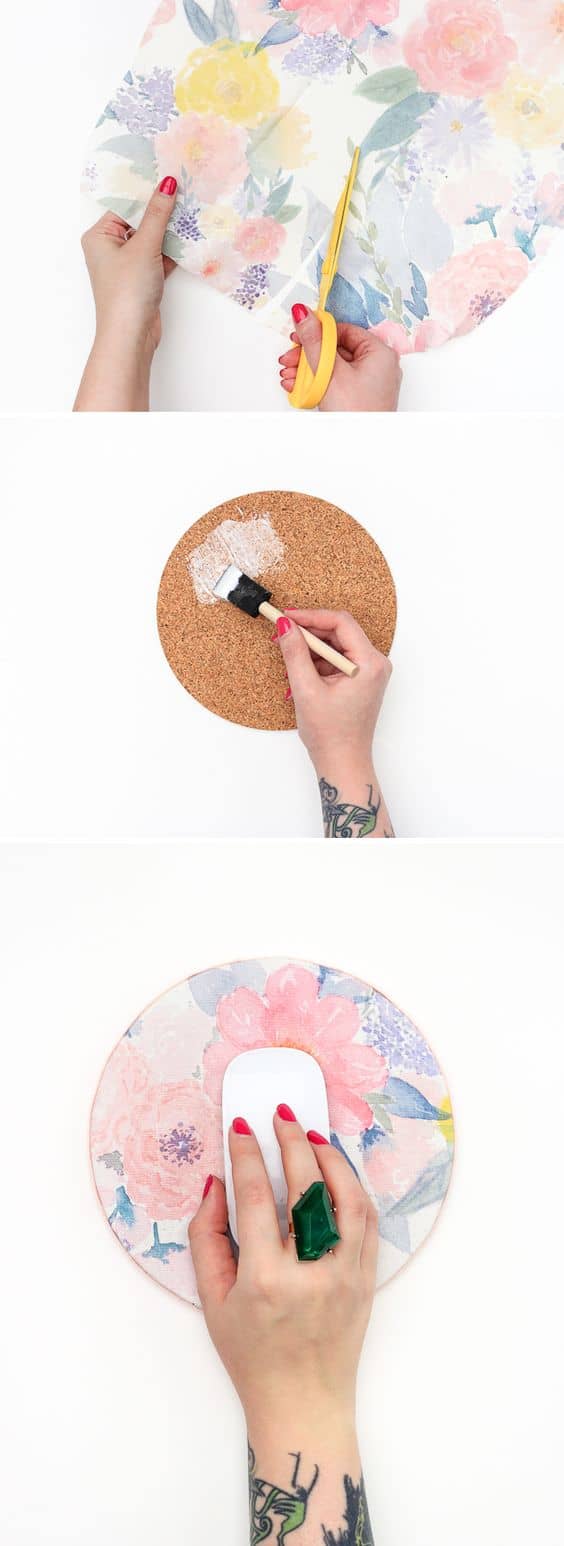
DIY Cork Mouse Pad with Custom Pattern

A corkboard cut to your preferred size and covered in your chosen fabric or paper produces a mouse pad that is both functional and completely personalized — something no retail option can offer at the same price point. The cork base provides just enough friction for accurate tracking while protecting the desk surface underneath.

via thecraftedlife.com

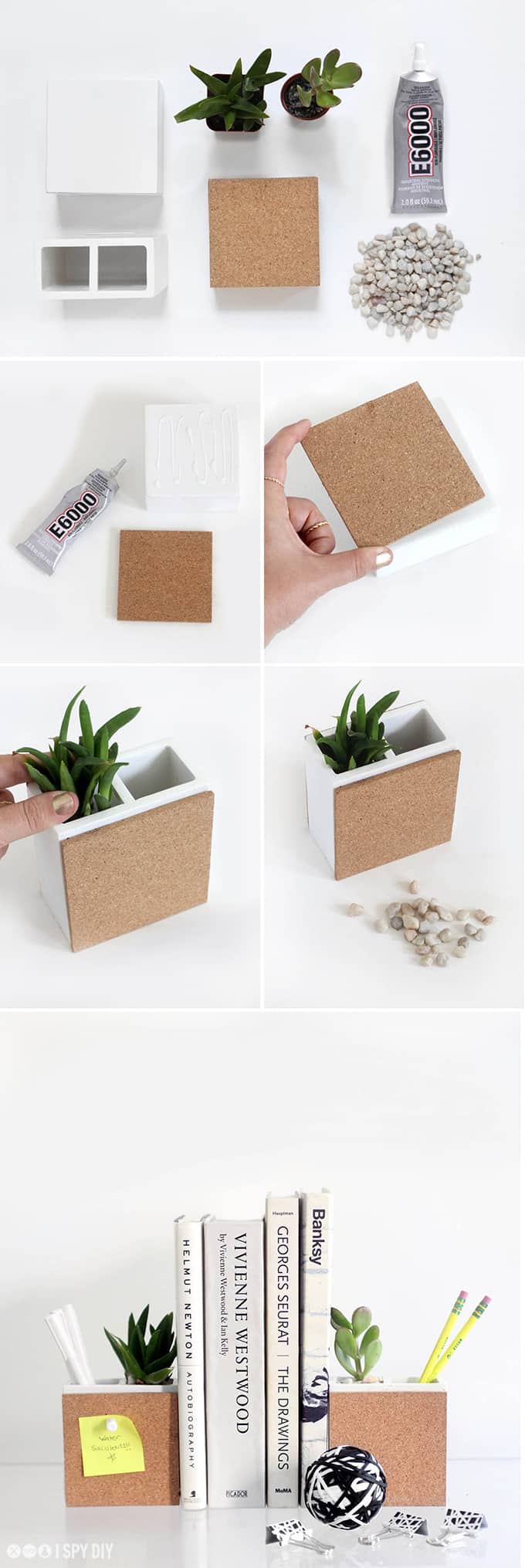
6. Create Succulent Bookends

DIY Succulent Bookends for Desk

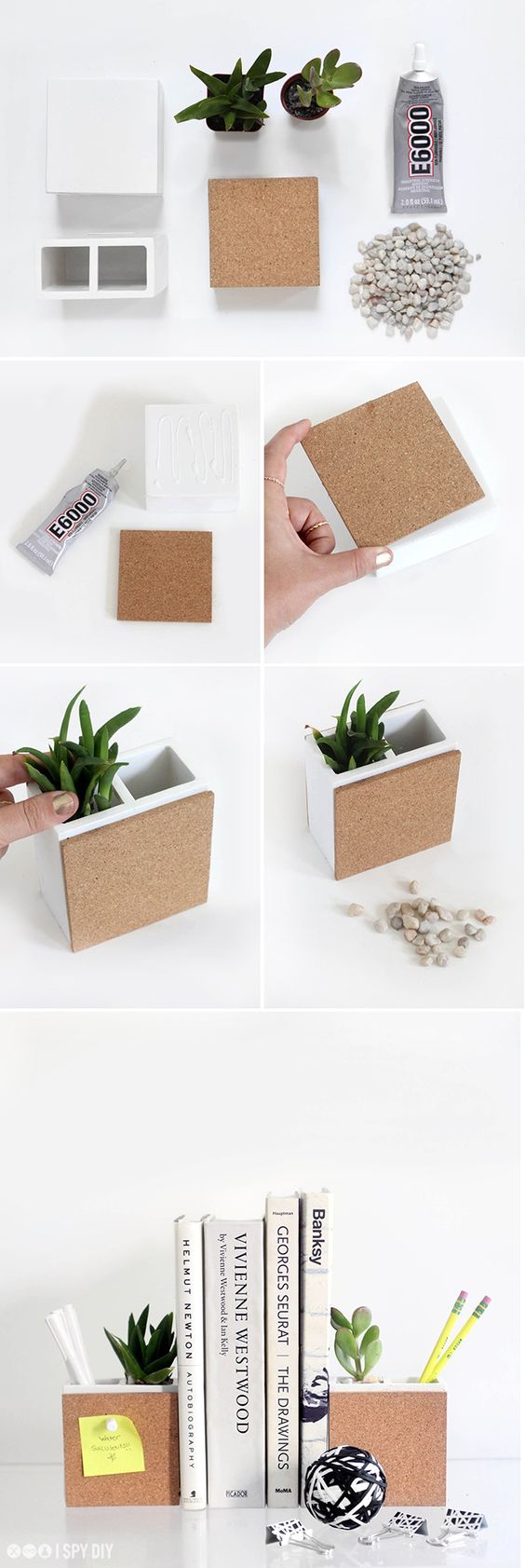
Bookends with living succulents planted into their base do two things simultaneously: they keep notebooks and references upright and they bring the single most effective natural accent — greenery — directly onto the desk surface. Succulents are ideal for this application because their water requirements are minimal enough to survive the irregular attention most desk plants receive.

via ispydiy.com

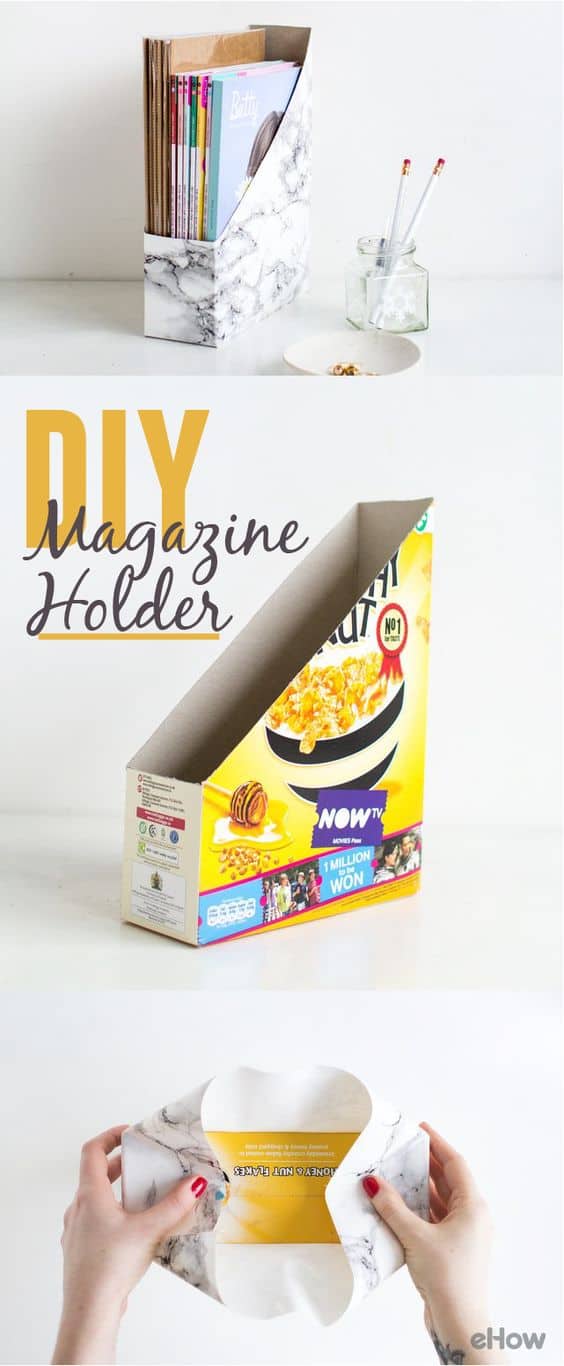
7. DIY Marble-Effect Magazine Holders

DIY Marble Effect Magazine and Document Holders

Cereal boxes wrapped in marble-effect contact paper or craft wrapping produce magazine holders that are indistinguishable from retail versions at a fraction of the cost. Cut the opening at an angle for easier access, line them in a row, and a formerly chaotic stack of paperwork becomes a coherent, designed storage system in under twenty minutes.

via ehow.com

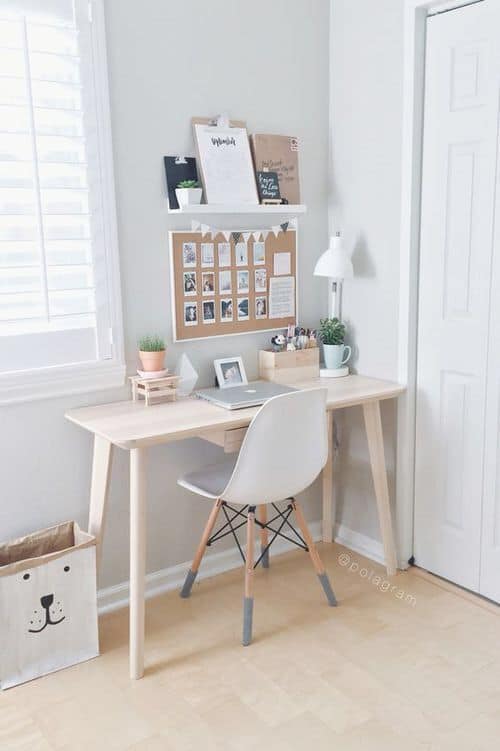
8. Claim Your Office With Memories

Desk Decor with Personal Photos and Greenery on Corkboard

The most effective desk personalization is often the most restrained. A corkboard with a small photo cluster, two plants for contrast, and a considered color palette in the accessories does more for a workspace atmosphere than any amount of decorative objects. Note the trash can here — even that has been chosen deliberately, which is the level of intention that makes a desk feel truly owned rather than assembled.

via grabsomeideas.tumblr.com

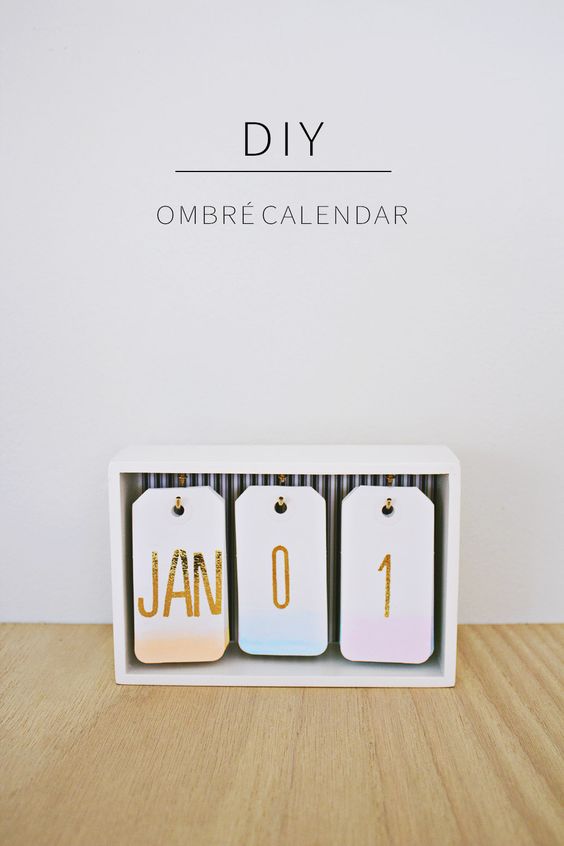
9. Design Your DIY Ombre Calendar

DIY Ombre Desk Calendar

A hand-painted ombre calendar replaces the generic grid of a standard desk calendar with something you actually want to look at — the color gradient draws the eye naturally to the current date while the overall composition reads as wall art rather than office stationery. It is also the kind of object that tells anyone entering the space something specific about the person who works there.

via homemadebycarmona.com

10. Use Accents to Define Your Space

Desk Decor Defined by Color Accents

Accent pieces — a single bold color in a pen holder, a patterned tray, a metallic stapler — do the visual work of establishing a palette without requiring a full redesign of the workspace. Commit to two or three accent colors maximum and repeat them consistently across every accessory on the surface; the coherence this creates is what makes a desk look styled rather than decorated.

via Hobby Lobby

11. Craft Inexpensive Storage With Wooden Crates

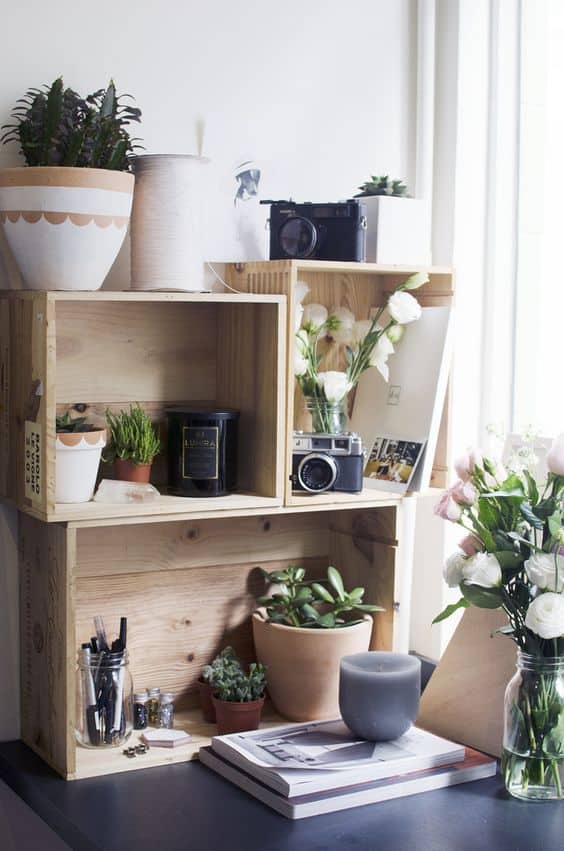
Wooden Crate Storage for Desk Organization

Wooden crates painted dark on the exterior with a contrasting interior color create storage that reads as furniture rather than organization hardware. The delicate pattern detail added here deepens the visual interest considerably — a step that takes ten minutes with a stencil and a single color but transforms the overall impression of the workspace entirely.

via joann.com

12. Inspire With Art Typography

Motivational Art Typography for Desk Wall

A single typographic print above or behind a desk does more motivational work per square inch than any other desk accessory — but the wording matters enormously. Choose something specific and meaningful rather than generic, because a quote you genuinely believe reads completely differently to a visitor than one that was simply available in the right size and color.

via joann.com

13. Transform Your Jar Lids Into Desk Accents

Jar Lids Transformed With Gold and Copper Finish

Gluing a small toy or figurine onto a jar lid and finishing the whole piece in gold, copper, or silver spray paint produces a desk accessory that looks deliberately collected rather than improvised. The metallic finish is the key step — it unifies any object underneath it, which means the quality of the base item matters far less than the quality of the paint application.

via curbly.com

14. Create Desk Mason Jar Organizers

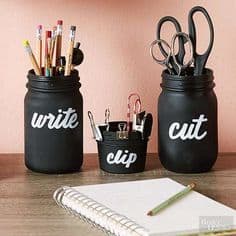
Chalkboard Mason Jar Desk Organizers

A coat of chalkboard paint on a mason jar converts it from a generic glass container into a labeled, customizable desk organizer that can be updated any time its contents change. Group three or four jars of varying sizes together on a small tray and the arrangement reads as a designed desktop system rather than a collection of repurposed kitchen items.

via bhg.com

15. DIY Hanging Pinboard

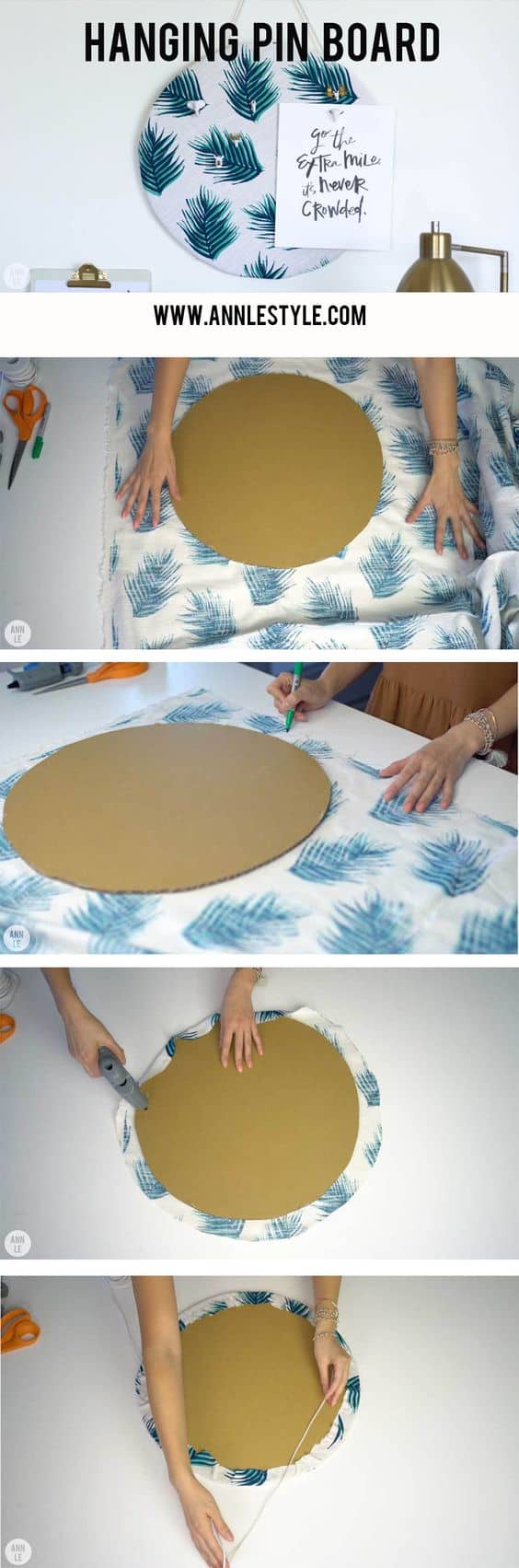
DIY Hanging Pinboard for Desk or Playroom

A cardboard pinboard covered in your chosen fabric or textured paper costs almost nothing and can be cut into any shape — which immediately distinguishes it from the standard rectangular options available in every office supply store. The ability to change the cover as frequently as you like also means the board can be refreshed seasonally without rebuilding the whole structure from scratch.

via lifeannstyle.com

16. Modular DIY Triangle Organizer

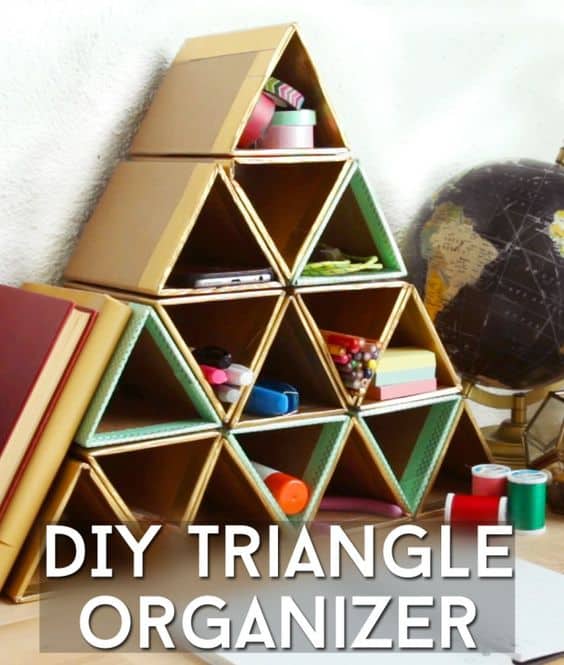
DIY Modular Triangle Desk Organizer From Cardboard

Cardboard scored and folded into triangular modules creates a desktop organizer with a genuinely architectural presence — the angled compartments hold pens, scissors, and rulers more accessibly than a standard cylindrical holder, and the geometric form adds visual interest that flat-sided boxes never achieve. Cover the exterior in paper or fabric to match your palette and the whole system looks like a considered purchase rather than a craft project.

via buzzfeed

17. Colorful Organizer for Your Drawer

Colorful Cardboard Drawer Organizer for Craft Supplies

Cardboard compartments cut to fit inside a drawer and painted in coordinating colors turn the inside of a desk drawer into an organized system that is genuinely satisfying to open. Color-coding the compartments by supply type — one color for writing tools, another for adhesives, another for clips — adds a layer of functional logic to what is otherwise a purely aesthetic improvement.

via landeeseelandeedo.com

18. Raise Your Monitor and Increase Storage

DIY Monitor Riser With Integrated Desk Storage

Raising a monitor to eye level — the ergonomically recommended position — simultaneously creates a hidden storage shelf beneath it that reclaims desk surface without adding any visible footprint. The space underneath a monitor riser is exactly the right depth for a keyboard, a notebook, or a small row of frequently accessed items, which makes this one of the few desk upgrades that improves both posture and organization at the same time.

via containerstore.com

19. Use Wooden Boxes to Store and Beautify

Wooden Boxes as Desk Storage and Decor

Wooden boxes bring a warmth to a desk surface that no plastic or metal organizer replicates — the material absorbs light rather than reflecting it, which makes the overall setup feel calmer and more considered. Add a small succulent or trailing plant alongside them and the natural pairing of wood and greenery does the rest of the design work without any further intervention.

via apairandasparediy.com

20. Colorful Clothespin Notes on String

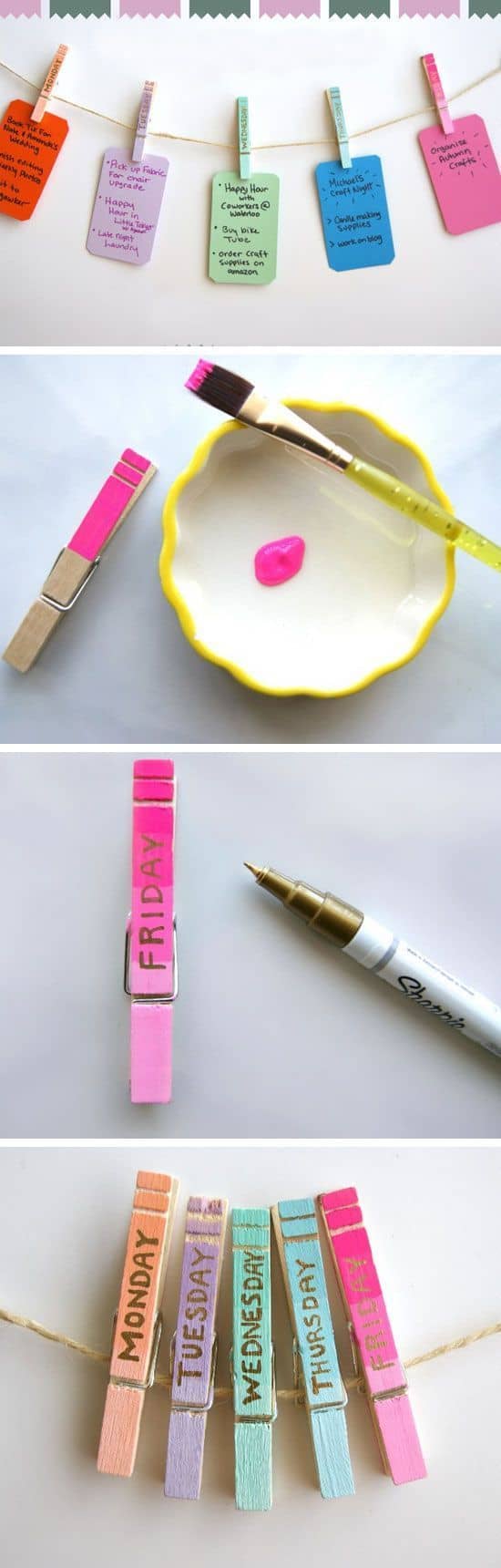
Colorful Clothespin Notes on String for Desk Decor

A horizontal string pinned between two points above the desk creates a note display that is both more visual and more flexible than a standard pinboard — cards and notes can be added, moved, and removed without leaving holes or residue, and the color-coded clothespins provide an instant organizational system that reads across the workspace at a glance.

Source Unknown

21. Identity in Simplicity and String Lights

Minimalist Desk Decor with String Lights Black and Copper

A stark white desk setup needs only two things to feel complete: contrast and warmth. The black and copper accessories here provide the contrast, and the warm-toned string lights provide the warmth — a combination that transforms an otherwise clinical space into something genuinely inviting without adding a single decorative object that doesn't also serve a function.

via Pinterest

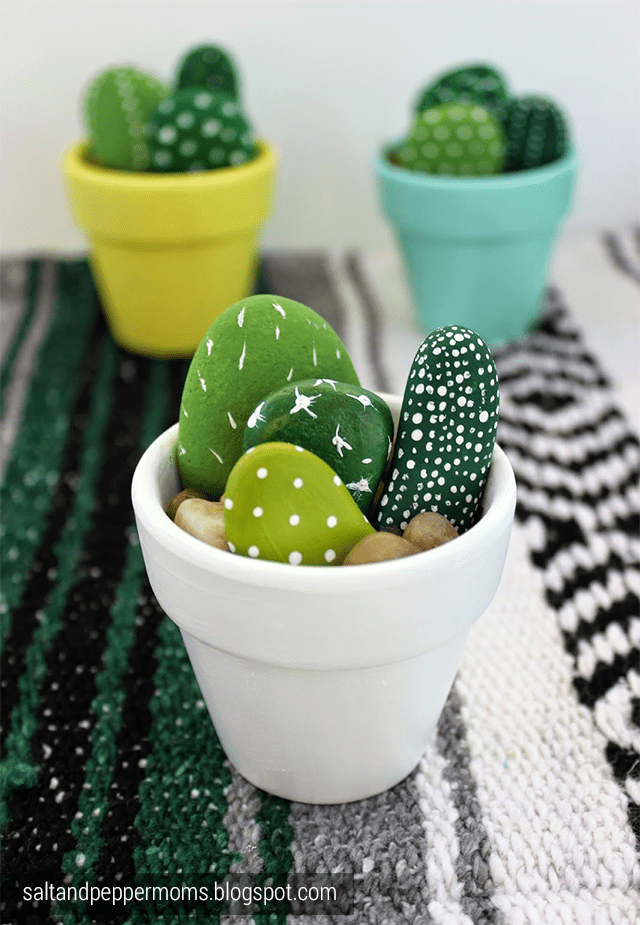
22. Painted Rocks as Faux Cacti

Painted Rocks as Faux Cactus Desk Decor

Painting smooth rocks in varying greens with white dot detailing and setting them in small terracotta pots produces a desk cactus garden that requires zero watering, never drops a leaf, and costs almost nothing. The organic shapes of the rocks mean no two look identical, which gives the arrangement a natural variation that painted ceramic alternatives rarely achieve.

via saltandpeppermoms.blogspot.com

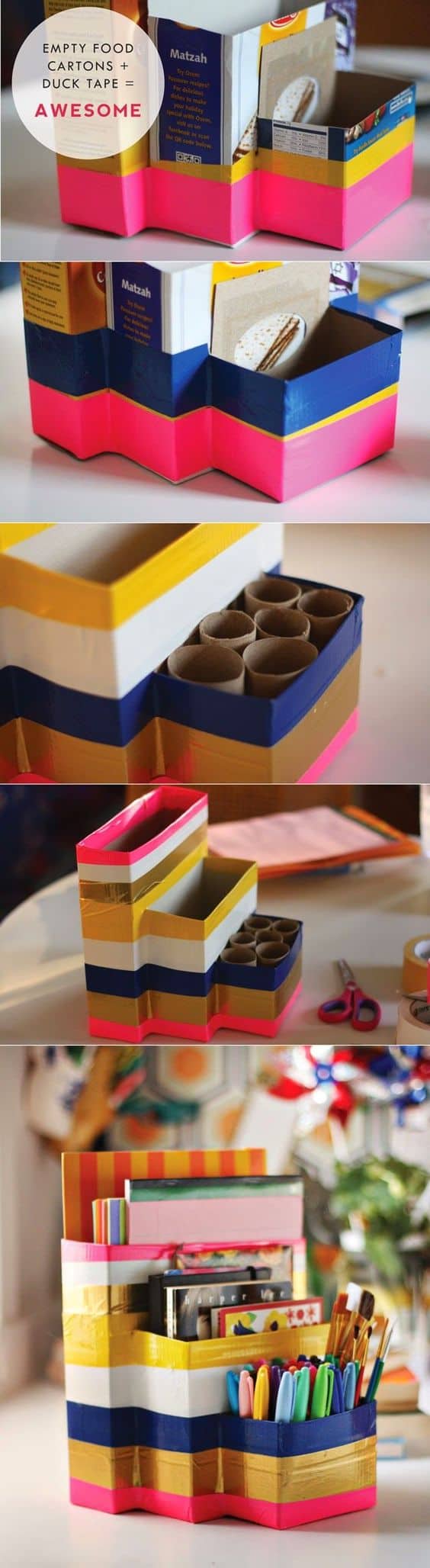
23. Cereal Boxes and Duct Tape Organizers

Cereal Box and Duct Tape DIY Desk Organizer

A cereal box covered in colored duct tape — cut at an angle at the opening for easy access — produces a desk organizer that is structurally sound, visually bold, and free to make. The key is choosing tape colors that are already present elsewhere on the desk so the organizer reads as part of the palette rather than an isolated craft object.

via lovethispic.com

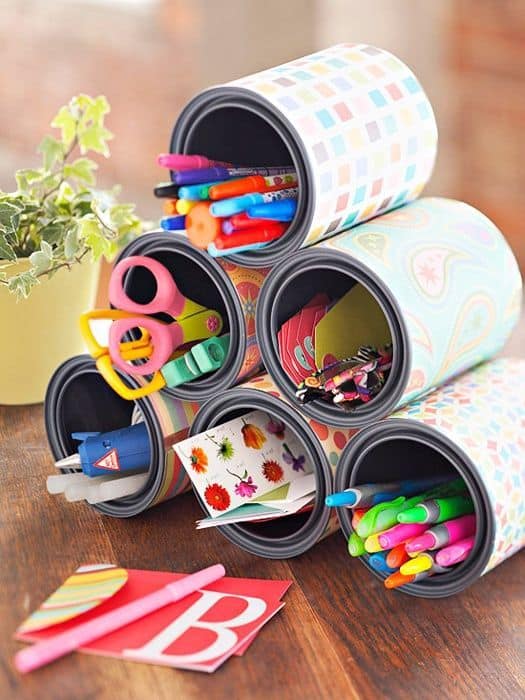
24. Colorful Tin Can Organizers

Colorful Tin Can Desk Organizers

Tin cans wrapped in paper, fabric, or painted directly become desk organizers with a genuinely solid, weighty presence that plastic equivalents never match. Group them in a cluster of three or five at varying heights — achieved simply by using cans of different original sizes — and the arrangement has the visual weight distribution of a deliberately designed desktop accessory set.

via HGTV

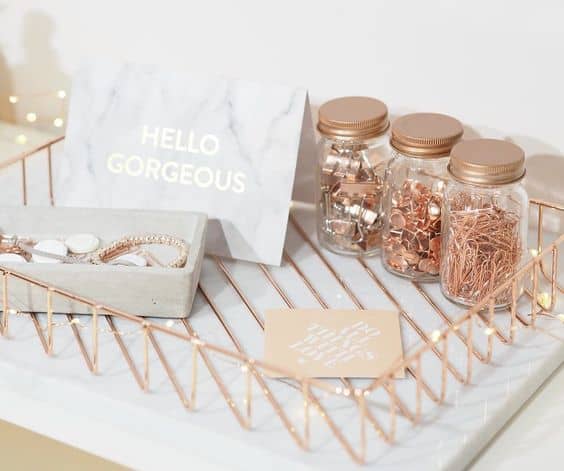
25. Copper and Marble Desk Accessories

Copper and Marble DIY Desk Accessories

Copper spray paint applied to any standard desk accessory — a tray, a stapler, a pen holder, a small vase — immediately elevates it into something that looks deliberately sourced. Paired with a marble-effect surface or a concrete tray, the combination produces a desk palette that photographs exceptionally well and holds up to daily use without looking tired, which is a rare combination in DIY home office decor.

via instagram

26. Decorate Your Desk With Memories and Contrast

Desk Decor With Personal Memories and Black Gold Contrast

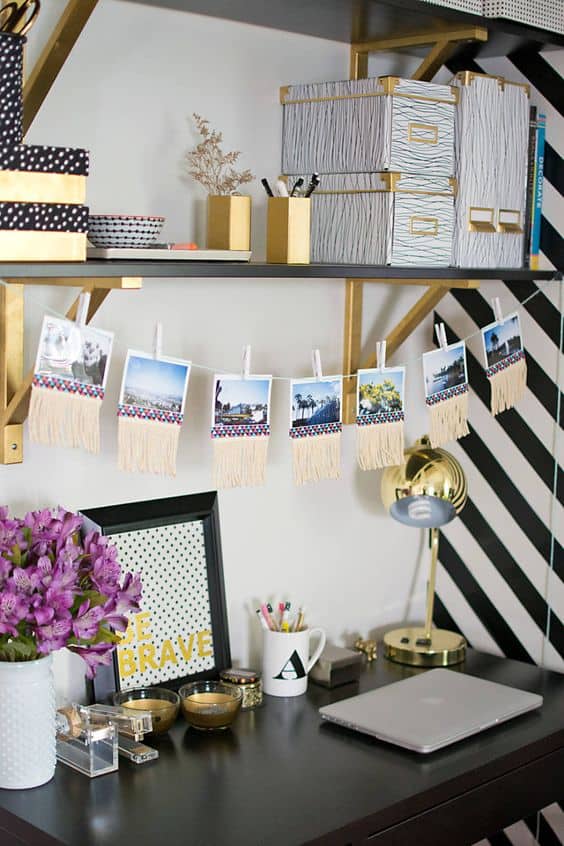
A black-and-white base palette anchored by gold accents and a handful of personally meaningful objects is one of the most reliable desk styling combinations available — the monochrome backdrop makes the gold pop, and the personal items give the whole setup a specificity that no generic desk accessory can replicate. This is the approach that makes a workspace feel inhabited rather than arranged.

via homeyohmy.com

27. Flowers and Simplicity

Simple White Desk Decor With Flowers

A single stem or a small bunch of flowers in a simple vessel is often the only thing a clean white desk needs — the organic form and natural color introduce warmth and life that no manufactured object replicates, and the impermanence of cut flowers means the display is always slightly different, which prevents the workspace from feeling static or stale over time.

via instagram

28. Build an $80 DIY Farmhouse Desk

$80 DIY Farmhouse Desk Build

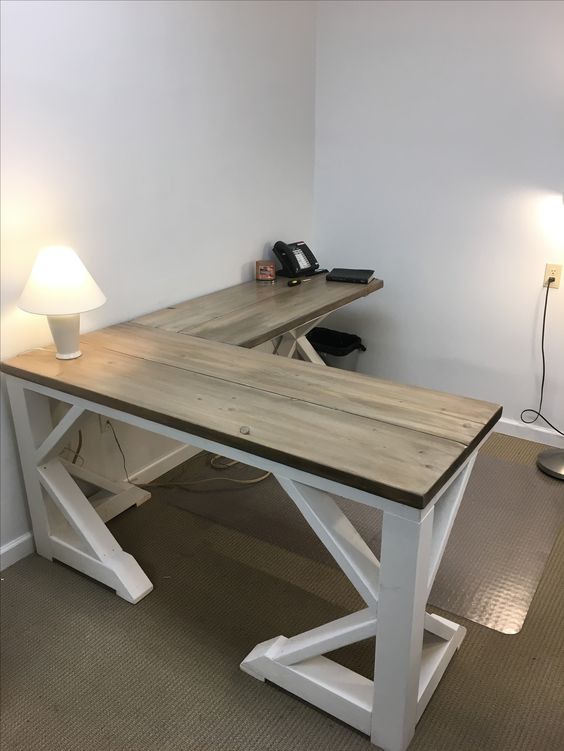
For those who want to address the desk itself rather than just its surface, this farmhouse build delivers a full-sized, furniture-grade work surface for under $80 in lumber and hardware. The construction is straightforward enough for a first woodworking project — straight cuts, basic joinery, and a good sand and seal finish — and the result is a desk with the material warmth and proportional generosity that flat-pack alternatives at three times the price rarely match.

via Chad Dickenson

29. Complete Your Desk With a Handmade Planner

Handmade Desk Planner and Task Organizer

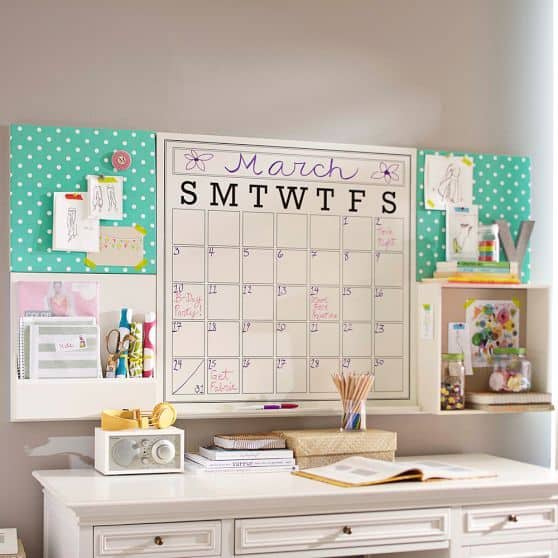
A large, well-designed desk planner keeps the day's priorities visible at all times — which research consistently shows reduces the cognitive load of task management more effectively than any digital equivalent. Making your own means you control the format, the size, and the aesthetic, producing a planning system that fits both your workflow and your workspace rather than the other way around.

via pbteen.com

30. Boost Color and Texture With Painted Containers

Painted Containers for Color and Texture on Desk

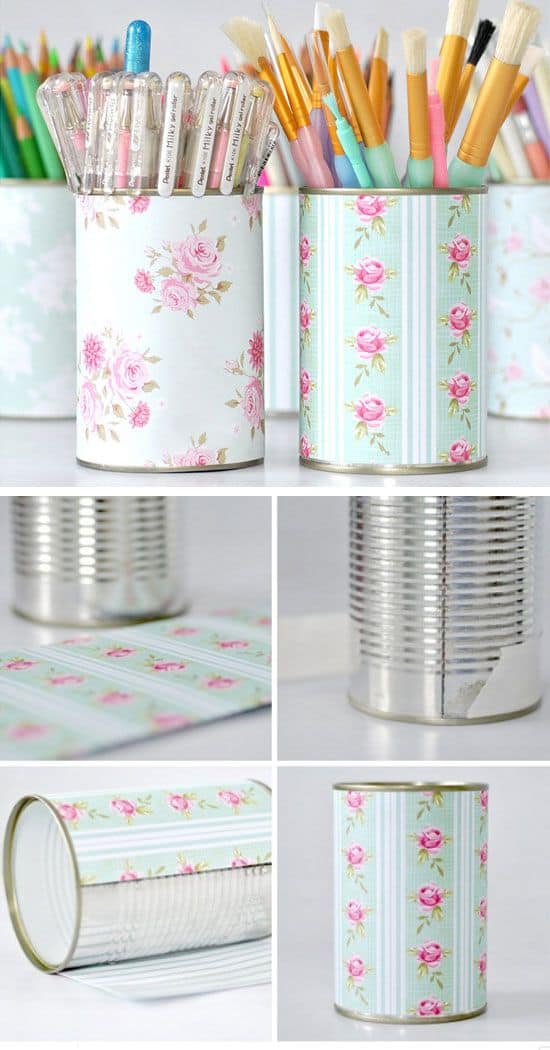
Any container — a cup, a box, a tin, a jar — can be transformed with a coat of paint and a few minutes of drying time. The key decision is committing to a consistent finish across every container on the desk: the same paint sheen, the same color family, or the same pattern language ties disparate objects together into a cohesive set that looks curated rather than accumulated.

via chasingfoxes.com

31. Pin the Small Things, Pin Inspiration

Inspiration Pinboard for Personal Desk Decor

The most powerful desk decor element is often the smallest — a ticket stub, a postcard, a printed quote, a small photograph pinned without a frame. These objects carry specific personal meaning that no purchased accessory can replicate, and their cumulative presence on a pinboard or desk surface is what ultimately makes a workspace feel like it belongs to one particular person rather than anyone at all.

via fengshuidana.com

Which of these 31 ideas are you starting with? A personalized desk is one of the most productive investments you can make in your daily working environment — and as this list shows, the most effective changes are rarely the most expensive ones. Share your setup in the comments below.
DIY wooden lamp projects deliver one of the highest visual-to-cost ratios in home décor — a category where a fallen tree branch, a stack of paint stir sticks, or a handful of reclaimed pallet wood can produce a finished piece that reads as designer furniture rather than a weekend craft. If you want lighting that adds genuine character to a room rather than simply illuminating it, this collection of 50 builds spans rustic bedside lamps, geometric pendant lights, driftwood floor lamps, tripod stands, Edison bulb installations, ceiling wood lighting rigs, and multi-purpose shelf-and-lamp combinations. Adjacent territory includes chicken wire shade builds, upcycled stool bases, hexagon walnut desk lamps, cracked-resin table lamps, stir stick pendant shades, and LED strip modern builds. The detail most wooden lamp guides skip entirely: hiding the cord is the single finish decision that separates a build that looks handmade from one that looks custom — surface-mounted cords undermine even the most carefully constructed base, while a routed channel or fabric-sleeved cord elevates the entire piece without adding more than thirty minutes to the build. Most projects here require only a drill, basic adhesive, and a lamp cord kit costing under $15, making beginner-friendly DIY wooden lamp ideas the genuine entry point for the overwhelming majority of builds on this list.

Before You Start
Wood and heat require more planning than most lamp build guides acknowledge, and the gap between a safe build and a fire hazard often comes down to two decisions made before drilling starts. Enclosed wooden shades — the geometric pendants, cube lamps, stir stick shades, and basket builds in this list — trap heat, and any incandescent or halogen bulb inside one will exceed the ignition temperature of the surrounding wood under sustained use. LED bulbs only, always, in any shade where the wood surrounds or sits close to the light source. The second decision is the cord kit: every build here that requires wiring should use a UL-listed pendant or table lamp cord kit, which costs under $15 and includes a socket, switch, and correctly rated wire in a single assembly. Splicing standard electrical cable, using zip cord rated below 300V, or repurposing an extension cord as a permanent lamp fixture creates a fire and shock risk that no amount of careful woodwork compensates for. For builds that route the cord through a drilled channel in the base — the solid wood chunk lamp, the trunk base, the tripod floor lamp — drill the channel before cutting the base to final dimensions, and size the hole to 3/8 inch minimum so the cord sleeve passes through without compression. Compressed cord insulation degrades faster than any other failure point in a DIY lamp.

DIY Wooden Lamp Projects and Crafts

Light lamp on wall decoration interior of room. Creative DIY Wooden Lamp Projects and Crafts.

We've listed 50 awesome wood lamps that can transform your space to look like it belongs to an IKEA catalog.

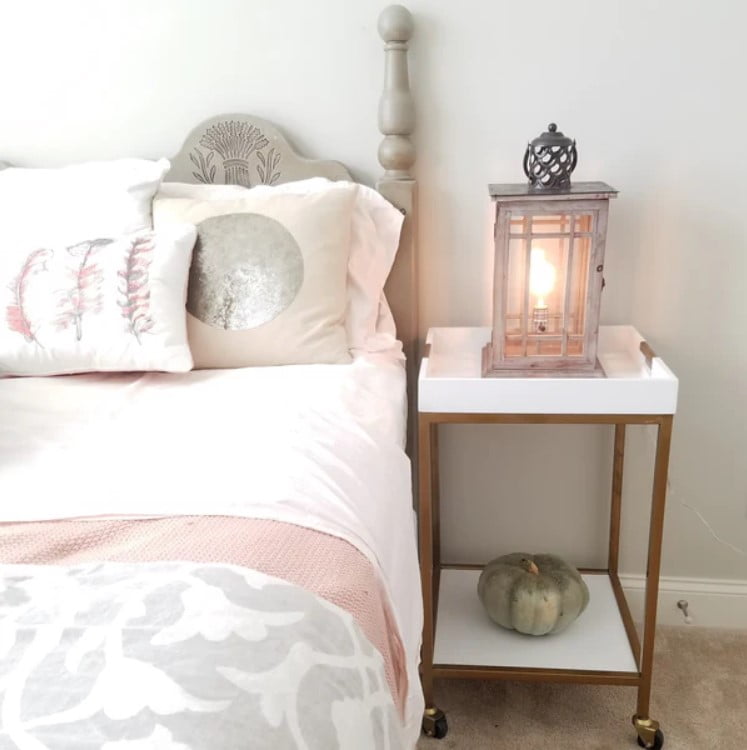
1. Rustic Bedside Table Lamp

Rustic Bedside Table Lamp

via The Makely Blog

Adding a simple lamp is one of the best ways to complete your rustic-themed room. If you've got a used lantern lying around, consider repurposing it to lamps!

Use a dim yellow bulb to give your room a cozy feel. Paint the outside with your favorite color, and you're done!

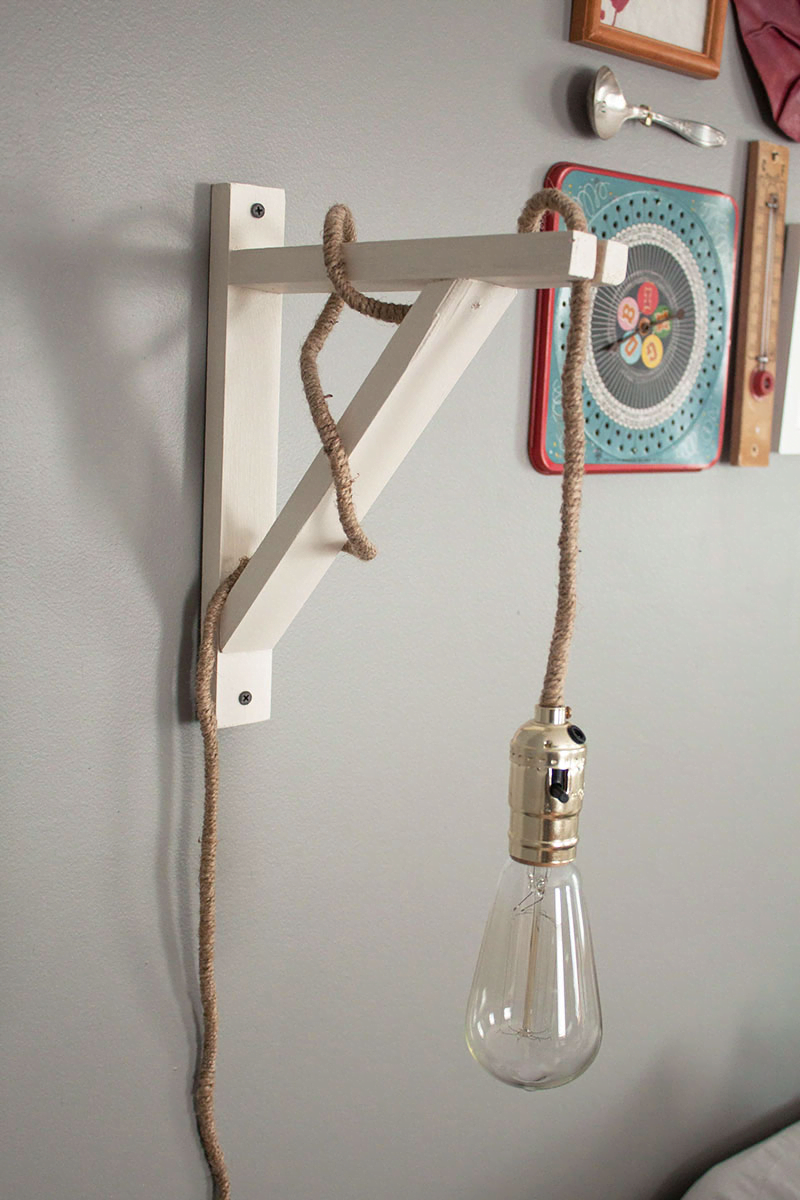
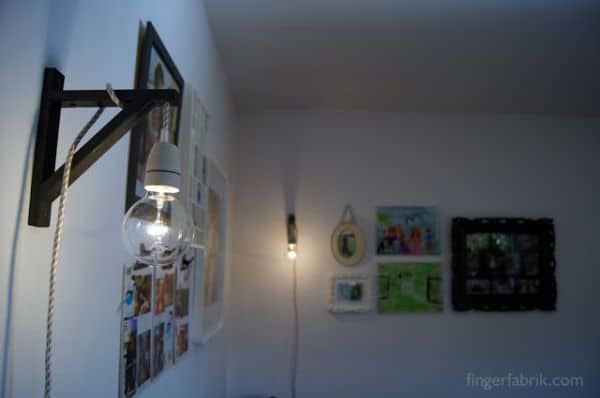
2. Wall Bracket Lamps

Wall Bracket Lamps

via The Homesteady

You can use wall brackets as base for your lamps. It's one of the best ways to create a unique and simple lampshade at home.

It hardly takes hours to do, and all you need is to screw the brackets to the wall! Hang the light bulb on the bracket, and make sure the wires are covered.

3. Aesthetic Pallet Lamp

Aesthetic Pallet Lamp

via Cut The Wood

Wood pallets are highly durable and easy to work with. They're highly affordable, and you might even be surprised to find wood pallets given away for free!

Create a unique wood pallet table lamp, and make it feature décor in your room. Sanding the wood is also a good idea so you don't encounter any splinters.

4. Trunk Lampshade

Trunk Lampshade

via Mountain Modern Life

If you chance upon a fallen tree trunk, consider using it as a base for your wood lamp. Creating a trunk lampshade is a good way to mix modern and rustic designs.

Make sure to cut the edge to a size that fits your desk or bedside table. Watch a tutorial to help you sand the edges properly.

5. Geometric Hanging Wood Lamps

Geometric Hanging Wood Lamps

via Herr Mandel

Geometric wood lamps are always a good centerpiece for a small room. It's a good conversation starter and takes little effort to do.

All you need are wooden triangles or cutouts, which you can glue together to form a shape. Look for a guide or tutorial to help you properly shape the dimensions.

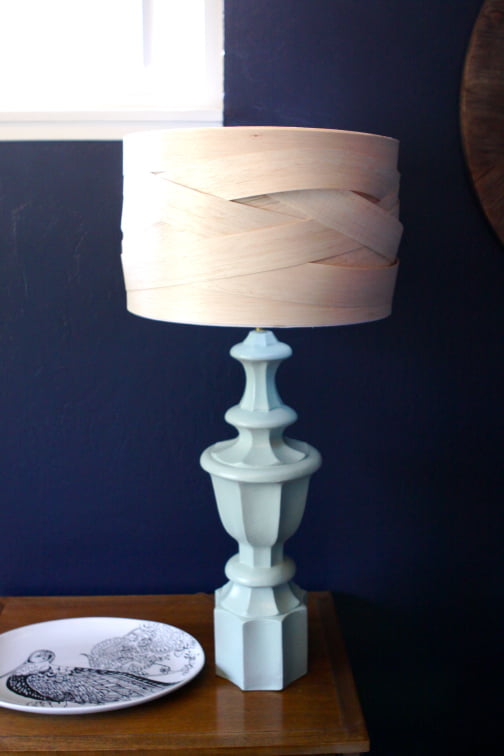
6. Simple Wooden Lamp Shade

Simple Wooden Lamp Shade

via Crafting Really Awesome Fun Things

Consider this wood lamp idea if you want to spruce your lamp with style. Cover the whole lamp shade with thin wood cutouts to transform it immediately!

You can use wood samples for the cutouts to complete this lovely rustic and minimal wood lamp.

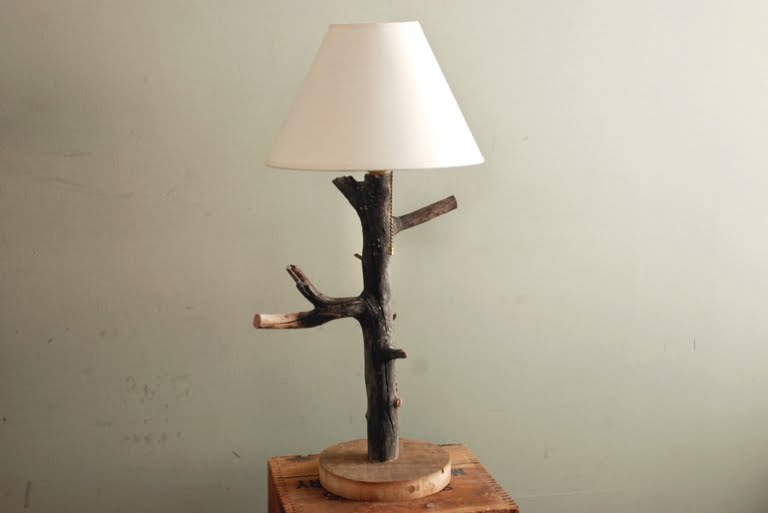
7. Branch Table Lamp

Branch Table Lamp

via The Merry Thought

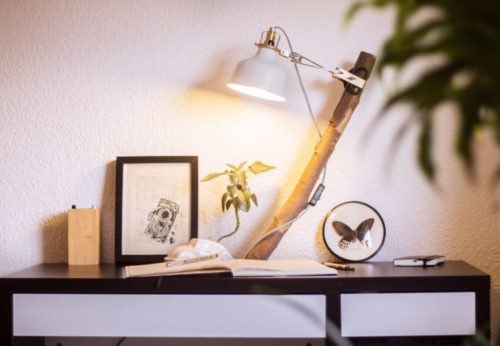
This wood lamp is a conversation starter. You can use any fallen tree branch as the lamp base.

Top it with an aesthetic-looking shade that matches your room's style. Be sure to hide the wirings to give it a completely clean look.

8. Intertwined Fallen Branches or Driftwood

Intertwined Fallen Branches or Driftwood

via Stephanie Mae Foster

Another awesome wood lamp idea is this intertwined fallen tree branch. Grab a few tree branches in your garden, and tie them together until you form a smooth, solid base.

Smoothen the surface until you're sure there are no more splinters. Make sure to watch a tutorial to help you with sanding your wood properly.

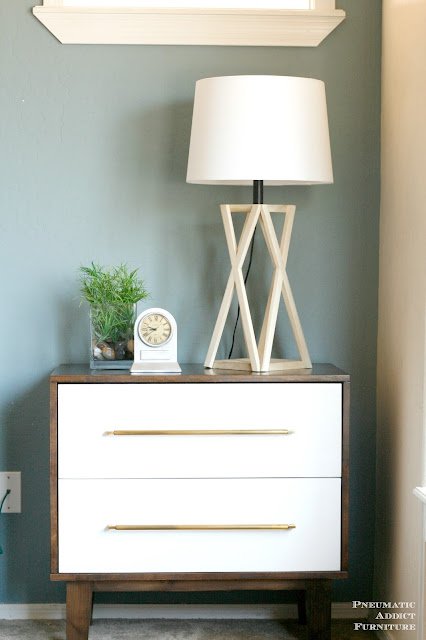
9. Geometric Table Lamp

Geometric Table Lamp

via Pneumatic Addict

This minimalist wood lamp fits perfectly anywhere. It's also very easy to do, and you can DIY immediately this DIY wood lamp kit without a tutorial.

The supplies are highly accessible in your local hardware store, and completing this modern wooden lampshade doesn't take time.

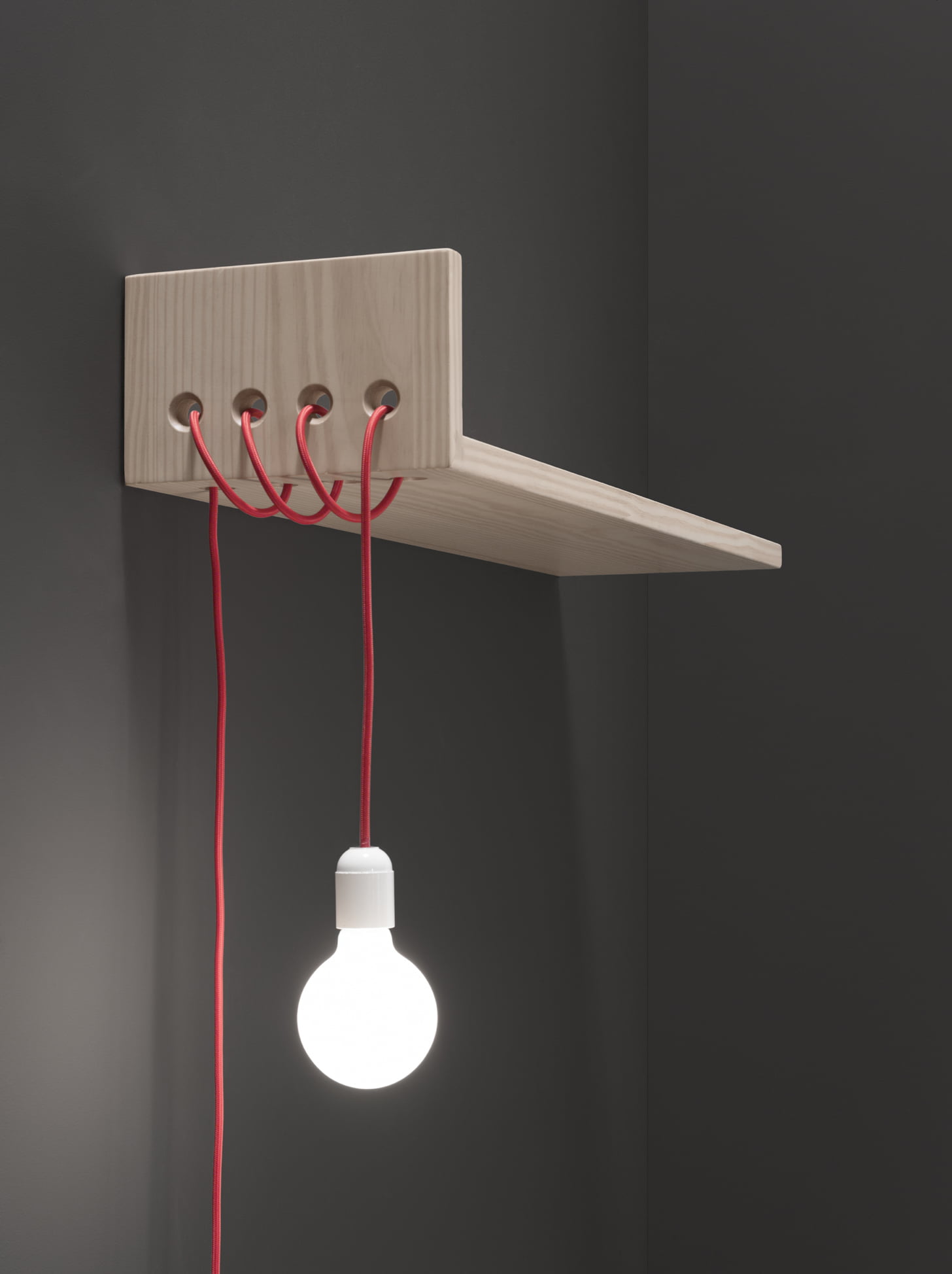
10. Modern Shelf and Lamp Kit in One

Modern Shelf and Lamp Kit in One

via Bruno Faucz

Adding frames or shelves is a good idea to liven up your home. You can be as creative as you want with your ideas.

A good idea is to start creating a modern multipurpose shelf and wall lamp in one DIY project. All you need are shelves and your favorite lighting to get started.

11. UpCycle Sunshade Slats

UpCycle Sunshade Slats

via Recyclart

Don't throw out your used sunshade slats and upcycle them to be wooden table lamps.

The beauty of using slats is that you can place holes and screws, creating an adjustable lamp. You can use a tutorial to help you position your screws.

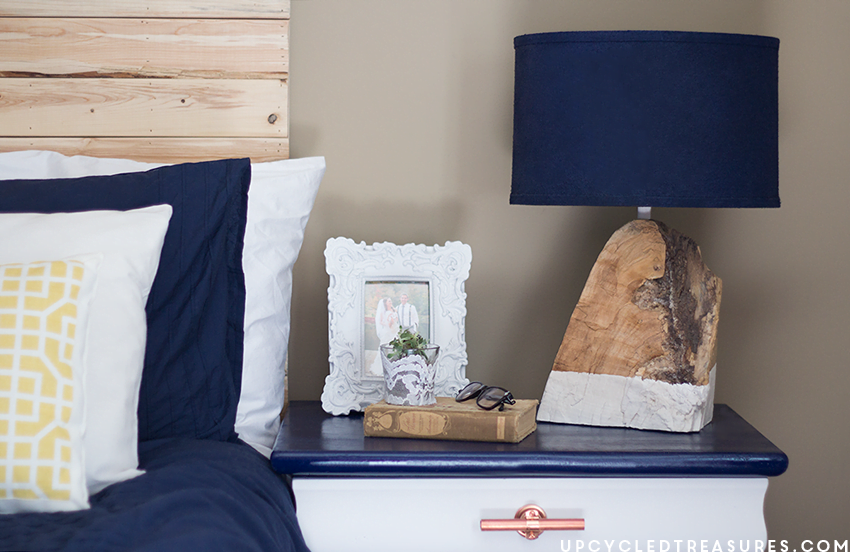
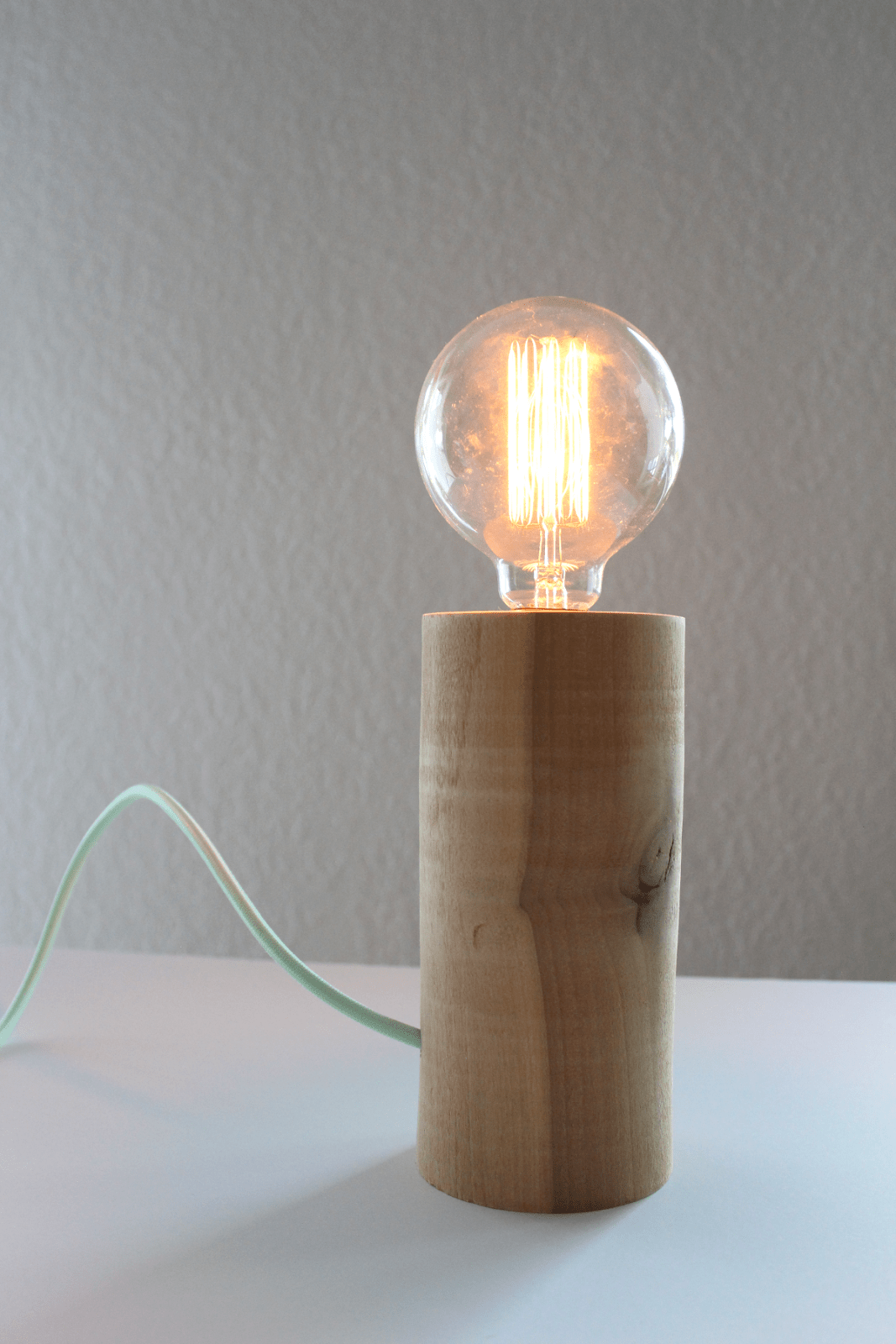
12. Simple Solid Wood Lamp Base

Simple Solid Wood Lamp Base

via iDLights

Craft a small lamp that can give your room an intimate feeling. You can use a small chunk of natural wood and lighting of your choice. 

The challenge with this lighting is hiding the cord to give it a clean finish. 

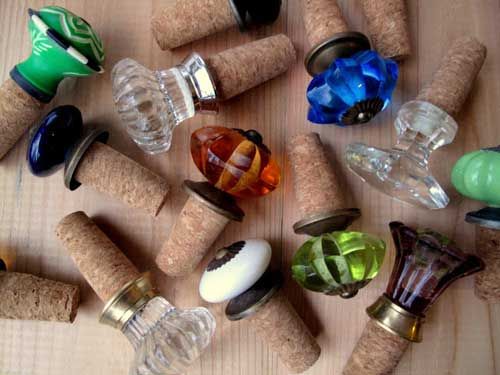
Some would even be nifty enough to use a big wine cork for the project! Check out the different DIY wine cork projects you can do! 

13. Animal Shaped DIY Wooden Lamps

Animal Shaped DIY Wooden Lamps

via Leanter

This DIY wood lighting is a perfect project you can do with your child. You can carve out your child's favorite animal for this project.

Alternatively, you can use simple shapes for this wood lamp project. Have a tutorial ready for your child to follow along.

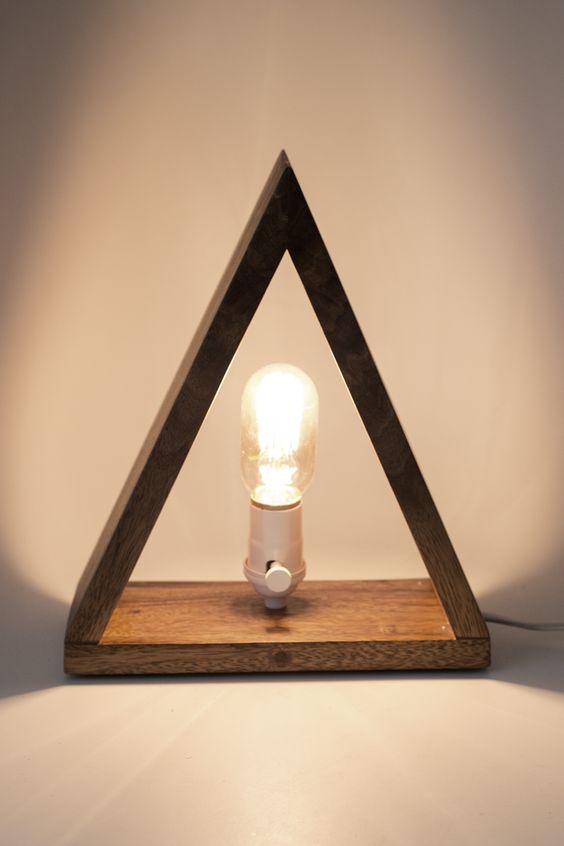
14. Triangle Table Lamp

Triangle Table Lamp

via Moorea Seal

This DIY wood project is as simple as it looks. You hardly need complicated instructions for it, and you only need a few tools and materials.

Use a wooden triangular piece and put a simple light bulb in the middle. Hide the wirings under the table to craft a cool and seamless décor.

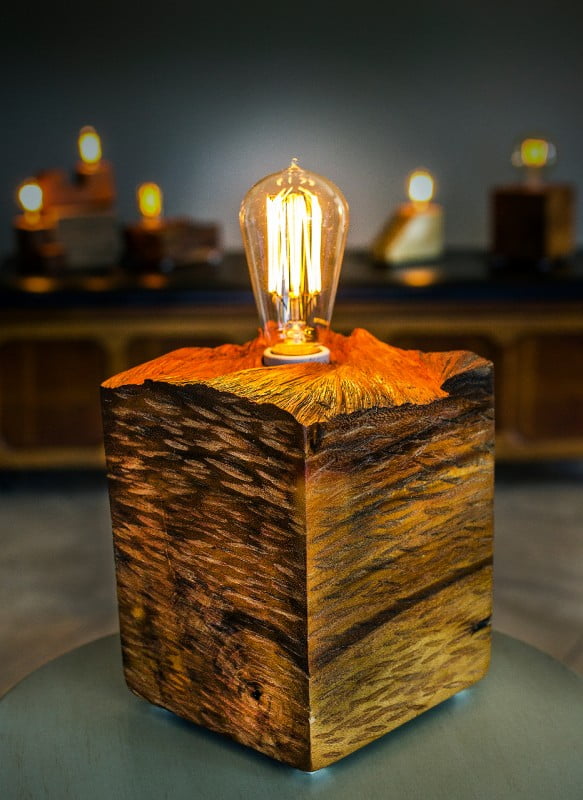
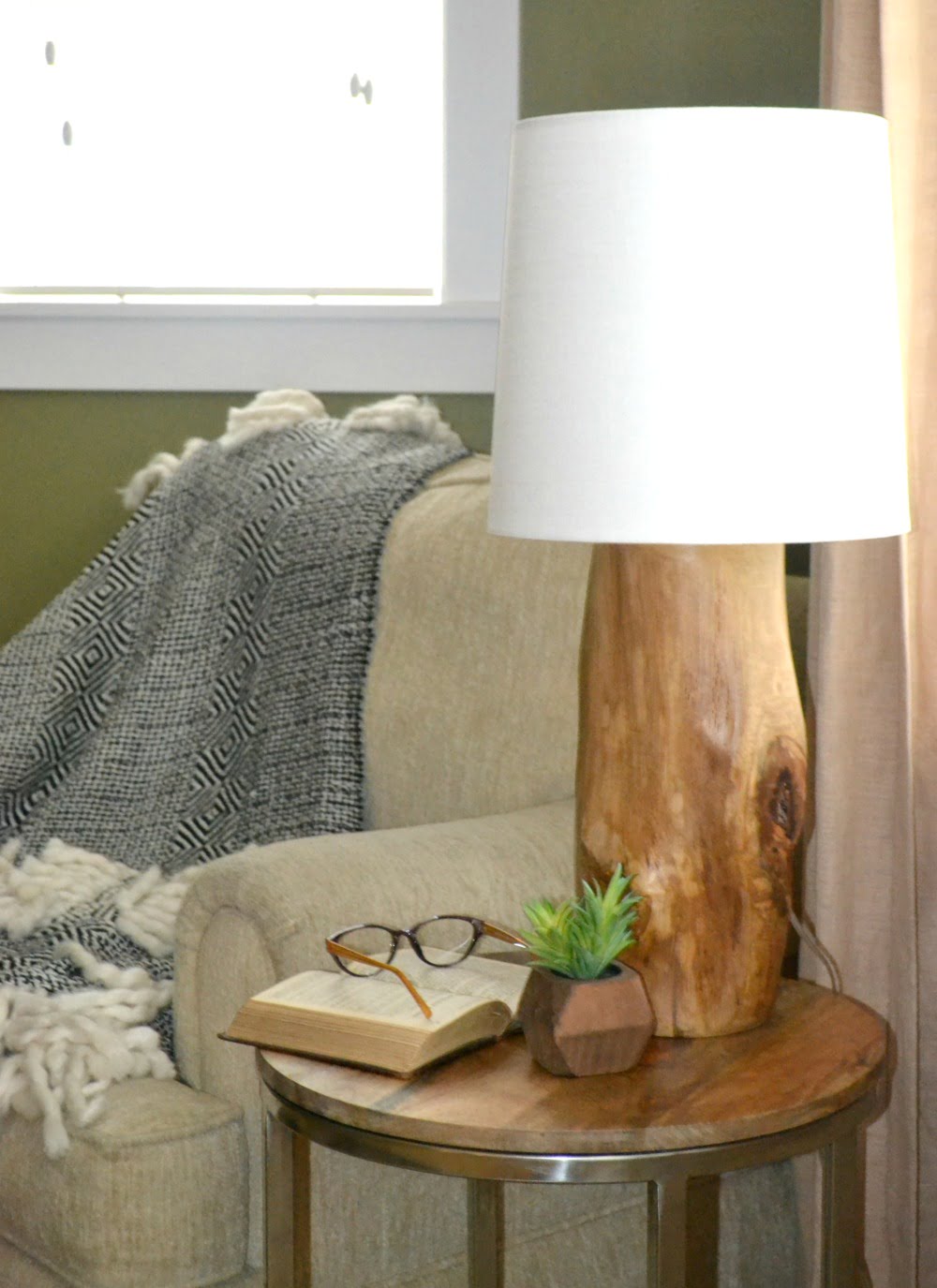
15: Rustic Wood Chunk Lamp

Rustic Wood Chunk Lamp

via Rachel Teodoro

This wooden lampshade is perfect for adding warmth and elegance to your room. At a glance, this lamp looks expensive, but it's a project you can DIY immediately.

You only need a wood trunk for the base and attach a lighting system on top. We recommend watching a tutorial on how to attach the cord properly.

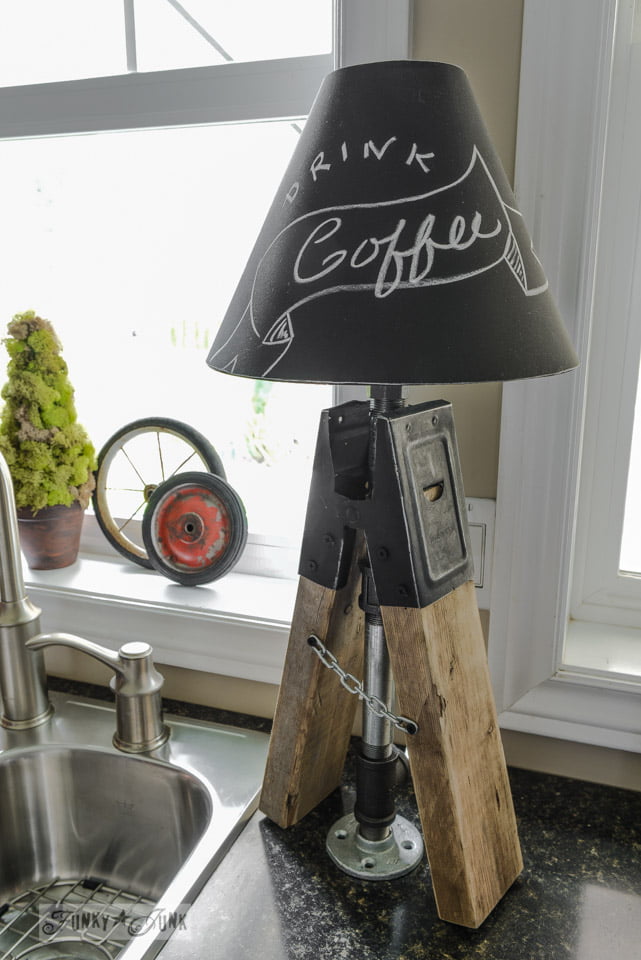
16. Sawhorse Pipe Lamp

Sawhorse Pipe Lamp

via Funky Junk Interiors

If you've got sawhorse clamps lying around, consider playing with them and transforming them into lamps!

You can place a hole in both the base and middle of the clamp, creating a sturdy base for your lighting system.

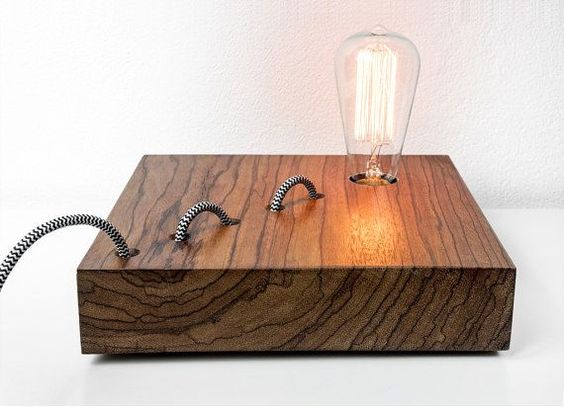
17: Swimming Cord Lamp

Swimming Cord Lamp

via Telltale Design

This simple lamp looks like an eel swimming. The bulb is the head, and its peaking cord is the body. Crafting this lamp is so easy to do. You don't need a tutorial for it.

However, be careful with how you put the wires together.

18. Reverse Stool Wooden Lamp

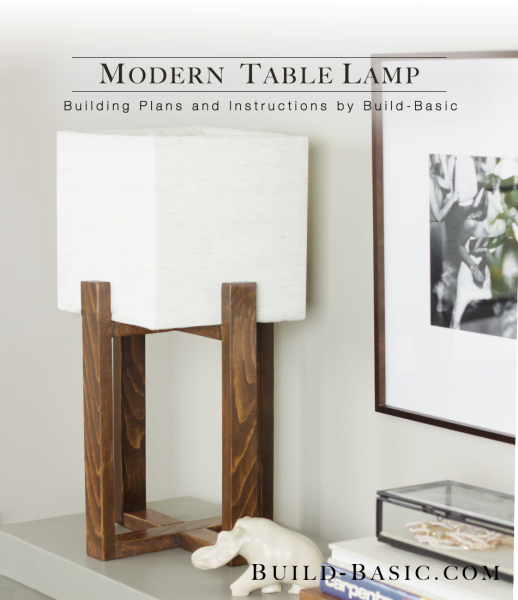
Reverse Stool Wooden Lamp

via Build Basic

Grab a stool and set it upside down! You can use the seat part as a sturdy base for your lamp and the fabric on the bottom for your shade.

You can use an old stool you've wanted to throw out.

19. Simple Tree Branch Lamp

Simple Tree Branch Lamp

via We Must Be Dreamers

Is your home needing an extra light? Look out your window, and you might find a material you can use - aka a tree branch.

A simple tree branch can be used as the base of your lamp. However, you might have a challenge balancing the branch to stand.

20. Hexagon Edison Lamp

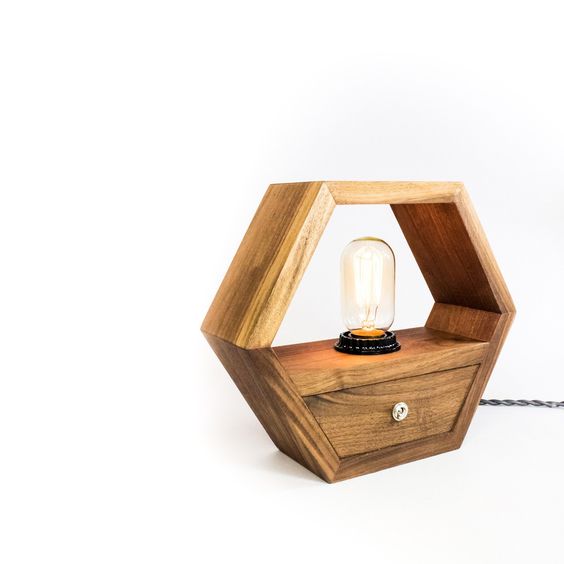
Hexagon Edison Lamp

via Fernweh Woodworking

This hexagon-shaped lamp is the perfect addition to your office, and you can make it as small or big as you want. Not to mention, it's also a perfect gift idea for your friends!

We highly recommend using black walnut wood for that sleek and clean finish. Finish it off with some varnish, and you're done.

21: Vintage Pulley Light

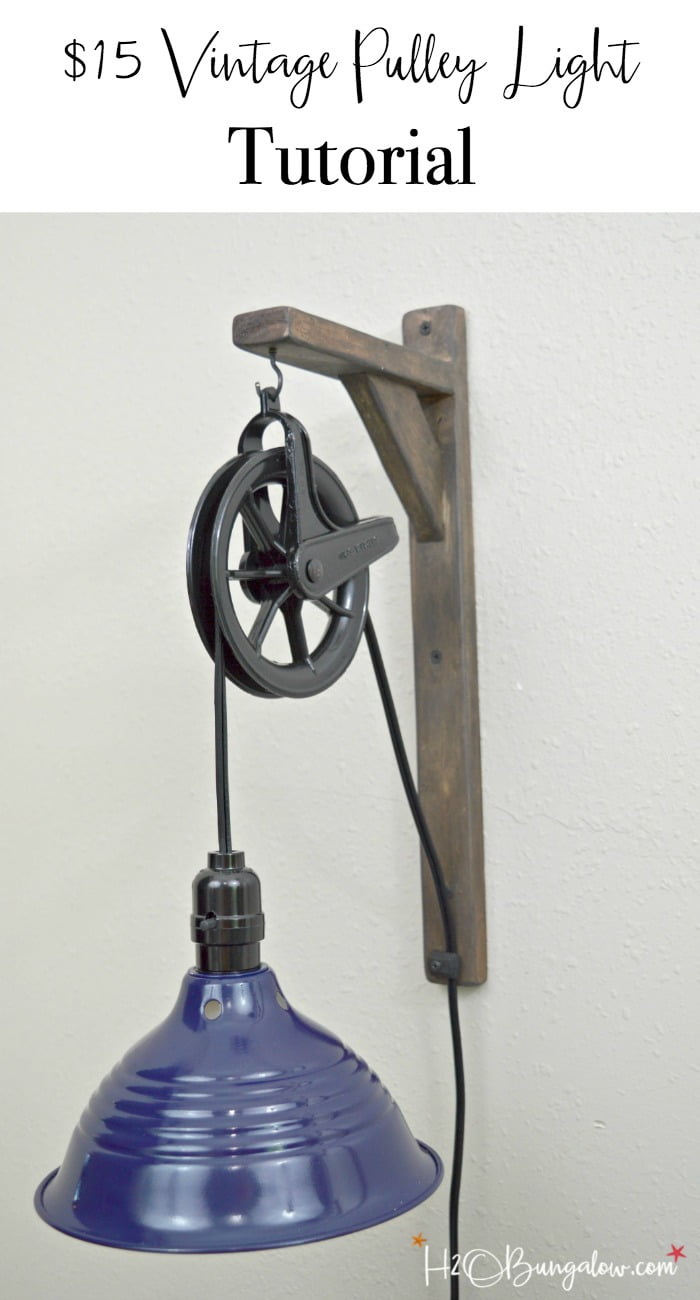
Vintage Pulley Light

via H2O Bungalow

If your home has a pulley system, consider transforming it into a lamp. It's a good way to repurpose them without removing them from your home!

Make sure to assemble the wires properly and watch a tutorial on how to fix the pulley system.

22. Quirky Wood Lamp

Quirky Wood Lamp

via masteruan

At a glance, this quirky wood lamp looks easy to do. But once you've started this project, you might find that there are little bits and pieces you need to worry about.

Finishing this project requires a tutorial to help you out. But rest assured; you'll finish this lamp successfully.

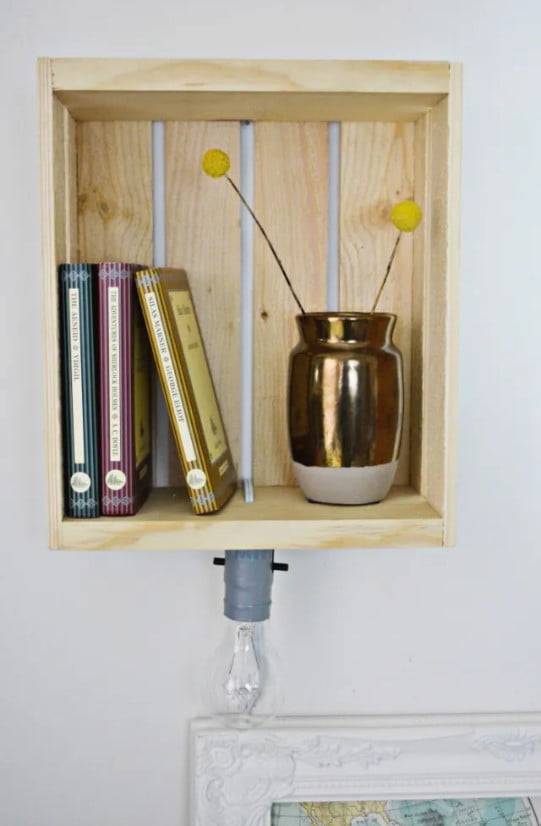
23. Multi-Purpose Lamp and Shelves

Multi-Purpose Lamp and Shelves

via A Joyful Riot

This lamp and shelving unit is perfect for people looking for a space-saving project. Stick these lamps on a shelf on your wall and a lighting system underneath!

Install the shelf properly, so it doesn't fall from your wall.

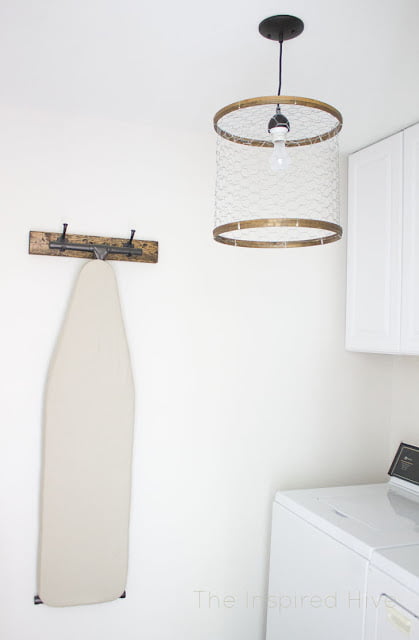
24. DIY Chicken Wire Wood Lamp

DIY Chicken Wire Wood Lamp

via The Inspired Hive

Chicken wires aren't just for keeping your chickens in. You can repurpose it and use it as the base of your shade!

You need wooden and wire end rings to attach the wires. Be sure to also have glue so that you're ready. Handle the wires carefully cause they tend to be sharp.

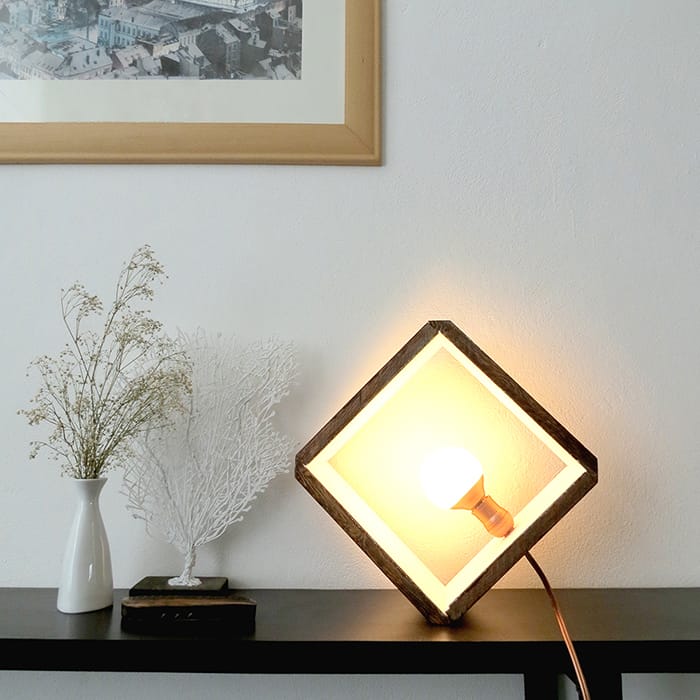
25. Aesthetic Cube Lamp

Aesthetic Cube Lamp

via Ohoh Deco

Lamps such as this one are definite show-stoppers. They're unlike other lamps because of their fun and quirky shape.

Crafting this lamp is also fun, especially when it's time to set the light in the middle and figure out a way to balance it on its side.

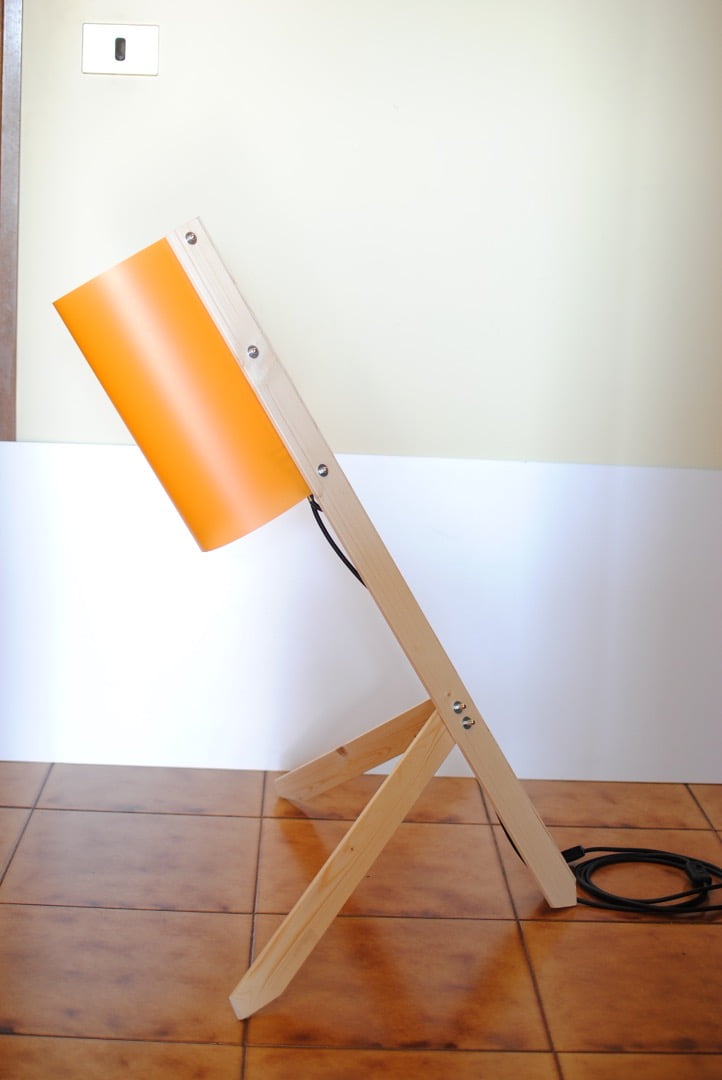
26. DIY Pallet Wood Lamp

DIY Pallet Wood Lamp

via alexovic

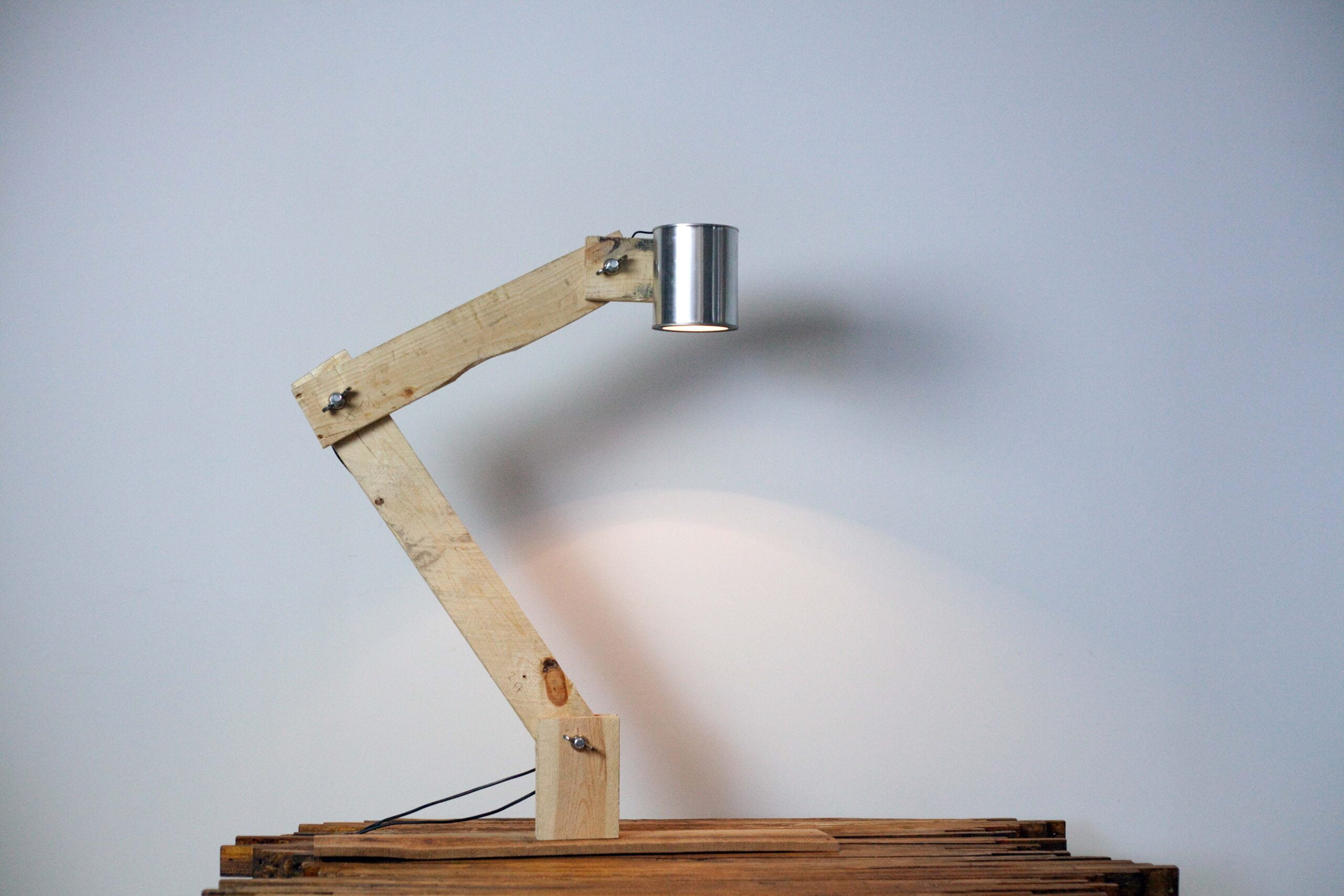
This DIY wood lamp looks so minimal and hardly looks like a lamp at first glance. All you need are a few wooden pallets and a pin light.

Adding knobs and screws to the corner makes this lamp highly adjustable.

27. Modern Wood Lamp

Modern Wood Lamp

via NomadEnterprises

IKEA better make a run for their money once you've figured out how to make this modern wood lamp. It looks unique, yet only requires a few pieces: favorite wood and LED strips.

Watching a tutorial on assembling LED strips will help you a lot.

28. Up-Cycled Geometric Candle Holder

Up-Cycled Geometric Candle Holder

via Natalie Shaw Doodlecraft

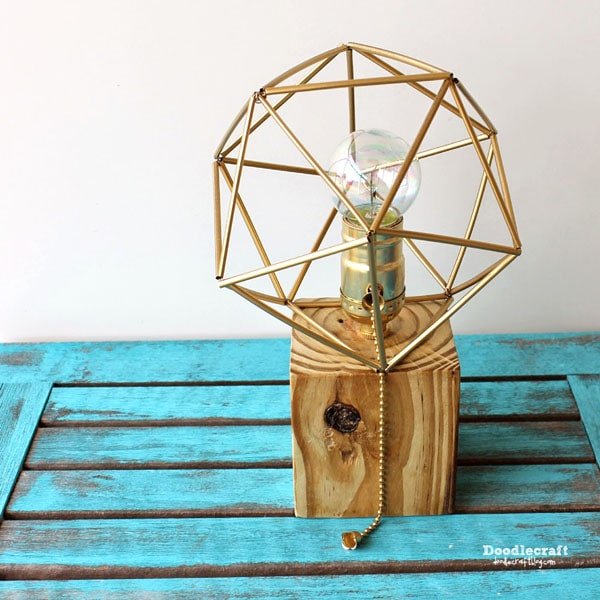
Transform your geometric candle holder as the cover for your DIY wooden project. This project looks unique and intricate but only requires two components.

Grab a solid wood to use as a base, and ensure it is sturdy enough to support your geometric cover.

29. Small Edison Lamp

Small Edison Lamp

via TealsPrairie

This small Edison lamp is something you can DIY immediately. It's also an excellent gift suggestion for your crafty friends.

Assembling the wiring for this project might seem complicated, but it's nothing a wiring tutorial can't help you with.

30. Rustic Basket Light Lamp

Rustic Basket Light Lamp

via Recyclart

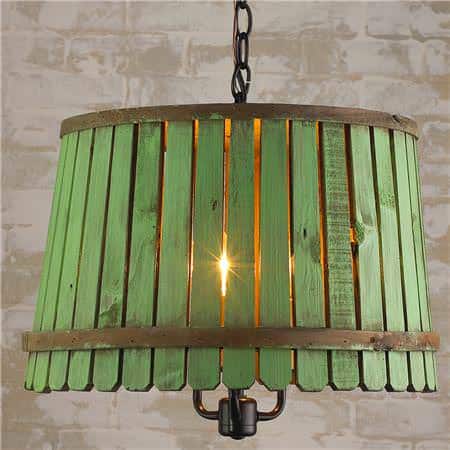
Do you have extra wooden baskets you're not using? Transform it into a rustic-inspired lamp and make it the focal point of your home.

Your friends will be completely blown away by the creativity you've done.

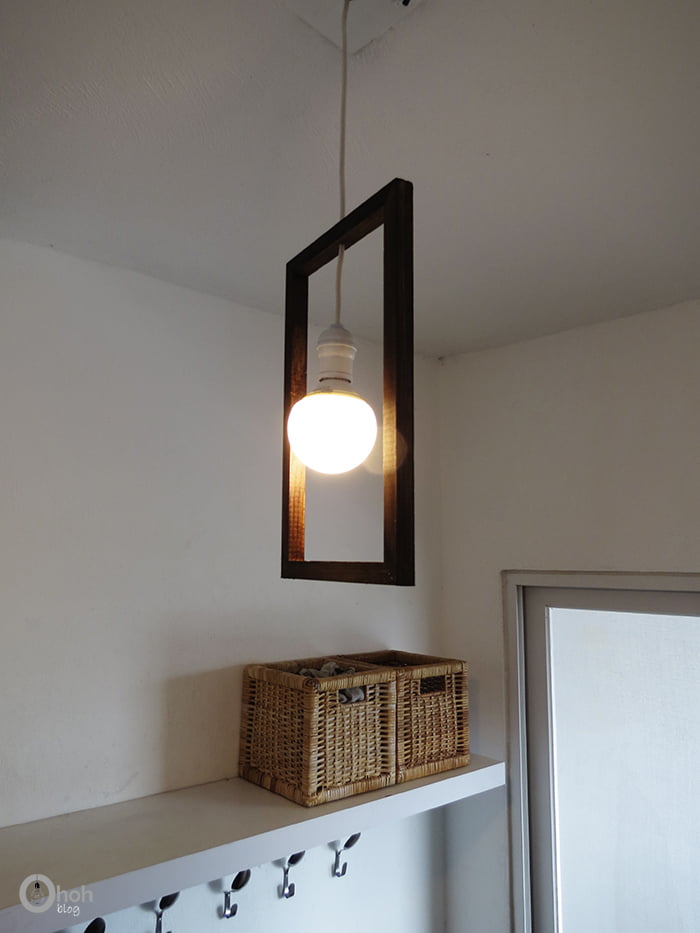
31. Simple Wood Pendant Light

Simple Wood Pendant Light

via Ohoh Deco

This pendant light is a project you can DIY immediately. It looks so good because of how minimal it is.

You can use a simple wooden frame to couple with your bulb for this project. Just drill slots where you plan to insert the cord.

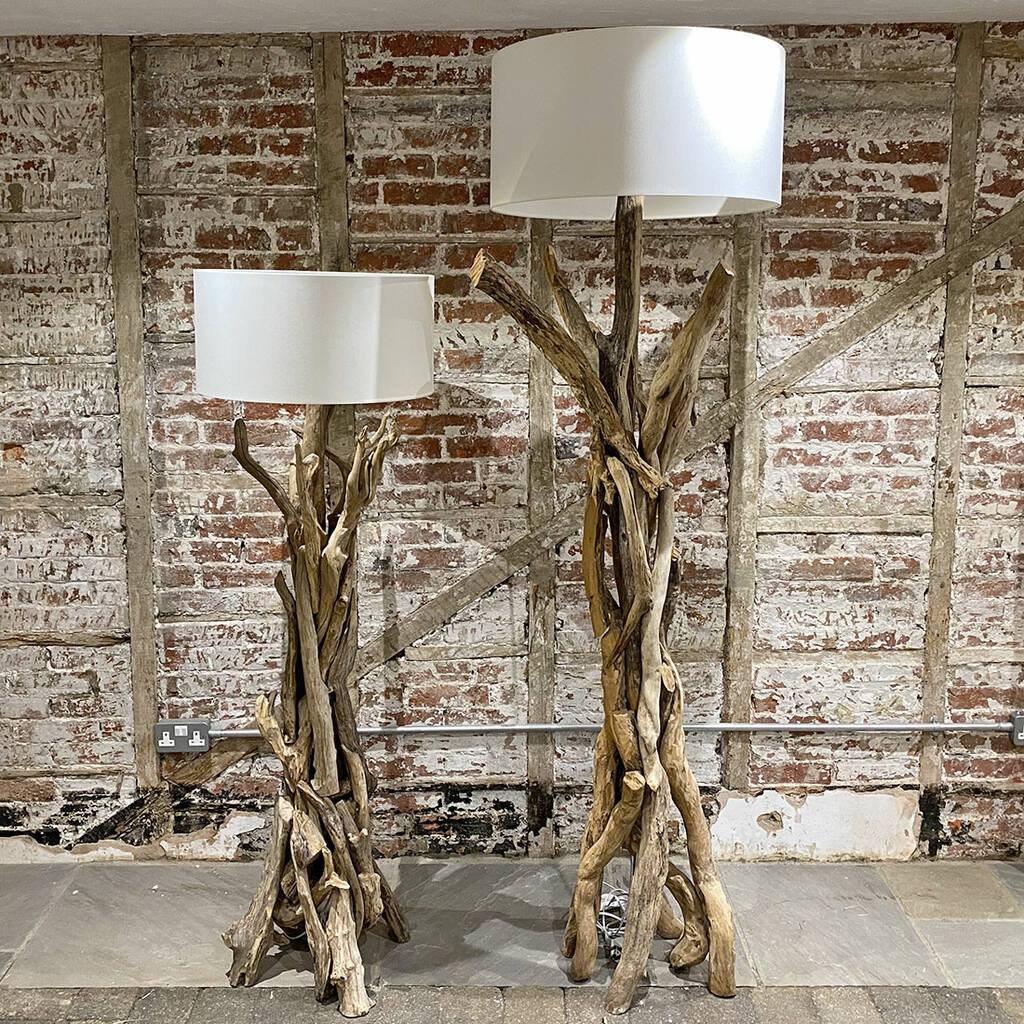
32. Dramatic Driftwood Lamp

Dramatic Driftwood Lamp

via Doris Brixham

One of the most stunning wooden lamps we've seen is made of driftwood, and it's probably the last thing you'd expect.

You can tie a couple of driftwood together and assemble them to be the base of your lamps! Add a neutral tone as the shade, and you will have a dramatic-looking décor.

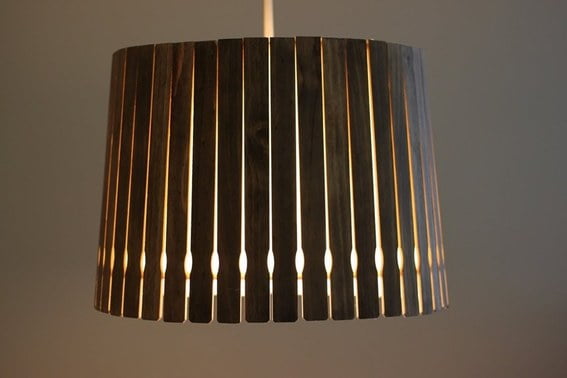
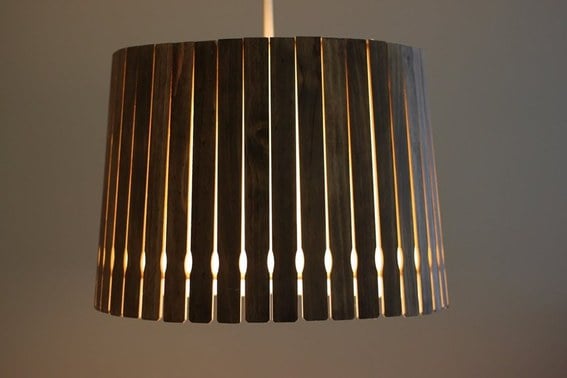
33. Easy Stir Stick Wood Lamp

Easy Stir Stick Wood Lamp

via Curbly

Stir sticks are often overlooked. You'd hardly think you could use it for lamps! But now that you're here, you know this is a project you can do next. 

It doesn't cost a lot, and you only need a couple of stir sticks that can be used to form a shade. Once you're done, you've got an IKEA-looking project!

You might also want to check out a tutorial for plastic spoon crafts for your next project. 

34. Easy Lamp Stool

Easy Lamp Stool

via Monster Circus

If you've got an extra stool lying around you've decided to dispose of, don't! You can use it as the base for your floor lamp.

All you need left is your bulb and a clear glass dome as a cover. Drill the middle of one side of the stool to connect the wiring from the bulb to the socket.

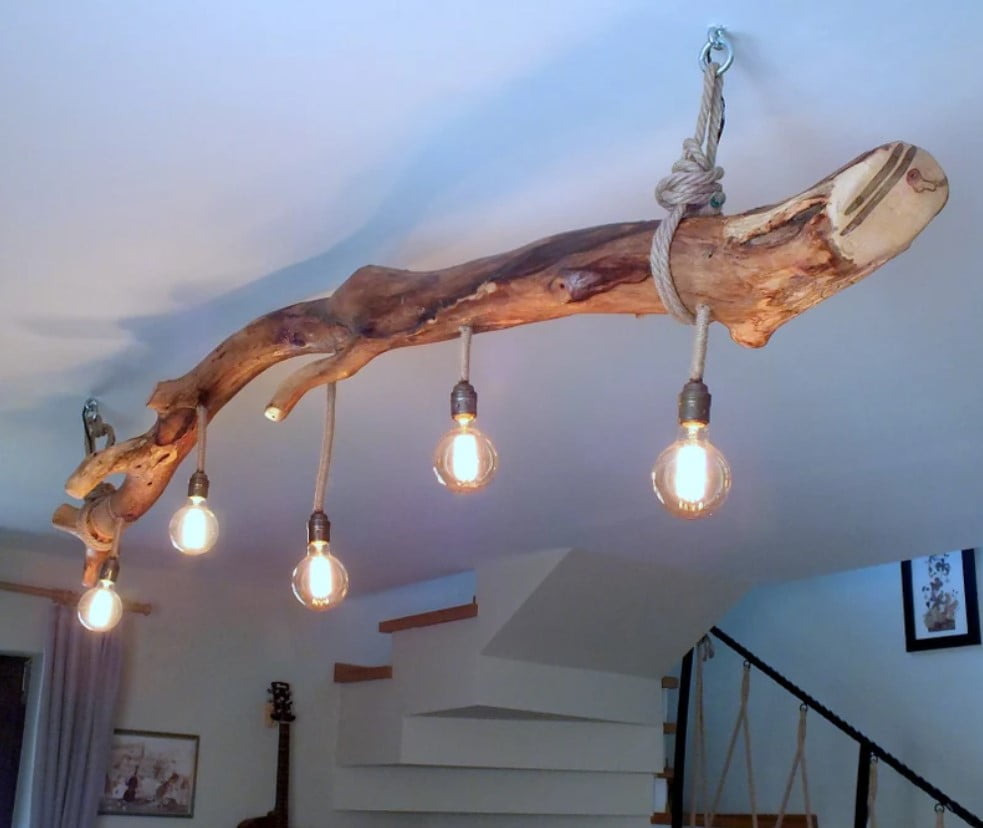
35. Ceiling Wood Lighting

Ceiling Wood Lighting

via MariusRus

Say goodbye to your usual kitchen lights and trade them for a unique natural wood front lighting system. This project is easy to DIY immediately, and instructions are hardly necessary.

You can use a thick driftwood or a fallen thick tree branch. Hang the lights, and you're ready to install!

36. DIY Natural Wood Tripod Floor Lamp

DIY Natural Wood Tripod Floor Lamp

via Completely Coastal

Who would have thought you could tie several tree branches together to turn them into a wooden lamp tripod?

It's a perfect project to craft if you want to put some clashes in your modern décor. The cost of this project hardly costs a fortune!

37. Rectangular Table Lamp

Rectangular Table Lamp

via Dream Green DIY

This is one of the simplest wooden lamps you can DIY immediately. All you must worry about is cutting your wood to a perfect rectangular shape.

Both the lamp base and shade can sport the same rectangular shape to give it a modern minimalist vibe. Choose a cool-toned material as shade, and you're all set.

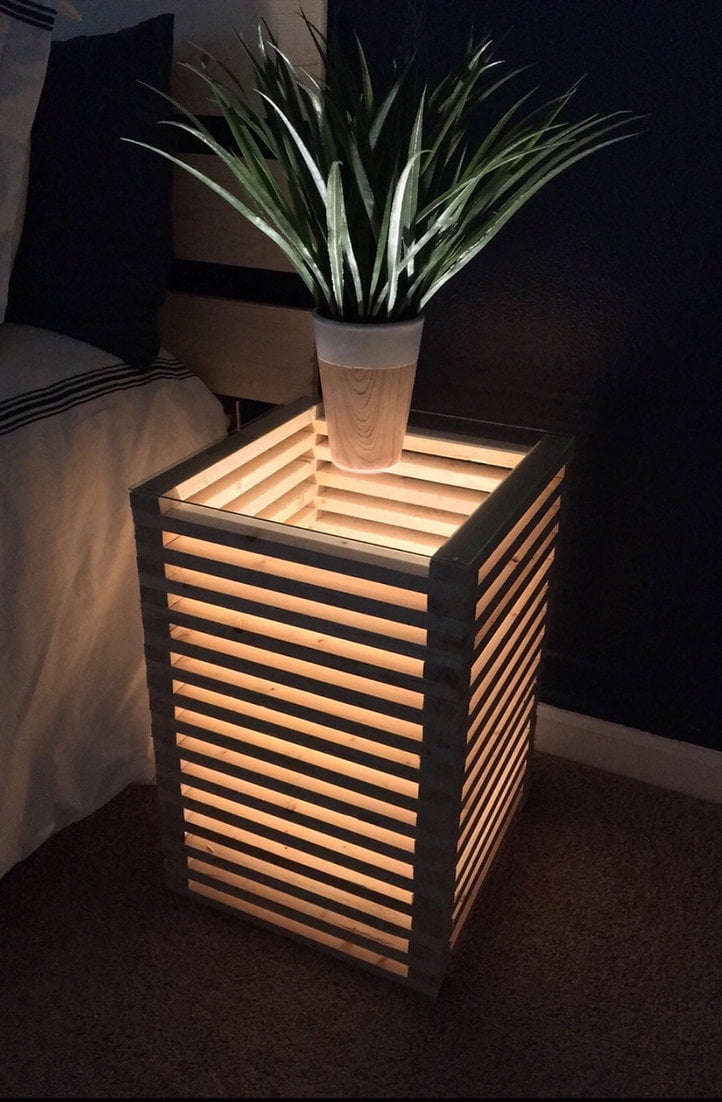
38. Illuminating Stacked Nightstand

Illuminating Stacked Nightstand

via Christiani Modern Wood Designs

We immediately fell in love with how cool this lamp looked. It can illuminate any dark area instantly and even lift your spirits!

Doing this project won't cost too much. However, you might need a tutorial to help assemble the slats.

39. Minimal Wood Lamp

Minimal Wood Lamp

via Turning it Home

Another project you can DIY immediately is this minimal wood lamp. We love this project's simplicity; you'll hardly need a tutorial for it.

Although it's relatively small compared to other lamps, it's still highly functional.

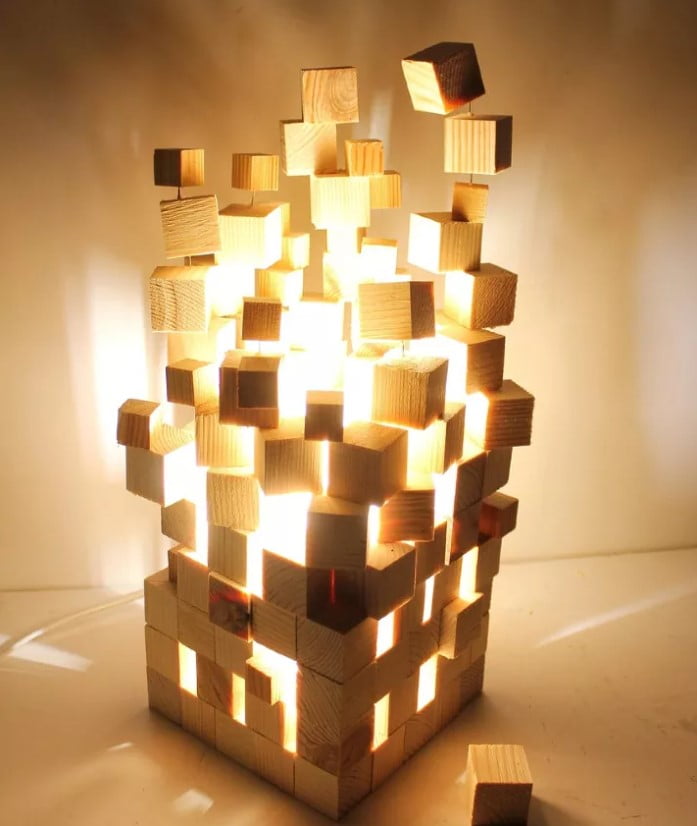
40. 3D Cube Desk Lamp

3D Cube Desk Lamp

via Polkilo

One look at this desk lamp, and you already know you've got a challenge ahead of you. It sports a unique style that's hard to put together.

Nonetheless, we're sure it's a challenge you'll be willing to take on. After all, it's a cool project you can feature at home.

41. Industrial Natural Wood Table Lamp

Industrial Natural Wood Table Lamp

via etsy.com

We love how stunning this lamp looks. It looks like it costs a lot to assemble, but it does not.

All you need are even wood slats drilled on a wooden base. Turn on the bulb and watch it illuminate your office.

42. Edison Light Bulb Project

Edison Light Bulb Project

via Homesthetics

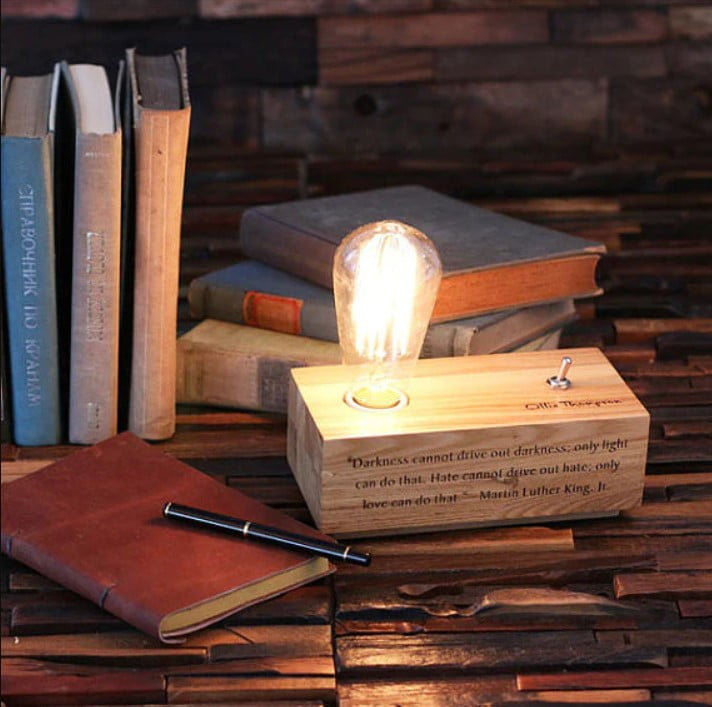
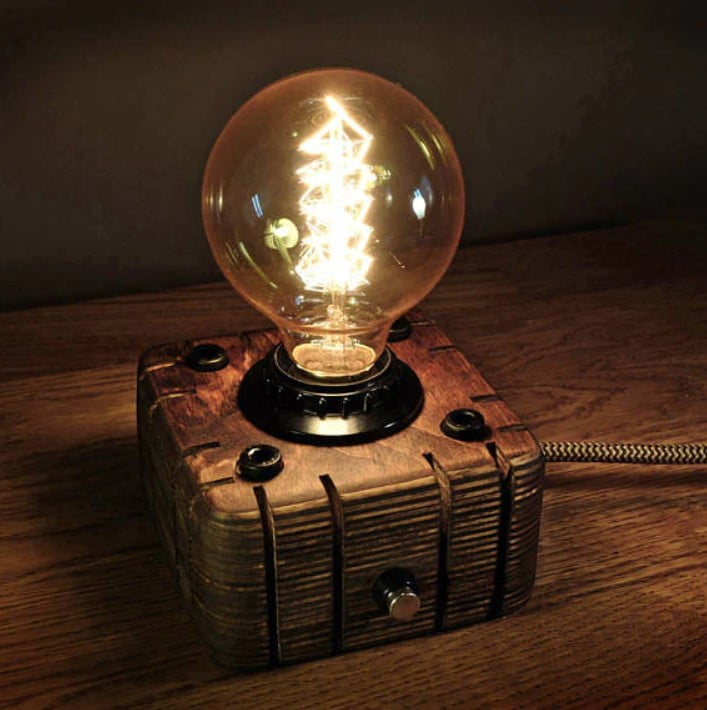
Pay homage to the father of light bulbs by making this simple DIY project. Just attach your favorite bulb to the middle of your favorite wood.

You can use this as the highlight of your modern room.

43. Customized Heartwood Ceiling Lamp

Customized Heartwood Ceiling Lamp

via pinterest.ph

The inside of a tree trunk looks stunning, especially the closer it gets to the center. A slab of the trunk can get expensive, depending on the wood you use.

Customize your own tree trunk ceiling light. Trade in your usual chandelier for this awesome DIY project.

44. Cracked Table Lamp

Cracked Table Lamp

via iDLights

Building this DIY table lamp is a lot of fun, but it is certainly tricky. You want to create a cracked illusion in both the base and middle, where the light will be illuminated.

Once you finish this project, you'll overwhelm many friends with this cool DIY lamp.

45. Wooden Coaster Lamp

Wooden Coaster Lamp

via Designer Trapped

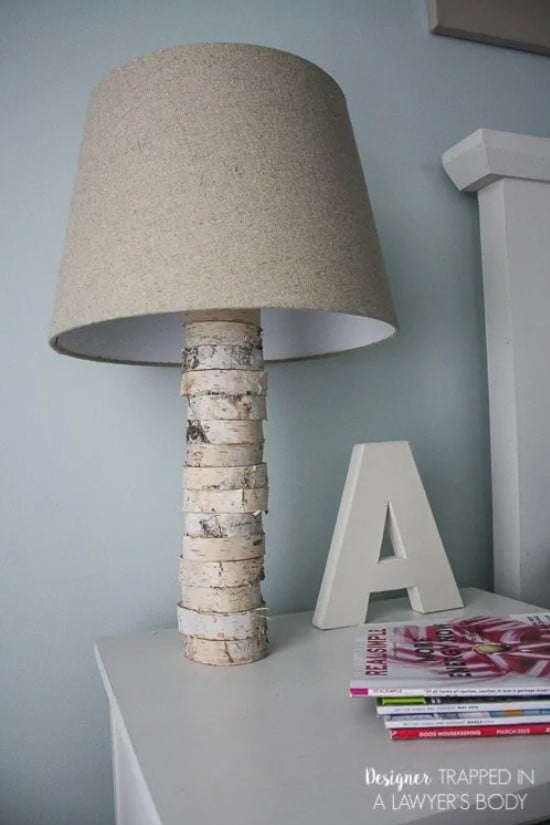
Repurpose your old, wooden lamps and coasters and use them as a base for your DIY lamp. It's a lovely project you can DIY immediately.

Pile the coasters on top of each other and secure them properly with an effective adhesive.

46. Studded LED Diode Lamp

Studded LED Diode Lamp

via Siegried Enge

If you want a challenging DIY project, this LED studded lamp is for you. You can put this lamp on your desk and make a good conversation starter.

Fair warning, putting the LEDs on one side of this branch will be tricky.

47. Easy DIY Tripod Floor Lamp

Easy DIY Tripod Floor Lamp

via The Merry Thought

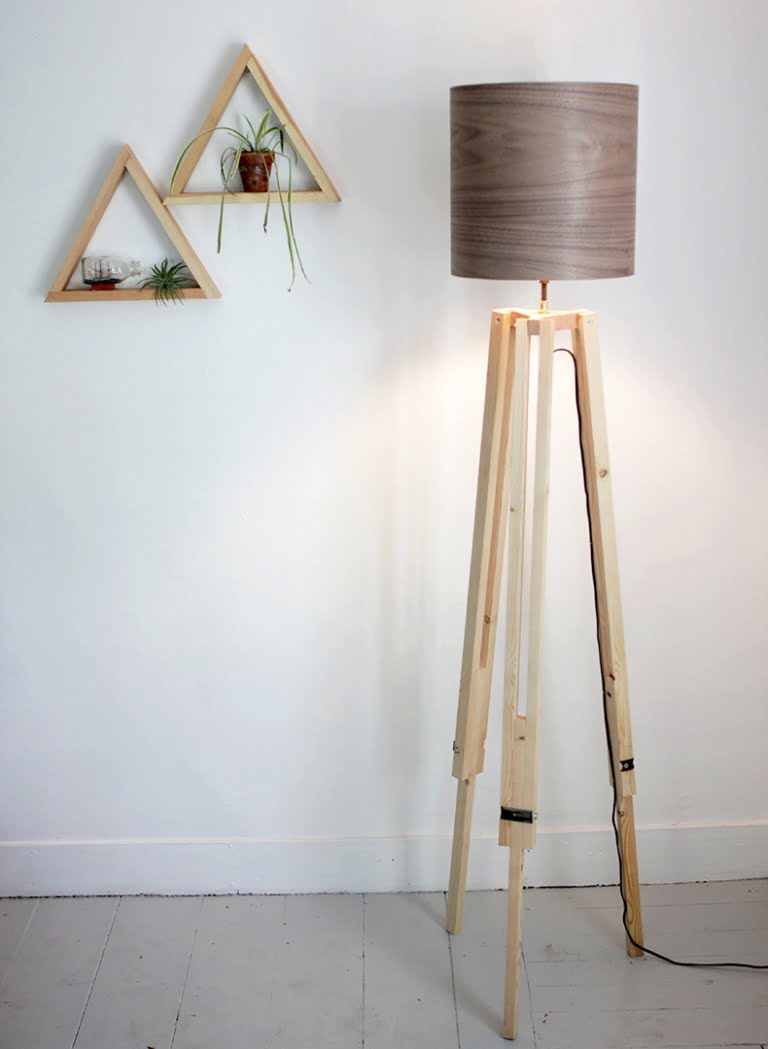
Create a tripod floor lamp with the help of a few wooden pieces. Make sure to cut each leg evenly to stand properly on the floor.

You can save a lot by building this floor lamp because the materials are hardly expensive.

48. Geometric Angle Lamps

Geometric Angle Lamps

via UshkiStudio

We love this geometric lamp because of its unique look. You probably think it costs a lot of money, but it does not.

The challenge with creating this wooden lamp is cutting the wood to an angle. But after that, you're all set to add your lighting system.

49. Small Office Table Rustic Lamp

Small Office Table Rustic Lamp

via MasterWoodUA

This small office lamp is so easy to make. All you need is a small piece of wood as a base and a light bulb!

You can design the wood according to your style to suit your room's aesthetic.

50. Hanging Wood Branch Pin Lights

Hanging Wood Branch Pin Lights

via TrendHunter

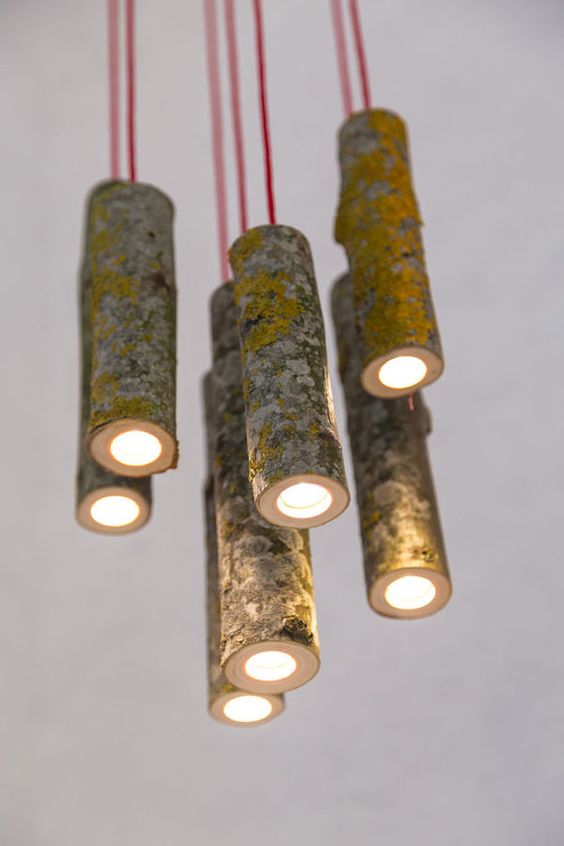
Who would've thought you could use branches as pin lights? Consider picking them up and bringing them home if you chance upon thick branches.

Create holes with a hollow center to insert the pin lights into the hole.

Wooden Lamp Projects Conclusion

Wooden Lamp Projects Conclusion

Creating your wood lamp is simple, easy, and will hardly cost you a fortune! You can have your IKEA-looking lamp at home. 

Be sure to follow along with your favorite tutorial to help you finish your wood project successfully! 

We hope you enjoyed this article. Let us know in the comments which DIY project you decided to create. We'd love to hear about it. 

You might also want to check out DIY PVC pipe projects that can get your hands busy. 

DIY PVC pipe projects are the most underestimated category in home crafting — a material that costs almost nothing per meter, cuts with a hand saw or even a length of string, and handles everything from outdoor furniture and garden irrigation to children's furniture, camera mounts, and kitchen organizers with equal structural reliability. If you have leftover pipe from a plumbing job or simply need budget-friendly solutions to real household problems, this collection of 50 builds spans bike racks, aquaponic gardens, overhead garage storage, ball pits, photography backdrop stands, wine rack drawers, dog cots, and a full cabana — covering the complete range from ten-minute utility fixes to weekend structural builds. Adjacent territory includes PVC lamps, starburst mirror frames, honey spinners, no-ladder gutter cleaners, sprinkler socket irrigation systems, and kiddie carwash setups. The detail most PVC project guides skip entirely: pipe diameter is the single variable that determines whether a build works or fails — using the wrong diameter for knife holders, shoe organizers, or wine racks means nothing fits, and no amount of assembly skill compensates for a material mismatch at the planning stage. Most builds here require only PVC elbows, T-fittings, pipe glue, and a saw, making beginner-friendly DIY PVC pipe ideas the genuine majority of this list rather than the simplified exceptions.

Before You Start
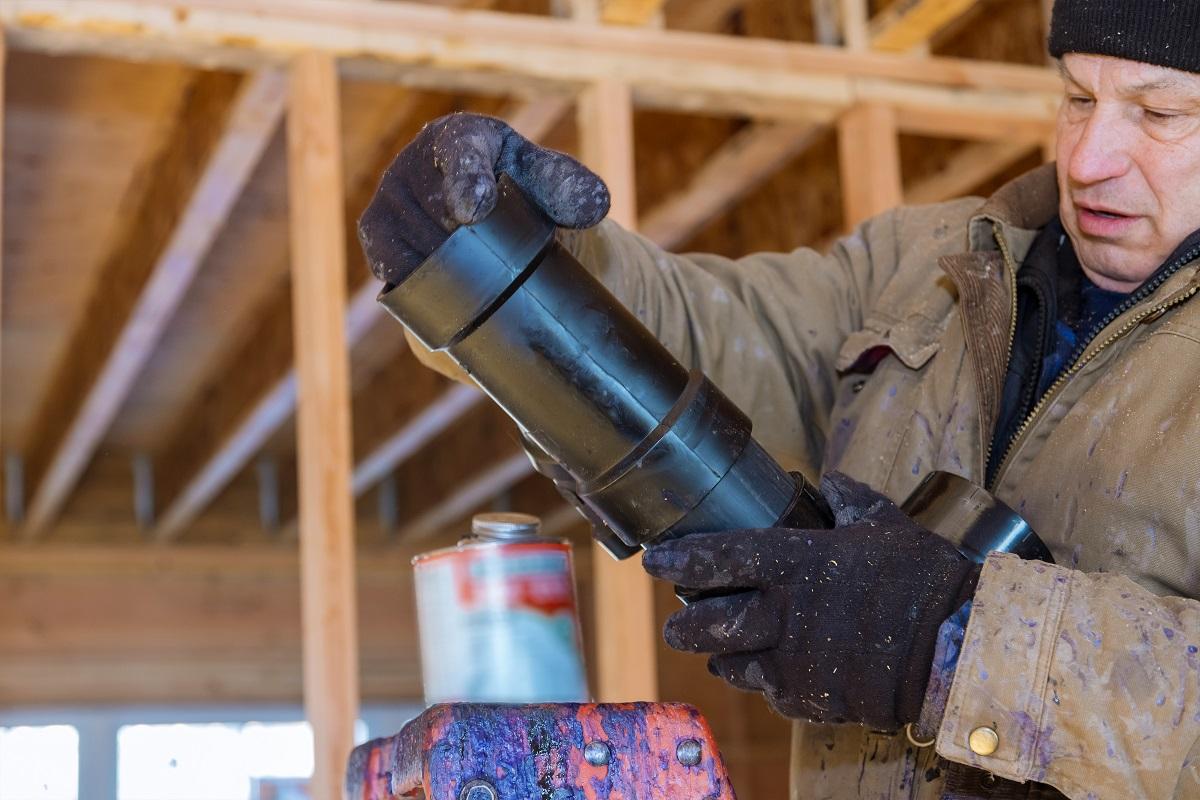
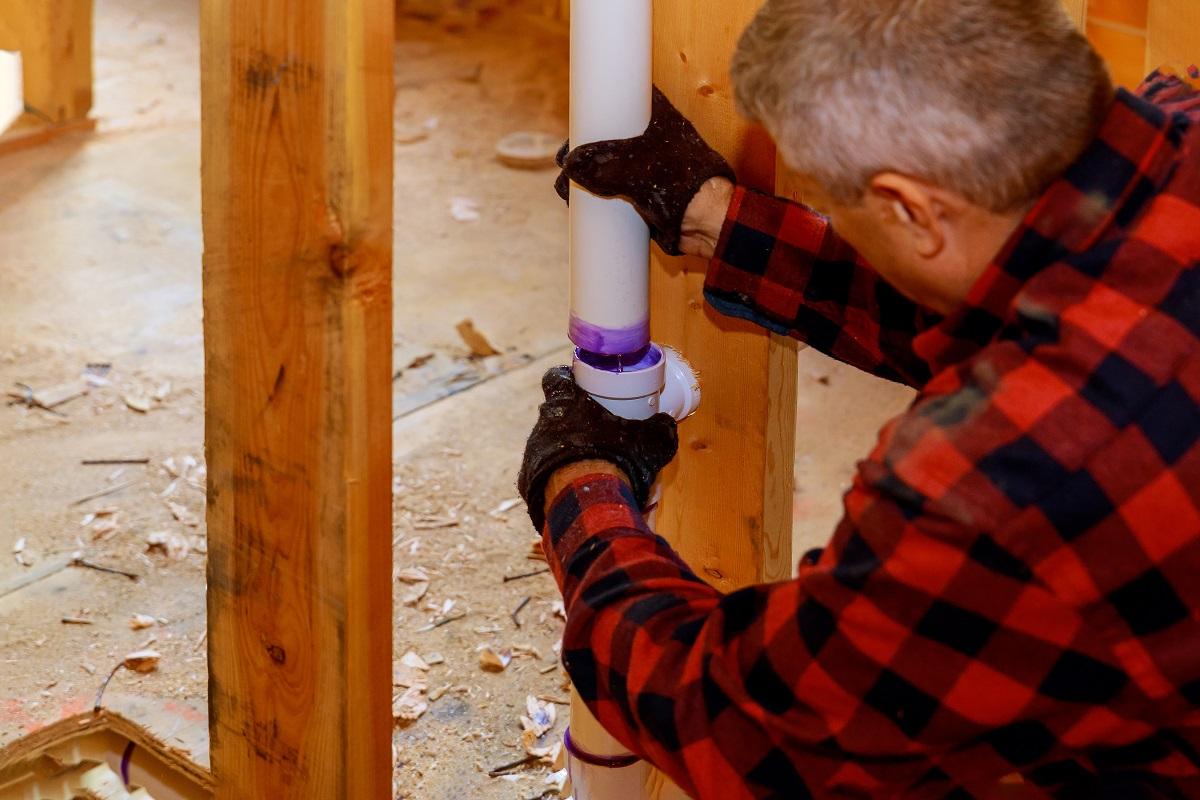
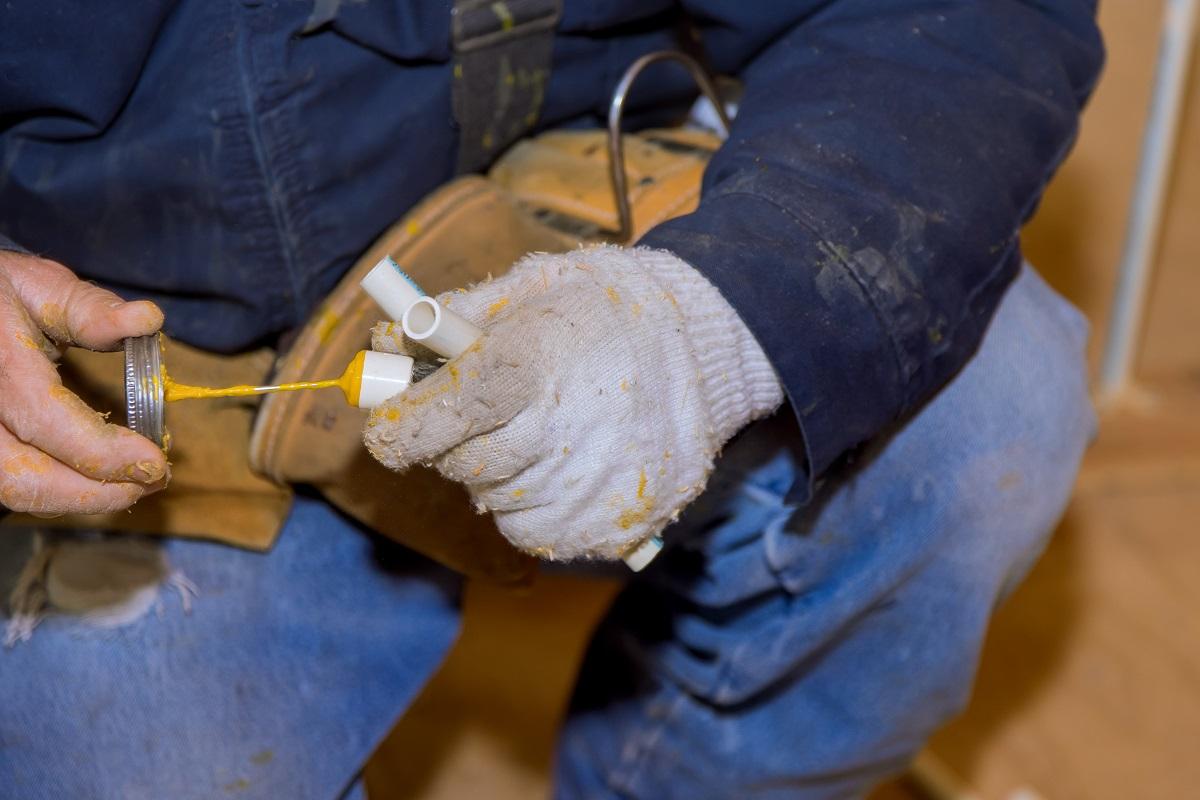
PVC cement does not work like regular glue, and treating it as though it does is the reason most structural PVC builds — the bed frame, the cabana, the dog cot, the ball pit — fail at the joints under real load. PVC cement is a solvent that chemically melts both pipe and fitting surfaces, fusing them into a single piece as the solvent evaporates. That process requires purple primer applied first to both surfaces, followed by cement applied while both surfaces are still tacky — the window is roughly 30 seconds. A joint assembled dry first and then glued, or one where the cement was applied to only one surface, looks identical to a correctly made joint but carries a fraction of the load. Twist the pipe a quarter turn as you push it into the fitting to distribute the cement evenly, hold it for 30 seconds without movement, and allow a full 24-hour cure before applying any load. For builds involving food — the aquaponic garden, herb planters, and honey spinner — standard gray DWV pipe is not rated for food contact. NSF-61 certified pipe, clearly marked on the label, is the only type safe for those applications. Check the label before cutting anything.

50 DIY PVC Pipe Projects You Can Do Today

Plastic pipes for the water system on grey background. Repair service, sale, online. Flat lay. Copy space 50 DIY PVC Pipe Projects You Can Do Today

Polyvinyl Chloride pipe, or PVC pipe, is a type of economical material used in sewer systems and water lines as it is durable and resistant to environmental factors over time.

Yet, there are instances where excess PVC pipes can be left rotting in the nooks and crannies of our storage space after construction or DIY repairs.

There will also be times when we'll need budget-friendly solutions for everyday needs, such as storage racks or even interior design elements.

So, instead of stocking PVC pipes, we can reuse them for other purposes which are laid down below. Let's get started!

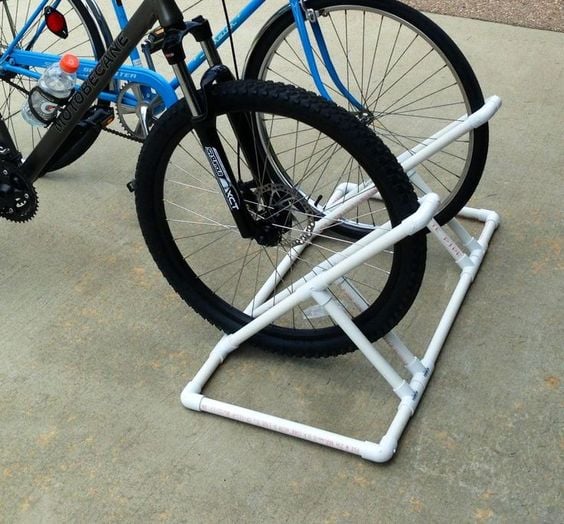
1. PVC Pipe DIY Bike Rack

PVC Pipe DIY Bike Rack

Image Source

If you are a habitual cyclist who uses bikes to-and-from work or are a serious cyclist who competes in marathons and races, you'll surely need a bike rack for your two-wheeled buddy.

To make a sturdy and reliable PVC bike rack while keeping your budget on track, use 3/4-inch PVC pipes and assemble them to replicate the image above.

The key challenge here is ensuring that your front wheel can fit and balance between the gaps.

2. Toddler Chair

Toddler Chair

via Trisha Poffenberger

During summer beach days or camping trips, you would want your toddlers to feel comfortable sitting down while getting some sun through this DIY PVC pipe project – a toddler chair!

In making the toddler chair, you must have a 3/4" PVC pipe, eight elbows, and six PVC tees.

You will also need to add a cloth that will serve as the seat and backrest. You can use fabrics showing your toddler's favorite cartoon character, superheroes, or preferred colors.

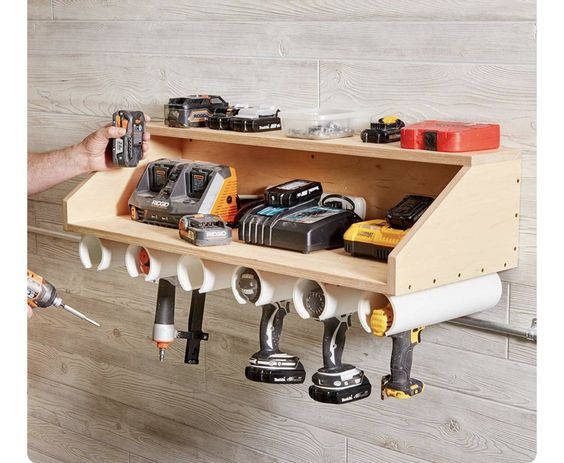
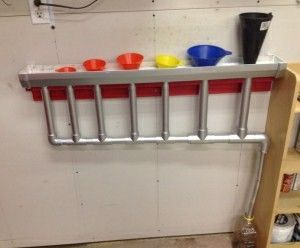
3. Drill Dock

Drill Dock

Image Source

An organized station for your drilling tools can bring joy to every individual immersed in mechanical work. You can work with PVC pipes to make organization happen even on a budget.

In making a drill dock PVC pipe project, you'll need to measure your drills and buy PVC pipes with diameters that can fully accommodate your equipment once slotted in.

4. PVC Pipe Water Shooter

PVC Pipe Water Shooter

via Sarah Dees

Providing your kids (and kids at heart) a fun time means creating PVC pipe projects that are entertaining, like a water shooter.

Making this PVC pipe project is easy because you only need the barrel (external) and the piston (internal), both of which can be made with different-sized pipes.

You'll need to insert the piston into a relatively larger barrel with a seal cap on top that has a drilled hole. This creates enough pressure to push the water out in the signature super soaker style.

5. DIY Marshmallow Gun

DIY Marshmallow Gun

via : Cindy

Keep the intensity (and fun) high during kiddie parties or family gatherings by shooting marshmallows everywhere! To have enough for everyone, you must have a cost-effective alternative – a DIY PVC pipe marshmallow gun!

It is easy to make, as you only need to combine PVC pipes, tees, and elbows to create a gun-like shape. Just ensure both ends are open to blow on one end and push the marshmallow out the other.

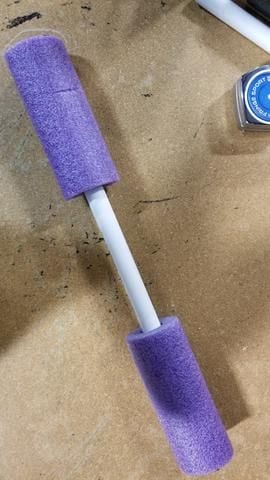
6. Pool Noodles

Pool Noodles

via Fringe Sport

When teaching your kids, and even some adults, to swim, they need reassurance that they will float no matter what, and you can do that through pool noodles.

To elevate your pool noodle's buoyancy and ease your tutees, you can cut it in half and insert a PVC pipe between the two noodles for additional stability and rigidity.

You can also use this for pool photoshoot designs if you keep the water noodles festive and on theme.

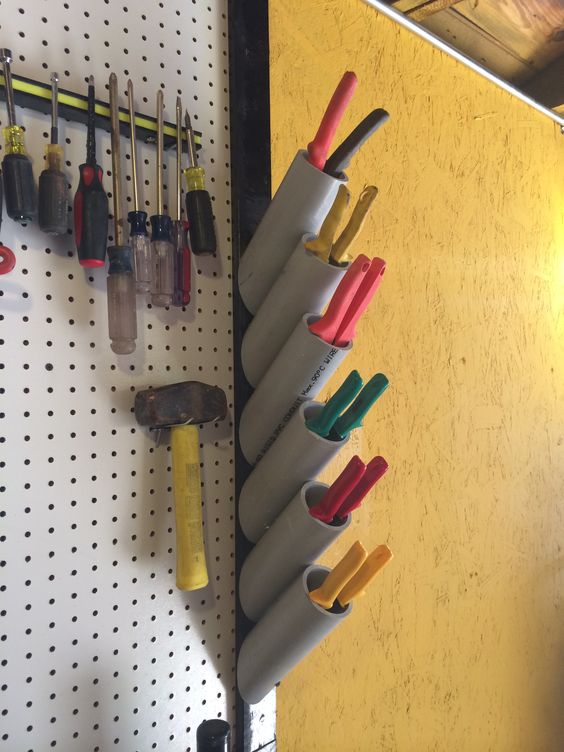
7. Knife Holders

Knife Holders

via Ryan Grondin

If you want to keep your kitchen or working area neat and well-ordered, you can do this through another PVC pipe project.

A DIY PVC pipe knife holder is essential in keeping the knives and users safe by moving them off the counter and away from your child.

In making your DIY PVC pipe knife holder, cut PVC pipe according to the lengths of your knives from the tip to the end of the spine.

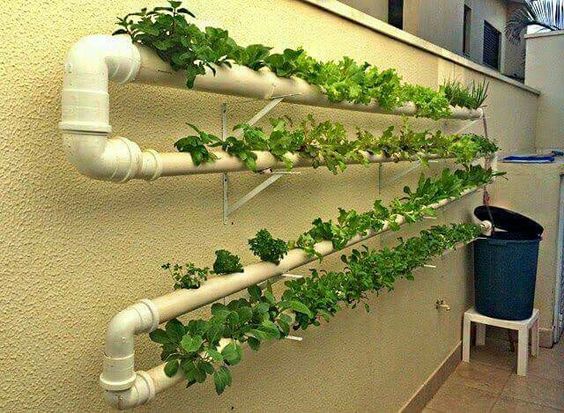
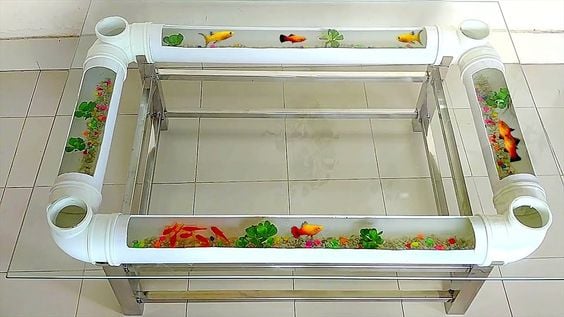
8. PVC Pipe Aquaponic Garden

PVC Pipe Aquaponic Garden

Image Source

As you create a PVC pipe aquaponic garden, sustainability and healthy living can now be found within your household.

To do this, you have to connect your PVC pipe (fluid conveyance) with holes to a water source (hose) and make sure that the latter can generate water throughout your pipe system.

9. DIY Laptop Stand

DIY Laptop Stand

via super ziper

Living in the modern world also calls for modern solutions, including a DIY laptop holder made of PVC pipes.

To do this, you need a 1 to 1-1/4-inch PVC pipe and six elbows. Then, you can sand and paint them to your liking. Lastly, connect them using glue to form an angled-laptop stand based on the size of your device.

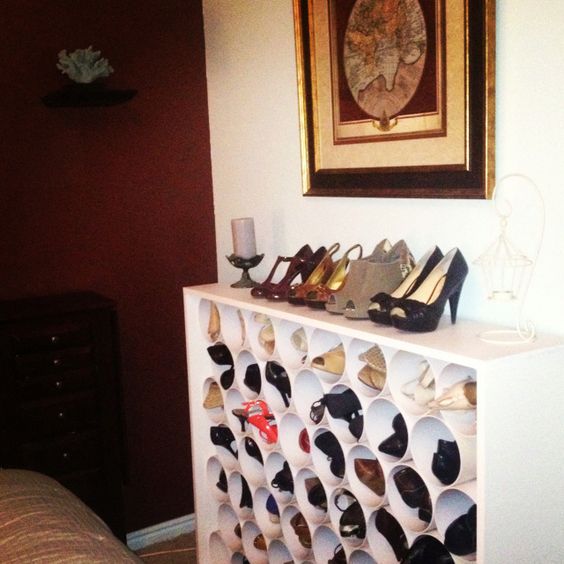
10. Shoe Organizer

Shoe Organizer

via : April Stephenson

If your hobbies include collecting shoes, the first thing you need to remember is the answer to the question: where will I put the shoes?

The most obvious answer is a shoe organizer. Yet, if you are on a tight budget for organizers, as most of your funds are focused on buying shoes, PVC pipe may be your friend!

You can cut a standard-sized 6-meter PVC pipe into 15 to 20 short lengths, depending on your shoe size, arrange them like the image above, and you can have your very own DIY shoe organizer.

11. PVC Cabana

PVC Cabana

via JTM

Relaxation is not complete without a cabana, whether by the swimming pool, at the beach, or right in your backyard.

Lounging in the comfort of a cabana while sipping your coffee does not need to be expensive, as you can include it in your lists of PVC pipe projects.

To do this, you must have at least eight PVC pipes, which can be six to ten meters long, depending on your desired design. Then, connect these PVC pipes using L and T-shaped fittings.

12. PVC Starburst Pattern Mirror

PVC Starburst Pattern Mirror

Image Source

Recycling your stock PVC pipes can also help up your indoor design by making it the mirror's frame. As we know, mirrors are essential parts of a home that can create the illusion of a bigger space in a smaller area.

To make a starburst pattern mirror, any tutorial would include cutting each pipe, gluing the pipes together in your chosen design, and attaching them to your walls via screws.

Moreover, you can also elevate this inexpensive way to decorate your home through light spray paint or aerosol paint.

13. PVC Lemonade Stand

PVC Lemonade Stand

Image Source

During the summer, one thing that both you and your kids will enjoy doing is making a lemonade stand to sell lemonade.

Before we proceed with the selling part, you can create a lemonade stand PVC pipe project with your young entrepreneur using a 40-foot PVC pipe, and slip tees, all of similar diameters.

After you have assembled the PVC pipe system, you can paint the signage by hand or with spray paint, add a stand cover, and let your kids start selling!

14. Kids Sprinkler

Kids Sprinkler

via Danielle Ramsay

If you want to spark excitement among the young ones during your annual family gathering or just for your usual weekend leisure, DIY projects like this kids' sprinkler will be perfect for any occasion

To make this DIY PVC pipe happen, you must use your imagination, lay out a design, buy PVC materials, use colorful tape and design all over the sprinkler, and connect to a water source like a hose.

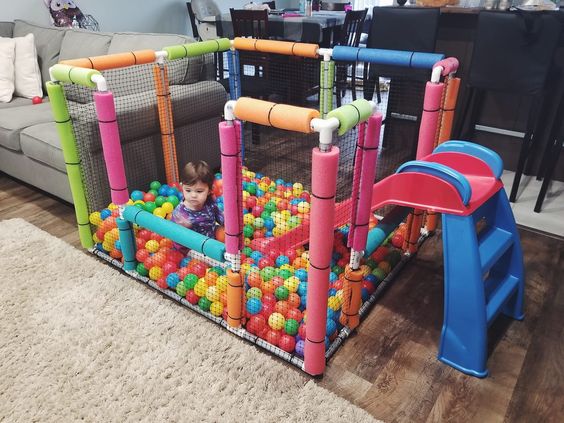
15. Ball Pit

Ball Pit

via Moesha Mercer

When you want your kids to feel the excitement and sensory stimulation from a ball pit without actually going to a ball pit park, ball pit PVC pipe projects are a great idea.

Aside from using a PVC pipe, it would be best to have some water noodles, elbow connectors, pipe glue, zip ties, netting, and balls.

Moreover, an additional way to boost your kids' mood is by incorporating their outdoor slides as an entrance to the kids' ball pit.

16) Bookshelf

Bookshelf

via Amanda

In trying to introduce the world of books, and life in general, to your kids, you are left with so many books and so little space to keep them. A bookshelf DIY PVC pipe can save your day!

With a bookshelf DIY PVC pipe, you secure the books and keep your little ones' areas nice and tidy. Make sure to make a shelf they can reach when their need to read arises.

Tip

The bookshelf design in the image above can also be used as your bag organizer within your closet.

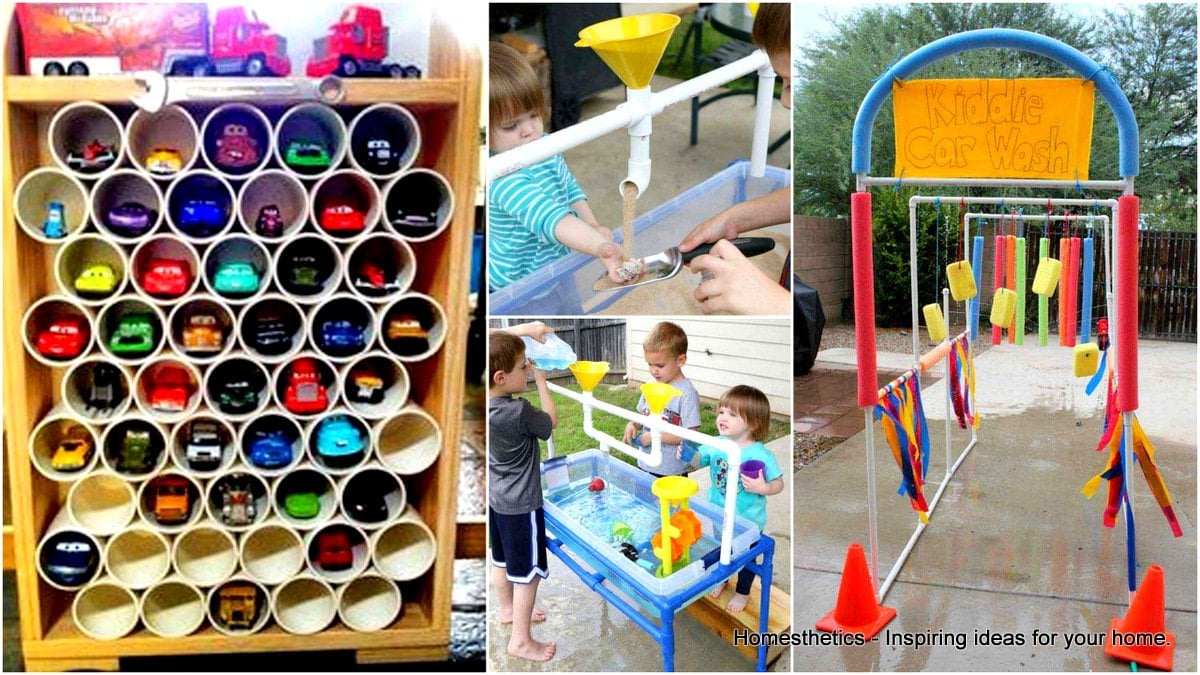
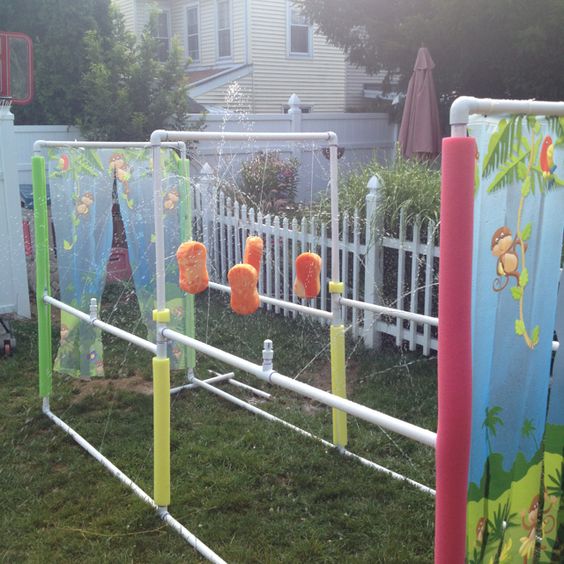
17. Kiddie Carwash

Kiddie Carwash

via Tanya Memme

During summer breaks, we need something that will keep our kids' minds busy, their bodies moving, and their hearts gleaming with joy, and there's no better way to do that than with a kiddie carwash in your backyard.

Aside from using a PVC pipe for the structure and fencing, make sure you have fabric, textiles, water toys, paper designs, sponges, a pool noodle, an expansive lawn, and colorful cones to add to the fun.

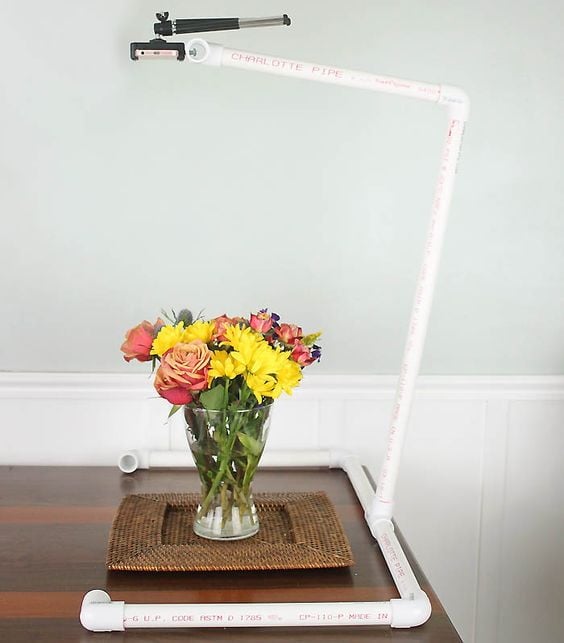
18. Overhead Camera Mount

Overhead Camera Mount

via Gina Michele

In the digital age, where content creation has been the topmost priority to earn money, and social relevance, an overhead camera mount is another essential that you need to have to take pictures or videos from a bird's eye view.

Overhead camera mounts on the market are expensive, so including this in your DIY PVC pipe projects is a must.

For this, you must ensure the lower PVC pipe mount is sturdy enough to support the neck and the weight from the camera once mounted.

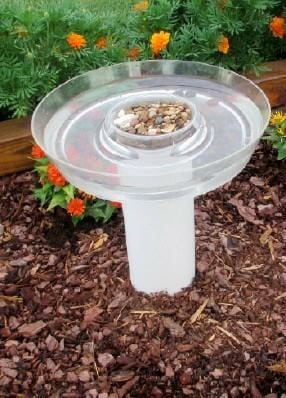
19. Bird Bath

Bird Bath

via Richard Buse

Birds need water to drink and to keep their bodies clean. To do that, they will need a bird bath.

But, a bird bath does not need to be expensive, it just needs to be efficient, and you can do that by creating one in your backyard using PVC pipe.

You can use a thick PVC pipe as the column of the bird bath. You can also cut a PVC pipe into sections, cut them in half (vertical), and form a frame using elbows to create a table-like bath.

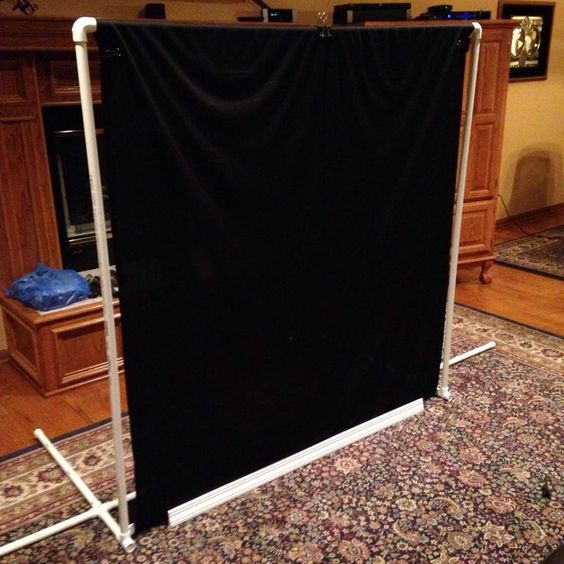
20. Photography Backdrop Stand

Photography Backdrop Stand

Image Source

Birthday shoots, homecomings, and other celebrations need a photo booth; in that booth, you will need a backdrop stand. Well, with that problem, the best solution is a DIY PVC pipe square frame covered in fabric.

It's easy to do as you only have to ensure the mount is well-built, the stands that hold it are well-balanced, and the fabric you attach is aligned with the theme.

21. Craft Room Tool Organizer

Craft Room Tool Organizer

via Aspen Flores

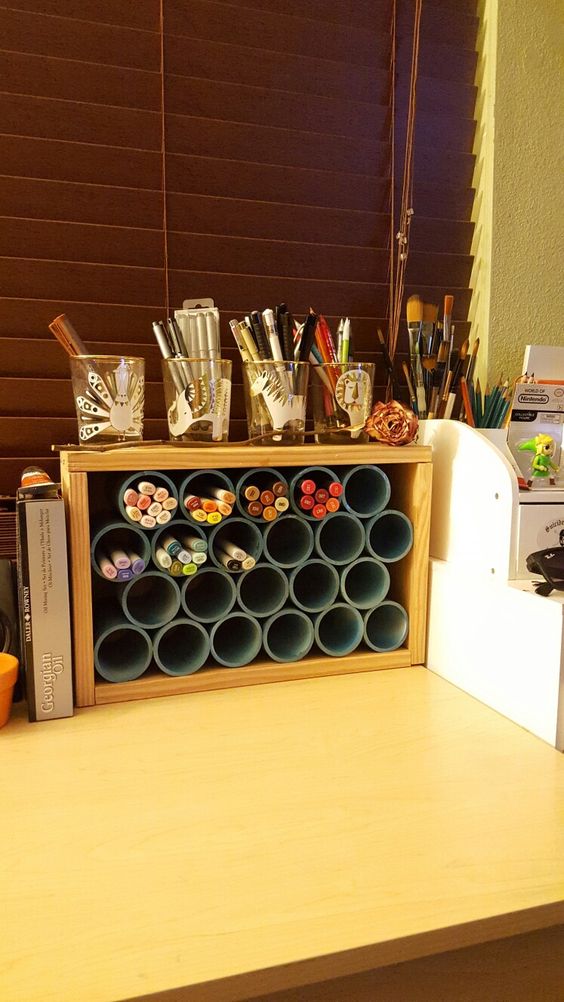
If you or your kids' hobbies involve arts and crafts, something that will surely spark joy in your lives is a craft room tool organizer.

Aside from the end product, you will also enjoy the process of making PVC pipe projects like the image above.

To make it more creative, aside from when you cut PVC pipe, remember to paint the tubes in your favorite hues and incorporate different patterns to make them lively and fun. 

22. Tool Pockets

Tool Pockets

via LifeProTips

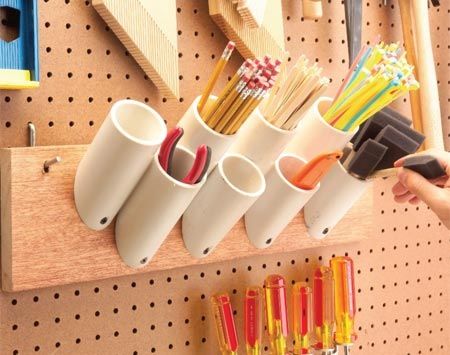
Things can get messy in a hardware store or workshop when tools and accessories are in disarray. Yet, you can prevent it with tool pockets PVC pipe projects.

This project's straightforward process only involves cutting the PVC pipe into a tube with lengths depending on the tools.

Then, proceed by painting (optional), attaching them to a wooden wall board, or just letting them stand tall above your work desk.

23. No-Ladder Gutter Cleaner

No-Ladder Gutter Cleaner

via SBLY Media

Cleaning the gutter takes tons of energy as you need to climb the roof and clean it from there. However, times have changed, and the DIY PVC pipe projects game has leveled up as you can now have a no-ladder-toss gutter cleaner.

To make this gutter cleaner, you must assemble the nozzle and the valve. The nozzle will be the one that will clean the gutter, and the valve is the one connected to your air or water source.

24. PVC Pipe Bed

PVC Pipe Bed

via Sterling Acree

Having kids means providing them with their own beds. Yet, what if you are on a budget or have a small space? The answer is a DIY PVC pipe bed!

In building a pipe bed, the foundation is the main thing you need to stabilize. They must be adequately connected using elbows and have different columns attached through a T-shaped PVC pipe.

Moreover, you can use cute rainbow washi tape designs to make it more appealing for the kids and tape it all over the poles.

25. Fall Wall for Kids

Fall Wall for Kids

via Summer Keyser

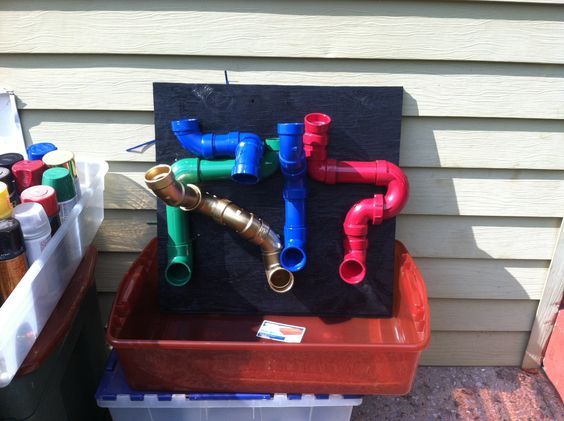
If you are looking for fun and games to keep your kids away from the spell of gadgets during the summer, you can create a fall wall for kids inside your home or in your garden.

For a complete tutorial, what you need to have are PVC pipes, elbows, a board where you can glue these materials, and a container so that the balls will not go anywhere upon falling.

You can also add some colors to your pipes using spray paint. Make sure that the colors you incorporate are eye-catching and can stimulate visual sensations.

26. PVC Fence

PVC Fence

via Karina WA

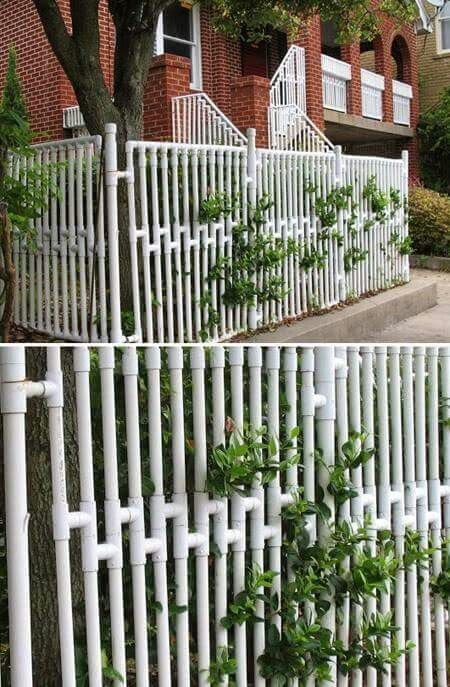
A fence is a protective element that protects the perimeter of your yard, yet it sometimes costs a lot, especially in this economy. However, there are cheap but reliable alternatives, such as a PVC pipe fence.

Aside from securing your homes, it can also be an excellent addition to level up your garden aesthetics, especially when you know how to design the fence using T and L-shaped PVC pipes.

27. Cord Organizer

Cord Organizer

via Brittany

Another inexpensive way to organize your cords is by creating a PVC pipe cord organizer.

To do this, you only need to cut a PVC pipe horizontally to the lengths you need, attach them to the wall using glue or an adhesive, or drill a hole and lock them with a screw.

28. Drying Rack

Drying Rack

via Angie Hutching

In every pool session, your kids would gladly want a place to get or hang their wet towels to dry off quickly. A PVC pipe drying rack is the best affordable idea you can get in this case!

You can have it in a two-way parallel design or a layered rack similar to the image. Just remember to make the frame foundation well-connected to ensure the balance of the rack.

You can permanently mount the drying rack in your garden. It will act as your pool towel hanger and washed clothes dryer instead of letting them dry inside the bathroom.

29. Honey Spinner

Honey Spinner

via Permies

Extracting honey from honeycombs can be done quickly using a honey spinner. To help small-time beekeepers, a DIY PVC pipe spinner can be used as a cheap yet efficient alternative.

In making the PVC pipe honey spinner, you only need about a meter and a half of PVC pipe to seal the deal.

30. Wine Rack Drawer

Wine Rack Drawer

via Martha Stewart

There is no such thing as too much wine, but they must be kept perfectly secured in a wine rack drawer similar to this Martha Stewart piece.

For PVC pipe furniture projects like this to prosper, you need to buy PVC pipes with a diameter that fits the body of your wine bottles.

It would also help to cut the PVC pipe in lengths that can accommodate the bottom up to the caps of the wines.

Fun Fact

You can also design your wine rack with some wine corks, and to do that, you need to check out our article on DIY wine cork projects.

31. Odd Bits Organizer

Odd Bits Organizer

via Julie Salamone-Lee

If you have pets and kids, one of your priorities is to keep odd bits away from their reach. You can do that using a PVC pipe odd bits organizer.

To do that, cut your PVC pipe, arrange them in any manner you like, whether horizontal or vertical and screw them into your walls above their reach.

32. Sprinkler Socket System

Sprinkler Socket System

via samuel belknap

When you are a busy person who goes to the office before sunrise and leaves after sunset, you surely won't have spare time to water your garden. Yet, it's not a problem when you have a sprinkler socket system.

You must assemble and connect the pipes to a primary water source or hose for an irrigation sprinkler socket system to work.

33. Floating Window Planter

Floating Window Planter

via Mandi Johnson

A fun detail to add in a kitchen is a floating window planter for your herbs, which means having flavor and health benefits right within your reach while preparing food.

You must have at least a 4-inch PVC pipe to have this kind of magic indoors. Then, you must put holes in the pipe's body, depending on how many herbs and shrubs you will plant.

Also, ensure the holes are big enough for the plants to breathe and take in enough water for sustenance.

34. PVC Pipe Lamps

PVC Pipe Lamps

via decor8

If you are tasked to decorate your house's interior design, an idea worth doing is a PVC pipe lamp project.

For PVC pipe projects like this, you need to follow this tutorial: cut a PVC into a tube, depending on the diameter of your liking, carve different shapes and patterns on its shell, paint, and put a light source inside.

In addition, you can also put this as a table centerpiece to level up your table décor and preparations.

Remember

You can always complement the PVC with a wooden lamp by following the full instructions in this DIY wooden lamp article!

35. Ladder Golf Game

Ladder Golf Game

via Brielle and Karen

A PVC pipe can also save your dull day by helping you create a ladder golf game for kids and adults.

The tutorial for this project is simple, as you only need to connect the lower frame with the standing frame and add other accessories using yarns or ropes.

36. Soccer Goal

Soccer Goal

via Dave Fymbo

A PVC pipe can transform a plain and simple yard into a play and training area for kids who like playing soccer or association football.

To create a sturdy soccer goal, use a thicker PVC pipe about 2 inches in diameter, and attach a net around it. You'll have your little FIFA players scoring goals in no time.

37. Overhead Garage Storage

Overhead Garage Storage

via Dubois Cornell

Sometimes the floor area of your garage is not enough to cater to all of your stuff (given your car and associated tools), which is why you need to be creative and integrate additional overhead storage using PVC pipe.

To do it, you must connect the pipes and use a screw to safely fasten the pipes to the garage's ceiling.

38. Sanding Files

Sanding Files

via TRAINS4U2C2

PVC pipes surely come in handy, as they can also be used as sanding tools to contour surfaces of different materials.

To make it functional, you need to cut a parallel gap in the pipe's body and use it to buff the nooks and crannies of complex shapes.

39. Oil Recovery System

Oil Recovery System

via Ryan Keele

Oils can be reused, but sometimes, recovering them after every use isn't easy. Yet, it's an easy task to do when you have an efficient oil recovery system made of PVC pipe.

For this, you must assemble a tube that connects to a particular funnel. You will need another pipe that will act as the main line for all the other tubes and another connection that will lead the oil right into the recovery bin.

40. DIY Table

DIY Table

Image Source

If you think glass and wood are the only table materials that bring out the aesthetics in every house, then you're wrong because a PVC pipe table can be an elegant addition to your interiors, too.

Aside from being sophisticated furniture when it comes to visuals, a PVC pipe table can also be a valuable item that can house your fish, just like in the image above.

41. Dog Cot

Dog Cot

via Marìa Fernanda Alfaro Estrada

Dogs like to play and sleep anytime and anywhere, but it will surely make them feel more loved and cared for when they have their very own dog cot to play and sleep on.

A PVC pipe dog cot is simple to make. Its complete tutorial only involves making a frame, cot feet, and adding fabric that will act as the dog's bed.

42. PVC Pipe Baby Gym

PVC Pipe Baby Gym

via Karol Michels

In helping your kids learn how to walk, the best cheap solution is a PVC pipe baby gym, which they can hold on to when taking their first few steps.

The PVC pipe baby gym full tutorial only involves creating two parallel rails with bottom stands connecting to balance the baby gym out.

43. Vacuum Attachment Holder

Vacuum Attachment Holder

via Lori Taylor

When using a vacuum, we tend to forget where we placed a specific attachment, and in turn, delay our cleaning or storing.

To help you keep things tidy and secure, we have a solution allowing you to store all your vacuum attachments in a single area – a PVC pipe vacuum attachment holder!

All you need is a pipe with a diameter that fits the opening of your attachments, connect it to wood or wall using a screw, and stick and store your vacuum attachments.

44) Utensil Serving Station

Utensil Serving Station

via Brittany Bailey

Earlier, we discussed how to build a cabana, and the best pair to a cabana is a PVC pipe utensil serving station to complement your outdoor set-up with a fitting buffet.

To make your serving station, cut the PVC into the length of your utensils from the neck down to the handle. After that, you can style the pipes using ribbons or other colorful accessories.

Then, you can store the utensils inside your DIY PVC utensil serving station.

Tip

You better check out the tutorial on plastic spoon crafts to be aware of the other creative and fun activities you can do with your utensils.

45) PVC Pipe Playhouse

PVC Pipe Playhouse

via IMAGE SOURCE

If you can make an in-house ball pit, you can also do a playhouse using PVC pipes, clothes, and other fun materials for your kids.

Doing this is like imitating the complete tutorial of a cabana. The difference is that the PVC pipe playhouse is smaller in size.

46. Fishing Rod Organizer

Fishing Rod Organizer

via Carrie Haddican

When your life revolves around fishing, you most likely have a lot of fishing rods stored in your garage. That raises the question: how can I store all these rods?

The answer is simple, use a PVC pipe similar to the image above. A PVC pipe organizer can house at least eight fishing rods. But it can still accommodate more, depending on the size of your PVC pipe.

Fact

You can also do this for your golf clubs.

47. String Pipe Cutter

String Pipe Cutter

via Part Time Cowboy

You do not need heavy equipment to cut through a PVC pipe, as a string can help you get the job done.

This is done when you create friction by continuously rubbing the string around the area of the pipe you want to cut. After a few tries, the friction will neatly divide the PVC pipe.

48. Mattress Transport Sling

Mattress Transport Sling

via Jackie

Moving a mattress from one place to another is a no-brainer with a full tutorial on how to make a PVC pipe mattress transport sling.

To do this, you need to make a bottom structure based on the average length of your mattress, vertical stands to connect the bottom and top parts, and a rectangle-like upper part that will serve as holders.

49. Hair Dryer Stand

Hair Dryer Stand

via Matt's Finds

Doing your hair is all fun and games until you finish the actual hair styling part, and you are left with nothing but a question about where to put your hair dryer and flat iron.

Well, we have an answer – a PVC pipe hair dryer stand!

The complete tutorial for the hair dryer stand is undemanding, as you only need a Y connector PVC pipe to solve any hairy situations.

50. Flower Vase

Flower Vase

via Dot & Bo

Last but not least from this PVC pipe full tutorial list is the flower vase that can elevate the visual aesthetics of your home, office, or other places.

To do this, all you have to do is get a Y connector or an elbow PVC pipe, put some flowers on it, and display it on your coffee table or give it as a gift on Mother's day.

DIY PVC Pipe Projects FAQs

  • We know you want to clarify some things related to PVC pipes and DIY activities. Well, we have some of the answers to your FAQs in this section. Read on!

  • How can you make a PVC pipe look nice?

    You can make a PVC pipe look nice by doing the following:

    • Adding light to dark paint colors
    • Decorating with a stylish Washi tape
    • Reusing it in your garden, bathroom, or as house decor where you wouldn’t expect to see PVC pipes
  • How do you bend PVC pipe DIY projects?

    You can easily bend the PVC pipe by putting oven-heated sand inside the pipe for about a minute. 

  • DIY PVC Pipe Projects Conclusion

    Conclusion

    With all the do-it-yourself projects on PVC pipes from this list, you can surely have an enjoyable, productive summer with your kids through the different activities listed above.

    Just remember that a PVC pipe is not only for sewers and water systems, as it can also be your best companion for a fun-filled activity and the best one for organizing stuff.

    Now, get your pipe, follow the tutorial of your preferred DIY, and create magic with your PVC pipe projects!

    DIY bamboo projects occupy a category most outdoor crafters underestimate — a material that is stronger than most hardwoods by weight, grows faster than any timber alternative, and works equally well for structural builds like gates and shower enclosures as it does for decorative ones like wind chimes and LED landscape lights. If you're looking for garden and outdoor project ideas that feel genuinely distinctive rather than generic, this collection of 31 builds spans cascading fountains, privacy screens, tiki bars, vertical planters, tomato cages, hanging lanterns, bee houses, and full furniture builds, including benches, chairs, and coffee tables. Adjacent territory includes bamboo rain gutters, sunburst mirror frames, grow walls, spiral garden edging, yard dividers, and bamboo torch lighting installations. The detail most bamboo craft guides skip: bamboo must be dried for six to twelve weeks before any structural build — using green, moisture-laden poles in joinery or furniture projects causes warping and joint failure as the material cures, which is the single most common reason first-time bamboo builds fall apart within a season. Most projects here require only twine, a drill, and zip ties as core hardware, making beginner-friendly DIY bamboo garden ideas the practical starting point for the majority of builds on this list.

    Before You Start
    Plastic spoons are not all the same material, and that difference determines whether a project holds together or falls apart within days. Most craft failures with plastic spoon projects trace back to hot glue applied to polypropylene — the slick, slightly waxy plastic used in many disposable spoons that hot glue cannot bond to reliably. Polystyrene spoons, which feel slightly more rigid and snap cleanly rather than bending, accept hot glue and paint far better. A simple test: press a fingernail into the back of the bowl — polypropylene leaves no mark and feels slightly greasy; polystyrene marks more easily and feels drier. For projects that require melting and reshaping spoons into petals, roses, or bangles, use a heat gun rather than an open flame — a candle produces uneven heat that scorches before it softens, and melting polystyrene over an open flame releases styrene vapors that require ventilation. Work near an open window regardless of heat source. For gluing, roughing the spoon surface with 120-grit sandpaper before applying adhesive improves bond strength on any plastic type — skipping surface preparation is why most spoon flower and mirror projects shed pieces within weeks of completion.

    50 Creative Plastic Spoon Crafts and Projects

    Overloading oceans. Colorful dangerous plastic utensils killing animals in the oceans and harming our environment. 50 Creative Plastic Spoon Crafts and Projects

    We always end up with a ton of extra plastic spoons at home. Instead of throwing them out, consider transforming them into beautiful art pieces!

    1. Plastic Spoon Christmas Trees

    Plastic Spoon Christmas Trees

    Make your Christmas memorable by creating small Christmas trees using plastic spoons. This project is easy, and you can use different colored spoons.

    You can use green or red spoon heads in keeping with the Christmas spirit. Alternatively, you can go for a monochromatic look using only white spoons.

    2. Lilac Rose Petals

    Lilac Rose Petals

    via : Purple Hues and Me

    This rose petal vase is one of the most stunning ideas we've come across. It makes good home décor without costing you a fortune!

    You only need plastic spoon heads, an old bowl, and some petals. Glue the petals to the spoon, and shape it along the bowl's curves.

    3. DIY Spoon Roses

    DIY Spoon Roses

    via : Made by Marzipan

    Did you know you can make roses out of plastic spoons? The results look stunning, especially if you use colorful spoons.

    All you need to do is melt the spoon and mold it into a rose. Leave it to harden, and you're done! Just be careful with handling the heat, especially around kids.

    4. Plastic Spoon Vase

    Plastic Spoon Vase

    via : DIYnCrafts

    If you've got an extra plain vase at home, spruce it up with colored plastic spoons. All you need is a glue gun and spoon heads.

    You can create an Ombre-inspired vase to give it a fun and chic look. Add some flowers to it, and you're done!

    5. Plastic Spoon Peacock

    Plastic Spoon Peacock

    via : StyleEnrichDIY

    Peacocks are stunning birds because of their bright and luscious feathers. You can create your very own peacock creation using plastic spoons!

    Color your spoons with bright hues like green, yellow, and blue. Put them all together, and you have a stunning project to be proud of.

    6. Plastic Spoon Puppets

    Plastic Spoon Puppets

    via : Creative Jewish Mom

    Use your old plastic spoons as puppets! This is one of the easiest plastic spoon crafts you can do with your kids.

    They can draw their favorite animals on the back of the spoon heads! They can even add felt and other materials to give it a textured effect.

    7. Soda Plastic Bottle Bird Feeder

    Soda Plastic Bottle Bird Feeder

    via : Kelly Leigh Creates

    Don't throw your old plastic bottle just yet — you can repurpose it as a bird feeder. You hardly have to do anything except cut two parallel holes in the body.

    Insert old wooden spoons in the hole, which will serve as a holder for the bird feeds. This bird feeder project will take you only a short time to do!

    8. Plastic Spoon Wreath

    Plastic Spoon Wreath

    via : Tip Junkie

    Creating a plastic spoon wreath is challenging, and it's something that will test your kids' patience.

    In this DIY plastic spoon craft, they'll learn to bend the spoon into a wreath! Is your kid up for the challenge?

    9. Plastic Spoon Ants

    Plastic Spoon Ants

    via : Surviving a Teacher's Salary

    Other easy spoon crafts are plastic spoon ants. You can use a bright red plastic spoon like fiery red ants!

    Wrap the body with pipe cleaners and add googly eyes to the spoon heads. That's everything you have to do.

    10. Plastic Spoon Pumpkin Craft

    Plastic Spoon Pumpkin Craft

    via : Chica Circle

    One of the most creative plastic spoon projects we love doing is pumpkin decors. It's a perfect project for kids to mark the start of fall.

    All you need are orange plastic spoon heads, and start sticking them to a base. This is one way to get in a festive mood without buying pumpkins.

    11. Salt and Sugar Spoon Heads

    Salt and Sugar Spoon Heads

    via : Smart School House

    Plastic spoon craft ideas don't always have to be grand. Sometimes, the simplest projects can make a significant impact at home.

    Take this salt and sugar spoon project, for example. It's a great way not to waste plastic spoons and have a use for them in your kitchen!

    12. Paper Plate Birds

    Paper Plate Birds

    via : krokotak

    Let your children's creativity unleash with this paper plate bird project. You only need a few crafting supplies — such as a spoon and a paper plate!

    The plastic spoon will be the base, and the paper plate as the body. Stick a few feathers on the plate to make it more realistic.

    13. Plastic Spoon Catapult

    Plastic Spoon Catapult

    via : Devin Collier

    Children love catapulting things at each other, and they can get very creative with what they use. Why not teach them how to make a plastic spoon catapult?

    You only need popsicle sticks, rubber bands, and old plastic spoons. Your kids can use it to catapult marshmallows at each other!

    14. Spoon Toy Doll

    Spoon Toy Doll

    via : Skip To My Lou

    Dolls are one of the most sought-after toys by kids. They can never have too many of them, and their collection grows yearly.

    Teach your kids how to craft a spoon toy doll! They can design the doll however they want it to look.

    15. Holiday Painted Spoon Heads

    Holiday Painted Spoon Heads

    via : Hello Wonderful

    Prepare your children for the holidays by crafting this lovely holiday décor. You can liven up your home without having to spend a fortune!

    You and your kids can paint your favorite Christmas characters on spoon heads. It could be a snowman, a reindeer, or even Santa Claus himself!

    16. Vegetable Garden Spoon

    Vegetable Garden Spoon

    via : Twig and Toad Stool

    Are you always confused about which plant is which in your garden patch? Why not add signage by using wooden spoons?

    You can write the names of the plant on the spoon heads and even draw them! Stick it in your garden patch, and you will no longer have any trouble distinguishing them.

    17. Disney Princess Spoons

    Disney Princess Spoons

    via : iHeartCraftyThings

    Disney princesses are an icon to every child — they know each character by heart. Why not let them craft their favorite princesses with the help of plastic spoons?

    You only need dollar-store materials to end up with a really beautiful project. Your child will surely love this idea.

    18. Family Wooden Spoons

    Family Wooden Spoons

    via : Teach Me Mommy

    An awesome project you can do as a family is this wooden spoon project. Every family member can create their spoon versions to showcase at home.

    It's a great bonding activity you and your kids can do. Fun crafts like this will surely be part of your kids' core memory.

    19. Lion Spoon Head Craft

    Lion Spoon Head Craft

    via : Bible Class Creations

    It's so easy to create a lion out of a spoon head. You only need yarn and a marker for this spoon craft! No need to get more craft supplies.

    You can use colored yarns to make the lion's mane look fun and quirky! Start pasting it on the outer edge, and leave it to dry.

    20. Spoon Flower Napkin Ring

    Spoon Flower Napkin Ring

    via : Purple Hues and Me

    You won't need to buy a napkin ring once you've mastered making this spoon craft.

    All you need are a few plastic spoons to mold into a flower. You can use colorful spoons to match the color of your table napkins.

    21. Thanksgiving Turkey Spoon Crafts

    Thanksgiving Turkey Spoon Crafts

    via : Hub Pages

    Many children look forward to thanksgiving because it's one of the few holidays to bond with their whole family and eat out.

    Make this holiday extra memorable by creating this spoon craft. Cut out a few pieces of art paper to use as turkey feathers. Add eyes and watch the spoon come to life.

    22. Thanksgiving Chalkboard Wreath

    Thanksgiving Chalkboard Wreath

    via : PartyCity

    Another awesome thanksgiving project is this chalkboard wreath. All you need is a chalkboard and some plastic spoons.

    Line the board with your plastic cutlery, and stick it properly. You wouldn't want it to fall over the place before the holiday ends.

    23. Plastic Spoon Centerpiece

    Plastic Spoon Centerpiece

    via : mygrowinghome

    The next time you're looking for an art piece for your home, consider making one instead. This plastic spoon centerpiece looks stunning — you won't believe it only costs a few dollars!

    All you have to do is stick your plastic spoons to a circular Styrofoam and spray paint it with your favorite color.

    24. Small Flower Pots

    Small Flower Pots

    via : Crafts For All Seasons

    Start with this simple flower pot project to teach your kids how to have a green thumb. You need a small pot/vase and a few plastic spoons to stick on the pot!

    Use a sharpie pen to draw on the spoon heads to get more crafty. Remember to place beautiful flowers once you're done!

    25. Clear Vase with Spoon Flowers

    Clear Vase with Spoon Flowers

    via : Purple Hues and Me

    We love a clear vase because it looks chic and modern — it ties well in any room design. Spruce your clear vase with this spoon craft!

    Melt your clear plastic spoons and shape them into a flower! Don't worry, you don't have to perfect it on your first try.

    26. DIY Rose Accessory

    DIY Rose Accessory

    via : Cut Out + Keep

    Who would have thought a plastic spoon could be used as an accessory? Plastic spoon flowers make a good addition to your collection without spending a fortune.

    Paint it with your favorite color, and viola! You have a DIY rose accessory that will be a show-stopper and a good conversation piece.

    27. Plastic Spoon Ladybugs

    Plastic Spoon Ladybugs

    via : DIYnCrafts

    Plastic spoon heads have a perfect shape to make ladybugs. You can use a red spoon and put black dots on the back.

    Alternatively, you can use spray paints if you have trouble finding colored spoons. We're sure your kids will love spray painting for the first time.

    28. Colorful Tulip Flowers

    Colorful Tulip Flowers

    via : Risi Kids Play

    Tulips are so beautiful, and it's a type of flower everyone wants to receive. It marks the start of spring because of its lively and bright colors!

    Craft your very own tulips using plastic spoons! It's so easy to do, and you only need a bunch of colorful spoons to tie them together.

    29. Neon Plastic Spoon Bangles

    Neon Plastic Spoon Bangles

    via : A Matter of Style

    Another plastic spoon accessory on this list is these awesome neon bangles! They make a statement with their bold and bright colors.

    All you have to do is melt the ends and shape them to the size of your wrist. We bet your kids will love showing off these bangles to their friends.

    30. Tea Light Candle Holders

    Tea Light Candle Holders

    via : Purple Hues and Me

    Repurpose your old plastic spoons as candle holders! This is one of the most useful plastic spoon ideas we love to do.

    The only problem, however, is making sure the candle holders don't melt whenever we light up the candles.

    31. Water Lilies Spoon Crafts

    Water Lilies Spoon Crafts

    via : Fab Art DIY

    Crafting water lilies is so fun because of the overall results. There's something about the flower which looks so stunning, even if they're just plastic spoons.

    Cut off the spoon heads, and start sticking them together until you form beautiful flowers. You can also paint the center yellow to make it more realistic.

    32. DIY Chandelier

    DIY Chandelier

    via : icreativeideas

    Wow your friends with this DIY project! They'll be impressed with how awesome this project turned out!

    They probably won't believe you did this project and only used plastic spoons. Now, who thought that was possible?

    Once you've mastered this project, you can try your luck making a DIY wooden lamp!

    33. Plastic Spoon Watch Decorations

    Plastic Spoon Watch Decorations

    via : Healthy Way to Cook

    Liven up your wall clock by adding colorful plastic spoons as the number indicators. You can be as creative as you want for this DIY project.

    Just stick your plastic cutlery properly so it won't fall off your walls.

    34. Frosty the Snow Spoon

    Frosty the Snow Spoon

    via : Blue Dolphin

    Another awesome holiday project is this snowman spoon craft. All you need are plastic spoons, and some felt for fun projects like these.

    Draw a snowman on the spoon, and top it with your kids' favorite accessory! This DIY plastic spoon craft will keep them preoccupied for a while.

    35. Plastic Spoon Pot Decoration

    Plastic Spoon Pot Decoration

    via : Crafts by Amanda

    There's something special about homemade décor, especially during the holidays. It's even more special knowing your children put much effort into making it.

    This plastic spoon snow pot is one of the best DIY projects we love to plan for the winter. Let your kids dress up their plastic spoon to become their favorite snowman!

    36. Bunny Spoon Crafts

    Bunny Spoon Crafts

    via : The Guardian

    Children love Easter because of the many treats they get after an Easter egg hunt. Many surprises await them after a long, challenging day.

    A great way to sneak in some rest is by making bunny spoons. It's just as fun as going on an Easter egg hunt!

    37. Monster Spoon Heads

    Monster Spoon Heads

    via : Home Talk

    Besides princesses, children are all about monsters that spook them out. Help them conquer this fear by making monster spoon heads!

    They can spray paint a wooden spoon their preferred colors, that'll surely give them the spooks! Their imaginations can run wild with the type of monsters they can create.

    38. Colorful Maracas

    Colorful Maracas

    via : Made Everyday with Dana

    We loved playing with maracas as a child because of the different beats and rhythms to explore. Not just that, we were always so curious about where the sounds came from.

    Feed your child's curiosity and craft maracas with them. This DIY project only requires plastic spoons, washi tape, and a few beads!

    39. Wooden Spoon Bug Craft

    Wooden Spoon Bug Craft

    via : Handmade Charlotte

    Help your child understand entomology with this project. Consider crafting bugs instead of plastic spoon flowers!

    This is one of the best plastic spoon craft ideas to teach children about bugs and their significance in the ecosystem.

    40. DIY Spoon Mirror

    DIY Spoon Mirror

    via : Craftaholics Anonymous

    Transform your plain mirror into something spectacular! With the help of plastic spoons, you can spruce your average mirror to become a centerpiece.

    We recommend using your favorite colors or one that matches the interior of your home. Creative plastic spoon projects like this one are always a crowd favorite.

    41. Spoon Skeleton Craft

    Spoon Skeleton Craft

    via : Scrumdillydilly

    One of the most interesting holidays is Día de los Muertos, which celebrates life and death.

    This DIY project is a great way to introduce this tradition to your children! They can get crafty with their design as much as they want.

    42. Plastic Spoon Bugs

    Plastic Spoon Bugs

    via : Paging Fun Mums

    Making bugs out of plastic spoons is so easy. Crafty things such as this one only take a few minutes to do!

    Have your child cut some wings and create eyes to stick on the spoons. Add this to your plastic spoon flower project so your ecosystem is complete.

    43. Plastic Spoon Bugs and Branch

    Plastic Spoon Bugs and Branch

    via : Amanda Formaro

    Take a break from the usual plastic spoon flower project and create this two-in-one masterpiece.

    Have your kids cut felt to the shape of a leaf, and design the spoon head as bugs. Cut a hole in the felt and insert the spoon!

    44. Chrysanthemum Mirror

    Chrysanthemum Mirror

    via : addicted2decorating

    Chrysanthemums are a crowd favorite because of their beautiful and luscious flower petals. You can get lost counting how many petals each flower has.

    So, why not create a chrysanthemum-inspired mirror frame? You can paint the spoon in shades to give it an Ombre effect.

    45. Pineapple Lamp

    Pineapple Lamp

    via : DIY Project for Teens

    This DIY project looks so stunning you'd think it cost a fortune! But it only uses an old plastic bottle as the base and several plastic spoons.

    The challenge with this project is figuring out how to light up the lamp. But in terms of designing plastic bottles, it's very easy.

    46. Chocolate Spoon Heads

    Chocolate Spoon Heads

    via : Bird's Party Blog

    Use your plastic spoons to make lollipops. You can melt some chocolate on the spoon and have your children decorate it with their favorite sprinkles!

    Put it in the freezer to cool, and serve it as a delicious treat to your child. You can even serve it to your friends and family.

    47. Butterfly Spoons

    Butterfly Spoons

    via : krokotak

    One of the first few things children learn how to draw is butterflies. It's a great way for them to master drawing lines and curves.

    Level up their art skills and teach them how to make 3D butterflies! You can use paper plates and pipe cleaners to complete this project.

    48. DIY Chrysanthemum Clock

    DIY Chrysanthemum Clock

    via : That's What Che Said

    Another awesome chrysanthemum project is this clock frame. If it isn't apparent enough, we love chrysanthemum projects because they look stunning.

    You can layer the spoon heads to create a luscious-looking frame. Just be sure to glue them properly, so they don't fall apart.

    49. Plastic Spoon Garden Markers

    Plastic Spoon Garden Markers

    via : Amanda Formaro

    You can never go wrong with making plastic spoon garden markers. There's always a need for it, especially if you love planting herbs.

    No need to play the guessing game of which herb is which! All you need to do is design the spoon and label them accordingly.

    50. DIY Christmas Candle Holders

    DIY Christmas Candle Holders

    via : StyleEnrichDIY

    Mark the start of the Christmas season with these beautiful and festive candle holders. Christmas trees aren't the only thing to help you feel the holiday spirit!

    Layer your spoon heads to make them look like flowers, and paint them with festive colors. Glue them together and make sure they can lay flat on your table.

    Plastic Spoon Crafts Conclusion

    Conclusion

    If you've got a ton of plastic spoons to spare, consider creating all these stunning ideas we've mentioned!

    The projects range from very easy to slightly hard — but we're sure you and your children are ready to take them on.

    We hope you enjoyed this article!

    If you'd like to do more crafts, you can also check out the different DIY wine cork projects, which are very fun and easy to do.

    DIY bamboo projects occupy a category most outdoor crafters underestimate — a material that is stronger than most hardwoods by weight, grows faster than any timber alternative, and works equally well for structural builds like gates and shower enclosures as it does for decorative ones like wind chimes and LED landscape lights. If you're looking for garden and outdoor project ideas that feel genuinely distinctive rather than generic, this collection of 31 builds spans cascading fountains, privacy screens, tiki bars, vertical planters, tomato cages, hanging lanterns, bee houses, and full furniture builds, including benches, chairs, and coffee tables. Adjacent territory includes bamboo rain gutters, sunburst mirror frames, grow walls, spiral garden edging, yard dividers, and bamboo torch lighting installations. The detail most bamboo craft guides skip: bamboo must be dried for six to twelve weeks before any structural build — using green, moisture-laden poles in joinery or furniture projects causes warping and joint failure as the material cures, which is the single most common reason first-time bamboo builds fall apart within a season. Most projects here require only twine, a drill, and zip ties as core hardware, making beginner-friendly DIY bamboo garden ideas the practical starting point for the majority of builds on this list.

    Before You Start
    Bamboo is a grass, not a timber, and it behaves differently from wood at every stage of a build. Green, freshly cut bamboo contains enough moisture to warp, crack, and pull joints apart as it dries — which is why any structural project in this list, from the bench and gate to the swing and tiki bar, requires poles that have been air-dried for six to twelve weeks first. Skipping that curing period is the single most common reason bamboo builds fail within a season. Dried poles are also far less likely to split when drilled, but bamboo's hollow, fibrous structure still needs a pilot hole slightly smaller than the fastener — driving screws or bolts directly into underprepared bamboo causes radial splits that travel the full length of the pole. Pre-drill every fastener point, and wrap joints with twine or wire in addition to any mechanical fastener for builds that carry load. For outdoor installations, seal cut ends with exterior wood glue or melted wax immediately after cutting — open bamboo ends absorb water faster than the pole wall does, and that moisture imbalance is what causes the characteristic longitudinal cracking that appears months after a build looks finished.

    DIY Bamboo Projects  

    31 DIY Bamboo Projects to Bring Out the Natural Beauty of Your Garden

    Like DIY wine bottle and tire crafts, DIY bamboo projects are great CREATIVE OUTLETS. You can use your imagination to make crafts and decorations out of natural elements, plus add a personal touch to your designs!

    Aside from pieces of ornaments, you can also use bamboo to create yard and lawn art so you can have something more creative than your plain old garden gnomes.

    Here's a list of 31 projects you can do to beautify your garden using bamboo:

    1. Cascading Bamboo Fountain

    Cascading Bamboo Fountain

    Image Source

    Including a cascading fountain in your garden is a great choice to add a refreshing vibe to the place. It's made of alternately split bamboo poles, so they look like they're pouring water on each other.

    A cascading fountain could be one of the sophisticated DIY bamboo projects, and it may take some time to create. However, the results speak for themselves.

    2. Bamboo Garden Fence

    Bamboo Garden Fence

    Image Source

    A bamboo fence also adds an EXOTIC FEEL to your garden. You can use thin or thick bamboo poles that vary or are the same length.

    Line them up and tie them with nylon twine like you're making a raft. You can also enclose it in a cedar wood frame to create a vertical panel.

    3. Bamboo Garden Trellis

    Bamboo Garden Trellis

    Image Source

    Another DIY bamboo project you can create is a bamboo garden trellis. It's made of bamboo pieces that follow a crisscross pattern. This can be attached to the wall or directly on the dirt of your backyard.

    A trellis allows you to be creative with your flower or fruit-bearing vines.

    4. Vertical Bamboo Planter

    Vertical Bamboo Planter

    Image Source

    Aside from a bamboo trellis, you can also make a vertical bamboo planter to add a fresh touch to your patio, balcony, or courtyard.

    You can create bamboo planters using a bamboo pole with INTACT BOTTOMS so the soil will stay in place. Don't forget to drill small holes at the back portion. 

    5. Outdoor Shower Enclosure

    Outdoor Shower Enclosure

    Image Source

    An outdoor shower is another fixture you should add to your garden near your pool area or if you live near the beach to maximize the tropical feel.

    You can make an enclosure using whole bamboo poles or those split in half. This is quite similar to making bamboo fencing, except it follows a half-circle shape.

    6. Bamboo Gate

    Bamboo Gate

    Image Source

    If you're using bamboo poles for fencing, you might as well create a bamboo gate to match the yard fence. How it's made is similar to a bamboo garden fence but with hinges and locks.

    You can make a double door or one large gate, depending on your preference. 

    7. DIY Bamboo Swing

    DIY Bamboo Swing

    Image Source

    A swing is a FUN and RELAXING fixture to add to your patio or outdoors. Small swings, like those you see in parks, are easier to make since you only need to secure short bamboo poles and tie them together like a raft.

    However, the one in the photo might involve a drill, metal washers, bolts, and nuts to secure the large poles in place.

    8. Lantern

    Lantern

    Image Source

    You can also make small baskets out of thin bamboo stalks and slide a candle or LED light inside to make lanterns for your garden or backyard. You can also add rope handles to hang them anywhere in your area. This adds visual interest to your garden, especially at night.

    9. Tiki Bar

    Tiki Bar

    Image Source

    A tiki bar gives your garden Hawaii beach vibes. If you're into this, it's a project WORTH your time.

    In these types of bamboo projects, the basic materials you must prepare are four bamboo poles, large enough to be the bar's foundation, as well as smaller poles, weaved bamboo sheets, and dried palm leaves for the roof. 

    10. Bamboo Garden Bench

    Bamboo Garden Bench

    Image Source

    Another DIY bamboo project you can make is a bamboo garden bench. It's perfect for making your outdoor space cozy and enhancing the natural beauty of your garden.

    It would also make an excellent addition to your indoor space. When putting this outside, make sure to position it below a shed. 

    11. Coffee Table

    Coffee Table

    Image Source

    A coffee table is a perfect pair for your bench. This is one of the DIY bamboo projects where you need to prepare a drill, twine, and some thin bamboo poles. As seen in the photo, you can also incorporate woven rattan and a large piece of glass into your design. 

    12. Room Divider

    Room Divider

    Image Source

    A room divider made of bamboo might look like an indoor bamboo fence. It divides the space while still maintaining the illusion of continuous space. You can make this with varying length of poles to add visual interest to the design. 

    13. DIY Bamboo Wind Chime

    DIY Bamboo Wind Chime

    Image Source

    A DIY bamboo wind chime adds a serene, calming feel to your garden. It's believed by many to purify energy and attract good, friendly spirits. You can hang this in trees in your backyard or on the front porch. 

    14. Easy Bamboo Hanging Planters

    Easy Bamboo Hanging Planters

    Image Source

    These hanging planters are quite similar to the vertical bamboo planters we featured earlier. It's probably the easiest DIY bamboo craft you can make. Just grab a bamboo pole and split it into equal parts. Make sure to drill small holes at the bottom before filling it with soil. 

    15. Bamboo Tomato Cage

    Bamboo Tomato Cage

    Image Source

    You can also make a tomato cage with bamboo sticks. This will help your tomatoes grow upright and keeps the fruits from falling to the ground. 

    16. Privacy Screen

    Privacy Screen

    Image Source

    A DIY bamboo privacy screen is great for attaching to existing walls, especially if your wall is made of wood. You can install woven bamboo screens to your yard's fence to add a more rustic vibe.

    17. Grow Wall

    Grow Wall

    Image Source

    This is just like the vertical bamboo planter we featured previously. This is also attached to the wall, along with a series of planter containers. You can grow herbs, veggies, and small flowering plants in this.

    18. Bamboo Garden Cubby

    Bamboo Garden Cubby

    Image Source

    This bamboo cubby is a great addition to your garden too. This can be your child's secret fort, your pet's little playhouse, or even your own space to RELAX. You can bring pillows and some furniture inside to make it feel more homey!

    19. Garden Edging

    Garden Edging

    Image Source

    Thin bamboo poles can also be used to decorate your garden edging. It blends well with the flowers and ground, and it DOESN'T overpower the colors of the plants.

    This one is pretty simple to do. You only need to line the sticks up, secure them with zip ties, twine, or thin rope, and stick it on the soil around your garden box.

    20. Bamboo Water Feature

    Bamboo Water Feature

    Image Source

    This simple mini water feature is also a great DIY bamboo project if you don't want the large cascading fountain. You only need three small poles and a short one that acts as a faucet. You must purchase a small water pump for this one. 

    21. Planting Container

    Planting Container

    Image Source

    Another variant of a bamboo planter is this big plant box.

    The frame is made of long bamboo poles. You can use a different kind of wood for its base, but some prefer to use purely bamboo. This is perfect for growing flowers and vegetables in your yard. 

    22. Spiral Garden

    Spiral Garden

    Image Source

    This spiral garden is relatively simple and cheap to make since you only need short sticks. The method is still similar to garden edging. But don't wrap it around the plant box! Instead, make a spiral pattern with significant gaps in between.

    23. Large DIY Bamboo Wind Chimes

    Large DIY Bamboo Wind Chimes

    Image Source

    As with the regular DIY bamboo wind chimes we showed you, this LARGE VERSION is also a great project to work on. Instead of using small poles, you'll need larger stalks. You can hang it on a circular base, like in the photo, and secure it using a wire or rope. 

    24. Bamboo Yard Divider

    Bamboo Yard Divider

    Image Source

    This yard divider is a great option if your property has an open space near the woods or fields. If you don't want to cut the open space short, making the area still appear wide and unbroken, this yard divider made of bamboo stalks is a must-try!

    25. Bamboo Rain Gutter

    Bamboo Rain Gutter

    Image Source

    You can also use a bamboo pole for your rain gutter instead of your usual PVC pipes. This is more ECO-FRIENDLY and adds a grove-like feel to your home. 

    26. Bamboo Outdoor Lighting

    Bamboo Outdoor Lighting

    Image Source

    Bamboo torches provide great lighting to your yard or garden, especially at night. Like a tiki bar, it makes your home feel like you live on a tropical island, especially if the area is filled with flowers, plants, and other rustic fixtures. 

    27. Bamboo Plant Stand

    Bamboo Plant Stand

    Image Source

    You'll surely appreciate this bamboo plant stand if you love MINIMALIST and NORDIC DESIGNS. It's a perfect pair for your ornamental plants since the colors brown and green blend well, giving a refreshing, natural look. 

    28. Bamboo Bee House

    Bamboo Bee House

    Image Source

    Bees give life to flowers and plants. So, giving them a home within your home is a good call. You can make this bamboo bee house and place it on a tree. You may even get free honey out of the deal.

    29. Bamboo Mirror

    Bamboo Mirror

    Image Source

    You can also use bamboo to make the frame of a mirror. This sunburst design is easily achieved by aligning the poles to follow a circular shape and securing them with twine or wire.

    You can use bamboo with varied or similar lengths, depending on how symmetrical or asymmetrical you want your mirror to be. 

    30. Bamboo Chair

    Bamboo Chair

    Image Source

    If a bench is too big for your liking, you can make a bamboo chair instead. It's also a fine choice to include in your courtyard, along with other wooden furniture. 

    31. Bamboo LED Landscape Lights

    Bamboo LED Landscape Lights

    Image Source

    You can make LED landscape lights using large bamboo poles by drilling holes or carving different shapes and patterns. This can look mesmerizing at night and make you feel like you're looking at the sky full of stars.

    Bamboo Projects FAQ

  • Let’s answer some of your questions about working with bamboo!

  • How Long Does It Take for Bamboo to Dry?

    Air drying bamboo takes 6-12 weeks to ensure all the moisture has dried out completely.

  • What Projects Can You Do with Bamboo?

    You can make all sorts of craft projects with bamboo, such as a garden planter and trellis, furniture, shower enclosure, and even a small hut! You can consult our list for just some of the bamboo crafting ideas you can try.

  • Bamboo Project Conclusion

    Bamboo Project Conclusion

    That's a wrap! You now have 31 DIY bamboo projects to work on to enhance the beauty of your garden and backyard.

    You can even look for a video tutorial online for the DIY bamboo craft you plan to make. 

    So, are you planning on making a bamboo planter, fence, outdoor shower, or other fixtures? Whichever it is, we hope you HAVE FUN in your spare time! 

    Tip

    If you want to add a splash of color, you can always paint your projects. But, when doing multiple colors, always use masking tape to keep things clean.

    DIY wine bottle crafts are the single most versatile upcycling category available to any home crafter — a material that is structurally strong, naturally beautiful when lit, and available in an endless range of shapes, colors, and sizes at zero cost. If you've been accumulating empty bottles after dinner parties and have no idea what to do with them, this collection of 55 projects spans pendant lamps, tiki torches, herb garden planters, outdoor chandeliers, soap dispensers, sea glass vases, citronella candles, and frosted centerpieces — covering everything from a five-minute spray paint makeover to a full slumped glass serving platter. Adjacent territory includes decoupage and Mod Podge finishes, twine-wrapped bottle dispensers, chalkboard paint message bottles, boho centerpieces, and self-watering hanging planters. The detail most wine bottle craft guides skip entirely: glass color determines which projects work best — clear bottles maximize light transmission for lamp and torch builds, dark green bottles absorb and diffuse light for a warmer glow, while brown glass photographs best when used in vase and centerpiece applications. Most projects here require only spray paint, a hot glue gun, and materials you already own, making beginner-friendly wine bottle craft ideas the realistic entry point for the overwhelming majority of these builds.

    Before You Start
    A significant number of projects in this list — pendant lamps, pendant lights, planters, chandeliers, and slumped platters — require cutting glass, and this is where most builds fail or cause injury. A standard glass cutter scores the surface but does not cut through; the break happens when heat is applied along the score line, and the quality of that break depends entirely on a single continuous score made without lifting the tool or changing pressure mid-line. A hesitant score, or one made in two passes, produces an uneven fracture that shatters rather than separates cleanly. Score once, apply heat with boiling water or a candle flame along the line, then transfer immediately to cold water — the thermal shock completes the break. Always wear cut-resistant gloves and sand the cut edge with 80-grit wet-dry sandpaper before handling the piece further, since freshly cut glass carries razor-sharp microburrs invisible to the eye. For the slumping project specifically, a household oven does not reach the 700°C (1,292°F) required — that build requires kiln access, and attempting it without one produces glass that warps unevenly rather than flattening. Sort your projects by whether they need cutting before collecting materials, and the rest of the build becomes considerably more straightforward.

    55 DIY Wine Bottle Crafts You Can Do

    55 DIY Wine Bottle Crafts You Can Do

    After the holiday season, we often find ourselves having plenty of empty wine bottles lying around.

    Now, with some of these beautiful ideas, we can safely turn them into colorful home decorations without spending too much money.

    If you plan on taking them to the next level, check out these wonderful DIY recycled wine bottle ideas!

    1. Clear Wine Bottles Turned to Sea Glass

    Clear Wine Bottles Turned to Sea Glass

    Source: Sadie Seasongoods

    Most of the time, crafts and ideas regarding wine bottles don't have to be challenging. Any type of wine bottle and a little spray paint can do the magic for you.

    Spray paint what you envision in these spray bottles and let your imagination control. Be sure to collect plenty of glass bottles of different shapes and sizes.

    2. Transform Your Wine Bottle into Wine Bottle Lamps

    Transform Your Wine Bottle to Wine Bottle Lamps

    Source: DIY Projects

    One of the best ways to recycle wine bottles is by transforming them into something we're not accustomed to. For example, they are great tools for making good dining lights.

    Since wine bottles are made of glass, they can be cut through with a cutter and insert those loose light bulbs that can serve as your light fixtures.

    3. Ombre-Colored Old Bottles

    Ombre-Colored Old Bottles

    Source: Flea Market Trixie

    It's always a fun idea to decorate bottles with paint. One of the better ways to decorate wine bottles for home décor is to paint them with the Ombre effect.

    These ideas can be great when you plan to place them in your flower garden or the backyard. It complements any surroundings as long as you pick the right color.

    4. Flatten Wine Bottle for a Wine Platter

    Flatten Wine Bottle for a Wine Platter

    Source: Hunker

    Slumping is a form of flattening glass bottles. There are plenty of ways to flatten a bottle, but using a kiln is the most effective.

    Turning your empty glass bottle into a serving platter is a budget-friendly option. Before flatting the glass bottle, ensure the empty bottle is completely dry, and the labels are removed.

    5. Colored Marbles Inside a Wine Bottle Outdoor Torch

    Colored Marbles Inside a Wine Bottle Outdoor Torch

    Source: The Armchair Sommelier

    This wine bottle craft will inspire you when staying on your patio and backyard. You can create these through simple materials as well.

    Just be sure that when you fill the marbles inside, it is completely clean. Tiki torches are a fun way to decorate any area in your home that needs lighting late at night.

    6. A Trio of Wine Bottle Vases

    A Trio of Wine Bottle Vases

    Source: craftandsparkle.com

    This wine bottle craft can enlighten the atmosphere in your area. It can be placed on your office desk, dining table, or foyer. It all takes a few wine bottles for this craft to come to life.

    7. Repurposed Wine Bottles as Tiki Torches

    Repurposed Wine Bottles as Tiki Torches

    Source: craftbeering.com

    Enlighten the entire backyard or patio with these repurposed, upcycled wine bottles turned Tiki torches. You can add a few plastic flowers or bird feeders to make it more appealing during the day.

    During the day, they can serve as feeders for our feathered friends; when it's nighttime, they can ignite the entire area with a cozy ambiance.

    8. Repurposed Painted Wine Bottle DIY Lamp

    Repurposed Painted Wine Bottle DIY Lamp

    Source: 1dogwoof.com

    If you want to create an inviting atmosphere at home, this repurposed painted wine bottle DIY lamp can serve you in the best way possible.

    Cover the entire bottle with your chosen paint; a few key materials for your lampshade can give it a new life.

    9. Bird Feeder

    Bird Feeder

    Source: elizabethjoandesigns.com

    A bird feeder can be done with just a few materials, like a wine bottle and spare wood. You can decorate these bottle crafts using a hot glue gun to make them more appealing to our feathered friends.

    Glue in colorful flowers, shapes, and other naturistic designs to help make it more inviting to our birdies. Place it in your garden or hang it on your roof.

    10. Homemade Vinegar Using Repurposed Wine Bottles

    Homemade Vinegar Using Repurposed Wine Bottles

    Source: inspireacreation.com

    Sometimes, discarding your favorite wine bottle is hard, so repurposing them into vinegar bottles is the best way to use them.

    This DIY wine bottle repurposing idea is amazing if you know what herbs to put. Pour some olive oil, favorite herbs, and spices for your mealtime enjoyment.

    11. Wine Bottle Glass Pendant Lights

    Wine Bottle Glass Pendant Lights

    Source: Dream a Little Bigger

    Empty wine bottles make for amazing fixtures and pendant lights. This craft can be done by cutting the bottom part of the glass bottle and turning it upside down.

    Insert the bulb through the hole and look for a great place to put it. It can simply make the atmosphere of your home even more relaxing.

    You can put these bottles as a design for your car. About cars, if you want to design your tires in your own way, check out the best DIY tire projects here!

    12. Lace Trim Wine Bottle Vases

    Lace Trim Wine Bottle Vases

    Source: Hostess With the Mostess

    Most wine bottle crafts revolve around converting them to vases. These unique and aesthetically pleasing can serve as a vase or a centerpiece in your dining area.

    13. Message in a Wine Bottle Craft

    Message in a Wine Bottle Craft

    Source: Sadie Seasongoods

    While sending messages through an empty wine bottle is a thing of the past, we can still use them in a way we want to convey a message. This wine bottle message craft will look adorable and be displayed in your home.

    14. Wine Bottle Full of Glitter

    Wine Bottle Full of Glitter

    Source: Jenny on the Spot

    Families with kids know glitters make their lives colorful. Cover an entire wine bottle with glitters and paint some polka dots to make it more creative-looking.

    15. DIY Bird Feeder

    DIY Bird Feeder

    Source: Down Home Inspiration

    A bird feeder is the first choice when repurposing old wine bottles. White paint and green and brown colors will truly attract any birds.

    16. Clay Vase

    Clay Vase

    Source: youtube.com

    For DIY wine bottle crafts, wrapping an empty wine bottle with clay puts a Mediterranean vibe to it, right?

    Painting the glass bottle with muted colors complements any other part of your home.

    17. Wine Bottle Luminaries

    Wine Bottle Luminaries

    Source: postcardsfromtheridge.com

    Wine bottle crafts like these can add new life to any part of your home.

    Especially when the holiday is coming, this craft can do wonders for you without spending hundreds of dollars. For this idea, you'll need plenty of wine bottles and light bulbs

    18. DIY Sparkling Bottles

    DIY Sparkling Bottles

    Source: artsykarma.com

    Lights, paint, and empty wine bottles always go hand in hand, especially with these DIY Wine bottle crafts. What makes them great is they look wonderful regardless of where you want to put them.

    Just imagine how beautiful the sun, moon, and stars will be if the light is turned on in your garden.

    However, using recycled wine bottles for this craft will require precise cuts and wine corks. They can also serve as your Christmas lights when the holiday season is approaching.

    19. Wine Bottle Makeover

    Wine Bottle Makeover

    Source: uniquecreationsbyanita.com

    Sometimes, wine bottle crafts don't need to be challenging. Most of the time, they only need a simple makeover using materials hanging around the corner.

    For this wine bottle DIY project, you'll need plenty of paint to fill the entire glass bottle and incorporate decorative pieces using a glue gun.

    20. Wall Vases

    Wall Vases

    Source: artsyprettyplants.com

    Vases on the table are common, right? What about hanging them onto your walls to make your walls breathe new life?

    This simple wine bottle DIY idea is a super easy project to do. Feel free to use any beautiful bottles with a few spray paint bottles. You can also use scrap wood for backplate purposing when installing it onto the wall.

    21. Mod Podge Wine Bottle Crafts

    Mod Podge Wine Bottle Crafts

    Source: Amy

    Recycled wine bottles are great for home décor, right? Turn the junk lying in the kitchen sink and turn it into this colorful masterpiece.

    You can design the bottle with unique shapes and colors or create flowers and grass to make it nature-friendly. This mod podge craft is fun for kids!

    22. Wine Bottle Chandelier

    Wine Bottle Chandelier

    Source: modpodgerocksblog.com

    A chandelier is a popular home décor. Why not use your old drinking glasses and turn them into a piece of the chandelier? That sounds like a cool idea, right?

    Cut the wine bottle in half and fill the entire bottle with colors using chalkboard paint. It's fun to bond with the kids while decorating your home.

    23. DIY Wine Bottle Planters

    Source: kreatinghomes.com

    Repurpose your old wine bottle and turn them into wine bottle planters! Plant enthusiasts should love the idea of turning their old glass bottles into a haven for their Philodendrons!

    You can place them on your bookshelves, dining table, or garden. Old wine bottles also make good wine bottle crafts.

    24. Wine Bottle Gnome

    Wine Bottle Gnome

    Source: myeclectictreasures.com

    It feels like putting a nose and a beard on an empty wine bottle can make for a gnome! Gnomes are pleasant to look at and can make for great home décor.

    Before decorating the wine bottle, use dish soap to clean the entire bottle to ensure everything sticks!

    25. Wine Bottle Centerpiece

    Wine Bottle Centerpiece

    Source: hwtm.com

    One of the most common wine bottle crafts is used as centerpieces. You can use them as-is or paint wine bottles that complement an area where you will put them.

    Greens and yellows make for great centerpieces, especially when summer is fast-approaching.

    26. Wine Bottle Edging

    Wine Bottle Edging

    Source: diyjoy

    Wine bottle edging is a good way to create boundaries. Most of the time, glass wine bottles are left outside to either rot or be broken; why not use them for edging?

    27. Wine Bottle Tree

    Wine Bottle Tree

    Source: hubpages

    This bottle tree works best with plenty of multicolored bottles. It can serve as a Christmas bottle tree when the holiday is near.

    A bottle tree would also be a great addition to your home, and have the kids make it with you.

    28. Decoupaged Wine Bottle

    Decoupaged Wine Bottle

    Source: karenkavett.com

    A wine bottle can serve as a base. You can turn wine bottles into colorful vases with a few cans of spray paint and flowers.

    Let your imagination take over, and do what you feel appeals to your eyes. This way, seeing them in any area of your home creates positivity about how you feel when making them.

    29. Wine Bottle Bird Feeder

    Wine Bottle Bird Feeder

    Source: thegardenroofcoop.com

    Some of the most popular wine bottle crafts have got to be bird feeders. Seeing them eat inside your project feels very fulfilling and satisfying.

    What makes them even more appealing is you can do many things with just a few empty wine bottles and objects lying around the corner.

    30. DIY Modern Herb Garden

    DIY Modern Herb Garden

    Source: Instructables

    Making a hanging herb garden can spice up the atmosphere if you want to breathe new life into your garden.

    You'll only need a few bottles, soil, and plants that love the sun's rays to ensure they can live long enough to brighten any area of your home.

    Cut them in half, discard the rest, and use corks to seal the top portion and turn them upside down. Fill the bottle with soil and place your plants. Use hanging ropes and carefully attach them

    31. DIY Wine Bottle Citronella Candles

    DIY Wine Bottle Citronella Candles

    Source: helloglow.co

    Summer and cold nights should be free from creepy crawlies and pesky mosquitoes. These wine bottle crafts that use a tiki wick can solve that problem.

    Instead of throwing your empty wine bottle in the recycling bin, why not use them to clear the area where you will be camping? Citronella is a great mosquito-repellant, and its smell is very relaxing too!

    32. Wine Bottle Boho Centerpiece

    Wine Bottle Boho Centerpiece

    Source: Mom Spark

    If you love to drink wine and have a couple of wine bottles lying around the corner, it might be the best time to turn them into a Boho Centerpiece.

    Get creative with this craft! If you're not artistic, paste some stickers, stencils, or 3D-printed stickers to make it more appealing at home.

    33. Wine Bottle Dish Soap Dispenser

    Wine Bottle Dish Soap Dispenser

    Source: Living Well Spending Less

    Tall and thin white bottles make for a great soap dispenser. You can find any stopper at your local grocery store, which would do the trick.

    This idea would creatively make your kitchen look more appealing than most looks dispensers

    34. Message on a Wine Bottle

    Message on a Wine Bottle

    Source: Cohas

    Painting wine bottles with chalkboard paint is a great wedding gift you can give. Most people paint the entire bottle with a single color and use white paint to put their messages on it.

    This idea is amazing if you put in the fact that they don't cost you much, and the message will always do wonders for the couple!

    35. Decoupaged Wine Bottle Crafts

    Decoupaged Wine Bottle Crafts

    Source: Rita Shehan

    Decoupaged wine bottles are creative ways to make your old bottles look unique and appealing. You can pick up designs like mod podge, abstract, and unique shapes.

    You can also tear book pages and paste them onto the wine bottles for a more vintage look. Glass bottles look grander if covered with amazing color combinations.

    36. Floating Candles Inside a Wine Bottle

    Floating Candles Inside a Wine Bottle

    Source: Homey Oh My

    A typical dinner night with hubby can make it more romantic with floating candles inside a wine bottle. It can also serve as a gift for couples if you have one.

    These candle wine bottles are best when using darker bottles paired with lighter candles. They will simply light up the atmosphere making the ambiance lovelier!

    37. Marble Filled Beautiful Glass Bottle Torch

    Marble Filled Beautiful Glass Bottle Torch

    Source: helloglow.co

    Marbles are easy to find; they take on another life once you put them in these bottles. All the shades of blue and green swirl together and marvel around once the light is torched.

    It's one of the better touches you can add beside your pool or along the attic to make the scene more serene and mellow. Tiki torches make the area glow most nicely!

    38. Etched Wine Glass Bottle

    Etched Wine Glass Bottle

    Source: realcreativerealorganized.com

    Grab the kids and make your way into making these colorful decorations at home with just a few materials. This project is one of the brilliant ways to make old wine bottles breathe new life.

    In addition, why not host a girls' night party at home and serenade them with this home décor that can liven up the atmosphere? Sounds pretty amazing, right?

    39. Repurposed Steampunk Wine Bottle Lamp

    Repurposed Steampunk Wine Bottle Lamp

    Source: morenascorner.com

    You will see many gears when repurposing these wine bottles and turning them into steampunk versions.

    These will look cool when displayed in your bedroom or dining areas. What makes it even better is you can incorporate various designs to your liking!

    40. Hanging Wine Bottle Planter

    Hanging Wine Bottle Planter

    Source: singlegirlsdiy.com

    With this simple trick, why not add an empty, repurposed wine bottle for your outdoor plants? Whether you want to hang it in your garden or along the hallway, this will make for great décor.

    This design might be an old favorite, but it never goes out of style. You can also add self-watering features to ensure the plant grows optimally!

    Bamboo goes well with this idea! If you want to know more projects involving bamboo, check out the best DIY bamboo projects here!

    41. Hand-Painted Wine Bottle Vase

    Hand-Painted Wine Bottle Vase

    Source: vesna-kreativnostidrugesitnice.blogspot.com

    Hand-painting a wine bottle will almost do the trick most of the time. This elegant wine bottle is carefully repurposed and painted to make it look elegant and dazzling.

    42. Modern Repurposed Wine Bottle Outdoor Sidewalk Lights

    Modern Repurposed Wine Bottle Outdoor Sidewalk Lights

    Source: more-organics.com

    Outdoor and fairy lights in your garage make the entire area look brighter and more lively. It can also help illuminate the entire walkway to help watch your steps!

    43. DIY Wrapped Wine Bottle Table Decorations

    DIY Wrapped Wine Bottle Table Decorations

    Source: abrideonabudget.com

    Sometimes, you must wrap the bottle, which will take on a new form. This cheap but creative idea can help make your dining table more pleasant.

    44. Outdoor Bottle Wine Chandelier

    Outdoor Bottle Wine Chandelier

    Source: artsyvava.blogspot.com

    Hanging wine chandeliers can serve you well when decorating your outdoor space. This outdoor bottle looks good paired with wind chimes.

    Ensure the bottle you are using complements well with its surrounding. For a more homey look, opt for a green bottle.

    45. Wine Bottle Décor

    Wine Bottle Décor

    Source: thatswhatchesaid.net

    Upcycling an old bottle looks good, especially when the holiday season knocks at your doorstep. This idea can give a repurposed glass bottle new life paired with green and red colors.

    Insert in the lights, making your Christmas merrier as you save a few bucks instead of buying new ones.

    For similar ideas, check out the best DIY wooden lamp ideas here!

    46. Herb Garden Bottle Crafts

    Herb Garden Bottle Crafts

    Source: DIY Projects

    Herb gardens are becoming more popular in wine bottle crafts in recent years. Look at this idea; you only cut the bottle into two and turn it upside down.

    To make it more appealing, sticking a chalkboard label in front of it will almost certainly do the trick!

    47. Wrapped Twine Bottle Crafts

    Wrapped Twine Bottle Crafts

    Source: A Blissful Nest

    Wrapping the entire bottle with twine works best if the insides are clean. You can pour in any liquid material inside that serves as your dispenser.

    Add some design to balance out the pale colors usually associated with twine.

    48. Cut Wine Bottles in Half for Easy Bottled Planters

    Cut Wine Bottles in Half for Easy Bottled Planters

    Source: Homemade Modern

    Another bottle planter idea, this creative design allows you to display your indoor plants inside your room while still making an impact.

    Ensure you keep the corks to lock the bottom when you turn it upside down. The glass bottle planter should also be placed in areas with less shade for plants to grow.

    49. Doodle to Your Heart's Liking

    Doodle to Your Heart's Liking

    Source: Creative Jewish Mom

    Doodling an empty glass bottle is another fun and creative way to decorate it. The idea is to make it look more hand-drawn rather than perfect.

    50. Attaching Tiki Torches to Outdoor Fence

    Attaching Tiki Torches to Outdoor Fence

    Source: knowwines

    Torches are becoming our favorite because they brighten any area but don't require heavy machinery.

    You can put this on your outdoor fence or a nearby kitchen garden. For good measure, fill the torch with citronella oil to keep those pesky mosquitoes away!

    51. Frosted Centerpiece

    Frosted Centerpiece

    Source: sustainmycrafthabit.com

    A frosted-looking wine bottle looks luxurious and elegant, right? What if you can do it without spending hundreds of dollars?

    The next time you plan on painting your old wine bottle, make sure you do it like this! They should not be too opaque; a little hazy would do the trick!

    52. Do-it-Yourself Gift

    Do-it-Yourself Gift

    Source: scrappygeek.com

    An old empty bottle on your kitchen cabinets can serve a couple well if you plan on repurposing them for gift-giving purposes.

    Look at this project; you don't need to be an artisan to make this one. A block of scrap wood, an empty bottle, and a wrap will almost certainly do the trick for you!

    53. Upcycled Cacti Glass Planter Bottle

    Upcycled Cacti Glass Planter Bottle

    Source: vickymyerscreations.co.uk

    Some of us love a cactus plant. They are hardy, adaptable, and stand the test of time as a bottle can do. This idea might need a few tools to make it work.

    You'd want a drill and a garden tool for this project. You don't want to crack the glass as it can break entirely.

    54. Polka Dot Glass Vase

    Polka Dot Glass Vase

    Source: craftsbyamanda.com

    Polka dot designs are among the most common designs you can paint on your empty glass bottle. You can also gift them to your kids as home decor to make their room brighter and more colorful.

    Spray painting the whole bottle with white and incorporate bold colors when making polka dots to make it bolder.

    55. Decorative Farmhouse Bottle

    Decorative Farmhouse Bottle

    Source: craftbits.com

    A farmhouse bottle with colorful flowers can brighten up anyone's mood. Look at this. Isn't it lively?

    You can also mash it up and turn it into a candy corn bottle! It can affect your mood positively! Sunflowers are the best!

    Wine Bottle Craft Conclusion

    Wine Bottle Crafts Conclusion

    Adding these creative ideas to your home décor can make the whole place appealing and induce a positive ambiance that uplifts mood and anxiety.

    Experimenting with these ideas, like adding a self-watering feature, is what makes these ideas fun to do!

    You can do these ideas in the comfort of your home without needing any artisan skills and heavy machinery.

    Wine cork crafts are one of the most rewarding upcycling categories available to any crafter — a material that accumulates naturally, costs nothing, and works equally well for functional home builds and decorative gifts. If you've been collecting corks without knowing what to do with them, this list of 50 projects spans coasters, bulletin boards, bath mats, jewelry organizers, candle holders, garden markers, wreaths, wall art, and backsplash tiles — covering everything from five-minute tabletop builds to weekend installations. Adjacent territory includes cork vases, monogram décor, seasonal Halloween and Christmas ornaments, pendant and earring jewelry, and cork-based furniture hardware like drawer knobs and wall hooks. The detail most wine cork craft guides don't name: cork density varies significantly between brands, and denser corks cut cleaner, hold screws better, and produce more uniform surfaces when glued — meaning the quality of your source material directly determines which projects are achievable. A hot glue gun, a craft knife, and acrylic paint cover the tool requirements for the majority of builds here, making beginner-friendly wine cork projects the genuine starting point rather than the simplified exception.

    Before You Start
    Not all wine corks behave the same way, and the difference matters before a single drop of glue is applied. Synthetic corks — the plastic or rubber ones that feel slightly springy and show no visible grain — will not absorb hot glue, cut cleanly with a craft knife, or hold a screw eye without cracking. Sort your collection before starting any project and set synthetic corks aside; they are not interchangeable with natural cork for any build in this list. Natural corks stored damp also carry mold spores that transfer to whatever surface they are glued to. A ten-minute soak in one part white vinegar to three parts water, followed by a full 24-hour air dry, kills surface mold and removes wine residue without degrading the cork structure. Cork density varies between brands too — denser corks cut cleaner edges for coasters and tiles, while softer ones compress under a craft knife and produce uneven slices. For any project requiring uniform rounds or halves, test one cork from your collection before cutting the full batch.

    1. Wine Cork Coasters

    DIY Wine Cork Coasters

    via diycandy.com

    Coasters are one of the most practical first projects for a cork collection. Slice your corks into discs, arrange them in a square or circular pattern, and glue them onto a base. The natural compression of cork absorbs moisture efficiently, protecting table surfaces from both cold glasses and wine bottle rings — which is a more fitting second life for the material than almost anything else on this list.

    2. Wine Cork Garden Markers

    Wine Cork Garden Markers

    via Donna

    Push a wooden dowel into each cork, write the plant or herb name directly on the cork face with a permanent marker, and you have a set of garden markers that take about two minutes each to make. They're weather-tolerant, biodegradable, and far more visually appealing than plastic stakes — a small detail that makes a kitchen garden or herb planter feel considered rather than improvised.

    3. Wine Cork Birdhouses

    Wine Cork Birdhouse

    via douglasfoster4

    A birdhouse built from wine corks requires more patience than most projects on this list, but free templates make the process approachable. Work over a wooden frame structure for stability, use a hot glue gun throughout, and prioritize consistent cork sizing for the exterior cladding — uniformity is what makes the finished piece look intentional rather than improvised.

    4. Wine Cork Jewelry Organizer

    Wine Cork Jewelry Organizer

    via Crafts For All Seasons

    Cork's soft density makes it ideal for holding pins and hooks without damaging jewelry. Mount a row of corks onto a backing board, add small screw hooks into each one, and you have an organizer that keeps rings, necklaces, and earrings visible, separated, and genuinely easy to find. It also doubles as wall décor in a way that plastic organizers never manage.

    5. Wine Cork Bulletin Board

    Wine Cork Bulletin Board

    via Emma Chapman

    Commercial cork boards are made from compressed cork granules — which means building your own from whole wine corks is essentially the same material in a more textured, handmade form. Arrange the corks in rows or a herringbone pattern inside a picture frame and glue them in place. The result holds pins just as well as anything store-bought, and looks considerably more interesting on a home office wall.

    6. Cork Planters

    DIY Cork Planters for Succulents

    via Unknown Artist

    Hollow out the centre of a large cork with a drill bit or craft knife and you have a self-contained planter that works perfectly for succulents and small air plants. A collection of these lined up on a windowsill or mounted on a wall creates a living display that is distinctly organic in character — and one that requires almost no maintenance given the drought tolerance of the plants best suited to the format.

    7. DIY Wine Cork Keychains

    DIY Wine Cork Keychains

    via lizkingdesigns

    Thread a keyring through a screw eye inserted into the top of a cork, add beads or painted detailing, and you have a lightweight, personalized keychain that also functions as a float — useful for boat keys or lake house use since cork keeps keys from sinking. These make excellent party favors and are quick enough to produce in quantity for events.

    8. DIY Wine Cork Tray

    DIY Wine Cork Serving Tray

    via Rebecca Kilbreath

    Fill the base of an existing tray frame with tightly packed, glued corks to create a textured serving surface that is both practical and visually distinctive. The corks provide natural grip for glasses and bottles, reducing sliding during service — a functional benefit that makes this one of the more genuinely useful projects on this list, not just a decorative one.

    9. Wine Cork Bath Mat

    DIY Wine Cork Bath Mat

    via Crafty Nest

    Cork is naturally water-resistant and anti-microbial, which makes a bath mat one of its most practically appropriate applications. Glue uniform-sized corks onto a non-slip shelf liner in tight rows, and the result is a mat that dries quickly, resists mold, and feels warm underfoot — a significant improvement on standard fabric bath mats in a wet bathroom environment.

    10. Wine Cork Place Card Holders

    Wine Cork Place Card Holders for Dinner Party

    via Jochem and Jamie Veldhuijzen

    Cut a shallow slit along the top of each cork with a craft knife, deep enough to hold a small card upright. These take under a minute each to make, cost nothing if you already have corks, and add a genuinely considered touch to a dinner table setting — the kind of detail guests notice and remember long after the meal is over.

    11. Wine Cork Trivet for Pots and Pans

    Wine Cork Trivet for Hot Pots and Pans

    via dailydoseofsparkle.com

    Cork is a natural insulator — it was used as a heat barrier long before it was used for wine. A trivet built from tightly glued corks handles the heat of most pots and pans comfortably, protecting counter and table surfaces without any treated finishes or synthetic materials. Arrange the corks in a hexagonal or grid pattern for the most stable, even base.

    12. Vase Filler

    Wine Corks Used as Vase Filler

    via pinterest

    Fill a tall glass vase with whole wine corks and push flower stems down through them to hold arrangements upright without floral foam. The corks are visible through the glass, adding a warm, earthy base layer that complements almost any floral palette — and the arrangement can be dismantled and reassembled indefinitely without replacing any materials.

    13. Coat Hooks

    Wine Cork Coat Hooks

    via pinterest

    Hot glue large corks to a backing board at regular intervals, insert a screw hook into the face of each one, and mount the board near your entrance. The corks provide enough depth and stability for coats, bags, and umbrellas, and the setup reads as a deliberate design choice rather than a utility installation — particularly effective in entryways where you want warmth and character without heavy furniture.

    14. Bottle Stopper

    DIY Wine Cork Bottle Stopper

    via Lemons Are Blue

    Reusing a wine cork as a bottle stopper is the most direct possible repurposing, but adding a carved or painted top detail transforms a functional object into a personalized one. These make excellent party favors for wine-themed events — inexpensive to produce, easy to customize per guest, and genuinely useful enough that people actually keep them.

    15. DIY Wine Cork Tic-Tac-Toe

    DIY Wine Cork Tic-Tac-Toe Game

    via pinterest

    Use whole corks as dividers to create a tic-tac-toe grid on a small wooden board, then paint two sets of cork halves in contrasting colors to serve as the X and O pieces. The finished game is compact enough to store in a small bag, durable enough for outdoor use, and original enough to work as a handmade gift — especially for families with young children.

    16. Wine Cork Photo Clip

    Wine Cork Photo Clip Display

    via Studio Calico

    Insert a small binder clip or clothespin into the top of a cork, mount the cork on a stand or glue it to a surface, and you have a photo display that holds a picture at a natural reading angle. These are particularly effective when grouped in small clusters on a desk or shelf — a more personal and tactile alternative to digital frames for displaying favorite memories.

    17. DIY Wine Cork Wall Art

    DIY Wine Cork Wall Art

    via Morgan Hanson

    Arrange corks within a deep shadow box frame in any pattern — geometric, typographic, or free-form — and the result is wall art with real textural depth that flat prints cannot replicate. The natural variation in cork color and grain means no two panels ever look identical, giving every piece an inherent uniqueness. This works equally well as a standalone installation or combined with other natural-material wall elements for a cohesive rustic gallery wall.

    18. Wine Cork Stamps

    DIY Wine Cork Stamps for Crafting

    via Rebecca D. Dillon

    Carve a simple relief design into the flat end of a cork using a craft knife — removing the background so only the raised design transfers ink — and you have a reusable stamp that works on paper, fabric, and card stock. These are particularly useful for personalizing gift wrap, journaling pages, and greeting cards, and the small face size of a cork naturally lends itself to repeat pattern work.

    19. Wine Cork Pendant

    Handmade Wine Cork Pendant Necklace

    via Lisa Storms

    Slice a cork cross-section, sand the face smooth, paint or carve your chosen design, seal it with a clear coat, and thread it onto a cord or chain. The resulting pendant is lightweight, surprisingly durable, and genuinely unusual — the kind of accessory that prompts conversation precisely because the material is so unexpected in a jewelry context.

    20. Wine Cork Christmas Tree

    DIY Wine Cork Christmas Tree

    via pinterest

    Stack wine corks in diminishing rows over a foam cone form, secured with hot glue, to build a tabletop Christmas tree that holds its shape without water, needles, or maintenance. Add small ornament pins, ribbon, or fairy lights for decoration. This is a project that scales well — a small version works on a desk or side table, while a larger cone form can produce a statement piece for a mantelpiece or dining table centerpiece.

    21. Wine Cork Vase

    DIY Wine Cork Wrapped Vase

    via Design Improvised

    Wrap a glass bottle or cylindrical vase in a single layer of corks, secured with hot glue, to create a textured outer sleeve that transforms an ordinary vessel into a rustic centerpiece. The glass interior remains waterproof and functional, while the cork exterior adds warmth and tactile interest. Vary the cork orientations — some vertical, some horizontal — for a more dimensional surface pattern.

    22. Wine Cork Candle Holder

    DIY Wine Cork Candle Holder

    via pinterest

    Arrange sliced cork sections around the base of a glass votive holder or tea light container, gluing them vertically to form a protective sleeve. The cork insulates the heat from the glass, makes the holder safer to pick up when lit, and casts a warm shadow pattern through the gaps between pieces when the candle burns — a small but genuinely beautiful effect in low evening light.

    Fun Fact
    Cork is naturally fire-resistant due to its suberin content — the same waxy compound that makes it water-resistant. This is why cork has been used as an insulation material in buildings for centuries, and why it handles proximity to candle heat safely in most standard applications.

    23. Chandelier Made of Wine Corks

    DIY Wine Cork Chandelier

    via Max & Fodder

    Thread corks onto lengths of twine at varying intervals and hang them from a circular wire frame to create a chandelier that works through mass and repetition rather than individual craftsmanship. The organic variation in cork color and size gives the finished piece a textural richness that no manufactured alternative can replicate — and the scale of the project makes it a genuinely impressive installation for a dining room or covered outdoor entertaining area.

    24. Wine Cork Wreath

    DIY Wine Cork Wreath for Front Door

    via Nikki, In Stitches

    Glue whole corks onto a foam wreath form in a single tight layer to create a wreath that requires no foliage, no seasonal maintenance, and no replacement after the holidays. The natural brown tones of the cork work year-round, but a few seasonal additions — small ornament pins at Christmas, dried flowers in spring — keep the piece feeling current without rebuilding it from scratch each time.

    25. Wine Cork Utility Knife Handles

    Wine Cork Utility Knife Handles

    via pinterest

    Attach small canape or cheese knife blades into the end of a dense cork using epoxy adhesive for a clean, ergonomic handle. The finished knives make elegant additions to a cheese board or charcuterie setup and are genuinely distinctive as handmade gifts. Use only the firmest, most intact corks for this build — blade security depends entirely on the structural integrity of the handle material.

    26. Wine Cork Monogram

    Wine Cork Monogram Letter Decoration

    via pinterest

    Fill a large cardboard or wooden letter form with tightly packed, glued corks to create a monogram that has real dimensional weight and texture. These work as standalone wall pieces, wedding decorations, or shelf displays — and the natural warmth of the cork makes them more inviting than painted alternatives at the same scale.

    27. Wine Cork Candle Votives

    Wine Cork Wrapped Candle Votives

    via Smdecoración

    Wrap a band of whole corks around a glass votive holder using twine or wire to secure them — no glue required if the binding is tight. The cork sleeve makes the votive safe to pick up when warm, adds textural interest to the glass, and creates a diffused, warm glow through the gaps when the candle burns. A set of these at varying heights creates an effective table centrepiece for a dinner party.

    28. Wine Cork Backsplash

    DIY Wine Cork Kitchen Backsplash

    via Ibrand1

    Slice corks in half lengthwise and mount them cut-side down onto a tile adhesive-backed board or directly onto the wall behind a sink or prep area. Cork's natural impermeability to water makes it genuinely suited to this application — the surface cleans easily, the material handles moisture without warping, and the finished look reads as a deliberate design choice rather than a budget workaround.

    29. Wine Cork Bungee Ties

    Wine Cork Bungee Ties for Cable Management

    via The Kim Six Fix

    Drill a small hole through the length of a cork, thread an elastic band through it, and knot the ends — the cork acts as a toggle, locking the elastic in place around a bundled cable or cord. These are among the most genuinely functional projects on this list, solving a real household organization problem with a zero-cost material and five minutes of assembly.

    30. Wine Cork Spools

    Wine Cork Thread Spools

    via pinterest

    A cork's cylindrical shape makes it a natural spool for winding small lengths of thread, wire, or twine — keeping craft supplies tidy and preventing tangles in a sewing or crafting kit. Display them in a small bowl or glass jar and they double as a decorative desk or workspace element rather than a purely utilitarian storage solution.

    31. Wine Cork Drawer Knobs

    Wine Cork Drawer Knobs for Furniture

    via Rhonda Greene

    Drill a pilot hole through the centre of a cork, push a bolt through from the back of the drawer panel, and secure with a nut on the inside. The cork provides a naturally ergonomic grip, and the organic texture contrasts well against painted furniture — particularly effective on white or grey cabinets where you want a warm, material accent without changing the overall palette.

    32. Wine Cork Ornaments

    DIY Wine Cork Christmas Ornaments

    via pinterest

    Paint, wrap, or embellish whole corks with ribbon, small beads, or metallic accents and add a screw eye and hanging thread to create tree ornaments. Because the cork surface takes paint cleanly and holds pins without cracking, the decorating options are genuinely broad — from minimalist single-color finishes to detailed hand-painted designs. A set of matching cork ornaments made from bottles shared with guests at a specific occasion also makes for a sentimental, personalized tree decoration.

    33. Wine Cork Utensil Holder

    DIY Wine Cork Utensil Holder for Kitchen

    via amagicalmess.com

    Clad the exterior of a tall cylindrical container — a tin can, a glass jar, a wooden tube — in a single layer of vertical corks secured with twine or hot glue to create a textured utensil holder that is both water-resistant near the sink and considerably more visually interesting than a standard plastic holder. The project takes under twenty minutes and uses whatever container you already have on hand.

    34. Wine Cork Kitten

    Wine Cork Kitten Craft for Kids

    via pinterest

    Build a small cat figure using whole and halved corks as the body and head, adding felt ears, pipe cleaner whiskers, and small bead eyes with hot glue. This is one of the most accessible projects on the list for younger children — all assembly, no cutting required from their end — and the finished figure is charming enough to sit on a shelf long after the crafting session is over.

    35. DIY Wine Cork Centerpieces

    DIY Wine Cork Mason Jar Centerpiece

    via Lisa Nelsen-Woods

    Fill a mason jar with whole corks, tie a ribbon around the neck, and nestle a pillar candle into the top — the corks support the candle upright while creating a warm, earthy base visible through the glass. These centerpieces take minutes to assemble, cost almost nothing, and read as far more considered than their actual effort level suggests, which makes them a reliable choice for dinner parties and table settings at any scale.

    36. Wine Cork Pumpkin

    DIY Wine Cork Pumpkin Decoration

    via My Gourmet Connection

    Wrap corks in rows around a foam ball form, secured with hot glue, and paint the assembly orange once the structure is complete. Add a short twig or cinnamon stick as a stem and a small leaf cut from felt or fabric. The result is a pumpkin decoration that is far more durable than a real one, requires no carving, and can be stored and reused year after year — making it a better long-term investment than seasonal fresh produce.

    37. Wine Cork Craft Toppers

    DIY Wine Cork Bottle Toppers

    via At Home Arkansas

    Elevate a standard cork stopper by adding a decorative element to its top — a bead cluster, a small sculpted figure, a monogram initial, or a painted design. The underlying function remains unchanged, but the visual detail transforms an afterthought into a personalized finishing touch for oil bottles, olive jars, and custom-labeled gifts that are meant to look as good as they taste.

    38. DIY Wine Cork Wall Hooks

    DIY Wine Cork Wall Hooks

    via Lisa Nelsen-Woods

    Drive a large screw through a cork into the wall stud — or into a backing board that is then mounted — leaving the cork proud of the surface as the hook body. The cork provides just enough friction and depth to hold keys, lanyards, lightweight bags, and dog leads without pulling free. Mount several in a row near the entry door for a functional, low-profile key station that requires no hardware store trip.

    39. Wine Cork Pine Trees

    DIY Wine Cork Pine Tree Ornament

    via Jane and Sonja from Sustain My Craft Habit

    Glue a small pinecone to the top of a cork and paint the assembly green to create a miniature pine tree figurine that works as a tabletop decoration, a gift topper, or a place card base at a holiday dinner setting. These are particularly effective when grouped in small clusters of varying heights, and they can be made in large quantities quickly — the kind of seasonal craft that is simple enough to involve children throughout.

    40. Monogram Wine Cork Earrings

    DIY Monogram Wine Cork Earrings

    via Savedbylovecreations

    Slice thin cork discs, sand the faces smooth, paint or stamp a letter initial onto the surface, seal with clear varnish, and attach earring backs with strong adhesive. Use a fine-tipped paint marker or a letter stencil for the monogram if freehand painting feels too precise. These pair well with the cork pendant from earlier in this list — both use the same base material and technique, and the matching set makes a more thoughtful handmade gift than either piece alone.

    41. DIY Wine Cork Heart

    DIY Wine Cork Heart Wall Decoration

    via Hello Society

    Arrange wine corks in a heart outline within a shadow box frame, gluing each one in place, to create a wall piece that works as a Valentine's gift, a wedding keepsake, or a year-round living room decoration. For a more personal version, use corks collected from meaningful occasions — a first date, an anniversary dinner, a housewarming — so the shape carries a story as well as a form.

    42. Ball Centerpiece Made of Wine Corks

    Wine Cork Ball Centerpiece

    via Vidya

    Cover a foam sphere in whole or halved corks, working in rows from the top and securing each piece with hot glue, to create a textured ball centerpiece that can sit in a bowl, hang from a ribbon, or stack with others at varying scales. These are low-effort relative to their visual impact — the round form and natural material variation do the design work without requiring any painting or finishing.

    43. DIY Wine Cork Wall Decoration

    DIY Wine Cork Wall Decoration

    via pinterest

    Arrange corks in a shaped silhouette — a wine bottle, a map outline, an initial, or an abstract form — on a backing board, securing each piece with hot glue, to create a statement wall decoration with genuine dimensional relief. The natural color variation across different cork brands adds subtle tonal interest that makes the finished piece look more considered than a uniformly painted surface ever would.

    44. Glass Lamp Filled with Wine Corks

    Glass Lamp Filled with Wine Corks

    via pinterest

    Fill a hollow glass lamp base — the kind designed to be filled with decorative objects — with whole wine corks for a warm, earthy interior that transforms the lamp's character entirely. The corks are visible through the glass when unlit and cast a soft indirect glow around the base when the lamp is on. Mixing in dried botanicals, small pinecones, or seasonal elements changes the display without replacing any permanent components.

    45. Tile Piece Made of Wine Corks

    Wine Cork Tile Floor or Wall Panel

    via Jenilek Cork Group

    Slice corks into uniform rounds and arrange them in a grid or mosaic pattern on a tile board or backing panel, grouting between pieces once set, to create a cork tile that works as a small floor section, a wall panel, or a large trivet. The cross-section of a sliced cork reveals a natural pattern of concentric rings that, when repeated across a tiled surface, creates a visually rich texture unavailable from any manufactured tile product.

    46. Wine Cork Angel Ornament

    DIY Wine Cork Angel Christmas Ornament

    via CreativelyBeth

    Use a cork as the body, a small wooden bead as the head, ribbon loops as wings, and fine wire twisted into a halo to assemble a Christmas angel ornament that requires no specialist tools. The small scale of the project makes it appropriate for children to construct with minimal supervision, and a set of matching angels made together as a family activity produces ornaments with a personal history — which is more than most store-bought decorations can claim.

    47. Halloween Decorations Made of Wine Corks

    DIY Halloween Decorations Made of Wine Corks

    via Claire at Pillarboxblue

    Paint individual corks as ghost, mummy, or skeleton bodies — using white paint, black marker detailing, and small added elements like googly eyes or felt strips as bandages — and stand them in a grouped tabletop display. These work as desk decorations, gift toppers, or place card markers at a Halloween dinner, and the small scale means even a modest cork collection produces a sizeable seasonal display.

    48. Wine Cork Magnets

    DIY Wine Cork Fridge Magnets

    via Framed Chic

    Glue a small neodymium magnet to the flat end of a cork half, add a painted design or small embellishment to the face, and you have a fridge magnet that is thicker and more tactile than standard flat magnets. The cork surface holds paint cleanly in any design — miniature succulents, letters, geometric patterns, or seasonal motifs — and the magnets are strong enough to hold several sheets of paper without slipping.

    49. Wine Cork Pencil Holders

    DIY Wine Cork Pencil and Pen Holder

    via Content in a Cottage

    Arrange whole corks in a tight rectangular cluster, gluing each one to its neighbors with hot glue, to form a solid block with naturally aligned holes that hold pencils, pens, and fine brushes upright. The organic variation in cork diameter means the holes grip instruments at slightly different tensions — which actually works in the holder's favor, keeping items from falling through or rattling loose.

    50. DIY Wine Cork Mirror Frame

    DIY Wine Cork Mirror Frame

    via Sarah

    Glue whole or halved corks onto an existing mirror frame in a single tight layer to add dimensional texture to a surface that would otherwise be flat and unremarkable. Alternate the orientation of each cork — some vertical, some horizontal — for a herringbone effect, or align them uniformly for a cleaner result. The warm, natural tone of the cork contrasts well against both silver and bronze mirror glass, and the finished frame works in bathrooms, entryways, and bedroom dressing areas equally well.

    DIY Wine Cork Projects FAQs

  • You may have a few questions on wine cork crafts and how to make your DIY ideas come to life.

    We’ve gathered the most common questions to help you on your next DIY project.

  • Can You Use Regular Glue for Wine Cork Crafts?

    Most wine cork crafts can work with regular or school glue, especially if you’re doing the craft with a child.

    However, we recommend using a hot glue gun since it’s sturdier and won’t be easily absorbed by porous materials, like wine corks.

    If you plan to use your final work for everyday use, using hot glue that lasts much longer is best.

  • Can Corks Spoil After Being Used in Crafts?

    Yes, corks can spoil IF they’re not stored properly. Since they’re biodegradable, they can break down over time, especially when exposed to harsh elements.

    Corks can also grow mold when exposed to humid environments unless treated beforehand.

    However, corks can last 3 to 10 years if you can store them correctly.

  • DIY Wine Cork Craft Projects Conclusion

    Fifty projects from a material most people throw away — that is the genuine argument for starting a cork collection today rather than waiting until you have enough. Pick one project that matches what you already have on hand, build it, and the next one becomes considerably easier. Which of these wine cork craft ideas are you starting with? Share your build in the comments below.
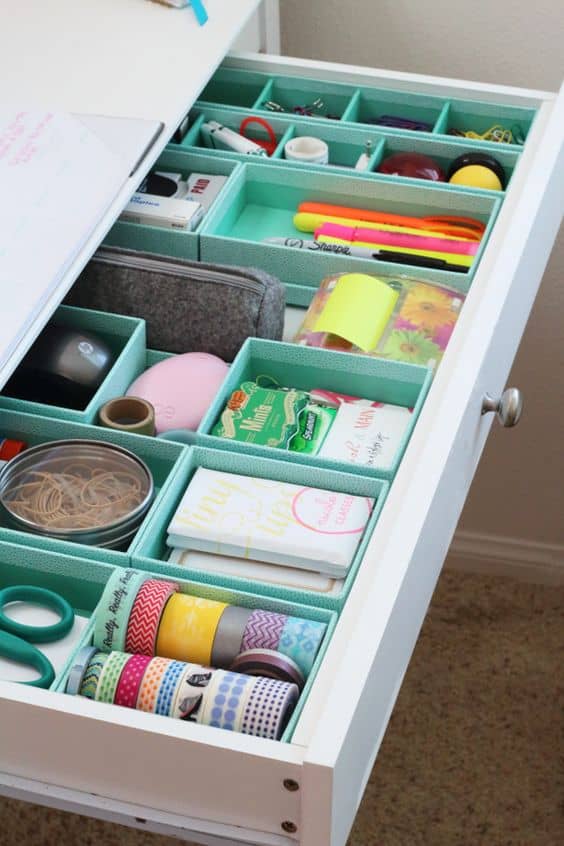
    DIY headboard ideas are where bedroom transformations actually happen — not in expensive furniture purchases, but in the single wall feature that determines whether the entire room reads as designed or unfinished. If you're looking to upgrade your bedroom without replacing the bed itself, this collection of 79 projects spans upholstered foam and fabric panels, reclaimed barn wood and pallet builds, macramé and textile hangings, repurposed doors and window shutters, LED floating frames, and tufted diamond designs that retail for over $1,600 but build for under $100. Adjacent territory includes chalkboard headboards, pegboard and pillow wall mounts, antique mantel conversions, chevron and geometric plywood cuts, and canopy-headboard hybrid configurations. The mechanic most headboard guides don't name: the visual weight of a headboard should scale with ceiling height — low-profile fabric panels suit compact rooms, while floor-to-ceiling dramatic builds only work when the room's vertical space can absorb them. Most projects here cost between $10 and $50 in materials with no specialist tools required, which means cheap DIY headboard ideas are the genuine majority of this list, not the budget consolation tier.

    Before You Start
    Headboards take more force than they appear to — pillows pushed back, people sitting up, the nightly lean — and that repeated lateral load is what pulls standard drywall screws out of hollow wall within weeks, regardless of how many you use. Find your studs before marking a single hole, and where they don't align with your mounting points, use toggle bolts rated for at least twice the headboard's weight. For the upholstered and foam builds in this list, foam density is the second decision worth getting right before cutting fabric: foam below 1.8 lb/ft³ compresses permanently under regular contact and stays flat. High-resilience upholstery foam starts at 1.8 lb/ft³, costs marginally more, and holds its shape through years of use. Get the anchor and the foam right at the start — both are harder to fix once the fabric is stapled and the board is on the wall.

    Smart Cheap Homemade DIY Headboard Ideas

    1. Pillow Headboard

    The first on the list doesn’t require a lot of effort from your side, as it’s made of one of the things that are readily available right at your home, or at any bed and bath store - pillows.

    All you have to do is get some pillows and mount them on your wall. To give it a look that complements your bed, you can get some covers that go well with the sheets and blankets that you have used.

    Better yet, just take all the little pillows from the bed and place them on the wall, and you’re done!

    However, there’s one issue with this type of setting, as the pillows tend to catch up dirt soon, and you might have to use them often. So, if you do decide on going with this design, then make sure you mount them in such a way that they’re easily detachable.

    Pillow Headboard

    via freshome.com

    2. DIY Faux Brass Headboard

    If you happen to have a plain IKEA headboard at home that’s old and needs an uplift, then you might want to try this one out.

    It’s quite simple to make, and you would need some gold adhesive foil (vinyl one would be preferable), and a pair of scissors.

    Measure out the foil as per the dimensions of the headboard, cut them out, peel off the metallic vinyl and stick the sheet carefully along the headboard, and you’re done.

    DIY Faux Brass Headboard

    via sugarandcloth.com

    3. Sweet Dreams Headboard

    Do you have some old picture frames lying around your home? Then you could probably use them to make a pretty little headboard. If not, you could pick up a few cheap ones at the dollar store and get on with this project.

    Print out the letters ‘SWEET DREAMS’, frame them up, and mount them on the wall. You can even personalize the letters into the names of the people using the bedroom, or just some other wordings.

    This idea will work great for children’s bedroom, especially that of little girls!

    Sweet Dreams Headboard

    via www.architectureartdesigns.com

    4. An Artsy Collage Headboard

    Pick up a few canvases in different sizes from an art store to create an artistic headboard for your master bedroom.

    Paint these boards in high or semi-gloss paints in bold colors and mount them on the wall as shown in the picture. Also, outline these pre-stitched canvases with a contrasting color to give it a finishing touch. This gives your room a chic and contemporary look that’s to die for.

    And in case you find these canvases too expensive, you can even replace them with cardboard boxes and repeat the technique.

    An Artsy Collage Headboard

    via freshome.com

    5. Geometric Wood Headboard

    If you happen to have a miter saw at home, this amazing project will be all the easier to achieve. After all, who wouldn’t be enchanted by the gorgeous geometric patterns that can complement your bed in style?

    To make this headboard, you need to get some plywood and measure them as per your requirements. Cut them down and hammer or glue them to the frame and you’re good to go.


    Geometric Wood Headboard

    via etsy

    6. Fireplace Mantel Headboard

    Did you move into an apartment from a house, and have an old fireplace mantel that you don’t know what to do with?

    Well, this one’s a great idea for you to work on. And oh, it’s extremely easy too.

    Just set up this spare mantel behind your bed, and decorate it with a tufted upholstery (preferably in vintage design), and voila, you have a medieval-look inspired headboard that immediately uplifts your bedroom.

    Simple, isn’t it?

    Fireplace Mantel Headboard

    7. Work of Art as a Headboard

    Now, we all love to place works of art around the house to give it a more finished and beautiful look. But using it as a headboard would be something that wouldn’t cross your mind quite easily.

    But why not give it a shot?

    Try using a huge mural, or landscape painting as a headboard. But make sure it is really big and will cover the broader area of the wall, unlike the standard headboards.

    And if you prefer a padded, and softer effect, try printing out the artwork of your choice on canvas, frame it up, and use some upholstery for padding.

    There you go! A customized and personalized headboard that transforms your entire bedroom!

    Work of Art as a Headboard

    via freshome.com

    8. DIY Jute Headboard

    For those who are thinking of going for a boho look in their bedrooms, this jute headboard could be the go-to design.

    To make this, you can get some jute placemats from the store and put them together in a design before mounting them onto the wall. Yes, it’s that easy.

    But if you don’t want to spend too much on ready-made jute mats, you can as well make your own ones by knitting them. This way, you’ll also have the satisfaction of doing everything right from scratch. And of course, there’s complete personalization of design.

    DIY Jute Headboard

    via sarahshermansamuel.com

    9. Picket Fence

    I love using picket fences for my DIY projects. I mean, they’re really cheap, easily available, and can be used for a variety of projects. And of course, picket fence headboard isn’t an exception to it.

    Get hold of some picket fence boards, and cut them up into small pieces. Now, clean them and give each of them a different stain finishing before fitting them up into a frame.

    As a final step, mount this frame onto the wall behind the bed to have your very own vintage-looking picket fence headboard.

    Picket Fence

    via www.pinterest.com

    10. Corner Fabric Headboard

    If your bed is at one of the corners of the room, as opposed to being in the center, then this idea might just be great for you.

    All you need to do is put up two low profile headboards against the two walls where the bed is located, thus creating a simple corner headboard.

    To give it an elegant finish, you can cover it up in a nice fabric. You can even add a tailor-bed skirt to complement the look further.

    This works great for smaller bedrooms with a single or twin bed, unlike the master bedrooms.

    Corner Fabric Headboard

    via freshome.com

    11. Channel Tufted Headboard

    If you aren’t one for the traditional headboards, then you might definitely want to give this design by Emily Henderson a try.

    It’s super easy, stylish, and can be accomplished over a weekend. Combine it with a matchbox style side table to give alleviate the whole look.

    Channel Tufted Headboard

    via stylebyemilyhenderson.com

    12. ‘It’s Not Metal!’ Headboard

    Don’t want to put too much effort into your headboard but want to have something that looks great? Then have a look at this one!

    It is made with PVC pipes, which are coated in silver paint and had clothespins attached to twines that were strung between these pipes. A few postcards are pinned to the headboard to give it a finishing touch

    This industrial-looking headboard works great for guys and those who love traveling around and putting up their pictures and postcards in their rooms.

    ‘It’s Not Metal!’ Headboard

    via wismahome.com

    13. Three Dimensional Fabric Headboard

    When I first looked at this headboard, I thought that it was quite difficult to make. But boy, I was surprised when I found out how easy it was.

    For this elegant three-dimensional headboard, collect cardboards of different sizes and wrap them up in the fabric of your choice. Then use command hanging strips to create an amazing headboard wall in three dimensions.

    Three Dimensional Fabric Headboard

    Source Unknown

    14. Cedar Shingle Headboard

    New to DIY projects? Don’t worry!

    Got $10 to spare? Perfect! Because that’s all it takes to make this gorgeous headboard.

    All you need is some wood, hammer, nails and a couple of hours on your hand, and you’re good to go!

    Cedar Shingle Headboard

    via eastcoastcreativeblog.com

    15. ‘Sail off to Sleep’ Headboard

    This is another PVC pipe inspired that’s quite easy to make.

    Just paint the pipes in silver to give the frame a metal look. And to give it a finished look, take a small piece of boat sail and fasten it to the frame with the help of some rope and grommets.

    ‘Sail off to Sleep’ Headboard

    via www.denhartbakingcompany.com

    16. Fabric Mosaic Headboard

    Now, if you want a headboard that gives your bedroom an elegant look, then you could probably go with this beautiful fabric mosaic for the headboard.

    Get some foam that’s about 2 to 5 inches in thickness and get it cut into the desired size by the shopkeeper - be it rectangles of squares.

    Wrap these pieces of foam in the fabric of your choice and suspend it on the wall with the help of command hanging strips.

    Fabric Mosaic Headboard

     Source Unknown

    17. Plywood Headboard

    For those who love minimalism, this headboard is no less than a perfect choice.

    All it needs is a piece of plywood to be mounted on the wall, and a hammer and some nails to fix some shelves on to it.

    You don’t even need carpentry skills to make this, as you can get pre-cut pieces of plywood from the shop directly.

    Plywood Headboard

    via mrkate.com

    18. Slated Lean-able Headboard

    What’s great about this headboard? It’s sleek, slatted and can be leaned back whenever needed so that you could sit back and relax by reading a book or watching a TV show.

    This is great for those who wouldn’t love spending time and do things from the comfort of their bed, like me.

    Slated Lean-able Headboard

    via homesthetics.net

    19. Narrow Vertical Panel Fabric Headboard

    I often like to experiment things the unconventional way. So, when I came across this project, I was quite fascinated, as it uses the panels vertically.

    What’s more! You can even change the striped runners whenever you put on some fresh bedding so that the entire bed looks coordinated.

    Narrow Vertical Panel Fabric Headboard

     Source Unknown

    20. Faux Headboard

    Don’t want to have an actual headboard but want to create something that gives the same look instead? Then you might want to give this one a try!

    Just create a rectangle frame with the help of a painter’s tape and paint it all over with a brush. Believe me when I tell you that it wouldn’t even take more than an hour.

    Faux Headboard

    via www.papernstitchblog.com

    21. Cottage Style Headboard

    This is another easy DIY project that gives you a feel of magazine and catalog style headboards.

    To achieve this look, you can pick up a standard lumbar piece and fix it to the frame. You can paint the whole board white to give it an elegant look.

    Cottage Style Headboard

    via www.hgtv.com

    22. Fabric Panel Headboard

    For those who want a headboard that’s not just easy to make, but also gives your bedroom a cozy look, this fabric panel project is worth giving a try.

    All you have to do is cut a piece of thin wood as per the required measurements and wrap it in the fabric. You can use some hot glue to fix the material to the board or staple it at the back of the headboard.

    Fabric Panel Headboard

    Source Unknown

    23. Winged Headboard

    Most of the upholstery based projects need sewing, which is why a lot of people don’t usually go for them.

    But this winged headboards don’t need even a single stitch and can be done with just a piece of plywood, some foam, four yards of fabric, 28 buttons and a lot of nails.

    Wondering how much everything would cost? Well, only around $140.

    Winged Headboard

    via www.dorseydesigns.com

    24. Statuesque and Dramatic Headboard

    If you’re looking to create a dramatic focal point all the way up to the ceiling, then you can give this DIY project a try.

    All it needs is some fabric, plywood, optional foam, and things to fasten and suspend the headboard, like a hammer, nails, glue gun, etc.


    Statuesque and Dramatic Headboard

    via cutediyprojects.com

    25. Room Divider as Headboard

    Want to try a unique and easy way to transform your whole bedroom? Try using this convertible room divider as a headboard instead of the conventional ones.

    You can use an old divider or get a cheap one from the store. There will be many to choose from. Now just fix this room divider behind the bed.

    You can even paint the divider or the frame to complement the decor in your room.

    Room Divider as Headboard

    Source Unknown

    26. Macramé Headboard

    Love dream weavers, yarns, and textiles? Why not use them as a headboard?

    Get a beautiful macramé like this from an upholstery store and weave one all by yourself, and suspend it like a curtain by using a tree branch as a frame for an elegant and personalized look.

    Macramé Headboard

    via www.housesparrownesting.com

    27. Photo Frame Headboard

    Now, this is another headboard you can make by using a photo frame.

    Unlike the one I’ve mentioned earlier in the article, this one has only one large frame with planks lined up on four sides to the desired size.

    And what goes inside the frame you may wonder? A family photo that invokes beautiful memories.

    Photo Frame Headboard

    via wismahome.com

    28. Area Rug as a Headboard

    Have an old or spare rug at your home?

    Just hang it on the wall behind the bed with the help of a curtain rod to create a unique headboard that’s simple and adds a touch of softness.

    You can go for a standard 5x8 rug for a queen-sized bed. And go with a design that’s thin and light-weighted, like an Indian dhurrie-style rug.

     Area Rug as a Headboard

     Source Unknown

    29. Live Edge Headboard

    Beginner at wood-cutting? Worry not! Because this might probably be the easiest wood-based project on the whole list. And it only takes about two hours to complete.

    Just saw out the desired design on the plywood and fix it behind your bed. Voila, you’re good to go!

    Live Edge Headboard

    via www.classyclutter.net

    30. Rustic Style Headboard

    A simple tongue and groove style headboard, all you need to make this one is some wood, hammer, and nails.

    After you frame the board together, distress it and give it a barn-wood or stained finish to complete the look.

    Rustic Style Headboard

    31. Floating Furniture as Headboard

    If you happen to have a sprawling bedroom with the bed placed in the center. Then you can go with this eccentric idea for the headboard, to give the whole area a much better look.

    Just place in a dresser or a cabinet with closed drawers behind the bed and place some lamps on the top, to give out some light while you’re reading in the bed.

    Floating Furniture as Headboard

    Source Unknown

    32. Pegboard Headboard

    Like bold colors? Then, spruce up your bedroom with this peppy headboard.

    Get a few pegboards and screw them onto the walls using some anchors. Cover it up in a bold vinyl graphic sticker, or outline the boards using a painter’s tape and paint it in desired colors.

    Pegboard Headboard

    via www.ourfifthhouse.com

    33. Forest-Style Headboard

    I made something like this for my sister’s bedroom, and boy, it looks incredible. Also, the project was quite simple and didn’t take up a lot of time.

    For this, I’ve got an old headboard at a thrift store and painted it in white. To top it off, I’ve taken some tree branches, repainted them in white, and embellished them in glitter, bird toys and ribbons.

    Forest-Style Headboard

    via boatylicious.org

    34. Recycled Book Headboard

    For those who are on a budget, this recycled headboard is a perfect idea to spruce up the whole bedroom as it only uses leftovers for the entire project.

    You can create a plain headboard by fixing some spare pieces of wooden flooring together and frame it up with bamboo poles. Then take some old books and pin them up onto the headboard to give an overall rustic look.

    Recycled Book Headboard

    Source Unknown

    35. No-sew Headboard

    This is another upholstery-based headboard that required no sewing whatsoever!

    To achieve the look, you can take an old headboard and pin some upholstery to it using a staple gun. To give it a fluffy feel, you can attach some foam to the board and wrap it in velvet.

    No-sew Headboard

    via www.cre8tivedesignsinc.com

    36. Twinkle Twinkle - On the Wall

    Have a baby boy at home? Then this DIY project is just perfect to make his room all the more beautiful.

    Place a basic headboard in dark blue shade to give the look of a night sky and adorn it with the help of fairy lights and glow-in-the-dark stars to give it an extra sparkle.

    Twinkle Twinkle - On the Wall

    via insightfully.co

    37. Picket Fence Headboard

    Like I said, there’s no scarcity of ideas when it comes to using Picket Fences for DIY projects. Here’s another headboard idea that you can do by using picket fences, and give your bedroom a rustic feel.

    For this one, you’d need dog ear fences which are fixed together and placed behind the bed. To finish the look, you can add a couple of clamp lights on either side. This will not cost you more than $10.

    Picket Fence Headboard

    via downtoearthstyle.blogspot.com

    38. T-Shirt Headboard

    Now, you must have heard of using t-shirt quilts, but have you ever heard of using t-shirts as headboards?

    Well, take out all those old jerseys and sew them up into a collage and fix it up behind your bed. To make it squishy, you can even staple it to a plywood, with some foam inside.

    T-Shirt Headboard

    via diyjoy.com

    39. Wall Panels

    If you’re into LEGO or in our case, more specifically, Architecture LEGO, then you can make a headboard inspired by it using 3D wall panels.

    Just get some wall panels from the store, color it in the shade of your choice and frame it up against the wall behind the bed.

    This is a great project for kids’ rooms. You can even use a multitude of colors for the finish, instead of just a single shade.

    Wall Panels

    via sweetparrishplace.com

    40. Homemade Slipcover Headboard

    For someone who likes changing the design of the headboards as per the bedding and decor of the room, this slipcover could be a perfect choice.

    Just take a canvas slipcover or drop cloth of your choice and attach it to a plain headboard with the help of ribbons.

    You can keep changing the cloth as and when needed.

    Homemade Slipcover Headboard

    via wismahome.com

    41. Bohemian Headboard

    Another boho-inspired headboard, this project needs a few leftover bathroom tiles and some plywood.

    Place the wood behind the bed and decorate the sides with the tiles. A walnut finish to the plywood will give it a more attractive look.

    Bohemian Headboard

    via www.adesignerathome.com

    42. Duct Tape Headboard

    Love duct tape projects? Then you might want to give this one a try.

    Now, it’s hard to believe that you can make a headboard with duct tape, but it makes for an amazing look, especially when it comes to kids’ bedrooms.

    Get duct tapes in vibrant colors and stick them onto a piece of plywood as per the desired shape.

    Duct Tape Headboard

    via homesthetics.net

    43. Woven Wooden Headboard

    If you’re looking for easy DIY headboard projects that are made out of wood, then this one could be worth trying.

    Get some pieces of lumber cut at the shop in the desired size, paint them in the color of your choice and weave the pieces together using some wood glue. And there, you’re good to go!

    Woven Wooden Headboard

    via www.littlebitfunky.com

    44. DIY Pillow Headboard

    Another pillow-based headboard project, this one is minimal and quite easy to make.

    Take a couple of pillows and suspend it with a copper wire or shower rod to give it a sleek look. What’s more, you can even use these pillows to rest back while reading a book, having a snack and watching television.

    DIY Pillow Headboard

    via sarahshermansamuel.com

    45. Rustic Headboard

    If you’re a big fan of farmhouse styles, then give this DIY project a shot.

    With a miter saw, a drill and some planks of wood, this headboard could be easily made in a few hours, even for a novice. However, you might want to get some help with cutting the wood and fixing the planks together.

    Rustic Headboard

    via lilluna.com

    46. Woven Headboard

    Got some vertical blinds at home? Don’t discard them. Instead, you can weave them and attach them to a wooden frame to make a headboard.

    You can find similar headboards at retail stores, but they cost you around $700.

    Why spend so much when you can make a better, bigger one for only $70? And oh, you can add some clamped lamps on either side, for just another $10.

    Woven Headboard

    via madincrafts.com

    47. Farmhouse Headboard

    Another headboard inspired by the farmhouse style, this DIY project will cost you less than $50.

    Fix some wooden planks together and give it a varnish of your choice. You can even decorate the board with a toy-deer head and a string of pom poms. A series of LED lights can also alleviate the overall look.

    Farmhouse Headboard

    via deeplydistressed.com

    48. Diamond Tufted Headboard

    Want to have a headboard that looks luxurious, yet takes only a little amount for the whole project? Then you must have a look at this one for sure!

    With some foam, pegboard, fabric, upholstery threads, needles and buttons, this headboard could be made in just a few hours.

    Diamond Tufted Headboard

    via makebakeandlove.blogspot.com

    49. Chevron Headboard

    There’s something about chevron that gives out a look that’s not only elegant but also stylish at the same time.

    If you’ve got some basic carpentry and woodcutting skills, then you can make this chevron headboard within just $100.

    The same kind, when bought in a store, could cost you anywhere around $1600 or more.

    Chevron Headboard

    via eastcoastcreativeblog.com

    50. Curtain Headboard

    What’s wrong with experimenting with headboard ideas? If you’re not into wooden or foam based headboards, then try suspending a large curtain from the wall, and you’re good to go.

    Curtain headboards work well when your bed is placed by the window, as you can keep moving it as per the requirement of light needed in your rooms.

    Curtain Headboard

    via www.thespruce.com

    51. Cardboard and Fabric Headboard

    One look at the image, I didn’t believe that this one was a DIY headboard. But yes, it is!

    What’s more surprising is that it’s just a piece of fabric wrapped around cardboard. And it’s easier to make than you would imagine it to be.

    Cardboard and Fabric Headboard

    via pinterest

    52. Hang a Textile

    Now, this one’s just like the curtain and rug headboards we’ve mentioned before. But here, you can use a thick textile that’s woven and nail it directly onto the wall.

    Hang a Textile

    via pinterest.com

    53. Embroidered Headboard

    Beautiful embroidery on a headboard can immediately uplift the look of your bedroom - be it a simple one or an intricately-made one.

    This one with sharp lines embroidered over a navy blue is perfect for modern bedrooms. Just take the embroidered fabric and pin it to a plywood board before fixing it onto the wall.

    Embroidered Headboard

    via www.bhg.com

    54. Door Turned Headboard

    If you’re renovating your house, then you will probably have a lot of things lying around that you might want to throw in the trash. And if an old door happens to be one among them, just don’t get rid of it.

    Instead, paint it out in the colors that complement your bedroom and use it as a headboard. It’s cheap, yet beautiful enough to transform the whole place.

    Door Turned Headboard

    via www.countryliving.com

    55. Antique Window Headboard

    Not just the door, don’t even throw those windows away, especially if they’re of vintage style. Try making headboards out of those too, by placing them above the bed in the shape of a rectangle or square, whatever you desire.

    This way, you can give your home a Victorian style look, without having to spend too much on the project.

    Antique Window Headboard

    via www.lizmarieblog.com

    56. Door Headboard

    Another door headboard on the list, this one can be made simply by taking an old door and spraying it with white color. Unlike the one painted in different shades, this one is simple and works well with most of the color palettes that adorn the bedrooms.

    Door Headboard

    via www.infarrantlycreative.net

    57. DIY Light-up Headboard

    Plain wooden headboards can also be spruced up to give it a new look altogether.

    Take this project for instance, where you can make a stencil of a word or a small quote, paint it in black and light it all up with the help of a few LED bulbs. And voila, you’re good to go!

    DIY Light-up Headboard

    via www.abeautifulmess.com

    58. DIY Floral Headboard

    This project is excellent for all the girls out there who’d want to give their bedroom an all floral look, that too within a budget.

    Take a plain headboard, preferably in an intricate pattern. Now, decorate it with as many paper flowers as you want, and in any color you like. All you have to do is secure them with the help of a tape.

    And as for the leaves and branches, the task could be easily achieved with wires and washi tape.

    DIY Floral Headboard

    59. DIY Rustic Headboard

    If you happen to have some tongue-and-groove barn wood at home, then this project is as easy as a breeze.

    Cut out the wood in random sizes and fix it up behind the bed. You can paint it in the desired color or leave them be to give a rustic look.

    DIY Rustic Headboard

    via www.remodelaholic.com

    60. Floating Headboard with LED Lighting

    You must have noticed those beautiful LED headboards in the home and luxury magazines. But do you know, they’re not really challenging to make at all?

    To make a floating LED headboard, you can pick any wood of your choice. Mount a string of LED lights onto the wall and place the headboard between the bed and the lights as a final step. And you’re done!

    Floating Headboard with LED Lighting

    removeandreplace.com

    61. Faux Tiled Headboard

    The best thing about faux tiles? They’re easy to clean and wouldn’t burn a hole in your pocket when you plan a DIY using them.

    To make a headboard as shown in the picture, you can get some faux foam tiles and mount them onto the wall with the help of some mounting scotch tape.

    What’s more? The whole project doesn’t cost you more than $12.

    Faux Tiled Headboard

    via sweetcsdesigns.com

    62. Up-cycled Headboard

    If you aren’t keen on making a headboard from scratch, then you can just upcycle and transform the one that’s already available at home.

    For this, you can just nail some thin wooden planks to the existing board in the desired design. Or you can polish them with a varnish of your choice.

    Up-cycled Headboard

    via brooklyntowest.blogspot.com

    63. DIY Vintage Sheet Headboard

    Vintage themed houses have a charm of their own. But you must make sure that every piece of decor in the home complements the theme.

    If you’re looking to make a headboard which works with the overall look of the house, then you should probably go with this DIY project.

    Get some vintage sheets and fix them on a headboard wrapped in fabric. You can leave them as they are, paint it in pristine white or any color you desire.

    DIY Vintage Sheet Headboard

    via www.happinessishomemade.net

    64. Headboard with a Curve

    If you want to add a lively touch to your plain old wooden headboard, then you can saw up a little curve onto it, like this picture.

    For this, you should have a little experience with wood-cutting, as you’re required to stencil the design and saw it out.

    Headboard with a Curve

    via www.thriftyandchic.com

    65. Mantle to Headboard

    For those who liked the fireplace headboard idea mentioned earlier in the article, here’s another DIY idea that uses an old fireplace mantle.

    Just like the other project, this one too uses a mantle for a headboard. But unlike upholstery, this one uses a plain plywood board with minimalist designs painted over it.

    Mantle to Headboard

    via www.vintagerevivals.com

    66. Headboard Shutter

    New to DIYing? Then this might be the headboard project that will give you a headstart.

    You can use old window shutters for creating a simple headboard. Just paint them in the color of your choice and mount them on the wall behind the bed to create a rustic or an upbeat look 0 whatever you desire!

    Headboard Shutter

    via eastcoastcreativeblog.com

    67. Ladder Turned Headboard

    Here’s another simple DIY project that results in a wonderful headboard in just a little amount of time.

    Take an old ladder that’s chipped and mount it on the wall above your bed. What’s more, you can even use it as a small shelf to place books, photo frames, and other things.

    Now, that’s some way to give an original look to your bedroom, as well as create something that’s functional at the same time.

    Ladder Turned Headboard

    via www.pinterest.com

    68. Chalkboard Wall Headboard

    Since we’re speaking about functionality and bedrooms, why can’t we just use make use of a small part of the chalkboard wall as a headboard?

    You can frame a small part complementing the dimensions of the bed to give the feel of a headboard, and even draw out some designs of your choice.

    Further, you can even suspend a lamp through clamps so you can sit back and read a book in a relaxed manner.

    Chalkboard Wall Headboard

    via www.poppytalk.com

    69. Pallet Love Headboard

    Here’s another pallet-inspired headboard that’s quite easy to make.

    Just fix some pallet pieces together and place it behind the bed. You can even stencil design of your choice (like the birds in the image below) and paint them in black color.

    Pallet Love Headboard

    via www.catheywithane.com

    70. Coastal Cottage Shutter Headboard

    For those who love coastal cottage inspired designs, this headboard idea is worth giving a try.

    You can just get some unfinished, louvered shuttered stores from any improvement market, paint them and hinge them together with the help of mending braces.

    Now, all you gotta do is mount it on the wall, behind your bed.

    Coastal Cottage Shutter Headboard

    via www.hgtv.co

    71. Unique Chalkboard Headboard Idea

    If you’re looking for budget-friendly DIY options for your headboard, you might want to have a look at this one.

    For this project, you need some wood, chalkboard paint, primer, and dustless chalk. Just get the woodcut in the desired shape and paint it with primer followed by chalkboard paint. Now draw any design you like on the board with the dustless chalk, and you’re good to go!

     Unique Chalkboard Headboard Idea

    via www.desiretoinspire.ne

    72. Old Chalkboard Turned Into Headboard

    If you happen to have a spare or old chalkboard at home, turn it into a headboard by mounting it on the wall above your bed.

    This works great for those who have tight schedules, need to scribble notes constantly, or if you’re forgetful about things and need to have reminders about the same.

    Old Chalkboard Turned Into Headboard

    via www.instructables.com

    73. Holes in the Headboard

    I don’t need to emphasize how amazing geometric patterns look, especially as a part of your home decor.

    This one, for example, has a simple piece of plywood with pilot holes drilled into them in various sizes. Now, the wood can be painted in any desired color that brings out the beauty of the bedroom as a whole.

    Holes in the Headboard

    via sanaltur.us

    74. DIY Canopy Headboard

    You might have come across headboards, and then you might have seen canopies. But have you ever thought of creating something that’s a blend of both?

    Yes, it’s entirely possible and makes for a quite stunning backdrop to your bed too. All you would be needing are some curtains, adjustable rods, anchors, screws and curtain brackets to be mounted on the wall and ceiling, and you’re good to go!

    DIY Canopy Headboard

    via diycozyhome.com

    75. DIY Leather Headboard

    If you are willing to spend a little more on your DIY project, then you can try getting rich cowhide tiles to give your bedroom a luxurious look and feel.

     DIY Leather Headboard

    via www.marthastewart.com

    76. Simple Salvaged Headboard

    In case you have some leftover barn wood, then you can create a headboard like the one in this one quite easily.

    You can even pick other pieces of wood if you don’t have access to barn wood, and simply varnish them with wooden paint to give a finishing look.

    To embellish it further, you can scribble few words in glitter paint, and hang a rope with pictures above the board.

    Simple Salvaged Headboard

    via architectureartdesigns.com 

    77. Simple Wooden Headboard

    Have $25 to spare? Because that’s all, it needs to make this amazing wooden headboard with a dark finish.

    Put together a few pieces of wood, stain it in dark brown walnut varnish and mount it on the wall. There you go, an elegant touch that gives your whole bedroom a luxurious feel!

    Simple Wooden Headboard

    via thesleepjudge.com 

    78. Tapestry Headboard

    You can find a variety of tapestry in the market, in all shapes and sizes. Now, do you know that they can also be used as a wonderful headboard too?

    What’s more, you can get them at as low as $10, and just hang them on the wall behind your bed to give the whole place a colorful look and feel.

    Tapestry Headboard

    via thefinderskeepers.com

    79. Wallpaper Headboard

    Have you ever thought of turning one of those snazzy wallpapers you find at stores into a perky headboard? My guess would be no!

    But I bet you’d be in awe of the outcome when you frame a piece of your favorite wallpaper design and mount it on the wall behind the bed. To make it all the more interesting, try using wallpapers that complement, or are in contrast with the color of your wall.

    Wallpaper Headboard

    via domino.com

    Final Thoughts

    With this, we’ve reached the end of the article. We hope you’ve found the perfect one among these 79 DIY headboard ideas.

    If not, you might have had enough inspiration to work out on your own one.

    So, what are you waiting for? Take out those DIY tools, shop for the required materials and get on with your headboard project this coming weekend.

    Good luck, and until next time!


    Tree bed designs solve a specific bedroom problem that standard furniture never addresses: how to make a sleeping space feel like an environment rather than a room — and for children especially, that distinction is the difference between a bedroom they're sent to and one they actually want to be in. If you're looking for nature-inspired bedroom ideas that range from minimalist birch branch bed frames to full fairy-tale canopy builds, this collection of 37 designs spans rustic log constructions, polished wood tree-post frames, hammock-style suspended builds, painted treehouse lofts, and cottage-inspired bunk configurations. Adjacent territory includes dark nest-style enclosures, Victorian-era branch detailing, symmetrical twig headboards, DIY carpenter builds from raw timber, and Bali-influenced canopy arrangements. The detail most bedroom design guides miss: the finish level of the wood — raw and unpolished versus sealed and symmetrical — is the single variable that shifts a tree bed from rustic cabin to contemporary statement piece, and every design in this list falls somewhere on that spectrum deliberately. Most concepts here can be executed with salvaged timber or raw branches, making nature-themed bed frame ideas achievable well under the cost of comparable retail furniture.

    Before You Start
    The variable that determines whether a tree bed frame stays beautiful for a decade or becomes a structural and hygiene problem within two years is one almost every build guide skips: whether the wood was properly dried before it was shaped into furniture. Raw branches and freshly cut logs contain significant moisture — sometimes 40–80% water by weight — and as that moisture escapes after the wood is incorporated into a frame, the timber checks, splits, warps, and loosens every joint it is part of. A branch that looks solid when assembled will develop deep radial cracks within months of being indoors in a heated room, and those cracks are not cosmetic — they propagate through joinery points and compromise the structural load the frame is carrying every night. Kiln-dried or air-dried lumber with a moisture content below 19% is the threshold for stable indoor furniture; anything above that moves. The second issue specific to this category is bark retention: bark traps moisture against the wood surface and harbors insects, mold, and mites that are invisible at build time but become a genuine infestation problem in a sleeping environment. Remove bark before finishing, sand the cambium layer beneath it smooth, and seal with a penetrating oil or polyurethane before assembly. Source your timber from a lumber yard or sawmill that can confirm drying status — reclaimed barn wood and salvaged branches need moisture testing before they come indoors.


    This design looks like it came straight out of a fairy tale dream. Along with some painted trees at the back or all around the room, this would look like a place where you would go and rest your tired mind.

    Imagine coming back from a long workday to enter another realm in your very own room. You can always add other accessories to make it seem more like a real forest.

    via typepad.com 

    If you like spending your alone time in the woods close to your house, you’d love having a hammock like this.

    Being with nature and enjoying every moment of it while lying down on a comfortable, rocking bed… sounds like a perfect day to gain some peace of mind. We can’t think of a better option that’s closer to a vacation in the woods than this.

    via www.luuux.com

    Here is a bed tree design that’s perfect for those who want to combine style and nature at the same time.

    Going well with a single color, this looks very similar to a beautiful autumn scenery when leaves have fallen, allowing you to see the details of each naked branch and fall asleep to it.

    Picture having this bed when living alone in an apartment that’s waiting on your mind’s creativity to give life to it.

    via domain.com.au

    If you like minimal greenery designs, you’ll definitely love this idea.

    It has nothing to do with the bed, yet makes it appear bright with plenty of energy to brighten up all your days by reminding you about the beauty of nature and life.

    If you live in a city that has no resemblance to the serenity of forests, having plants by your bedside brings you closer to nature, soothing your mind every night while energizing it every morning.

    via instagram

    If luxury is what you’re into, yet still go crazy about nature, take a look at this one. It reflects someone who has a taste in both an expensive lifestyle and nature’s simplicity.

    Living a great, sophisticated life does not necessarily mean losing touch with things closest to your heart; and seeing them before going to bed will give you a sound sleep throughout the night.

    With natural branches and twigs, one can only feel like sleeping under an old rugged cottage in the woods.

    via www.highcamphome.com


    Craving for the warm cuddle of birch trees every night? Take a look at this bed frame design and see how they make a bed look beautiful effortlessly.

    If you are inspired by simplicity, you’ll love using this idea for a room. It may not look much but it maintains that grandeur feeling. As Chanel would say, “Simplicity is the keynote of all true elegance.” - which truly applies here.

    Matching walls, bed sheets, and pillowcases give a modern chic look to the whole bedroom.

    via womenwhodesignthewest.wordpress.com

    The next one is very cozy. It provides a homely feeling to those who love closed, warm spaces.  

    If you're living in a crowded city and don’t get too much peace, then you’ll be happy to come home to a bed frame like this with your favorite book on the side table waiting just for you. Enjoy your nights living a vintage life.

    Feel the comfort and belongingness which the bare naked logs give you every time you lay down on the bed.

    via www.captivatist.com

    Here’s another bed frame design with birch trees surrounding your bed. And this one has got a touch of little extras to it.

    Match up the colors in the room and throw some decorations, making it look a bit more sophisticated.

    What would make it perfect is if you add some of your favorite collection of antiques and a pair of antlers to give the rustic look that it craves. It’s like you get a private vacation in your own home.

    via interiorsbystudiom.com

    Love the embrace of dark rooms? This one looks like a Halloween theme.

    With a bed that’s designed like a nest, you’ll be safe and sound underneath the sheets, with either a lantern (as shown in the picture) or your favorite lights tucking you in.

    It kicks you even to imagine sleeping through a thunderstorm in this bed and feeling protected and comfortable.

    Not many would be into this idea but if you’re someone who loves the aesthetic pleasure of darkness, you’ll get what we mean.

    via indulgy.com

    The first thing that comes to mind when we see this is that it suits people who are frequently on the go - they can just crash in it whenever they’ve had a long trip. It is pretty simple, yet it holds a lot of modern beauty with it.

    But most importantly, we love that there is not too much stuff lying around. It’s a free space with no other furniture. The bed frame design here shows that ‘less’ is better. It looks neat, tidy, and pretty easy to maintain.

    via www.nsmbl.nl

    If you are looking for a bed frame design that spells ‘family’, we have this one. Just a look at this bed, we can picture a kid waking the parents up while their dog is running around doing the same thing. That’s a beautiful sight to see.

    And the flowers will enhance your mood anytime you go to bed, which is important especially in the morning to have a good mood.

    via 1decor.net

    Whether we want to deny it or not, this one looks like a bed where the Ice Princess would sleep on. We are also sure if you surprise your little girl with something very similar, she will start going to bed early from now on.

    Plus, every girl’s dream once was to become a princess, so we guess something like this will help you relive that dream even if you’re not a little girl anymore.

    via www.gnibo.com

    Are you more of an indie gal? What do you think of this idea?

    There is no right or wrong way when it comes to styling an indie bedroom. Everything depends on the creativity of the owner. Also, don’t be afraid of trying out colorful extras and mix-matching them.

    Add any kind of decors that complement your spirit and you’re good to go!

    via shopstyle.com

    This next one will make you feel like you’re on stage performing a musical. Children will probably love it for its cut-out appeal. But even if you’re an adult with a young heart who enjoys fun bed frames, you’ll love this bed idea.

    Make yours look fancy by accessorizing it with what you like most.

    via interiorexterior-design.blogspot.com

    If you wanna feel like you’re living in the Bahamas every day, get a bed with this bed frame or something very similar.

    We’d recommend getting a stuffed toy piggy if you’re considering the Bahamas look to complete the theme. Otherwise, add more seashells and other ocean accessories inside the room and bring your little sea world to life.

    via loveobsessinspire.typepad.com

    Next up, we have this crazy idea of making your bedroom or your bed look like it’s on a tree house.

    At least, it’s more exciting than a normal bedroom could ever be. We will suggest a theme that appears more outdoorsy and adventurous. The right decors and paints will play an important role in making the theme realistic.

    via theeverygirl.com


    Are you the girl who is enthralled at the sight of fairy lights? Or perhaps, you love daydreaming and any kind of art? You might like this idea for your bed.

    The room does not need to be very big; the average one is enough for this bed frame. You can enjoy your personal space.

    via ideasforho.me

    We think this one looks like some room you’d find in an exotic Bali house. Make your room look like you’re living on the other side of the world.

    This is a light theme in which there is not much to add to the room, therefore, creating a more relaxing environment which is perfect when you've had a day surrounded by people.

    The idea is to make the room look as plain as possible.

    via www.themarchcollective.com

    What do you think about a room that looks like a hunter’s den? If you love going outdoors for a good hunt, then you might just consider this theme.

    Set up your room with polished branches, especially for the bed, and just throw them anywhere you feel like it. It may look disorganized, but isn’t that the beauty of forests?

    When you’re done, add more extras that go well with the overall theme so that it reflects your passion for hunting.

    via etsy

    Alright, so this one is a blend of modern design and the beauty of nature. You’re most likely to see these types of designs in hotels and expensive guesthouses.

    Some people love the idea of making their home look just as posh. The minimalistic environment will make you feel as if you are living the life of a celebrity or a millionaire.

    Birch trees will look perfect for this idea, but if you want to be creative and explore more ideas, feel free to do so!

    We have here a very simple, average-looking bedroom. Unlike the rest on the list, this one is what you will mostly find in many houses.

    But the idea is to add some wooden décor so that it adds more style to the home environment. Maybe you don’t like making yours or the kids’ room look too fancy but you’d love to add just the right amount of accessories that will reflect your appreciation for nature.

    If that’s the case, then having a plant or a branch like the one in the picture can elevate things a little bit more.

    via www.remodelista.com

    And now we have a very cute bed frame which is suitable for both kids and adults.

    As you can see in this picture, the bed is made up of multiple branches which aren’t polished. And that’s the main idea of it - it has to look like a cot inside a cottage in the middle of the woods.

    The picture depicts a tiny bed but it actually depends on your preferences to choose just how big you want it to be. All you have to do is gather more wood if you want a king-sized version. So, chop-chop!

    via log-cabins.tumblr.com

    We personally love this one. It has a touch of rural life to it and it doesn’t seem to show anything off, yet it displays tranquility - something anyone would want to come home to after a hard day’s work.

    The environment inside the room will be welcoming with the simple decor. The bed would be carefully crafted with wood branches and perhaps a few twigs as extras.

    To create a pleasant experience inside, there should be enough windows for the sunlight to pass through.

    via designluster.tumblr.com

    Here’s another one which resembles a small cottage in the woods. This is a perfect idea for summer or winter homes, mostly.

    However, that doesn’t mean it won’t work for an actual room. A shared bedroom for kids will be amazing with this idea. It probably will cost a lot since everything is made of wood, but the concept is unique.

    And let's not keep aside the fact that this room looks magical - as if a lost princess used to stay here (maybe you get the reference). The point is that kids will fall in love with it.

    via imgfave.com

    Similar to the above, this bed is also meant for kids but younger. If you see that your little one loves sports and adventure at a young age, why not start off by personalizing the bed?

    There is also a high chance that your kid will have more appreciation for nature later in life.

    Anyway, coming back to the bed… If you have an apartment space in the city, this would be more convenient because it consumes less space and you can store multiple things underneath.

    Moreover, you can always choose to paint it or not. Either way, it will look amazing.

    via www.pinterest.com

    If this one doesn’t look like a honeymoon bed to you, then we don’t know what does.

    Boost up the romantic mood with this idea or something similar to it - all white with just the right amount of lighting. And yes, this will also work if you’re looking for ideas to dress up your bed and surprise your significant other.

    To achieve that classy look, it’s always safe to match the sheet's color to that of the room. And as you can see in the picture, a large painting will complete the whole look.

    via imgarcade.com

    So we have already seen a few cottage-like bedrooms before, but nothing beats this one.

    If you like the idea of building things from scratch and not using a single ready-made item (including decors), then step up your DIY game and get ready for this bed frame.

    Of course, you will need to have enough knowledge about carpentry to come up with something like this. But once you get a hang of making furniture by yourself, we assure you it will be one of your favorite hobbies. Most people who get into DIY projects love expressing their own creativity every time.

    via chasingthegreenfaerie.tumblr.com

    Want an odd wood bed frame for your bed? Check this one out.

    There are people who love things that appear organized, while there are people who find messy bed frames to be more aesthetic. This option is for the latter group.

    The bed you see here looks as if it’s just been constructed 5 minutes ago using whichever wood we could find. But the thing is, there’s beauty in it.

    The best thing is that you can have it made however you want it to be - it does not have to look exactly the same as the one in the picture.

    via manualidades.facilisimo.com

    After speaking about messy bed frames, here’s an idea for those who love symmetrical ones. Everything is uniform and in place.

    The idea is to not make the bed too fancy and instead, use simple tree designs (as seen in this picture) which add enough beauty to the room.

    The best trick to execute an idea like this successfully is to maintain a level of minimalism. If you feel that there’s too much stuff lying around in your room, maybe it’s time to consider decluttering?

    via collegecandy.com

    The next bed frame we have is entirely made of polished wood.

    This one has a lot of details which make it look unique. Of course, you can also have yours made according to your unique preferences.

    Well, something like this would go better with a room that has a fair amount of antiques and plant decors. Let’s also not forget to match this with other wooden furniture such as wardrobes, chairs, and tables. This will give your space somewhat of a Victorian-era touch, hence, making it look highly expensive.

    Source Unknown

    If you like the idea of having a normal-looking room without too many extras, yet with a few nature-related decors, we can suggest making it look something just like this.

    As you can see from the picture above, both the room and the bed look just like any normal bedroom would. But with the presence of the tree bed frames as bedposts, it looks more defined and beautiful.

    via www.hotelphilosophy.com

    Okay, so we have chosen this bed frame for those who do not like to include anything else in their bedroom except for a giant bed and a couple of side lamps.

    If you like to have more space in your bedroom (at least around the area where the bed is), you might just need something like this.

    We would understand if you find a big room with monochrome matching to be boring. That’s why we will suggest opting for a different wall color so that the room looks balanced, lively and a bit colorful.

    via wohnenmitklassikern.com 

    Our next bed frame looks like it came straight from the 18th c period. With its black-painted tree designs, thick sheets, and fluffy pillows, you’ll feel like you’re living in the classical era every single time you step into the bedroom.

    If you would like to experience what it’s like to sleep in a bed like that, try out an idea like this. Make sure to decorate your walls and have some expensive-looking vase (which you can get for cheap in thrift stores) inside the bedroom.

    via interioralchemy.tumblr.com

    Want one more bed frame specifically for kids? Check this out.

    If you live in a small house with not enough room to move about, consider having something like this installed. Children love extraordinary beds, so you might as well need to give them one. In which case, it will be a win-win situation for both you and the kids.

    There will be plenty of room underneath where you can make good use out of it. Take the place from the photo, for example. There is enough space for a tiny living room with a bookshelf opposite to it.

    via artaurea.de 

    Well, here is another design with stairs. This is great for both kids and adults to lay down on a hot sunny day.

    If you want something similar to the picture, keep in mind that there is not a lot of room for storing other things underneath it. It is more of a fancy bed which is suitable for a house with a large space.

    Rather than just leaving it as is, we would recommend either painting or polishing it so that it looks less messy and more attractive.

    via ecosia.org 

    We know what you might be thinking: This looks as if someone just chopped big logs and kept them there.

    Well, that may be true but we think this has to do more with being artistic than anything else.

    If you have a creative mind which does not like to follow traditional designs, you’d love this idea at first glance. These logs don’t necessarily have to be attached to the bed as bed frames, but instead, can be set up as decors.

    And as we mentioned that this is just an idea, take this as a sample to make use of your creativity and explore new designs.

    via findingshibusa.com

    Last but not least, we have this design that spells ‘Christmas’ all year round!

    With a red theme, wooden bed, and a pair of night lamps beside, you’ll feel like you’re on winter holidays every time you step into the bedroom.

    The best way to create this bedroom theme is to have a fireplace inside the room, some fluffy pillows or cushions, and some tree decors, of course! You might just fall in love with the idea of having your own Christmas theme inside your bedroom to turn any sad day around.

    via dresscodefinder.com

    Related Articles

    12 Ways To Put Your Bedroom Corner Space To Good Use

    39 Spectacular Tree Logs Ideas for Cozy Households

    29 Brilliant Easy to Build DIY Platform Bed

    21 Mindbogglingly Beautiful Fairy Tale Bedrooms for Kids

    21 Super Small Nightstands Ready to Fit in Petite Bedrooms

    Recycled Pallet Bed Frames – DIY Pallet Collection

    15 Creative Small Beds Ideas For Small Spaces

    30 Small Bedroom Interior Designs Created to Enlargen Your Space

    37 Smart DIY Hanging Bed Tutorials and Ideas to Do

    Bedroom Christmas Lights Ideas For A Cozy Atmosphere

    32 Dreamy Bedroom Designs For Your Little Princess

    100 Inexpensive DIY Headboard Ideas for Your Bedroom Design

    47 Stylish Floating Bed Design Ideas

    53 Incredible Hanging Beds to Float in Peace

    33 Epic Navy Blue Bedroom Design Ideas to Inspire You

    6 Best Vacuum Cleaners for Mattress  

    13 Best Loft Beds with Slide Reviews

    DIY nightstands are one of the most overlooked upgrades in a bedroom — small in footprint, but outsized in impact on how the space feels. The nightstand sits at eye level every morning and night, which makes it one of the first things a visitor notices and the last thing you see before sleep. The problem is that most store-bought options are either too expensive, too generic, or both. The 33 ideas in this guide solve that with builds using pallet wood, wooden crates, hairpin legs, salvaged beams, IKEA hacks, and upcycled suitcases — ranging from a stacked cinder-block solution you can finish in ten minutes to a full mid-century nightstand with drawers built from scratch. Whether you're working with power tools or just a glue gun, there's a cheap DIY nightstand idea here that fits your skill level, your bedroom style, and most likely the materials you already have sitting around.

    Before You Start
    The measurement that determines whether any nightstand in this list actually works — cinder block, floating shelf, suitcase, hairpin leg, or stacked crate — is one most builders never take: the height from your floor to the top of your mattress. Standard nightstand height guidelines assume a standard mattress stack, but platform beds, thick pillow-tops, adjustable bases, and low-profile frames all produce different mattress heights, meaning a "standard" 26-inch nightstand can miss your actual reach zone by three or four inches in either direction. A surface too low means reaching down in the dark; too high means knocking things off. Measure your mattress top before you build or assemble anything, and work backward from that number to set your finished surface height. The second detail this collection's faster builds invite skipping is wall anchoring on any floating or wall-mounted design — a floating nightstand loaded with a lamp, a glass of water, and a phone carries more dynamic load than it appears, especially when grabbed for leverage getting out of bed. Decorative hollow-wall anchors will not hold that load repeatedly; find the stud, or use a rated toggle bolt sized for the actual weight plus a safety margin. Get the height right, and the wall anchor right, and almost every build in this list becomes genuinely functional rather than just visually convincing.

    1. Transform a simple table with a wooden top

    1. TRANSFORM A SIMPLE TABLE WITH A WOODEN TOP

    Pallets can offer you the wood needed for the craft, a spectacular way to revamp an old side-table or a mass produced one that you can buy with little costs but you don`t actually fancy. The wooden texture bring coziness and warmth and in airy interiors, Scandinavian decor this is definitely a recipe for success.

    via welivedhappilyeverafter.com

    2. Up-cycle wooden beams into epic diy wooden nightstands

    2. UP-CYCLE WOODEN BEAMS INTO EPIC DIY WOODEN NIGHTSTANDS

    The process itself is relatively simple if you are experienced with power tools yet the result is extraordinary rewardful, enough to invite a friend to help with the project, an exemplary nightstand will be born and a memorable experience between friends, forged.

    via etsy.com

    3. Build a nightstand full of drawers

    3. BUILD A NIGHTSTAND FULL OF DRAWERS

    A simple item can greatly enhance the storage in your home and the chest-like solution above is no exception. This shape can take any color, receive any finish you desire that might help you integrate it seamlessly into your decor.

    via ana-white.com

    4. Use an Expedit IKEA shelf as an epic nightstand

    4. USE AN EXPEDIT IKEA SHELF AS AN EPIC NIGHTSTAND

    A popular IKEA choice that can be transformed through the items planted in it. Combine silver and gold accents with warm textures like wood and paper on a white or black background piece.

    via theeverygirl.com

    5. Stack wooden crates vertically into an epic display

    5. STACK WOODEN CRATES VERTICALLY INTO AN EPIC DISPLAY

    The back and forth crates offer a space to place your watch and multiple shelves to store your nightstand book.

    via alvhem.com

    6. Up-cycle a door into an epic background for your nightstand

    6. UP-CYCLE A DOOR INTO AN EPIC BACKGROUND FOR YOUR NIGHTSTAND

    via polkapics.net

    7. Floating diy nightstand with teal color accents

    DIY Table de nuit graphique 13 7. FLOATING DIY NIGHTSTAND WITH TEAL COLOR ACCENTS

    DIY Table de nuit graphique 2

    DIY Table de nuit graphique 3

    A pretty brilliant craft with a complete tutorial that one ought to consider for a modern vibe in the household, the look is exemplary, the colors can be changed to match any design line and the floating nightstand emphasizing the feeling of space, by freeing floor space.

    via paris-lareunion.blogspot.ro

    8. Tailor a diy nightstand with salvaged wood

    8. TAILOR A DIY NIGHTSTAND WITH SALVAGED WOOD

    http%3A%2F%2F4.bp.blogspot.com%2F-HMxwvXZr84k%2FUjN8kLZ3WaI%2FAAAAAAAABSg%2FYneyPD3LUjA%2Fs640%2FIMG_2109

    http%3A%2F%2F4.bp.blogspot.com%2F-1FcwH6Spadc%2FUjN811coT4I%2FAAAAAAAABSs%2FTQ9qjC9Rs84%2Fs640%2FUntitled-1

    The craft uses salvaged wood in a simple rectangular shape with inexpensive legs to form a modern nightstand.

    via ceebeeandj.com

    9. Nightstand shaped around a brilliant piece of wood

    9. NIGHTSTAND SHAPED AROUND A BRILLIANT PIECE OF WOOD

    If you are to find the right piece of wood in the recycling yard it is your responsibility to put it to good use, to bring that legendary texture forward. A simple open-shelve nightstand might be the answer.

    via Pinterest

    10. Plywood and hairpin legs nightstand

    DIY MID CENTURY TABLE 10. PLYWOOD AND HAIRPIN LEGS NIGHTSTAND

    The hairpin legs  known to be a blessing to most crafts as their look emphasizes the feeling of space a great deal, combine that with plywood in light tones and the airy ambiance will give the craft wings. Simple yet brilliant, very much appreciated in design.

    via burkatron.com

    11. Plant a wooden crate on hairpin legs

     11. PLANT A WOODEN CRATE ON HAIRPIN LEGS

    One could use only two hairpin legs and mount the wooden crate on the wall properly or none at all to further emphasize the feeling of space

    via dwellbeautiful.com

    12. Simple elements can bring color and pattern

    12. SIMPLE ELEMENTS CAN BRING COLOR AND PATTERN

    Mix and match colors and patterns to boost comfort and graphic aesthetics alike.

    Source Unknown

    13. Create an nightstand with wood and pipes

    13. CREATE AN NIGHTSTAND WITH WOOD AND PIPES

    Use the industrial decor to your advantage through inexpensive means at the expense of a fun craft.

    via The Golden Sycamore

    14. Design Brilliance - X DIY Nightstand

    14. DESIGN BRILLIANCE - X DIY NIGHTSTAND

    Coziness and warmth in a powerful wooden texture combined with an impeccable stark white support. Brilliant design piece, easy to realize at home.

    via My Daily Randomness

    15. Two wooden boxes shaping a rustic nightstand

    15. TWO WOODEN BOXES SHAPING A RUSTIC NIGHTSTAND

    The simplest diy nightstand in our guide probably, the craft presents two wooden boxes in a great shape on top of each other, coziness and warmth in a simple package.

    via Simply Real Moms

    16. Simple layout nightstand with immense storage space

    16. SIMPLE LAYOUT NIGHTSTAND WITH IMMENSE STORAGE SPACE

    A compact unit can shelter a great amount of storage, insanely simple craft that can contribute to a clutter free home a great deal.

    via Shanty 2 Chic

    17. Teal rebuilding a nightstand

    17. TEAL REBUILDING A NIGHTSTAND

    Powerful colors can be bold enough to change a setting. Pick up an old nightstand from the flea market and rebuild it with color; side-tables can be transformed with ease as well.

    via Craft Habit

    18. Revamp an antique nightstand

    18. REVAMP AN ANTIQUE NIGHTSTAND

    via Sew Woodsy

    19. Custom stenciling and color

    19. CUSTOM STENCILING AND COLOR

    Invite a new vibe in your decor; create custom stencils to feature the pattern of your choosing and match with bold colors. You are to tailor your own future, start with a furniture piece.

    via Doodle Craft

    20. Black and white stripped nightstand

    19 Simply Brilliant Cheap DIY Nightstand Idea 20. BLACK AND WHITE STRIPPED NIGHTSTANDs homesthetics decor (6)

    via See Kate Sew

    22. White withered wooden boxes

    22. WHITE WITHERED WOODEN BOXES

    Two crate are enough to shape a nightstand. You can color them, leave them bare or create that withered look, a look very much appreciated by the DIY community.

    via Learning Creating Living

    23. Use a small ikea ladder as a nightstand

    23. USE A SMALL IKEA LADDER AS A NIGHTSTAND

    Very simple, inexpensive and versatile, you can customize it a great deal it goes without saying that multi-purpose furniture pieces are a very good addition to any home.

    via Everything Emily

    24. Build a mid-century nightstand

    24. BUILD A MID-CENTURY NIGHTSTAND

    A guided tutorial is able to aid you in your endeavor, craft the perfect solution, shape your dream decor.

    via Build Basic

    25. Nestle a coral and gold nightstand in your decor

    25. NESTLE A CORAL AND GOLD NIGHTSTAND IN YOUR DECOR

    Revamp timeless shapes with color, they`re able to rebuild your present beautifully.

    via The Happy Housie

    26. Create a petite rustic nightstand

    26. CREATE A PETITE RUSTIC NIGHTSTAND

    The full plans and tutorial will make this plan easy to realize and extraordinary fast to build. Shape your decor.

    via Shanty 2 Chic

    27. Coral nightstand nestling intricate textures

    27. CORAL NIGHTSTAND NESTLING INTRICATE TEXTURES

    A nightstand picked up for little to no costs that can be transformed inexpensively into a very powerful accent in your home.

    via brepurposed

    28. Nestle color indoors in airy ambiance

    28. NESTLE COLOR INDOORS IN AIRY AMBIANCE

    via The Hunt

    29. Emphasize a piece of furniture with a mirror-chromed finish

    29. EMPHASIZE A PIECE OF FURNITURE WITH A MIRROR-CHROMED FINISH

    via The Steen Style

    30. Create a cool petite floating nightstand

    30. CREATE A COOL PETITE FLOATING NIGHTSTAND

    A brilliant nightstand can be realized within minutes, a very simple, fresh look worth pursuing.

    via Monsters Circus

    31. Create brilliant pallet wood nightstand

    31. CREATE BRILLIANT PALLET WOOD NIGHTSTAND

    An experienced diy enthusiast that knows his power tools can create the craft with absolutely no costs and the result is extraordinary. Having crafter-friends might be considered a great asset from this point of view.

    via Instructables

    32. Build a diy suitcase side table

    32. BUILD A DIY SUITCASE SIDE TABLE

    The side-table can be built with any legs and thus the possibilities are endless. Get creative!

    via The Weathered Door

    33. Simple cinder-block nightstand

    33. SIMPLE CINDER-BLOCK NIGHTSTAND

    Three cinder-blocks properly cleaned can aid your decor in minutes. The storage, shelving options are built in and the exposed concrete can look interesting. Simple and efficient way to intervene in your decor.

    Source Unknown

    The nightstand is very important even though it is often overlooked, one should ensure that this item resides in the bedroom as it can be "built" with absolutely no costs. Shape your home beautifully, forge the epic nightstand that will literally be by your side for hours and hours.

    What do you think?

    We would love to hear your opinion on the subject in the comment section below.

    DIY rustic wedding decorations solve a specific tension that most wedding budgets create: the venues and aesthetics that photograph best — driftwood candelabras, hula hoop chandeliers, mason jar aisle lighting, burlap and lace chair arrangements — are also the ones that cost the least to build yourself. If you're planning a barn, outdoor, or countryside ceremony and want décor that feels intentional rather than improvised, this guide covers 45 projects spanning ceremony arches, floral ladder displays, handmade signage, centerpiece builds, and lighting installations. Adjacent territory includes baby's breath globe arrangements, wine barrel bouquets, wishing tree builds, pallet photo collages, and unity candle styling. The detail most rustic wedding guides miss: material consistency — specifically cycling burlap, twine, raw wood, and soft pastels across every element — is what separates a cohesive rustic aesthetic from a collection of individual crafts. Most projects here require only dollar-store or Etsy materials under $15 each, which means budget-friendly rustic wedding décor ideas are the foundation of this list, not the compromise.

    Before You Start
    The decoration that photographs best at a rustic wedding — the hula hoop chandelier, the mason jar aisle lighting, the flower chandelier, the baby's breath globes — is also the one most likely to injure a guest if the hanging point fails. Overhead DIY installations at wedding venues are a structural problem, not a craft problem, and the distinction matters because barn beams, tent poles, pergola crossmembers, and ceiling drapes have wildly different load capacities that no amount of jute twine compensates for. A single mason jar weighs roughly one pound; a dozen of them on a shared line, swaying in an outdoor breeze, represent a dynamic load that a decorative ceiling hook or a knot around a fabric drape will not hold through a four-hour reception. Before committing to any hanging installation, contact the venue and ask for their approved anchor points — most event venues have designated structural attachment locations precisely because this failure mode is well-documented. For DIY builds at private properties, use rated carabiner clips and test the anchor point with twice the intended load 24 hours before the event. The second timing issue the day-of always exposes: fresh flowers in mason jars, baby's breath globes, and any foam-based floral build should be assembled no more than 18–24 hours before the ceremony and kept in a cool space — assemble them a week out and you will be decorating with brown edges on the day that matters most.

    DIY Rustic Wedding Decorations

    • Rustic Floral Ladder Display

    Imagine walking into your wedding venue and seeing rustic wooden ladders displayed with your favorite orchids or tulips placed in bunches. The ladder would be painted white to add to the aesthetics while the flowers will be in a contrasting pastel shade. Short blooms will look the best as we do not want extravagant floral arrangements. 

    • Rustic Ceremony Arches

    Just when you thought that wooden arbors would look too dull, we have a suggestion for you. Drape the light shaded wood with beige or peach linen and add flowers at regular intervals to bring out the elegance. Shades of white flowers with green leaves can be used to achieve the perfect color balance.

    • Rustic Bridal Bouquet 

    The blush, green, and ivory tones look very rustic and would be a perfect fit while making the bridal bouquet. These shades paired with jute strings and white ribbons to tie up the bunch will add to its uniqueness. 

    Choose a white or beige paper to use for tying and do not go for anything plastic. Anything too glazy would not fit the theme of the party.

    • Rustic Wedding Escort Cards

    Imagine taking your guests by surprise when they are expecting to be handed paper place cards and instead are given beautifully painted stones with their names written in calligraphy. 

    The stones could be of a dull green or bluish shade while the writing could be in gold etched letters. These stones could be placed on a black background with lighted up scented candles around it to embrace the tranquility and peace that the rustic look emanates.

    • Simple Rustic Centerpieces

    You can go with a very budget-friendly option here. Instead of intricate designer pieces, go for simple glass jars and milk bottles. Place white and pastel-shaded blooms in them. Wrap a jute string around if you wish to, and have something your guests cannot ignore. 

    • Rustic Table Setting

    When you are looking to set up tables, do not go for exquisite tablecloths. Sure, they look nice, but the rusticness of the venue would come about better if you leave the tables uncovered. Opt for wooden tables, and it would be great if you would stick to light wooden tones. The shiny china on wooden surfaces is sure to enthrall your guests

    • Rustic Wedding Menu

    Imagine a giant slice of wood placed on a wall near the dining area, where the menu is carved out onto wood. It sounds fascinating, right? That's exactly how it will be if you replace the standard paper menus for each table with one big piece of wood! Also, go for cursive or calligraphic font to write out the list. That would add to the uniqueness of the whole affair. 

    • Rustic Floral Arrangement

    Flowers are a wedding's best friend, and we all admit that! The wrong choice of flowers can destroy the whole decor single-handedly. So one should be very careful while choosing the type of blooms to go with. 

    Also, choose blooms that would survive throughout the wedding and not look stale or dead after a while. 

    We would suggest that you stick to one color theme or play with two colors where both the shades are light and compliment each other. White would compliment peach, beige, dusky blue, and shades of pastel green. 

    • Rustic Drink Cart

    Guests will want to have a drink before the ceremony making the drinks corner an essential deal. What if we replace the drink corner with a white cart? The cart could have decorative wheels, and the top part could be divided into shelves so as to increase the serving area.

     If you are on a budget, opt for a simple cart and paint it white. Add a few green or olive branches here and there, and you have a beautiful piece that will leave the guests in awe. 

    • Playing with Appetizers

    Once you have a nice drink cart, compliment it with appetizers to go with. You could go for placing finger food on toothpicks and sticking them into fresh grass or fabric topped floral foam. 

    Place baskets in which you use the material or grass and stick in the finger bites at intervals. Go with items that one can pick up and eat comfortably.  

    • Dessert Spread

    People love desserts and will be amazed if you can serve it differently. We would suggest you use round glass cake plates and add a personal touch to it. A few leaves and a single flower tied to the base of a dish will add the much-needed distinctiveness to it. Use a white string if the glass is transparent while go for a jute string if white glass is used. 

    Another way to serve desserts will be if you do it on white boat-shaped plates. Arrange the plates in concentric circles on a large table with a centerpiece in the middle. This will look extraordinary while it will not raise the costs at all. 

    • Rustic Metal Chairs

    What kind of chairs do you usually see at weddings? The ones covered in white with a big bow behind or white lounge chairs, right? Choose something different. Go for industrial metal chairs, and you would not believe the difference it can make. It will add the much needed rustic touch as well as enhance the seating arrangement. 

    To add an extra touch, do not place seat numbers on the table, instead carve or write the number in calligraphic font on a small piece of wood and hang it behind all chairs. The wood will be hanging behind the chair and will not be a hindrance to anybody sitting down. 

    Also, use jute strings to tie the wooden pieces and hang them. Jute looks the best while also being an environment-friendly option to go with. 

    • Post Dinner Tit-bits

    Keep a refueling station for your guests. Arrange for a fire pit outside where you could keep a smores counter. Make sure you have the classic items, including graham crackers, marshmallows, and chocolate. If you want to make it unique, elevate the snacks with hazelnut spread, molasses, and mint chocolates. 

    You could keep a pile of cookies too alongside, this wedding theme idea invites guests to sit, have a snack before going back to dancing inside. 

    The corner will provide for a place where guests can come and chill beside the fire. 

    • Rustic Alcohol Décor

    Get big wooden crates and arrange them by placing one on top of another to reach staggering heights. Ask the bartender to display all the fantastic wine bottles and craft beer you are planning to serve. 

    You can line the crates with sheet moss, which will add greenery to the boxes, thus making it look rustic. You could also add a few bunches of white flowers at the edges of the decoration.

    • Baby's Breath Wedding Globes

    Baby's breath is something that is almost synonymous with weddings. These flower arrangements are not a complicated affair but will add the much-needed touch to the wedding. You will require foam globes, floral wire, and fresh or silk baby's breath, and that's all. 

    The wedding globes could be hung all around the venue from the beautifully done up ceremony area to the reception area. For when the sun sets, be a little innovative and add fairy lights around these globes. Keep them switched off in the morning while you light them up as dusk falls.

    • Gorgeous Table Runners

    Be it a wedding you are planning outdoors, in a barn or in the traditional way, adding a burlap table runner will instantly lift the decor. You could go for plain wooden tables as we suggested before and add a beautiful table runner to add to the country's vibes.

     The table runner could be lined with white lace, which matches the flowers that you use. To keep with the rustic theme, the color of runners could be in earthy tones. Pair it up with the centerpiece you keep on every table, and you are set! 

    • Burlap and Lace Chair Décor

    Burlap is the ideal material to use for a rustic themed wedding and imagine burlap combined with white lace. The combination is perfect to use for chair decorations. Instead of the wooden number plates for every table, you could also decide upon this.

     All you would need to do is get large burlap bows and tie lace in the center. Write the name or number on the lace, and you have a beautiful art piece to add on to it. 

    • Burlap Cutlery Holder

    These make a great addition to the table. Make burlap pockets and put your cutlery inside. You can ask the caterers to do it for you, or you could get them made separately. It is not an expensive affair, and you can pretty well afford it. 

    • Rustic Twig Letter Banner

    Twig letters are a great addition to the wedding and would make people wonder in awe looking at the beautiful idea. You basically need to use twigs to create fonts and then stick them on a banner.

     You could use these letters to write the bride and groom's name at the entry point, or you could just write 'Love' or something similar which would fit the mood of your wedding and then hang it up near one of the gates.  

    If you have a hashtag that you have specially created for the wedding, you could also write it down with twigs and place it at different locations around the venue. This will remind the guests to use the hashtag, and they can add it when they are posting pictures from the big day. 

    • Flower Box Cooler

    This is an excellent use of wooden flower boxes. You could use the flower boxes in which your blooms arrive and turn them into coolers. Add dry ice into it, and keep your cold drinks and juice cans. The arrangement will look unique and rustic. Try keeping this outside in the lawn or yard for a more significant effect. 

    In case you do not have flower boxes, they can be made very easily with wooden planks. Get a carpenter to do it, and he can get it made in half a day. 

    • The Mr. and Mrs. Banner

    Burlap makes an entry again here with this very lovely and homespun banner that one could put up above the main table at the reception. It is as simple as it gets as you buy a large burlap cloth and paint out the letters in white. 

    If you think it is looking too dull, paint a few flowers at the corners and hang it in such a place where you could keep flower vases just below it. This would look amazing if you could hang it over a rack. Place decorations on the shelf, and you are good to go. 

    • Mason Jar hanging Aisle Décor

    Mason jars have the country look to them already. All you need to do is take pieces of burlap or pretty lace and tie it around the middle. Add a few twigs and leaves or flowers and stick them to the lace. Now place flower bunches inside the jars and top it with a piece of twine on top. 

    You have got a masterpiece which you could hang around the venue. Guests would not be able to figure out how easy it was to make them, yet they will look like a thousand bucks! This could also be used as a table decoration at the reception dinner. 

    • Homemade Rustic Wedding Wishing Tree

    This tree is meant to add to the rustic décor and inspire guests to leave a note or cash as they please. The wishing tree is very easy to make with a long branch cut from a tree. Remove all the leaves, and you have a branch base in your hand.

     Now you can hang tiny envelopes and cards which the guests could fill with their message, a note showing love and maybe add money with their words. Place the branch in a wooden frame and attach it so as it does not come off. Place this near the entry so as it is one of the first objects that guests notice on arriving.

    • DIY Rustic Driftwood Candelabra

    Ever thought of using driftwood to enhance your décor? Well, it is time to try it out, and you are in for a surprise. Take a piece of driftwood, add some moss and fern on it, and attach a few tall candles. This would make a fantastic centerpiece, or you can even hang it at places. Light up the candles and let the glow add a yellowish hue to the surroundings. 

    After the party, you can actually take it back to your houses and use it for years. This piece would add to the countryside vibes of the marriage venue and would also be a great addition if you are going for a beach wedding theme. 

    • Lighter Hula Hoop Chandelier

    Hula hoops can do wonders for the décor! Buy hula hoops from a dollar store, and you would get it for very cheap. Add in some Christmas lights or fairy lights that could be twisted around the circles. 

    This already makes for great lighting as well as adds to the décor. If you want to go the extra mile, buy some silk or burlap sashes and wrap them around the hoop. You could even add some artificial flowers to it. Tie them with burlap bows, and you have a startling piece. 

    • DIY LED Mason Jar Lights

    Mason jars are a hit when it comes to rustic decoration. Place led lights inside mason jars and try buying from a dollar store to save money on this. You already have a perfect light to hang. 

    Make a few of these, add multicolored lights, or you can stick to warm lights too to give a uniform hue to the place. This will work best if the wedding is post-sunset. 

    You could also paint the jars for added effect. If you want to hang mason jars before sunset, replace the lights with artificial blooms, and you have a fantastic piece again. Make sure you are attaching the jars in a pattern, be it horizontally, in a crooked line or in a circle, there should be a pattern you follow. 

    • Rustic Wedding Signs

    If making wedding signs is on your mind, regardless of where the wedding is, make sure you make these rustic arrow-shaped signs. They will add to the country look that you are attempting to bring about. The signs should look like they are written on a wooden surface, even if it is plastic made to look like wood.

     Place them wherever you need to show the guests the way. You could use it to direct people to the reception area, food carts, photo booths, or even the restroom. 

    • DIY Flower Chandelier

    This one is super easy to make while they look extremely attractive. Take a wire and twist it into a circle, attach flowers all over, and you have your flower chandelier. You could use real flowers but if the weather is not fine enough, go for artificial silk flowers. These flowers almost look real and will give off the same vibe. 

    When it comes to hanging the flower chandeliers, you could go for two designs. One is where you hang them horizontally, one beside the other, creating a large design. Another way you could use these chandeliers is by placing them vertically and hanging them at different heights, building a wall of sorts.

    Both the designs will look excellent, and guests could use them as a backdrop to click pictures

    • Birch Wood Wedding Cake Topper

    Cake toppers can be pretty expensive, and if you are on a budget, spending too much on a single product needs to be curbed. But again, you would not want to compromise on the earthy feel of the wedding. This birch wood wedding cake topper is an excellent option for you. 

    It does not cost too much, and it looks perfect for a rustic wedding. Buy it from a local vendor or Etsy and get it personalized with your names. 

    • Distressed Candle Holders

    Nothing can replace the warm glow of candles to add to the warmth of love on your wedding day. Go to any local thrift store and get simple candle holders. Work your magic on them by adding twigs all around the holder.

     The twigs can literally be plucked from a tree in your backyard and will fit absolutely well with the décor. As you light the candles up at night, the light will peak from within twigs and look like tiny fairy lights. 

    • DIY Rustic Flower Crates 

    This beautiful flower crate can be made very easily with paint sticks. You just need to get hold of a lot of these sticks, and they will be readily available at your local thrift store. Sit with a bottle of glue and make a crate out of it by sticking the paint sticks together

    . Once you are done, tie a silk ribbon around it, or you could just leave it like that. Place flowers inside, and you are done! These crates could be used on tables to keep beside cutlery, or they could be used near the finger foods. 

    While selecting the flowers, again, make sure you stick to the color theme. Do not go for bright colored flowers, or you could place one bright flower in a bunch of pastel blooms.

    • DIY Rustic Cake Stand

    Wood is something that already has a very rustic feel to it and would help build the country feel of the wedding. Wooden circles can be used to make the cake stands.

     This is a great idea for smaller cakes and even cupcakes, but if you are looking for a base for the wedding cake, opt for a wooden circle with reliable support, which would be able to hold the weight of the cake. We suggest you go for a wooden stand as a base. 

    • Rustic Wood Bride And Groom Chair Signs

    All you need is a couple of wood pieces and some paint, and you can make your own bride and groom signs. We love the idea of having 'Mr' and 'Mrs.' painted on to these wooden pieces and hung. 

    It makes the seats look unique and remains reserved for the select two. You can also add burlap or a giant silk bow and use twine to tie it to the chair. This will add to the rustic look of the wedding you are planning.

    • Stump Ring Holder

    Have you ever thought of using a wooden stump to create a ring holder? Remember those fairy tales from your childhood where the prince and the princess got married in the woods? If you want your wedding to look and feel like that, this is an extra touch you can provide. Begin with the ring bearer being a wooden stump with a perfectly created hole in it to hold the ring. 

    Get a carpenter to make this for you, or you could do it yourself with the proper equipment to carve out wood. If you want to leave the holder as it is without polishing it or making it shine, you can. That will look more natural as if nature itself is keeping the ring safe in its lap. 

    • Tissue Paper Pom Pom Flowers

    These easy to make tissue flowers would be a great addition to the wedding. They look exquisite and need only tissue papers to create. You can buy a few packs of tissues from a dollar store and then get to making these.

     A full bouquet of these blooms could be made with only a pack or two of tissues. The only crucial decision would be while buying the tissues, decide upon the colors you want to use. Painting these flowers later would not be a feasible option as the paper is fragile and will become soggy. 

    To make large bouquets, you could attach twigs and branches to the flowers to make it long. Make sure you glue the bases properly because you do not want the blooms to fall off in the middle of the ceremony. 

    • Rustic Ladder Favor Display

    End the event with a very rustic display of wedding favors strung on an old ladder. Get hold of a giant ladder and paint it white or beige. Add strings and twine and clip flower seed packets on to them.

     We personally love wildflower sachets and would like to choose these over rice or bird seeds, but again, it depends on the availability and the climate of your town or city. If wildflower is not possible, then go for bird seeds.

     Make sure every packet is colorful, and you could even add a thank you note with every package. This will be the perfect goodbye that none of the guests will be expecting. See to it that the clips you use match the color of the ladder. If this is going to be placed in the evening, you could even line up the strings with fairy lights. 

    This would not only highlight the ladder but also make it convenient for guests to spot it. We would prefer that you place this outside. 

    • Wax Paper Backdrop

    Want a backdrop that will stand out and be very different from the rest? This wax paper background is an attractive choice to go for. The backdrop is pretty intricate and will take some time to make and assimilate, but once you are done with it, the results are fantastic. This could be your wedding ceremony's main backdrop, or it could also be used to take pictures after the event. 

    Hang it carefully and make sure it is long enough to cover the background even if groups of 6-8 people stand at once. For hanging the paper, use twines or jute strings and wooden support. This will complete the look and will make the wedding very picturesque. 

    • Rustic Log Wedding Box

    Often guests bring cards to the wedding which convey their love and warm wishes. What we create a log wedding box with a hole to drop the cards into? This will add a quaint country touch to the occasion. It is best if you could get help from a professional to carve out the log.

     If not, ask one of your friends to help you with this. You just need to carve out a huge hole inside with a lid on top. Carve the names of both, bride and groom on the outside, and you are done. Additionally, you could keep the log on a fake moss and attach a few twigs at the base on the moss. This will make it feel more real and natural. 

    • DIY Wine Barrel Bouquet

    We are sure this idea never crossed your minds! It did not happen for us, too, until we started drinking wine one day, and we were closely observing the barrels kept behind the counter. The idea struck us then that we could use these to showcase flowers. 

    Barrels could come in various sizes, and you would probably have a number of them because wine is almost essential at any wedding event. Do not let the caterers take away the barrel, instead ask them to put it around the venue. 

     Big ones could be decorated and kept at significant places like where the guests enter and the reception area. Smaller ones could be put on tables at the entrance, with starters or, at the reception area. You would find the smaller ones at art stores or hobby and craft stores. Use these to display beautiful blooms with a few added leaves and branches. 

    • Rustic Wooden Guest Registry

    Do you want to keep a registry where the guests leave their names? If so, opt for a wooden version of it. A sizable wooden surface with your name etched will serve as a very folksy way to welcome guests. 

    Also, something as innovative as this would make the guests want to sign their names on it. The only thing you need to keep in mind is that the surface should be smoothed out because otherwise, writing on it will be difficult. 

    Etsy has these wooden registers where you could also get your name, and the wedding date etched. 

    • Beautiful Glow Jars

    Weddings are already a very pricy affair, and if you are planning one, the costs must already be worrisome to a great extent. Well, what you could do is stick to making most of the decorations on your own and save a lot of bucks.

     Buy things off Etsy or a thrift store and paint it out. The beautiful glow jars are an example of luxurious decorations done without losing a kidney. 

    Buy these jars from any dollar or thrift store where you would get more than two jars for under a dollar. All you need is some glow paint, and these masterpieces can be created in a jiffy. Buy colorful paint so as there could be a burst of colors when these jars are on display. 

    • DIY Rustic Wooden Table Numbers

    When you are planning the wedding according to a specific theme, it is very essential to take care of every minute detail. Detailing is crucial, and you should try and look at every aspect of the décor. Every table is numbered, and you can go the extra mile by using circular wooden slices to do that. 

    Slice off wood from a tree nearby, but make sure you have permission to do that. You can either use a Cricut machine to make the stencils or buy them off the internet. Now all you need to do is place them and etch the numbers onto wood slices. The results will surprise you as they look very vintage and rustic. 

    • DIY Pallet Picture Collage

    This pallet collage is a great idea to go with if you want to introduce you and your spouse's life together. Take them on a walk through the memory lane, tell your story of how you fell in love, how the proposal happened, and places you both have seen together through pictures.

     The pallet is a very nice way to paint your story. Simply get photos of you and your spouse printed and glue them to the board; however, you wish too. If you want to add small texts alongside, do so with stick-on notepaper. Add in a few twigs and leaves at the edges and hang it with twine.

    To add a feather to the wedding theme ideas, you could create a photo walk if there is ample space where you dress up a wall with burlap and place these pallets one after the other horizontally. This could be the walkway that leads from the gate to the main event area. The wall will have your story in parts, and guests could experience it as they walk past them. 

    • Rustic Twine and Lace Unity Candle 

    If the unity candle is mandatory at the wedding, you might as well choose a pretty looking one. Etsy has some very cheap choices where you can get a pack of large and small candles for an impressive price. But if you plan to make these yourselves, buy some little flowers from an art and craft store and some jute rope to go with.

     All you need to do is tie strings around the base of candles. Continue doing it till you reach one third the height and glue flowers on it. Imagine how inexpensive yet enthralling they will look! A bit of lace could also help beautify it further. Play with these items and let the inner artist create wonders. 

    • Rustic Lace and Burlap Garland

    To add the final touches to the venue, these rustic looking garlands could be hung at intervals. The garlands have pieces of burlap and lace that are sewn together on a big string. The easiest to make, these would look beautiful, and with lanterns in between, they would add to the aesthetics of the event.

     If you have a shortage of time or resources to make it, these are also available online on Etsy, and they are not sold at a very high price. You can easily pick them up off the net and give your wedding the look it deserves. 

    You are ready to take a step forward and begin planning the best rustic wedding of the year. Begin from scratch and chalk out the decor items which you want for the upcoming big day.

     Start preparing to keep ample time in your hand so as the pieces can be assembled and created. Ask your friends and bridesmaids to help plan this big day of yours. Go ahead, have a fairy-tale wedding!

    Related Articles

    23 Stunningly Beautiful Decor Ideas For The Most Breathtaking Indoor/Outdoor Wedding

    31 Simply Breathtaking Cloche and Bell Jar Decorating Ideas For Magical Weddings

    Elegant And Dreamy Floral Wedding Centerpieces Collection

    17 Wedding Centerpieces You Can Use On A Low Budget For Any Season

    19 Splendid Summer Wedding Centerpiece Ideas That Will Beautify Your Event

    27 Simply Charming and Smart Unique Outdoor Wedding Bar Ideas

    57 Tea Party Decoration Ideas for a Delightful Event

    Cool mailboxes are one of the highest-leverage, lowest-cost upgrades available to any homeowner's curb appeal — yet that square foot of street-facing real estate is almost always wasted on a generic aluminum box. If you're hunting for something that makes your property instantly identifiable or finally reflects your personality, this collection of 47 designs delivers. The range spans sculptural metal fabrications, upcycled scrap and license plate builds, wall-mounted minimalist panels, farm-animal silhouettes, and vintage-inspired forms — collapsing an entire design spectrum into one browsable list. Adjacent territory includes custom mailbox posts, built-in fence integrations, DIY wood constructions, and novelty vehicle or character shapes. The overlooked design constraint: a creative mailbox must still read, visually, as a mailbox — and that boundary actually narrows the skill gap considerably. Most builds here require only basic hand tools and under $50 in materials, making unusual mailbox designs genuinely achievable regardless of experience.

    Before You Start
    Before you commission a sculptor or fire up a welder, check your local postmaster's requirements — because the USPS enforces specific dimensional and placement standards for curbside mailboxes, and a non-compliant installation will simply stop receiving mail. The opening must measure between 6 and 8 inches wide, 6 inches tall, and 18 to 22 inches deep, the door must open fully without obstruction, and the box must be mounted so the opening sits 41 to 45 inches from the road surface. Every sculptural, novelty, and upcycled design in this list that actually functions as a residential mailbox has to satisfy those constraints somewhere inside the build — the creative form wraps around the functional envelope, not the other way around. Wall-mounted and fence-integrated designs shown here operate under different rules and typically require a separate USPS approval or a PO box arrangement, so confirm your mail delivery type before committing to a placement. The second constraint worth knowing early: your postman can refuse delivery to any box they deem unsafe to access, so dramatic overhanging forms, animal silhouettes with sharp metalwork near the opening, and low-clearance vehicle builds all need a test run before permanent installation. Measure first, design second — the creative latitude inside those dimensions is still enormous.

    Unusual and Cool Mailboxes For Your Home

    1. sculptural elf-inspired mailbox carried by a tree

    1. SCULPTURAL ELF INSPIRED MAILBOX CARRIED BY A TREE

    Metal offers you infinite possibilities, numerous artists are trying to showcase their work in viable, viewable areas, and the mailbox sure is such a place. Start your own artwork and call your best friend to aid you, make a day of it; alternatively, commission a local artist, it is a win-win situation that beautifies the neighborhood and the world.

    via imgur.com

    2. Intimate chic minimalist mailbox

    2. INTIMATE CHIC MINIMALIST MAILBOX

    This wall mounted mailbox on the front porch is not necessarily a viable option if your home is not close to the road, this is a far more intimate and important position, if you consider this option think about your neighborhood and your relation with it.

    via thedecorista.com

    3. geeky computer shaped mailbox

    3. GEEKY COMPUTER SHAPED MAILBOX

    A tech-savvy individual might see this as an super cool thing, it can be realized in mdf or hdf, it can use an actual computer or one can transform an old monitor with ease, just find the appropriate mailbox post and the rest is history.

    via morganhomeaccents.com

    4. happy blue human keeping your mail safe

    4. HAPPY BLUE HUMAN KEEPING YOUR MAIL SAFE

    A joyful mailbox can share smiles with your neighbors and passing pedestrians, something simple, positive, can change everything. Sculptural options like this mail carrier need no mailbox post and they're a joy to see.

    via mailboxesandstuff.com

    5. pallet box for your mail

    5. PALLET BOX FOR YOUR MAIL

    Create a super simple and super inexpensive correspondence, wall mounted mailbox, add a few hooks that can also hold your key or jacket while you get your snickers on.

    via Pinterest

    6. small trellis and greenery supporting your mail

    6. SMALL TRELLIS AND GREENERY SUPPORTING YOUR MAIL

    Greenery ought to be emphasized through all possible means and happily, the mailbox can be enhanced with a simple lattice or trellis meant to nestle climbing plants swiftly, here the mailbox post  offers you the opportunity to grow your favorite climbing plants.

    via pinterest.com

    7. cool horse shaped mailbox

    7. COOL HORSE SHAPED MAILBOX

    This mailbox requires no description, the proud stallion mail carrier can relate to your business, your passion. It is simple, elegant and can be the result of a relatively inexpensive DIY project, note that you can work more on a less obvious mailbox post if you go towards a metallic support.

    via morganic.com

    8. disguise your mailbox in your fences

    8. DISGUISE YOUR MAILBOX IN YOUR FENCES

    If you mark the mailbox discreetly in your fence make sure that it is recognizable and can still function as a mailbox.

    via beneathmyheart.net

    9. farm-truck inspired mailbox

    9. FARM-TRUCK INSPIRED MAILBOX

    An old wagon can be transformed to look like one of the first cars in the world or like a an old truck as your cool mailbox designates the engine on the front. It might take some time to carefully paint it and make it work but the result is definitely worth pursuing.

    via flickr.com

    10. carry your mailbox and address in style

    10. CARRY YOUR MAILBOX AND ADDRESS IN STYLE

    A small landmark can be simple yet elegantly noticeable, it can wear your street number too and it will certainly boost your curb appeal. This is technically a wall mounted mailbox?

    via undercoverdiyer.com

    11. scrape flea markets in the search of incredible

    11. SCRAPE FLEA MARKETS IN THE SEARCH OF INCREDIBLE

    Certain mailboxes can beautifully surprise, the size is not important nor is the format even though the one above is far more common between the vintage, beautiful decorated cool mailboxes. Flea markets often hide the extraordinary relics of the past like this wall mounted mailbox, discover them.

    via flickr.com

    12. TRANSFORM the simple shape in a cool TRAILER

    12. TRANSFORM THE SIMPLE SHAPE IN A COOL TRAILER

    The basic shape of the US mailbox makes the transformation above an easy project, a project definitely worth attempting with little ones, it can be an epic educative lesson.

    via Pinterest

    13. pursue a diy swan mailbox

    13. PURSUE A DIY SWAN MAILBOX

    The administration of your local park or the child`s kindergarten could definitely put a swan mailbox to good use, here too the shape of the basic US mailbox helps the craft itself.

    via pinehill-woodcrafts.com

    14. memories have no expiration date

    14. MEMORIES HAVE NO EXPIRATION DATE

    A simple wall mounted mailbox is sometimes the best option, if you find the right one, stick with it, regardless of its current color, thickness of rust layers, put it to good use.

    via texasescapes.com

    15. up-cycle scrapyard elements into epicness

    15. UP-CYCLE SCRAPYARD ELEMENTS INTO EPICNESS

    A multitude of elements surprise us, if you have the opportunity to assemble the ones that surprise you in something epic and significant for you, something that would speak about you, about your household to your loved ones, why wouldn`t you?

    via uniquejunktique.com

    16. diy plane mailbox design

    16. DIY PLANE MAILBOX DESIGN

    Little ones can be easily surprised with cool mailboxes but when the whole thing is easy read-able them for them too you are opening opportunities, you are showcasing creative options; by simply realizing the mailbox above as diy project you are revealing a whole new world, the realm of creativity. Needless to say that the more creative you get the more your home's curb appeal goes up especially in the eyes of the little ones.

    via pinterest.com

    17. safeguard your land & Advertise

    17. SAFEGUARD YOUR LAND & ADVERTISE

    A metal-worker that would like to advertise his workshop through a small installation can put a new spin on the mailbox, here the volume is still clearly recognizable and the ensemble will surely not be overlooked.

    via reddit.com

    18. pursue art in any endeavor, sculpt your mailbox

    18. PURSUE ART IN ANY ENDEAVOR, SCULPT YOUR MAILBOX

    If you`re a sculptor yourself the idea above requires no description but if you are not already an artist that doesn`t mean you can`t pursue something different, something that would speak of your hobbies and artistic endeavors.

    via funniez.net

    19. beautiful, simple crab mailbox

    19. BEAUTIFUL, SIMPLE CRAB MAILBOX

    It will be an extraordinary pick for your beach home or a sea resort, children will adore the little creature.

    via yahoo

    20. A WEIRD and cool presence welcoming you

    20. A WEIRD AND COOL PRESENCE WELCOMING YOU

    A mayor could use the town mascot at the city hall, so can a school, an university. Make it fun, make it extraordinary.

    via dumage.com

    21. shape something fun, playful

    21. SHAPE SOMETHING FUN, PLAYFUL

    The local theme Jurassic-themed Park could mark his presence easily on the road through a cool, colorful mailbox.

    Source Unknown

    22. mark your farm with a cow mailbox

    22. MARK YOUR FARM WITH A COW MAILBOX

    A really creative mailbox and a really fun cow silhouette has been sculpted in the example above yet one could argue that the design is not easily recognizable as being a mailbox, this can be solved through some color accents.

    via weheartit.com

    23. praise nature with a tree trunk diy mailbox

    23. PRAISE NATURE WITH A TREE TRUNK DIY MAILBOX

    A super simple and extraordinary graphic design for your mailbox nestled by natural components, mark it with a small red flag or notify your postman of its presence and you are good to go.

    via superbanksf.org


    24. invite art in the public space

    24. INVITE ART IN THE PUBLIC SPACE

    Public spaces can beat the norm in terms of scale, they can accommodate super creative solutions that will often be the result of small public contests, if you have the chance always contribute or join the discussions as these impact you and the whole community around you.

    via imgfave.com

    25. expose your dark side early on

    25. EXPOSE YOUR DARK SIDE EARLY ON

    Your passion for various hobbies, shows, characters, can be exemplified on your mailbox, the example above uses black and white paint to present the dark side, simple and graphic

    Source Unknown

    26. have fun with your mailbox 

    26. HAVE FUN WITH YOUR MAILBOX 

    Winter brings you cool options, you can embellish your mailbox in snow, you can sculpt anything around it through snow, call your friends and loved ones to help you and make a day of it.

    via Pinterest

    27. create a built-in mailbox filter 

    27. CREATE A BUILT-IN MAILBOX FILTER 

    It is both funny and helpful, the postman can place commercials in spam and letters in the inbox, this doesn`t mean you should not check both but it saves you the hustle of filtering them yourself, in theory.

    via Pinterest

    28. mark possible dangers through a shape

    28. MARK POSSIBLE DANGERS THROUGH A SHAPE

    The mailbox above seems to signal the low cables above it firsthand, the funny elements on the top give it a funny look too.

    via Pinterest

    29. tailor retro mailboxes inspired by good design

    29. TAILOR RETRO MAILBOXES INSPIRED BY GOOD DESIGN

    Designers are always surging inspiration from well established objects, elements of grand designs that have gained the "timeless" status. Above the `70s of the american cars have inspired a great retro collection of mailboxes. Find inspiration in things that you love.

    via flickriver.com

    30. sculpt a fast motorcycle mailbox

    30. SCULPT A FAST MOTORCYCLE MAILBOX

    Your passion ought to drive your life, your action and naturally happy state of mind; happiness is in the little things.

    via facebook

    31. your mailbox can mark your activity

    31. YOUR MAILBOX CAN MARK YOUR ACTIVITY

    A golf coarse can mark its presence through numerous means.

    via interestinglycoolstuff.blogspot.com

    32. vintage presence, timeless design

    32. VINTAGE PRESENCE, TIMELESS DESIGN

    Beauty has no age, beauty has no certain design language, this wall mounted mailbox above will be adored for eternity.

    via archzine.fr

    33. where nature prevailed, cherish its victory

    33. WHERE NATURE PREVAILED, CHERISH ITS VICTORY

    It might look odd but it happened nonetheless, if you`ve bought an old property and this has been presented to you on site, take advantage, clean it up, paint it with great care, make the best of it.

    Source Unknown

    34. swim your way towards epic mails

    34. SWIM YOUR WAY TOWARDS EPIC MAILS

    A diving instruction center looking for a new mailbox? No matter, the internet always has an answer; it is not always the right one, but is an answer nonetheless.

    Source Unknown

    35. EMPLOY the road-runner to catch your FAST-MAIL 

    35. EMPLOY THE ROAD-RUNNER MailBox

    Nothing faster, nothing merrier.

    via deanscustommailboxes.com

    36. sculpt an artistic installation with scraps

    36. SCULPT AN ARTISTIC Mailbox INSTALLATION WITH SCRAPS

    An epic artist installation can be simple, here old pipe scraps have assembled an epic gentleman, rust gave it the right age and it now beautifies the day of many while carrying the mail of those in need.

    via flickr

    37. veterans ought to design their own army inspired mailbox

    37. VETERANS OUGHT TO DESIGN THEIR OWN ARMY INSPIRED MAILBOX

    It is a simple tribute, it signals the immense effort of the individual for a cause. The graphic mailbox above can signal a veteran club, a retirement center or simply a recruitment center. It can make sense in multiple settings.

    via waymarking.com

    38. Mark Your Ranch With something representative

    38. MARK YOUR RANCH WITH SOMETHING REPRESENTATIVE

    Simple to realize, , easy recognizable and super fun to look at as the black and white horse seems to ride the wheel itself.

    via Pinterest

    39. the odd and insanely fascinating cool box

    39. THE ODD AND INSANELY FASCINATING COOL BOX

    A tiki motif can share a message, can mark a hobby center, the workshop of an artist, have fun with simple elements.

    via tikiroom.com

    40. the wild supports mail now

    40. THE WILD SUPPORTS MAIL NOW

    A small cabin in the woods that`s being used as training center for the boy scouts could use such a cool mailbox, have fun in everything you do.

    via hbchainsawsculptures.com

    41. sculptural tree-shaped mail

    41. SCULPTURAL TREE-SHAPED MAIL

    The surreal mailbox above seems inspired by the Tolkien universe, its metallic presence has been emphasized by the presence of rust and paint on the leafy part.

    via indz.com


    42. REcycle old number plates into an epic mailbox

    42. RECYCLE OLD NUMBER PLATES INTO AN EPIC MAILBOX

    Simply salvage 5-6 old number plates, preferably, plates of different states, and embellish your classic mailbox carefully. It can mark the presence of many businesses or simply the home of a car enthusiast, a car nut.

    via greenecoservices.com

    43. little red farm mailbox 

    43. LITTLE RED FARM MAILBOX 

    It might look like a hard craft to materialize and for the amateur it might be so, especially considering the level of detail, but regardless, you all know that good carpenter, that friend with power tools or the architect that knows to work models in soft balsa wood, there are always options, and where they`re not, you can shape them.

    via hongkiat.com

    44. Re-pURPOSE a boat engine case

    44. RE-PURPOSE A BOAT ENGINE CASE

    A super simple craft that uses an old boat engine to facilitate correspondence. The engine case fits beautifully the role of a mailbox, simply epic result.

    via flickr

    45. harley davidson mailbox tribute

    45. HARLEY DAVIDSON MAILBOX TRIBUTE

    You can find a purpose to any object. The insanely cool Haley-Davidson composition above is surely a great solution for pieces that have suffered irreparable damage in an accident for example, they mark a strong passion, a lovely hobby.

    via blog.bikerornot.com

    46. the mailbox of a car nut, ENTHUSIASM defined 

    46. THE MAILBOX OF A CAR NUT, ENTHUSIASM DEFINED 

    You know your passion better than anyone else, you know your needs and desires better than anyone else, pursue them, in everything.

    Source Unknown

    47. RUST FEATURED IN A MODERN EXPRESSION

    Elegance can take many shapes, here a really simple modern solution signals a discreet mailbox and street number. How are you signaling yours ?

    With design and diy projects we`re not entering the "right" or "wrong" land often, there is hardly any right or wrong in anything. We ought to pursue something that we live, something that we love without harming our own balance while doing so, we ought to break the rules of our existence everyday, we ought to brake the rules, not the law.

    How do you see these cool mailboxes? We would love to hear from you in the comment section below !

    Acorn crafts are one of the most underestimated seasonal resources available to any crafter — a material that costs nothing to collect, requires no power tools to work with, and scales from toddler-friendly afternoon projects to genuinely striking home décor. If you're looking for fall craft ideas that don't require a trip to a specialty store, this collection of 49 projects spans wreaths, Christmas ornaments, candle holders, garlands, jewelry, mason jar arrangements, and wall art builds. Adjacent territory includes pine cone combinations, Mod Podge fabric applications, painted seasonal displays, acorn cap floating candles, and nature-based installations for children. The detail most seasonal craft roundups skip: acorn caps and acorn bodies function as two completely separate design materials — caps alone can become floating candles, jewelry bases, or glitter ornaments without the fruit attached at all. Every project here is achievable with basic craft supplies like acrylic paint, a glue gun, and felt, making beginner acorn craft ideas the default starting point rather than the simplified exception.

    Before You Start
    The project that fails is not the one with the wrong glue or the wrong paint — it is the one built with raw, uncured acorns. Fresh acorns contain significant moisture, and as they dry over the weeks following collection, they shrink, crack, and separate from their caps, pulling apart any glued assembly in the process. More importantly, freshly collected acorns almost always contain acorn weevil larvae — small grubs that will hatch indoors, exit through the shell, and become a genuine infestation in your home if the acorns are not treated before use. The fix takes one hour and costs nothing: spread collected acorns in a single layer on a baking sheet and cure them in the oven at 200°F (93°C) for two hours. This kills any larvae and eggs, drives out surface moisture, and stabilizes the shell so it will not crack once it is incorporated into a wreath, ornament, or glued arrangement. After oven-curing, allow acorns to cool completely before applying any finish — heat-expanded wood will contract slightly as it cools, and gluing or painting before that happens produces joints that loosen within days. Collect, cure, cool, then craft — skip the first two steps and the acorns do the work of undoing everything you built.

    49 Incredibly Beautiful Acorn Crafts to Pursue

    1. use acorn caps with glitter 

    1. USE ACORN CAPS WITH GLITTER 

    To shape extraordinarily beautiful Christmas ornaments, a simple diy endeavor to be realized with your family.

    via sweetsomethingdesign.blogspot.com

    2. create acorn initial ornaments

    2. CREATE ACORN INITIAL ORNAMENTS

    These can designate one`s place at the dinner table, the glitter and white can fit any decor easily but in simplicity they truly shine.

    via mynearestanddearest.com

    3. create a fall tribute in a wreath

    3. CREATE A FALL TRIBUTE IN A WREATH

    Acorns, pine-cones, walnuts are elements of great beauty all  by themselves yet together they`re able to change any decor; use them with burlap and yarn and win the day !

    via livemaster.ru

    4. learn to preserve acorns

    4. LEARN TO PRESERVE ACORNS

    In fall decor acorns are key, needless to say that they are an amazing element when it comes to crafts for preschoolers.

    via stayingclosetohome.com

    5. create beautiful fairies 


    5. CREATE BEAUTIFUL FAIRIES 

    Leaves, pine-cones and acorns can sculpt simple decorations.

    via willodel.blogspot.fr

    6. decorate your CHRISTMAS tree with acorns

    6. DECORATE YOUR CHRISTMAS TREE WITH ACORNS

    via susanhillson.blogspot.com

    7. create adorable acorn toadstools

    7. CREATE ADORABLE ACORN TOADSTOOLS

    Red and white acrylic paint is all you need. A memorable craft for toddlers and parents alike.

    via twigandtoadstool.blogspot.com

    8. use mason jars and candles

    8. USE MASON JARS AND CANDLES

    Contain acorns beautifully in a mason jar surrounding a candle that will share the scent of winter from a very graphic package.

    via savingbydesign.com

    9. create miniature easter installations

    9. CREATE MINIATURE EASTER INSTALLATIONS

    Epic simple installations can be challenging and quite interesting, a craft worth tackling with little ones !

    via twigandtoadstool.blogspot.ca

    10. acorn lights can animate pine-cones

    10. ACORN LIGHTS CAN ANIMATE PINE-CONES

    The color of fall in a bowl.

    via gardeners.com

    11. craft an acorn photo frame

    11. CRAFT AN ACORN PHOTO FRAME

    It speaks of nature and it proudly showcases it, a beautiful gift for the adventurous, a beautiful gift for nature lovers all-around.

    via anextraordinaryday.net

    12. halloween acorn crafts

    12. HALLOWEEN ACORN CRAFTS

    Spray paint or acrylics can do the deed, a sharpie can aid with details.

    via etsy.com

    13. create acorn necklaces

    13. CREATE ACORN NECKLACES

    via Bullseye beads via Etsy

    14. petite installations for children

    14. PETITE INSTALLATIONS FOR CHILDREN

    A small game, a big challenge for little ones. Create the extraordinary at a small scale using acorns only !

    via twigandtoadstool.blogspot.com

    15. Mod Podge and Fabric

    15. MOD PODGE AND FABRIC

    A craft for mod-podge enthusiasts, a beautiful way to display textile samples in a presentation.

    via Patchwork Pottery

    16. sculpt art with nature

    16. SCULPT ART WITH NATURE

    If this owl surprises you imagine the immense joy on the face of your children when you are to craft this with them !

    via broogly.com

    17. use a multitude of acorns in a wreath

    17. USE A MULTITUDE OF ACORNS IN A WREATH

    The extraordinary result can be painted to match your porch-theme afterwards or it can simply be left bare to exude naturalness.

    via craftionary.net

    18. use small glass recipients along acorns

    18. USE SMALL GLASS RECIPIENTS ALONG ACORNS

    Little family portrays can be depicted using small glass recipients, glass paint, acorns and creativity.

    19. simply paint acorns

    19. SIMPLY PAINT ACORNS

    At a small scale they adorn the most creative illustrations, get creative.

    via plandiiy.blogspot.com

    20. christmas tree shaped with acorns

    20. CHRISTMAS TREE SHAPED WITH ACORNS

    A paper cone can nestle this simple, beautiful Christmas tree alternative for your office, get crafting and spread Christmas joy.

    21. Create a candle holder

    21. CREATE A CANDLE HOLDER

    The simplest decoration for a candle can be constituted out of acorns and a few pearls.

    via dishfunctionaldesigns.blogspot.com

    22. felt and glitter

    22. FELT AND GLITTER

    Replace the acorn fruit with white felt and dip the small cap in glitter for something really remarkable.

    via anabellearts via Etsy

    23. create acorn garlands

    23. CREATE ACORN GARLANDS

    Decorate your home with fall.

    via TheJuise.BlogSpot.com

    24. Emphasize a boring vase

    24. EMPHASIZE A BORING VASE

    Acorns can change everything, give acorns a chance.

    via EclecticallyVintage.com

    25. use acorn caps to form floating candles

    25. USE ACORN CAPS TO FORM FLOATING CANDLES

    A romantic setting with a simple craft.

    via ThinkCrafts.com

    26. use acorns to define a table setting

    26. USE ACORNS TO DEFINE A TABLE SETTING

    Leather and acorn can function in any interior decor yet it is in rustic designs and among fall decorations they truly thrive.

    via yankeemagazine.com

    27. decorate a mirror with acorns 

    27. DECORATE A MIRROR WITH ACORNS 

    Start by categorizing acorns by size and proceed by sticking them with the glue gun in concentric circles around the mirror.

    via craftionary.net

    28. Acorn christmas globe

    28. ACORN CHRISTMAS GLOBE

    One sphere, acorns and a piece of yarn, that is all you need for an epic Christmas decoration.

    via duncraft.com

    29. Nail paint and acorns

    29. NAIL PAINT AND ACORNS

    Simple solutions for simple crafts.

    via blog318.com

    30. happy acorn necklaces for children

    30. HAPPY ACORN NECKLACES FOR CHILDREN

    Super graphic and immense happiness in a craft to realize with children.

    via satsumadesigns.com

    31. small decorative acorn globes

    31. SMALL DECORATIVE ACORN GLOBES

    Simple joy in a small package.

    via sayyes.com

    32. create fall acorn necklaces 

    32. CREATE FALL ACORN NECKLACES 

    via littleyellowcouch.com

    33.  textiles and acorns

    33.  TEXTILES AND ACORNS

    via zemphira.blogspot.ca

    34. create super epic magnets

    DIY-neon-acorn-magnets-1

    One slice of wood and colored acorns shaping epic kitchen magnets.

    via bliss-athome.com

    35. one acorn width wreath

    glittered-acorn-wreath

    A beautiful design to welcome guests, family and friends on the front porch.

    via thatsmyletter.blogspot.ca

    36. create an acorn basket for your harvest

    Make-an-Acorn-Vase

    Interesting to say the least.

    via craftionary.net

    37. diy pumpkin acorns

    37. DIY PUMPKIN ACORNS

    Color expressing joy and simplicity for Halloween.

    via gigglehearts.com

    38. transform PINE-CONES into acorns

    38. TRANSFORM PINE-CONES INTO ACORNS

    Creativity at its best.

    via lifeisaparty.ca

    39. acorns and mason jar motives

    39. ACORNS AND MASON JAR MOTIVES

    via itallstartedwithpaint.com

    40. Wall art on a slice of wood

    40. WALL ART ON A SLICE OF WOOD

    A very beautiful craft to take up with children, a beautiful gift for parents, soon to become family heirloom.

    Source Unknown

    41. remake simple boxes

    41. REMAKE SIMPLE BOXES

    A cherry or an acorn on the top and everything changes.

    via coroflot.com

    42. petite colorful candles

    42. PETITE COLORFUL CANDLES

    A small colorful memory for an interesting experience.

    via etsy.com

    43. fall display wall art

    43. FALL DISPLAY WALL ART

    Color can emphasize any medium, regardless of support.

    via modpodgerocksblog.com

    44. tailor acorn flowers

    44. TAILOR ACORN FLOWERS

    A beautiful expression with no expiration date.

    via bhg.com

    45. teal felt in acorn

    45. TEAL FELT IN ACORN

    A beautiful match of colors defining a dinner setting.

    via thegirlinspired.com

    46. funky acorn rings 

    46. FUNKY ACORN RINGS 

    A treat for children and parents alike.

    via hellohydrangea.com

    47. simple white with a little red

    47. SIMPLE WHITE WITH A LITTLE RED

    A heart worth sharing in a splendid decor, an extraordinary match for a cozy-airy setting.

    Source Unknown

    48. Color in the natural ENVIRONMENT

    48. COLOR IN THE NATURAL ENVIRONMENT

    Spread a game of color with acorn caps in your family circle, children will love it !

    Source Unknown

    49. a simple pair for your christmas tree

    49. A SIMPLE PAIR FOR YOUR CHRISTMAS TREE

    One of the simplest crafts might be the one to win the Christmas tree ! A simple pair, ready to rock !

    Source Unknown

    Acorns might not be the first thing that comes to mind when one thinks of diy projects and crafts but yet their potential is extraordinary and they`re quite resourceful, lucrative, they can solve a lot of problems despite their small form-factor ! What do you think about acorn crafts? We would love to hear from you in the comment section below !

    DIY bird feeders are one of the few backyard projects where the most visually striking results — wine bottle dispensers, mason jar hangers, teacup towers, suet wreaths, tin can flower builds — cost less than $5 in materials and take under an hour to assemble. If you want to attract birds consistently without buying plastic feeders that crack by the second season, this collection of 69 designs spans upcycled bottle and jar feeders, natural suet and pine cone builds, clay and terracotta options, carved fruit feeders, and fully structural birdhouse-feeder combinations. Adjacent territory includes popsicle stick constructions, PVC pipe gravity feeders, LEGO builds, burlap thistle socks, and rainbow ice feeders for snow-season yards. The detail most feeder guides skip: feeder material determines which bird species visit — open platform designs attract ground feeders, while tube and mesh configurations pull finches and chickadees specifically, meaning build choice is actually bird selection. Almost every project here uses household recyclables or dollar-store supplies, making homemade bird feeder ideas genuinely achievable for any skill level and any backyard size.

    Before You Start
    Every feeder in this list will work — until it gets wet and you forget to clean it, at which point it stops attracting birds and starts killing them. Wet seed grows mold within 48 hours, and Aspergillus fungus in particular causes aspergillosis, a fatal respiratory disease in birds that has no treatment and spreads through an entire visiting flock before you notice anything is wrong. The feeders most vulnerable to this are exactly the ones that photograph best: open platform designs, carved fruit holders, teacup arrangements, and any upcycled vessel without drainage holes. The fix is structural before it is habitual: drill at least four drainage holes in the base of any enclosed feeder, size the seed reservoir so it empties within two to three days rather than sitting for a week, and never fill a feeder more than halfway in wet or humid conditions. Cleaning schedule matters as much as design — every feeder needs a full scrub with a 10% bleach solution and complete drying before refilling, at a minimum every two weeks and after any rain event that soaks the seed. Build the drainage in before you hang the feeder, and pick a seed capacity that matches how many birds actually visit your yard — a half-empty feeder refilled often is safer than a full one left to sit.

    Homemade Bird Feeders

    1. Tin Can Feeder

    We all have used food tin cans just sitting there in the recycling bin. So, instead of throwing them away or selling them off to a scrap dealer, you can reuse them as bird feeders.

    All you need to do is smooth out the sharp edges of the can, paint the can with bright colors, and hang it from a hook or a branch with fancy ribbons. You can also glue a short stick on the outside for the birds to sit on. Seems easy to do, doesn't it?

    TIN CAN FEEDER

    More details at momendeavors.com 

    1. Tin Can Flower Feeder

    We saw various upcycled tin can products, but this feeder undoubtedly takes the prize. It’s a very clever idea, using old tin cans to make flowers for your backyard or garden. Birds easily get attracted to brightly colored flowers, so using that principle to make a bird feeder gives you an absolutely gorgeous product.

    These tin cans are cut halfway and flattened into the shape of a flower. The bird seed is filled in the central portion. You can paint the cans in different colors and hoist them on sticks, high above the ground. It will also look amazing in your garden on a beautiful summer day.

    TIN CAN FLOWER FEEDER

    More details at wemadethat.blogspot.ca 

    1. Jute Rope Feeder

    This DIY Homemade Bird Feeder adds an organic and natural look to your bird feeder, quite literally. It uses an old tin can, like the ones we saw above. Make sure to blunt the edges of the metal and fold the lid so the birds won’t be hurt.

    Tying a jute rope around the can will insulate the feeder for both summer and winter so that the birds can take shelter in harsh weather. It will be easier to hang the can, too. You can get the jute or sisal rope in any utility shop, and for dirt low prices, so it won’t be an expensive project for your garden.

    JUTE ROPE FEEDER

    More details at dabblesandbabbles.com 

    1. Plastic Bottle Feeder

    We all wonder what to do with empty plastic soda bottles. We just reuse them and throw them away. Now we can control the number of plastic bottles we throw out by using them to create a haven for little birds.

    These one-liter plastic bottles can be hung around your backyard or windows as bird feeders. It uses wooden spoons to stop the bird seed from spilling out, and the handles of the spoons to allow birds to stand.

    PLASTIC BOTTLE FEEDER

    More details at herecomesthesunblog.net 

    1. Plastic Bottle Cottage

    There are so many ways you can use a plastic bottle to make a bird feeder apart from the ones suggested above. Like this bird feeder, which uses the same kind of bottles and adds a different twist to them. They made it look like a small cottage!

    The bottle is painted with earthy colors. And it has a roof thatched with leaves too. If I were a bird, I’d certainly like to visit this bird feeder doubling as a birdhouse.

    PLASTIC BOTTLE COTTAGE

    More details at favecrafts.com

    1. Plastic Jug Feeder

    We used an upcycled milk carton for a feeder before; now this one uses a milk jug. The jug has large squares cut on its sides. They’ve taken extra care to tape it with colored sticky tape so the birds won’t get injured.

    You can add sticks to the bird feeder, which is not really necessary, but can help birds stand and eat more easily. This upcycled bird feeder seems really neat.

    PLASTIC JUG FEEDER


    1. Hanging Bowl Feeder

    This design uses upcycled take-away plastic bowls to make bird feeders. I like the 3-in-1 purpose this bird feeder uses. You can use plastic bowls of different colors, attach them with straws, and hang them in the garden.

    There’s a bowl each for bird seed and water. So in harsh summers, birds can hydrate themselves easily. The third bowl works as a shelter for these birds. Seems pretty efficient, doesn’t it?

    HANGING BOWL FEEDER

    More details at wildlifegadgetman.com

    1. Orb Feeder

    How about building a bird feeder that reminds you of a spaceship? Or a UFO? It’s an easy craft idea that can add a theme to your bird feeder and make your garden or balcony look futuristic.

    You can basically use old lampshades for this feeder. Stick them together and suspend it from trees. You can even use plastic fishbowls for this. The large hole will allow a lot of winged friends to party in this orb feeder. Birds will surely love it.

    ORB FEEDER

    More details at NorthofSeven

    1. Wine Bottle Bird Feeder

    A treat for you, a treat for the birds, and a treat for the eyes of people visiting your backyard. This fancy bird feeder looks so aesthetically European, something that you can find hanging around in street cafés.

    Keeping them around the bird baths in your backyard or under the cool shade of plants, can attract more birds. You can even attach small LEDs inside the wine bottles to make them look pretty in the evenings. Even if you don't drink wine, you can use any colored glass bottles, or simply buy them from a thrift shop.

    WINE BOTTLE BIRD FEEDER

    More details thegardenroofcoop.com

    1. The Pouring Wine Feeder

    There are so many wine bottle tutorials showing us the variety of bird feeders we can make. Who knew wine bottles could be so useful, well, other than storing wine. This wine bottle is suspended upside down from a frame, and it looks like the birdseed is pouring out of the bottle.

    You’ll need to build a simple wooden frame to hold the bottle in place. Then, filling up the bottle with the grains and turning it upside down will do the job for you. It’s quite simple to recreate, isn’t it?

    THE POURING WINE FEEDER

    More details at thecurtiscasa.com

    1. Soda Bottle Feeder

    We saw some designs for plastic and wine bottles upcycled as bird feeders. You can also use a similar technique to use old soda bottles made of glass. It’s an inexpensive and simple idea, but it works wonders for a DIY bird feeder. If you can’t find a soda bottle, you can use ketchup bottles instead.

    SODA BOTTLE FEEDER

    More details at birdsandblooms.com

    1. Bird Feeders from Recycled Products

    The best thing about making a bird feeder yourself, is the fact that you can use recyclable products from your household to make it. It’s a good way to make sure you’re not wasting resources or money. And the vintage look that it gives is just brilliant.

    Like this bird feeder, which uses an old license plate, some spoon holders, and sardine tins. You can use old metal plates, wooden spoons, cans, and bottles. It’s really economical, and you get to try different ideas this way.

    BIRD FEEDERS FROM RECYCLED PRODUCTS


    1. Mason Jar Feeder

    Mason jars have proven quite useful outside kitchens, and in backyard decorations. You can use one such mason jar as your DIY bird feeder. The best thing about mason jars is the fact that they can be crafted and modified into any unique design.

    You can hang it horizontally or vertically, straight or upended, decorated or just plain normal; it is guaranteed to look good with birds flying around. Let your imagination run wild!

    MASON JAR FEEDER

    More details at thegardenroofcoop.com

    1. Repurposed Jar Feeder

    If you have glass jars that have been out of use or jars that have lost their lids, you can repurpose them into a pretty bird feeder. It will look nice in your garden or your balcony and will attract a lot of birds.

    The most efficient trait of glass jars is that they are thick and won’t break on impact with supporting walls. They’ll also withhold the weight of many birds, especially if they’re suspended by a woolen yarn. So try this simple idea today.

    REPURPOSED JAR FEEDER

    More details at melissacamarawilkins.com 

    1. Carton Box Feeder

    Tetra pack cartons are known to be sturdy and durable enough to preserve the milk and juices they contain. If you have any spare ones in your kitchen, you can use them to make a bird feeder.

    Painting the box with bright colors will attract birds as well as your guests’ attention. Using small sticks to make a stand for birds, or to make a roof for the carton, will add charm to the feeder. You can take inspiration from various designs put up on social media.

    CARTON BOX FEEDER

    More details at craftsy.com 

    1. Egg Carton Bird Feeder

    Paper-made egg cartons can prove really convenient for purposes other than holding eggs. Like this nice little bird feeder. It's so easy to make and hang around in the gardens and balconies.

    The best thing about this feeder is that it can be done within a minute or two. Punch some holes in the corners of the carton and pull some ribbons through it. You may even paint it if you wish to. An amazing idea, isn’t it?

    EGG CARTON BIRD FEEDER

    More details at thecreativecubby.blogspot.ca

    1. Toilet Roll Tube Feeder

    Toilet rolls are essentially needed in every household, but we end up throwing the cardboard tubes away. This tube has many uses in recyclable DIY products, like this nifty bird feeder. It’s not even difficult to make! All you need to do is coat the toilet paper roll tube with peanut butter and thoroughly coat it with a thick coat of birdseed. You don’t even have to decorate the bird feeders, and they’re easy to replace, too.

    TOILET ROLL TUBE FEEDER

     More details at playfromscratch.tumblr.com

    1. Porch Swing Feeder

    Now, this bird feeder looks really adorable. It’s a tiny porch swing, filled up with bird seed. You can either buy it from a gift or a craft shop, or make it yourself.

    You can use it from most showcase items that have these kinds of swing sets, or you can get one from a dollhouse. If you plan on making it yourself, you can use small twigs or small wooden plywood sticks. All in all, this idea seems like it would look really neat on your porch, next to your own swing, or in a garden.

    PORCH SWING FEEDER

    More details at birdsandblooms.com

    1. Popsicle Stick Feeder

    This DIY project is bringing back our favorite craft material: popsicle sticks! They’re readily available in the nearest art store. These are mini, easy-to-use wooden sticks that you can use to make different designs for your bird feeders.

    Like the one in this picture. Looks like a miniature treehouse, right? It is easy to assemble, stick, and paint however you desire. Don’t hold yourself back from going a bit crafty on your new popsicle stick feeder. Let your imagination run wild!

    POPSICLE STICK FEEDER


    1. Popsicle Swing Deck

    Here we have another DIY idea that uses popsicle sticks. The one we saw above was more extensive, but this one is petite and cute nonetheless. Although it’s simple, birds are sure to love swinging on this small swing made out of popsicle sticks.

    POPSICLE SWING DECK

    More details at 101gardening

    1. PVC Pipe Bird Feeder

    If you have some leftover PVC pipe pieces from an old construction or a garage project, you can upcycle it as a crafty bird feeder. It holds plenty of birdseed, and you can control how much seed is released by cutting a hole for enough spillage.

    You can fix the pipe to some old plates and make a stand and a roof for the birds. PVC pipes can be easily painted with acrylic and oil paints, so you can let your kids help with the project.

    PVC PIPE BIRD FEEDER

    More details at birdsandblooms.com

    1. Burlap Thistle Sock

    This is another organic idea that you can replicate. Making a small gunny sack, or in this case, a sock, as a bird feeder. You can get burlap fabrics in any store, or you can repurpose an old grocery bag for it.

    You’ll need to give it a few stitches, turn it inside out, and fill it up with the bird seed. The small holes in the burlap will give easy access to the birds to peck out seeds with their beak, and at the same time, keep the grains from spilling out.

    BURLAP THISTLE SOCK

    More details at thegardenroofcoop.com

    1. Tire Swing Feeder

    Oh, this brings back a lot of childhood memories! This tire swing is actually used as a bird feeder. You can get a similar tire from toy stores quite easily, and hang it with a jute rope. The birds will appreciate the swing and the feast that comes with it.

    Although it’s also available for purchase, you can craft it from toys, clay, and other rubber articles.

    TIRE SWING FEEDER

     More details at coolstuffdude.com

    1. Paper Plate Feeder

    This simple, little crafty idea is really good as a bird feeder. Since the surface of the dish is big enough, a lot of birds can feast from it. Using a disposable paper dish can make your DIY project easy.

    It doesn’t need any tools or fixing, so kids can make this easy bird feeder too. Using a wired cheerio as a hanging thread is a really clever trick. It definitely adds some variety to the birds’ nibble.

    PAPER PLATE FEEDER

     More details at happyhooligans.ca

    1. Window Bird Feeder

    This bird feeder is so minimalist and adorable. It’s made out of simply cut plywood and has a deck to it. It has a small roof to it, and it’s suspended to the glass window with rubber suction cups.

    It looks just like a birdhouse. You can build this frame yourself using wooden pieces. Or if you have an old birdhouse that has become obsolete, you can cut the entrance part of it, paint it, and reuse it. The arch will give an unobstructed view of birds from the other side of the window.

    WINDOW BIRD FEEDER

    More details at ana-white.com

    1. Log Bird Feeder

    What better way to attract birds than to use trees or wooden logs for a feeder? Well, it makes sense if you use a log from your firewood or construction projects instead.

    All you need to do is carve out a very small piece of a log, enough to accommodate some birds. Hollowing it out from the inside will allow you space to fill up the bird seed. The birds can sit on the edge of the log and enjoy their hearty meal, feeling right at home with this Log Feeder.

    LOG BIRD FEEDER

    More details at pinterest.com

    1. Standard Tower Feeder

    If you plan on having a more traditional bird feeder in your garden, this Tower Feeder can be your best choice. It’s mostly available in shops, but you can also make it yourself if you wish to cut on your costs.

    This DIY tutorial gives a step-by-step of how to build your standard bird feeder tower with stuff you can upcycle. You can decorate the feeder in different colors, too. Check it out in the link given below.

    STANDARD TOWER FEEDER

    More details at thegardenroofcoop.com

    1. Umbrella Tower Feeder

    Now, this bird feeder is a top-class idea for hummingbirds. It stores nectar in a glass tube, which has a small, pretty umbrella for a roof. It seems like a place a bird would want to go on a vacation to.

    This product is available for purchase, but you can also try your hand at DIY with some glass tubes and a toy umbrella. Check it out here:

    UMBRELLA TOWER FEEDER


    1. Clay Feeder

    If you have a pottery kit in your home or simple playdough, you can try this simple idea for a clay bowl feeder. It’s so easy to make; you can even let your kids try their hand at simple clay art. Make holes in it to tie up some yard for hanging purposes.

    Sculpting clay is quite easy to mold and paint, so you can mix up colors and try different pottery designs for your feeder too. Kids will have a ball working with clay, and will keep themselves busy with pottery-inspired bird feeders.


    1. Flower Pot Feeder

    If you don’t have any way to make your own clay feeder, but the idea of using clay pots appeals to you, don’t hold back. You can repurpose old flower pots or earthen clay lamps to spread a feast for the birds.

    You can use a drill to make holes in the pot for the seeds to fall out. You can even make a different pattern with the holes, like the one shown in the picture. Extra tip: Use a plastic bottle cap to reduce the impact of drill on the clay and keep it from cracking.

    FLOWER POT FEEDER

    More details at allthingsheartandhome.com

    1. Terra Cotta Saucers

    When most of your old cups have broken off, and their saucers are left obsolete and useless in your kitchen cabinet, don’t throw them out. You can instead use them as simple bird feeders. Using straw or metal hanging baskets to hold the saucer in place with glue, will be a good idea, since you wouldn’t want the saucer to tilt and spill the bird seed.

    More details at gardengatenotes.com


    1. Gumball Machine Feeder

    You hardly get old gumballs in toy stores now. So most of them have been sold off to thrift stores or recyclables. You can buy one of those to make a cute little bird feeder for your garden.

    The good thing about these machines, is their capacity to hold a lot of bird seed. You wouldn’t have to worry about refilling it time and again. Who would’ve thought using a gumball machine would be so convenient?

    GUMBALL MACHINE FEEDER


    1. Shovel Head Feeder

    If you have a lot of gardening tools in your shed which hasn’t been used in a long time, you can repurpose them as bird feeders. You’ll need to separate the shovel heads from their wooden handles. If there’s rust on them, you can remove it easily with some tips and tricks available online.

    Make sure you blunt the edges of the metal so the birds won’t get injured. Fix them on a tree trunk, and you’ll have a brilliant repurposed bird feeders for your backyard.


    1. Old Ladle Feeder

    We’ve been seeing a trend of using old utensils for the purpose of feeding birds. This one is similar to the wooden spoon idea, but it’s actually an old soup ladle fixed to the wall. You can put a base to the ladle for the birds to stand on. The shiny metal will certainly attract birds to your yard or balconies.

    OLD LADLE FEEDER

    More details at pluska.sk

    1. Tea Cup Feeder

    This bird feeder is quite adorable. Using a ceramic or a melamine cup and saucer arrangement as a bird feeder can look really pretty with little birds sitting on it.

    You can use glue to stick the cup and saucer together. If you've got a certain theme going on in your garden or backyard, you can use different designs for cups; Victorian, polka dotted, abstract, brightly colored, and so many more. Make sure to hang the tea cups to a strong suspender and not long ribbons, so that it won't swing around and break.

    TEA CUP FEEDER

    More details at mommymoment.ca

    1. Cup and Saucer DIY Bird Feeder

    We saw a cup feeder which looked like it spilled the beans. This one needs a little more craft skills as drilling through a ceramic cup and saucer is a work of patience. But the drilling is all you need to do.

    The cup acts a food holder for the birds, and the saucer acts as a shelter. You can use peppy colors for the feeder by choosing different designs on your ceramic. You can also go one step further and add a cup for water.

    CUP AND SAUCER DIY BIRD FEEDER

    More details at erinscreative.blogspot.ca

    1. Teapot Feeder

    Like a cup and saucer, you can also use an old teapot for your winged friends. It can also double as a birdhouse during harsh weathers. Sealing the spout can prevent the bird seed from falling out.

    Teapots can be painted in very pretty colors, be it pastel, polka dots, or earthy colors. You can hang them around trees by their handles. It will surely add a new charm to the garden.

    TEAPOT FEEDER

    More details at edenproject.com

    1. Tea Cup Towers

    If you live in a windy area, and are scared to suspend your china from a tree, you can use this alternative idea instead. The crockery won’t swing around and crash against any surface, so it’s a very safe option for both the birds and yourself.

    These tea cups are placed in a saucer normally, and glued neatly. The tea cup will hold the bird seed, and the saucer will act a stand for the birds. The cups are then glued to a rod, buried in the ground. So your cups won’t break if you arrange them this way, and they’ll surely attract a lot of hungry birds too.

    TEA CUP TOWERS

    More details at rockiescrafts.blogspot.com

    1. Lego Bird Feeder

    Everyone loves Lego blocks! I do too, especially the best architecture kits envisioned by LEGO yet beyond kits with a specific end design, free-styling with LEGOs is the thing that started everything.There are so many things you can create with these colored blocks. For instance, take this Lego feeder. Seems brilliant, doesn't it?

    If you have old Lego blocks from children's toy kits that you can spare, or if you don't mind purchasing a basic Lego kit, you can make your very own Lego Bird Feeder. You can even build it according to your favorite or available Lego themes.

    LEGO BIRD FEEDER

    More details at feederwatch.org

    1. Rainbow Ice Bird Feeders

    This is one of my favorite ideas from the lot. The creator of this idea stumbled across this idea by happenstance. If you live in regions with heavy snow and frost conditions, you could surely try this idea to feed your feathery friends and add color to your snow-clad white backyard.

    This is a really economical idea, and you don’t even have to create as many bird feeders. You just have to use some balloons, water, and some bright food colors. This will look quite brilliant on the snow canvas in your garden. And don’t worry, the ice doesn’t hurt the birds’ feet, so it’s a safe option.

    RAINBOW ICE BIRD FEEDERS

    More details at twigandtoadstool.blogspot.ca

    If you’re not interested in using metal, glass, or tin cans for your bird feeders, you need not worry. It’s easy to make or bake a bird feeder using suet and bird seed. There are quite a lot of ideas around that use baked bird seeds, making it easier to hang them around the garden. They don’t even leave anything behind, so that’s a plus. Try some of these caked bird seed ideas -

    1. Suet Log Feeder

    This one is quite simple for beginners. It’s a dry wooden log drilled and made hollow in random places. These holes are stuffed with the suet mix, and the whole feeder is hung in the garden.

    Now, since this feeder looks like a natural log, a lot of birds take up to it immediately, especially woodpeckers. When the feed gets over, you can refill it with another batch of suet and hang it back. The birds will surely take a liking to it.

    SUET LOG FEEDER

    More details at thegardenroofcoop.com

    1. Grapevine Suet Ball Feeder

    You can easily buy a grapevine ball from a shop, and it’s not even expensive. You’ll have to pull some twigs apart to fill it with the suet, and leave it to refrigerate. You can hang it around the garden or balcony with jute or a sisal rope, and it will look completely natural.

    The tutorial gives some extra tips to hold the ball in shape as the twigs are thin and don’t hold the heavy suet weight. You can even stuff the grapevine balls with cheerios if you’re not interested in using suet for the mixture.

    GRAPEVINE SUET BALL FEEDER

    More details at thegardenroofcoop.com

    Hanging out different shapes of hardened suet will add extra beauty to your garden. You can use your cookie cutters to cut fun shapes into the suet layer. You can use a festive theme for the shapes, and it will look really pretty.

    For instance, you can cut star or gingerbread shapes and hang them for a candy cane for Christmas, hearts hanged by a pretty red ribbon for Valentine’s, or butterfly shapes for Spring and Easter. It is sure to attract the attention of the birds as well your guests during a garden party.

    COOKIE SHAPE FEEDERS

    More details at jugglingwithkids.com

    1. Bundt Pan Wreath Feeder

    Speaking of thematic and festive designs for suet bird feeders, you should definitely try this bird seed wreath for your door. It can replace your regular blingy green wreath and toy birds with something that’s homemade and organic. And you’ll even get real birds flying around your front door.

    You can find suet or gelatin recipes for a bird feed online, all you need is a bundt cake pan, and behold! Your very own bird seed wreath is ready to be hanged. Make sure to use fancy laces and ribbons for some extra color.

    More details at infarrantlycreative.net

    1. Acorn DIY Bird Feeder

    This idea is quite clever. It’s shaped like an acorn using suet bird seed mold, wooden bowl, and a jute rope. The bowl acts as the top of the acorn, and the mold id fit into the bowl. You can put the jute rope through both the bowl and the mold, and then turn it upside down. Make sure you don’t attract the squirrels with this design though.

    ACORN FEEDER

     \More details at craftfoxes.com

    1. Simple Suet Feeders

    You can use mesh bags to hold refrigerated suet balls for the birds. You can readily get mesh bags from a grocery store. You can mold the bird seed suet mixture in spherical balls and put them in the mesh bags.

    You can add color to this simple craft by using different colored mesh bags. Using fancy ribbons and laces to hang them can take the boring simplicity away. Watch the birds have fun flying around this simple mesh bag suet feeder.

    SIMPLE SUET FEEDERS

    More details at goodhousekeeping.com

    1. Hanging Cheerio Feeder

    This idea is quite brilliant, and unbelievably cheap. If you don't have bird seeds available in your area, you can use a few of your Cheerios or cereal loops.

    It can hang around your windows and backyard in the summers, without any worries of breakage. You can experiment with different shapes, sizes, and colors, adding to the extra charm of a cheerio garland.

    HANGING CHEERIO FEEDER

    More details at 366daysofpinterest.com

    1. Feeder Garlands

    An all-inclusive food buffet for your feathered friends! Fruits, nuts, grains and all! You can use threads to hand fruit slices - birds prefer apples and oranges - to attract birds. You can also include bird seed coated pine cones and nut threads in the garland. As much as it seems convenient as a bird feed, it also proves to be a very decorative piece for your garden. You might as well end up attracting some squirrels too.

    FEEDER GARLANDS

    More details at diynetwork.com

    1. Citrus Peel Feeder

    Leftover citrus fruit peels can be now used as a bird feeder. When you’re done carving the fruit out for juice, you can use these halved peels to store bird feed. Using woolen yarns to make holders for the bowl will withstand the weight of birds and the feeder itself. You can hang them around your garden or balcony, and it will still look pretty and beautiful.

    More details at mnn.com

    1. Pine Cone Feeder

    Pine cones naturally attract birds due to their strong and fresh scent. You can use them to attract hungry birds to your garden. You can pick the pine cones fallen around the trees or pluck some off the tree yourself.

    Coat them up with peanut butter and stick the bird seed on it, et voila, it’s ready to be hanged in your windows or garden. So, if you're looking for a natural bird feeder, you can definitely try this idea.

    PINE CONE FEEDER

     More details at freebiefindingmom.com

    1. Dried Apple Feeders

    As mentioned above, apples are quite popular among birds. You can add fruit to their menu by including these sun-dried apples in their feeder. Apples are sticky too so that you can coat them with a thin layer of bird seed. Hang them up in your garden or balcony, and you’ll have constant visitors to your popular apple-and-grain buffet.

    DRIED APPLE FEEDERS

    More details at hoosierhomemade.com

    1. Bread Bird Feeder

    The bread goes dry and stale quickly, especially in winters. But birds still love to peck on random bread crumbs. So instead of throwing away a good loaf of bread, you can prepare a winter treat for your feathery friends.

    Lather some bread with peanut butter on both sides and coat it with a neat layer of birdseed. Pull a thick wire or thread through the bread to hang it in your window or balcony. A no-waste product like this is sure to be a success.

    BREAD BIRD FEEDER

     More details at cbc.ca

    1. Gourd or Coconut Shell Feeder

    You can use a dried gourd or an empty coconut shell to make this hanging bird feeder. This is another best out of a waste product which isn’t expensive and reduces your garbage. Drilling holes in the shell will allow you to thread a wire through it and make it easier for hanging. You won't even have to throw the gourd seeds away as the birds will eat them up.

    GOURD OR COCONUT SHELL FEEDER

     More details at kitchencounterchronicle.com

    1. Carved Apple Feeder

    Now that we know what fruits the birds love, we can use them as a bird seed holder. Like this fancy apple holder. You can carve different shapes with some cookie cutters. You can even use pears for this feeder. Filling up the carved space with bird seeds will certainly attract more birds, and they'll be surprised to find a juicy fruity treat with it too!

    CARVED APPLE FEEDER


    1. The Orange Feeder

    We tried a lot of bird feeders with apples; now there’s this nifty idea of keeping oranges for your winged friends. All it uses is an insulated craft wire or a spring, twisted and turned to hold the oranges.

    Although it says orange feeder, you can put other fruits in this feeder too. You can cover it up with a piece of fabric to keep the squirrels away, and add some more colors to it. It’s quit an easy and charming bird feeder.

    THE ORANGE FEEDER

     More details at acowboyswife.com

    1. Fruit and Grain Hoops

    These bird feeders look like pretty charm bracelets. Sew some grapes, nuts, and grains into a thread and hang it around your garden. You can even add Cheerios in them.

    I like the no-waste approach to this idea - using up old fruit, or nuts with worms - it just reduces the garbage by a lot. You can make multiple charm feeders and hang them around in the garden or your windows, and see birds finish it up quickly. They’ll surely love the thought.

    FRUIT AND GRAIN HOOPS

    More details at cbc.ca

    1. Carved Pumpkin Feeder

    Make your garden look special and festive in autumn with this cute pumpkin feeder. It will look especially festive with Halloween knocking on your door. So while you’re carving your jack-o-lanterns, use another pumpkin to offer festive treats to your winged visitors.

    Carve the central portion of a dried or a fresh pumpkin and fill it with bird seeds. The birds will love that extra juicy taste coming from the pumpkin, and the idea will be a super duper hit among your guests, too.

    CARVED PUMPKIN FEEDER

    More details at dreamywhites.blogspot.com

    1. Mug Bird Feeder

    This bird feeder is pretty simple to make. All you really need is a mug that you aren’t using anymore or one you think is disposable enough to be repurposed as a bird feeder. Fill it up with bird feed and milk and ready it to be hoisted by a wall or a door with a twig for the birds to perch on while feeding.

    More details at frugalfamily.co.uk

    1. Little Victorian Birdhouse

     LITTLE VICTORIAN BIRDHOUSE

    This birdhouse and bird feeder is a little special in the way it looks. It is quite Victorian in its design. It not only gives the birds enough space to rest and to feed, but it also acts like a lovely little decorative piece in your backyard to have.

    More details at thebirdhousechick.com

    1. Birdhouse Paradise

    This how-to is more than about just one birdhouse for one bird feeder. This is a small township on the wall designed solely for your winged friends to rest in and to feed. There are different types of feeders and houses in this birdhouse paradise.

    More details at homesteading-com.cdn.ampproject.org

    1. Bird Wheelhouses

    These wheelhouses made out of iron mesh are great for birds to both live and feed in. You can have either one or more of these wheelhouses for your tweety friends, and I’m sure they’ll appreciate the gesture!

    More details at hometalk.com

    1. Upcycled Bird Feeder

    Upcycling is always fun. It does your job and saves on money and time. You are essentially recycling while giving upgrading the object’s purpose. And this bird feeder does the job gorgeously. It looks neat and will be a welcome addition to your outdoors.

    More details a cutesycrafts.com

    1. Lamp Bird House

    LAMP BIRD HOUSE

    This little bird house is warm, cozy and pretty secure. It is spacious enough for your bird friends to fly comfortably inside, and the glass on most sides keeps the temperature adequately warm for them to feel at home.

    More details at  hometalk.com

    1. Chandelier Bird Feeder

    Have an old chandelier you have no use for anymore? Don’t know what to do with it other than selling it off at the junkyard? Here’s how you can help a lot of birds feed by repurposing it into a bird feeder. Sweet and simple and an odd yet creative decorative piece in your backyard to have.

    More details at peachydoddlesandpolkadots.blogspot.in

    1. Suet Baskets Bird Feeders

    These suet baskets look adorable, and so do the little birds who feed on them. These are pretty easy to make and are very crafty to look at. Apart from being convenient feeders for neighborhood birds, these suet baskets also are quite ornamental.

    More details at duncraft.com

    1. Repurposed Bird Feeder

    This is a repurposed piece of interior décor which looks more at home being a bird feeder. It has enough space for a lot of bird seed to be added and more on top for water. I’m sure the adorable little-winged creatures will like this arrangement very much!

    More details at pinterest.com

    1. Spiral Bird Feeder

    SPIRAL BIRD FEEDER

    This is such a beautiful bird feeder! It looks like something straight out of Alice in Wonderland. Using a spiraling coil and some glass bowls, and a few ornamental jingles, this lovely bird feeder is extremely attractive, both to birds and to humans.

    More details at pinterest.com

    1. Recycled Can And Plate Feeder

    This bird feeder uses a recycled trash can lid and an old partitioned plate. The partitions help you segregate different types of edibles for the birds to feed on, and not only bird seed. Plus, you can use one of the sections for water instead of food. Pretty convenient and space-saving.

    More details at pinterest.com

    1. Multiple Bird Feeder Ideas

    Here’s an assortment of bird feeder ideas for your perusal. Some are very simple, others a little more advanced, but all are satisfactory for your bird friends and lovely additions to your garden!

    More details at craftionary.net

    So, did you find any DIY Homemade Bird Feeders ideas that were helpful? Did some ideas inspire you to try your own designs? Let us know your ideas too! Good luck with your crafty bird feeders.

    If you`ve found the DIY Homemade Bird Feeders above interesting we invite you to check various other free woodworking plans, we have curated lists that will show you how to build a cheap fence ideasguinea pig cagerouter tablesduck housedeer standbat house, tiny houserocket stovediy tree housecat towergaragefire pitporch swinggreenhousesmall cabinfarmhouse tablepole barn, rabbit hutchdiy dog beda playhouse, a pallet fence, a chicken coopa coffee table or a gazebo.

    13 Best Hummingbird Feeders Right Now

    23 Epic Homemade DIY Guinea Pig Cage Designs to Build

    13 Epic Free Rabbit Hutch Plans You Can Download & Build Today


    DIY projects at their best solve three problems at once: they cut costs, fill your home with objects that carry personal meaning, and turn an idle afternoon into a skill-building experience — yet most roundups bury the actually buildable ideas under aspirational crafts that require a full workshop. This collection of 111 projects spans floating shelves, upcycled furniture flips, mason jar organizers, pallet builds, chalkboard paint applications, and suspended lighting rigs — collapsing an enormous range of skill levels and material types into a single, browsable resource. Adjacent territory includes bottle crafts, macramé planters, thrift-store transformations, paper art installations, and outdoor seating builds. The non-obvious insight here: the projects with the highest social traction in DIY communities are rarely the most complex — they're the ones where a single material constraint, like a wine bottle or a paint chip, forces unexpected creative solutions. Most builds here require under $15 in materials and no power tools, which means beginner-friendly do-it-yourself ideas are the majority, not the exception.

    Before You Start
    Across every category in this list — painted mugs, upcycled furniture, spray-painted jars, stained wood, glittered bowls — the step that separates a result that lasts from one that chips, peels, or yellows within months is surface preparation before any finish goes on. Most DIY failures are not finish failures; they are adhesion failures caused by applying paint, spray, glue, or sealant to a surface that was not cleaned, deglossed, or primed first. Oils from handling, factory coatings on ceramics and glass, and the smooth face of sealed or laminated wood all actively prevent bonding — the finish sits on top rather than adhering to the surface, and it lifts the moment it is flexed, heated, or handled repeatedly. The fix is unglamorous but non-negotiable: wipe every surface with isopropyl alcohol before finishing, sand glossy surfaces to at least 120 grit, and prime anything porous or previously painted before adding color. For glass and ceramic projects specifically — the mugs, jars, and bowls throughout this list — use a paint or sealant rated for the surface, and cure it properly; most require oven-baking at low heat to bond permanently rather than just drying on the surface. The craft is the easy part. What you do in the ten minutes before you open the paint is what determines whether it still looks good in a year.

    World's Most Loved DIY Projects

    1. Organic paint wall art DIY project

    1. ORGANIC DO IT YOURSELF PAINT WALL ART

    Simple elements can always surprise, they can be used as stamps or stencils in brilliant easy painting ideas. Get ready to create brilliant wall art with unusual items like cabbage pieces or teddy bears, creativity has no limits and neither does painting; it is recommended to invite a little human into the diy endeavor as they are able to enhance your artwork with ease.

    Find more details here.

    2. Materialize a DIY Crate Bookshelf Tutorial

    MATERIALIZE A DIY CRATE BOOKSHELF TUTORIAL

    Storage options should never be overlooked. A solid, graphic solution that was embraced with joy by the diy community is the wooden crate bookshelve. Bring the coziness and warmth into the picture.

    Step by step tutorial here

    3. Puzzling Chalkboard DIY Menu Board

    PUZZLING CHALKBOARD DIY MENU BOARD

    Chalkboard paint is opening great opportunities in DIY; with a menu realized with color and chalkboard one can obtain that chic vintage look in a familiar, simple manner. The board can also be updated with ease, making things natural, seamless.

    Find the tutorial here

    4. Create a DIY Dog Dining Station with Storage included

    CREATE A DIY DOG DINING STATION WITH STORAGE INCLUDED

    The craft requires no introduction, a simple solution to will emphasize your life and the pet`s alike while keeping as hygienic as possible.

    Full instructions here

    5. craft epic beer bottle centerpieces at home

    paint beer bottles in epic centerpieces
    Wine bottle crafts are something remarkable, one of the most discussed topic in do it yourself world and one of the easier crafts to realize. The crafts are very much sought do to the resilience of glass and the immense positive impact of up-cycling glass, an act that saves our planet a whole deal of energy.

    Details here

    6. Build Wall art with a painting frame and photos

    realize epic wall art with pictures

    A simple frame, thread and pegs are the required tools for a graphic timeless display. Choose to showcase your memories in a timeless manner, experiences shape us.

    Source

    7. Learn How to make a wood floating shelves

    LEARN HOW TO MAKE A WOOD FLOATING SHELVES

    There are numerous shelving do it yourself projects worth attempting for your interior decor yet floating shelves often win on the comparison table due to their interesting gravity-defying appeal.

    Full tutorial here

    8. DIY Storage ideas Farmers Market inspired fruit shelves

    7

    An open shelving for fruits might encourage the individual to consume more fruit, to keep them organized to actually become a graphic presence in their decor, inexpensive and easy to realize, the craft can be realized in one hour by a seasoned diy enthusiast.

    Source

    9. epic craft series - upcycled drawers to side-tables

    upcycled drawers to side tables

    Becoming a side-table is something that not many drawers dream off yet few happy ones achieved this status at a certain point in life; after all, survival is key. Up-cycling summons the creativity of the crafter and more often than not gives birth to simply exemplary, unusual elements of design, filled with memory and substance, these are here to last.

    Details here

    10. 9$ thrift store drawer transformed into a cool functional storage

    9$ THRIFT STORE DRAWER TRANSFORMED INTO A COOL FUNCTIONAL STORAGE

    A walk to the thrift store or flea market every now and then is recommended for the health of the diy enthusiasts, this action is known to raise the interest of the individual, the appetite for crafting and it may often manifest a pure sentiment of joy in the individual if one was to purchase the foundation of a future craft. Hundreds of items await a savior and hundreds of crafters are looking for their ideal match; start your journey, today.

    11. create a decorative clothes rack with one ladder and two brackets

    epic ladder upcycling project

    A ladder might help you achieve great success on wardrobe organizing in a graphic manner. The simple process can enhance a space in thirty minutes or less if you skip the paint job. Tailor your own solutions towards success.

    Source

    12. Tailor an epic DIY dreamcatcher

    diy dreamcatcher desings

    A piece of cultural heritage in a contemporary shape tailored by your own hands can be a neat addition in your bedroom decor. The dream-catcher supposedly filters bad dreams as well, this thing alone making the whole craft more interesting.

    13. tailor an easy diy platform bed

    diy easy platform bed tutorial

    Building your own bed out of natural, renewable materials in the comfort of your home can be an almost healing experience in this world driven by consumerism, a feat of strength for you and the home alike, a memory of greatness.

    Tutorial here.

    14. Take on an epic project- Build swings around a campfire

    TAKE ON AN EPIC PROJECT- BUILD SWINGS AROUND A CAMPFIRE

    The outdoor experience is unparalleled, one should take advantage of its greatness as much as possible and with proper outdoor seating options and a fire-pit the recipe for success is right there, friends and family are required to complete the image. Simple and beautiful.

    Full details here.

    15. tailor a wooden pallet bookshelf armchair

    build a neat pallet bookshelf chair

    Use the simplicity of the pallet to you advantage and tailor one armchair that will hold knowledge, beauty and resources where they belong, in the comfort of our homes. The reading nook is an underrated element in today`s come yet the bookworm knows its place, share the news and put the book in its place .

    Tutorial here.

    16. Spice up a party with WATERMELON jell-o shots

    Watermelon-Jello-Shots

    Watermelon Jell-o Shots are interesting to say the least, these could become the focus point in festive entertaining, give jello a shot !

    Instructions here.

    17.  Use a pill bottle to create a hidden key storage

    Awesome-DIY-Uses-for-Pill-Bottles-Concealed-Key

    It is recommended to paint the bottle as well to make sure it`s presence cannot be noticed due to its glare. Simple and efficient, the craft is surely worth attention.

    18. transform a dresser into a stylish bench

    dresser transformed into a nech

    A new life for a furniture piece translates into energy saved and memory encapsulated in a great new shape. Give an old item a chance and change the past today for tomorrow.

    Details here.

    19. create a brilliant cork rug

    create a brilliant cork rug

    Save all those corks and prepare them for grand things, one could build a cork bathroom mat, greatly emphasizing the comfort in the bathroom.

    Tutorial here.

    20. create a brilliant frame shelf

    simple and cheap diy frame shelf
    Framed shelves are really really graphic subjects that can be used in stores and homes as displays with ease. The costs are low yet the results are mesmerizing.

    Full tutorial here.

    21. Create a comfy colorful fire seating

    create colorful comfy tyre seating
    Recycling a tire it is recommended as simply sending it to the landfill can be highly harmful to our planet. Up-cycling is an option as well and with a tire you can create various seating options, flower planters and even some water ponds for a beautiful green yard, choose to transform your household with creative crafts

    Details in full here.

    22. tailor an epic glass bottle salvaged wood centerpiece

    brilliant salvaged wood glass bottle centerpiece

    One of the simplest and most beautiful crafts that one could realize for the dinner table. A wooden plank is required along with a certain number of glass bottles that will be re-purposed in an epic manner, beautifying your dinner table. Variate your flowers, refresh your decor with each dinner setting.

    Details here.

    23. Realize an old coffee table out of old windows

    old window coffee table design

    The old wooden frame windows had charm, had a familiar look that one should simply not dismiss easily. The coffee table containing up-cycled windows is a great to-go craft yet hundreds of other window re-purposing crafts do exist and hundreds can be envisioned by the creative mind. Infuse memory into your decor be re-purposing items creatively.

    Details here.

    24. Realize a memory - family HAND-PRINTS wall art

    realize beautiful family handprints on canvas

    The craft will take a few minutes and the memory will last a life-time; the wall wart will amaze your guests, beautify your decor and spread happiness and joy among family and friends. Share this craft with people you love, a simple craft for a sunny day.

    Details here.

    25. build brilliant diy mini pallet coasters

    BUILD BRILLIANT DIY MINI PALLET COASTERS

    A simply stunning idea, one that would make a super cool diy birthday gift for a fellow do-it-yourself enthusiast. Collect the Popsicle sticks and start crating once you have enough to make a six pack of coasters. A crafty look for a creative mind.

    Details here.

    26. diy beautiful rustic twig frame

    diy rustic twig frame craft

    A rustic look is pursued by many and with simple natural items like twigs one could emphasize a dull frame into something interesting. The craft may not look like anyone`s cup of tea but realized with the little ones it can be quite creative, especially if they themselves gift the result or if one is to make a parallel to how birds create their nest for example.

    Full tutorial here.

    27. have fun with diy bath bombs

    super-cool-diy-batg-boms-tutorial

    The process is simple, the results are soothing. A craft that deserves attention and recognition alike.

    Full tutorial here.

    28. emphasize your yard with a practical structure - Chicken coop

    more-Awesome-Chicken-Coop-Ideas-and-Designs-11

    Nothing compares with fruits and veggies that you grow yourself. The egg that you collect from your own little chicken farm will not compare with the one purchased either. The chicken coop becomes an outdoor structure that often appears today in less urbanized area thanks to their practicality and efficient size. Salvaged wood from various sources is being used in the process, pallet wood being the most common choice.

    Details here.

    29. Learn How to Make a DIY Cloud Lighting fixture

    diy magic light cloud fixture

    A spectacular cloud, lighten from within. An item torn from fairy tales, a craft that might mark the childhood of a child. Splendid craft, mesmerizing to say the least.

    Tutorial here.

    30. upcycle a tic-tac box in a bobby pin case

    upcycle a tic tac into a bobby pin case

    As it happens large tic-tac boxes are a great fit for bobby pins and as you surely know, they are all over the place if not contained, as they have a will of their own. Personalize your tic tac box to fit the make-up corner; you are now closer to a clutter free home.

    Details here.

    31. build a simple tree swing in an hour

    simple to realize outdoor swing backyard project
    A craft that cannot take more than half an hour, one that invites you to spend outdoors, rocking a swing, soothing your nerves, spending time with family.

    Full tutorial here.

    32. transform an old file cabinet into an epic garage storage

    metallic storage makeover ideas

    Garage organization is not an easy task, especially when it comes to a well equipped one filled with tools and gadgets. Try to craft your way to a clutter free household.

    33. learn how to make S'mores Pops

    S`mores popsicles for your party

    Joy may come in sweets, invite laughter and happiness with s`mores popes, it might transform your party.

    Recipe here.

    34. paint a diy heart sharpie mug

    spectacykar diy craft project - sharpie mug

    One of the simplest crafts that one could realize, a very graphic one that can be gifted to your loved ones.

    Tutorial here.

    35. create a lava lamp at home

    create a lava lamp at home diy

    A quite exquisite presence was the lava lamp back in the day, a quite sought item that was surely seen as exclusive and intriguing. Today, the do-it-yourself community surfaced practical solutions able to replicate this effect with great results in an inexpensive manner.

    Details here.

    36. emphasize your home office with a shinny craft

    create a luxurious looking accessory for your home office

    Spray paint is a must in the do it yourself world, it can transform mundane items into jewels and ti can easily replicate high end finishes found in pricey yet simple, mundane items.

    37. realize epic nail polish marble mugs at home

    craft epic looking marble mugs
    A beautiful diy gift, one that bears uniqueness, authenticity and personality more than anything. Use a matte white to bring the color forward and create a transparent, delicate look .

    38. revamp your NIGHTSTANDs with 8 dollars

    REVAMP YOUR NIGHTSTANDS WITH 8 DOLLARS

    Items re-purposed rely on your creativity. Choose to transform a salvaged piece of wood with color and texture for a striking accent or simply bring the wooden texture forward once again by polishing it right. A simple change can go a long way.

    Full tutorial here.

    39. Realize Anthropologie-Inspired epic Agate Coasters

    anthropologie knock off diy agate coasters

    One immersive craft that will surely gather a glimpse of well-deserved attention.

    Details in full here.

    40. realize an epic phone holder with washi tape

    easy diy phone holder full of color
    Colorful washi tape and paper rolls might be all you need to amplify your music at home.

    More details here.

    41. Flip Flea Market items PROFESSIONALLY

    transform a tiny dresser beyond beleif

    Matte gray and wood are a striking combination that one could not simply overlook. Start salvaging the flea market for jewels and rejuvenate them with color.

    42. create wall art with your children with sharpies

    crafts to realize with kids-wall art
    Wall art is constructive, graphic and filled with memory, especially when realized with the little ones. Enjoy an afternoon craft that will forge a great memory and piece of art for your wall alike.

    43. upcycle epic items from the thrift store - tray makeover

    2 dollars thrift sotre tray makeover

    One could purify various items in the household with stark white paired with the right texture. Start slow.

    44. create a spectacular diy flameless fire pit

    create an epic diy flameless fire pit
    The flame-less fire pit craft above deserves the whole internet attention, for Christmas in particular this extraordinary look can invite a very cozy and warm atmosphere without producing harm. A great idea to play with.

    Details here.

    45. learn how to make a suspended lightbulb planter

    how to make a hanging lightbulb planter

    Delicacy comes in small packages, boosting transparency through glass and contrast through greenery the construct above is a clear win on this front.

    46. tree coat hanger rack of immense beauty

    realize an epic tree coat hanger
    The tree lover might have found the perfect coat hanger in the craft above. Craft responsible from fallen trees only, there are plenty in our forests, talk to you local forester or wood supplier for the perfect, sculptural piece.

    Available for purchase here.

    47. build an ottoman with storage with wooden boxes

    epic ottoman with storage included realized out of wooden boxes
    The storage in wooden boxes can transcend the item`s shape or function; one could use wooden boxes to shape a coffee table or a ottoman that incorporates the must needed storage.

    Details here.

    48. epic diy color changing mugs

    d54fb142294dd5413e5371002a757cdf

    Imagination and some spacial paint is required to realize these stunning DIY gift; the paint is entitled termochromatic paint and it it can be found in various colors, ready to make changes, ready to build extraordinary DIY gift.

    More details here.

    49. paint flower pots creatively and transform your decor

    painting pretty plant pots

    A basic flower pot, the raw ceramic look that so many of us nestle in our homes can become so much more. One could use paint to offer it new clothes, a design choice that could subdue the planter to any design line beautifully, seamlessly.

    Source unknown.

    50. revamp your lampshades in minutes

    revamp your lamp through a diy project

    A pattern can change a great deal; one could animate a setting through an elegant, discrete modification to the lampshade, a change that would be visible only in the light-bulb`s presence. Download or sketch a city silhouette and start your transformation, today.

    Source.

    51. DIY pebble shower floor

    river stone walk in shower makeover

    Walk-in showers are high sought bathroom features these days thank to their graphic attributes and easiness. Salvage river rocks and bring in your setting an airy, refreshing natural presence.

    Details here.

    52. SPECTACULAR flower letters framed decoration

    legendary framed flower decoration

    Frame flower-letters. Simply extraordinary graphic, a flower shaped letter, framed or not, can be a beautiful addition to a wonderful celebration. Craft it and wear it proudly in your decor.

    Source

    53. tailor an epic wooden boxes diy coffee table

    epic wooden boxes diy coffee table design

    The wooden boxes have lost ground in the favor of plastic ones and today they`re certainly harder to find yet if you happen to stumble on some of them, great crafts do await you. A coffee table can be realized with four of these in 10 minutes.

    Tutorial here.

    54. create chalkboard paint at home for your diy endeavors

    create chalkboard paint

    DIY chalkboard paint can be realized at home, the recipe is worth sharing especially if one was paint an entire fence line or a big play-room for the little ones. Chalkboards are extraordinary nests for the creativity of the little one.

    Recipe here.

    55. Realize a heart map wall art piece

    heart map wall art decor

    Transform old maps into great piece of wall art, piece that can shape extraordinary diy gift and beautiful, romantic messages.

    Tutorial here.

    56. craft diy twig letters for a rustic decor

    CRAFT DIY TWIG LETTERS FOR A RUSTIC DECOR

    Twigs too, very much like flowers can emphasize a celebration with their presence on a letter; one could use a glue gun to anchor them onto it and the rustic vibe brought into the picture will surely amaze. Needless to say that the rustic vibe could be emphasized with candle light or warm-cozy string lights in yellow.

    Find details here.

    57. learn how to make yarn ombre monogrammed letters

    learn how to make a yarn ombre minogrammed letter

    Delicate and far more resilient than natural flower-letters, the yarn-ombre letter option could be the way to go long term. These too can wear any color, any font and any additional decor along the yarn if need be.

    Tutorial in full here.

    58. upcycle old cd`s creatively

    reycle old cds into graphic wall art

    There are numerous way to reuse both cd`s and vinyls alike: one could use a laser cutter to create pretty much any wall decoration, brilliant custom-clocks can be realized or shape the new pieces manually.

    Details here.

    59. learn how to glitter up your life

    how to add glitter to pretty much anything

    Glitter can go a long way and there are numerous ways to use it in your decor. Choose wisely.

    Details here.

    60. create a sculptural hanging bookshelf

    Hanging-Book-Shelf

    A sculptural piece of wood change its spatiality with ease through its simple presence. Suspended with rope in an airy, stark white flooded by light things do change, the item becoming far more important, far more spectaculous.

    Source Unknown.

    61. tailor your own diy masquerade ice queen mask

    create a diy masquerade mask
    The right mask, tailor by hand, an interesting craft worth sharing.

    62. realize diy rustic lanterns for your porch

    diy wooden lanterns for your porch

    The lantern could embrace your patio with coziness and warmth at sunset or they can make a beautiful DIY gift.

    Tutorial here.

    63. Realize an epic diy glitter bowl

    realize epic glitter bowls
    The glitter bowl is a craft that responds to many questions simply put. Regardless of the content that it will carry, the piece enhances a decor through its simple presence.

    Source

    64.  Realize beautiful embroidery hoop orbs

    embroidery hoop orbs diy

    Using embroidery hoops to shape wooden orbs might seem furtile yet when one can envision the orb wearing string lights suspended from a tree in the yard, carrying greenery or simply project shades thanks to a candle from within, everything changes. The sculptural nature makes the item great justice.

    Details here.

    65. tailor an epic toilet paper tree rack

    realize a toilet paper tree rack
    A tree indoors that one could found useful at times.

    Source Unknown

    66. Create a jar of Colorful Dreams

    Easy-DIY-Teen-Room-Decor-Ideas-for-Girls-Jar-of-Dreams1
    Nestle dreams in a glass jar, a beautiful idea that can become a timeless journal throughout ones life. Save an idea for later, save an epic dream-image for life.

    Source.

    67. Epic DIY BLOCK zipper pouch handbag gift

    EPIC DIY BLOCK ZIPPER POUCH HANDBAG GIFT

    The pouch can be realized from the comfort of one`s home with ease, it can be personalized 100% thus becoming an ideal gift-storage option.

    Full tutorial here.

    68. Start an epic firework salt painting project

    START AN EPIC FIREWORK SALT PAINTING PROJECT

    Salt can become the main element of a fun craft to realize with your little ones, cast a glance at the tutorial below.

    Details here.

    69. build an epic set of dip-dyed frosted tumblers

    dip dyed frosted tumblers
    The right color and the sculptural line planted on any item can make the design. Glass recipients can be transformed through dyeing, do it right and you have a new diy gift idea at hand a a great element of decor.

    Tutorial here.

    70. learn how to cut glass and start epic glass bottle crafts

    44 Simple DIY Wine Bottles Crafts And Ideas On How To Cut Glass P991S homesthetics

    An epic resource glass is and we have a great amount at our grasp. Learn how to manipulate glass safely at home, learn how to cut glass and the realm of possibilities wideness with thousands of crafts that require the skill. You can find more ideas and the full tutorial in the comment section below.

    Details here.

    71. learn how to make a cool diy ladder shelf

    create an epic diy ladder shelf

    A ladder shelf creates a terraced displays that brings forward all items displays with occupying a great deal of space visually. This can be used to shelter various items from the towels in your bathroom to family photos in the hallway or plants on the deck, feel free to customize with any color or texture if need be.

    Full tutorial here.

    72. Upcycle an old window into a timeless showcase

    realize and epic display out of an old window
    The great effort invested into a delicate window that we barely see anymore these days should not hit the landfil. One ought to donate it to a wood recycling center from which the enthusiast crafter can pick it up and use it for various projects if not its main role. Windows make great displays, always did, choose them to display your extraordinary family in the hallway.

    Details here.

    73. build a super epic diy coffee table

    realize an epic Rustic X Diy Coffee table

    The right coffee table should be sculpted by the mind of the owner; if the construct is simple enough one ought to build it as well. It takes a great deal of time, energy and dedication to obtain dream-material.

    Tutorial here.

    74. build a heart-shaped shower garland

    create a beautiful heart paper garland

    Use paper craft to shape temporary do it yourself decorations for your home. Inexpensive and fast to make, these can be refreshed with ease making your home look brilliant with little effort.

    75. DIY Metallic mason jars realized with Spray Paint

    build epic metallic mason jars

    Silver and golden spray paint alike are being used by the do it yourself community to a great extent, these can transform simple items in quite fabulous ones; metallic spray paints for example can make the mason jars the graphic and inexpensive solution to a major celebration.

    Details here.

    76. build epic diy outdoor light orbs

    DIY-Outdoor-Lantern-Ideas-DIY-Orb-String-Lantern

    Outdoor light bulbs can be realized with embroidery hoops with ease yet simply rope, glue and one balloon can work beautifully to shape the sphere needed as well.

    Tutorial here.

    77. craft a mason jar make up organizer for your bathroom

    craft a mason jar diy organizer for your bathroom

    Unbeatable combination glass and wood is; one could use the combination to materialize a beautiful organization  unit.

    Details here.

    78. build a CHRYSANTHEMUM mirror with plastic spoons

    BUILD A CHRYSANTHEMUM MIRROR WITH PLASTIC SPOONS

    Plastic spoons are a pretty presence that scaled properly can become a graphic organic presence. Use them by your mirror for a truly immersive effect.

    Image source.

    79. Prepare for independence day with a patriotic pallet flag

    patriotric pallet flag independence day

    In the grand scheme of do it yourself the wooden pallet is a clear winner; the resource founds thousands of crafts and emphasizes households through coziness and warmth. The craft above illustrates how a creative mind showcased proudly a patriotic flag on Independence day with little to no costs.

    Details here.

    80. build a breathtaking composition of paper flowers

    extraordinary paper flower backdrop tutorial

    Paper flowers are easy to realize and extraordinary to gift. Be creative and create a paper flower bouquet for your loved one, the effort will surely be appreciated.

    Tutorial in full here.

    81. build a splendid heart-shaped wall art out of branches

    BUILD A SPLENDID HEART-SHAPED WALL ART OUT OF BRANCHES

    Twigs might not be everyone`s cup of tea when it comes to diy projects yet some simply steal the show. The graphic installation uses a gradient effect to balance the rustic vibe out with a delicacy rarely seen or matched by mass produced items, the naturalness of the looks brings for

    Details here.

    82. build an epic-easy mason jar soap dispenser

    epic mason jar soap dispenser

    The mason jar dispense looks fresh, it wears an airy ambiance that one could find in a sea-side resort, a calm, easy, quiet craft that can bring peace.

    Tutorial here.

    83. build elegant succulent-planter bookends

    create epic succulent planter bookends

    A book-end too can shelter succulents and infuse greatness to a home with greenery; do not underestimate it, craft with love.

    Tutorial here.

    84. build macrame hanging planters

    build epic string rack to suspend your flower pots

    One should elevate greenery to a whole new levels through do it yourself projects.

    Tutorial here.

    85. upgrade a vase with pennies

    realize an epic copper vase

    Pennies are a quite graphic element that can be easily obtained. Use it to create focal points in your decor; the timeless copper pallet beautifully greets a vintage vibe.

    Photo Courtesy to voneinspired.com

    86. build an epic ottoman out of a drawer

    trasform a simple drawer into an epic ottoman

    One drawer, one ottoman. Choose the right color and textiles and the result will be breathtaking.

    Find details here.

    87. create breathtaking diy marble dipped mugs

    build super cool colorful mugs

    Few people know how great of a resource can nail polish can be. It can create a fantastic marble effect with ease, at home on mundane item like mugs. One could use white mugs to create an airy colored collection, a great house warming gift worth pursuing.

    Full tutorial here.

    88. learn how to make a macrame hammock

    learn how to make a crocheted macrame hammock

    Craft for leisure in two directions, craft the comfortable hammock chair you are about to sit on after you are done with the your highly rewardful craft.

    Details here.

    89. extraordinary butterflies made from recycled books

    build epic diy projects with old books

    Tailor a breathtaking installation out of recycled paper; this can contain butterflies, origami cranes, little colorful stars or simply put any element at all; paper crafts, when scaled and suspended, create this phenomenal immersive effect of greatness.

    Details here.

    90. Enhance your party with wine bottles tiki torches

    realize epic wine bottle tiki torches

    In a couple of minutes wine bottles can be up-cycled into tiki torches, super simple way to obtain a graphic lantern for your nights of festive entertaining.

    91. Sculpt a new bench from an old door

    old door new bench

    A door contains all the pieces that one would need to build a pretty a cool bench, one with an airy, Scandinavian look. Put wood to good use.

    Tutorial here.

    92. build a wooden pallet bench with integrated storage

    realize an epic pallet bench with storage

    A bench with included storage is a solution that few retailers have in stores and more importantly, even fewer have one a decent price. Pallets can help here as well as the craft above beautifully illustrates a very practical bench with a huge amount of space.

    Source Unknown

    93. rectangular DIY sitting area with firepit

    create an sitting area with a firepit
    A few outdoor bricks and some wooden beams can do the trick but the included planters and lights on the bottom really change the entire craft.

    Details here.

    94. modern diy outdoor bench inspired by william sonoma

    williams sonoma diy outdoor replica bench

    A contemporary look in an inexpensive craft. Simple. Beautiful.

    Tutorial here.

    95. build a mint and silver diy tassel garland

    realize an epic diy tasel garland

    Green mint goes along great with golden textures and simple Scandinavian textures showcasing white; put them to good use in your decor at a textile level-composition-wise or in petite scaled items like a party garland.

    Full tutorial here.

    96. brilliant diy PROJECT tic tac toe game

    BRILLIANT DIY TIC TAC TOE GAME

    A simple game that most often than not is played indoors can become really fun outdoors, especially when the environment is involved. Find more backyard games here.

    Tutorial here.

    97. RECLAIMED wood - rope love wall art DIY PROJECT

    RECLAIMED WOOD - ROPE LOVE WALL ART

    Present the rightful texture upfront, emphasized by a magic word that could welcome guests into your home or simply serves as motivational wall art in your household.

    More information here.

    98. learn how to make a diy glitter vase

    wedding design ideas diy glitter vase

    A great deal of succesfull DIY projects involve Mod Podge and glitter;make sure you have them in your arsenal.

    Full tutorial here.

    99. build a fairy mushroom house tea light holder

    diy mushroom house tea light holder

    One of the most beautiful diy project in the hole list, the petite fairy light is the showcase of creativity and for a child it might easily represent the realm of endless possibilities that through work, passion and dedication can become reality. A highly graphic craft that can be realized with ease, simply beautiful at all fronts.

    Source unknown.

    100. Use Rainbow roses to surprise a friend

    rainbow roses infographic

    Rainbow roses are something torn from the fairy tale realm, something able to surprise beautifully a loved one, something that can be realized at home comfortable. Simply make sure the white rose is fresh from the garden and everything will work like a charm.

    Tutorial here.

    101. build diy wood pumpkin decor for halloween

    create wooden pumpkins for halloween

    A resilient decoration that can be used any year; the color can be change to adapt to the overall design theme of the year yet the graphic shape remains. Needless to say that is a beautiful craft reference to Minecraft.

    102. Up-cycle an Unused dresser into a chic bench

    Unused-Old-Dresser-Turned-Bench

    A beautiful second chance, one that redefined the item into something better than it was initially.

    Details here.

    103. charm your backyard with diy string light

    unique string light across a beautiful rustic bench

    Wood and string lights are the recipe for success. A simple combination for a grand design.

    104. learn how to make t-shirt HeadBANDS

    LEARN HOW TO MAKE T-SHIRT HANDBANDS

    Swift and efficient.

    Tutorial here.

    105. create a socket phone pouch

    build a socket phone pouch

    This pouch becomes insanely relevant for the individual on the run that needs to charge the electronic device from various sockets, some of which are in the air, well isolated from any furniture. make things easy and safe with a simple craft.

    106. create custom gifts - DIY popsicle stick bracelets

    CREATE CUSTOM GIFTS - DIY POPSICLE STICK BRACELETS

    Have a different one, each day and consider crafting them as diy gifts.

    Tutorial and details here.

    TAILOR COLORFUL ANIMAL-SHAPED PILLOWS

    A refresh in a cookie shape. Color wipes the slate clean.

    Tutorial here.

    108. transform an old fridge into a cool-cooler

    transform an old fridge into a cool cooler
    An old fridge can become a great addition to your outdoor entertaining unit. Use salvaged wood to tie things together in a graphic shape.

    More information here.

    109. build toilet paper bird feeders

    BUILD TOILET PAPER BIRD FEEDERS

    Invite the environment closer and rejoice its presence.

    Details here.

    110. build mason jars aquariums with your kids

    75006046f00ceca93dadab939c58ee36

    5-mason-jar-aquarium

    A craft that your little ones will surely love.

    Details here.

    111. emphasize a planter with a himmeli geometric sculpture

    EMPHASIZE A PLANTER WITH A HIMMELI GEOMETRIC SCULPTURE

    Simple geometric sculpture ready to emphasize your setting.

    Tutorial here.

    Diverse DIY projects have been featured in the gather up, all beautiful, all worth of attention. What do you think? How do you see these do it yourself projects and the whole craft movement on ensemble? We would love to hear your opinion on the subject in the comment section below.


    Housewarming party ideas range from polished seated dinners to relaxed open-house formats, and choosing the wrong one for your space is the mistake most first-time hosts make. If you've just moved in and want the celebration to feel effortless rather than stressful, this guide covers 22 practical decisions — from DIY paint-chip invitations and thumbprint guest art to mason jar décor, backyard games, and finger-food spreads that work without a full kitchen setup. The adjacent planning territory here includes guest flow management, furniture rearrangement for movement, designated gift zones, and message-wall keepsakes that outlast the party itself. What most housewarming checklists miss: atmosphere is an engineering problem, and small mechanical choices — lighting, pathway width, menu visibility — determine whether guests relax or hover. The three anxieties most hosts carry into this — budget, an unfinished home, and limited hosting experience — are directly addressed throughout, because none of them are actual obstacles to a memorable celebration.

    Before You Start
    The most common housewarming mistake has nothing to do with food or decorations — it is waiting too long to host. Most people postpone the party until the house feels "finished," which means it either never happens or happens months after the social window has closed. A housewarming does its real work in the first two to four weeks after you move in, when neighbors are naturally curious, friends are eager to visit, and the excitement of a new beginning is still a live thing in the room. An unfinished house is not a liability at a housewarming — it is a conversation. Guests enjoy seeing the vision, hearing the plans, and being part of the before-picture. What they will not remember four months later, when the walls are painted and the shelves are styled, is why they are gathered at all. The practical implication of hosting early is that your prep should be tightly scoped: clean the main living areas, stock the bathroom, and sort the food — and close the doors on any rooms that are not ready for guests. Set a date within three weeks of your move-in day before you read another word of planning advice, because that single decision determines whether this party actually happens.

    Housewarming Party Ideas for a Warm and Memorable Celebration

    friends gathering in a modern living room during a housewarming party
    A housewarming party brings friends and family together to celebrate a new beginning and explore the layout of a new home.

    1. Adopt an Open House Party Format

    open house housewarming party with guests socializing in a living room
    An open house format allows guests to arrive and leave freely, creating a relaxed and social housewarming atmosphere.

    One of the first decisions to make when planning a housewarming party is whether to host a seated dinner or an open house. For most people who have just moved in, an open house format works best. Guests can drop by at different times, explore the new home, and socialize casually without the pressure of a fixed schedule. This flexible approach also allows you to welcome a larger number of visitors without worrying about seating arrangements.

    2. Reuse Paint Chips as Creative Invitations

    DIY housewarming party invitations made using paint sample cards
    Paint sample cards from the decorating process can easily become creative housewarming invitations.

    If you recently redecorated your home, you probably have paint sample cards left over from the design process. These colorful chips can be transformed into charming invitations. Write the event details on the back of each card or attach a printed message with the party information. It is a simple DIY detail that ties the celebration to the home design journey.

    3. Clean the Home Before Guests Arrive

    clean living room ready for guests at a housewarming party
    Clean and organized living spaces create a welcoming first impression for housewarming guests.

    Even if the moving process is still ongoing, focus on cleaning the main living areas before guests arrive. Living rooms, kitchens, and bathrooms should feel tidy and welcoming. Guests do not expect perfection, but they will appreciate a comfortable environment where they can relax and enjoy the gathering.

    4. Adopt a Welcoming Open-Door Atmosphere

    open front door welcoming neighbors to a housewarming gathering
    A welcoming entrance encourages neighbors and friends to stop by and celebrate the new home.

    A housewarming party is a wonderful opportunity to meet neighbors and strengthen community connections. Keeping a welcoming entrance or inviting nearby residents can create a friendly atmosphere and help you build relationships within your new neighborhood.

    5. Plan Short House Tours

    guests touring a new home during a housewarming party
    Guided house tours help guests explore the layout of the home and spark natural conversations.

    Guests are naturally curious about a new home. Offering short guided tours allows visitors to explore the layout while giving you the chance to share small design details, renovation plans, or interesting features of the house. These tours often become great conversation starters.

    6. Add DIY Touches Like Sunshine-Dyed Napkins

    DIY sunshine dyed napkins used as housewarming party table decor
    Handmade decorations such as sun-dyed napkins add personality and creativity to a housewarming table.

    Small handmade details help personalize the celebration. Dyeing simple linen napkins or creating small table decorations can add color and character to the setup while giving guests something unique to notice and enjoy.

    7. Display the Menu Clearly

    chalkboard menu displayed near housewarming party food table
    Displaying a visible food menu helps guests understand the available snacks and drinks.

    A menu board near the buffet table allows guests to quickly see what food and drinks are available. This reduces the need for guests to ask the host questions and encourages everyone to help themselves comfortably.

    8. Create DIY Paint Chip Cutlery Holders

    DIY paint chip utensil holders used at a party table
    Colorful paint sample cards can be folded into creative holders for forks, spoons, and napkins.

    Paint chips can also be turned into decorative utensil holders. Folding them into small pockets provides a creative way to organize cutlery while adding a playful and colorful element to the table arrangement.

    9. Prepare Activities and Backyard Games

    backyard lawn games prepared for a housewarming gathering
    Outdoor games help guests interact and create a lively social atmosphere during a housewarming party.

    Simple activities can help guests interact and break the ice. Backyard lawn games, board games, or card tables can keep guests entertained and encourage friendly conversation throughout the gathering.

    10. Decorate With Paint Chip Garlands

    DIY paint chip garland decoration for housewarming party decor
    Paint chip garlands are simple decorations that instantly add color and festive energy.

    Stringing together paint sample cards creates colorful garlands that are inexpensive and easy to make. These decorations add a festive atmosphere while complementing the DIY spirit of the event.

    11. Decorate With String Lights

    string lights decorating a backyard during an evening housewarming party
    String lights create a cozy and welcoming ambiance for evening housewarming gatherings.

    Soft lighting can completely transform the atmosphere of a gathering. String lights or patio lights create a warm and inviting environment that encourages guests to relax and enjoy the evening.

    12. Create a Guest Message Wall

    colorful guest message wall created with sticky notes during a party
    A colorful message wall allows guests to leave notes, wishes, or memories for the new homeowners.

    Instead of a traditional guest book, consider creating a message wall using colorful sticky notes. Guests can leave short messages, wishes, or funny memories. Once the party is over, the notes can be framed or saved as a meaningful keepsake.

    13. Create a Guest Thumbprint Artwork

    guest thumbprint art created during a housewarming party
    Thumbprint artwork becomes a collaborative memory created by everyone attending the celebration.

    Guests can add colorful thumbprints to a printed illustration such as a tree or balloon design. The finished piece becomes a collaborative artwork that can later be framed and displayed in the home.

    14. Serve a Variety of Finger Foods

    charcuterie board with finger foods for a housewarming party
    Finger foods such as fruits, cheeses, crackers, and small snacks are ideal for casual housewarming gatherings.

    Finger foods are perfect for housewarming parties because they allow guests to snack comfortably while walking around or socializing. Charcuterie boards, fruits, small sandwiches, sushi, and vegetable platters are all great options.

    15. Prepare a Space for Gifts

    housewarming gift jar displayed on a table during a party
    A designated table for gifts keeps the space organized and allows guests to place presents comfortably.

    While gifts are not required, guests often enjoy bringing small housewarming presents. Preparing a small table or corner for gifts keeps the area organized and allows you to thank guests easily.

    16. Make Sure the Bathroom Is Fully Prepared

    clean guest bathroom prepared for visitors during a housewarming party
    A clean and well-stocked guest bathroom is an essential detail for any successful gathering.

    Bathrooms should be spotless and stocked with fresh towels, soap, and toilet paper. Adding a pleasant scent or a small plant can also make the space feel welcoming.

    17. Arrange Furniture for Easy Movement

    living room layout with open pathways for guests during a party
    Rearranging furniture slightly can create wider pathways and make it easier for guests to move around.

    When hosting a gathering, ensure there is enough space for guests to move comfortably between rooms. Rearranging furniture temporarily can create better flow and make the environment feel more open.

    18. Decorate With Mason Jar Flower Vases

    mason jar flower centerpiece used as simple party decoration
    Mason jars filled with fresh flowers create charming and affordable table decorations.

    Fresh flowers always add beauty to a gathering. Simple mason jar vases placed on tables or counters can brighten the entire space with minimal effort.

    19. Serve Drinks in Mason Jar Glasses

    mason jar drinking cups with colorful straws for party beverages
    Mason jar drinking cups provide a casual and stylish way to serve beverages at a housewarming party.

    Mason jars are durable, charming, and practical for serving drinks. Adding colorful straws or small labels can make the presentation even more festive.

    20. Offer Both Hot and Cold Foods

    variety of hot and cold foods served at a buffet table
    Providing both hot and cold food options ensures there is something for every guest to enjoy.

    A mix of hot appetizers and cold snacks creates a balanced buffet that appeals to different tastes. Variety also ensures guests can enjoy food throughout the event.

    21. Use Decorative Straws

    colorful decorative straws used for party drinks
    Decorative straws add playful color and personality to beverages.

    Small details such as decorative straws or drink stirrers add visual interest and make drinks feel more festive.

    22. Give Guests Simple Party Favors

    DIY housewarming party favors prepared for guests
    Small party favors are a thoughtful way to thank guests for attending the celebration.

    A small gift, such as candy jars, handmade treats, or small plants, can serve as a memorable thank-you for guests. These thoughtful gestures help end the celebration on a warm and appreciative note.

    At the end of the day, the most important element of a housewarming party is the atmosphere. Being surrounded by friends and family makes any new space feel more like home. This gathering marks the first of many memories that will be created in the house, so relax, enjoy the moment, and celebrate the beginning of a new chapter.

    Garden edging ideas define the boundary between lawn, flower beds, vegetable gardens, paths, and patios. A well-built edge does three jobs at once:

    it slows grass and roots from spreading into beds, keeps mulch and soil from spilling onto hardscape, and creates a clean mowing line that makes trimming faster.The most useful way to choose edging is by function. A flush mowing edge sits level with the lawn for easy cutting and crisp borders.
    A retaining edge rises higher to hold soil, gravel, or small grade changes in place, which is especially helpful for raised beds and sloped sites.This gallery covers both types across common edging materials—stone and flagstone, brick and pavers, metal edging and steel panels, poured concrete, timber borders, gravel bands, gabion baskets, and living plant borders—so you can match durability, maintenance, and style to your garden layout.

    Before You Start
    The variable that determines whether any edging holds its line for five years or fails in two is not the material you choose — it is what you put under it. Every edging type in this gallery, from poured concrete to flat stone to metal panels, relies on a compacted, stable base to resist the two forces that destroy garden edges: frost heave and lateral soil pressure. Frost heave pushes edging upward as water in the soil expands during freeze cycles, and it does this repeatedly, progressively tilting or lifting pieces that were set directly into loose soil. Lateral pressure — from settling mulch, expanding roots, and wet soil weight — pushes edging outward, opening gaps between sections. The fix for both is the same: excavate 4–6 inches, compact the base, and bed the edging in crusher dust or coarse sand, not the native soil you dug out. For metal and plastic edging, staking depth matters as much as base preparation — a stake driven only halfway holds nothing against lateral load. Before you commit to any material, also confirm the top edge profile is safe to mow against; thin steel and slate edges with unfinished tops are a real cut hazard. Choose your material, prepare the base properly, and the line will hold — skip the base and no material will save it.

    Safety And Material Notes

    • Avoid creosote-treated railroad ties for residential landscaping and garden borders. Creosote is a pesticide wood preservative used for products such as railroad ties and utility poles, and it is not intended for residential garden use.
    • If you reuse older pressure-treated wood, confirm the preservative type and follow extension guidance for edible gardens. Avoid burning treated wood and avoid using CCA-treated wood where it can be chipped or handled frequently.
    • For metal edging, choose landscape-grade products with rolled or hemmed top edges and stake them properly to reduce cut hazards and “wave” formation.

    Best Materials for Garden Edging

    Material Durability Maintenance Best Use
    Metal (Steel or Aluminium) Very High Low Clean lawn borders, modern lines, tight curves
    Natural Stone Very High Low Organic borders, mowing edges, raised edges
    Brick or Pavers High Low Classic edging, walkable borders, durable lines
    Concrete Very High Low Custom curves, long-term containment, crisp edges
    Wood Medium Medium Rustic edging, raised beds, quick DIY builds
    Gabions Very High Low Retaining edges, structural borders, and seating walls
    Plastic (Decorative or No-Dig) Low to Medium Medium Budget borders, fast installs, light-duty edging

    Garden Edging FAQs

    What is the easiest garden edging idea?

    A maintained cut trench lawn edge is one of the simplest and lowest-cost edging options. It creates a crisp mowing line but needs periodic re-edging as turf grows.

    What is the most durable garden edging material?

    Stone, concrete, brick, and properly installed metal landscape edging are among the most durable materials because they resist rot and hold alignment when installed on a stable base.

    Are railroad ties safe for garden edging?

    Some railroad ties are treated with creosote, a pesticide wood preservative used on products such as railroad ties and utility poles. For residential gardens, use safer materials intended for landscape and garden applications.

    Resources


    DIY light fixtures are one of the fastest ways to transform the feel of a room without the cost of a professional lighting overhaul. A well-placed pendant lamp, chandelier, or wall sconce doesn't just illuminate a space — it defines its character. The problem is that designer lighting is expensive, and most budget alternatives look exactly like what they are. That's where DIY changes the equation entirely. From mason jar chandeliers and woven wood pendant lamps to upcycled wine bottles and plumbing pipe fixtures, the 33 ideas in this guide cover the full range of styles, skill levels, and materials you likely already own — so you can build something that looks custom without spending like it is.

    Before You Start
    The detail that turns a creative project into a fire hazard is bulb heat against flammable materials. Paper lanterns, tulle pendants, hemp string globes, book lampshades, and coffee filter snowballs all look beautiful and photograph well, but every one of them depends entirely on a cool light source to stay safe. An incandescent or halogen bulb inside a paper or fabric enclosure will exceed the ignition temperature of those materials over time — not immediately, but after repeated use as heat accumulates with nowhere to dissipate. The fix is not complicated: LED bulbs only, always, in any fixture where the shade touches or closely surrounds the light source. A standard LED equivalent runs at roughly 40–60°C at the base versus 200°C+ for an incandescent — a difference that is the entire margin between safe and dangerous in an enclosed DIY shade. Before you wire anything, also confirm you are using a UL-listed pendant cord kit rated for the socket type you are using; generic craft store lamp kits vary widely in quality and insulation rating. Choose your bulb first, verify it is LED, check its maximum wattage against the cord kit rating, and only then build the shade around it.

    Cool DIY Light Fixtures

    1. Mason jar hanging candelabras

    Ever walked into a cafe or a bar and looked in awe at those beautiful light fixtures made out of mason jars and other glassware? Well, what you don’t know is that it can be replicated at your home quite beautifully and can be a wonderful addition to your dining space or kitchen counter, if you have a big one, that is!

    MASON JAR HANGING CANDELABRAS

    Tutorial in full at marthastewartweddings.com

    All you would need for this project is a large plywood board, ropes, and of course, mason jars. These mason jars must be filled with an electric tea light so as to give a soft yet radiant shine and make the ambiance much more pleasant. They must be attached to the plywood board and suspended with the help of a rope to make the look complete.

    1. More mason jar pendant lamps

    If the one above is about planning and precision, these simple lamps could make a beautiful display for your living room, or even perhaps the garden area. It is way easy to make and could be a wonderful DIY project for your weekend. All you need are a couple of mason jars, a hanging lamp kit, and a perfect spot to hang the lights from.

    MORE MASON JAR PENDANT LAMPS

    Source Unknown


    1. Plastic glass pendant lamps

    Now, plastic glasses are something that can be available in any house. A beer night or a get-together, you’ll just have these lying around. But do you know that you could make a really beautiful glass lamp with something that’s available in our houses, as easily as these normal plastic glasses?

    PLASTIC GLASS PENDANT LAMPS


    Put on your creative caps, and just think of ways to make it beautiful and colorful, if you aren’t that much of a creative, well here’s one idea. Wrap the glasses in colorful fabrics to make a lampshade. Now make multiple lampshades like these, tie them together with a thread, fix in some LED or fairy lights, and hang them above the bed, the picture gallery, or maybe even near the door.

    1. Candle holder pendant shades

    In case you’re looking for the perfect lighting for your outdoor dining area, this might just be the perfect one. Just collect a few candle holders and cut off the bottom from them and fix them around the usual pendant lights. Now just suspend them to a wire and place them in the outdoors. Voila, you are successful in creating a dabbled subtle light effect that you can enjoy during your dinners with family or loved ones.

    CANDLE HOLDER PENDANT SHADES


    1. Globe pendant lamp

    I remember my parents buying me a globe during my school to help me study geography. As I grew up, I didn’t have any need for that and I guess it’s lying somewhere in those boxes. Now I think this would be a great idea for me to make use of that long-forgotten globe of mine and turn it into a study lamp or something. Perhaps, you should try it too if you have one.

    GLOBE PENDANT LAMP

    Tutorial in full at rosebudscottage.typepad.com

    Just cut the globes into two halves and hang in from the ceiling. It’s that easy, and you can also flaunt your nerd side with these uber-cool lampshades. What’s also great about this is that you can make two shades with one globe, turning each hemisphere into one.

    1. Glass bottle pendant lamps

    This is a wonderful idea for all those wine and drinks lovers out there. What do you do with the empty bottles left over after your drinking sessions? Why don’t you turn them into wonder lighting fixtures instead?

    GLASS BOTTLE PENDANT LAMPS

    Tutorial in full at styleitchic.blogspot.ro

    These could be done in two ways. You can cut off the bottoms of the wine bottles and fix a bulb into it and suspend it from the ceiling. This would be a great way to give subtle lighting to your kitchens, dining space, or living areas. You can also use the same bottom-cut bottles as candle holders or electric lamp shades, by placing them on the stairway or in the corner of the room.

    1. Faux capiz chandelier

    If you are looking to get a chandelier for your house, look no further and indulge in this beautiful, sophisticated, and alluring DIY chandelier. It sure looks difficult to make and is time-consuming. But I believe that the end product is definitely worth it.

    FAUX CAPIZ CHANDELIER


    For this project, you would be needing, a couple of rolls of wax paper, scissors, white spray paint, parchment papers, ribbons, a hot glue gun, a circle cutter, an iron, and a cutting mat. Start off by spray painting a planter basket and making the capiz shells. Take the wax paper, cut them into three pieces, and place them in between the parchment paper. Fix ribbons to the planters’ basket and glue the capiz shells to the ribbons until the desired height and you are done.

    1. Tree branch chandelier

    A wonderful idea for houses with big dining spaces, a tree branch chandelier needs some branches, candelabra sockets, and lamp cords. You need to collect as many twigs, branches, and barks as you want, clean them, and screw them together into the desired shape. Then you have to wire the sockets together, screw them onto the branches and add a cord to give it a final touch.

    TREE BRANCH CHANDELIER

    Tutorial in full at apartmenttherapy.com

    1. Tulle pendant lamp

    This cute lamp looks like a tutu skirt for little children, but could definitely give a soft yet brilliant lighting effect to small dining spaces. All you would be needing is a large tulle, a light bulb, an embroidery floss, an embroidery needle, safety pins, and a cutting mat. Take the tulle and cut it into a 17” wide strip, and fold the piece that is larger of both so that the shade could be of three layers. Secure these with safety pins and sew them carefully. In the end, place a cord in the shad and fix a lamp and you will be done with your project.

    TULLE PENDANT LAMP

    Tutorial in full at craftynest.com

    1. Folded paper lamp

    This one is for those who enjoy the craft of origami and paper folds. It is simple and subtle but needs a lot of patience and time to make. So, perhaps you can sit on the couch and make this one while watching a movie or binge on a TV show. It would probably take around 7-8 hours to finish the whole thing, but the final outcome will never disappoint you.

    FOLDED PAPER LAMP

    Tutorial in full at ahyiyi.blogspot.ro

    1. Bamboo orb pendant lamp

    This elegant lamp is made with bamboo strips and one CFL bulb and is said to resemble a Cassiopeia chandelier. The kind of bamboo used for this project is flexible and can be bent as per your need. More materials needed for this project include glue, cords, scissors, and mini spring clamp. You have to cut the strips and bend them to form a circle. Later, glue them together and fix the lamp from the top of the shade and suspend it from the ceiling.

    BAMBOO ORB PENDANT LAMP

    Tutorial in full at craftynest.com

    1. Snowball wall light

    Perfect to be placed above the headboard of your bed, this light fixture can be done with the help of basket-shaped coffee filters, fairy lights set, and a sheet of hardware cloth. You have to take the cloth, fix the lights and place the filters in such a way that the hardware cloth would not be visible anymore. If you desire, you can even color these coffee filter ruffles by dipping them in paint.

    SNOWBALL WALL LIGHT

    Tutorial in full at craftynest.com

    1. Book lampshade

    Just looking at this beautiful lampshade struck me with a Cupid’s arrow. For book lovers like me, this is perhaps a perfect lampshade. I mean, look at how the light sears through the pages of the book, giving it a brilliant aura!

    BOOK LAMPSHADE

    Tutorial in full at instructables.com

    To make this project, choose one of those big books you’ve always hated to read or a book you’re willing to give up, and then, cut a rectangular piece big enough to place the bulb inside. That’s it and you’re done!

    1. Stainless steel pendant light

    Another wonderful way to illuminate your dining areas is by making lampshades out of stainless steel utensils. They are easy to make and can be created just by modifying caddies. All you need to do is attach a cord to fix a bulb and suspend it from the ceiling. In case you want it colored, you can even go right ahead and paint them.

    STAINLESS STEEL PENDANT LIGHT

    1. Hemp string pendant lamp

    This is one of the DIY lamp projects that have been famous for quite a while now. So I wouldn’t be surprised if you have heard of this before. Though they look very intricate, they are very easy to make. You would just need a bouncy ball or a balloon, yarn, hemp string, or wool, and craft glue. Wrap the hemp around the ball/balloon, leaving a small circle on the top to fix the cord. You could apply the glue directly onto the ball, or dip the string in glue before wrapping it. Then let the whole thing dry, and burst the ball so that you can remove the deflated ball easily. Now you just need to attach a cord to the shade and suspend it from the ceiling.

    HEMP STRING PENDANT LAMP

    Tutorial in full at craftynest.com

    1. Elegant delicate chandelier using twigs

    Another way to use twigs to make a chandelier is to collect some small twigs, clean them up, tie them together and suspend them with a cord. You have to take small LED lights and fix them to the twigs, all the way to the edge to give the perfect lighting. This one is much smaller, as compared to the one made with the branches mentioned above, but is perfect for the small dining areas, or tables in study areas.

    ELEGANT DELICATE CHANDELIER USING TWIGS

    Source Unknown

    1. Lighting fixture with spoons

    With some creativity and imagination, you can pull off something great even with the most unconventional of objects. This fixture is so simple and doesn’t need anything except spoons. Yes, you read that right. All you have to do is take some spoons and tie them around a lighting fixture in the shape of a flower, or a shade, to evenly distribute the light. Amazing, isn’t it?

    LIGHTING FIXTURE WITH SPOONS

    Source Unknown

    1. Origami Chandelier

    If you have the art of origami in your hand, then nothing is impossible. Earlier in the article, I talked about a DIY lampshade that can be achieved by folding paper. If that’s not your cup of tea, then you could simply take some newspapers and make these tiny houses with them and suspend them together with strings. Place a light amidst these tiny paper houses, and you’re left with a beautiful lighting effect.

    ORIGAMI CHANDELIERSource Unknown

    1. Teacup chandelier

    This one definitely looks like something taken straight out of an ‘Alice in Wonderland’ movie, doesn’t it? It’s simple to make and only needs those cups and saucers lying in your kitchen that you don’t use anymore. You have to attach the cups and saucers together with strong glue and suspend them upside down from the ceiling to achieve the desired effect.

    TEACUP CHANDELIER

    Source Unknown

    1. Embellishing an old chandelier with twigs

    Twigs! We’re definitely talking a lot about them today. Well, this project doesn’t really need to build something straight from scratch. But rather upcycling something that’s already there. Take an old chandelier and decorate it with pieces of small twigs. You could repaint the whole thing together like in the picture to give it a different look altogether.

    EMBELLISHING AN OLD CHANDELIER WITH TWIGS


    Source Unknown

    1. Another mason jar chandelier

    Here’s another kind of chandelier you can do with the help of mason jars. Pick a few mason jars, preferably in multiple glass colors, make holes on the top to attach a cord, and fix them to a circular frame using string, in an orderly fashion. This image places mason jars in the manner of ascending order of height. Once you are done, you can suspend the whole chandelier from the ceiling.

    ANOTHER MASON JAR CHANDELIER

    Source Unknown

    1. DIY lamp with tin cans

    You can also use something as simple as tin cans to make light fixtures. I am sure that tin cans are available at almost every other house. Just take these, cans, clean them up, perforate them using a drill, and paint them in your desired color. Voila, you have finished making your lampshade. You can make a few like these and attach them together to suspend it like a chandelier, or just use single ones by placing a string of LED lights in it. Simple, right?

    DIY LAMP WITH TIN CANS


    Source Unknown

    1. Adding graphic perforates to an existing lamp

    Like the twigs and old chandelier above, this project too, doesn’t need a lot of work, as it is just upcycling, If you want to renew an old lamp that’s already at home. You can perforate it in a graphic design to give it a completely new look. You have to choose how you want to drill holes in them, and what design to go with. Then sit patiently and start drilling holes in them. It might take a lot of time, but rest assured, the final outcome will be simply stunning.

    ADDING GRAPHIC PERFORATES TO AN EXISTING LAMP


    Source Unknown

    1. Grater lights

    Another unique yet wonderful way of adding light in the kitchen is using graters as your lamp shades. It’s simple and doesn’t really need a lot of work. You have to just place the cords into the graters, and fix them to a plank of plywood. This whole setting can be suspended from the ceiling. You can even place a few artificial crawling flower plants to give the whole fixture an extra effect.

    GRATER LIGHTS

    Tutorial in full at recyclart.org

    1. Doily lamp

    This one is like the hemp string lamp, but only with lace. That means you have to replace the hemp string with huge pieces of lace instead. Just take a balloon, blow it into a round shape, apply loads of craft glue onto it, and fix the lace onto the balloon. Let it dry completely before bursting the bubble and attach a cord lamp kit. You can then hang the light from the ceiling. What I really love about this project is that it is so simple and even children can make it without any problem.

    DOILY LAMP

    Tutorial in full at dosfamily.com

    1. Plastic bottle lights

    When I looked at the picture of this chandelier, I couldn’t even figure out that it was made of plastic bottles. It’s so simple and elegant. And now that I observed it, I noticed that it’s really easy to make as well. All you have to do is collect as many bottles as possible, preferably of the same size, and cut the bottom parts of it.

    PLASTIC BOTTLE LIGHTS

    Tutorial in full at blogilates.com

    Now this is what we will use for the chandelier. Simply attached these floral-shaped plastic bottle bottoms with string and suspend everything from a rounded frame, something like a planter basket. You can now fix a cord in the center of the chandelier for the bulb, and every time it lights up, it gives an angelic light effect.

    1. Plastic spoons and water jug lamp

    Yes, this sounds crazy, but they actually make for an amazing texture. For this, you need a lot of plastic spoons and one water jug. Chop off the handles of the plastic spoons and stick them on the water jug. Start from the bottom of the jug. Now, for the light, place the cord on the brim of the jug and then suspend the whole lighting setup from the ceiling.

    PLASTIC SPOONS AND WATER JUG LAMP

    Tutorial in full at techeblog.com

    1. Sharpie lamp

    For this, you can already use an existing plain lampshade or make one with paper yourself. You can then write verses from your favorite poem, movie dialogues, or quotes from the books using a black Sharpie. This gives an excellent way to reflect your love for words, even through the light.

    SHARPIE LAMP

    Tutorial in full at veryirie.blogspot.com

    1. Plumbing pipe light

    These days, using plumbing tools for interior decor has become quite the rage. So, you can try this pipe lighting fixture where you can fix the bulbs to the plumbing pipes and suspend them from the ceiling. What’s even better is that you can get this whole thing done for well under $100.

    PLUMBING PIPE LIGHT

    Tutorial in full at thegatheredhome.com

    1. Cylindrical wood veneer pendant lights

    You can now make wonderful pendant light fixtures with the help of wood and cans. The number of cans depends on the length of the pendant you want. Fix these cans together and wrap them in wood veneer. You can then fix the cord light kit inside and suspend it from the ceiling. You can use different colors and textures of wood veneers for different pendants.

    CYLINDRICAL WOOD VENEER PENDANT LIGHTS


    Source Unknown

    1. Woven wood lamp shade

    This is another wooden lampshade, but here the wood is woven instead of being fixed to the tins. To make this kind, you would need a normal lamp shade, balsa wood strips, a glue gun, and glue sticks. You have to first take the lamp shade and weave the wooden strips around it and stick them tight with the help of a glue gun. The finishing look is elegant and worth having a second look.

    WOVEN WOOD LAMPSHADE


    Source Unknown

    1. Stir stick pendant lamp

    This is a lamp that you can make at almost no cost. All you need are stirring sticks. Collect as many as possible and stick them together to form a pendant. You can paint them in any color you want. Then you can attach a light with the help of a cord and suspend it from the ceiling.

    STIR STICK PENDANT LAMP


    Source Unknown

    1. Simple wall table lamp

    This rustic wall lamp is simple and easy to make. All you need is some pieces of wood to support the lamp, a light bulb, hardware, and cable. First, you need to make a frame for the bulb and mount it on the wall. Then fix the setting for the light and add a bulb. That’s it, you now have a great light fixture that could be perfect for a reading spot.

    SIMPLE WALL CABLE LAMP

    Tutorial in full at fingerfabrik.com

    These are a few ways of enhancing your home decor while giving yourself some amazing DIY light fixture projects. With a little bit of imagination and these ideas to give you a kick start, who knows, you might just end up achieving something much better!

    What do you think? We would love to hear from you!

    Related Articles

    23 Shattering Beautiful DIY Rustic Lighting Fixtures to Pursue

    13 Best-Rated Solar-Powered Dusk-to-Dawn Lights 

    10 Best Solar Gutter Lights

    11 Best Solar Disk Lights

    13 Best Low Voltage Landscape Lighting

    10 Best Bluetooth Light Bulb Speakers

    14 Best Christmas Tree Lights

    13 Best LED Work Lights

    9 Best DIY Pendant Lighting Kits to Consider

    Recycled pallet bed frames are a practical DIY way to build a platform bed, headboard, or daybed using reclaimed wood that is easy to source and simple to assemble. The best pallet bed designs solve two things at once: they create a sturdy mattress base, and they add useful features—like under-bed storage, built-in nightstands, wheels, or integrated lighting—without adding visual clutter. Because pallets vary widely in condition and treatment, choose clean, dry pallets with clear markings (for example, “HT” heat-treated) and avoid pallets with signs of chemical spills, strong odors, or unknown treatments before bringing them into a bedroom.

    Before You Start
    Before you sand a single board, check the pallet stamp — because not all pallets are safe to bring indoors. Pallets marked MB have been treated with methyl bromide, a toxic pesticide that off-gasses from the wood and cannot be sealed away with paint or varnish. The only pallets safe for a bed frame are those stamped HT (heat-treated), which means they were decontaminated with temperature rather than chemicals. This stamp is usually burned or stenciled onto the stringer — the thick central board — and takes ten seconds to find. The second thing the article does not say loudly enough: even heat-treated pallets designed for freight are not planed, dried, or graded for furniture use, which means surface preparation is structural, not cosmetic. Raised grain, loose knots, and hairline checks in pallet wood all become splinter sources under the pressure of a mattress shifting nightly. Sand to at least 120 grit, seal with a penetrating oil or polyurethane, and fill any knot voids before the mattress goes on. Skip the stamp check and you are sleeping on a pesticide source; skip the prep and you are sleeping on a surface that will degrade faster than the build deserves.

    Jump to Top Picks

    Build Notes and Safety

    • Inspect pallets for protruding nails, splinters, mold, or oil/chemical stains before sanding or using indoors.
    • Sand thoroughly and seal or paint to reduce splinters and improve cleanability in a bedroom.
    • If you add lighting, keep wiring away from pinch points and use indoor-rated products.
    • For added comfort and mattress longevity, use a solid platform, slats, or a manufacturer-recommended support layer instead of placing a mattress directly on rough boards.

    Pallet Bed Frames FAQs

    Are pallet bed frames safe to use indoors?

    They can be, if you choose clean pallets with clear markings, avoid pallets with chemical stains or strong odors, and sand and seal the wood to reduce splinters and dust. When in doubt, use new wood or reclaimed boards from a known source.

    Do you need to treat pallet wood for a bed frame?

    For indoor use, sealing (or painting) helps reduce splinters and makes the surface easier to clean. For outdoor daybeds or swings, use an exterior-rated finish and protect cushions from moisture.

    How do you prevent a pallet bed from moving or squeaking?

    Level the floor contact points, fasten pallet layers together, and add rubber pads or felt at contact points to reduce movement and noise.

    Resources

    DIY bookshelf plans are where most builders make the same mistake: they choose a design that looks impressive in photos but doesn't match their actual wall space, skill level, or book volume — and end up with an unstable unit that costs more than a retail piece. This collection of 57 plans covers floating wall-mounted shelves, classic freestanding bookcases, built-in corner units, cube and cubby storage, ladder designs, and sculptural statement builds like tree shelves and mandala arrangements — collapsing the full range of difficulty and budget into a single, filterable resource. Adjacent territory includes IKEA hacks, knock-down shelving for renters, secret-door bookcases, repurposed-material builds using salvaged drawers or rain gutters, and desk-integrated wall units. The detail most roundups skip: shelf spacing is the single variable that most separates a functional bookcase from a decorative one — oversized gaps waste vertical capacity, while undersized ones force books to lie flat. Nearly every plan here is achievable for under $60 in lumber, with beginner-friendly DIY bookshelf ideas accounting for the majority, not the advanced builds.

    Before You Start
    Every bookshelf in this list will eventually be tested by the same force: books are heavy, and wood deflects under sustained load. The mistake most DIY builders make is treating shelf span as a design choice rather than a structural limit — then wondering why their shelves bow six months later. The physics are straightforward: the longer the unsupported span, the more the shelf deflects, and unlike a sudden break, wood creep is cumulative and permanent. For ¾-inch plywood or pine, keep shelf spans under 32 inches without a center support; for hardwood at the same thickness, you can push to 36 inches. Going wider requires either thicker stock, a steel or hardwood edge strip glued to the front face, or a fixed center support — not just a thicker finish. A back panel also does real structural work here: a ¼-inch plywood back nailed or screwed into a rabbet stiffens the entire carcass against racking, which is the lateral wobble that makes tall freestanding shelves feel unstable. Before you cut a single board, calculate your span, know your wood species, and plan your back panel — because fixing a sagging shelf after assembly means rebuilding it.

    DIY Bookshelf Plans and Ideas

    1. DIY Bookcase

    If you want a straightforward bookshelf that looks modern and costs very little, this DIY bookcase is a strong starting point. It uses measured wooden planks cut to the dimensions of your wall and simple supports that can be wooden brackets or leftover metal pipes, depending on the look you want. Because the structure is minimal, it’s easy to scale up or down for a reading corner, home office, or living room wall, and it’s also easy to finish—sand it clean, soften the edges, and seal it for a durable everyday surface.

    Simple DIY wooden bookcase with open shelves for a modern home library wall
    Simple open-shelf DIY bookcase that works well for small home libraries and modern interiors.

    More details at ohohblog.com

    2. Twin Storage Headboard Base Plans

    In kids’ rooms, storage is usually the real problem, and a headboard with built-in compartments solves it without adding more furniture. This plan combines a bed headboard with practical shelving so books, toys, and daily items have a consistent home, which helps reduce floor clutter over time. The same concept works for adults too, especially in small bedrooms where a headboard can replace a bulky nightstand setup while keeping books within arm’s reach for night reading.

    Twin bed storage headboard with built-in shelves for books and bedroom organization
    A storage headboard creates book storage without adding extra furniture—ideal for kids’ rooms and compact bedrooms.

    More details at ana-white.com

    3. Life with Fingerprints Bookshelf

    When floor space is limited—or when you want to keep books safely off the ground—this wall-mounted bookshelf is a practical solution. Each shelf has a small front barrier that keeps books from sliding forward, which is especially helpful in children’s rooms or busy family areas. Hung at the right height, it becomes a clean, space-saving way to store books without turning the room into an obstacle course.

    Wall-mounted bookshelf with front rails to prevent books from falling in small spaces
    A wall-mounted bookshelf with a front rail keeps books stable and frees up floor space.

    More details at lifewithfingerprints.com

    4. Bookshelf Tree

    A tree-shaped bookshelf is a fun way to turn storage into a visual feature, especially in a child’s study area, playroom, or a bright living room corner. It can be finished in natural wood for a warm look or painted to match the room, and it’s a great option when you want a bookshelf that feels playful without becoming messy. The build is approachable if you follow a measured template and take time to sand edges for safety.

    Tree-shaped bookshelf design for kids room or playful reading corner storage
    Tree-inspired bookshelf design that adds personality while storing books in a compact footprint.

    More details at lowes.com

    5. Mounted Shelving Unit

    This mounted shelving unit brings an industrial feel while staying simple to assemble, making it a good fit for both contemporary and transitional interiors. It works well for books, decor, and daily items you want accessible, and it can be installed as a wall-mounted shelf or leaned as a statement piece depending on the plan. The key to a clean finish is careful leveling during installation so the shelves read as intentional, not improvised.

    Industrial style mounted shelving unit for books and decor in modern home office
    Industrial-inspired wall shelving that works for books, decor, and everyday storage.

    More details at almostmakesperfect.com

    6. Contemporary Bookcase

    A contemporary bookcase like this is designed to display books and objects with a clean rhythm, which makes it ideal for living rooms and offices where you want storage that looks curated. The build method is approachable because the structure is straightforward, but the details—consistent spacing, clean edges, and a smooth finish—are what make it look high-end. You can keep it natural, stain it, or spray-paint it to match your color palette.

    Contemporary DIY bookcase with open shelving for books photo frames and home decor
    A clean-lined contemporary bookcase that’s simple to build but looks polished when finished well.

    More details at popularwoodworking.com

    7. Ironbound Bookcase

    If you like the mix of wood and metal, this ironbound bookcase delivers a professional home-office look while staying practical. It’s sturdy and cost-effective when built carefully, and it holds up well to heavier books and binders. Because the build may involve larger tools and heavier components, it’s a smart choice if you’re comfortable with basic shop safety—or if you have someone experienced who can help with cutting and assembly.

    Wood and metal ironbound bookcase with industrial style for office and study storage
    Iron-and-wood bookcase that brings industrial durability to a study or home office.

    More details at homemade-modern.com

    8. DIY Kentwood Bookcase

    This Kentwood bookcase has a country-furniture character with generous shelf spacing, which makes it especially useful for oversized books, baskets, and mixed storage. It’s also an approachable build that doesn’t require complicated joinery, so you can focus on straight cuts, accurate measuring, and a good finish. If you want the look of a store-bought bookcase without the price tag, this is the kind of plan that delivers.

    DIY Kentwood bookcase with four wide shelves for large books baskets and home storage
    A wide-shelf DIY bookcase that’s practical for large books, baskets, and everyday storage.

    More details at ana-white.com

    9. The Six Cube Bookshelf

    A cube bookshelf works well when you want flexible storage that can mix books with baskets, bins, or decorative objects. This six-cube design looks modern and stays visually tidy because each compartment creates a clear boundary, which is especially helpful in family homes. If you want to keep the bookshelf looking intentional, use baskets to hide worn paperbacks and store visually “busy” items, while leaving a few cubes for books with attractive spines or covers.

    Six cube bookshelf with storage bins for organizing books toys and living room clutter
    Cube shelving makes it easy to mix books and hidden storage for a cleaner-looking room.

    More details at ana-white.com

    10. The Floating Bookshelf

    Floating bookshelves are a strong option for small spaces because they keep the floor clear and make dusting easier. This design is also useful in kids’ rooms because the shelf can be installed at an accessible height, encouraging reading while reducing the chance of tipping hazards that come with tall freestanding furniture. When installing, use appropriate anchors for your wall type and aim for a level line so the shelf looks crisp and architectural.

    Floating bookshelf wall shelf design for small spaces home office and modern interiors
    Floating shelves keep books accessible while saving floor space in compact rooms.

    More details at instructables.com

    11. Industrial Bookcase

    An industrial bookcase like this works best when you want a formal, structured look that fits a living room, study, or home office. The dual-toned finish gives it a furniture-grade presence, but it looks best when you allow breathing room between books and mix in a few sculptural objects to avoid visual overload. Similar units can be expensive retail purchases, so building your own is a practical way to get that high-end look at a fraction of the cost.

    Industrial style bookcase with dark frame and wood shelves for modern living room storage
    Industrial-style shelving feels polished in offices and living rooms when styled with spacing.

    More details at rogueengineer.com

    12. The Classic Bookcase

    A classic bookcase is one of the most versatile builds because it fits almost any interior style and can be finished in paint or stain. It’s also a practical choice if you have many books, since the shelving spans are designed for real storage rather than purely decorative styling. If you want to keep costs down, plywood is a sensible option for the main structure, while a careful paint finish can make the whole unit look custom.

    Classic DIY bookcase plan with deep shelves for hardcovers and home library organization
    A classic bookcase is adaptable, high-capacity, and easy to finish to match your room.

    More details at jayscustomcreations.com

    13. The Ladder Bookshelf

    A ladder bookshelf is a great way to add vertical storage with a casual, relaxed feel, which makes it especially good for porches, patios, or cozy living rooms. The rustic character works well with natural wood finishes, and some versions include a built-in desk surface that can turn a small wall into a functional work-and-read station. Because the structure leans, pay attention to stability and wall contact so the shelf feels solid in daily use.

    DIY ladder bookshelf with rustic wood shelves for reading corner porch or relaxed living room
    Ladder shelving adds vertical storage and a relaxed, rustic feel to reading corners and porches.

    More details at shanty-2-chic.com

    14. The Boat Bookshelf

    If you love nautical-inspired decor, a boat bookshelf is a statement build that can make a room feel personal and unique. It works best in spaces where themed objects are already part of the interior, such as coastal homes, lakeside cabins, or bright beach-style bedrooms. A careful finish—smooth sanding, clean paint lines, and durable sealing—helps the piece feel intentional rather than novelty.

    Boat-shaped bookshelf for nautical themed home decor bedroom or coastal living room storage
    A boat bookshelf is a bold decorative storage piece that suits coastal and nautical interiors.

    More details at homehardware.ca

    15. The Plumbing Shelving Unit

    A plumbing pipe shelving unit is ideal when you want strong industrial character and a structure that can handle weight. It tends to work best in larger rooms, where the depth and visual presence have room to breathe, and it looks especially good against a light wall where the pipe silhouette reads clearly. If you want the shelves to feel finished, keep your pipe fittings consistent, level the system carefully, and choose wood thickness that won’t sag under books.

    Industrial plumbing pipe shelving unit with wood shelves for books and decor storage
    Pipe-and-wood shelving creates an industrial look and strong support for heavier book collections.

    More details at the-brick-house.com

    16. The Simple Bookcase Plan

    This simple bookcase plan is a classic for a reason: it’s easy to build, sturdy when made with solid wood, and sized for real book storage. The proportions make it particularly useful if you want a dedicated “books-only” shelf without extra compartments, and the height stays approachable for daily use in family homes. For best results, take time with sanding and edge easing so the bookcase feels furniture-grade instead of purely functional.

    Simple DIY bookcase plan with short height and sturdy shelves for family home book storage
    A simple, sturdy bookcase that works well as a dedicated shelf for everyday reading collections.

    More details at familyhandyman.com

    17. From Kitchen Cabinets to a Bookcase

    Repurposing old kitchen cabinets into a bookcase is a smart upgrade when you want storage plus a built-in look without building everything from scratch. The cabinets create enclosed space for items you don’t want visible, while the added shelves above can store books, frames, and decor. This kind of hybrid unit also works as an entertainment center, especially if you leave a central opening for a TV and keep the side shelves for books and display objects.

    Repurposed kitchen cabinets converted into a bookcase with upper shelves for books and storage
    Turning cabinets into a bookcase adds enclosed storage below with open shelving above for books and decor.

    More details at worthingcourtblog.com

    18. The Super Simple DIY Bookshelf

    If you want the fastest possible DIY bookshelf, stacking wooden crates is a beginner-friendly approach that can even become a family project. The main benefit is flexibility: you can adjust the height by adding or removing crates, and you can paint them in bright colors to make them feel playful in kids’ rooms. For stability, it’s worth securing the stack together and anchoring it to the wall if it’s tall or placed in a high-traffic area.

    Stacked wooden crate bookshelf painted for kids room simple DIY storage for books
    Stacked crate shelving is a quick DIY solution that works well for kids’ books and casual storage.

    More details at crazylittleprojects.com

    19. DIY Colorful Crates Bookshelf

    This colorful crate bookshelf is a cheerful option when you want something budget-friendly with personality. Built around a ladder-like structure, it can be painted in a bright tone to lift a living space while still functioning as real storage for books and small decor pieces. The key is to keep the finish consistent—clean edges and even paint coverage make the whole piece feel intentional rather than improvised.

    DIY colorful crate bookshelf with ladder structure for bright living room or small apartment storage
    Colorful DIY shelving adds energy to a room while offering simple book and decor storage.

    More details at casahaus.blogspot.in

    20. Unique Ladder Table Bookshelf

    A coffee table bookshelf is a clever solution when you want books within reach while relaxing, without dedicating wall space to storage. The internal divisions keep books organized and easy to grab, and the wheeled base makes it movable, which is ideal for multipurpose living rooms. It’s also a good way to display a curated selection of favorites without letting stacks spread across the room.

    Coffee table bookshelf with internal compartments and wheels for living room reading storage
    A rolling coffee table bookshelf keeps reads close while adding storage without using a wall.

    More details at smalltowncraftfair.blogspot.in

    21. The Anthro Bookcase

    This portable box-style bookcase is designed for a small, curated selection rather than a full library, which makes it great for showcasing favorites. It works well on a console, sideboard, or desk where you want a neat display that can also move from room to room. If you like the concept but need more capacity, the same idea can be scaled with deeper sides and stronger joinery.

    Small portable box style bookcase for displaying favorite books on console table or desk
    A small portable bookcase designed to display a curated selection of favorite reads.

    More details at whollykao.com

    22. The Dresser Bookshelf

    A dresser bookshelf combines two functions—clothing storage and books—making it especially useful in bedrooms where space is limited. Shelving extensions on either side can be adjusted for book size, while the drawers keep everyday items hidden to reduce visual clutter. If you want a built-in feel, match the paint color to your wall or trim so the piece blends into the architecture of the room.

    Dresser bookshelf combination with drawers and side shelves for bedroom storage and books
    A dresser-plus-bookshelf hybrid adds storage capacity without increasing the furniture footprint.

    More details at onthebanksofsquawcreek.com

    23. The Salvaged Drawers Bookcase

    Using salvaged drawers as modular shelves is a smart way to reuse solid wood furniture that would otherwise be discarded. Arranged carefully, the drawers create varied compartments that can hold books, baskets, or decor, and repainting them gives the whole structure a refreshed, cohesive look. For long-term stability, secure the modules together and consider anchoring the unit if it becomes tall.

    Modular bookshelf made from salvaged drawers stacked as compartments for books and decor
    Salvaged drawers turned into modular shelving create character-rich storage with varied compartments.

    More details at craftynest.com

    24. Cute and Cheap Crate Bookshelves

    Wall-mounted crate shelves are a simple solution when you need storage but want to keep the floor clear. By cutting crates and mounting them securely, you get compact book compartments that can work in small bedrooms, hallways, or kids’ spaces. A good paint finish makes the shelves feel intentional, and consistent spacing between units helps the wall read as designed rather than random.

    Wall mounted crate bookshelves cut from crates and painted for small space book storage
    Wall-mounted crate shelving creates compact book storage without taking up floor space.

    More details at extraordinareality.blogspot.in

    25. “Knot” Your Typical Shelf

    A rope-suspended shelf is a playful design that works particularly well in children’s rooms or casual reading corners. The ropes create a nautical feel while keeping the shelf light and visually airy, and it’s a good option for displaying a small number of books and framed photos. To keep it safe and stable, use strong wall hooks anchored properly and keep heavier books centered on the shelf.

    Rope suspended bookshelf shelf with nautical style for kids room displaying books and frames
    Rope-hung shelving adds a nautical touch and works best for lighter book displays.

    More details at projectnursery.com

    26. Stylish and Easy to Make Bookshelf

    This curved bookshelf design creates a sculptural wall feature while still functioning as real storage. Its organic form looks like an extension of the wall, which suits modern interiors that lean toward statement pieces rather than traditional furniture silhouettes. Because the curves require accuracy, the project rewards careful measuring, precise cutting, and a clean finish that highlights the geometry.

    Curved modern wall bookshelf with organic shape for contemporary living room feature storage
    A sculptural curved bookshelf that reads as wall art while storing books in a modern layout.

    More details at instructables.com

    27. The Custom Kitchen Bookcase

    Adding bookshelf compartments to a kitchen island or table is an efficient way to store cookbooks while saving cabinet space. The side compartments can also display pottery and kitchen decor, keeping frequently used references within arm’s reach while you cook. If you want the unit to feel built-in, match the wood species and finish to your cabinetry so the shelf reads as part of the kitchen design.

    Kitchen island bookcase compartments built into sides for cookbook storage and kitchen decor
    Built-in kitchen bookshelf compartments keep cookbooks accessible without using extra wall space.

    More details at deeplysouthernhome.com

    28. The Secret Door Bookcase

    A secret door bookcase is the ultimate blend of storage and novelty, combining hidden access with real shelving capacity. It’s more advanced than most builds because it involves structure, swing mechanics, alignment, and sometimes lighting or locking systems, but the payoff is dramatic. If you want a statement project that becomes the defining feature of a room—especially a study or media space—this is the kind of build that can do it.

    Secret door bookcase with hidden passage design for home office or study bookshelf feature
    A hidden door bookshelf turns storage into an architectural feature, ideal for offices and studies.

    More details at instructables.com

    29. The $60 Bookshelves

    If you need big capacity on a tight budget, tall DIY bookshelves like these are hard to beat. The height makes them useful for serious book collections, while the simple construction keeps costs low and build time reasonable. For best results, secure tall shelves to the wall for safety, and consider adjusting shelf spacing so heavier hardcovers have adequate clearance without wasted vertical space.

    Tall budget DIY bookshelves for large book collection low cost home library storage
    Budget-friendly tall shelves designed for large book collections and practical home library storage.

    More details at infarrantlycreative.net

    30. Built-In Corner Bookshelves

    Built-in corner bookshelves turn underused corners into productive storage, especially in living rooms and stair-adjacent spaces where furniture often feels awkward. Even a few shelves can change the usefulness of a corner, and the built-in look tends to raise the perceived value of the room. A clean face frame and consistent shelf thickness help the final result look architectural rather than improvised.

    Built in corner bookshelves in unused corner space for living room and home library storage
    Corner built-ins are one of the best ways to reclaim dead space and add book storage.

    More details at remodelaholic.com

    31. Built-in Book Cases

    Full wall built-in bookcases create a finished, high-end look and can also integrate a media zone by leaving a central section open for a TV. They are most effective when the shelves run cleanly from one boundary to another, creating a strong architectural frame rather than a piece of furniture that happens to sit on the wall. For better styling and usability, mix books with a few display objects and keep some negative space so the built-in doesn’t feel visually heavy.

    Wall to wall built in bookcases with open shelves and central media space for living room
    Wall-to-wall built-ins elevate a room and can double as a media wall with storage.

    More details at instructables.com

    32. Henry Bookshelf

    This wide-shelf bookcase is designed for flexibility, allowing you to double-stack books or combine books with decor on the same shelf. The style leans country-contemporary, which makes it adaptable across different interiors depending on finish. If you want the shelf to feel more modern, a cleaner paint color and minimal styling can shift the look without changing the structure.

    Henry bookshelf with wide shelves for double stacked books and decor in bedroom or living room
    Wide shelving gives you flexible storage for double-stacked books and mixed display styling.

    More details at ana-white.com

    33. The Classic Walnut Book Case

    Walnut is a premium furniture wood that finishes beautifully and holds up over time, which is why walnut bookcases often feel heirloom-grade. This design suits homes where you want a warm, classic statement piece that still fits modern spaces. If you build with walnut, the finishing stage matters even more—take time with sanding and a consistent oil or clear coat to bring out the depth of the grain.

    Classic walnut wood bookcase with warm grain for timeless home library or living room storage
    Walnut bookcases feel timeless and furniture-grade, especially with a careful clear finish.

    More details at rockler.com

    34. Knock Down Shelves

    If you move often or like to reconfigure furniture, knock-down shelves are practical because they can be disassembled and rebuilt without damaging the structure. The design is portable, less cumbersome than traditional large bookcases, and useful in apartments where tight stairwells make big furniture difficult. When built well, these shelves balance flexibility with stability, giving you a bookcase that adapts to changing layouts.

    Knock down bookshelf that can be disassembled and moved easily for apartments and renters
    Knock-down shelving is ideal for renters and frequent movers who still want stable book storage.

    More details at instructables.com

    35. The IKEA Hack

    This low bookcase design works as both storage and a bench, making it useful for entryways, under-stair zones, or reading corners where you want books close by. The height keeps it approachable and visually light, which can help small spaces feel less crowded. If you want it to look more custom, matching the paint to trim or adding a finished top surface can elevate the overall appearance.

    Low bookshelf IKEA hack that doubles as a bench for entryway or under stairs storage
    A low bookshelf that can double as a bench is a smart choice for entryways and compact reading corners.

    Source unknown

    36. Large Cubby Bookshelf

    A large cubby bookshelf gives you structured storage with adjustable compartments, which is useful for both books and decor. It’s a good option for families because it can hold baskets, toys, magazines, and books in a way that stays visually tidy. Keeping the compartments aligned and the finish consistent helps the piece look like a designed storage wall rather than a utility shelf.

    Large cubby bookshelf with adjustable compartments for books baskets and family storage
    Large cubby shelving is ideal for mixed storage—books, baskets, decor—while keeping the room organized.

    More details at ana-white.com

    37. The Hanging Book Display

    This hanging book display is designed for young children who choose books by cover, making it a great tool for encouraging reading habits. The fabric pockets show the front of each book clearly, so kids can find favorites quickly without pulling everything onto the floor. Hung near a bed or a reading nook, it creates a neat routine for bedtime stories while keeping books within easy reach.

    Hanging book display with fabric pockets showing book covers for kids bedroom reading corner
    Front-facing fabric book storage helps children choose books easily and keeps the room tidier.

    More details at pennycarnival.typepad.com

    38. Tetris Book Shelf

    A Tetris-inspired bookshelf is a playful way to create storage with varied compartments that break the monotony of standard shelving. Because the compartments differ in size, the shelf can hold books, DVDs, small planters, and display objects without looking repetitive. It’s best styled with a mix of vertical and horizontal stacks so the geometry reads clearly rather than becoming visually noisy.

    Tetris inspired bookshelf with varied compartments for books DVDs and small plants
    A Tetris-style bookshelf creates dynamic compartments and works well for mixed book-and-decor styling.

    More details at instructables.com

    39. DIY Built-in Book Case Tutorial

    If you have a bay window or a door flanked by blank wall space, built-in shelving is often the best upgrade because it adds function without competing with the architecture. This kind of build can transform a “dead” wall into a focal point while creating storage that feels integrated rather than added on. Precise measuring and symmetrical shelf placement are what make built-ins look professional, so it’s worth taking time with layout before cutting.

    DIY built-in bookcase framing doorway or bay window with custom shelves for home library wall
    Built-in shelving around openings adds storage while turning blank wall areas into a finished feature.

    More details at imperfectlypolished.com

    40. The Low-Waste Bookshelf

    Low-waste bookshelf plans focus on efficient cutting so you get maximum shelf area with minimal offcuts, which makes them budget-friendly and environmentally sensible. The simple geometry also makes the shelf adaptable: you can adjust dimensions, add wheels for portability, or change the finish to match different rooms. If you want a practical bookshelf that’s quick to build and easy to customize, this approach is a strong option.

    Low waste DIY bookshelf plan with efficient cuts for budget friendly home book storage
    Low-waste bookshelf designs maximize usable shelf area while keeping material costs down.

    More details at instructables.com

    41. Rain Gutter Bookshelves

    Rain gutter bookshelves are a clever, low-cost solution for kids’ rooms because the books face outward and are easy to grab. They also take up almost no floor space, which makes them ideal for small bedrooms or playrooms where you want more open area for movement. When installed securely into studs or proper anchors, they create a sturdy front-facing book display that encourages children to choose and return books independently.

    Rain gutter bookshelves mounted on wall for front facing kids book display and small room storage
    Rain gutter shelving is a budget-friendly way to create front-facing book storage for children.

    More details at restorationbeauty.com

    42. Recycled Leather and Wood Shelf

    Leather strap shelves combine wood’s warmth with leather’s soft texture, creating a simple but refined wall shelf for light-to-medium storage. They’re ideal for displaying a curated row of books, a small plant, and a framed photo without the shelf feeling heavy. For longevity, choose thick leather straps and mount them securely, since the shelf strength depends heavily on the strap anchors.

    Leather strap floating shelf with wood plank for minimalist book display and modern wall decor
    Leather-and-wood shelves add a refined handmade look and work well for curated book displays.

    More details at designsponge.com

    43. Wall to Wall Book Case and Desk

    A wall-to-wall bookcase with a built-in desk creates a complete home office zone, combining storage with a dedicated writing surface. The design feels especially finished because it reads like part of the architecture, not freestanding furniture, and the desk creates a natural focal point within the shelving. To keep it from feeling visually heavy, vary shelf styling and consider cabinet doors on lower sections for hidden storage.

    Wall to wall bookcase with built in desk for home office study storage and workspace design
    A wall-to-wall bookcase with desk creates a functional home office while maximizing vertical storage.

    More details at remodelaholic.com

    44. Skateboard Bookshelf

    A skateboard bookshelf is a creative reuse project that can add personality to a teen room, game room, or casual living space. The curved shape becomes the shelf’s identity, while the build remains relatively straightforward if you mount and support the board properly. Because the surface is already finished, the main focus is safe anchoring and clean alignment so the shelf feels intentional, not temporary.

    Skateboard bookshelf wall shelf DIY using recycled skateboard for teen room book storage
    A skateboard shelf repurposes old boards into functional wall storage with a bold, youthful look.

    More details at instructables.com

    45. The Inverted Book Shelf

    An inverted bookshelf creates a visual illusion where books appear to “hang” in place, making it a compact statement piece for small collections. It won’t store a full library, but it’s perfect for highlighting a handful of favorites near a desk, reading chair, or bedside. The key is using strong materials and careful installation so the illusion doesn’t compromise stability.

    Inverted bookshelf illusion where books appear suspended on wall for modern minimalist reading nook
    An inverted shelf is best for small collections and works as a minimalist statement near desks and reading corners.

    More details at instructables.com

    46. The DIY Book Case

    This built-in style bookcase is designed for rooms where you want a strong storage feature that also displays collectibles. The tall, architectural proportion makes it feel like part of the room rather than an added object, which is why this approach works so well for living rooms and offices. A consistent finish and clean trim details are what elevate the final result from “DIY” to “custom.”

    Tall built-in style DIY bookcase with shelves for books and collectibles in living room
    A tall built-in style bookcase adds a custom look and creates a strong display wall for books and decor.

    More details at artsychicksrule.com

    47. The Book Shelf Chair

    A bookshelf chair combines seating and storage, making it a fun option for home libraries or reading corners where you want everything in one place. The shelf base keeps books close without extra furniture, and the chair format encourages actual use rather than decorative staging. Upholstery choice matters here: pick a durable fabric that fits your interior palette and holds up to frequent reading sessions.

    Bookshelf chair with storage under seat for cozy reading corner home library furniture
    A bookshelf chair creates a compact reading station with built-in storage for favorite books.

    More details at instructables.com

    48. Invisible Book Shelf

    An invisible bookshelf uses hidden brackets so the books look like they’re floating on the wall, which makes it one of the most space-efficient and visually minimal options. It works best for small stacks of books and can be arranged in clusters to create a wall composition. For safety and long-term durability, use strong brackets and avoid overloading, since the effect relies on clean alignment and stable support.

    Invisible bookshelf hidden bracket design making books look like they float on wall minimalist decor
    Invisible shelves create a floating-book illusion and work best for light, curated stacks.

    More details at instructables.com

    49. Nautilus Book Shelf

    The nautilus bookshelf has a sculptural, spiral-like presence that turns storage into a conversation piece. It’s not designed for large collections, but it works well as a focal object that holds a few meaningful books in a living room or studio. Because the geometry is unusual, the project benefits from careful planning and steady construction, ideally with experienced help if you’re not confident with complex cuts.

    Nautilus spiral bookshelf sculpture design for small curated book display in modern room
    A spiral bookshelf is a sculptural feature best for curated books rather than high-capacity storage.

    More details at instructables.com

    50. Tree Bookshelf

    This tree bookshelf reads like a high-end design piece while staying functional as vertical storage. It’s best placed next to a blank wall where the silhouette can stand out, and it works well in living rooms, bedrooms, or creative studios. As with other shaped shelves, finishing details matter: smooth sanding and consistent paint or clear coat are what make it feel premium.

    Tree bookshelf with branch-like shelves for modern home library wall design and book storage
    Tree-shaped shelving adds personality and vertical storage, especially in minimal modern interiors.

    More details at instructables.com

    51. Rope Bridge Bookshelf

    A rope bridge bookshelf is a playful design that works best as a light-duty shelf in bedrooms or children’s spaces. It’s more about atmosphere than heavy storage, making it ideal for a few bedtime books or small decorative objects. If you build one, prioritize strong rope and solid anchors, and keep the load modest so the shelf stays safe and stable over time.

    Rope bridge bookshelf for kids bedroom holding light books and creating playful wall storage
    A rope bridge shelf is best for light storage and adds a playful touch to kids’ rooms and bedrooms.

    More details at instructables.com

    52. The Guitar Bookcase

    Transforming a guitar into a bookcase is a sentimental reuse idea that turns an old instrument into a functional wall feature. It works especially well in creative homes, music rooms, studios, or covered patios, where the guitar silhouette becomes part of the decor language. Because the guitar body wasn’t designed as shelving, reinforcement and careful mounting are essential to keep it safe and long-lasting.

    Guitar bookcase repurposed instrument wall storage for music room studio or creative home decor
    A guitar bookcase repurposes an instrument into functional decor, ideal for studios and music rooms.

    More details at refurbished-ideas.com

    53. Triangle Bookshelf

    A triangle bookshelf is a compact modern shelf that works well as a decorative storage accent in bedrooms, offices, or small living rooms. The geometry feels clean and contemporary, and it’s a good DIY choice if you want something that looks designed without requiring a huge amount of material. Neat cuts and precise angles make the difference here, so careful measuring is worth the time.

    Triangle bookshelf geometric wall shelf for modern home decor and small book display
    Geometric triangle shelving adds modern character and works well for small book and decor displays.

    More details at poppytalk.com

    54. Mandala Bookshelf

    A mandala-style bookshelf creates a mural-like wall feature that stores books while acting as a visual centerpiece. The design uses repeated square shelves arranged into a circular composition, which gives the overall piece a graphic, almost architectural rhythm. This is a good option when you want shelving that reads as wall art, especially in living rooms, studios, or creative workspaces.

    Mandala bookshelf circular wall shelving design made from square shelves for artistic book display
    A mandala bookshelf blends storage and wall art, creating a bold focal point in creative interiors.

    More details at grosgrainfab.com

    55. The Diagonal Bookcase

    Diagonal shelving creates a diamond-grid look that fits modern interiors and offers compartments for books, brochures, and display pieces. It’s especially effective in offices and living rooms where you want storage that also adds geometry to the wall. Whether you run it floor-to-ceiling or keep it partial-height, consistent spacing and clean finishing are what make the diagonals look intentional and crisp.

    Diagonal diamond grid bookcase for modern interiors office shelving and geometric book storage
    Diagonal shelving introduces geometric structure while creating practical compartments for books and decor.

    More details at community.homedepot.com

    56. Cloud Bookshelf Ledges

    Cloud bookshelf ledges are a charming option for children’s rooms because they turn storage into a playful wall scene. The ledges work best for picture books and light paperbacks, and multiple clouds spaced along a wall can create a “sky” effect that feels designed. For durability, use a solid back plate and strong anchors, since kids tend to pull books quickly and repeatedly.

    Cloud bookshelf ledges for kids room wall decor storing picture books in playful reading nook
    Cloud-shaped ledges encourage kids’ reading habits while adding playful wall decor and easy access storage.

    More details at howtonestforless.com

    57. Corner Bookshelf

    Corner bookshelves are one of the most effective ways to make awkward spaces useful, especially in small homes where every square meter matters. By adding plywood shelving into a corner with clean alignment, you can create a compact library zone that doesn’t intrude into the room. If you want the shelf to look built-in, finish the edges neatly and keep shelf thickness consistent so the corner reads as a deliberate part of the interior.

    Choosing the Right DIY Bookshelf for Your Space

    The best DIY bookshelf plan depends on three things: the size of your book collection, the space you can dedicate, and the style you want the shelf to communicate. Wall-mounted and floating shelves are ideal for small rooms and rentals because they save floor space, while cubbies and classic bookcases work well for family homes where mixed storage is needed. If you want a built-in look, corner shelves and wall-to-wall units create the strongest architectural impact, while statement pieces like tree shelves, mandalas, and spiral designs turn storage into decor.

    Whatever you choose, focus on stable construction, accurate measuring, and a finish that matches your interior. When those fundamentals are handled well, even the simplest bookshelf can look custom, keep your home organized, and make your book collection easier to enjoy every day.

    DIY hairpin leg nightstands sit at the intersection of the two things most bedroom furniture fails to deliver at once: visual lightness and genuine function. The slim steel legs reduce visual bulk by lifting the piece off the floor, making even a small bedroom feel less crowded — while the box underneath handles everything from books to charging cables to reading glasses. What makes this specific build so compelling is that the hard part is already done. A wooden crate, an IKEA cube, a reclaimed drawer, or a plywood box becomes real furniture the moment it's elevated on hairpin legs — no complex joinery, no specialist tools, no large budget. The 14 ideas in this guide cover the full range: from rustic and farmhouse builds to mid-century modern, industrial, and minimalist configurations, with a practical guide on leg height, base thickness, and mounting precision so whatever you build is stable enough to last.

    Before You Start
    The legs will not fail — the screws will, and almost always for the same reason: the mounting plate gets fastened into face grain or a veneer layer instead of long grain or solid core material. Hairpin leg plates ship sized for #10 screws, and those screws develop holding strength from long-grain wood fiber — the kind that locks threads in place. Face grain has almost no resistance to the lateral pull that happens every time someone grabs the nightstand to stand up; the screw levers out over time, and the leg rocks loose. The fix is not heavier legs or more screws — it is ensuring your base is at least ¾ inch of solid wood or plywood, and if you are repurposing a crate, drawer, or IKEA cube, checking that the base panel is that thick before you commit to drilling. Particle board and MDF require threaded inserts or internal blocking — screws alone will loosen. Before you drill a single pilot hole, confirm your base material, locate the solid core, and match your screw length to reach it at full thread engagement.

    1. IKEA Cube Hack Hairpin Leg Nightstand

    IKEA cube shelf converted into DIY hairpin leg nightstand
    A standard cube shelf becomes a modern bedside table when elevated on hairpin legs.

    via IKEA Hacks

    An IKEA cube unit provides a structurally stable base for a DIY nightstand. Converting it into a hairpin-leg nightstand requires securely mounting the steel legs to the base panel with precise alignment.

    Because the cube is already rigid, the build focuses on elevation rather than reconstruction. The open cavity provides accessible bedside storage. This cube nightstand hack is well-suited to apartments, rental bedrooms, and budget-focused furniture projects.

    2. Minimal Plywood Open Shelf Nightstand

    Minimal plywood open shelf nightstand with black hairpin legs
    A plywood box elevated on steel legs creates a clean, modern bedside solution.

    via Caroline Burke

    A plywood box highlights the structural clarity of a DIY hairpin leg side table. The box form provides stability; slim steel legs reduce visual mass and increase floor visibility.

    Clean edge finishing and evenly spaced mounting points are essential. This minimalist nightstand works well in Scandinavian bedrooms and modern small-space layouts.

    3. Dark Wood Open Box With White Hairpin Legs

    Dark wood open box nightstand with white hairpin legs
    White legs contrast with stained wood to create a refined bedside table.

    via Georgia More Like Home

    A stained wood box paired with white hairpin legs creates a high-contrast DIY nightstand suited to contemporary bedrooms. The open-shelf configuration maintains simplicity while offering functional storage.

    Accurate leg placement ensures proper weight distribution. This hairpin leg bedside table works particularly well in modern interiors with light wall finishes.

    4. Dark Stained Open Box Hairpin Leg Nightstand

    Dark stained open box nightstand on black hairpin legs
    A tonal pairing of dark wood and black steel produces a cohesive bedside table.

    via Mainly Katie

    A stained-wood box paired with black hairpin legs creates a cohesive, modern-industrial nightstand. The uniform finish reduces visual contrast and emphasizes form.

    The open shelf offers everyday storage without moving parts. This DIY nightstand suits neutral bedrooms and interiors that favor material continuity.

    5. Rustic Crate Hairpin Leg Nightstand

    Rustic crate nightstand elevated on hairpin legs
    A wooden crate becomes a compact bedside table through elevation.

    via Homesthetics

    A crate offers a ready-made box structure for an upcycled nightstand. Elevating it with hairpin legs transforms storage into furniture.

    Surface preparation and reinforcement of thin base panels improve durability. This rustic nightstand works well in farmhouse and wood-forward interiors.

    6. Tray Top Hairpin Leg Nightstand

    Tray top nightstand with hairpin legs beside a bed
    A tray-style top adds containment and improves bedside usability.

    via Ryan Bassett

    A tray top increases function by preventing small items from sliding off the surface. The structural profile remains simple while improving daily use.

    Secure attachment between tray and base is essential. This configuration works well in compact bedrooms and highly used bedside setups.

    7. Slim Narrow Hairpin Leg Nightstand

    Slim narrow nightstand with hairpin legs beside bed
    A shallow footprint reduces bedside bulk while preserving storage.

    via Georgia More Like Home

    A narrow nightstand mounted on hairpin legs addresses limited clearance beside the bed. Reduced depth minimizes obstruction while maintaining usable surface area.

    Precise mounting is critical due to the smaller footprint. This small bedroom nightstand solution suits tight layouts and apartment bedrooms.

    8. Reclaimed Wood Drawer Hairpin Leg Nightstand

    Reclaimed wood drawer DIY nightstand on black hairpin legs
    A reclaimed drawer becomes an elevated bedside table with minimal reconstruction.

    via Riess-Ambiente.de

    A drawer nightstand conversion is structurally efficient because the storage unit already exists. Attaching hairpin legs converts the drawer box into a functional bedside table.

    Dense wood requires secure anchoring. This reclaimed wood nightstand suits rustic-modern and transitional bedrooms.

    9. Industrial Metal Drawer Hairpin Leg Nightstand

    Industrial metal drawer nightstand on hairpin legs
    Elevating a metal drawer cabinet refines its profile for bedroom use.

    via Thrift Diving

    A metal drawer unit functions as an industrial bedside table when mounted on hairpin legs. Elevation reduces visual heaviness and improves proportion.

    Metal surfaces require appropriate hardware and pre-drilling. This industrial nightstand design works in loft-style bedrooms and interiors featuring exposed materials.

    10. Repurposed Industrial Drawers With Wood Top

    Repurposed industrial drawers with wood top and hairpin legs
    A wood top softens industrial storage and improves surface usability.

    via BlinkLab

    Adding a solid wood top improves both aesthetics and function. The wood surface provides warmth; hairpin legs create lift.

    Leveling between materials prevents shifting over time. This hybrid DIY nightstand suits eclectic and rustic-industrial bedrooms.

    11. Mid Century Orange Two-Drawer Hairpin Leg Nightstand

    Orange two-drawer mid-century modern nightstand with hairpin legs
    A bold painted finish and slim legs reference mid-century modern design.

    via The Hairpin Leg Co.

    A painted drawer box paired with hairpin legs creates a mid-century modern nightstand with a strong visual identity. Clean geometry allows the color to define the style.

    Finish consistency and hardware alignment are essential. This painted nightstand suits design-forward bedrooms where the bedside table serves as a focal element.

    12. Vintage Card Catalog Drawer Side Table

    Vintage card catalog drawer unit used as bedside table on hairpin legs
    Multiple small drawers provide structured bedside organization.

    via Joe Brown

    A card catalog drawer unit offers segmented storage suitable for bedside use. Elevating it on hairpin legs modernizes its base while retaining original character.

    Weight distribution must be considered due to multiple drawers. This upcycled bedside table suits vintage and eclectic interiors.

    13. Tall Two-Drawer Console Style Hairpin Leg Nightstand

    Tall two-drawer console nightstand with long hairpin legs
    Extended leg height creates vertical emphasis and floor clearance.

    via Cameron Michael

    Longer hairpin legs shift proportions toward a console-style nightstand. Increased height reduces visual bulk and introduces vertical lift.

    Accurate mounting is critical due to the added height. This configuration works beside taller beds or in rooms that benefit from lighter visual mass.

    14. Collection of Upcycled Drawer Hairpin Leg Nightstands

    Collection of upcycled drawer nightstands on hairpin legs
    A consistent structural approach supports varied finishes and styles.

    via Etsy

    This collection demonstrates how the DIY hairpin leg nightstand framework supports different materials, drawer types, and finishes. The core structure remains the same: rigid box, balanced elevation, secure anchoring.

    Material and finish selection determine whether the result reads as mid-century modern, industrial, rustic, or minimalist.

    What to Know Before You Build

    A DIY hairpin leg nightstand relies on three fundamentals: a rigid base, correct leg height, and secure mounting. The visual appeal comes from proportion. The durability comes from installation precision.

    Before attaching hairpin legs to any drawer, cube, or crate, confirm that the base panel is thick enough to hold screws securely. Verify the final height aligns with the top of the mattress. Position legs consistently from each corner to ensure balanced weight distribution.

    Hairpin legs simplify furniture construction, but stability depends on alignment and structural support.

    DIY Hairpin Leg Nightstands FAQs

    What thickness should the base panel be to mount hairpin legs securely?

    A base panel should be at least ¾ inch (18–20 mm) thick, solid wood or plywood. Thinner panels require internal reinforcement blocks to prevent screw pull-out. MDF and particle board require additional support or threaded inserts.

    How far from the corners should hairpin legs be mounted?

    Hairpin legs are typically installed 1 to 2 inches inward from each corner. This reduces edge splitting and distributes weight evenly across the base.

    What height should a hairpin leg nightstand be?

    Most nightstands measure between 22 and 28 inches tall. The top surface should align closely with the mattress height. To determine leg size, subtract the box height from your target overall height.

    Are hairpin legs strong enough for a bedside table?

    Yes. Standard steel hairpin legs commonly support 200–300 pounds per set when properly mounted. Always check manufacturer specifications and distribute weight evenly.

    Can I add hairpin legs to particle board furniture?

    Yes, but reinforcement is necessary. Use through-bolts with washers or internal wood blocking to increase holding strength. Screws alone may loosen over time.

    Do hairpin leg nightstands work in small bedrooms?

    Yes. Slim steel legs increase floor visibility and reduce visual bulk, making them well-suited for small bedroom layouts.

    DIY coffee bar ideas turn one of the most-used corners in any home into a deliberate design feature — yet most people either overcomplicate the build or underestimate how little space and budget a functional, beautiful setup actually needs. If you want a dedicated coffee and tea station that works for daily use and entertaining alike, this collection of 49 designs spans reclaimed wood wall builds, pallet mug racks, Scandinavian floating shelf configurations, chalkboard wall stations, repurposed furniture flips, and rolling cart setups. Adjacent territory includes IKEA-hack configurations, copper-and-wood color pairings, hidden cabinet stations, vintage flea-market dresser conversions, and typography-driven chalkboard displays. The detail most coffee bar guides overlook: counter depth is the constraint that determines whether a setup stays functional or becomes purely decorative — even a 12-inch shelf run can house a full station if vertical storage is used to separate mugs, beans, and brewing equipment across levels. Most builds here require only a wall section, basic lumber or salvaged furniture, and under $50, making beginner-friendly DIY coffee station ideas the realistic starting point for the majority of these designs.

    DIY Coffee Bar Ideas

    1. Reclaimed Wood Coffee Bar

    Reclaimed wood carries history and warmth that new lumber simply cannot replicate. Here it takes the shape of a compact coffee bar built to entertain — proof that salvaged materials can produce results that look anything but second-hand.

    via etsy.com

    Reclaimed Wood DIY Coffee Bar

    2. DIY Pallet Coffee Mug Rack

    A single pallet slice is all it takes to display your mug collection in style. Mount it on the wall, add a row of hooks, and you have a warm, wood-textured focal point that keeps your favorite cups within arm's reach every morning.

    via etsy.com

    DIY Pallet Coffee Mug Rack

    3. Complete Scandinavian Coffee Rack

    Clean lines, negative space, and natural wood — the Scandinavian approach to a coffee station is as functional as it is beautiful. If your kitchen already leans minimal, this setup will feel like it was always meant to be there.

    via foreverinpursuit.wordpress.com

    Complete Scandinavian Coffee Rack

    4. Coffee and Sugar at Your Grasp

    A compact coffee station makes as much sense in a home office as it does in a kitchen. Having your essentials — coffee, sugar, creamer — within reach reduces interruptions and keeps you focused. Even a small tray and a shelf is enough to make it work.

    via instagram.com

    Coffee and Sugar Station at Your Grasp

    5. Wood and Black in a Graphic Display

    The contrast between black metal or painted surfaces and raw wood grain is one of the most reliable combinations in home décor. Applied to a coffee bar, it reads as deliberate and sophisticated without requiring expensive materials.

    via thevintagewren.blogspot.com

    Wood and Black Graphic Coffee Bar Display

    6. Concrete Top, Rustic Wood and Chalkboard

    This three-material combination — concrete counter, raw wood shelving, chalkboard panel — is one of the most visually complete coffee station setups in this list. Add a few glass jars and a sprig of greenery and you have something that could sit comfortably in a high-end café.

    via The Tale Of An Ugly House

    Concrete Top Rustic Wood and Chalkboard Coffee Bar

    7. Complete Set in Wooden Simplicity

    Old wood interiors create warmth in a way that painted surfaces never quite replicate. A coffee station built entirely from aged timber sets a deeply comfortable, unhurried atmosphere — exactly the feeling you want at the start of the day.

    Source Unknown

    Complete Coffee Bar Set in Wooden Simplicity

    8. Withered White in a Scandinavian Setting

    Worn white paint, a chalkboard frame, wire baskets, and a leafy wreath combine here into a station that feels both curated and relaxed. The distressed finish does most of the design work — this is a look you can achieve with paint, sandpaper, and patience.

    via instagram.com

    Withered White Coffee Bar in Scandinavian Setting

    9. DIY Coffee Bar Tailored From Scratch

    If you want full control over dimensions, finish, and layout, building your coffee bar from scratch is the most rewarding path. This tutorial walks through the process step by step, making it accessible even for first-time builders.

    via farmfreshvintagefinds.com

    DIY Coffee Bar Built From Scratch

    10. Petite Teal Coffee Station

    Small footprint, big personality. This low-profile teal and wire composition proves that a coffee station doesn't need to dominate a wall to make an impression — a single accent color and clean organization are all it takes.

    Source Unknown

    Petite Teal DIY Coffee Station

    11. Travel-Inspired Coffee Bar

    A coffee bar that tells a story is a coffee bar worth building. Incorporate souvenirs, maps, vintage postcards, or objects collected on your travels and the station becomes a personal corner of the home — not just a functional setup.

    via DIY for Life

    Travel-Inspired DIY Coffee Bar

    12. Shabby Chic Containers Coffee Bar

    Tea and coffee collectibles gathered over years — mismatched tins, ceramic canisters, vintage jars — can define the personality of an entire station. The beauty of a shabby chic approach is that nothing needs to match perfectly; variety is the point.

    via Moorea Seal

    Shabby Chic Containers Coffee and Tea Bar

    13. One Chalkboard and All the Coffee

    Sometimes a single chalkboard panel listing your brew options is all the design a coffee station needs. Add a small pot of greenery for contrast and the whole setup reads as intentional, relaxed, and café-inspired without any major construction.

    via Good Life of Design

    Chalkboard Sign DIY Coffee Station

    14. Chalkboard Wall and Rustic Floating Shelves

    A full chalkboard wall paired with wood floating shelves gives you both storage and a surface that evolves with you — write the weekly menu, a favourite quote, or seasonal specials. Extended counter space makes the whole setup genuinely practical for entertaining.

    via Thrifty Decor Chic

    Chalkboard Wall and Rustic Floating Shelves Coffee Bar

    A well-organized row of coffee mugs on open shelving is décor in its own right. Align them by color, size, or collection, and the display becomes a gallery wall that also happens to be fully functional every morning.

    via Poppytalk

    Simple Coffee Mug Gallery on Open Shelves

    16. Simple Hideaway DIY Coffee Bar

    Hiding the coffee station inside existing kitchen cabinets is the smartest option when counter space is limited. Everything stays accessible but out of sight — a setup that declutters the kitchen without sacrificing any functionality.

    via The Kitchn

    Simple Hideaway DIY Coffee Bar Inside Cabinets

    17. Minimalist Black and White Coffee Station

    A metal cart, a monochrome palette, and careful vertical organization produce a coffee station that looks like it belongs in an editorial shoot. For those who prefer order over decoration, this restrained approach delivers maximum visual impact with minimum clutter.

    via sfgirlbybay.com

    Minimalist Black and White Coffee Station

    18. Simple Cheerful Coffee House

    Open shelves, a small patch of counter space, and a warm color accent are all the ingredients here. This is the kind of coffee station that makes a kitchen feel lived-in and welcoming — not designed within an inch of its life, but considered and personal.

    via Caught In Grace

    Simple Cheerful Home Coffee House Station

    19. Small Coffee Table Corner

    A coffee bar doesn't need to occupy a wall. A small side table in a kitchen corner, styled with your brewer, mugs, and a few favourite accessories, creates an intimate station that fits naturally into even the most compact layouts.

    via Jenna Antonelli

    Small Coffee Table Corner Station

    20. Neutral Taupe Professional Coffee Display

    For those who entertain frequently or simply drink a lot of coffee, a larger, more structured station like this one is worth the extra investment of space. The neutral taupe palette keeps the setup feeling calm and cohesive even when it's fully loaded.

    via The Inspired Room

    Neutral Taupe Professional Coffee Display Station

    21. Modern Gray Coffee Station

    Understated, precise, and quietly elegant. A modern gray palette strips away visual noise and lets the coffee equipment itself become the focal point — a smart approach for kitchens that already have a lot of competing elements.

    via Crazy Mary

    Modern Gray Coffee Station

    22. Black Pallet and Red Salvaged Furniture

    A flea-market find painted in bold red paired with a black pallet mug rack creates a high-contrast coffee corner with real personality. The combination is inexpensive, easy to execute, and produces something that looks genuinely custom.

    via Del Hutson Designs

    Black Pallet and Red Salvaged Furniture Coffee Bar

    23. White Coffee Cart Embellished by Light

    A white rolling cart placed near a window creates an airy, light-filled coffee station that feels effortless. The mobility is a practical bonus — roll it to where guests are gathered, then tuck it back when the party is over.

    via Decor Pad

    White Coffee Cart Embellished by Light

    24. Small Brilliant DIY Coffee Bar

    Smart use of vertical space makes this compact station punch well above its size. Use the lower shelf for wine storage and the upper section for coffee essentials — a two-in-one setup that justifies every inch it occupies.

    Source Unknown

    Small Brilliant DIY Coffee Bar with Wine Storage

    25. Wire in Black Enhances Wood and Stark White

    Black wire hooks against white walls and natural wood shelving form one of the cleanest compositions in this collection. Simple, balanced, and easy to replicate — this is a setup that rewards restraint above all else.

    via indulgy.com

    Black Wire Hooks on Wood and White Coffee Station

    26. Natural Wood Coffee Bar in White Setting

    In any DIY context, wood remains the most forgiving, accessible, and naturally beautiful material available. Set against a white wall, a raw or lightly finished wood station commands attention without competing with anything around it.

    via eatwell101.com

    Natural Wood Coffee Bar in White Setting

    27. Refurbish an Old Furnishing to Your Needs

    The ideal base for a DIY coffee bar is often already out there — sitting in a flea market for next to nothing, waiting for the right color and purpose. A coat of paint and a set of hooks can transform a redundant piece of furniture into a genuinely useful station.

    via creativethings.stfi.re

    Refurbished Old Furniture as DIY Coffee Bar

    28. Pallet Wood Tailored as Mug Display

    A section of pallet wood mounted horizontally with evenly spaced hooks creates a mug display that is both practical and visually warm. The rough grain of the pallet adds texture that polished shelving simply cannot match.

    via delicateconstruction

    Pallet Wood Coffee Mug Display

    29. Simple Iron and Wood Coffee Bar Cart

    An iron-framed cart with wooden surfaces is one of the most versatile coffee station formats available — it moves, it stores, and it looks polished in virtually any interior. The warm gold hardware tones here lift the whole piece without overpowering it.

    via freshmommyblog.com

    Simple Iron and Wood DIY Coffee Bar Cart

    30. Vintage Floating Coffee Bar

    Wood and wire suspended against an olive-green wall creates a floating station with real vintage character. The key here is contrast — the black wire elements sharpen what would otherwise be an entirely earthy, monochrome composition.

    Source Unknown

    Vintage Floating DIY Coffee Bar

    31. Wall Art Coffee Stash

    For the true coffee enthusiast, a wall-mounted display of coffee essentials doubles as décor. Inexpensive to put together and deeply satisfying to look at every morning — this is a setup that wears its passion on its sleeve.

    via nurseslabs.com

    Wall Art Coffee Stash Display

    32. Shabby Chic DIY Coffee Bar

    A side dresser flanked by floating shelves creates a coffee station with genuine storage depth. The shabby chic approach — distressed finishes, soft colors, mixed textures — makes the whole setup feel relaxed and assembled over time rather than bought all at once.

    via siempreguapaconnormacano.blogspot.com.es

    Shabby Chic DIY Coffee Bar with Floating Shelves

    33. Balanced Scandinavian DIY Coffee Bar

    Black, white, and natural wood in careful balance — then sharpened with metal accents and typography. This is Scandinavian design applied to a coffee station: nothing unnecessary, but nothing missing either.

    Source Unknown

    Balanced Scandinavian DIY Coffee Bar

    34. Memory in a Sensible Coffee Bar

    The best coffee bars are personal. A framed photo, a meaningful word, a small object that tells a story — these additions transform a functional corner into a space you genuinely want to return to. Good design starts with what you care about.

    Source Unknown

    Personalized Memory Coffee Bar Design

    35. Re-Purpose an Old Window for Coffee

    An old window frame mounted above a coffee station adds character, hooks for mugs, and even a writable glass surface for your favourite recipe or brew ratio. It is the kind of addition that makes the whole station feel designed rather than assembled.

    Source Unknown

    Repurposed Old Window Frame Coffee Station

    36. Put Unused Space to Good Use

    The narrow gap between appliances, the awkward end of a kitchen counter, the corner that currently holds nothing — all of these are viable homes for a coffee station. The example below shows how a neglected slice of kitchen wall becomes an organized, purposeful setup with minimal intervention.

    Source Unknown

    Unused Kitchen Space Turned Coffee Station

    37. Use an Old Door to Create Your Coffee Heaven

    An old door laid flat or propped vertically as a back panel — combined with a small side table — produces a shabby-chic coffee station that costs almost nothing. The worn surface, hinges, and panels add more visual interest than anything new could.

    via kitchenfunwithmy3sons.com

    Old Door Repurposed as DIY Coffee Bar

    38. Blue, Copper and White Team-Up

    Copper hardware against a deep blue surface, finished with white ceramic mugs — this color combination is essentially impossible to get wrong. Simple in structure but extraordinary in finish, this is a setup that demonstrates how much color theory can do when applied to even a small space.

    via jenwoodhouse.com

    Blue Copper and White DIY Coffee Bar

    39. Use Typography to Enhance Your Coffee Lab

    Typography applied generously — through chalkboard lettering, framed prints, wooden signs, or stencilled text — gives a coffee station an identity. The abundance of fonts and messages here works because the underlying structure is simple enough to absorb it.

    Source Unknown

    Typography-Enhanced DIY Coffee Lab Station

    40. Reclaimed Wood and Wire

    Black wire hooks paired with white-washed reclaimed wood produce a station that is both graphic and organic at the same time. The simplicity of the composition is deliberate — let the material texture do the talking and the design takes care of itself.

    via 1001pallets.com

    Reclaimed Wood and Wire Coffee Station

    41. One Simple Coffee Corner

    A small section of existing counter space, designated and styled intentionally, is often all you need. Choose a corner, clear it out, and arrange your brewer, mugs, and essentials deliberately — the act of framing the space is what turns a cluttered counter into a coffee bar.

    via instagram.com

    Simple Coffee Corner on Kitchen Counter

    42. Chalkboard and Floating Shelves

    Chalkboard paint combined with wooden floating shelves, small plants, and earthy tones creates one of the most reliably beautiful coffee station compositions in this list. The chalkboard does double duty: it's a design element and a surface that you can update with the seasons.

    via decoholic.org

    Chalkboard and Floating Shelves Coffee Bar

    43. Bar Cart with Marble Counter Top

    Adding a marble slab to the top of a small bar cart instantly expands its usable surface and elevates the whole piece visually. It's an inexpensive upgrade — offcut marble tiles from a tile supplier cost very little — and the result reads as considerably more polished than the base cart alone.

    via cool-homedecorations.xyz

    Bar Cart with Marble Counter Top Coffee Station

    44. Exquisite French Baker Coffee Bar Design

    For those who love detail and ornament, a French baker-inspired coffee station — all white paint, glass-fronted cabinets, and fine hardware — delivers the richest visual experience on this list without dominating the room. The white unifies the abundance of detail and keeps it feeling light.

    via Junk Chic Cottage

    Exquisite French Baker DIY Coffee Bar Design

    45. Metal and Wood DIY Coffee Table

    A standard side table takes on a completely different character when topped with salvaged wood planks. The visible grain and texture of the wood bring warmth to what would otherwise be a cold, functional surface — and the combination of black metal and natural timber is one that ages beautifully.

    via katiegen.com

    Metal and Wood DIY Coffee Table Station

    46. Coffee Station Inside Kitchen Cabinets

    A dedicated cabinet for coffee keeps everything organized, accessible, and completely hidden when the doors are closed. This is the most practical solution for small kitchens where counter space is a genuine constraint — and the most satisfying one to open every morning.

    via thecreativityexchange.com

    Coffee Station Organized Inside Kitchen Cabinets

    47. Old and Beautiful Re-Purposed

    An old hutch or dresser repainted in a fresh color becomes one of the most generous coffee station formats available — deep shelving, closed lower storage, and a surface wide enough to set up a full tea and coffee service for guests.

    via diybeautify.com

    Old Hutch Repurposed as DIY Coffee Bar

    48. Gray and Wood Coffee and Tea Bar

    A dark gray accent panel behind floating wood shelves gives the station a defined zone within the kitchen without requiring any structural changes. Mugs, a small frame, and a plant are all the styling it needs — the color contrast does the rest.

    via bowerpowerblog.com

    Gray and Wood Coffee and Tea Bar

    49. Simple IKEA Elements in a Coffee Bar

    IKEA shelving, hooks, and storage containers are among the most adaptable raw materials available to any DIY builder. Arranged thoughtfully around a coffee maker and a curated set of mugs, they produce a station that looks custom — because the curation, not the components, is what makes the difference.

    via reddit.com

    Simple IKEA Elements in a DIY Coffee Bar

    Coffee bars are one of the most rewarding small investments a home can have — a corner that works for you every single morning and for your guests every time they visit. Which of these 49 setups fits your space best? We would love to hear from you in the comment section below.

    43 Super Cool Bar Top Ideas to Realize

    15+ Beautiful Cheap DIY Coffee Table Ideas

    Many people have to deal with the problem of a noisy neighborhood every day.

    There are numerous sources of such noise, ranging from loud music from the house next door to traffic noise from vehicles on a busy street. Soundproof fences are one of the most effective ways by which you can deal with noise pollution in your vicinity. 

    While soundproof fences cannot block out sound completely, they are highly effective in providing insulation against it to your home and yard. Additionally, they help protect your privacy by preventing sound from inside your home from being heard outside. However, the problem lies in finding the ideal product that perfectly fulfills your needs. 

    Different options are available for different requirements, as not all soundproof fences are suitable for all situations. That said, we have conducted some in-depth research and compiled this list of the best soundproof fences to make your job easier.

    So, let’s get started!

    Types of Fences for Noise Reduction

    Solid Fence

    A solid fence is the most effective type of fence for noise reduction. It is usually made of a material such as wood, vinyl, or metal, and features a dense construction that absorbs and blocks sound, as you know mass is the best solution for noise reduction. This type of fence is best for blocking out loud noises from a nearby road or other sources, as it does not allow sound to pass through.

    Solid fences ought to be built to specific heights to provide additional soundproofing benefits and always consider the source of the sound.

    Acoustic Fence

    An acoustic fence is a type of soundproof fence that is specially designed to reduce sound levels. It is usually made of a sound-absorbing material such as foam, which is strategically placed between two layers of metal, wood, or vinyl. This type of fence is most effective at blocking out lower-frequency noises, such as those from cars, trains, and airplanes but is limited in the amount of noise it can block.

    Acoustic fences are also great for reducing noise from nearby sources, such as a neighbor’s loud music or machinery.

    Best Fence For Noise Reduction

    Best Fence For Noise Reduction

    1. Mass Loaded Vinyl Fence

    Mass Loaded Vinyl Fence

    Image Source

    Mass-loaded vinyl (MLV) fences, also known as noise block soundproof fences, are thick, heavy vinyl sheets that include metal particles to increase the mass. MLV is usually available in sheets or rolls and is highly flexible, durable, and weatherproof. 

    These features make it versatile and excellent for use on various surfaces, including doors, ceilings, walls, and floors. Similarly, you can also use it on fences for noise reduction.

    Mass-loaded vinyl can be easily installed on any fence and is one of the most cost-effective options currently available on the market. Additionally, it is very flexible and durable, due to which it tends to last for a significant amount of time. 

    The only thing to remember is that you need to be very careful during the installation process. That said, mass-loaded vinyl can tear very quickly if the proper installation procedure is not followed. 

    To ensure that there is no problem during the installation process, first, measure your home fence to ensure that you get the right amount of material and avoid wastage. Make sure to find the area of the fence in square feet. In case of a limited budget, cover only the sensitive areas. Then purchase the thick vinyl sheets based on the measurement. 

    You can either use adhesives to fix the material to the fencing or use a nail and hammer. Cut the sheets as required for installation and mark the points where the nails and screws will go. Drill the holes in the fence at these points and nail the sheets to them. Alternatively, if you use an adhesive or nail gun, there is no need to drill holes in the fence.

    2. Wooden Fence

    Wooden Fence

    Another excellent solution to reduce noise in your backyard is using wooden fences. Closely packed boards or wooden planks with no gaps between them can effectively block the noise coming from outside. The thicker the wooden fence, the more effectively it can prevent sound from coming in. Additionally, you can build a tall fence for the best results when going with this option.

    Cedar and redwood are two of the most popular types of thick wood that are excellent for building wooden soundproof fences. Quality wooden fences are made from thick timber that can block noise from the outside easily. Wooden fences also offer a more appealing outdoor area than other types of fences and can be painted in different colors.

    When installing a timber fence, go for a thick and solid wooden fence at least two meters high that covers the ground, leaving no gaps. One of the most significant advantages of wooden fences is that they are very affordable and easy to install. However, they are not as durable as other options on the market, such as cement or brick wall fencing. 

    One reason for this is that the wood tends to split over time due to weather conditions, meaning such fences require constant and regular maintenance. One way to prevent this is by covering the wood with a weatherproof panel or soundproof foam, thus increasing the fence’s durability. 

    Alternatively, you can use weatherproof paint on the fence to protect it from termites and make it corrosion-free. Growing plants and bushes or using straw bales can also add to the effectiveness of the noise-blocking fence. 

    Wooden fences are one of the best options for DIY enthusiasts, as they can easily be constructed at home. However, it is recommended to take the help of a carpenter for convenience. 

    3. Heavy Corrugated Metal Fence

    Heavy Corrugated Metal Fence

    Image Source

    One of the most effective materials for blocking airborne noise is metal, which can be used alone or with other fences. Metal provides perfect insulation against noises such as children playing, dogs barking, etc. 

    A heavily corrugated metal fence or heavy metallic sheeting over a standard fence can both be viable choices for soundproof fences. While metal is highly effective in blocking out airborne sounds, it cannot block vibrations very effectively. They can even amplify vibrations, so you cannot use them at all locations. 

    Layered metal fencing can be a superb option and acts as a soundproof fence by offering multiple solid obstacles to sound waves. Fences made of metal alloys also have an excellent sound absorption capacity and can be used in residential and commercial areas. 

    While metal fencing may not be very pleasing appearance-wise, it can also be painted in different colors with anti-corrosive paints to make it more appealing. Metal fencing can also be installed using DIY methods.

    Corrugated metal is also resistant to water and corrosion, offering long-lasting durability. Keep in mind that most metals are excellent conductors of heat, making touching these fences difficult in the summer. 

    Also, remember that a metal noise-blocking fence has almost no acoustic properties, making it unsuitable for coastal or windy areas. 

    4. Brushwood Fence

    Brushwood Fence

    Image Source

    Brushwood fences are made up of undergrowth and contain small branches and twigs. They are relatively cheap to install and are highly durable. For a brushwood fence to be effective for soundproofing purposes, it must be at least half a meter wide and over 60 centimeters high. 

    Brushwood fences were one of the first types to be constructed, originating in ancient Japan. However, they have become trendy in recent years as a more natural method of soundproofing an area. They are used to muffle or dampen sounds, reflect some of the sounds, and absorb some of them. 

    Brushwood fences, also known as heather fences, are affordable for those unwilling to spend on costlier alternatives. It can easily last for up to 20 years. However, brushwood fences may not be compatible with modern construction designs and are not suitable for areas prone to fires. 

    Also, remember that the thicker the fence, the more effective it is against noise. A heather fence can also be used to cover up chain-link fences to create a privacy screen. Fence height, density, and coverage are essential factors to consider when installing a brushwood fence. 

    Brushwood fencing can be tailored to suit specific needs; not only can it be easily molded to fit the location as required, but the density can also be altered for increasing effectiveness. Remember that the greater the mass of a substance, the harder it is for sound to pass through it. So, make the brushwood fence as thick as possible to block noise such as those of lawnmowers and noisy neighbors. 

    5. Acoustic Fence

    Acoustic Fence

    Image Source

    Acoustic fences are specially created for noise reduction and are one of the best solutions to this problem. They are not only tall and dense but are also covered with sound-deadening materials for greater effectiveness. Acoustic fences are also excellent for reducing sound vibrations, such as road noise, unlike metallic fences that easily transmit vibrations. 

    Generally, acoustic fences are made of plastic composite or layered wood and are easy to install. They are also more economical than building brick fences and can be styled to create a personalized backyard space. Additionally, they are an excellent option for ensuring your privacy by preventing sound from within your home from traveling outside. 

    Acoustic panels are becoming increasingly easy to find and can be easy to use to construct such fences. Acoustic fences are also lightweight and provide a sleek and modern aesthetic. Homeowners and industrial and commercial establishments popularly use them to block out sound. 

    The installation process of an acoustic wrap for your fence is relatively straightforward. Purchase the wrap according to the measurements of your fence. These wraps are available in the form of rolls, which should first be left out in the sun for a few hours. It helps straighten them out before the application process.

    Then, use chalk or markers to mark the spots for screws and washers, which will help even weight distribution and avoid tearing the acoustic wrap. Finally, attach the acoustic panel to the fence while maintaining a distance of at least 50 mm from the edges to prevent tearing. 

    6. Brick Wall Fence

    Brick Wall Fence

    Image Source

    Brick walls are one of the best and most effective ways to drown out the sound from outside. Brick walls can act as excellent fences for keeping noise out and can be built as high as required. These tall fences are so effective that they can also prevent heavy traffic noises from entering your home, among other noise sources. 

    The reason brick walls are so effective in noise reduction is their density. The denser the medium, the slower the sound vibrations and waves can travel through the solid fence. That is one of the reasons why there are legal requirements in factories that use heavy machinery requiring the mandatory use of thick brick walls.

    Creating solid brick or cement walls is an excellent option for a permanent solution and will last long. Due to the substantial mass of these structures, they can keep unwanted sounds, such as road or backyard noise, out of your home.

    Brick walls can also be customized using paint, similar to wooden fences. They are also highly resistant to temperature and weather changes and require minimal maintenance. 

    However, building brick walls is a costly affair compared to other fencing options and requires professional assistance. It can also be a labor-intensive job, but the result is worth the expense.

    7. Concrete Fence

    Concrete Fence

    Like brick wall fences, a cement wall is also highly effective in creating an effective sound barrier. Concrete is one of the most common building materials in the world. It is also a highly dense soundproofing material, making it great for reducing noise levels. Just be sure that there are no holes or gaps in the material for best results. 

    Concrete fences are incredibly durable and long-lasting but may take time to install and are generally expensive. Despite these issues, most outdoor soundproofing projects use concrete since it effectively creates a noise barrier for all types of sounds. 

    Soundproof concrete fences are built from gravel, rock, and cement, creating the perfect density and mass combination. Concrete walls can be built around your home as required, but they should be reasonably tall to block noise effectively. 

    One significant advantage of concrete fences over other soundproof fences is that they do not allow vibrations to travel through. Being an immensely solid and dense material, concrete does not produce any vibrations, and it can absorb sound waves that pass through it. While this may be a costly option, it is also a permanent and effective soundproofing solution.

    Concrete is one of the best soundproofing materials and works in areas where a timber or metal fence fails to solve the noise problem. Concrete walls can also be easily painted by overusing any preferred color to create a customized and more personal appearance.  

    8. Green Fences 

    Green Fences 

    A green fence or a hedging fence works by sound attenuation, which means diminishing sound volume by dampening it. Thick hedges can be excellent in reducing sound in your home from the street or noisy neighbors. Additionally, they also act as a perfect privacy screen for your home. 

    Green fencing can be done in several different ways, and one of the most popular ones is having thick plantations on your fence. Besides offering noise insulation, green fences also provide a natural ambiance to your home.

    The only concern is that such fences require a decent amount of time as the hedges need to grow to a level at which they are effective in blocking sound. To improve the effectiveness of such fences, they can also be combined with other types of soundproof fences. 

    Hedge fences can also last for up to a hundred years, so you do not need to worry about durability. Moreover, green fences offer many choices regarding the type of plantation you would like to use as a hedge. 

    Green fences can be used along with additional objects such as water fountains to make use of white noise, which helps distract unwanted sounds. They can offer a considerable advantage in reducing backyard noise and offer the added benefit of being environment-friendly. 

    9. Berms

    Berms

    Image Source

    While not strictly a fence in the traditional sense of the word, berms, when used correctly, can also be highly effective in blocking out sound. They are earth mounds that act as excellent sound barrier fences if they are built high enough. 

    Earth berms are best used to block noise from neighboring houses, but the installation for such structures is quite cumbersome. Also, the footprint of such berms can be quite large, which makes them unsuitable for areas with limited spaces. 

    Earth berms are essentially made up of dirt, so there is also erosion risk. To mitigate the problem of erosion, the berm has to be covered. Foliage can be a good choice for this, as it also provides a better aesthetic to the mound. 

    Berms also tend to compact over time, and you will need to add more earthen substance to maintain its height. Unless a berm is high enough, it will not act as a sound barrier fence. 

    Berms are created by moving earthen material to the spot where sound needs to be blocked. Earth berms are a viable alternative to freestanding noise walls because they offer comparable noise insulation but require lesser maintenance and can be built at a lower cost. 

    Factors to Consider When Choosing a Fence for Noise Reduction

    Noise Source

    When choosing and installing a fence for noise reduction, the source of the noise is key, everything that is what you are fighting against.

    Is the noise coming from nearby traffic, or is it coming from an industrial source, such as a factory?

    Depending on the source, different types of fences may fit the scenario but a professional acoustic engineer is the one who ought to examine your scenario, what and where you need the noise reduction fence as each situation is different.

    Fence Height

    Height always matters when it comes to fences, even more, when it comes to noise reduction fencing.

    Taller fences will be more effective at blocking out noise usually but it all comes down to the relation between the source of the noise and the height of the fence. Fences, regular, and noise-reduction alike, are also extremely expensive so going higher might be necessary at times and also, extremely expensive.

    Fence Material

    The material of the fence will also affect its effectiveness at reducing noise.

    As adding mass is the best solution to noise reduction, solid materials, such as wood, metal, and masonry will absorb sound better than materials like vinyl.

    Do note that materials with a rough texture, such as chain links, can be effective at reflecting sound away from the property.

    Installation and Maintenance of  Noise Reduction Fencing

    Preparing the Area

    Before installing a fence for noise reduction, it is important to set yourself up for success, by preparing the area.

    This can mean different stuff for each site but making sure the surface is level and free of any debris, removing any existing vegetation, and marking off the area for the fence are good practices.

    It is also important to take into account the local building codes and any necessary permits that might be required.

    Installation Procedure

    The installation of the fence for noise reduction should begin with the posts which means they should be securely set in the ground, either by concrete or other secure means.

    Proceed with the fencing material and attach it to the posts making sure you are still leveled, and taking all precautions to secure the fence properly at all times. The fence should be checked for gaps or holes that could reduce its effectiveness in noise reduction.

    Maintenance Requirements

    Maintenance of a fence is arguably a harder task than the installation process itself.

    This includes checking for any loose or damaged parts, as well as any gaps or holes that could reduce its effectiveness.

    It is important to ensure that the fence is regularly cleaned and that any vegetation near the fence is trimmed back to prevent it from interfering with the fence's ability to reduce noise.

    Fence For Noise Reduction FAQs

  • Which fence materials are best for soundproofing?

    The best materials for soundproofing a fence include solid wood, vinyl, composite, and metal panels.

  • What is the process for installing a soundproof fence?

    To install a soundproof fence, you should begin by setting up the posts and panels, making sure to use plenty of sealants, and then adding insulation materials such as acoustic foam or rubberized barriers.

  • How effective is a fence in reducing noise?

    A fence is a great barrier between you and the source and thus can be quite effective in reducing noise, depending on the type and thickness of the material used, as well as the distance the fence is located from the noise source.

  • Are there any upkeep requirements for a soundproof fence?

    Upkeep requirements for soundproof fences depend on the type of material used but generally include washing and resealing regularly and checking for any damage or signs of wear.

  • What is the most effective type of fence for noise reduction?

    The most effective type of fence for noise reduction is a solid wood panel fence, as this material blocks the most sound.

  • Best Fence For Noise Reduction

    Fences for Noise Reduction Verdict  

    High sound levels are one of the leading causes of various problems, such as migraines, irritation, lack of focus, and so on. 

    And with ever-increasing sound levels, it is vital to take adequate measures to block unwanted noise from your vicinity. Soundproof fences are a tried-and-tested solution that can help you out in such situations.

    Just keep in mind various factors, such as location and durability, when selecting the ideal fencing product for sound reduction, and you’ll be able to get some peace of mind. 

    Now, it is time for us to sign off. Until next time!

    Related Articles 

    Best Fence For Garden

    Best Fence For Sheep

    Best Fence For Rabbits

    Best Fence For Goats

    Best Fence For Cattle

    Best Fence For Dogs

    Best Fence For Sloped Yard

    18 Best Solar Fence Lights

    13 Best Solar Electric Fence Chargers

    10 Best Electric Fences for Chickens

    7 Best Electric Fence Chargers

    Types Of Fences

    How To Build A Horizontal Wood Fence

    Get Creative With These 23 Fence Decorating Ideas and Transform Your Backyard

    26 Insanely Cool Garden Fences Ideas to Materialize This Summer

    37 Awesome and Cheap DIY Pallet Fence Ideas

    Having a cabin in the woods of your own is a dream many share, some casually, some very passionately and for reasons that vary. But, even if your reasons differ, not many end up building a cabin in the woods. Why? Because it is not always easy to leave the hustle and bustle of city life or even the quaint and comfortable reliance of a small town and retire in the gorgeous yet daunting woods permanently. The challenges are plenty. From water to electricity to food and other home appliance supplies; there is a whole lot to take into consideration.

    But, if you’re strong-willed and have a steely resolve to proceed and stay in the woods, then there is nothing in the world that can stop you, except of course the unavailability of land, something that is rarely the case. So, what to do when you finally make up your mind to head to the woods with all that you own? You look for two options. Either you purchase an already constructed cabin, or you make one on your own. The latter is definitely a cheaper alternative and also one that offers you several options for customization. There isn’t a single type of cabin; in fact, there are so many varieties even in the standard lot, that you are bound to be spoilt for choice.

    If you`ve found the small cabin plans below interesting we invite you to check various other free woodworking plans, we have curated lists that will show you how to build a greenhouseporch swingfire pitgaragecat tower, a rocket stovetiny houseduck housedeer standbat house, diy tree housecat towerporch swingfarmhouse tablepole barn, rabbit hutchdiy dog beda playhouse, a chicken coopa coffee table or a gazebo.

    Cheap Small Cabin Plans & Designs

    Here are thirty-three small cabin plans for you to choose from. They range from homesteads to trailers to big and small and multi-storeyed cabins, each offering something that the other possibly couldn’t, and each fitting the style and need of different individuals. Some people want to make this move with their families, and for such folks, there are cabins that can accommodate a small-sized family easily. And again, there are cabins that are so small, only one individual can live in them and with not too many things brought along.

    Whatever the case, you won’t be asking for more plans once you go through these. There are enough to catch your eye and leave you satisfied.

    1. A Cabin For Small Families

    This lovely wooden cabin is bigger than others on this list but is ideal for people who want to not only live alone but also for those who want to live as a nuclear family unit. It has enough space for a good sized wood stove and is the right size of cozy to feel right at home.

    CABIN FOR SMALL FAMILIES

    More details at motherearthnews.com 

    1. The Norse Style Cabin

    Sometimes the most precious things in life are those that do not cripple you with insurmountable debts. We would all fancy a huge suburban house with extensive facilities, but the housing market will not do many favors in that regard. The cost of a large and well-furnished home is just too high to afford, and in that case, a rustic and small cabin that you can make on your own feels very homely.

    NORSE STYLE CABIN

    More details at motherearthnews.com 

    1. The Perfect Beach Styled Cabin

    I adore beach houses. They are so compatible with the view around and actually complement their surroundings, regardless of where they are made. They are often painted in an array of colors and add glamor to the landscape. So, making a beach house, styled cabin would be a refreshing departure from the standard cabin design. Moreover, with a beach house elevation, you can be safe from flooding issues.

    PERFECT BEACH STYLED CABIN

    More details at smallshelters.com 

    1. Classic A-Frame Cabin

    I love A-frame cabins and their attics. A-frame cabin attics are just so comfy and make me feel warm and secure with a strong urge to fill the place with books and idle away day after day reading a great many stories. And even if you’re planning to skip on the attic section, getting a vaulted ceiling creates a grand and spacious feel in the house.

    CLASSIC A-FRAME CABIN

    More details at lsuagcenter.com 

    1. Future Renovation Cabin

    There is always room for more even though sometimes we just don’t know yet if we want more. But, what to do when you aren’t aware if you’d require a larger space and go with a smaller sized cabin instead? Houses are mostly permanent in nature and expansion isn’t always easy. Thankfully, this house small cabin plan has a detailed instruction manual that shows how you can actually add more space later on if the need arises.

    FUTURE RENOVATION CABIN

    More details at  lsuagcenter.com 

    1. Micro-Sized Cabin

    A mini-cabin is pocket-friendly, cute and resource saving. This specific design not only has an attic space for creating a small room on the top, but it also has a good fireplace area and one large room. The warmth of a home has never felt more comforting than when living in a small cabin and this one is pretty high on the list of options.

    MICRO-SIZED CABIN

    More details at sheldondesigns.com 

    1. The Sapphire Cabin

    What a wonderful design to actualize. Its symmetry is perfect enough to impress director Wes Anderson, and the enormous porch space on both sides is great for lapping up the breeze. The fireplace brings warmth to this cottage in the winter and on cold nights, and the loft and bedroom provide enough space just to retire.

    SAPPHIRE CABIN

    More details at sheldondesigns.com

    1. The Adequate Space Cabin

    There is more than enough space in this cabin for an average family to live in. It has two bedrooms, one dining room, one bathroom and a kitchen. Additionally, it has a living room which is big enough to accommodate many and two porches for recreation apart from adequate storage space.

    ADEQUATE SPACE CABIN

    More details at ag.ndsu.edu

    1. Aben’s Average Sized Cabin

    This small cabin has two bedrooms, one kitchen and one living room along with a lovely chimney. The wall and roof have detailed cross-sectioning, and the cabin comes with two porches.

    More details at ag.ndsu.edu 

    1. The Wes Anderson Cabin

    A U-shaped cabin, this house has a porch that is surrounded and an enormous vaulted ceiling. The large living room gives way to three bedrooms, two bathrooms and one kitchen, all equally divided and spaced in perfect symmetry.

    WES ANDERSON CABIN

    More details at ag.ndsu.edu 

    1. The Single Occupant Cabin

    This cabin is not small yet is not feasible for a family. It can only really house a couple or a single person due to its one-room restriction. It does have a lovely open fireplace to sit in front of and warm yourself with.

    SINGLE OCCUPANT CABIN

    More details at loc.gov

    1. The Hunter’s Cabin

    Perhaps you can use this cabin as a summer getaway place or if you’re into hunting. Either way, it is small enough to be cozy yet not accommodate a lot of people. It has two floors and a very spacious area on the lower floor for both the bathroom and the kitchen. This is definitely one to fancy.

    HUNTER’S CABIN

    More details at loc.gov

    1. The Spacious Cabin

    This is a large cabin with two spacious bedrooms, a fantastic open fireplace, a kitchen and a living room. It is a great plan to implement for cabin making if the piece of land you’re making your cabin on is sloped.

    SPACIOUS CABIN

    More details at loc.gov

    1. The Tiny And Warm Cabin

    This isn’t big enough for more than one person, but can only house two occupants at max. It has big windows that face the sun in the noontime and hence keep the indoors well lit and just one small room for comfort and lazy days. I love cozy cabins hence, as they don’t waste space and are perfectly warm.

     TINY AND WARM CABIN

    More details at thesurvivalistblog.net

    1. The Log Wall Cabin

    This adorable log home is double-storeyed and has a trap door entrance to the attic/secondary bedroom. It is too small to provide just about anything else but is cozy for a getaway and for a single person occupancy.

    LOG WALL CABIN

    More details at loc.gov/pictures

    1. The Holiday Cabin

    Ah! The perfect cabin for your summertime getaway or winter, if that’s your preference. It has a longer roof on both the front and the back, giving you more than adequate dual porch space. It also has a hot tub, which can be replaced with a sauna, and a kitchen, a bathroom, and an enormous room.

    More details at sheldondesigns.com

    1. The Space Conscious Cabin

    A more compact and sharper looking cabin than most, it has a very subtle yet instantly noticeable style that is bound to impress. Not only is it appealing to one’s aesthetic musings, but it also scores high marks on the functionality aspect. It has enough space not to make you feel like you’re trapped yet not big enough to make you feel haunted by the extra space.

     SPACE CONSCIOUS CABIN

    More details at lsuagcenter.com

    1. The Lookout Cabin

    A cabin that is so pretty, it is guaranteed to make visitors, people passing by and any onlooker wow out loud. It blends a very distinctly block design with both modern and older aesthetics to create something that really stands out. From the windows to the main entrance, the borders and the balcony, this tall yet small cabin is worthy of boast and pride.

     LOOKOUT CABIN

    More details at todaysplans.com

    1. The Off-Grid Cabin

    Cabins are often representatives of self-sufficiency. They just signify a person’s will to go against the norm of the society and the fortitude to forge a home that does not conform to established standards. And if your lovely looking cabin is powered directly by the sun with no dependency on a power grid, you are defining your ideals very soundly. It is also very eco-friendly.

    OFF-GRID CABIN

    More details at instructables.com

    1. The Budget Friendly Cabin

    A small cabin with striated outer walls and simple yet welcoming color scheme is a lovely option to go with. Adding to this coziness is the covered entrance. It allows you space to sit during the rainy season or just to stand under without being drenched, and also cuts down the impact of the rain hitting your windows directly.

    BUDGET FRIENDLY CABIN

    More details at instructables.com

    1. Tennessee Cabin Plans

    These free plans provided by the University of Tennessee are a blessing. They provide detailed blueprints and instructions for making cabins that fit your budget, style, and preference. Be it a cabin with multiple rooms or a gabled cabin; these plans are right for the task at hand.

    TENNESSEE CABIN PLANS

    More details at bioengr.ag.utk.edu

    1. North Dakota Cabin Plans

    You wonder what Universities do apart from teaching, and this is one of the answers to your question. Universities were formed not just as means of making money off education, an idea that bloomed way later, but as stalwarts of knowledge and these lovely plans provided by North Dakota State University are surely of immense aid.

    NORTH DAKOTA CABIN PLANS

    More details at ag.ndsu.edu

    1. The Cosy Log Cabin

    This is a log cabin that is made with a porch, a small wall in the backyard and has the charm and comfort you definitely desire. It isn’t elaborate in its make yet its simplicity has its own unique allure. It isn’t too difficult to make this cabin either.

    THE COSY LOG CABIN

    More details at instructables.com

    1. The Compartmentalized Cabin

    This is a really small cabin, barely 400 square feet yet it is immensely feasible for you. What I really like about this cabin is that it is tiny yet compartmentalized enough to give you the feel of a proper home, with more than one room. Compartmentalization is always helpful, after all.

    More details at cabinplans123.com

    1. The Perfect Cabin

    This is a winner in my books. A cabin that has a basement and several bedrooms scream balance to me. It has a large front porch and a huge chimney and enough windows to keep the indoors airy and sun-kissed. I love a lot of sunlight and fresh air in my house. I tend to feel suffocated and depressed if there isn’t enough cross-ventilation in my house. It is always healthy to have ample airflow. So, yes, this is a perfect cabin.

    THE PERFECT CABIN

    More details at todaysplans.net

    1. The Vintage Small Cabin

    What’s better than a studio flat? A small and gorgeous cabin that has all the charm of a vintage house. This living space can be quite compact and is recommended for people who like to live a solitary life or want to have a getaway on the weekend or in the summer and winter breaks and don’t want to build over a large space.

    VINTAGE SMALL CABIN

    More details at theclassicarchives.com

    1. The Round Log Cabin

    Whenever I think of cabins, I think of a cabin made of long logs. It’s just a very clichéd yet homely image that for good or bad has been embossed in my memory. And log cabins are classic. But, the best part about having your cabin made out of logs is that you won’t need to do anything extra to protect yourself from the chill outside because rounded logs are fantastic insulators.

    ROUND LOG CABIN

    More details at alaskaantlerworks.com

    1. The Basement Storage Cabin

    What? An actual, full-sized basement in a cabin? Yes. This cabin with a basement is perfect for long-term winter storage, and provides ample protection from storms. It also adds to the space by having a loft for either storage or accommodation. And if you’re in the mood for making some money, you can charge college grads that are looking to make a low budget horror film for making use of both your basement and the loft for spooks.

    More details at todaysplans.net

    1. The Gorgeous DIY Cabin

    This gorgeous cabin is stilted and has one living room and one dining room, two bathrooms along with a porch and three big sized bedrooms. Moreover, you have a carport and a storage room. With the added benefits, opting for this cabin seems like a sure shot deal.

    GORGEOUS DIY CABIN

    More details at lsuagcenter.com

    1. The Cabin Homestead

    This cabin has a distinctly pronounced A-frame structure, with enough upper room/attic space an entire family. What I love about it is how big the porch is and how it basically gives you the option of organizing a small lunch right there with a long table laid out for people to gorge away food from. Homesteading is a beautiful way of life. To grow your own food, and to make your own produce and be entirely self-sufficient is satisfying, even though taxing. It does make you appreciate the more invisible things in life and the processes of our daily supplies a little more.

    CABIN HOMESTEAD

    More details at motherearthnews.com

    1. The Lovely Brick Cabin

    A neatly finished brick house is a lovely house to make. It is modern enough to blend with the aesthetics of the day and has a connection to older times for the enthusiast. Continuing with its positively dual nature, this contemporary brick cabin is two-story even though it does not appear to be large enough at first glance.

    More details at tinyhousedesign.com

    1. The Cabin Duplex

    I used to live in a duplex, and I miss it. Duplexes are not cramped up like apartments yet compartmentalized perfectly enough to provide ample privacy for its inhabitants. So, if you’re looking to share the burden of maintenance and construction with someone who isn’t immediately close to you or wants to set up some boundaries, then making a duplex cabin is perfect for you. This does reduce the cost of construction and also helps you reduce future costs, including paying EMIs for the purchased land, if you aren’t buying it in a single installment.

    CABIN DUPLEX

    More details at logcabins.co.uk

    1. Cabin In A Trailer

    This is too small for an average family yet adequate for a couple or more people. It has two levels, one porch and a tiny balcony on the upper floor. It is small enough that you can build it on a wheel base so that you can carry it around like a trailer house. What a trailer house gives you is the added advantage of mobility. Sometimes, we tend to get bored of living in one place and here is where a trailer house rids us off our boredom. You can essentially take your home with you wherever you go.

    You can wake up to the sunrise in a different place every day, every week, every month, every year, depending on how frequently you travel or like to be on the road. I personally love trailer cabins the most due to this very fact. I don’t have to return to my house after a long journey. I can always be home on my journeys. Wouldn’t you like to as well?

    CABIN IN A TRAILER

    More details at loc.gov

    These small cabin plans are pretty detailed, aren’t they? You not only have written tutorials for building your dream cabin, but you are also aided with pictures for references, detailed blueprints, and step by step instructions. Some plans are a little complicated to understand while others are quite simple. But, all of them are accurate to scale and offer you a chance to build a beautiful cabin for yourself and for those you love, for half the cost of purchasing one that is ready-made.

    Free Small Cabin Plans Conclusion

    There are many purposes of a cabin and these small cabin plans cover all of them. From guest houses to vacation houses to hunting lodges and homesteads, all your reasons are pretty much taken into consideration. Moreover, you can always give these cabins your own spin by adding nifty personal touches here and there, whether it is in the painting or adding accents and decor or shifting a few things in the design.

    Even though most cabins do not offer enough space for a lot of furniture, you can always add some that work great with the aesthetics of the cabin. Antique furniture always works better than modern one for cabins, but if you’re someone who wants to give your cabin a splash of color and liven it up with vibrancy, you can make the cabins as unique as you want them to be.

    These plans are there just for your guidance, but what you choose to do ultimately depends solely on you. So, get going with your dream plan to nestle in the woods, and share the plan you have decided to choose.

    Top 10 Quietest 5000 Watt Generators For Home Use

    11 Best Composting Toilet | Reviews & Guide

    23 Awesome Free Deer Stand Plans You Can Start Right Now

    38 Rustic Country Cabins With A Stone Fireplace For A Romantic Getaway

    You’ve finally revamped your room by adding that baseboard you had been eyeing for a while. But now you are faced with another predicament - finishing nails!

    Finishing nails can make or break your baseboards as they are the primary determiners of durability and strength. Using the right nail is extremely crucial and this usually depends on the kind of project they are required for and the material of the baseboard itself. 

    Let’s give you some worst-case scenarios which could happen due to using the wrong size of finishing nails in your baseboard. The board could split open, or worse, you could end up penetrating an unknown pipe! We don’t want that, now, do we?

    So, what we have done here is compiled an exhaustive guide for you, outlining some factors that you must keep in mind before making a selection. 

    Let’s get started, shall we?

    Right Gauge Size

    The man secures the baseboard to the wall

    The important rule of thumb to remember is that, the larger the gauge number, the smaller the diameter of the nail it shoots. The largest nails are usually employed by finish nailers and these range between 15 to 16 gauges, which denote smaller nails. These are ideal for a smoother finish as they leave no space or holes, thus reducing the need for fillings.

    Baseboards require nails with smaller diameters. Thick nails have chances of splitting the wood, while the longer ones may go right through surfaces and/or pipes, causing damage that’s difficult to repair.

    Using the right gauge size also proves useful while painting the house. As part of your interior wall, baseboards are generally of the same color as your wall. So, in order to minimize sanding or putty to cover up spaces left behind, it is best to carefully consider the size of the finishing nail.

    In the case of unpainted baseboards, we would advise you to sink the stained hole and then use putty. Not only does this offer a finish to the board but it also camouflages the nail. Thankfully, there is no chance of any structural inconvenience here, as baseboards simply have a decorative or protective function.

    Long story short, the nail you use must be long enough to secure the baseboard firmly to the wall. That is the primary function of a finishing nail. The reason why we insist on the correct size is so that even the most minor damage can be averted. This brings us to the next factor that you must consider - the material.

    Baseboard Material

    This is quite the no-brainer. Baseboards come in a variety of construction materials as they cater to the decorative requirements of the house. Design aesthetics, therefore, are influential in deciding the material of the baseboard.

    This, in turn, becomes important while choosing finishing nails for the board. Nailers shoot in the nails with considerable force and being strong and sharp themselves, the nails can potentially cause immense damage. This is why the right size and material go hand-in-hand while it comes to selecting the ideal finishing nail.

    In addition to that, it is important to take into account the climatic conditions of your location. A large variety of wood tends to shrink or expand, depending on the temperature and humidity. This inadvertently has an impact on what kind and size of finishing nail is then suitable for use on that particular baseboard.

    To avoid this, we recommend that you leave the baseboards inside your house for 24 to 48 hours before nailing them in. By then, they will have grown accustomed to the temperature conditions indoors.

    Using a Punch

    This is a very specific but essential part of the trimming process where the baseboard has not been painted. In that case, as we mentioned above, it would be advisable to first sink the hole and then use putty or filling. Now, while there are other ways of doing this, we would suggest using a punch in order to prevent the slightest damage.

    Punches are widely available in the market at any hardware or machinery store. Not only do punches ensure that the nails are driven smoothly through the boards, but the sharp tips on the top of the punches also make the process much easier.

    8d Finish Nails

    8d finish nails are simply a type of finish nails, where the ‘d’ stands for ‘penny’. This is an indicator of the length of the nail according to a system that dates back to the time of the Romans! 

    The strength of the nail depends on its length and diameter. If it is of the precise length, then there will be no problem in driving the nail far enough into the wood in order to secure it.

    The diameter determines the strength as well, in the sense that it directly affects the quantity of wood fibers that come in contact with the nail. A wider nail has the capacity to bear a larger quantity of wood fibers, which results in a stronger link.

    Female hands hold a heavy drill tool and make a hole in the wall for attaching the baseboard. Home repairs. Feminism

    Conclusion

    We hope we have been able to guide you adequately regarding the right nail size for baseboards. Gauge size and material are the two key points while using a punch and bearing in mind the temperature conditions also result in a smoother experience. So go ahead, and install that baseboard.

    Cheers!

    Related Article

    Freeman PFR2190 Framing Nailer Review + Buyer’s Guide

    13 Best Finish Nailers for Woodworking

    What Size Nails Do You Need for Framing?

    Pin Nailer vs. Brad Nailer 101 | Key Differences, Advantages & Disadvantages

    13 Best Roofing Nailers  

    9 Best Framing Nailer

    Over time, furnaces have been replacing the conventional fireplace as the means to provide warmth in homes. Today, furnaces have emerged as the powerhouse behind every commercial, industrial, and residential heating system. With their diverse utility and beneficial features, the demand for furnaces is always high.

    This is one of the reasons why the market is flooded with a variety of furnace options for you to consider, which is why the selection process can be challenging and time-consuming.

    To help you with your furnace selection, we’ve broadly categorized the 30 types of furnaces into four easy-to-understand sections. So, without further ado, let’s get going!

    Types of Furnaces

    What Is a Furnace?

    Before diving into the different types of furnaces available in the market, it makes sense to understand the unit’s purpose. A furnace is one of the main components of an HVAC system that activates once you set your thermostat. The fundamental principle is pretty much the same for every furnace; it takes in air, heats it up, and then distributes the warm air throughout your home or room (depending on its size). 

    To help you find the type of furnace that’s most appropriate for your home, we’ve divided our guide into four sections. Each section explains the different categories of the heating system in detail, allowing you to choose the best option.

    Types of Furnaces Based On Efficiency and Design

    In this section, we’ll be categorizing the general types of furnaces based on efficiency and design.

    1. Natural Draft Furnaces

    Known for its simple design and fewer controls, the natural draft is among the oldest types of furnaces. It depended fuel to create heat, but without a burner, it failed to circulate air into the room. Instead, any heat produced by the furnace would vent through chimneys made of masonry or brick.

    Over time, homeowners utilized electric blowers to push the hot air out of the furnace and circulate it in the room. Natural draft furnaces with gas systems depend on a thermostat to control the amount of heat produced while coal or wood furnaces rely on the amount of fuel left in the system.

    1. Forced Air Furnaces

    Forced air furnaces gained popularity in the 1950s and 1960s. They were more efficient than natural draft furnaces, but their annual fuel utilization efficiency can’t be compared to that of today.

    Made using steel, they were bulky and could be installed on the same pipe system as the natural draft. However, unlike the latter, they came with blowers to distribute heat throughout the room.

    That’s not all; forced air furnaces offered homeowners ample control over heat. They were connected to belts and later designed to work with air conditioners after relying on brick and masonry chimneys.

    1. Forced Draft Furnaces

    Taking efficiency a step further is the forced draft furnace, featuring a steel heat exchanger and a multi-speed blower. Consequently, the combustion air blower pulls air through the furnace’s heat exchanger, thereby increasing fuel efficiency.

    The multi-speed blower also makes it convenient for homeowners to adjust the amount of heat being pumped into their homes for optimal comfort. What’s more, they are compact in size compared to older furnaces, making them perfect for every household.

    1. Condensing Furnaces

    Condensing furnaces ensure high fuel efficiency, thanks to their combustion area, secondary heat exchanger, and draft inducer. During operation, the heat exchanger removes heat that’s released in the exhaust gas, condensing water vapors and other chemicals.

    This makes the pipes strong enough to withstand the acids created by the chemicals. On the other hand, the draft inducer makes it easy for piping to be horizontal or vertical. This allows you to achieve the most efficient arrangement to help bring fresh air into the furnace from outside.

    1. Single-Stage Furnaces

    This furnace comes with a single gas valve that opens and closes to allow gas to flow at a high rate. Generally, single-stage furnaces are very noisy, running on only one speed while continuously pumping out hot air at a fast pace.

    Perfect for mild to moderate areas, they keep you warm but fail to maximize savings per month, as they work at 80% annual fuel utilization efficiency.

    1. Dual/Two-Stage Furnaces

    A two-stage furnace will offer more control over the flow of gas compared to its single-stage counterpart. You may easily choose between full or low power, depending on your requirements.

    That’s not all; it can adjust according to the heating load of your home by communicating with the thermostat. In other words, the thermostat triggers the furnace to open up its valve, allowing full power when your home starts getting colder during the winters.

    Operating at around 90% annual fuel utilization efficiency, it’s without a doubt one step above the single-stage furnace. It also comes with an extended heating cycle to ensure better air distribution throughout your room for optimum comfort.

    1. Modulating Furnaces

    A modulating furnace keeps adjusting the amount of heat released into your home to ensure optimal heating at all times. Although models vary, most units adjust their output after considering the temperature of your home.

    The furnace is most commonly used in homes located in areas with long and cold winters where heat is demanded for an extended duration. Being highly efficient, it makes sense for homeowners to take advantage of the system, despite its hefty price tag.

    Types of Furnaces Based on Fuel-Type

    In this section, we’ll be shedding a light on the different types of furnaces based on the type of fuel utilized for heat generation.

    1. Natural Gas Furnaces

    Furnaces that use natural gas as their source of fuel are commonly used in most households, as they’re relatively inexpensive and easy to maintain. They don’t break down that often, so you need not bother about spending a lot on necessary repairs and replacement when required.

    Not only that, but you don’t have to worry about causing pollution every time you turn on the furnace to heat up your home. This is because natural gas is the cleanest and most efficient form of fuel. Using a small amount of it will help produce optimal heat during the cold winter months.

    1. Electric Furnaces

    Nowadays, most homeowners prefer electric furnaces because they don’t require additional gas lines. This saves expenses on running pipework by calling professionals for the purpose.

    With easy access to electricity, using this type of furnace to heat your home is more convenient than their natural gas counterparts. Being cost-effective, it serves as the ideal option for families on a tighter budget. In fact, electric furnaces are also more efficient than the other types of furnaces. You need not worry about toxic fumes or carbon monoxide leaks.

    1. Oil-Fired Furnaces

    You can definitely consider opting for an oil furnace if your home has the space for it, and you don’t mind having someone over to fill up its tank on a regular basis. However, in case your furnace runs out of oil, you’ll have to wait for the person to come back and refill it to heat your room again.

    Besides these drawbacks, this furnace-type is relatively easy to maintain, but you’ll need to change the oil filters regularly to avoid the risk of a fire hazard. Apart from this, it’s important to note that despite being more reasonably priced compared to natural gas and electric filters, you’ll eventually end up paying more for the fuel itself. This is why we recommend weighing long-term benefits and savings before going ahead with this purchase.

    1. Propane-Fueled Furnaces

    Homeowners are turning to propane furnaces since they can be used almost anywhere, and they don’t require gas lines. All you need to do is connect the furnace to a large propane storage tank, and you’re good-to-go. However, like oil furnaces, a propane furnace also requires regular filling of its tank to prevent running out of fuel.

    The best part of using this type of furnace is that it’s incredibly adaptable. You can simply opt to burn natural gas instead of propane in case of a shortage or price surge. Being hotter than any other fuel, it manages to heat up your home within no time by circulating hot air uniformly throughout the room. You’ll also be impressed by its durability as these furnaces are guaranteed to last for 20 years or more.

    1. Coal Furnaces

    Equipped with fewer moving parts than the others, furnaces fueled by coal are less likely to break down and require extensive repair. That said, manufacturers are utilizing anthracite coal to fuel furnaces nowadays, as it produces high heat without the dangerous soot and smoke.

    Unlike bituminous, anthracite coal is almost 100% carbon. Even though it prevents smell, be prepared to find dust and ash while cleaning out the furnace. Nonetheless, the fuel source is commendable as it’s both efficient and easy to manage.

    1. Wood-Burning Furnaces 

    Looking for a dependable and efficient source of fuel for your furnace? It’s safe to say that wood is your best bet. It eliminates the high monthly heating bills, offering financial relief to those who use it. In fact, furnaces powered by wood can be used to heat a number of buildings at once by moving them outside, thereby reducing the risk of a fire hazard. To further ensure safety, make sure you clean and maintain them regularly.

    A furnace free of rust and creosote will last as long as possible. On the other hand, a low-quality model without proper maintenance will serve its purpose for hardly a decade. Furthermore, the easy availability of wood makes this furnace-type high on demand, especially for people living in a large area of land who are able to harvest and cure their own wood.

    1. Waste Oil Furnaces

    These furnaces serve as green and environmental-friendly solutions, as they recycle waste automotive or vegetable oil that would have normally been disposed of. 

    When cleaned and maintained regularly, waste oil furnaces can last for 20 to 25 years, so you can rest assured of its efficiency and performance over time. However, it’s critical to keep in mind that waste oil can contain lubricants and pollutants, such as chromium, lead, and PCBs, which can be hazardous to health while heating.

    This is why you should go by the EPA regulations to know which fuels are safe to burn. In some areas, users may need to purchase a permit and monitor their chimney emissions regularly to maintain the ecological balance of their surroundings.

    1. Dual Fuel Furnaces

    During cold weather, dual fuel furnaces fire up gas to distribute warm air throughout the room. On the other hand, they utilize a heat pump in the comparatively warmer months to maintain a comfortable temperature at all times.

    The heat pump takes air from the outdoors to warm your indoor space. Its air handler passes the air over a hot refrigerant while the fan circulates the warm air evenly throughout your home.

    Dual fuel furnaces are considered to be one of the most efficient types of furnaces on the market. Even though its initial installation and system up-gradation may be expensive, the system saves on energy consumption and associated costs.

    Types of Industrial Furnaces

    The primary goal for each industrial furnace remains the same - attaining the highest level of heat both efficiently and uniformly. On that note, we’ll be discussing the types of furnaces used in industries for metal and material processing.

    1. Bell Furnaces

    Bell furnaces are electrically heated, thermal recirculation heating, or gas-fired systems that include a movable dome. Ideally, these units are used to temper, normalize, anneal, and stress relieve steel plate formed parts. However, they can also be used with multiple bases to provide reliable seals, treat strips, coils, sheets, rods, and more.

    1. Box Furnaces

    Featuring vertical lifts or swing-open doors, box furnaces ensure a consistent airflow while used for heat-treating, curing, calcining, preheating, tempering, and other processes. Available in both electric and gas variants, they accept heavy-loads to support industrial and laboratory applications.

    1. Quenching Furnaces

    These furnaces come with an enclosed heating chamber to prevent low-temperature processes like phase transformation. Its rapid and controlled cooling hardens the material to prevent uneven heating and overheating. However, you can also perform the tempering technique once the quenching process is over to increase toughness.

    Having said that, gears, bearing components, fasteners, and agricultural machinery components are a few products processed in quenching furnaces.

    1. Forging Furnaces

    Many people often confuse forging furnaces with pizza ovens because of their uncanny resemblance. They transmit heat via radiation to bring the temperature of the metal to a point at which it can be forged, or to stop the hardening process.

    1. Rotary Furnaces

    This industrial furnace-type, ideally used for calcination and oxidation, features a lined furnace welded from steel into a barrel shape. Mounted on a drive, it rotates the barrel throughout the heat treatment while the material is mixed by tilting the furnace during the process.

    What’s more, these units are highly efficient with easy pasteurization, providing heat uniformity with good material contact. As far as the internal heat source goes, it can be either electric or gas with a flow of muffled combustion gases.

    1. Tempering Furnaces

    These furnaces are designed to heat-treat ferrous metal products in order to increase their toughness. That said, heat-treating certain high strength materials may impact the energy absorption and alloy’s formation.

    This is why tempering furnaces are often used with quenching furnaces to achieve the best balance of strength and elasticity. For this, it’s crucial to maintain uniform temperature levels throughout the furnace’s chamber. Only then will you be able to achieve the desired material characteristics.

    1. Vacuum Furnaces

    You’ll find a vacuum furnace in almost all industries. What makes it stand out from the other types of furnaces is the vacuum, which is maintained throughout the heating process. This, in turn, protects the heated steel and metal parts from overheating and damage.

    Ideally these furnaces are used for brazing, sintering, heat treatment, and annealing. Vacuum furnaces, whether they’re gas heated or electric, also include pumps to prevent oxidation, heat loss, and contamination.

    1. Salt Bath Furnaces

    Salt bath furnaces are used to treat high-speed steel and other edge tools, annealing stainless steels and nickel-chrome alloys, and brazing automotive radiators. Utilizing high heat transfer characteristics of convection, they help achieve fast heating of metal parts, typically five times that rate of air furnaces.


    These furnaces are usually powered by electrodes immersed directly in molten salt. The temperature of the bath depends on the types of salts used, such as cyanide and chloride mixtures, with temperatures ranging anywhere between 300 to 2350 degrees Fahrenheit.

    Depending on the temperature during operation, ceramic or metal pots are used for the process. While the electrodes are preferably mild or high chromium steel, typically square-edged, and not round, to maximize magnetic flux. That being said, the electrodes can be controlled through a tap changing transformer to help you adjust the power as required.

    1. Pit Furnaces

    For those who don’t know, a pit furnace is commonly known as a top-load furnace, and it’s often available as a variant of an electric or gas furnace. Mainly used in automotive and aircraft manufacturing, the unit also helps in mining, machine building, and generating wind energy.

    Types of Furnaces Based On Features and Airflow

    This section will take you through an in-depth analysis of the different types of furnaces categorized based on their features and airflow.

    1. Sealed Combustion Furnaces

    Furnaces that come with sealed combustion not only protect you and your family from the risk of carbon monoxide, but they also offer energy efficiency. Plus, they retain the heat for a longer period of time to ensure that your home is efficiently and evenly heated at all times.

    1. Energy Star Rated Furnaces 

    Energy rated furnaces come with an annual fuel utilization efficiency of more than 90%. It makes sense to categorize these models selected by the US Department of Energy and the US Environmental Protection Agency as a type of furnace because, unlike other units, they help in saving energy.

    Ideally, furnaces that come with an energy star rating use 20% to 30% less energy than what’s required by the mandates from the government. As a result, they lower expenses by saving on electricity bills. This is one of the crucial reasons why they’re growing in popularity among the homeowners of today.

    1. Smart Furnaces

    Don’t mind spending a few extra bucks? In that case, we’d suggest considering a furnace equipped with smart technology to make your life more convenient. These models come with intelligent controls that notify you when it’s time to change the filter.

    They also allow you to monitor the airflow and adjust the zones at home. Even when you’re not at home, smart furnaces help you keep a close watch on the interior and exterior temperature of your home using any device, be it a smartphone or a tablet.

    1. Upflow Furnaces 

    These furnaces draw in cool air through their base, and then they push out the warm air through the top. Hence, they’re perfect for homes where the ductwork is usually above the furnace.

    1. Downflow Furnaces 

    Downflow furnaces differ from upflow furnaces in their heating mechanism. These units intake cool air from the top and release the warm air from their base. As such, they’re ideal for places where the ductwork is below the furnace.

    1. Horizontal Furnaces

    Perfect for attics or basements, horizontal furnaces are designed to lie on their sides, so they don’t require much vertical space. They intake air from one side and release the warmth from the other. Plus, they’re available in two variants - upflow/horizontal and downflow/horizontal.

    Factors to Consider When Choosing a Furnace

    Even after reading this extensive list, deciding on a suitable type of furnace for home or industrial use isn’t a simple choice. This is why we have a few crucial points for you to consider while considering your options.

    1. The Right Size

    You might have decided on the type of furnace for heating your home or office space, but that’s not enough. Make sure you choose the right size (measured in BTUs) based on the size of the area, ceiling height, local climate, and the number of doors and windows.

    1. Climate and Region

    It’s important to opt for a furnace-type that suits where you live. This will help you determine the climate and availability of energy resources. An open area with the provision of curing or harvesting wood is perfect for wood-burning furnaces. On the other hand, electric variants are ideal for areas with a lack of natural energy resources.

    1. Brands

    The brand name often serves as a source of reliability, so it’s equally important to consider the brand before settling on a furnace. Oil and gas furnaces from American Standard, Rheem, and Trane are highly rated for efficiency, price, and performance, while Carrier and Goodman are often considered while buying electric furnaces.

    Final Words

    Believe it or not, furnaces have a long history of heating homes dating back to the Roman era, 1200 BCE. Utilizing a heating-system referred to as “hypocaust,” they used to distribute heat in palaces and kingdoms until the fall of the Roman empire. These systems also regained popularity in the 13th century.

    Modern furnaces aren’t just heating systems used to warm the air of your room, home, or building; The thermal energy obtained from these units can also be used to process metal and materials in industries. As such, they have many commercial and industrial applications as well.

    We hope this guide assists you when making your final decision.

    Can we all agree that building the right plumbing system is no walk in the park?

    Whether you plan to hire a professional or get on a DIY project, knowing about the different plumbing pipes is virtually indispensable. Trust us; it won’t take you long to ask, “which pipe should I go for?”

    And the plethora of options on the market won’t do you much good unless you have a fair idea about their use and maintenance. So, here we are to guide you about the types of plumbing pipes and their most common uses.

    Now, let’s dive into the deets, shall we?

    Types Of Plumbing Pipes

    1. PVC 

    PVC or polyvinyl chloride pipes are perhaps the most common and inexpensive type used in plumbing jobs. Essentially made of a thermoplastic chemical, these cream or white-colored pipes are popular due to their lightweight nature, making it easier to work with them. All you need is a miter box, hacksaw, and some solvents for gluing the pipes together. 

    On top of that, their durability, strength, and versatility are second to none. And talking about the latter, you can use PVC pipes for various purposes like vents, drains, and waste lines, as well as for potable water lines and sewage applications. Plus, they can also be used for stacks, i.e., the pipes that stick out of the roofline.

    Plumber joining assembly plastic pipes with glue cement for drains under construction

    Depending on the intended use, these come in different diameters, which are mostly mentioned on the surface of the pipe itself. For instance, Schedule 40 PVCs are extremely strong and often used for residential drain lines. Likewise, the heat-resistant properties of  CPVC (chlorinated PVC) pipes make them suitable for interior supply lines. 

    On the other hand, the Schedule 80 variant can be used as cold-line supplies since it isn't recommended for hot water lines. 

    Moving aside from the advantages, we thought there are some downsides that you should be aware of. Firstly, PVC pipes may lose their quality upon getting exposed to the sunlight for prolonged periods. Also, the glued joints tend to leak, and the only way to fix them is by cutting the part and gluing it back.

    1. PEX 

    Also known as cross-linked polyethylene, the color-coded (blue and red) PEX pipes are a relatively new name in the plumbing market. The high-pressure resistance on offer makes them particularly ideal for water supply lines in residences and small business establishments.

    Worker connecting alupex pipes with a tap. Hand press for water pipes PEX - AL - PE-X. plumbing industry

    But despite having a dedicated purpose, these pipes have quickly become popular among DIY-enthusiasts and professional plumbers alike, thanks to their flexibility and ease of installation. 

    Furthermore, PEX pipes can be weaved throughout walls, crawlspaces, ceilings, and basements. You can also bend them to 90-degrees for going around the corners of walls. Not only do they cut easily, but you can easily attach these push-fit plumbing fittings. Moreover, they can be joined with copper pipes to create a seamless extension. 

    Although they cost slightly more than copper or plastic pipes, their longevity is a bit of a concern. And while at it, do keep an eye out for leaks, especially with push-fit plumbing fixtures.

    1. ABS 

    ABS or acrylonitrile butadiene styrene pipes were one of the first pipes to be used for residential plumbing jobs. These look like a black-color variant of the PVC pipes and are softer to touch, but are actually stronger than the PVC ones. 

    Additionally, ABS pipes are capable of tolerating cold temperatures. Therefore, they are good for exterior and underground use as vent and drain lines. But sadly, not many building codes permit these pipes today. Besides, they may get deformed at certain temperatures, which is a hindrance to their versatility.

    1. Flexible Copper

     Moving on from the plastic pipes, it’s time for us to introduce the metal variants. And we start off with flexible copper pipes. Featuring an almost helical pattern, these tubings are ideal for shorter runs of water to heaters, refrigerators, and sinks. But they don’t come with a budget-friendly price tag.

    Moreover, their pliability is the main reason why these pipes are used for water supply in compact and unusually shaped areas. Using a hacksaw, you can easily cut these pipes to achieve the desired measurement. 

    That said, their flexibility makes them fragile for use, especially outdoors. And much like ABS pipes, they don’t hold up well in extreme temperatures. But should it kink, you can cut that part and replace it. On that note, we should also mention that flexible copper pipes can be joined with soldering or compression fittings.

    1. Rigid Copper

    Unlike flexible copper, rigid copper pipes have a small diameter and have been traditionally preferred for water supply lines due to their durability and long-lasting construction. Since copper doesn’t develop rust, it’s the perfect option for a drinking water supply as the water won’t be infused with any harmful chemicals. 

    Apart from that, you can use these pipes as hot water or steam supply as copper usually doesn’t bend or sag under high temperature. However, their expensive price tag means you may want to limit their use in the household.

    Beyond that, rigid copper pipes are available in three thickness variants, detonated by types ‘M’, ‘L’, and ‘K’. Among them, type M is the thinnest but is still strong enough to be used in most homes. Similarly, types L and K are thicker and more suitable for various outdoor and drain applications. 

    One of the hassles associated with rigid copper pipes is that they aren’t very easy to work with. While you’ll most likely need a tube cutter or wheel cutter for trimming the pipes, joining them requires soldering.

    So, if you haven’t done soldering before, we suggest getting professional help. Alternatively, you can practice soldering at home, provided you have the required tools and a few extra pipes to spare. Also, rigid copper pipes may develop pinholes overtime, or corrode from the inside to ultimately hamper water flow. Hence, frequent replacements may be necessary, especially with continuous heavy duty use. 

    1. Cast Iron

    Cast iron pipes can be predominantly found in homes built before 1960 for vertical drain, vent stacks, sewer applications, and horizontal drain purposes. Featuring a robust pig iron construction, most cast iron pipes have a diameter anywhere between 5 and 120-centimeter.

    Although they aren’t rustproof per se, you can use them until the point where they are completely rusted through. 

    In fact, cast iron pipes can be expected to last up to a century under ideal circumstances. Therefore, it comes as no surprise that they are extensively used for city water distribution systems.

    The usual length for residential use is about 12 feet, but you can extend it up to 20 feet if needed. And depending on the use, the pipes can have a thickness value of up to 350 psi for tolerating increased pressure. While larger pipes come with a lining of cement mortar, the smaller ones have bituminous compound coating for rust-resistance and enhanced hydraulic quality.

    Another thing to know is that cast iron pipes meant for plumbing are generally manufactured with a lead bell and spigot joint. A few jute strands are tightly wrapped around the spigot before it’s inserted into the belt. Then, the whole joint is packed with more strands. 

    As a final step, the space between the bell and spigot is tilled with a molten metal, which caulks tightly into the joint after cooling. 

    Other than that, several inexpensive materials like patented sulfur compounds and neat cement mortar are also used for producing joints. However, they tend to be less flexible.  

    Furthermore, the flanged pipe variant is used in pumping stations, filter plants, and similar areas where you may have to disjoint the pipe. A pro tip: replace the chisel and hammer with a cutter and hacksaw for cleaner cuts.

    1. Steel

    As you may have already guessed, steel pipes are made from stainless steel sheets for everyday use like carrying gas and liquid indoors. Smaller steel pipes have an almost invisible welded joint running along the length, and the larger ones are equipped with riveted joints. The average longevity of these pipes is between 25 and 50 years.

    1. Galvanized Iron (G.I.)

    No list of plumbing pipes is complete without mentioning galvanized iron pipes. Abbreviated as ‘G.I.’ pipes, they are made from mild steel sheets and are threaded at both ends. You will commonly find them carrying water, gas, or other fluids inside buildings.

    Manufacturers generally choose the thickness of the sheet in accordance with the purpose, and the diameters vary from a range of 12-millimeter to 15-centimeter. The standard length hovers around 6-meter. Once the pipes are carved, they are dipped in a zinc solution to prevent rust formation. This process is called galvanizing.

    Much like PVC pipes, G.I. pipes are one of the most lightweight options on the market, which makes them easier to work with. You don’t have to put in a lot of effort to cut, thread, or bend them as desired. Additionally, joining them requires nothing more than a simple connecting socket.

    Considering that these pipes come with a reasonable price tag, we are pretty satisfied with the 10-year service life (under ideal circumstances). That said, extremely alkaline or acidic water can cause the pipes to corrode faster.

    1. Wrought Iron

    Wrought iron pipes are almost identical to their galvanized iron counterparts in terms of looks and use, except that they are manufactured by welding wrought iron sheets. Their seamless structure aids flexibility and ease of use. Not only that, but you can use either socket, flanged, or welded joints to connect multiple pieces.

    1. Asbestos Cement

    Without sounding too technical, asbestos cement pipes are produced from a combination  of asbestos, cement, and silica that is converted to a dense homogenous material under high pressure. The resultant mixture is thoroughly combined with more cement for strength building and reinforcement purposes.

    Coming to further specifications, these pipes are available in a diameter range of 4 to 36 inches, and the maximum length is about 13 feet. Moreover, the thickness grade varies, with the highest one meant to withstand internal pressures up to 200 psi.

    Asbestos cement pipes are mostly assembled with a special coupling (joint) that consists of a pipe sleeve and a pair of twin rubber rings. The latter stays compressed between the pipe and the interior of the sleeve. Besides, the joint is as resistant to corrosion as the pipe itself, so quality isn't an issue.

    Contrary to expectations, these relatively lightweight pipes have a pretty straightforward assembly, which doesn't require a lot of expertise. They can be connected to a cast-iron pipe with sulfur or lead-based compounds. Plus, you can cut them and thread as needed. 

    Another of the likable features is their high hydraulic pressure efficiency, meaning you can use them as regular liquid flow lines. In this regard, the flexible joint facilitates a 12-degree deflection for laying the pipe around curves.

    Perhaps the biggest downside is that the rubber-joint seals are less resistant to gasoline and petroleum products, which somewhat impacts the versatility. Also, excavating tools can easily damage the surface of the pipes, so be careful during installation.

    1. Concrete Pipe

    As we near the end of the list, precast concrete pipes make a deserving entry. A distinct feature of this variety is that the pipes seldom come in smaller sizes. As such, the diameter can extend up to 72-inch, with the length being around 180-inch. Needless to say, precast concrete pipes are primarily used for larger establishments.

    Apart from that, pipes with a diameter of more than 24-inches are reinforced using two cylindrical mortar cages. And for this, the structure is rapidly spun around the axis of the pipe. 

    As a result, the centrifugal force presses the mortar tightly against the surface, thereby forming high-density watertight concrete. Appearance-wise, these reinforcements may take the form of elliptically wound wires or elliptical booms. Reinforced concrete cement (RCC) pipes are specifically designed to tolerate high-pressure flow.  

    Similar to cast iron pipes, low head concrete pipes mostly use a mortar caulked bell and spigot joint, while those designed for higher pressure utilize a lock joint. At the same time, concrete pipes with heads above 100-feet have a welded steel cylinder on the inside for ensuring water-tightness. 

    Long story short, the precise manufacturing techniques enhance the quality of precast concrete pipes, making them significantly lean compared to cast-in-place pipes of the same size.

    With proper maintenance, concrete pipes should last for about 35 to 50 years, but alkaline water and sulfide corrosion can have detrimental effects. Furthermore, the weight of concrete makes both transportation and maintenance a challenging job.

    On a side note: cast-in-place concrete pipes are expensive and customarily used where precast pipes are insufficient to take on the transportation pressure. These are built with diameters between 24 to 72-inch but without any reinforcement.

    1. Vitrified Clay Pipe

    In contrast to concrete pipes, vitrified clay pipes are not meant to tackle pressure and are widely used in sewage or drainage for flow at low depths. Their smooth and practically corrosion-free surface correlates to extended shelf life and reinforced hydraulic pressure, respectively.


    In case you’re wondering, the low strength tension and inability to form watertight joints make the vitrified clay pipes unsuitable for high-pressure flows. The most common joint is the bell and spigot variant that utilizes a precision matted surface in tight contact. Other than that, rubber-sleeve couplings secured with anti-corrosion steel bands may also be used. 

    Whatever be the type, the joints are often unlatched to allow the flow of water into or out of the pipe.

    The length of these pipes start from as low as 2 feet and can go up to 4 feet. Likewise, the inside diameters can be increased by 2-inch in the 4 to 12-inch range and by 3-inch beyond the 12-inch mark. However, you will rarely find vitrified clay pipes with a large diameter.

    Final Words

    That’s it from us on the types of plumbing pipes.

    Hope our efforts help you pick the right pipe according to your needs and, of course, budget. But if you’re looking for other varieties like MDPE pipes, then feel free to click here. After all, very few things match the nightmare that is a faulty plumbing system! 

    With that, it’s time for us to say goodbye. But before we leave, here are a couple of pro tips: first-timers should always seek professional help for installation or maintenance needs. Secondly, plastic pipes like PVC or ABS should be avoided for hot water supply lines. 

    See you next time!

    If you haven’t ever thought of using tools all by yourself, then now is the time to start. 

    It is quite a smart investment to learn how to use tools effectively. You are going to save some bucks too. Owning a drill bit will let you complete many complex tasks without much hassle. But, choosing the best drill bit is quite a challenge. 

    With thousands of options available on the market, how do you decide which drill bit will be the best one for you? When it comes to drilling materials, cobalt and titanium types are the best ones that you can consider today. 

    Let’s take a look at the tussle between these two drill bits and see which one is the best option for you to consider. 

    Cobalt vs. Titanium Drill Bits

    metal drill in hand on a white background

    Whether you’re renovating a client’s house, simply refurbishing your own home, or working on a DIY project, a good drill bit is the need of the hour. 

    Drill bits come in a variety of sizes and shapes for use in construction projects and DIY works. For dealing with metals or other such tough materials, you need a good drill bit. A standard drill bit will not perform as efficiently as you will want it to. 

    While cobalt drill bits can efficiently cut through abrasive metals, titanium bits are sturdy enough to cut through any metal, including metal sheeting. Cobalt bits are also highly durable and can even withstand hot temperatures. On the other hand, titanium bitscan drill like the wind and are ideal for general drilling purposes. 

    Without further ado, let’s hop on to the deets of the two. 

    What Are Cobalt Drill Bits?

    If you are on the lookout for drilling hard and abrasive materials, then cobalt ones are the perfect option for you to consider. 

    Featuring about 5 - 8% cobalt, this is a highly efficient drill bit. As it’s made of steel along with cobalt, it is sturdy enough to last almost a lifetime. Also, its high-speed steel (HSS) is what makes this drill durable. And because of this cobalt bits are resistant to a variety of uses and damages. 

    Why Prefer Cobalt Drill Bits?

    Cobalt drill bits can easily drill through metals which standard drill bits fail to penetrate. Furthermore, because they are robustly built and are resilient enough, they will not wear down quickly. But, you can also sharpen them from time to time and use them for as long as you want. 

    Also unique is its gold color, which lets you spot this tool even amidst the pool of your tools. Drilling requires sturdy bits, and these bits can withstand up to 1,100 degrees Fahrenheit. As such, you do not need to worry as this bit won’t shatter or break while working against other metals, thanks to its high resistance to heat. 

    These drills are ideal for all kinds of usage, thanks to their versatility. Be it commercial, engineering, home, or any DIY projects, you can easily use these drill bits to complete your task without a hitch.

    And because they are highly versatile, you can use them on cast iron, stainless steel, and any other material. You can also use them on soft materials but must be cautious while working, so as to ensure that you don’t damage the work material. 

    What Are Cobalt Drill Bits Good For?

    Cobalt drill bits have a number of advantages that make them stand out from other drill bits. 

    1. Durability

    Built from sturdy and robust material, cobalt variants are highly durable. When they become blunt, you can keep using them by repeatedly sharpening the bits. This is a huge benefit in terms of not having to spend a lot of money on a new bit every time it becomes dull.

    1. Versatility

    Cobalt drills can be used for a variety of purposes. As such, you may use it for any kind of work that you want. And, drilling through soft materials isn’t a problem with this bit; you just have to be a little bit cautious while working upon them

    1. Increased Resistance

    These types of bits are highly efficient when it comes to dealing with abrasive materials, and no drill can beat them when it comes to efficiency. Want to drill cast iron or stainless steel? It isn’t an issue with this drill bit.

    What Are Cobalt Drill Bits Not Good For?

    Cobalt bits are excellent for drilling purposes, mainly because of their impeccable performance, but anything excellent has its drawbacks too. The major drawback of this drill bit is that they are a bit pricey. 

    Because of its high price, we are sure you won’t want to throw this away as soon as it gets blunt. So, to keep them working, you will have to keep sharpening them. To employ this bit to its fullest possibilities, you will have to invest in a correct sharpening tool to ensure it functions efficiently. 

    Those with a tight budget might find this unduly expensive. However, this cobalt drill comes with handy features which will be a bang for your buck. 

    What Are Titanium Drill Bits?

    Made up of steel with a titanium coating, you would find titanium bits in different forms. They are capable of resisting high temperatures, thanks to their strong, heat-resistant Titanium Nitride coating (TiN).

    Apart from this, you can even find them in titanium aluminum nitride (TiAN), and titanium carbonitride coating (TiCN). A TiAN coating can effectively double or triple the span of your drill bits, while TiCN is strong and sturdy and performs efficiently in appliances that are subjected to a lot of mechanical stress.

    Why Prefer Titanium Drill Bits?

    Titanium drill bits can withstand temperatures of up to 1500 degrees Fahrenheit, thanks to their toughened coating, which acts as a protective wall between different metals. Because of their durable coating, they can drill through tough materials efficiently. If you are looking for an extremely robust and long-lasting drill bit, then this is an ideal option for you to consider. 

    These bits are highly versatile. They can easily and quickly drill through those toughened surfaces, which are difficult to penetrate with the regular drill bits. The titanium bits are an excellent choice for drilling into toughened woods. 

    Apart from this, they are also effective on copper, brass, steel, and aluminum. If you want to drill accurate holes in metal cutting equipment, then these are your go-to drill bits. And all these handy features are coupled with a surprisingly affordable price tag. 

    What Are Titanium Bits Good For?

    1. Highly Versatile

    If you are on the lookout for a drill bit that would smoothly drill through soft materials, then the titanium drill bit is the ideal option for you. Be it wood or soft metals, with this drill bit, you can easily drill through anything. Further, it is highly efficient and does its job smoothly.

    1. Pretty Economical

    If you are looking for a drill bit that is easy on the pocket, then this titanium drill bit is an excellent option. You can buy this without costing a fortune. 

    These bits wear away with use over a period of time. But because they are so moderately priced, they are worth a buy. 

    1. Highly Durable

    Titanium variants are highly durable, thanks to their abrasion-resistant coating. Their durability surpasses those of the regular bits available on the market. If you are looking for a drill bit that can last almost a lifetime, then considering this drill bit would be the best option for you. 

    What Are Titanium Bits Not Good For?

    It is without a doubt one of the best drill bits for fulfilling all your DIY needs. However, you must keep in mind that this drill bit cannot be sharpened. And, this isn’t suitable for harder materials because the coating tends to wear down faster. 

    If you use it to drill cast iron, stainless steel, and other similar materials, then be ready for the coating to wear off earlier than it should. Other than that, this product’s handy features make it worthy of investment. 

    Cobalt vs. Titanium Drill Bits- How To Choose Between The Two?

    Be it DIY, construction, or any other project, drill bits have become a necessity for all those complex drilling work. Both titanium and cobalt variants are strong, sturdy, and durable. But how do you choose between the two?

    To answer this question effectively, let’s explore the features of the two drill bits to help you understand how to make a better choice.

    1. Uses

    Both the cobalt and the titanium bits perform exceptionally well for drilling through materials. However, they are designed to cater to different drilling purposes. 

    If your next project involves dealing with hard and abrasive materials, then cobalt ones are excellent. They can drill through such materials effortlessly and efficiently. Be it stainless steel, cast iron, or any such hard materials; you’re good to go with cobalt drill bits.

    On the contrary, titanium bits are perfect for drilling through soft materials because of their titanium coating. If you are a DIY person and have drilling projects at hand, then this type is excellent for meeting all your drilling needs. Soft metals, wood, plastics, or any such materials - you can complete all the tasks in a breeze with this drill.

    1. Composition

    Both the cobalt and the titanium variants are composed of different materials. A combination of steel and cobalt alloy goes into the making of the former kind of drill bits. And the cobalt alloy is what makes them highly efficient.

    On the other hand, titanium bits are composed of high-speed steel along with a layer of titanium nitride on the exterior. And this is what makes them strong and resistant to damage. 

    1. Durability

    Cobalt bits are robustly built to last long. And, if you take proper care of these bits, they can last for more than 20 years. Also, if you keep sharpening them, you can make them last a few years more. So, if you are a professional in quest of robust and sturdy drill bits, your search ends here.

    On the flip side, titanium variants are not as durable as cobalt drill bits, mainly because of their titanium coating. But, it is this titanium coating that makes it resistant to heat and ensures superior performance as compared to other drill bits. It is highly durable than the regular drill bits available on the market. 

    1. Sharpening Of The Bits

    The good news is that the cobalt drill bits can be sharpened over time. In case you notice the drill bits getting blunt due to heavy usage, you can sharpen it with a drill bit sharpener. This ensures that the drill will last long. 

    However, titanium bits can’t be sharpened. But, this does not mean they are lower in quality than cobalt drill bits. The drill bits with Titanium Aluminum Nitride (TiAN) coating extends the life of the drills four or five times as compared to those with regular titanium coating. Thus, they don’t need to be sharpened. 

    1. Types

    Cobalt drill bits come in 2 variants. Featuring 5% of cobalt alloy, the M35 drill bit is an excellent handheld drill. This will allow you to work efficiently and will also last longer. At the same time, the M42 contains 8% of cobalt and can withstand high temperatures. 

    The titanium drill bit comes in 3 varieties. You can go for the one coated with Titanium Nitride (TiN) if you are looking for a drill with resistance to higher temperatures. But, if you want a long-lasting drill, then nothing can surpass the one with Titanium Aluminum Nitride (TiAN). 

    However, there’s a third variety too that can withstand significant mechanical stress, and that is the one coated with Titanium Carbonitride (TiCN). If you are a professional looking for a drill that can perform impeccably with abrasive materials, then just go for this one. 

    1. Price

    Well, the prices of both the drill bits vary, for both of them are designed for different needs. Because of their durability, resistance, and versatility, cobalt drill bits fall slightly on the expensive side. 

    On the flip side, the titanium bits come with a friendly price tag. They, too, are durable, can withstand high temperatures, and can last for years.  

    So, if you are a professional or a contractor looking for a drill that will last you almost a lifetime, then nothing is better than cobalt. But, if you are just a beginner venturing into the drilling field or a DIYer, then titanium ones are the best for you. They perform drilling jobs impeccably and are also easy on your pocketbook. 

    Cobalt vs. Titanium Drill Bits| Similarities

    Cobalt and titanium bits both perform their jobs exceptionally well. And, there are a few similarities between the two. So, let us see what similarities these drill bits share with each other. 

    • They are both mostly made of high-quality steel
    • They are both highly efficient
    • They are compatible with heavy-duty tasks
    • Both get along with hard as well as soft materials

    Cobalt vs. Titanium Drill Bit| Differences

    Both these drill bit types are excellent for drilling through surfaces, and both are highly resistant to heat. Both also perform their job impeccably. But they both are dissimilar to each other in certain aspects.

    1. Coating

    The two drill bits, even though made of steel, consist of different materials. The cobalt drill bit is made up of cobalt alloy mixed with steel, while the titanium drill bit is coated with titanium nitride. 

    1. Resilience

    The cobalt variants are robustly built, and therefore they are resilient to high temperatures. Titanium ones are not as resilient as cobalt drill bits, but they too can withstand up to 1,500 degrees Fahrenheit. 

    1. Materials

    Cobalt bits are ideal if you want to drill tough materials, such as stainless steel and cast iron. On the other hand, titanium bits perform excellently while drilling through soft materials, such as plastic, wood, soft metals, and so on. 

    Some Tips To Make Drill Bits Last Longer

    To ensure drill bits last long, you must care for them properly. Here are a few steps that you can follow to ensure the longevity of the drill bits. 

    • Gently clean the drill bits with a towel once you’ve finished working with them.
    • Make sure to use machine oil on the bits before putting them away.
    • Applying cutting fluid/lubricant will add to efficiency in operation and will also prevent heat generation. 
    • The speed of drilling is really important. Using the appropriate speed will not only prevent mishaps but also ensure the longevity of the tools. 
    • Make sure you do not drill too fast, for it will make your tool blunt.

    FAQ Cobalt vs. Titanium Drill Bits

    1. Which Drill Bit Would Be Perfect For Drilling Woods? 

    High-speed steel bits are ideal for drilling in woods.titanium bits would help you to drill woods smoothly and efficiently. They hold up nicely to everyday woodworking operations. But make sure you use cutting fluid or lubricants for a precise finish and to prevent wood chips from sticking to the tool. 

    1. I Want To Buy A Good Drill Bit But Within My Means. Which One Should I Go For?

    If you are looking for a drill bit that can perform exceptionally well without burning a hole in your pocket, then we recommend titanium drill bits. These bits are robust, strong, sturdy and deliver precise results. Moreover, we recommend you go for the one with Titanium Carbonitride coating (TiCN) because it can withstand high pressure. 

    1. Can I Sharpen Titanium Bits Like Cobalt Ones?

    No, you cannot sharpen titanium drill bits. If you sharpen them, you run the risk of the coating wearing down. And, once the coating wears down, it will perform just like a regular drill bit. Cobalt ones can be sharpened because they are made of cobalt-based alloys which are resistant to wear. 

    1. Can The Drill Bits Be Used On Masonry?

    No, it would be best if you did not use the drill bits on masonry. You risk ruining the drill bits if you do so.

    1. Are Cobalt Drills A Worthy Investment?

    Yes, they are. Because they are highly durable, versatile, and can be sharpened when blunt, they are worth every penny. Moreover, they last for almost a lifetime. 

    drills with carbide tip for impact drill lie on a plank wooden background. close-up.

    Summing It Up

    Both cobalt and titanium bits perform exceptionally well. And so, picking a winner between the two is extremely difficult. Still, the question remains: which one should you get? Ultimately, the answer comes down to your personal preference. 

    If you are just a beginner venturing into the field of drilling, then we recommend you go for titanium drill bits. Not only are they durable and resistant to heat, but they are also easy on your pocket. Further, you can easily replace them when they’ve outlived their utility. 

    However, if you are a contractor or if you deal with abrasive materials, we recommend cobalt drill bits for their durability and longevity. Both the drill bits do a commendable job in drilling through various surfaces. Ultimately it all boils down to the user’s needs, so the final choice is yours. 

    On this note, we come to the end of our discussion. Hopefully, this guide will help you in making the correct choice between the two.  

    Until then, Take care!

    Related Articles

    11 Best Auger Bit

    Makita vs Dewalt Drill [Differences & Winner]

    10 Best Floor Drill Presses

    13 Best Screwdriver Sets on the Market Today

    11 Best Magnetic Bit Holder

    5 Best Electric Ice Auger

    11 Best Cordless Drill Under 100

    In the world of adhesives, epoxy and super glue are two dominating forces. 

    Super glues are the ones that have made it to our house. So, whenever we break something, the thought of gorilla gluing comes to our minds. 

    On the other hand, epoxies are used for everything from making cute jewelry to heavy construction. The substance is more popular than ever, and you can't hide from it. Moreover, finding epoxy resins have become more accessible, and numerous variants of it have cropped up. 

    So, if you are searching for a strong adhesive for binding things, naturally, epoxies and super glues come to your mind. The decision can be tricky because you will hear good and bad things about both adhesives. 

    Hence, to give you a breather, we created a guide stating the differences between the substances. But do you think there can be a clear winner among them? 

    Let's investigate their bonds and find out! 

    Epoxy And Super Glue Differences

    Mixing colorful of resin chemical in plastic cup, Process of making accessory from resin

    Most of us are more or less familiar with both of these adhesives. Hence, without wasting any time, we will jump straight into finding things that make them different. Keep an eye on the points that matter the most to you and make a thoughtful purchase. 

    Key Differences Between The Adhesives 

    1. Base Materials 

    The most basic difference seen is the mixture that forms the glue. Super glues are made of compound cyanoacrylate, whereas epoxy works by combining resin with a hardener. 

    You can use super glue right from its packaging. However, in the case of epoxy, you will need to mix the resin with the hardener.

    Besides, when you start applying super glue, it dries instantaneously because the cyanoacrylate tends to form immediate bonds with moisture. Whereas, as a polyepoxide, epoxies don't tend to follow the steps of super glue, and take some time to dry. 

    1. Properties 

    When it comes to using adhesives, properties decide the strength and lasting capabilities. We do know that both super glue and epoxy form strong bonds. But, there is a slight difference between how the two work. 

    You may observe that things joined by super glues may still break, mainly because of excessive pressure. This is due to the low shear strength of the adhesive. Even the slightest off-angle pressure can damage the bond. 

    On the other hand, epoxies have one of the strongest bonds provided by an adhesive. It can take both shear and peel stress giving it the desirable durability to be used in places that face regular stress. 

    1. Where To Use 

    Picking up an adhesive may seem easy, but the reality is quite different. So, you will need to focus on its desired outcome in a project. 

    Super glue is great for small-scale jobs where a strong bond is required quickly. This has helped super glue become global, and now it's even used in surgeries. However, there are some substances like glass and fabric where super glue falls short. 

    On the other hand, epoxy is the holy grail of adhesives because of its versatility. It has wide usage in industries and commercial sectors because of its strong and durable bond. Moreover, epoxies can also work as a sealant, unlike super glue. 

    1. Ease Of Use 

    To be honest, everyone doesn't require glues to have everlasting properties. But a common deciding factor for buying adhesives is the application process. 

    Super glue dominates this territory as you can use it directly out of the tube. Also, the narrow applicators in most variants make it easy for you to use for gluing anything together. 

    However, in the case of epoxy, preparation takes up a lot of time. You will need to mix the resin with the hardener in correct proportions to get desired results. This is an advantage needed in construction or industrial use, but people who want a quick fix wouldn't care for it. 

    1. Drying Time 

    Any glue with a low drying time helps to fix things quickly. Super glue has pioneered this property because it starts drying as soon as it comes out of the tube. This is perfect for things like fixing an old shoe or a broken toy. 

    However, there are times when the slow curing of epoxies comes to the rescue. So, while building something new or fixing things like a glass bowl, using it makes the task easier. Also, adding a bit more hardener to the mix can fetch you more time to work with the materials. 

    1. Cleaning Up 

    Have you spilled super glue all over your hands? Don't worry, as using a bit of acetone can clear up the mess. This hack also works for cleaning up super glue residues or for loosening the bond. Solvents like gamma-butyrolactone or acetone break the bonds, giving the adhesive low solvent resistance. 

    On the other hand, epoxy dries hard, and it's almost impossible to dislodge it after the drying period is over. If you have made a mistake, the only way to remove it is by using white vinegar or acetone before it has cured.


    Pros Of Super Glue:

    • Fast drying
    • Easy to use
    • Effortless clean-up
    • Easily available
    • Eco-friendly
    • Strong bond
    • Moisture resistant
    • Works with various materials
    • Available in different formulations
    • Excellent for small scale jobs
    • Good for home use


    Cons Of Super Glue:

    • Doesn’t work with glass
    • Low shear strength
    • Not solvent resistant
    • Can’t fix big gaps
    • Bonds easily to skin


    Pros Of Epoxy

    • Superior adhesion bond
    • Versatile usage capability
    • Great for fixing gaps and cracks
    • Easily available
    • High shear resistance
    • Resistant to various environmental factors
    • Good for household, industrial, and commercial usage
    • Solvent resistant
    • Doesn’t bond with skin


    Cons Of Epoxy:

    • Long curing time
    • Difficult to remove
    • Produces heat during curing
    • Difficulty of use
    • Resin and hardener mixture has short life


    Epoxy vs. Super Glue Verdict

    When it comes to using adhesives, the main goal is to make sure that the bond has the desired strength. So, to achieve that, you will need to search for glue based on different aspects of the project.

    Having said that, we do think that most people would prefer using super glue as it's easy to use. However, epoxy would be a better choice if you need to fix something like a glass vase or anything precious.

    Honestly, we wouldn't declare a winner among the contenders as both are equally helpful for the right jobs. Hence, we would suggest you assess the needs and expectations before selecting an adhesive.

    That's all for today. Do let us know if you have any queries, and we will try to help.

    Related Articles

    13 Best Epoxy Spray Paint Resins

    9 Best Glue for Metal to Wood

    How to Remove Gorilla Glue From Skin Safely & Easily

    11 Best Permanent Fabric Glues

    10 Best Leather Glue

    11 Best Glue for Paper & Paper Mache

    11 Best Glue for Metal

    4 Best Glue for Silicone

    10 Best Glue for Shoes

    10 Best Ceramic and Porcelain Glue

    11 Best Glue for Glass

    11 Best Glue for Rubber

    11 Best Glue for Polypropylene

    7 Best Glue for MDF

    11 Best Glue for Styrofoam

    3 Best Adhesive for Carbon Fiber

    How to Color Clear Epoxy Resin [Coloring Resin

    How To Fix Radiator Leak With Epoxy+ Best Radiator Repair Epoxy

    Epoxy Garage Floor 101 [All You Need to Know]

    Mold Release Guide + Best Epoxy Release Agents

    Surfaces Resin Won’t Stick to [All You Need to Know]

    Heat Resistant Epoxy 101 [A Guide for High Temperatures]

    Epoxy Cement Guide 101 [How to Repair Concrete with Epoxy]

    How To Mix Epoxy 101 [Measuring & Mixing Epoxy Resin Guide]

    How To Harden Sticky Resin [Uncured Epoxy Solutions]

    How To Fix Epoxy Mistakes [Tackling Common Epoxy Problems]

    6 Best Pressure Pot for Resin Casting Right Now

    Polyurethane Glue 101 | All You Need to Know  

    Gorilla Glue vs. Super Glue | Strengths, Weakness + Winner?

    7 Best Glue for Aluminum 

    9 Best Glue for Hardwood Floors

    8 Best Heat Resistant Glue

    7 Best Glue for Rhinestones

    7 Best Glue for Cork

    5 Best Glue for Marble

    11 Best Glue for Miniatures 

    7 Best Adhesive for Acoustic Foam

    Glue That Works On ABS And PVC

    5 Best Glue for Mirrors 

    Whether it’s the countertops in your kitchen or the edges of your fireplace, leaving the junction points barren is a huge turn-off for the overall appeal of the house.

    That’s when moldings come into the picture. Base moldings are thin beams made out of wood or other materials used to cover the meeting point between two adjacent structures. 

    As you most probably already know, based on the shape, these are mainly of two types - shoe molding and quarter round. 

    In this comprehensive guide, we will draw a comparison between the two. We’ll start from scratch and get to know everything about the base trimmings and move on to their similarities and differences.

    If you are a beginner, then no worries, we have included a detailed molding installation guide to get you through the whole process smoothly. Keep reading to find out.

    Let’s get started!

    Quarter Round Vs. Shoe Molding 

    Close up of white plastic plinths on dark wooden oak floor parquet.

    What Is Shoe Molding?

    Shoe Molding is a type of trimming with a ninety-degree backside and a squat curvature front, used at the intersecting point of any architectural structure. Commonly 1.5 inches wide, this trimming does not have a perfect curvature; instead, it is somewhat flattened out. 

    These pieces give a smooth transition to the places where furniture or the floor joins the wall. Depending on their material, shoe moldings are of various types. We’ll discuss them in detail in the next section.

    Types Of Shoe Molding

    To match the different types of baseboards, shoe molds are also available in various materials. Some of these are:

    1. Wood

    This type is the most common among all. Hardwood moldings like ash, oak, and walnut are stainable and can be painted as needed. The pinewood options are the most affordable and can be bought at a nominal price per foot section.

    These are the traditional types and the go-to choice for most homeowners because of their durability, sturdiness, and long life span. Once varnished and seasoned, wooden trims are hands down the most elegant looking out of all. 

    1. Polystyrene

    Polystyrene shoe trims are more of a temporary situation. They are the cheapest and dent quite easily when bumped, but you wouldn’t have to meddle with saws and lumbar to install them on the upside. Unlike wood, they resist humidity and do not rot, so this type is perfect for you if you live in the Bay Area.

    Additionally, they stay safe from the terror of termites and have a sleek, professional look. The best part is you’ll save a lot of money.

    1. Medium-Density Fiberboard 

    Ideal for uneven baseboards, MDF shoe moldings can fill all the gaps and depressions effortlessly. They are composed of sawdust and resin in varying proportions. 

    We’ll have to say that this type is the most aesthetically pleasing since it’s available in different types of beautiful carvings and patterns.

    If you want to add a rustic or vintage finish to your house with those old-school vibes, you know which trim to go for. The only thing is you’ll have to settle with whatever shade they are available in as they do not stain well. But you can always paint them, so you’re not exactly missing out on anything. 

    What Is Quarter Round Molding?

    Quarter round moldings are more or less similar to their shoe-type counterparts, the key distinguishing feature being their shape. They are identical from the backside, having a ninety-degree base but have a perfect radius for the curvature. 

    The quarter round trims are three-fourth sections of a circular dowel. And unlike shoe moldings, they do not have a squat shape. The units are typically available in long strips of seven to eight feet, and you’ll have to bifurcate them into sections for installation. 

    Furthermore, you can use them to fill the gaps between the floorboards and adjacent walls. Shoe moldings and quarter round trims can technically be used interchangeably, depending on your preference. 

    Quarter Round Vs. Shoe Molding

    Now we are done with the basics and can move on to the real question at hand, what’s better, shoe or quarter round molding? Well, it’s not that simple. The answer depends on your preference and needs. No, we aren’t being diplomatic, just stating the facts.

    It’s crystal clear by now that both of the moldings have curved edges. The difference lies in the shape and size of the curve, and that plays a pivotal role in the visual appeal of a space.

    If you are looking for a well-rounded and pronounced edge, then quarter round trims will do the trick. These look amazing in window-casings and doorframes, and the well-rounded shape adds a decorative element. 

    In the same lines, shoe moldings are perfect for instances like filling the space between the stair steps where you don’t need an accentuated curved molding. 

    How Are They Similar?

    To demarcate the differences properly, let us have a look at the similar aspects first. Both of the trimmings have a rounded finish and a flat base - ideal to use with stone, natural tiles, wood, concrete, and laminate materials. They are typically composed of either solid wood or wood veneers.

    And they can be used to give a smooth transition to connecting points of furniture, floorboards, countertops, etc. You can also install them to bridge the gap between the steps or separate the foundations from the walls.

    If you are looking to construct a fireplace, both these trimmings will help you give it an ornamental touch. Door Frames, window cases, and the edges of the shelves are also a few essential applications for both types of moldings.

    Both quarter round and shoe moldings are easy to customize and have a width ranging from 0.75 to 1.5 inches. And depending on your tastes and requirements, you can leave them unseasoned or paint them.

    How Are They Different?

    It’s about time we jump on to the differences and pick a winner out of these two. The following are the key distinguishing features:

    The quarter round molding features a well-rounded one-fourth radius of a complete circle, while the shoe molding has a squat profile. It is also thicker when compared to the width or quarter round type. 

    Furthermore, shoe molding is available in several types and is more versatile, while the round quarter type comes in more size variations than the former. If we have to pick a winner, it’ll be shoe trimmings since they are multipurpose and can be used in a lot of areas.

    How To Install The Moldings?

    How exciting it is that you can change the whole vibe of a room with small collective improvements. The importance of the basal trimmings is often overlooked while interior designing. Instead of just choosing the conveniently available option, we suggest paying a little attention and planning things out. We guarantee you’ll be more than happy with the outcome.

    We always appreciate the zeal of those who put in the efforts of manually altering their living spaces. That’s why in this guide, we’ll assist you with the installation of your moldings. 

    1. Get The Tools

    First and foremost, you’ll need the right gears for your project. The skills are undoubtedly the most important part, but convenient tools can significantly simplify the whole process. The basic accessories that you’ll need are a utility knife and a putty knife, a saw, a miter box, a pneumatic nail gun, a measuring tape, and a handful of nails, along with your moldings.

    Some other things that might prove to be handy are a nail setter, nail crayons, a caulk, some varnish, and paints. We advise keeping these things within your reach for a finished professional look.

    1. Measure It Out

    Before buying the moldings, you need to have a precise idea of the area you’ll be covering. Accurately measure the room or the walls using a measuring tape from one corner to the other. You’ll feel tempted to orally remember it instead of writing it down but don’t give in to that.

    Write down all the dimensions and measurements and buy the trimmings accordingly. You can never be over-prepared, and it’s always wise to be farsighted, therefore buy a little extra material.

    1. Removing The Old Moldings

    This step will be relevant only if you are renovating your place or replacing the pre-existing trimmings. Feel free to skip over to the next part.

    For removing the original molds, you’ll have to loosen them out with the help of the utility knife. Carefully scourge out the paint coating without hampering the baseboard. This will liberate the trims from their original place.

    Insert the putty knife underneath the base of the molding and pry it away. Raise it with a flat bar and remove it from the surface. Next, you can start pulling out the nails. Once the trims are removed, inspect the baseboards thoroughly. If they are not in good shape, you’ll have to sand and repaint them for the next installation.

    Put a finishing coat over the new moldings after sanding, measure and angle them out accurately using the miter box, and divide them into perfect sections. Make sure that the finishing complements your baseboards. You can also use varnish for that purpose.

    After following the above steps, you’ll be ready to put in those trims at their place.

    1. Installing The New Moldings

    Nail down the molding with the pneumatic nail gun at the desired place after appropriate positioning. Be sure to drive the nail right at the center to prevent it from cracking. Space out the nails properly and maintain a gap of at least 1.2 to 2 feet. 

    While installing the molds, you’ll come across points where they will meet with nooks or doors. At such intersections, you’ll have to craft a return. There are many types of returns to choose from, like Bull-nose returns, mitered returns, wrap-around, etc.

     Go with the one that suits the room the best, but we’ll warn you that certain types are challenging to make. It’ll be prudent to do your research beforehand.

    1. Final Finishing Touches

    Bridge the accidental gaps using caulk for a smooth finish. Be constructive and look for easy ways to cover up any flaws. You can use a nail crayon to mask ugly nails or holes effectively. When you’re happy with the structure, the only thing that remains is staining and painting. 

    We were saving the most enjoyable part for the end. Paint the trimmings in a shade of your liking, which makes you happy. You can also stain it if your moldings are wooden. When finished with the work, be proud of yourself and pat your back from our side.

    Frequently Asked Questions

    1. Are baseboard moldings important?

    This is a question that we come across often. Simply put, yes, baseboard moldings are extremely important. In the absence of moldings, there might be unwanted gaps in flooring and stairs. Such gaps are ugly to look at and serve as pits for collecting dirt and debris. The baseboard moldings help in keeping these troubles away.

    1. What are the dimensions of quarter round molding?

    Typically a quarter round molding ranges from six to seven feet in length. The pieces are 0.75 inches wide and are easily customizable. You can cut them into smaller sections according to your needs.

    1. What are the color and design options for molding?

    The shoe moldings are available in a range of colors and designs. While the polystyrene type has more of a professional look and looks best in white, wood and MDF can be stained and painted in whatever shade you like.

    On the contrary, the Medium-Density Fibreboards are available in beautiful designs with carved patterns. They look good with vintage interior décor. People normally play it safe by installing white-colored moldings only. They are versatile and won’t need to be replaced during renovation since they match all décor types.

    1. Should the base shoe be removed before setting down a wooden floor?

    Yes, you must get rid of the pre-existing base shoe before renovating the floor. If your moldings are old, then they might be damaged or dented at several places. After multiple renovations over the years, they end up being coated with many layers of paint. It’s best to go all-in and replace the moldings as well to have a brand new floor.

    Additionally, renovating the floor is a tedious task. If you keep moldings in, it will become very difficult to set the new floor. The sander will not completely go along the edges and the installation will be uneven.

    Quarter Round vs. Shoe Molding

    Final Thoughts

    After going through the article, you must have realized how similar both these moldings are. Apart from a few key differences, both can be used interchangeably. 

    However, if you are a perfectionist and like to keep things a certain way, you’ll enjoy the shoe moldings better. They are available in a variety of types and materials and are more versatile to use. 

    Quarter round trims have a more pronounced shape and are more suitable for a few instances like windows and door frames.

    When a new floor is installed, it is essential to leave a little distance between the ground and the adjoining walls. This keeps all the elements from grinding against each other in case of expansion due to the weather conditions.

    Baseboard molding is also an important part of the architectural structure of a house. It beautifies the space, while keeping the debris and dust from accumulating in the gaps. We hope that this informative guide will help you select the right moldings for yourself.

    See you next time! 

    How To Paint Trim Near Carpet

    9 Best Paint Brushes For Trim

    If you have a boat, you are aware of just how much stress and pressure that a boat goes through. 

    Boat stringers, in particular, are one of the most crucial parts that need proper care and upkeep to stay afloat. What gives the hull of the ship its structural integrity are these stringers that form a grid pattern beneath the deck. 

    These beams are made of a variety of materials that are designed to go the distance. However, after regular wear and tear, even these materials are susceptible to breaking down. 

    That is why keeping them in tip-top condition is so important. As a piece of the ship that supports the deck, a stringer’s role in the ship is crucial. 

    If you don’t know where to begin repairing or replacing your boat stringers, worry not. Our comprehensive guide will cover everything. 

    With that, let’s get into it!

    Boat Stringers Repairing And Replacing

    Boat Stringers Repairing And Replacing

    Stringers And Their Importance

    If you are unfamiliar with stringers, then maintenance can be confusing. There are terminologies that you need to be aware of to understand what you need to do. 

    Understanding what a stringer is and why it is so important is an excellent place to start before working on the stringers. Essentially, stringers are what keep the hull, cockpit, and engine supported above the ship’s hull. 

    So, it is clear why they are so crucial for any ship and they are attached to the ship’s hull, running parallel to the long axis of the boat. Now, the individual stringer’s construction in a fiberglass boat is composed of a core and fiberglass skin on top of it. 

    Fiberglass is used to protect the core from external contaminants and damage. There are multiple layers of fiberglass that make up this skin that spans the length of the core and over the edges. 

    Stretching the fiberglass skin beyond the ends of the core serves the purpose of attaching the stringer to the hull. And the extension of fiberglass is known as a tab. Tabbing allows the stringer to accommodate a heavier load, giving it greater structural integrity. 

    Types Of Cores

    Stringers are not uniform in length and dimensions as they stretch across different lengths of the boat. As such, some stringers are more integral to supporting sections with a heavy load compared to sections with lighter loads. 

    When it comes to this distinction between stringers, the cores used within the stringer can vary. They are all made of the same type of wood but have different dimensions. 

    There are active core stringers that support heavier loads and act as the primary structure. On the other hand, inactive core stringers are not as integral to keeping the hull supported and only help keep the form of the fiberglass skin. 

    Moving on, active core stringers are usually composed of solid wood or pressure-treated plywood. These cores need to be durable as they bear the full weight of the hull and other loads on the boat itself. The heavier a load to be held, the denser and thicker the active core will be. 

    Additionally, the fiberglass skin on an active core stringer is thinner as compared to that of an inactive core stringer. As the core takes up a larger area, the space for the fiberglass skin is less. Essentially, the fiberglass skin only acts as the attachment of the stringer to the hull. 

    Naturally, inactive cores are made of a lower density material than active stringers. Stringers with this kind of core do not bear much load and rely on the fiberglass skin to support themselves. 

    Usually, these cores feature a cardboard tube, low-density foam, or have no core at all. After all, the actual core doesn’t matter; it is essentially a thick fiberglass skin to lend support. 

    When Do You Need To Repair Boat Stringers?

    Deciding whether your boat stringers need repair or replacement can determine how much work is required. 

    If your stringers are made of wood (an older type of material), then look for signs of rot and water damage. This can manifest itself in brown spots on the surface of the material. 

    Furthermore, you can simply notice if the deck feels less stable, a sign of a faulty stringer formation. Walking across the deck or cabin has a minor degree of flexing underneath the feet. 

    In order to fully gauge the extent of the damage in the stringer, drill a few access holes into the hull liner or cabin sole. This gives you a better view of the condition of your stringers. 

    Impacts and rotting are two of the most common types of damage when it comes to stringers. Identify the source of the weakness in the stringer formation; which stringer, in particular, requires maintenance. 

    Fractures and splitting away at the tabbing of the stringer are two clear signs that a stringer has taken impact damage. One common area where impact damage is made evident is at the tabbing. There is usually a wearing away of the epoxy resin laminate, so inspect the tabbing portions of the stringers thoroughly. 

    Wooden cores are susceptible to rotting if they become exposed to moisture. This can occur when the laminate surrounding the core is worn away or leaking at the tabbing joint. 

    Additionally, the fiberglass skin is prone to becoming internally detached from the core. To determine if this is the case, use a small hammer to tap the surface of the stringer lightly. If you hear a dull sound when you tap the suspected area of damage, then it means the fiberglass has become detached. 

    Repair Or Replace?

    Once the source of contamination in the stringer has been assessed, you need to make a plan of how to deal with it. You can either deal with just the problem area or replace the entire stringer. 

    Of course, not every contamination or damage will merit an entire repair job. If there is minimal damage or just a small area affected, an anti-rotting formula can be used. 

    However, repairing the stringer ensures a foolproof solution to contamination. Furthermore, if there is considerable damage to the stringer, then you may have to fix it or get a professional to do the job. 

    Additionally, replacing the stringer is another route you can take that is guaranteed to take care of the damage. This maintenance method is more costly and time-consuming but also ensures the stringer formation is the best that it can be. 

    It is important to note that replacing a stringer requires you to use the same wood type as the original stringer. Matching the cores will help maintain even support across all the stringers and deck. The dimensions and position of the replacement stringer are other considerations that need to be matched in both stringers. 

    Taking the consultation from a professional is recommended to determine what type of core your stringer has. As a general rule of thumb, it is always a good idea to talk to someone who knows what they’re doing. This is especially important if you choose to do the maintenance work yourself instead of outsourcing it. 

    Repairing A Boat Stringer

    Once you have confirmed the condition of the stringer, you can begin working on repairing it. Before working, it is a good idea to understand the composition of the stringer. This helps make working with this complex structure much more manageable. 

    Fiberglass boats have a fiberglass skin that surrounds a core material (usually wood). This core is known as an active core stringer as it is what gives the stringer its strength. The wood is the support with the fiberglass layer acting like a protective layer. 

    Additionally, the fiberglass skin is what attaches the stringer to the boat. Any damage to this layer can result in structural damage to the hull and allow seepage. As such, making repairs as and when needed is essential to keep the boat in good condition. 

    1. Prepare The Fiberglass

    Strips of fiberglass need to be cut to accommodate the stringer cores. This new layer of fiberglass needs to cover the span of the existing stringers, so cut it according to the thickness of the one being repaired. 

    For your first strip, ensure the fiberglass covers the entire length of the stringer and then some to accommodate the tabbing. The following strips will be smaller in size, about an inch or a half-inch with every subsequent strip. 

    By tapering the new fiberglass strips, a more robust stringer formation is created. Weight is distributed across the structure evenly to the tabbing ends. Therefore, stepping the edges of the fiberglass is essential to keep the strength at an optimal level. 

    1. Prepare The Surface

    Now that the fiberglass strips are ready, the stringers themselves need to be prepped for the new layers. Any contaminants on the stringer can affect how well the fiberglass adheres to the active core. 

    Dust, grime, and oil or gasoline stains need to be removed before any repairs can be done. Use a degreaser and a solvent to wipe away these contaminants. After the solvent is applied and wiped off, quickly dry the surface with a towel to prevent seepage. 

    Additionally, the stringer needs to be prepped to allow the fiberglass skin to stick to it. This can be done with a 50-grit grinder to give a texture to its surface. 

    In the event that the stringer already has a fiberglass layer, use a 12-to-1 bevel tool to adhere the new layer to the pre-existing ones. As fiberglass is rigid, bending it around the corners of the stringer can be difficult, so round off the top edges of the core. 

    Furthermore, the inner corners of the active cores toward the hull and bulkhead need rounding out. These are areas of critical structural integrity and require special attention due to their unique shape. 

    1. Apply The Fiberglass Layer

    With all the preparation work completed, the fiberglass is ready to be installed onto the stringer. 

    Begin with the longest stringer and place it over the corresponding stringer. Apply a layer of resin and hardener mixture over the entire piece and allow it to seep into the strip and wood. 

    Repeat this process for every stringer, working towards the outside of the boat. Waiting between applications on different stringers is not necessary. You can place the new fiberglass strips one after the other across the stringers. 

    Allow each initial layer on every stringer to reach its initial cure before applying another coating. Repeat this process until you reach the desired thickness of the stringer. Furthermore, being able to place the strips one after the other immediately removes the need to sand between coats. 

    Once you have applied every strip of fiberglass, pour a few more epoxy layers to create a final protective layer. It is at this point that the epoxy resin should be allowed to dry and cure fully. 

    1. Finishing Touches

    At this point, you can also add an aesthetic touch, if you so choose, to your stringers. Marine-grade epoxy-based formulas can add a pop of color to the boat. 

    Furthermore, painting the outer surface of the epoxy resin is another possibility in customizing the stringers. Just make sure you wash and sand the surface before applying anything to it. Primer is another necessary step to make sure the paint adheres well to the stringer. 

    However, if you wish to leave the resin as is, it is entirely acceptable as the stringers are not on display. As these are located underneath the deck in the bilge, the finish of the stringer will not always be visible. 

    Additionally, the same applies to cleaning up the epoxy resin layers. Imperfections and sharp corners are unavoidable when doing the repairs yourself. If you want a clean look, then an 80-grit sander can even out the surface well. 

    Replacing A Boat Stringer

    Replacing stringers is not as complicated as it may seem. Completely replacing a stringer is often seen as less of a hassle than just repairing it. 

    The logic behind this is that there may be additional damage within the stringer that is not obvious right away. Therefore, replacing the entire stringer is the safest bet to make sure there are no further repairs needed. 

    1. Prepare The Surface

    Similar to the process of only repairing the stringer, clean the surfaces of the stringer of contamination. Dry and sand the stringer before working on it to have the best quality result possible. 

    1. Mark Off The Stringer

    To make sure the replacement stringer is placed in the correct position, mark off the old stringer’s position. Keep the mark away from the area to be replaced to keep the surface of the stringer intact before installing the new stringer. 

    1. Take Out The Old Stringer

    Now that the surfaces and stringer have been marked off, the stringer can be removed. We need to replace the entire stringer, so the core needs to come out as well. A grinder can help you get to the tabbing where the stringer is attached to the boat. 

    While cutting away at the tabbing, be sure not to dig into the hull’s laminate surface. Once the stringer is removed, take note of how thick the fiberglass skin layers are. The replacement stringer needs to have the same thickness to be a perfect repair. 

    1. Make A New Core

    With the old stringer removed, the replacement stringer can begin to be made. The first step is to create a new core and build up the rest of the stringer around it. 

    It is crucial to use the same type of wood as the other stringers in the boat to have the same structural integrity. Try to match the exact dimensions of the old core when cutting away the wood for the new one. 

    1. Prepare Surfaces For Bonding

    Before the surfaces can be joined, they need to be prepared for the adhesive. This can be done by creating a surface that the glue can hold on to. Sand down the surfaces with 50-grit sandpaper to create a rough texture. 

    Repeat this step for the bonding surfaces of the hardwood or epoxy stringer. Once all the surfaces are sanded down, clean away the dust and dirt. The surfaces are now ready for bonding. 

    1. Installing The New Stringer

    Epoxy resin is used as the bonding agent here due to its durability and versatility. In the application process for epoxy resin, the surfaces need to be wet to have proper adhesion. Wipe down the surfaces where the adhesive is to be applied with a damp cloth; this means the core and hull. 

    Only one of the surfaces needs to have epoxy on it, so it’s up to you whether you put it on the core or hull. Insert the new stringer into the hull and press down until the epoxy is squeezed out from the joint. 

    Use this excess epoxy resin to shape a fillet against the intersection of the stringer and hull on both sides. You can use more epoxy resin to fill in the fillet if there is not enough. Try to have a 12 mm radius on both sides. These fillets will increase the structural integrity of the stringer.

    1. Apply A New Fiberglass Skin

    Now that the stringer is installed, clean up any excess epoxy before it dries. With this, the stringer has been replaced. All that is left is to replicate the thickness of the fiberglass skin on the old stringer. 

    Follow the steps in the repairing section of the guide to building up the fiberglass skin. Remember to match the exact thickness or be as close to it as possible. This will give you better structural support to your deck. 

    1. Further Maintenance

    Whether you are just repairing or completely replacing a boat stringer, it is important to keep an eye on them. If you have carefully worked on your stringers, then there should not be any further complications. 

    However, the role of a stringer is one of the most critical parts of a boat. Making sure there are no further problems can be worthwhile. Your boat’s quality and durability will be immensely better with a solid stringer formation. 

    Tips 

    Working on the maintenance of your stringers can be a time-consuming process. To ensure you have the smoothest process when working, learn as much about the process beforehand as possible. 

    Keep in mind these tips before you start working on the stringers to be better prepared once you do begin. 

    1. Diamond Cutter

    While it is not necessary, having a diamond cutter wheel attachment on your grinder can make cutting away easier. Whether it is the fiberglass skin or the stringer itself, it will help give a clean and easy cut. 

    1. Shape The Stringers 

    Shaping the stringers with fiberglass layers should be done as carefully as possible. Having uneven surfaces can make the stringer bear too much or too little weight. This causes inconsistent weight distribution and can damage the hull or deck. 

    1. Safety Equipment 

    Safety gear is an absolute must before working on the stringer in any capacity. There are dangerous materials involved in the maintenance, like fiberglass, so safety is definitely a priority. 

    Safety glasses and a respirator, as well as latex gloves, can keep these irritants and dangerous particles away from sensitive areas. Additionally, wear long sleeves to protect your skin from flying debris. 

    1. Measurement 

    Replication of the original stringer’s dimensions is crucial to maintaining the correct weight distribution across the stringers. If the repair job does not follow the same dimensions of fiberglass or core, it can result in further damage to the surrounding hull and deck. 

    Furthermore, the positioning of the stringer needs to remain constant if you are doing a complete replacement. The size and shape of the stringer determine how much load it bears, so keeping it in the same position is critical. 

    1. Maintenance 

    Not only is stringer maintenance a time-consuming process, but it can be quite expensive. Ensure you are set up with an adequate budget and time to work on the project before beginning any work. 

    Wooden boats on the lake. Nepal evening.

    Wrapping Up 

    Now that you are aware of stringers and how to care for them, we believe that you can maintain the boat. 

    It goes without saying that keeping your stringers in working condition is incredibly important. You wouldn’t want any of them to give way while on the sea. 

    Hence, make sure you are regularly checking for damage even after finishing repairs or replacements. Vigilance is essential not just while out and about on the water but also while the boat is docked. 

    So, keep an eye on the outside and inside of your boat for a safe boating experience.

    Related Articles 

    How Much Does It Cost To Bottom Paint A Boat?

    15 Insanely Beautiful and Creative Ways to Reuse Old Boats in Design

    When it comes to epoxy, we all make mistakes sometimes, don't we?

    Mixing, pouring, and applying epoxy is not something you can experiment with. It is an exact technique using measured components, and anything slightly off can ruin the epoxy mixture. Each step needs care and precision because even a tiny flaw in mixing, ratios, or contamination in the tools can ruin the mix.

    Today we decided to figure out all the common mistakes beginners make and compile them in one place. Along with highlighting the errors you need to avoid, we'll also be sharing a few easy methods to tackle them. So, the next time you face any of these issues, you'll be well prepared. 

    Without further ado, let's get started.

    How To Fix Epoxy Mistakes

    A girl artist in black gloves pours epoxy resin on a round surface and makes an artistic picture of the sea . Master class, hobby.

    What Are The Most Common Epoxy Mistakes?

    1. Incorrect Mixing Ratio

    Most often, epoxies come in two parts in the kit and need proper mixing just before application. The mixing ratio is vital if you want an epoxy of the correct consistency. This is why companies mention the exact proportion in weight or volume on the packaging, which needs to be followed precisely. 

    Failing to mix the two components in the correct ratio results in the epoxy hardening too fast or slow, even sometimes not hardening at all.

    1. Over Or Under Mixing The Epoxy

    Overmixing the epoxy leaves a thick sludge that barely pours over and would need to be thrown out. And if you undermix the epoxy components, the slurry will leave cracks and melted bits which are far from ideal. The mixture could also become hazy and opaque, so in order to prevent this, make sure you follow the instructions to the T.

    1. Working With The Wrong Product

    We understand why so many people struggle with selecting the correct type of epoxy for their project. After all, there are so many types of epoxies available, all of which have entirely different purposes. 

    There are epoxy adhesives and bonding agents, casting compounds, fillers, molds, and many others. So, it’s better to read about the product before purchasing to avoid ending up with the wrong type of epoxy. 

    1. Weather And Temperature Issues

    One thing we often ignore is taking the weather and temperature into consideration before beginning an epoxy-based project. Beginners might not know that epoxy is sensitive to extreme temperatures. So if you are in the middle of a frigid winter, chances are the epoxy will have trouble setting correctly. 

    The same is true for hot temperatures, too- the epoxy will either dry too quickly, forming bubbles or will develop cracks after drying. The best solution is to adhere to the temperature guidelines recommended by the company. You could either wait for a pleasant season or control the room temperature to match the guidelines.

    1. Intentionally Or Unintentionally Adding Moisture

    Newbies might make the mistake of adding water to thin out the solution, but let us warn you before you make the same mistake. Make it a point to stay away from moisture when working with epoxy. 

    If you want to save the epoxy mixture, you need to treat water and epoxy as sworn enemies. It is also possible to have water lying in the container or mixing bucket, and that's something you have to check every time. 

    1. Use Of Dirty Tools

    As we mentioned earlier, epoxy is pretty sensitive to all external factors, including dirt and dust sitting on your tools. Any of the grime or dust that you mix with the epoxy will show in the final product, and no one wants that! If possible, use fresh mixing buckets, containers, and stirrers. And if you already have these tools, clean them with acetone just before using them.

    1. Mixing Brands

    Needless to say, don't mix two different brands of epoxies, assuming they are all the same. All brands and solutions have their unique mixing ratio and composition. So, you will not get an even mixture if you add a different brand to the existing mixture. Not only that, it is not recommended to mix two different solutions from the same brand either.

    1. Improper Storage Of Epoxy

    You may already know that epoxies react with molecules in the air and harden to form strong bonds. So it goes without saying that when storing, nothing less than an airtight container will do. Also, epoxies have a shelf life; make a note of the expiry date before storing them. 

    It's possible to keep them at the back of storage shelves and remove them way after the expiry date. In such cases, you won't be able to use the epoxy anyway. And if you do, the solution won't mix properly because it would be partially hardened.

    Solutions To Epoxy Mistakes

    1. Sticky Film On The Surface

    Sometimes after hardening, a sticky layer is visible on top of the epoxy. This isn't an irreversible problem and can be fixed quickly. Take some hot water and dip a soft sponge to soak. Wipe the sticky surface with the sponge and hot water, and the sticky layer should visibly reduce. 

    Working indoors will protect the epoxy from external dust and dirt. It will also help in reducing the sudden changes in temperature and humidity. Also, try to work in a moisture-free zone to prevent the formation of this sticky film. 

    1. Epoxy Is Not Leveling Evenly

    Almost all epoxies are self-leveling and do not need manual assistance to set in place. But if you face a situation in which the epoxy is not leveling, the resin in the mixture is probably too little. 

    To fix this after the epoxy has cured, you'll need to sand down the uneven areas and add a second coat. And, if the epoxy is not yet cured, you can directly apply the second coat to the previous one. 

    1. Epoxy Cures Too Quickly

    If the epoxy is hardening and curing too quickly, that's not a good sign. Drying and curing are very precise, and quick curing means the polymerization of the epoxy is occurring way too fast. This happens when the temperature is too high, which leaves a substandard epoxy with cracks and haze. 

    To prevent this, keep the temperature constant between 68-77 degrees Fahrenheit (ideally). 

    1. Air Bubbles Have Appeared

    One of the most common issues people face is the appearance of bubbles in the epoxy. These bubbles appear as a result of air trapped in the resin due to improper mixing. If the epoxy components are mixed too quickly, the air gets incorporated into the resin, forming visible bubbles. 

    If you notice these bubbles before the curing process is complete, you can get rid of them easily. Move a heat gun quickly over the bubbles in intervals of 10 minutes. Once fully cured, the bubbles are difficult to remove, so try to identify and remove them before it is cured. 

    1. Epoxy Does Not Stick Properly

    A porous surface will absorb the epoxy easily, so the second layer of epoxy might be required to get correct results. Also, make sure that the wooden surface is dry, smooth, and clean. And ensure the solution is distributed evenly across the surface. 

    1. Ripples And Waves On Epoxy

    Sometimes ripples and waves might appear while working with epoxy. If this problem arises, you'll need more than one coat of epoxy solution to fix it. Begin the process by applying a thin sealing coat. This layer should be thin enough to avoid and bubble or ripple formation, yet it must coat the surface all around. 

    The second step is to add the epoxy layer, which is essentially the same substance but in a thicker coat. 

    1. Epoxy Has An Orange Peel Effect

    Imagine the outer layer of an orange peel. It has marks and dents all across the surface, and the orange peel effect on the epoxy layer looks very similar to that. This is definitely not the result one would expect since the ideal epoxy layer should be free of all marks, dents, ripples, or smudges. 

    This effect is the result of sudden temperature fluctuations; thus, the only way to prevent this is to work in a closed environment. If you find this effect when the epoxy is still wet, use a roller tool to even the upper surface. 

    If the epoxy has already been catalyzed and cured, you will need to scrub the imperfections using abrasive paper. To finish with a glossy look, spray a thin layer of epoxy on the surface. 

    1. Epoxy Fails To Bond

    Sometimes epoxy doesn't set, and you may scratch your head wondering what went wrong. Well, it could be one of several reasons. It could be an issue of incorrect curing, which we will discuss in detail in a separate section of this article. 

    Another reason could be working on a contaminated surface area. That is why it is essential to clean the work area and tools before mixing and pouring your epoxy solution. 

    1. Epoxy Is Opaque

    The distinct feature of export coating is a shiny, transparent, and sometimes reflective surface that it leaves behind. A fully cured epoxy coat that looks dull and opaque indicates that something in the process has gone wrong. Most often, this happens due to changes in temperature and the conditions at your workstation. Increased humidity also causes this cloudy and greying effect. 

    1. Epoxy Changed Color Due To Storage

    Ever managed to safely store epoxy in a safe airtight container for later use, only to open it to find the color has changed? What does the color change mean? A few chemical reactions occur in the epoxy over time which creates a reddish-brown color. 

    It should be fine to use as long as the solution was sealed in an airtight container and the consistency is fluid enough to pour. The color change will reflect in the final product, so if that doesn't bother you, then it is good enough to use.

    Tackling An Epoxy Mixture That Failed To Cure

    You might face a situation in which the time required for the epoxy to cure has passed, but the resin hasn't hardened yet. Why did this happen? Here are a few things you can do to avoid this issue-

    1. Epoxy Mixing Ratio

    The most common error that causes the epoxy to remain wet is the incorrect mixing ratio. This means that one or the other component was too much or too little. The perfect epoxy needs to have a balanced amount of both resin and hardener to set as per the instruction manual. This is why the drying and curing time goes haywire if one or both are messed up. 

    The only sure-fire way to fix this is to remove the epoxy layer altogether and begin the process again. We know it sounds tedious, and it is. But there is no going back once the batch is prepared and laid out. 

    1. Using Wrong Products

    Beginners often make the mistake of using a completely different type of product which doesn't cure even after the recommended time has passed. Care needs to be taken when selecting the products for applying on a table of the countertop. If you are unsure, try asking someone who is familiar with epoxy DIY or check a few products online. 

    The good thing about checking online is that you get reviews from fellow epoxy DIYers, and you can learn from their mistakes. Another mistake people make is mixing products from two brands together. No matter how similar they may seem, it is never recommended to mix different brands since it almost never ends up well. 

    If the wrong products have been used, the only thing to do is remove them immediately. Do not wait to hope that the epoxy might cure if you give it a few more hours because it most likely won't. Also, it's no use adding a correct epoxy mixture over an incorrect one. Since the incorrect layer won't be set, you'll have to redo the process from scratch. 

    1. Temperature

    We've mentioned this before, but temperature plays a huge role in the correct setting of epoxy. If the season is cold or the room is set to a lower temperature, the epoxy takes a much longer time to cure. So, check for the climate. Are you in the middle of freezing winter? We can't argue with nature, but what we can control is the room temperature. 

    The best solution is to apply additional heat to quicken the curing process. Also, there are curing hardeners available on the market that are specifically designed to speed up the process for lower temperatures. Or you could just allow the surface more time to cure if none of the other methods are possible. 

    Fixing Glaze Coat Epoxy 

    There is another issue DIYers complain about - glazed coat epoxy. Glazed coat epoxy is the cloudy, muddy, or opaque appearance of the final product, which can be disheartening to see. The epoxy glaze is incomplete without its transparent and shiny finished look, so many users try their best to avoid it. 

    The glazed coat look can occur due to a number of reasons, like humidity in the air or the formation of too many air bubbles. Most of the time, when the surface looks opaque and glazed, the curing is also compromised. Since the epoxy does not cure properly, the surface has a tacky finish that does not harden.

    1. Moisture And Humidity

    If the epoxy is exposed to some moisture or the workplace has a high humidity level, it directly impacts the curing and finishing. Small molecules of condensation react with the epoxy before it cures and creates a muddy, glazed look which we want to avoid. 

    In some cases, this cloudy appearance is irreversible, but there is a simple method that works most of the time. Try using a heat gun to melt the glazed surface and allow it to resettle naturally. A few applications of the heat gun should be enough to remove all the moisture from a thin layer.

    1. Air Trapped In The Epoxy

    Trapped air is another causal factor for cloudy epoxy. But it can be prevented by applying the epoxy coats in thinner layers. Also, you can use the same heat gun method to remove the trapped air. If there is no rush, wait for a warmer climate to apply the epoxy since thinner layers are easily formed in higher temperatures.

    1. Tacky Epoxy

    A glazed epoxy will not harden even if you give it extra time to cure. Sadly, the only thing you can do with tacky or sticky epoxy is to remove it entirely. Adding another layer in the hopes that it will be better won't work. So, remove the epoxy sand and clean the surface, and then start the process once again. 

    How To Repair An Epoxy Resin Table Or Countertop

    Over time, tables and countertops wear out and start peeling. Due to daily use and the action of placing pots, pans, or cutlery, they develop deep scratches. All of these issues can be fixed by adding a durable new layer of epoxy coating. Instead of throwing out that table or countertop, simply follow these easy instructions and get a shiny new surface. 

    Fixing A Table/Countertop With Epoxy

    Begin with removing the peeled-out wooden pieces and the deep scratches from the surface. A fine to medium grit sandpaper or abrasive sheet should do the trick. Work your way into the scratches and the peeled-off surface to create a smooth and even layer. 

    You can use the wet sanding technique, which includes dipping the sandpaper in water before scrubbing. This method removes the scratches without creating additional marks by rubbing the sandpaper. During the process, make sure you sand parallel to the imperfections since going against them might create deeper scratches. 

    After this, remember to clean the surface so that there are no dust particles left behind. The next step is essential, so do not skip it out of the process. Prepare a cleaning solution containing half part of the cleaner and half part water. Use this cleansing mixture to clean out any remaining particles that might be stuck to the surface. 

    After that, wipe the area to remove the last bits of the cleansing solution and leave the surface to dry. Once the tabletop is dry, give it a final polish and add a thin layer of epoxy to the top. This layer acts as a sealant and ends up drying to form a clear glass-like reflective surface. 

    Drying this layer completely will take no less than 24 hours, and you can check to see if it is still sticky. If it is still sticky, give it a few more hours before applying the next epoxy coat. 

    Fixing Mistakes On A Wet Surface

    Most mistakes are easier to fix when the epoxy is still in the wet stage. If there is a visible ripple, bubble, or any other imperfection, it can be smoothened out with a roller tool. 

    The same is true of uneven layers- tools can be used to correct the level so that no areas are left too thin or thick. If there is any dust sitting on top, removing it in the wet stage is much easier. 

    How to fix epoxy mistakes

    Final Words 

    Here we conclude our guide about epoxy mistakes and how to deal with them. Some errors like air bubbles on the surface and small ripples can be fixed fairly easily using heat. However, other issues like sticky and tacky epoxy need to be scrapped out and redone.

    We made the same mistakes when we started out, so we know the struggle of getting it right! Keep a close watch for any of these mistakes for your next project and try to fix most of them before the epoxy cures.

    Which of these mistakes did you face the most? Feel free to share in the comments below. 

    Until next time!

    Related Articles

    5 Best Epoxy Resin for Tumblers

    9 Best Primer for Bare Wood

    9 Best Varnishes for Wood

    11 Best Epoxy Resin For Crafts

    Food Safe Epoxy Guide 101

    Sanding Epoxy Resin Guide 101

    The Difference Between Epoxy & Super Glue

    Wood Filler vs. Wood Putty

    11 Best Bar Top Epoxy

    Waterproof Epoxy 101

    What is Resin and How It’s Used

    Epoxy Paint For Wood 101

    10 Best Epoxy for Plastic Today

    How to Color Clear Epoxy Resin [Coloring Resin

    How To Fix Radiator Leak With Epoxy+ Best Radiator Repair Epoxy

    Epoxy Garage Floor 101 [All You Need to Know]

    Mold Release Guide + Best Epoxy Release Agents

    Surfaces Resin Won’t Stick to [All You Need to Know]

    Heat Resistant Epoxy 101 [A Guide for High Temperatures]

    Epoxy Cement Guide 101 [How to Repair Concrete with Epoxy]

    How To Mix Epoxy 101 [Measuring & Mixing Epoxy Resin Guide]

    How To Harden Sticky Resin [Uncured Epoxy Solutions]

    6 Best Pressure Pot For Resin Casting Right Now

    Epoxy resin floors have been in buzz lately. But the material isn’t just limited to this; you can do several other projects using it. 

    If you’ve taken up the mighty task of doing a DIY epoxy resin project, it’s only natural to feel stuck at certain points. One such point is the measuring and mixing of resin and hardeners. Getting that ratio right can indeed be a challenging task, even for experienced builders.

    That’s why we’ve put together an elaborate step-by-step guide to assist you with the mixing process. We’ll also give you details about the preparation and application part so you can go ahead and ace that epoxy project. 

    Let’s get started right away!

    Guide To Mixing Epoxy Resin 

    How to mix epoxy

    A. Prepping up 

    Before getting to the mixing and measuring of epoxy resin, a little prepping up is needed. We’ll cover that bit in this section.

    1. Choose A High-Quality Epoxy Product

    Choosing a good resin product that suits all your needs is the first step in the right direction, and you need to do your homework while choosing. Know what you’re going to do with the epoxy, read up articles, and research which one will suit your purpose the best.

    Are you going to use it for coating a surface, or do you just need to fill up some holes in an old wooden piece?  There are different epoxies for different purposes, and we suggest getting a specialized one instead of their all-purpose counterparts. 

    Check the product description carefully and go for top-quality and reliable brands only. An epoxy resin is something you cannot take many risks with, as there are many products on the market that are just a waste of money. Some do not harden at all, while others are already yellow, even before application. 

    1. Gather The Equipment

    The next step is to get all your supplies and gear in place. Here’s a list of equipment you’ll need:

    • Mixing cups (avoid containers that contain oils or fats if you’re using recycled cups) 
    • Mixing sticks 
    • Eye protection
    • Latex or rubber gloves (reusable or disposable)
    • Mini digital scale or measuring cylinders

    B. Mixing

    Once you’re ready with all the products and equipment, you can move on to the next part, measuring the epoxy resin and mixing it in correct proportions. We advise covering the spot where you’ll be working with newspapers or rags, so you don’t spoil your floor while working. 

    1. Get The Ratio Right

    Each product has a different resin to hardener mixing ratio, which majorly determines its effectiveness and utility. The easiest and the most basic ones are mixed in a 1:1 ratio, which is a no-brainer, and if you’ve managed to pick one that follows this scheme, count yourself lucky.

    There are others that require two parts or three parts of resin for each part of the hardener, and they are attainable as well. But problems arise with the complicated ones that demand a proportion of 100:45 or 100:47, so you might need a little extra assistance in such cases.

    You can usually find the fractional details on the package, but in case this information is discrete, you can refer to an online epoxy resin calculator. The mixing ratio has to be precise to the point, else it won’t harden properly, and all your hard work will go down the drain. 

    The calculator will ask you to feed various dimensions like length, width, and thickness of the project, the volume of epoxy, and other details. Fill in all this data carefully, and you’ll find out the accurate mixing ratio.

    1. Measuring By Volume Vs. Measuring By Weight

    Some people suggest, like all other products, resin and hardeners should be measured in terms of weight too. But the fact that the density of both of these solutions differs must not be overlooked. 

    Therefore, it is better to measure the products in terms of volume instead of weight. But we’ll leave the choice to you and explain both methods one by one.

          A. By Weight

    First and foremost, power on your digital weighing scale and choose the desired units. Scales mostly measure in ounces or grams, so pick a unit that gives you the freedom to determine 0.1 gram or ounce. 

    Once you get the units straight, place the mixing cup on the scale and set it as the zero balance by pressing the zero selection or “tare” button. Now pour the resin and note the amount, let’s say ten ounces, for instance. 

    Next, measure the amount of hardener required as per the instructed proportions. If your product says 2:1, then your hardener should be five ounces. Pour the hardener from the container directly into the mixing cup, and if by chance the weighing machine resets because of inactivity, you’ll need to weigh only the hardener. 

    However, we don’t recommend following this method as you’ll have to keep a note of the differences in the weight of epoxy and hardener. You can use measuring charts for quick reference, but that is too much hassle.

          B. By Volume

    Assess the amount of material needed for the application as closely as possible, and if you don’t get enough on the first go, you can always mix up another batch. Since epoxy resin is an expensive commodity, try and minimize the wastage as much as you can.

    Start off by pouring the resin into the measuring cylinder or graduated cup and ensure that the lower meniscus meets the quantitative mark you are aiming for. Fun fact: while measuring solutions, mostly those that are colorless are measured by looking at the lower meniscus, while colored ones are assessed using the upper meniscus or the flat surface. 

    However, the warm resin lays flat, so you should give it enough time to settle down. When you’re done with the epoxy, you can proceed by pouring the hardener as per the ratio. Fortunately, the volume doesn’t take the density differences into account, and that makes the whole process significantly convenient. 

    1. Mix The Epoxy Resin

    Mix both the solutions thoroughly for three to four minutes using a mixing stick, and you can continue whisking for even longer if the quantities are large. Scrape off the bottom and the sides of your mixing cup while doing this, so there aren’t any lumps. 

    Don’t stop until you’re absolutely sure that both the solutions are completely mixed and have the desired consistency. One sure sign of attaining success is that your formula will be uniform and stop streaking.

    1. Dispense The Epoxy Resin

    Moving on, we have a few tips for dispensing the mixed epoxy:

    Most importantly, epoxy resins are very sensitive to temperature, and humidity changes; that’s why you shouldn’t use them outside when it’s freezing or moist and chances of condensation are extremely high.

    Next, don’t let the mixture sit in the pot for too long and start working as soon as you can, and that is directly proportional to its quantity. Meaning, the more is the quantity, the faster you should apply it because the consistency gets affected if you leave it unattended. 

    Start the application process by evenly spreading a thin layer of the resin using a squeegee and smoothing it out with a brush instead of pouring a thick layer directly from the container. Wait for the resin to tack and then proceed to apply a second layer or fill in the left-out spots.

    Furthermore, pump two strokes of epoxy for each stroke of the hardener by pressing the head entirely and allowing it to retract fully. Partial strokes will mess up your ratio, and you wouldn’t want that. Lastly, we advise you to calibrate your dispenser carefully for accurate proportions before you begin pumping. 

    C. Aftermath

    1. Get The Surface Ready

    Preparing your surface for adhesion is important before you start applying the epoxy resin. For effective mechanical adherence, the surface should ideally be clean, moisture-free, and properly sanded. 

          A. Chemical Bonds

    These bonds, also known as primary bonds, are formed when partially cured epoxy is covered with a fresh coat of epoxy. Primary bonding depends on the molecules of the previous layer for chemical reactions.

          B. Mechanical Bonds

    Mechanical bonds are secondary bonds that resemble the previous category, except they are applied on a fully cured layer. When the first layer is completely dried out, the window for chemical reactions closes. Hence mechanical bonds are formed when the molecules of the second layer key into the pores of the previous one.

    1. Curing And Cleaning Epoxy Resin

    The time taken by the epoxy resin liquid mixture to solidify is known as the curing period. The formula first transforms into a gel and then finally into solid to give the final finish. 

    Always try to stay near your project or keep checking up on it frequently during the curing period. Curing occurs best at room temperature, so you won’t need any external agents to alter the temperature (like oven or blow dryer). 

    Furthermore, if you feel the need for trimming, try to pull out the tape an hour or two after the resin has started setting. It is easier to do when the epoxy is three-fourths cured as opposed to completely cured. 

    1. Top Coats And Finishing

      The final and most important step in the process is applying a top coat on your brand new epoxy resin surface and making it durable against moisture and sunlight. 

    The glossy white coatings last the longest on epoxy as they reflect most of the light hitting its surface. Dull surfaces aren’t capable of doing that and absorb the light, weakening and turning the epoxy yellow as a result.

    Since completely cured epoxy resin is an inert and tough plastic, it doesn’t react and is compatible with most coatings. It also doesn’t swell or soften in contact with paint solvents. Elevate the temperature once your epoxy sets, allowing it to cure thoroughly. 

    Here are a few types of finish coatings that work best on epoxy resin:

         A. Epoxy Paints

    Available in one-part and two-part versions, these paints are chemical resistant and durable. However, they aren’t the best when it comes to UV protection.

         B. Alkyd Finishes

    These finishes are low-cost, easily available, easy to apply, and low in toxicity. But, just like epoxy paints, alkyd finishes also have low abrasion and UV resistance. 

         C. One-Part Polyurethanes

    One-Part Polyurethanes offer much UV protection than the previous two options and are easy to apply and clean.

         D. Two-Part Linear Polyurethane Paints

    These paints are the most durable and offer top-quality protection to the epoxy. They are available in clear or pigmented options with abrasion and gloss retention. But they are comparatively expensive than the others and are a little difficult to apply.

    Things To Consider While Mixing

    1. The Effect Of Ambient Temperature 

    As we’ve already told you, temperature has a huge impact on epoxy surfaces, so you need to consider the weather while applying the resin. 

          A. Temperature below 68 degrees Fahrenheit:

     Resin curing slows down significantly in this range. More amine reddening is also probable in such conditions, which takes quite a bit of effort for removal. Epoxy resin can also crystallize if the temperature drops lower than this.

          B. Temperature higher than 68 degrees Fahrenheit: 

    The mixture of hardener and resin reacts faster in this range. It also shortens the pot life as well as the curing period. Therefore, if you live in hot conditions, you should opt for epoxies with longer working periods.

    1. Humidity During The Processing

    Hardeners are sensitive to humid air, and hence, you must avoid opening the can if atmospheric moisture exceeds 65%. They will surely suffer qualitative damage if they aren’t used up immediately because more and more oxygen enters the container on frequent opening and closing.

    1. Temperature Of The Epoxy Resin

    Using cold epoxy can lead to bubbles or milky streaks in your final mixture, making your formula inconsistent. You won’t get your desired finish on the project if you use an inconsistent solution.

    For dealing with this situation, make sure that you store your resin at room temperature for at least twenty-four hours before use. If you’re in a hurry, then you can place it in a warm water bath too to bring the temperature up. 

    Heating makes the resin flow easy but reduces the open time, and you’ll have to work quickly. A significant rise can even half the curing time and pot life of your mixture, so be careful about that.

    1. Using Colors

    Only a select few colors are compatible with epoxy resins, and you should not use any pigment that you find in your mix. Look for mica pigments, coloring dye, and concentrated formulas that are compatible with your resin, and introduce it only when you’re sure about it.

    1. Tool For Mixing Epoxy Resin

    Correct tools can make the whole mixing process easy and quick without having to strain your hands in the whisking. A flat spatula, similar to a paint stirrer, is the most effective tool for this purpose. 

    A wooden spatula is a cheaper variant, but it is available only for smaller quantities, so mixing sticks is the best alternative for medium quantities. It doesn’t allow the air bubbles to enter and can be used multiple times. Another thing worth noting is that the mixing tool should be straight to scrape off material from the sides of the container thoroughly.

    1. Mixing DIfferent Epoxy Products

    Resins and hardeners are specially formulated to adjust with each other and make a final epoxy resin of uniform consistency. Hence, different solutions, no matter if they are from the same brand or manufacturers, should not be mixed. 

    Duly follow the mixing instructions and ratio while making the resin solution using the right tools for best results.

    1. Heat Generation

    Blending epoxy resin and hardener is an exothermic reaction, and the process produces a lot of heat. To avoid any accidents, you must take the following precautions:

    • Do not exceed the upper limit of the maximum mixing amount
    • Mix the components in large containers rather than higher ones to reduce heat build-up
    • Use less reactive epoxy resins

    Mixing color blue epoxy resin in a glass cup for casting burl wood on old wooden background

    Final Words

    Mixing epoxy resin sounds so easy, right? But it isn’t that easy when you bring in all the details. 

    After covering all the nuances and implications of the process, we’ve now reached the end of our guide on mixing epoxy resin. Did you find it helpful? We hope that you did! Creating a resin mixture can be a daunting task, but with our tips and tricks, you’ll get the hang of it.

    That’s it for this guide, guys. We’ll see you next time! Take care.

    Related Articles

    Totalboat Resin Epoxy 101

    5 Best Epoxy Resin for Tumblers [Complete Tutorial]

    9 Best Varnishes for Wood [Reviewed & Buyer’s Guide]

    11 Best Epoxy Resin For Crafts 

    Food Safe Epoxy Guide 101

    Sanding Epoxy Resin Guide 101

    The Difference Between Epoxy & Super Glue

    11 Best Bar Top Epoxy

    Waterproof Epoxy 101

    What is Resin and How It’s Used

    Epoxy Paint For Wood 101

    10 Best Epoxy for Plastic Today

    How to Color Clear Epoxy Resin [Coloring Resin

    How To Fix Radiator Leak With Epoxy+ Best Radiator Repair Epoxy

    Epoxy Garage Floor 101 [All You Need to Know]

    Mold Release Guide + Best Epoxy Release Agents

    Surfaces Resin Won’t Stick to [All You Need to Know]

    Heat Resistant Epoxy 101 [A Guide for High Temperatures]

    Epoxy Cement Guide 101 [How to Repair Concrete with Epoxy]

    How To Harden Sticky Resin [Uncured Epoxy Solutions]

    How To Fix Epoxy Mistakes [Tackling Common Epoxy Problems]

    6 Best Pressure Pots for Resin Casting Right Now

    A variety of factors can damage concrete surfaces, the most common cause being regular wear and tear. Other factors include fire, seawater damage, stress, etc. 

    Naturally, there are several different routes that you can take when going for concrete repair. The use of various techniques and methods also depends upon multiple factors. 

    Some of such factors that you need to consider before selecting the repair method include how deep the crack is, the size of the area to be repaired, time available, etc. 

    There are several ways to set about the process of concrete repair. Epoxy injection, Routing and Sealing of cracks, Drilling and Plugging, Gravity Filling Method, etc., are some of the methods of repairing concrete.

    Here, we mention the various ways through which concrete surfaces can be repaired using epoxy, while also noting down the advantages and disadvantages of different techniques.

    So, let’s get down to business.

    Epoxy Cement Guide 101

    Epoxy Cement Guide

    Understanding Epoxy Cement Repairs

    Using epoxy to repair damage in concrete is one of the popular techniques that you can use. The standard epoxy that is generally used for a wide variety of applications is a thermoset plastic. It includes a resin and a hardener.

    The epoxy cement, on the other hand, also includes coarse aggregate with sand. These components ensure that the epoxy cement creates a waterproof coating that prevents further damage to the surface.

    There are multiple ways in which you can use epoxy cement to repair any damage in concrete. In some instances, the procedure is simple. You can apply the epoxy injection directly to the crack to fill it up.

    However, depending upon the location of the crack, the process may differ. You may require additional steps to ensure a complete repair. Alternatively, other techniques and methods might be more appropriate for fixing the damage.

    Benefits Of Using Epoxy Cement For Concrete Repairs

    Using Epoxy mortar or cement offers several advantages for repairing concrete surfaces. Some of these advantages include:

    1. Provides High Durability

    Repairing concrete surfaces such as floors using epoxy ensures that these surfaces become tough and very durable. Epoxy hardens as it dries while retaining its flexible nature. As such, it can easily absorb shocks and vibrations that hit the surface.

    1. Reasonably Simple Application

    In comparison with other concrete repair methods, the application of epoxy cement is a less cumbersome process. In many cases, you do not even require the assistance of a contractor and can complete the process yourself efficiently. 

    1. Time-Saving

    Using epoxy cement to repair cracks in concrete is less time-consuming than other methods. The straightforward application process requires you to use the epoxy after cleaning the surface to be repaired.

    1. Cost-effective Solution

    Funding concrete repairs are generally too expensive for many people. Using epoxy cement is an ideal method that gets the job done without needing to break the bank. Additionally, undertaking the repair process without hiring a contractor also helps in saving money.

    1. Suitable For Interior And Exterior Surfaces

    You can easily use the epoxy repair method on all concrete surfaces, both indoor and outdoor. The cement works just as well in both conditions without being affected by the elements. Multipurpose or All-Purpose Epoxies are also available for use on a wide range of surfaces.

    1. Prevents Further Damage

    The timely application of epoxy cement to repair minor cracks in concrete can help you save a significant amount of money. This adhesive holds tightly to the surface, preventing further deterioration while also acting as a waterproof barrier. 

    Suitability of Epoxy Cement For Different Types Of Repairs

    Before deciding which epoxy material is ideal for repairing your concrete, you should first check the compatibility of the glue with the surface. Not all types of epoxies work well with concrete. 

    Additionally, the type of damage that needs to be repaired also determines which material and technique for repairing would be most effective. 

    For surfaces that have cracks passing entirely through, epoxy injections are an easy way to repair them. The epoxy resin in such a case should be very fluid to reach the interior of the material. 

    However, this method of repairing concrete is only applicable if further movement is not possible. If there is a possibility of further shifting within the concrete, other techniques are more suitable. 

    Keep in mind that epoxy injection for concrete repairs is not suitable for extensive cracks. Similarly, structural cracks should also not be repaired using this method. In case of cracks that have water inside, use water-resistant epoxy cement for best results.

    Using epoxy for repairs is not a practical solution in scenarios where cracks appear in concrete due to corroded steel. This is because the epoxy will not stop further decay of the material, and more cracks will continue to appear. For fixing large cracks, separate repair kits are available on the market.  

    Epoxy Cement Compared To Other Repair Materials

    Epoxy cement is one of the several popular materials available for repairing cracks in concrete surfaces. Alternatives include Epoxy Mortar, Urethane Cement, etc. There are subtle differences between these repair materials, and they serve different purposes.

    Similar to craft resin, epoxy cement also includes a resin and hardener. The mixture is easy to apply and provides durability as well as water resistance. It is available in different shades, making it suitable for different types of concrete. It also works well with other materials such as urethane cement. 

    In the case of epoxy mortar, it also contains epoxy, just like epoxy cement. This property makes both materials water-resistant and highly durable. They also have similar results, such as preventing corrosion, repairing tiles, etc. 

    The difference between the two materials lies in their composition. While epoxy cement contains a significant portion of a powder-like substance that acts as a filler, epoxy mortar contains sand-like material for the same purpose. 

    You can also get an epoxy putty, which contains the filler substance but offers a thicker consistency. It is suitable for use as a putty-like adhesive to fill space. However, epoxy putty serves a different purpose than epoxy cement and epoxy mortar.

    Another option for repairing cracks in concrete is Urethane Cement, which is also called polymer concrete. Polymer concrete comprises urethane mixed with an aggregate and standard cement that is ideal for creating waterproof surfaces. 

    Unlike epoxy mortar, it is possible to use urethane cement along with epoxy cement. The mixture not only creates a strong bond but also offers scratch resistance and durability.

    Deciding which material to use to repair concrete surfaces depends on your particular requirements. Factors that need to be considered include material compatibility, type of damage, cost, water resistance, etc.

    The Repair Process

    Despite being an overall simple process, the process for repairing cracks in concrete requires excellent care. Several steps need to be followed in the correct order to get the best results. Here, we explain the entire process of how to go about repairing concrete surfaces using epoxy.

    Before starting the epoxy crack repair process, ensure that this process is suitable for the scenario. One of the ways to determine this is to use a sounding hammer which will help make a correct assessment of the concrete.

    Understanding the width and depth of the crack is vital before deciding on the method of repair. Portable crack scopes or plastic crack cards will help you determine the quantity of epoxy required. Generally, more minor repairs lead to more waste as more material is needed for flushing the gun than for filling the cracks.

    Another thing to remember is that weather plays a significant role in how effective and quick the crack repair process is. In cold weather, cracks may contain frozen water, which increases the effort required to fix it. 

    Cold weather also increases the time that the epoxy requires to get cured. In such circumstances, the injection process must be slow, and the seal should be left on for longer. Ensure that the coating has the correct dew point to prevent any dew from getting trapped underneath the epoxy. 

    If the temperature falls below 35°F-40° F, the epoxy will go into a dormant state. This issue is not something to be worried about, as it will start to cure again once the temperature increases. To speed up the curing process, use an external source of heat. 

    1. Required Tools

    It is necessary to have the right tools and supplies at hand when starting a crack repair process. Some of the tools required include a disposable surface for mixing the epoxy, a utility knife, and a putty knife for mixing purposes. 

    Safety gloves, goggles, and face masks are also recommended to prevent the material from getting into your eyes or hands. If possible, work in a properly ventilated area that has good airflow. 

    1. Preparing The Concrete Surface And The Epoxy

    The damaged concrete surface that needs to be repaired should be appropriately prepared before starting the process. This process requires cleaning the surface using either wire brushes or a high-pressure water cleaner. When using a pressure water cleaner, make sure it has at least 5000 PSI for best results.

    A clean concrete surface will ensure that the filler bonds properly to the damaged surface. 

    Let the surface dry completely before starting the process. If there is a time constraint, tools such as air dryers can speed up the drying process. Also, avoid using mechanical devices for the cleaning process as it can lead to further debris falling inside the crack. 

    The standard procedure for repairing cracks in concrete involves widening the gap into a “V” shape. This V shape provides a more resistant finishing after the application of the epoxy.

    In case the epoxy to be used for application is too thick, it requires thinning before use. Preheating the epoxy before mixing is an effective way to thin it out. Other methods include storing it in heated rooms or adding a lightbulb to the injection pump.

    Keep in mind that the temperature changes will also affect the curing time of the epoxy after it has been mixed.

    1. Installation Of Ports

    Ports are used to inject epoxy into the concrete, which helps eliminate the need for drilling. There should be at least two ports that need to be spaced out properly for the correct application of the epoxy. 

    The ports should be 8 inches apart and installed along the crack in the concrete. After installing the ports, the top of the crack needs to be sealed. Use an epoxy paste along the length of the crack to cover it with the help of a putty knife.

    Leave the paste to dry for about 30 minutes, as it needs to be stable enough during the epoxy injection. Keep in mind that the temperature of the concrete determines the adhesion and seal of the epoxy.

    1. The Epoxy Injection Process

    Mix the two-part epoxy properly until onto the disposable mixing surface there are no visible streaks in the mixture. In the case of a readymade epoxy, there is no need for mixing, and you can directly get down to the injection process.

    Start the injection process by first injecting the crack repair epoxy into the lower port in the concrete. Continue to inject the epoxy until either it flows out of the next port or stops flowing. While working on horizontal cracks, start at the broadest part of the crack.

    During the injection process, closing the second port might be beneficial for filling up the gaps below the concrete surface. Once the epoxy stops flowing, remove the port and proceed to the next port. 

    Repeat the process with all the ports until the entire crack is filled. In case the epoxy has hardened at a port, proceed to the next one. Just keep applying a steady constant pressure during the injection process to prevent uneven filling or voids. 

    Once the entire crack has been filled, remove the ports and use epoxy to seal up the top of the crack. The temperature determines the curing time of the epoxy. To speed up the curing process, use a moderate heat supply in cases where there is a time constraint.

    There are various tools and methods to increase the temperature for a faster curing process. Use a heat gun, preheat the epoxy before application, use baseboard heaters or warming blankets to achieve the desired results. Thicker areas will get cured faster as epoxy also emits heat by itself during the curing process. 

    Keep in mind not to exceed 300° F while heating as epoxy tends to start deforming at that temperature. High temperatures in summer can also affect the durability of epoxy. 

    1. Cleaning Up And Storage

    Once the job is complete, it is essential to clean up the epoxy from the workspace and tools. MEK or acetone is an excellent product for this process. For cleaning up tools or small areas, dishwashing soap and water also provides great results. 

    Liquid detergents or concentrated soaps are better alternatives to solvents for removing epoxy from the skin. 

    After the repair process, there may be some unused epoxy leftover. Only unmixed epoxy is considered leftovers as it will not cure and can be stored for future use. Store excess epoxy in airtight containers until it is needed again. 

    Unfortunately, water-sensitive substances such as polyurethane do not allow for such long storage periods. Either use such materials quickly or dispose of them. 

    1. Finishing And Finalizing

    In many cases, simply fixing the cracks and getting the concrete repaired is not enough. The surface needs to be adequately maintained to provide the proper appearance. Sacking is a process that will help you restore the original smooth surface of the concrete.

    Sacking involves wetting the surface of the concrete and hitting it with a sack that contains a satisfactory amount of the color of the concrete. Another alternative is to paint over a fine cement-based slurry using a brush.

    Epoxy Cement Repairs For Different Surfaces

    Epoxy cement is a highly versatile substance that can be used to repair all types of concrete surfaces. These may include concrete floors, sidewalks, driveways, and more. 

    Here we will tell you how to make the best use of epoxy cement to repair such different surfaces. So let us get straight to it.

    1. Repairing A Sidewalk With Epoxy Cement

    The process of repairing any damage to the sidewalk depends upon the size and depth of the crack. If the crack is extensive, it needs to be enlarged first using a hammer and a cold chisel. 

    The process requires undercutting, which involves making the crack wider at the bottom and thinner at the top. Following this, any residue remaining in the area should be removed using a wire brush and a pressure hose. Before proceeding to the next step, ensure that the surface is completely clean.

    The next thing to do would be to apply an acrylic resin glue to the surface, which should be left to dry. A pre-mixed concrete patch has to be applied to the undercut area. Use a trowel to ensure that the mixture is completely smooth before use. 

    Once this process is complete, cover up the cement while it is still wet until it dries up. A plastic sheet should be left over the area for at least five days for best results.

    1. Repairing A Driveway Using Epoxy Cement

    To repair a driveway with epoxy cement, you should start by following the same process as sidewalk repair. Remember that, unlike a sidewalk, a driveway has to bear a considerable amount of weight. Therefore, it requires more strength.

    To ensure that the driveway has enough strength, use a gravel composition using sand, cement, and gravel. First, undercut the damaged area and then apply the epoxy cement for repair. 

    After completing this process, repeat the steps for repairing the sidewalk. The driveway should also be left for a minimum of 5 days before using it. To get an even stronger surface, add epoxy to the mixture.

    1. Repairing Hairline Concrete Cracks with Epoxy

    Unlike larger and broader cracks, hairline cracks often go unnoticed, which leads to further damage if not dealt with timely. 

    The process to repair hairline cracks starts with the creation of a paste by combining cement and water. Moisten the crack that needs to be fixed for at least 4 hours before beginning the repair process.

    This process makes it easier to apply the paste once the surface has become completely dry. Use a pointed trowel to apply the paste to the crack. 

    The concrete crack repair epoxy is also suitable for this purpose. It is a Two-Part Epoxy Adhesive Paste that provides excellent results for repairing hairline cracks in concrete.

    During the application process, put in a bit of weight and ensure that the paste enters the crack. After this, flatten the surface to make it smooth before leaving it to dry for about 2 hours. 

    Similar to the above procedures, cover the area with a plastic sheet for five days. Remember to lift the sheet and sprinkle a little water on the surface every day. The surface becomes perfectly ready for use after five days.

    Valuable Tips for Repairing Concrete Cracks

    There are several different concrete cracks, and one single repair solution does not apply to all. During the repair process, some issues tend to come up and require your attention. Some of the most common issues and the methods to deal with them are listed below:

      • First and foremost, verify that the crack can be fixed using the epoxy injection method. 
      • For larger cracks, there are other methods of repairing cracks that work better.
      • Always start the injection process with the lowest-pressure setting and increase the pressure as required.
      • Use more epoxy injection pressure to fill up larger cracks.
      • For wider cracks, it is best to fill them slowly without rushing. 
      • A slow filling process ensures that the epoxy is filling the crack correctly.
      • Be prepared for epoxy backflow, which may result from blockage by debris, or the crack may not be continuous.
      • Epoxy polymers always tend to contract and expand more than concrete. 
      • The property of rapid expansion and contraction should be kept in mind when working on a large crack.
      • The top seal can be removed using a chisel, scraper, while a heat gun helps remove the epoxy paste.
      • Ensure that you only remove the ports after the epoxy has fully set. 
      • The process of setting requires at least 48 hours to complete.
      • In case there is a leak in the top seal, insert a crayon to stop the leakage. 
      • The  technique of using a crayon works well only for areas with small leaks.
      • If the cracks are narrow, applying a bit of caulk on the side of the crack reduces epoxy waste. 
      • Using caulk also helps improve the adhesion and filling of the epoxy.

    There are several epoxy products for repairing cracks in concrete available on the market. However, selecting the one that fits your purpose is not an easy task. There are several factors to consider, such as ease of use, curing time, flexibility, etc. 

    Here, we would like to mention some of the best crack repair epoxy products worth considering. The purpose of this section is to help you save time and effort while discovering products that ensure the best results. So, let us get down to it.

    1. PC Products PC Concrete Epoxy Adhesive

    The first product we would like to mention comes from PC Products, one of the biggest names in the epoxy industry. The PC Concrete Epoxy Adhesive is one of the brand’s excellent products for repairing cracks in concrete. 

    It is easy to use, moisture-resistant, and also suitable for vertical applications. This epoxy can also be used to anchor rods, bolts, and dowels into concrete and is the perfect solution for interior and exterior usage. The product has a PSI rating of 6790 which also ensures a very high level of durability. 

    1. Quikrete Epoxy Concrete Repair

    Another product that offers excellent value for money is the Quikrete Epoxy Concrete Repair. This two-part epoxy forms a highly durable bond and is a very reliable product for concrete repair. 

    It also works well on vertical surfaces and is suitable for interior as well as exterior use. Also, it is a fast-drying epoxy that does not shrink and can be used on concrete, brick, stone, and similar surfaces. 

    Several other products are available on the market that also offer excellent results for repairing cracks in concrete. It is ideal to select the one which perfectly meets your particular requirements. Keep in mind the various factors before making the final decision. 

    Builder or homeowner repairing a wall

    Conclusion

    As mentioned before, repairing cracks in cement using epoxy is one of the most convenient techniques available. It is also cost-effective, especially when compared to hiring a contractor to do the job.

    Several products are available on the market for use in repairing cracks in concrete. Each product has its advantages and disadvantages, and selecting the right one depends upon your particular requirements. 

    The most important thing to keep in mind while undertaking repairs yourself is to ensure all safety measures are followed. And, in case you feel that all this is too tough to tackle by yourself, feel free to contact a professional and get the job done. 

    With that, we finally take our leave. 

    8 Best Basement Cement Floor Paints

    9 Best Glue for Metal to Wood

    9 Best Concrete Stains to Consider

    11 Best Concrete Bonding Agent to Use this Year

    11 Best Concrete Crack Filler

    11 Best Glue For Styrofoam

    11 Best Paint For Concrete Walls In Basement

    5 Best Paver Sealers for a Wet Look of Epic Proportions

    How to Color Clear Epoxy Resin [Coloring Resin

    How To Fix Radiator Leak With Epoxy+ Best Radiator Repair Epoxy

    Epoxy Garage Floor 101 [All You Need to Know]

    Mold Release Guide + Best Epoxy Release Agents

    Surfaces Resin Won’t Stick to [All You Need to Know]

    Heat Resistant Epoxy 101 [A Guide for High Temperatures]

    How To Mix Epoxy 101 [Measuring & Mixing Epoxy Resin Guide]

    How To Harden Sticky Resin [Uncured Epoxy Solutions]

    How To Fix Epoxy Mistakes [Tackling Common Epoxy Problems]

    6 Best Pressure Pot For Resin Casting Right Now

    In recent times, the use of various types of epoxies for a wide range of applications has skyrocketed. 

    Epoxy has become a panacea for all creative quests, from repair to home decor and even art. Since there is such a wide range of uses for epoxy, manufacturers have also started offering different types of epoxy products for other projects. There are all-purpose epoxies, weatherproof epoxy products, heat-resistant epoxy resins, and many more.

    J-B Weld 8297 HighHeat 500 Degree Epoxy Putty Stick - 2 oz....
    • J-B WELD HIGHHEAT: A hand mixable two part epoxy putty stick...
    • CURE AND SET TIME: After kneading the two part formula...

    Selecting the correct type of epoxy is not easy, especially for those who are first-time users. This fact is especially true if you are looking for heat-resistant epoxy for your project. There are several factors to be considered. This article will help you learn how to find the right type of heat-resistant epoxy, helping save both your time and effort. 

    Let us get down to it then!

    All About Heat Resistant Epoxy

    Stylish composition with design epoxy coffee table, sofa, blanket, pillows, book, decoration and personal accessories in modern home décor. Template. Details. Heat Resistant Epoxy

    Is Epoxy Resistant To Heat?

    Epoxies are a class of chemicals that includes adhesives, plastics, and other similar materials. Since it is a vast class of compounds, different epoxies come into use in almost every industry. 

    One of the most common uses of epoxies is as an adhesive, usually in structural and engineering applications.

    The most common epoxy resin available on the markets is usually used for DIY projects, such as repair work, art pieces, jewelry making, etc. This standard epoxy is resistant to heat up to a specific temperature and distorts if the temperature rises further.

    High-temperature epoxy resins are a different type of product that is specially manufactured to withstand extreme heat. Such epoxies are usually required for applications where high physical strength is needed, as these compounds can withstand high stress without getting distorted.

    You can easily find heat-resistant epoxy resins on the market, suitable for DIY projects such as making coasters. These resins can endure a reasonable amount of heat but are not ideal for extremely high temperatures.

    How Much Heat Can Epoxy Resin Endure?

    The standard epoxy resin available for home projects can withstand temperatures ranging from 150°F to 300°F for a short duration. On the other hand, heat-resistant epoxy can endure extremely high temperatures of up to 600°F. The resistance varies slightly depending on the product and the manufacturer.

    What Is A High-Temperature Epoxy Resin?

    Heat Resistant Epoxy Resin is a particular type of compound specially manufactured for industrial applications, such as automobiles, aircraft, etc. It is also used for larger projects like coating kitchen countertops to protect them from heat. 

    Industrial applications include mechanical and electrical repairs, generally in aircraft and automotive industries. Other industries where this epoxy resin is highly usable include communications, marine sectors, industrial control equipment, etc. 

    High-temperature epoxy resin is also used in structures and composites. In such applications, a bonding agent, sealer, or coating agent is generally used. Therefore, the epoxy needs to be highly durable and long-lasting for such purposes. 

    Using this epoxy along with a high-temperature surface coat helps create tough, durable, and high-resistant equipment. 

    Temperature Limits For Epoxy Resin

    The standard basic epoxy generally used for DIY projects can withstand low heat temperatures ranging from 68°F to 195°F. If it is subjected to temperatures higher than this, its molecular structure will start to change. 

    It can assume a rubbery surface instead of its solid glass-like texture. This leads to softening of the epoxy and distortion in its shape. That is why it is highly recommended to use a potholder or coaster on epoxy surfaces to keep articles such as hot beverages. 

    The situation is entirely different in high-temperature epoxy resin, as it is specially manufactured to withstand temperatures up to 600°F. As mentioned above, this range depends upon the individual product as well as the manufacturer.

    Companies generally manufacture high-temperature epoxies with added fillers such as quartz. It is also common to reinforce such epoxy resins with elements like titanium, enabling them to endure extremely high temperatures. 

    J-B Weld 8297 HighHeat 500 Degree Epoxy Putty Stick - 2 oz....
    • J-B WELD HIGHHEAT: A hand mixable two part epoxy putty stick...
    • CURE AND SET TIME: After kneading the two part formula...

    Benefits Of Using A High-Temperature Epoxy Resin

    There are several advantages that a high-temperature epoxy resin offers. It enables applications that are not suitable for regular epoxy. Some of these advantages include:

    • It is the perfect product for creating incredible designs and finishes for tabletops and countertops. 
    • The epoxy resin is ideal for use on various surfaces in the kitchen, bathroom, table, etc., renovation or restoration.
    • Stone Coat Epoxy resin is one of the most durable resins and provides excellent durability and strength. 
    • It is also flame retardant, helping prevent fires and slowing down their spread. 
    • One of the best things about this product is that it offers a highly polished finish and an even and flat surface.
    • The manufacturer has altered the epoxy formula to make it resistant to UV rays as well, making it suitable for surfaces exposed to sunlight.
    • Finally, the product is food-safe, allowing you to use it conveniently in the kitchen. 
    • There are also high-temperature epoxy resins available that are vegan and cruelty-free. 
    • High-temperature resin epoxies work well with silicone molds and are an excellent option for artwork. 
    • The clear-drying property makes such resins suitable for a wide variety of applications.
    • Such resins are also highly resistant to chemicals like sulfuric acid, marine environments, humidity, and corrosion.

    Disadvantages Of High-Temperature Epoxy 

    High-temperature epoxy makes it possible to complete extremely high-temperature projects at home. However, there are a few things regarding the product that you should take into account:

    • The high-temperature epoxy may acquire a yellow tint after curing, making it unsuitable for projects that require a transparent appearance.
    • In some instances, additional heating methods may be required during the curing process, increasing the overall time to complete the project.
    • High-temperature epoxy resins are generally more expensive than basic epoxy.
    • Prolonged use of epoxy can also lead to skin infections and allergies such as dermatitis. 
    • Even a slight deviation from the provided instructions affects the heat resistance capacity of the resin.

    Preventing Reduction In Temperature Resistance

    There are several methods to reduce the temperature resistance of the epoxy resin. The first thing is to ensure that the mixing ratio is correct, as any change in that can alter the nature of the resin. 

    Similarly, it is essential to adhere to the manufacturer's instructions, such as the time required for mixing the resin and hardener. 

    Adding additives such as pigments, colors, or ink automatically reduces the resin's temperature resistance. To prevent this from happening, apply a clear topcoat that will improve the epoxy's heat resistance properties.

    Some Useful Tips For Working With Heat Resistant Epoxy Resin

    For getting the best results, it is always advisable to follow the manufacturer's instructions as provided with the product. Deviating from the instructions will result in an undesired outcome. Here are some valuable tips to help you through the process:

    • It is crucial to mix only the amount of resin required for the project to allow enough time for proper application.
    • Proper preparation is necessary before starting the project, as time is critical during the process.
    • Using a worktable of the correct height will help avoid back pain while and after working.
    • Wipe the workspace clean using Isopropyl Alcohol to remove dust particles before starting.
    • Both the temperature and humidity can have unwanted effects on the final product. 
    • Cold temperatures can cause the product to acquire a sticky or waxy appearance. 
    • Warming the resin before mixing with the hardener can prevent the epoxy from getting a tacky texture in colder temperatures.
    • While working on a large flat surface, use a trowel or leveling tool to spread the resin evenly.
    • If using a paintbrush during the process, ensure that it is of good quality to prevent shedding any bristles. 
    • Another option is to use a brush with dark bristles, which will be easier to spot and remove from the mixture.
    • If the mixture has bubbles, remove them using a toothpick or blowtorch. Hold the blowtorch about 20 cm away to prevent dimpling. 
    • While using a blowtorch, ensure that you start it at some distance away from the project to prevent dust particles from blowing onto it. 
    • If there are any alcohol inks added for coloring the resin, avoid using a blowtorch to remove the bubbles. 
    • Use a blow dryer at the highest heat setting to remove bubbles from colored resins, though this process requires more time to complete.
    • After completing the project, please leave it to cure in a dust-free place.
    • Remember that adding pigments or powders to the resin will change the chemical structure of the resin, reducing its toxicity and heat resistance. 
    • Make sure to add a clear topcoat to enhance the heat resistance of the project.
    • For cleaning up wet epoxy that is leftover, use acetone with a clean cloth. 
    • In case the epoxy has dried up, use a blowtorch to heat it and a flat trowel or screwdriver to scrape it off.

    J-B Weld 8297 HighHeat 500 Degree Epoxy Putty Stick - 2 oz....
    • J-B WELD HIGHHEAT: A hand mixable two part epoxy putty stick...
    • CURE AND SET TIME: After kneading the two part formula...

    Best High-Temperature Epoxy To Purchase

    The choice of high-temperature epoxy depends on the surface to be coated, and it needs to be able to withstand heavy use and extremely high temperatures. Stone Coat is one of the most popular brands offering an excellent high-temperature epoxy resin. 

     About Stone Coat Epoxy

    The basic epoxy resin commonly used for DIY projects is not suitable for highly high-temperature applications. Stone Coat Epoxy makes it possible to complete such tasks efficiently. 

    Working With Stone Coat Epoxy Resin

    Stone Coat Epoxy Resin is an excellent product for Do It Yourself home projects. To learn how to use it properly, look for step-by-step instructions and video tutorials that will help you through the entire process.

    Besides DIY enthusiasts and hobbyists, this product is also convenient for contractors and designers. With this superb product, it is possible to completely renovate old tabletops and countertops, making them more durable and functional. 

    One point to keep in mind is that the maximum pour depth for each coat is ⅛ inch (3 mm).

    Advantages of Stone Coat Epoxy Resin

    Stone Coat Epoxy Resin is one of the best high-temperature epoxy resins on the market. Using it offers several benefits, such as:

    • It helps save money on the renovation of old tabletops and countertops when you take the DIY route.
    • The entire process of using the product is easily explained through an easy-to-understand training video. 
    • The epoxy resin is entirely environment-safe
    • It does not contain any VOCs (Volatile Organic Compounds)
    • Using this product will provide you with a completely scratch-resistant surface, highly durable and easy to clean.
    • Surfaces where this product is used, such as tabletops and countertops, can withstand temperatures as high as 500°F. 
    • You also get a non-porous surface that is completely clear.

    Steps To Follow While Using Stone Coat Epoxy Resin

    Here we lay down some steps that are required to be followed while using Stone Coat Epoxy Resin. 

    • Accurately measure the hardener and resin in a 1:1 ratio.
    • First, mix the compounds thoroughly for the required amount of time, then add colors and additives, followed by the mixing process again.
    • Use a flat leveling tool and a blowtorch to remove any bubbles after applying the color coat.
    • Wait for 24 hours after applying the color coat before applying the clear coat. 
    • Use sandpaper to sand down the surface and a wet cloth to wipe away the dust.
    • It takes around seven days for the project to get completely cured.
    • Once the surface is ready for use, ensure that you keep it clean and avoid scrubbing. 

    Top view of a beautiful dinning table with black cutlery and a black plate on it

    Final Words

    While the basic epoxy resin is good enough for most DIY projects, heat-resistant epoxy is the only solution for extremely high-temperature applications. Generally, these are only used for industrial applications, but some manufacturers such as Stone Coat Epoxy Resin also make them available for home projects. 

    There are several advantages of using high-temperature epoxy resins, and you get fantastic results if the instructions are correctly followed. High-temperature epoxy resin can help remodel, renovate, and restore old surfaces to give them new life. We recommend using it for all high-temperature DIY projects.

    We are signing off now. Be sure to leave a comment below!

    Related Articles

    5 Best Epoxy Resin for Tumblers

    9 Best Exterior Wood Stains Today

    11 Best Epoxy Resin For Crafts

    Food Safe Epoxy Guide 101

    Sanding Epoxy Resin Guide 101

    11 Best Bar Top Epoxy

    Waterproof Epoxy 101 [Is Epoxy Waterproof?]

    What is Resin and How It’s Used

    Epoxy Paint For Wood 101

    10 Best Epoxy for Plastic Today

    Totalboat Resin Epoxy 101

    How to Color Clear Epoxy Resin [Coloring Resin

    How To Fix Radiator Leak With Epoxy+ Best Radiator Repair Epoxy

    Epoxy Garage Floor 101 [All You Need to Know]

    Mold Release Guide + Best Epoxy Release Agents

    Surfaces Resin Won’t Stick to [All You Need to Know]

    Epoxy Cement Guide 101 [How to Repair Concrete with Epoxy]

    How To Mix Epoxy 101 [Measuring & Mixing Epoxy Resin Guide]

    How To Harden Sticky Resin [Uncured Epoxy Solutions]

    How To Fix Epoxy Mistakes [Tackling Common Epoxy Problems]

    6 Best Pressure Pot For Resin Casting Right Now

    Radiator leaks are messy and dangerous, so it's not surprising that people rush to the mechanic as soon as they spot a green puddle.

    Whether your car is high mileage or not, the radiator wears out and breaks with time. Repairing a broken radiator can be an expensive affair if you consult a professional. But fixing a radiator leak at home is possible if you know the correct method. 

    There are many ways to fix a radiator leak, and we've selected a temporary quick fix for you. In this guide, we're going to show you how to fix a car radiator leak using epoxy. 

    Fixing A Broken Radiator With Epoxy

    If the radiator leak is severe, you have no choice but to make a trip to the mechanic to get it professionally repaired. But say you spotted a minor leak or a small puddle, taking quick action on your own can work just fine, too. Although it might not be a permanent fix, it's better than nothing for the time being. 

    Don't ignore the leak and continue to drive your vehicle because the car is prone to overheating since it lost coolant from the leakage. In the long run, driving with a broken radiator damages the engine and could be dangerous. 

    But a simple fix with epoxy can prevent further damage. This DIY method will help you save the cost of the radiator parts and the mechanic fee as well. At the very least, there won't be any leaks when you are ready to get the radiator professionally fixed. 

    How To Fix Radiator Leak With Epoxy

    Car repair man checking the coolant system, boiler tank, in the old car.

    In this guide, you will learn how to find the source of the problem- the crack in the radiator. Along with that, you'll see the correct way to clean the radiator before sealing it with epoxy. 

    1. Identify The Problem

    When you notice leaks and puddles forming beneath the car, it's best to check the issue as soon as you can. Firstly, check if the puddle is made up of water or coolants. This can be identified by the color. In the case of a clear puddle, it is water, and if the puddle looks suspiciously green or any other color, it could be a coolant leak. Remember that coolant leaks indicate damage or cracks in the radiator.  

    1. Cool The Engine

    Now that you have figured out that the leak is indeed a coolant from a broken radiator, turn off the car engine. This is to make sure the engine cools down before you can inspect the parts. It also helps to reduce the pressure off the radiator and engine and is a general safety practice we recommend. 

    After the engine has cooled down, try to remove the radiator from the car. Modern vehicles have a different system that does not make the radiator accessible, and it takes an experienced hand to remove it. 

    But if your car is an older model, the radiator should be easy to remove without professional help. If the radiator does not come out, take other parts out of the way so you can get to the radiator.

    1. Drain The Radiator

    Once the radiator is in clear view, look around to find the cracked or broken area. Next, you'll have to remove the rest of the coolant if you want to apply epoxy. So, drain the radiator either completely or up till the part where the crack is visible. 

    After this, clean all sides of the radiator to remove the chemicals. A brake cleaner should be sufficient to do this job. Take your time while doing this step because the epoxy will not bond correctly unless the surface is completely clean. An additional step would be sanding the surface, although it is not mandatory. 

    But sanding the surrounding surface will allow the epoxy to form stronger bonds that will last for a slightly longer time. Also, before you apply the epoxy, allow the surface to dry completely. This is because moisture or dampness can interfere in the epoxy bonding process. 

    1. Seal The Radiator With Epoxy

    Now you get to choose which epoxy you'd like to use for fixing the radiator leak. We've listed out a few of our favorites later in the article, so be sure to check that out. Upon opening the packaging, you'll see that the epoxy comes in strips, and you can break off as much is required for the repair. 

    Take a piece of the epoxy, press and rub with your hands till the warmth from your fingers makes it soft and pliable. The more you work with it, the warmer it gets, and you get a flexible piece of epoxy for repair. 

    Now, spread the epoxy all over the crack or broken area of the radiator. It's essential to cover the entire area so that it seals nicely, and the excess can always be removed before it dries up. It's alright if this process takes some time, but don't skimp on it. 

    The layering needs to be correct for the epoxy to be able to handle the pressure of the radiator. After the epoxy is applied correctly, allow it to dry and cure completely. It takes around an hour to dry, but the curing process takes 24 hours. 

    1. Check If It Works

    The next day, check the radiator and the epoxy. The epoxy patch should be fully cured and solid by now, but you can also check it once to see if it is secure. Next, replace the radiator and the other parts back in the car and see if there is enough antifreeze. Start the car engine and take a look at the now repaired radiator. 

    Let the engine run for a while so that the pressure builds up in the radiator. Then take a look at the epoxy repair if it is still firmly in place. The patch should be able to withstand the pressure without any leaks. Finally, clean up any messes caused by antifreeze, if any, and the car is ready to use.  

    How To Fix A Plastic Radiator

    The method which we stated earlier was applicable for the standard metal radiator, which most cars have. But what do you do when your radiator is made of plastic? In that case, repairing it takes a totally different method which we will elaborate on in this section. 

    Even though the process is different, fixing a plastic radiator at home is possible if you know basic welding. Besides, you are better off repairing it at home because professionals usually do not fix plastic radiators. They will probably suggest you throw the broken one out and get a brand new one that can dig deep in your pockets. 

    We'd suggest you try to fix the plastic radiator on your own and if there is an issue after a few weeks, get it replaced. One thing you should know before fixing the plastic radiator is that it can handle high temperatures of 94 degrees Fahrenheit and above. 

    So don't worry about exposing the radiator to heat, thinking it might melt. Secondly, after you finish the repair, the radiator should be able to hold hot and pressurized coolant without damaging the parts- that's when you know that the job is done well. 

     Method For Repairing A Plastic Radiator-

    Again, cool the engine down so you can work with the radiator, then drain any water or solution till empty or beneath the break line. If the fluids from the radiator are not removed, they might spill while working. Next, clean and prep the area so that it is ready for repair work.

    Now, use a heat gun to soften the plastic. As you apply high heat to the cracked edges, you'll notice that they begin to change the texture and look glossy. If the break line is too large, divide your work into 2-inch sections for easy welding. This way, you can finish one section of welding before tackling the next one. 

    During the welding process, try to create a V-shaped channel throughout the break line. Next, melt a nylon rod into this portion using a plastic welder. Essentially, we want the rod to melt into the hollow area completely. 

    We want to give you a heads-up about the fumes plastic welding creates. It can get a bit suffocating if you're not wearing the correct protective gear or there isn't enough ventilation. So, be sure to prepare these beforehand. 

    After the nylon rod melts into the gap in the plastic, remove the extra bits on the edges. Next, use the tip of the welder to join the nylon with the plastic radiator. You'll know it has been blended when they begin to blend into each other. 

    Once this is done, leave the radiator to cool for a few hours. Alternatively, if you prefer to work with epoxy instead of welding, plastic-specific products are available on the market. The method to fix the plastic radiator with epoxy will remain the same as mentioned for metal radiators. 

    Best Epoxy Products For Radiator Leaks  

    Now that the method for fixing radiator leaks with epoxy is clear, it's time to look at some of the epoxy products available. Some of the epoxy products are specially designed for radiator repair, and many of them work equally well on metal and plastic. Here are a few brands we recommend-

    1. J-B Weld Radiator Repair Kit

    Radiator Weld by J-B Weld is one of the strongest epoxies for repairing leaks in radiators. It comes in a complete kit with all the items you will need for mixing and applying on surfaces. The kit comes with epoxy putty, fiberglass cloth, sandpaper, and an epoxy applicator. 

    J-B Weld is also one of the oldest brands with over 40 years of reputation backing it up. Their quick seal product is sure to help beginners who are unsure about using epoxies on radiators. The good thing about this product is that there is no need to remove the tank or radiator from its sitting place. 

    This means the epoxy can be mixed and applied even if it is not removed from the car. Impressively, this epoxy can fix 4-inch long breaks or cracks perfectly. JB-Weld epoxy is durable and resistant to chemicals and heat and can easily handle temperatures upto 250 degrees Fahrenheit. 

    Moreover, this product is versatile and can bond plenty of other broken items like washer fluid tanks, water tanks, storage tanks, plastic radiators, composites, and PVC.

    1. Versachem Plastic Tank And Radiator Repair Kit

    Next, we have another radiator repair kit which is a pretty good option by the brand Versachem. This product is versatile enough to work on both metal and plastic radiators. We appreciated that it could be applied to the tank or radiator without having to remove it in any way. 

    If the crack or break in the radiator is visible, you can apply this product directly after cooling the engine. Furthermore, this option can withstand a decent range of temperature- from 40 to 200 degrees Fahrenheit. So, you can rest assured that high temperatures will not damage your repair work. 

    When we read the back of the packaging, the product description mentions that it repairs gasoline and fuel tank leaks in 20 minutes. Also, there is no draining of coolant required with this product. All in all, this kit makes a good option when it comes to radiator repairs. 

    1. Permatex Optimum Black Gasket Maker

    Finally, we have a flexible sealant called Optimum Black Gasket Maker by Permatex. This product comes in a tube packaging of 4 ounces and can be squeezed out through a nozzle. Actually, this option comes with two different nozzles so you can adjust the amount of product you need for the project. 

    What's different about this option is that it has a fluid-like consistency instead of a solid stick putty. So there is no need to warm up the product in your hands. It is ready to apply as soon as the tube is opened. 

    We like that this sealant is resistant to auto and shop fluids and vibration, making it the perfect choice for fixing a radiator leak. Not only that, but it also retains a lot of its flexibility after drying and is an oil-resistant adhesive. This indicates that it is strong enough to withstand the pressure build-up in the radiator.

    Also, it can handle high amounts of heat, with a comfortable working range of -65 to 500 degrees Fahrenheit. Additionally, the product is sensor-safe, has low odor, and is non-corrosive, making it a great choice for fixing a leaking radiator.

    How To Fix Radiator Leak With Epoxy+ Best Radiator Repair Epoxy

    Final Words

    So, that was our short guide on fixing a radiator leak using epoxy. Most of the aspects which people struggle with have been mentioned in the stepwise guide. Also, we know that not all car radiators are made of metal, so we decided to include a section about plastic radiators as well. 

    Along with the methods for repairing a radiator leak, this article also mentions a few popular epoxy brands. Although we think all of them are up to the mark, our go-to option is the Radiator repair kit by J-B Weld. We hope this informative guide helps you the next time you need to repair a radiator with epoxy. 

    See you next time, bye!

    Related Articles

    8 Best Blowers For Drying Cars This Year

    Laying a deck, building furniture, making a custom frame out of trim pieces, minor repairs - impact tools are perfect for all your DIY projects. 

    Whether you’re a weekend warrior or a professional woodworker, having the right tools in your toolbox will let you complete all DIY tasks quickly. While looking for the best impact tools, you must have stumbled upon impact drivers and impact wrenches. 

    So, how do you know which one to go for? Choosing the correct impact tools for your tasks is certainly a challenge. To be honest, even professionals need help at times when selecting impact tools for their workshops. 

    But, fret not! To help you decide between the two, we’ll discuss the two impact tools and their plus and minus points. Thus, you’ll be able to compare them and choose the best one for your DIY tasks and home renovations. 

    So, without further ado, let’s jump right into the deets.

    Impact Driver vs. Impact Wrench 

    Close-up of a cordless screwdriver lying on a wooden surface with a nozzle for roofing screws. Self-tapping screws painted in gray are lying nearby. Top view, flat lay

    Whether you are quick-fixing minor things in the garage or building a cabinet, impact tools are a must-have in your standard toolkit. With patience and practice, you can quickly become a pro at handling such tools.

    Once used solely by professionals and mechanics, impact drivers and wrenches have become the go-to tools for DIY enthusiasts and hobbyists. The two impact tools are highly powerful, and are identical to each other in terms of looks and functionality. Not only do they use similar rotating motions to generate force, but they also generate a lot of noise while operating. 

    However, both high-torque power tools are quite different in terms of power and the jobs they can perform. This is why you must make sure to invest in the right one for your jobs. 

    Impact Driver

    Whether you have to drill through wood, metals, or even bricks, impact drivers are perfect for all your drilling tasks. Unlike regular drills, they feature a high-torque power that allows you to drill through anything and everything. 

    Although an impact driver looks similar to a cordless drill, it is quite different in terms of functionality. The torque of impact drives generally ranges between 1500 - 1800 in. lbs. For those who don’t know yet, the torque power of the impact driver is measured in inches and pounds.

    One of the best things about the impact drivers is that they mitigate the risk of reactionary torque. This means despite the heavy torque, your wrist will not twist while drilling through surfaces. 

    Features Of Impact Driver 

    Impact drivers feature a 1/4-inch hex socket along with bits that are specifically designed to withstand the additional stress that an impact driver exerts upon it while drilling. Thus, you can use a variety of bits to drill through whatever you want. 

    Also, impact drivers feature variable speeds, making them the perfect addition to your toolkit or workshops. Whether you have to drill through tough materials or softer materials, impact drivers allow you to adjust speed according to the task at hand. 

    Impact drivers are highly versatile and can be used for a variety of projects. Have to drill long screws on wood? Impact drivers will drill them through smoothly and efficiently. So, if your next project involves building cabinets or dressing tables, use impact drivers to carry out your tasks with ease. 

    Not only for drilling screws, but you can also use them for removing screws stuck on wood, metals, or bricks. Also, if you want to remove corroded screws from outdoor fences or old cabinets, you must use impact drivers, as they are decent enough to remove rusty screws. 

    While looking for power tools for DIY tasks, most people look for compact tools because they are portable. Thus, impact drivers are compact tools that make them perfect for small garages or workshops. Also, because they are compact, you can tuck them anywhere in the garage after use. 

    What’s more, impact drivers are usually cordless, and they run on batteries. Therefore, impact drivers will be your savior for the day for workshops and sites with power shortages. 

    What Could’ve Been Better With An Impact Driver? 

    After using impact drivers for quite some time, we found that it works pretty well for hard-to-reach areas. However, we found out that they are rather noisy. Therefore make sure to use ear protection while using this tool. 

    Moreover, the impact drivers lack clutch, which is found in almost all power drills. For those who don’t know, a clutch prevents the tool from drilling after reaching a particular torque level. Therefore, the absence of a clutch means that the screw might drive deeper than you want it to. However, you can avoid this by working carefully. 


    Pros

    • Easy to fit in tight spaces
    • Significantly lighter than regular drills
    • Efficiently drills through both tough and soft surfaces
    • Flexible as you can change bits according to projects
    • Minimal kickback
    • Affordable


    Cons

    • Sometimes the screw drives deeper than you want
    • Pretty noisy
    • Isn’t compatible with the bits of regular bits


    Impact Wrench

    Impact wrenches are slightly different from impact drivers. Unlike impact drivers, they are designed for heavy-duty tasks. That’s why they are primarily found in garages and workshops. If you’re looking for a power tool that will help you in loosening and tightening lug nuts. 

    More powerful than impact drivers, the torque of impact wrenches is measured in ft. lbs. With its torque range of 150 - 1400 ft. lbs., the impact wrench definitely packs a powerful punch. That’s why you’ll find them more in the hands of a car mechanic than a DIY enthusiast. 

    Moreover, its pneumatic-powered variant is popularly used in garages, mainly because they are highly powerful and work incredibly quickly. Along with mechanics, they are used by construction workers in assembly lines. As such, they aren’t something that you can use for your average DIY renovations. 

    Features Of Impact Wrench 

    At times, lug nuts may be too tight, or a screw head might be worn away. In such situations, regular wrenches are of no use. Thus, impact wrenches are what will allow you to loosen such lug nuts with ease. 

    Featuring a square anvil, impact wrenches are compatible with sockets rather than bits. Moreover, they are available in every standard socket size. While its 1/2” drives are most common, the 3/4” and 1” drives provide the most power for industrial tasks. Its 3/4” drives work perfectly for tightening or loosening lug nuts in tight, cramped spaces. 

    Because it features a powerful motor, you can exert intense pressure to twist the lug nut in a short burst of about 5 seconds. 

    Moreover, you can loosen and tighten rusted fasteners, bolts, and lug nuts smoothly and quickly. Unlike regular drills, impact wrenches deliver high torque power that efficiently tightens and loosens nuts with minimal exertion by the user. 

    To be honest, there isn’t any lug or nut that impact wrenches cannot handle. Therefore, they aren’t suitable for your DIY home renovations but are perfect for your garage and workshops.

    The Four Variants Of Impact Wrench 

    Impact wrenches are powered in four ways. Let’s take a look at them. 

    1. Corded 

    The corded ones require an electrical outlet to function. You’ll have to plug it into an electrical outlet to carry out all your tasks. These are suitable for garages and workshops. 

    1. Cordless 

    Meanwhile, the cordless ones do not require any electrical outlet to operate. They run on batteries which require charging between the uses. Therefore, they are ideal for construction sites where electrical outlets aren’t available. 

    1. Air-Powered 

    Next, air-powered or pneumatic variants of impact wrenches remove lug nuts and bolts incredibly quickly. They are very popular among race mechanics.

    1. Hydraulic 

    Not as popular as the other three variants, the hydraulic-powered impact wrenches rely on low-pressure hydraulic power sources. In terms of performance, they are similar to the impact driver. You just have to press the trigger for the machine to begin functioning. Thus, it is user-friendly. 

    Because of their high torque power, the hydraulic-powered impact wrenches are pretty heavy. But, just like impact drivers, they are designed in a way to prevent strain on your hands. However, it features a 1/2” standard square drive rather than a hex collet. Also, don’t forget to wear ear protection to protect against any damage due to the noise.  

    What Could’ve Been Better With An Impact Wrench? 

    We have noticed that this power tool isn’t suitable for amateurs and novices because of its high torque output. Therefore, we recommend the newbies use this only under an expert’s supervision. 

    Another minor drawback is that it is pretty noisy like an impact driver. Therefore, don’t forget to put on ear protection while using this. Also, it isn’t suitable for DIY home renovations but perfect for all your garage and workshop chores. 


    Pros

    • Can loosen even the most stubborn lugs and nuts
    • Ergonomic design that doesn’t strain wrists
    • Works incredibly quickly
    • Available in 4 different varieties


    Cons

    • Unsuitable for amateurs, novices, and newbies
    • Not for DIY home renovations
    • Pretty noisy


    Impact Driver vs. Impact Wrench Differences 

    Of course, you cannot buy both impact tools. This is why we’ll be comparing the two power tools in detail. This will help you make an informed decision and choose the best one according to your projects and needs. So, let’s begin. 

    1. Driving Styles 

    The first difference that we noticed between the two tools is the driving style. Impact drivers are compatible with only 1/4-inch hex shank bits because they feature a ¼-inch hex shank. Meanwhile, impact wrenches feature square drives that are compatible only with sockets. However, some impact wrenches feature a 7/16-inch hex, which is commonly used by utility workers. 

    No matter how much the impact drivers differ in performance, shape, and styles, they all feature the same ¼-inch hex collet. Moreover, they are available in various designs. Whether a right-angle impact driver, a standard pistol grip design, or a pressure-driven palm design, you can choose anything you want. 

    On the other hand, the arena of impact wrench is broader than that of the impact driver. The impact wrench offers endless varieties of models. Whether you are looking for a 1/4-inch impact wrench or the one featuring a 3/8-inch, the impact wrench has it all. 

    However, the most popular impact wrench available on the market features a 1/2-inch drive size. You’ll come across this variant of an impact wrench in almost every woodworker’s workshop. 

    Alternatively, when you’re looking for high torque output impact wrenches, the one featuring 1 inch and ¾-inch drives is the one you must opt for. These are perfect for all your heavy-duty tasks. 

    Moreover, when looking for impact wrenches on the market, we recommend looking only for the mid-torque and the high-torque because they will be ideal for all your tasks. If you’re a professional constructor or a DIY warrior, we suggest going for a small, compact impact wrench featuring mid-torque power. It will let you complete all your tasks smoothly and efficiently. 

    From pistol-grip style, ratchet-style, to utility impact wrench featuring a 7/16-inch hex collet, the impact wrench is available in a variety of styles on the market. You can choose the best one based on the nature of your tasks. 

    1. Usage 

    After discussing the driving style, let’s move to the usage of both the impact tools. Now, before choosing any tool, you must know what they are designed for and whether they are suitable for your needs or not. That’s why keep in mind the nature of your task. 

    An impact driver is used to drive screws into the surface. Therefore, they’ll be perfect for use with fasteners that need driver bits. Moreover, just by changing the bits, you can use them for drilling. 

    On the other hand, the impact wrench is ideal for hex-head fasteners. As such, they are perfect for loosening and tightening lug nuts, bolts, and rusted fasteners. Moreover, they are compatible with sockets rather than bits.

    That’s not it! The driving styles are highly flexible, and you can customize them to meet your requirements. You can turn your impact driver into a mini impact wrench by simply adding nut driver bits along with socket adapters. Now, you can simply go about handling hex head fasteners. 

    Moreover, there are impact socket adapters that allow you to join 1/4-inch bits to impact wrenches. However, you must keep in mind that this will limit the versatility of your tools. Therefore, you should buy the appropriate tool, albeit you can use these hacks when in a hurry. 

    1. Power 

    When it comes to power, there isn’t much difference between the two impact tools. 

    Impact drivers are found in two variants: corded and cordless. These are most commonly used by professional constructors and woodworkers. The cordless models feature max batteries of 12v, 18v, and 20v. 

    As they run on batteries and don’t require electrical outlets for operation, you can easily use them on job sites that suffer from power shortages. Plus, they are portable, so you can carry them from your garage or workshop to anywhere and work conveniently. Thus, they are ideal for workshops and garages. 

    Moreover, the corded ones are rarely found on the market. They are also available in different volts. However, the main issue with corded variants is that it only operates on electrical outlets sites. 

    Unfortunately, not all job sites have electrical outlets. Thus, it is of no use on such sites. We recommend opting for cordless ones to carry out all your tasks smoothly and efficiently. 

    Similar to impact drivers, an impact wrench has both corded and cordless variants. Along with that, they are also available in air-powered (pneumatic) and hydraulic variants. Cordless variants of impact wrench are popular among DIYers and enthusiasts, while experts, professionals, and woodworkers use the pneumatic variants.

    Unlike impact drivers, the corded impact wrenches are the best because impact wrenches are known best for their tremendous torque. However, no cordless impact wrench can generate torque as high as a corded one. Corded impact wrenches are excellent for all your heavy-duty tasks, while cordless ones are perfect for light tasks.

    Compared to the standard impact wrench, pneumatic ones are slightly less expensive. However, if you don’t have an air compressor, you’ll have to invest in one. All in all, the pneumatic impact wrench is best suited for garage and workshop owners.

    1. Torque 

    In terms of torque, the impact wrench edges over the impact driver. With its torque range of 150 - 1400 ft. lbs., you can fasten and loosen bolts, lug nuts, or rusted fasteners in a breeze. Meanwhile, some impact drivers have proven to be more powerful than impact wrenches. 

    As already stated, the torque of an impact driver is measured in inch-pounds as against the feet-pounds of impact wrenches. We found some impact drivers delivered more than 2000 in-lbs (165 ft-lbs), which is excellent. As such, this makes it perfect for your garage and workshops. 

    On the other hand, the impact wrenches are packed with high torque of around 200 ft-lbs. It is because of this aspect that you can change car tires easily. Moreover, impact wrenches with a torque output of about 400 ft-lbs are perfect for all your garage activities. 

    1. Speed Range 

    When it comes to speed, impact driver edges over impact wrenches. We tested a few impact drivers and found that their maximum speed exceeded 3600 RPM, which is pretty great. In contrast, the speed of some outstanding impact wrenches was just 2000 RPM. 

    But, the narrative changes when you throw in the pneumatic variant. The pneumatic impact wrench beats the impact driver with speed over 8000 RPM. Put simply, the impact drivers are faster than the impact wrenches but definitely slower when the pneumatic impact wrenches walk in. 

    1. Size 

    Mostly, impact drivers and impact wrenches are similar in size. This is because both the impact tools are built on similar foundations. However, to be precise, impact drivers are much more compact and lightweight than impact wrenches. Of course, the pneumatic variants are an exception.

    When it comes to impact wrenches, their weight and size depend upon their power levels. You can also estimate the weight of the impact wrenches by the size of the drive. 

    Having said that, the compact models feature 1/4-inch drivers while the high-torque and mid-torque impact wrenches feature 1/2-inch drivers. On the contrary, 3/4-inch and 1-inch drives are featured on the larger models. 

    Safety Measures Using Impact Driver And Impact Wrench 

    Using power tools is no child’s play. Hands down, both the impact tools are handy tools designed to ease complex tasks of drilling and fastening or loosening lug nuts. 

    No doubt, power tools save a lot of your time and effort. However, you must always take safety measures while using them. Otherwise, you can fall into a dungeon of mishaps that can lead to life-long sorrow. Also, if you’re a novice or a newbie, make sure you use power tools under guidance. 

    In this section, we’ve laid down a few safety measures that you must follow while using the impact tools. So, let’s dive in to see the safety measures.

    1. Go Through The Instruction Manual Carefully 

    All power tools come with a detailed instruction booklet. And the impact drivers and impact wrenches are no exception. The instruction booklet is specifically included to provide the users with all the necessary information on the device, its safety, and maintenance. 

    Before starting with your tasks, go through the user’s guide. You’ll get all the necessary information such as installing the device, turning on/off your device, on the user’s guide. 

    1. Declutter Your Workspace 

    Remember, you’re dealing with power tools, and honestly, they are pretty unforgiving. This is why you must clean and declutter your workspace to avoid any trips, slips, or falls while using the impact tools. 

    1. Wear Protective Gear 

    Protective gears are a must while handling power tools. Therefore, you will have to wear safety glasses, nitrile gloves, a protective shield, and headgear. However, you may skip this if you’re doing some quick-fix repairing and renovations, but make sure to wear them for all other heavy-duty tasks. 

    Moreover, protecting your eyes is always a priority. Therefore, we recommend wearing them every time you work with the impact tools.

    1. Maintain Your Impact Tools Properly 

    Although it might seem to be tedious, maintaining your impact tools is necessary. Not only will it make your tools more efficient, but maintenance will also enhance their longevity. Here are some things you can do weekly to maintain your tools.

      • Regular performance checkup
      • Ensure all the nuts and screws of the tools are securely attached
      • Grease the bits and sockets
      • Replace all the broken and worn out parts
      • Clean all dust and debris from the tool
    1. Unplug The Tools When Not In Use 

    No matter which impact tool you’re using, make sure you always unplug it after use. Also, you should never change the bits of sockets while the plug is on because if accidentally turned on, it might lead to dangerous accidents.

    man assembling white table furniture at home using cordless screwdriver

    Impact Driver vs. Impact Wrench Buying Guide 

    While knowing the two impact tools helps a lot, choosing the correct one still remains a challenge. There are certain factors that you must look out for before picking one for your projects. 

    To make things easy-peasy, we’ve discussed all the important factors in this section. Take a look. 

    1. Brand 

    Impact tools are a one-time investment. You buy them once and enjoy their life-long services. Therefore, we suggest you only go for a well-known brand because they manufacture top-notch quality tools. Moreover, they also offer excellent customer services along with years of warranty. 

    Although buying from a well-known brand might cost you a few bucks more, it will be worth the investment. Hence, it is better not to compromise on the quality when it comes to buying impact tools. 

    1. Accessories

    While buying either the impact wrench or impact driver, you must always consider what accessories the package contains. This is because accessories are very important when it comes to impact tools. 

    If you don’t get complete accessories while purchasing, you’ll have to spend a little more later. Thus, you can avoid this by buying a complete kit. Batteries, bags, extra bits, sockets - make sure you get a complete kit to avoid spending any money in the future.

    1. Battery

    Those going for corded models might skip this, but it is of utmost importance if you’re going for a cordless model. Check how much time the batteries will take to charge completely because you wouldn’t want to go for an impact tool that will take a whole day to charge but drain only in a few hours. 

    Moreover, make sure you check the batteries included in the package. Ideally, an impact tools package consists of two batteries. So, make sure they are there. 

    1. Weight

    Not to forget, weight is of utmost importance. Before buying any impact tool, make sure you consider the weight of the tool, especially if you’ll be using it frequently. For DIYers, enthusiasts, and hobbyists, a lightweight impact tool would be perfect. Therefore, go for only the one that’s significantly lighter in weight to avoid straining your hands. 

    Meanwhile, heavy-duty tasks call for powerful motors. Those featuring a sturdy and powerful motor will be significantly heavy. Therefore, heavy machines would be ideal for workshops and garages. 

    1. Technology

    There are quite a number of brands out there that use modern technology to design their tools. Therefore, you can go for them to make your tasks easy. If you’re going for an impact driver, we suggest you go for the one with an LED lighting system. This will allow you to drill through materials even in the darkest room or job site, without any difficulty, 

    However, there are also tools featuring Bluetooth connectivity or built-in apps to track the performance of your tool. You can get an impact tool loaded with such features by paying a few bucks more. It will ensure your tasks are all the more fun and enjoyable. 

    1. Safety Features

    While choosing an impact tool, you must remember that dealing with them is not child’s play. Therefore, safety is very important. There are tools out there that offer more safety than others. Hence, you must only go for the ones that offer more safety features to ensure your safety. 

    We recommend you go for tools offering automatic cut-off or shut-off options in case the tools get hot or once the battery is fully charged. Also, tools that prevent dust from getting into the mechanisms would be a great option. This will ensure your tools last for years to come. 

    Impact Driver vs. Impact Wrench FAQ

        Q1. Are Regular Drill Bits Compatible With Impact Drivers?

    No, the regular drill bits do not go along well with impact drivers. You’ll have to buy bits specifically designed for use with impact drivers.

        Q2. Can Impact Drivers Remove Lug Nuts?

    Although you can use impact drivers to remove lug nuts, we recommend you avoid using them. It’s better you use impact wrenches for removing and fastening lug nuts.

         Q3. Are Electric Wrenches Better Than Air-Powered Impact Wrenches?

    If you’re looking for impact wrenches for your garage or workshops, air-powered impact wrenches are any day the best bet. They are highly powerful and last longer than other impact wrenches. But, they come with an expensive price tag.

    Meanwhile, if you don’t deal with cars and are looking for an impact wrench for other tasks, the electric impact wrench is sufficient for all your needs. Therefore, it depends on the nature of your task and use.

         Q4. How Long Do Impact Wrenches Last?

    To be honest, impact wrenches last for quite a long time. However, maintaining them frequently, taking good care of them, and handling them properly will enhance the longevity of the impact wrenches. Thus, it all depends on how you take care of them.

         Q5. Do Impact Drivers Wear Out?

    Not only impact drivers, but all power tools will wear out if you overuse them and do not take care of them. However, impact drivers are pretty tough, and so they won’t wear quickly. We recommend you read the instruction booklet carefully and follow the maintenance tips to ensure you don’t run into any problems.

    Screwing a self-tapping screw into a metal fastening hole on a wood strip using a screwdriver, the work of a carpenter.

    Summing It Up 

    In a nutshell, impact driver and impact wrench are perfect power tools for all your DIY tasks and home renovation projects. Whether you are a garage owner or a hobbyist who loves to build furniture, impact tools are a must-have in your toolkit. 

    Overall, if you’re building a wooden cabinet or completing your DIY project, an impact driver will be an excellent choice for all DIY and renovation projects. 

    Meanwhile, if you frequently tinker with cars in your garage or work on construction sites, the impact wrench is perfect for all heavy-duty tasks. Hopefully, after reading this guide, you’ll be able to pick the correct impact tool for your tasks.

    But if you ask us our opinion, an impact driver is a much wiser choice for all your DIY tasks, compared to the impact wrench. With that, we shall take your leave. 

    That’s all for today, folks. Take care!

    Related Articles

    Black Oxide Vs. Titanium Drill Bits | A Clear Winner?

    DEWALT DCD777C2 Review | How Good Is It Really?

    13 Best Brushless Impact Drivers 

    11 Best Magnetic Bit Holder

    Cobalt vs. Titanium Drill Bits

    Tekton Tools Review | Craftsman vs Husky vs Tekton vs Gearwrench

    10 Best Torque Wrench Brands

    10 Best Air Compressors For Impact Wrenches

    11 Best Torque Wrenches on the Market Today

    11 Best Impact Socket Sets

    Kobalt vs. Husky vs. Craftsman | Husky Tools Reviews

    Different drill bits used in workshops can be confusing to understand. What material bit is the best choice to get the job done?

    Among the power tools, there are many drills with unique strengths and weaknesses used to get a specific job done. Similarly, different bits can determine how efficiently a job gets done with the best possible result. 

    In this guide, we delve into the differences between a black oxide and a titanium drill bit. We’ll also choose the winner after careful consideration of a few crucial factors.

    Read on to find out more!

    Black Oxide Vs. Titanium Drill Bits

    Black Oxide Vs. Titanium Drill Bits

    Black Oxide Drill Bits

    A black oxide drill bit is an HSS, or high-speed steel unit. Essentially, this means it is a standard bit that can be used individually, with an added layer that enhances certain qualities. 

    In the case of the black oxide drill bit, this layer is a black oxide finish. The reasoning for having this layer is the attributes it adds to the standard HSS bit - one being stronger resilience and the other being speed. 

    Additionally, the black oxide layer increases the lubrication of the drill bit, which helps in cutting down the heat formed due to friction between the bit and the material’s surface. As such, it can be used for a long stretch with little risk of overheating. 

    Another feature that a black oxide drill bit has is the resistance to rust and corrosion. A tool that has such a safeguard is able to have an extended life period with no natural breakdown. 

    To achieve these unique attributes, manufacturers heat the HSS bit to 950 degrees Fahrenheit to allow the black oxide layer to form on the bit. This helps speed up the drilling process on a number of materials. 

    Using this bit type is suitable when working with woods like oak, maple, and pine. Additionally, metals and other materials, such as carbon steel, drywall, plastic, PVC, and alloy steels are ideal for these units. 

    Evidently, the black oxide drill bit is seen as an all-purpose bit. What’s more, it is a popular choice for woodworking with a lifespan twice as long as a regular HSS drill bit. 

    Titanium Drill Bits

    Similar to a black oxide drill bit, titanium bits are also HSS variants with a special coating known as the titanium nitride (TiN) layer that has ceramic qualities. 

    Although there are multiple variations when it comes to titanium drill bits, different types of titanium coatings can bring out certain characteristics in the bit. However, the most common option is the titanium nitride variant. 

    The finish on this HSS drill bit implies a more durable tip. In turn, a higher surface hardness will increase its lifespan and efficiency. In particular, the titanium drill bit can last three to six times longer than the standard HSS bit. 

    Additionally, it has exceptional heat and friction resistance, which are the key factors to drilling into more robust materials for more extended periods of time. 

    In fact, when compared to other drill bits of various materials, the titanium bit is one of the best heat-resistant options. Consequently, materials, such as wood, iron, aluminum, steel, and magnesium are no match for the durability of these packs. Due to their surface hardness, rigid materials can be bored into them with ease. 

    Another feature that a titanium coating lends to a drill bit is corrosion resistance. Breaking down due to rust and moisture is slowed down significantly with the protective covering surrounding the bit. 

    Types Of Titanium Drill Bits

    The titanium drill bit can have uniquely special functions with a few different coatings of various titanium compounds. Areas such as extended durability and life span are some added benefits with different types of titanium drill bits. 

    1. Titanium Nitride (TiN)

    These drill bits are coated with a titanium nitride finish and increase the durability of the drill bit. A titanium nitride finish is commonly used as the default choice for titanium drill bits. 

    1. Titanium Aluminium Nitride (TiAlN)

    Having a titanium aluminum nitride coating lends the HSS drill bit a more durable outer layer. The added protection can extend the life of the bit by four or five times. A titanium aluminum nitride coating is a step up from the basic titanium nitride variant in terms of lifespan. 

    1. Titanium Carbonitride (TiCN)

    If there is a highly heavy-duty drilling job, then having a titanium carbonitride bit can come in handy. These bits are the most durable out of the titanium-coated HSS bits. This durability allows them to withstand high mechanical stress. It is also compatible with adhesives and abrasive materials. 

    Comparing Black Oxide And Titanium Drill Bits

    Choosing between a black oxide and titanium drill bit is a close call as they have very similar attributes. It comes down to the fine details of what you are looking for in a drill bit. 

    1. Special Qualities

    The black oxide drill bit has adequate heat resistance as compared to standard drill bits. What is arguably the key feature is its strong corrosion resistance. Water and rust have a hard time forming with the black oxide layer protecting the bit. 

    On the other hand, a titanium drill bit with the standard titanium nitride coating has its own share of exceptional attributes. It can withstand longer drilling times in more challenging materials with a superior heat resistance than their black oxide counterparts.

    Running the titanium drill bit at high speeds for long durations increases the number of materials it is capable of boring into. The greater friction and heat resistance are also linked to a longer-lasting drill bit as opposed to the black oxide bit. 

    As both are HSS types, they are susceptible to the eventual wearing away of the protective layer. Note that the black oxide and titanium are not part of the actual drill bit, just a coated finish to lend durability and resistance against heat and friction.  

    Additionally, they have a 135-degree split point at the tip, which is essentially a design on the end of the bit that brings both spiraled edges of the bit into one long edge at the tip.

    A singular long edge of the drill bit can be beneficial in easing the amount of pressure needed to bore into the material’s surface. What’s more, the split point helps in carrying debris out of the material and into the flutes of the bit to be removed. 

    Having a 135-degree split point implies it can be used on more rigid materials with no chipping of the bit. It also has the benefit of faster starts and little to no skating. Essentially, the bit will be able to dig into the surface right away and maintain contact with the material with no moving around. 

    1. Lifespan

    Between a titanium drill bit and a black oxide bit, the lifespan is dramatically different. Both have been put into context using a standard HSS bit as a frame of reference. 

    Due to the tough nature of the titanium coating, the titanium drill bit is the longer-lasting of the two. With a lifespan of up to six times that of a standard HSS bit, it is one of the more robust options when it comes to coated HSS variants. 

    On the other hand, the black oxide bit lasts only twice as long as an HSS bit. Compared to the triple lifespan of the titanium drill bit, there is no competition when it comes to which is the better option. 

    1. Usage

    Due to the added protection afforded by their protective outer layers, the black oxide and titanium drill bits can be used on similar materials. The toughness of the material is not a limitation for either bit with a similar 135-degree split point. 

    Where one bit pulls ahead of the other is in durability. As both can handle the same material types, it all comes down to how long you can use each bit with a particular material. The titanium drill bit takes the lead due to the more robust build; it can handle longer sessions than the black oxide bit. 

    Choosing A Drill Bit

    Selecting the perfect bit for a job can vary depending on many factors. The depth of the hole needed, the material being drilled, how many holes must be made. These are all parameters you should take into account when choosing a bit. 

    To simplify the process, the material of the surface being drilled is the critical factor to be considered. 

    1. Soft Wood

    Wood is one of the lighter-duty materials that are usually drilled. They do not require any robust build in the drill bit. Instead, the ideal bit to be used in softwoods is sharper ones to pierce into the surface cleanly. 

    Using a dull bit or one that has toughness over sharpness can cause the wood to heat up due to friction. The blunt edge is unable to pierce the wood and will just cause the wood to eventually smolder and potentially catch fire. 

    The shape of bits designed for wood can vary depending on the type of hole needed. A unique design is a flat design that is not found in any other kind of drill bit. This chisel-shaped construction allows the entire bit to meet at a sharp point for a smooth, circular recess to be created. 

    Woodworking bits usually have a golden finish to them as they do not require any protective layer added to them. The bit itself is adequate in handling most wood types; however, there are separately designed bits for durability and toughness for tougher woods. 

    1. Metal

    Another common material that is drilled into in workshops is metal. A metal bit is very similar in design to a woodworking bit. The giveaway to distinguish between them is a difference in color. 

    While woodworking bits are usually golden in color, metal bits have a dark blue or grey hue to them. This is due to the HSS drill bit at its core with a protective layering of a compound on top. This compound is usually cobalt or titanium with other materials lending more excellent durability or toughness to the HSS bit. 

    In order to pierce metal and have a clean result throughout, the drill bit designed for metal should be more rigid than the wood bit. A bit that is both tough and sharp enough to break the upper layer is essential when drilling into metal. 

    While it is one of the strongest bits in terms of the material it is designed for; the metal bit is still its most efficient when working with metal. For example, in materials that do not require sharpness but durability, the metal bit will be useless despite its sharpness.

    1. Plastic

    In a workshop, the need to drill into plastic is not common enough to merit a specially designed bit. It is not a robust material that requires heavy-duty bits or tools to pierce, but it can become messy if not drilled correctly. 

    The best choice for plastic is one that has been designed for metal. The reasoning for this is the build integrity and sharpness that a metal bit has. It is adequate enough to cut through the plastic cleanly. 

    Additionally, it is precise enough to make a cut without damaging the surrounding material being drilled. Being weaker than metal, the plastic will not chip or damage the metal bit. 

    1. Masonry

    Masonry is a very particular material to work with when it comes to drilling due to its fragile nature. Even tougher masonry materials such as concrete can be damaged or can cause damage to a bit and drill if not used with an appropriate bit. 

    Masonry bits are usually a bright silver in color to differentiate them from the wood and metal bits. However, this finish varies from manufacturer to manufacturer, so keeping a note of what is a masonry bit is imperative. 

    To safely make a recess into masonry, a masonry bit prioritizes the toughness of the bit rather than sharpness. In order to preserve the structure of the masonry as well as maintain the bit, a “hammer-drill” setting is used on the drill. 

    This setting allows the bit to penetrate the surface with no damage taken to the bit or drill while removing the upper layers bit by bit. Truly, a unique material with an equally unique bit to match. 

    Maintaining Drill Bits

    A drill bit’s performance is only as good as the state of wear it is in. Depending on the condition of the drill bit, it can perform like brand-new or be worse than lower-quality bits. 

    The eventual breaking down of the drill bit is inevitable, no matter what it is made out of or the layered finish it has. With regular use, these layers will break down and expose the HSS at the core of the bit. 

    While HSS drill bits are still a feasible option to use, they are considerably weaker than when they were coated with a layered finish. Be it in increased heat and friction resistance or more excellent durability; the bit is not the same once that outer layer is gone. 

    Regular maintenance of drill bits is the key to preserving their top-quality performance. While it may not be enough to keep them from deteriorating completely, regular maintenance can extend the life of the drill bit. 

    1. Honing

    Ideally, the best step you could take to increase a drill bit’s life is regular honing. Either done at a hardware shop or using a drill sharpener or mill at home will keep the bits sharp. A sharp bit means greater efficiency when drilling; the bit can remove more material with less effort. 

    Honing or sharpening the bit must be done a certain way in order to keep the shape of the drill bit. Shaving away too much of the bit can result in a loss of performance when using the bit again. Pushing too hard on the bit while honing it can destroy the bit and leave you with a smaller-sized drill bit. 

    Additionally, the angle at which a bit is sharpened should be kept in mind. It is these angles that allow the bit to cut through the material and give the bit its sharpness. If sharpened at the wrong angle, they can become blunted or stunted and not perform as well. 

    It should be noted that honing an HSS drill bit is not recommended. The reasoning for this is the removal of any part of the bit will only speed up the deterioration of the outer layer. 

    Once this outer layer is removed, the HSS bit will be exposed, and the bit’s durability, as well as resistance, will decrease substantially. Maintaining the outer layer of an HSS drill bit is only possible by keeping rust and corrosion at bay. 

    Once the outer layer of an HSS bit begins to wear away, it is advised to use a new drill bit to ensure the best performance. This is the reason the lifespan of many HSS bits is a deciding factor; once it is worn away, it is no longer useful. 

    1. Corrosion

    The greatest obstacle when it comes to the lifespan of any metal tool is rust. Rust can form on the surface of your bits if they are not stored away correctly. All it takes is a little humidity and being exposed to air. 

    A rust-resistant drill bit can be helpful in keeping any corrosion at bay; however, this is not a fix-all solution. Keeping your drill bits and other metal tools away from humidity and water is a good idea regardless of having rust resistance or not.

    Covering the tools or cleaning them off after use is a way to ensure no rust can form on the metal. 

    Black Oxide Vs. Titanium Drill Bits FAQ

    How can a black oxide drill bit be maintained?

    Cleaning the black oxide drill bit may be impossible with a honing or sharpening tool, but its lifespan can be extended in other ways. Cleaning the drill bit is the best way to keep it performing at its best efficiency.

    Wiping the bit with a clean cloth will remove any dirt clinging to the bit. A toothbrush or any other fine brush can take care of any other fine debris. After removing any debris, a coating of machine oil will keep it clean while stored away.

    Can a black oxide drill bit be used for cutting metal?

    Typical HSS drill bits are too weak to cut through many metals easily. However, a black oxide coating is enough to increase the durability of the HSS bit to bore into metals.

    The titanium drill bit is a better option than the black oxide drill, as it is more heat resistant. This allows the bit to be used for a longer amount of time. Cutting through any metal is more feasible when the bit can be used without any extreme overheating.

    Why is a specialized drill bit necessary?

    Being able to use a drill bit with certain features and specialties can determine the difference between an average product and a high-quality piece of work. Various attributes of a specialized drill bit lend the work a higher grade of quality and efficiency.

    For example, a heat-resistant drill bit can give a cleaner recess due to its consistent boring into the material’s surface. Additionally, a bit designed for hard materials will drill easier into a rigid surface than a weaker rated drill bit.

    Overall, the importance of using an appropriate drill bit for a job is not just in the efficiency and output but the safety it provides. A drill bit that is not suited for the job can damage the drill by overheating the motor.

    Additionally, the surface of the material can become messy when using the wrong drill bit for the job. A good instance of this is the masonry drill bit which requires a tougher drill bit over a sharp one. Using the wrong bit can make the bit snap or crack the masonry.

    Furthermore, the bit itself can become damaged if used on a surface that it is not rated for. Chipping and wearing away the edges of the bit is expedited when used on the wrong material.

    Increasing the bit’s life as well as having a more excellent quality result with high efficiency are just some benefits of using an appropriate bit. As such, it is recommended to always use a proper bit for the material you are working with.

    Drill close-up, drilling machine at the workplace of a toolman locksmith

    Concluding Words

    Selecting a drill bit to use or making a choice between the black oxide and titanium is a simple matter. Both have similar use cases when it comes to the materials they can be used with. 

    If the more general-purpose and lightweight uses are what you are looking for, a black oxide drill is an ideal choice. However, the titanium drill bit is a great performer when it comes to heavy-duty use. 

    With a greater heat resistance and life span, the latter is the better performer. Alternatively, the black oxide drill bit has decent water and rust resistance; it can only go so far in lengthening the longevity of the drill bit. 

    Regardless of the drill bit you choose, the performance will be similar in either choice. The only defining difference is the longevity of the drill bit. Investing is always a good idea in the long run when it comes to tools, so, if possible, the titanium drill bit is the best choice. 

    11 Best Auger Bit

    Impact Driver vs. Impact Wrench | A Clear Winner?

    DEWALT DCD777C2 Review | How Good Is It Really?

    Makita vs Dewalt Drill [Differences & Winner]

    Cobalt vs. Titanium Drill Bits [Differences & Winner]

    10 Best Floor Drill Presses

    11 Best Budget Drill Press

    13 Best Drill Press Vises

    13 Best Drill Press to Roll

    5 Best Electric Ice Auger

    11 Best Cordless Drill Under 100

    Joist hangers are one of the handiest and most efficient tools used while crafting wooden objects.

    If you are not familiar with what this tool is, or you’re stuck in a rut thinking whether it's better than good old end nailing, then this informational guide is meant for you. Put on your handyman helmet because you’re in for a ride.

    We’ll tell you everything you need to understand about both of these techniques and their use. After going through this guide, whenever your inner “Bob the Builder” will ask, “Can you fix it?” you’ll confidently be able to say, “yes, we can!”

    If you’re wondering what you can build with wood, then our answer is “everything” because, seriously, the options are limitless. Okay, saying “everything” is a little vague, so we’ll get you started with a list of ideas to get your creative juices flowing.

    Dig right in!

    End Nailing vs Joist Hangers

    Wooden under construction new residential home beam framing and PVC plastic drain pipe

    Things You Can Build With Wood

    It is a little old-fashioned to build things using only wood and nails, but with all new gears and tools, the process has become much simpler. Most importantly, you can add a creative touch to whatever you are building and save some money along the way. A few common DIY projects are:

      • Sheds
      • Shelves
      • Treehouse for your kids
      • Decks
      • Furniture (according to your skill level)
      • Garages
      • Playground equipment

    Honestly, we could go on and on, but you get the point, right? So, let’s move on to the next step. We are excited to answer your question of end nailing vs joist hangers, but before that, let us start from the basics and know what these terms exactly mean. If you know it already, then brownie points to you, but a little brushing up always helps.

    What Is End Nailing?

    In simple words, end nailing is a method used to connect two pieces of lumber by hammering a nail through one board and passing it through the other one. The end of a post is joined with a beam using this method. To put it technically, it is a method in which a nail is driven into a ledger joist to adhere it with the face grain.

    Logically, the nails and screws are obviously weaker forms of connection and do not have enough strength to hold the structure together for long. Therefore, end nailing should be done only in temporary projects. You can construct your blueprint by this method and later strengthen it using other types of connections. But we strongly recommend not using it in any permanent project at any cost.

    Several other types of nailing techniques, such as bond nailing, toenailing, etc., are more potent and sturdier but still fall weaker in terms of safety when compared to joist hangers.

    What Are Joist Hangers?

    Simply put, they are three-sided pieces that are used to anchor timber joists like decks, ceilings, floorboards, etc., together. They have a connecting plate that is fastened around the wooden frame using screws or nails. In this way, they can wrap up to three sides of a wooden beam.

    They are the perfect accessories for building permanent utility projects like shelves, sheds, and various other furniture items. You can construct much more rugged and long-lasting projects with joist hangers, and it is almost surprising how often people overlook or forget about their use.

    Types Of Joist Hangers

    You will find several types of joist hangers on the market, and each type is more or less meant for specific uses. If we were to divide them into two broad categories, then we’ll have:

    a. Timber to Timber

    b. Timber to Masonry

    1. Timber To Timber

    As the name suggests, timber to timber variants are used to connect two wooden pieces and strengthen a load-bearing structure. Let’s look at a few examples of this type.

    This type is used in the construction of floors that have floorboards at multiple levels. It’s possible because the hanger has adjustable legs that bend freely and accommodate different lengths. These hangers are as big as 600 millimeters in size and the best for your multi-leveled projects.

    These are perfect to be used for light applications like studs, ceiling joists, trimmers, etc. This type can cover a length of 100 millimeters and a width of 78 millimeters.

    These are used to attach I-Joists with the ledger boards and timber beams. They ensure appropriate structural performance and complete timber rotation. Often equipped with locators for simple fixing, they are designed to carry the maximum load. Additionally, these are available in two variants: top fix and face fix.

    These face-fix type hangers are ideal to use when the top of the steel or timber is not accessible. Heavy-duty variants are engineered to provide additional strength and should be hung with at least sixty percent support to avoid unnecessary rotation.

    Benefits

    Some benefits of timber to timber type joist hangers are:

    • There isn’t any requirement for drilling
    • Fast, simple, and effective
    • Reliable and long-lasting
    1. Timber To Masonry

    These come into the picture at the timber and masonry meeting point, such as places where the wall meets the floor. It’s not feasible to make equidistant and uniform-sized holes all along the wall, and it will be exhaustive labor work. Therefore, to ease out such tasks, they are used. Have a look at a few examples of this type.

    • Single Piece Joist Support

    This type is the one that is most extensively used. It is installed by laying the backside flat against masonry in a vertical position. You should ensure that the flange is in a dry spot. Moreover, lay at least three standard-sized bricks on top of it and let it mature. And that’s how you correctly use single-piece joist support.

    Welded Masonry Joist Hangers are also used in the same manner as a single-piece joist.

    • Welded Masonry Return Joist Hangers

    Available in two types - one with adjustable return and another with a fixed return, they have a depth of 25 millimeters. They wrap along the backside of timber or masonry and provide an added lateral support.

    • Straddle Welded Joist Hangers

    Two hangers are connected with the help of a flat surface on to the flange in this type. It helps in the alignment of different joists that are situated opposite to each other on a beam.

    Benefits

    A few highlights of timber to masonry joist hangers:

    • Ideal for masonry and support beams
    • Eliminates the requirement of cutting holes in bricks
    • Perfect for renovation and extension
    • Can also be used for timber to timber purposes

    Installing Joist Hangers

    It is crucial to have the correct equipment and gears while setting up these hangers. We discussed an extensive array of joist types, and by now, you must have a rough idea about which kind is used for which project. Select the joist hanger that best suits your requirements.

    You’ll also need a few nails, a hammer or a nail gun, and joist hangers of appropriate type and size.

    Space out your beams correctly and put in the markings. You can use a prototype made out of scrap timber for this purpose. Fix the hanger using good-quality nails into the joist or ledger board. That’s it, and it’s really that simple! At least theoretically, good luck doing it practically.

    End Nailing vs Joist Hangers

    We have reached the gist of our informative guide, the important question that we began with. The answer must be pretty much clear by now, but still, we’ll discuss it in further depth.

    First and foremost, If you build any important structural component using the end-nail method, it will not pass the building inspection. In most jurisdictions, end-nailing is not seen to be fit for structural fastening and therefore is not allowed, especially for decks. The reason is that it’s weak, unsafe, and risky for permanent use.

    Additionally, it is not possible to end-nail joists connected with the ledger boards. In this situation, you can either go for toe-nailing or simply use joist hangers.

    Under most conditions, joist hangers are convenient and effective to use. They require less effort and are a permanent solution for wooden projects. Furthermore, they are cost-effective and less labor-intensive.

    Few Tips For Outdoor Construction

    Before you go about happily working as the gifted handyman (or handyperson) that you are, we’d like to share some important tips. All the outdoor woodworking and construction is executed following certain structural and safety guidelines. When we talk about something that will be installed outdoors, we need to bring the weather elements into account.

    Adverse conditions like excessive rain, heat, and snow can erode and corrode your outdoor furniture. If you don’t want to compromise with the structural integrity of your project, then make it a rule to use joist hangers.

    Here are a few things that you must keep in mind while doing any outdoor work:

    1. Lumber And Wood

    We advise you to use only pressure-treated wood for exterior projects like building decks. Apart from that, Redwood, Western Red Cedar, and mahogany are viable options.

    • Pressure-Treated Wood

    It is the most commonly used wood for deck building. You can select from a variety of shades and easily find them in any hardware store. This type of wood provides guaranteed protection against decay and termites. It can sustain a weight of 600 pounds and is highly dense too. It has a density of about 14,400 PSI.

    • Mahogany

    A woven grain look and a coarse texture are identifying features of genuine mahogany. Honduras Mahogany is the real kind of mahogany, don’t confuse it with other woods like Philippine mahogany. It is slightly expensive, but it can support a weight as high as 775 pounds. The dark to medium brown and red type is the best for resisting decay.

    • Western Red Cedar

    Freshly chopped Cedar is an ideal choice for DIY projects. Available in four grades, ranging from A to D, this one is the most durable and resistant. However, it needs frequent treatment or sealing; otherwise, the color changes from tan to grey. It has a weight limit of 455 pounds and is 7550 PSI in density.

    • Redwood

    Available in several different color options, Redwood is softwood and is more prone to weathering than the others. It can handle a weight of 485 pounds and has a density of 9800 PSI. You can choose from light red to dark brownish-red shades.

    1. Hardware

    To work on your DIY outdoor projects along with the suitable wood and joist hangers, you’ll need the right kinds of tools too. While choosing your hardware, make sure that it is made of galvanized or stainless steel. The galvanized metal is hot-dipped in zinc and therefore doesn’t rust or corrode in high moisture conditions.

    It’s advisable that the screws you use are electroplated with a coating of polymer and are galvanized as well. Additionally, you’ll need a flat washer under the head of each machine bolt and lag screw.

    End Nailing vs Joist Hangers FAQ 

    Can we use screws on joist hangers?

    Yes, of course, you can use screws, but you’ll have to make sure that the ones you are using are of the right type. There are screws available on the market that are specifically designed to be used with joist hangers, so we suggest using them.

    It’ll add strength and reliability to the project. Furthermore, don’t just depend on the screws completely. Add a few other attachments to make sure that your product holds up.

    Are joist hangers crucial for an outdoor project?

    Yes, joist hangers are a crucial element. You might feel otherwise because they are not much visible in the project but think of them as skeletal elements to get a clearer picture of the situation. They are the key components that let your objects sustain weight

    You can’t build a floor or a deck that can’t hold up the weight of people standing on it; that won’t be feasible. To save yourself the hassle of frequent repair work and to prevent unfortunate accidents, use joist hangers in your projects.

    What are the alternatives for a joist hanger?

    Mortising, using dowels, and ledgers are a few alternatives. You can also go for bond nailing or toe nailing. These are just general suggestions because the method that you should use largely depends on what you’re exactly building. For example, if you’re constructing a deck, then you’ll need to use strip ledgers to support your joists; sliding dovetails or mortising won’t help in that case.

    Interior view construction new residential home framing

    Final Thoughts

    Crafting beautiful objects out of wood is an art. Whether they are utility products like furniture, shelves, decks, fences, or accent pieces, it requires correct technique and patience.

    After touching on so many topics related to the subject, we have reached the end of our informative guide. If you’ve been diligently reading, we can proudly say that you know all there’s to know about joist hangers and end nailing.

    You are now ready to go out and take a plunge in your wood crafting endeavors, but remember, information found online can only prepare you so much. You’ll get the hang of using all the types of joist hangers once you start practicing it.

    That’s it for now; we’ll see you next time with another interesting guide. Happy crafting!

    Related Articles

    11 Best Budget Drywall Screw Guns 

    10 Best Air Compressors For Nail Guns

    11 Best Nail Guns for Trim

    Glues are a must-have item in every household as they can be applied to repair broken things in a jiffy. 

    However, with the availability of a ton of options on the market, zoning in on a single product can be quite challenging and time-consuming. That’s why we have tried to make the task easier for you by reviewing 2 products from the 2 best glue brands on the market.  

    Furthermore, we have provided an in-depth comparison between the two packs of glue to help accelerate your decision-making. So, without further chit-chat, let’s jump in and find out which glue holds better.   

    Read on to find out everything!

    In this section, we’ll take a look at both the brands and their respective products in detail so that you can understand the fundamental difference between the two.  

    1. JB WELD 8281

    For over 40 years, JB Weld has been manufacturing glues that hold firmly to a range of surfaces such as metal, plastic, and concrete in even the harshest environmental conditions. And naturally, the 8281 Twin Pack of resin and hardener is no different.      

    This two-part epoxy system was originally designed as an alternative to torch welding. So, it should come as no surprise that they offer extremely strong and lasting repairs to a wide variety of surfaces and produce a bond that’s even stronger than steel. Understandably, that makes it an ideal choice for craft, marine, DIY household, and automotive repair. 

    Additionally, when the two-part epoxy is mixed together, it forms a glue that takes 24 hours to cure, which is pretty decent, given it's not super glue. And the best part? Once it’s cured, it can be further drilled, molded, sanded, filled, and tapped. In other words, you can do whatever you please with it after waiting overnight.

    Apart from this, the JB Weld glue is steel-reinforced, offering a tensile strength of around 5,020 PSI. Long story short, it is extremely durable and can withstand temperatures up to 550 degrees Fahrenheit without breaking a sweat. Not to mention, it is waterproof and resistant to acid, chemicals, and petroleum.

    Now, as far as the application is concerned, you can apply it to a wide range of materials, including fiberglass, metal, concrete, wood, ceramic, PVC, and tile. And that’s why both the product and the brand have earned a loyal following from DIYers, repair professionals, and mechanics alike. 

    2. Gorilla Glue 5002801

    This company has been manufacturing high-quality glues for over 2 decades, and the 5002801 Original Gorilla Glue is yet another prestigious addition to its wood glue repertoire. Over the years, it has built a name for itself in the industry, primarily because of its outstanding versatility and holding power. Let’s learn a bit more about it in the coming sections.    

    Unlike other glues, this water-activated polyurethane expands into adhesive materials to create a strong bond that can adhere to virtually everything. Besides, it’s entirely waterproof and safe for use both outdoors and indoors. Rest assured, it can easily withstand the various weather elements quite conveniently. 

    Once cured, you can stain it, paint it, and sand it as per your requirement and give the project a completely new and finished look, which is great. 

    However, ensure that the surface is dampened and clean, tight-fitting, and dust-free before applying. And for shiny surfaces like glass, you need to sand the material a bit so that the glue holds onto it. 

    Since it’s water-resistant, it doesn’t break down when it comes in contact with moisture, which is truly remarkable. Needless to say, it is heat-resistant and can therefore withstand temperature in tough conditions. 

    Overall, this flexible glue is one of the top-rated and best gluing materials on the market. 

    In-depth Comparison: JB Weld VS Gorilla Glue

    Now that you know what both the products are all about, it’s time we made an in-depth comparison between the two of them. So, let’s jump right in. 

    1. Cleanup

    As far as cleanup is concerned, both products are known to give users a tough time. That is because both of them feature solid adhesive materials. Note that the Gorilla Glue doesn’t need to be mixed with 2 different materials before application. 

    On the other hand, you have to mix different components of JBL Weld, which naturally makes it messy. So, we think it’s safe to say that the former is relatively easier to clean away than the latter.  

    2. Strength

    If you are looking for an option that provides unmatched strength, then the JB Weld could be your best bet as it has a higher tensile strength than Gorilla glue. On top of that, it’s way more resistant to weather elements, which is no less than a bonus in the books of those who intend to use glue outdoors.  

    However, this doesn’t mean that the Gorilla glue is weaker or susceptible to cracking or shrinking; it’s just that it is not as durable as the two-part epoxy JB Weld. Additionally, the bond formed by the JB Weld is difficult to break regardless of where it has been applied or prevailing weather conditions. 

    So, the winner here is JB Weld.  

    3. Materials

    The JB Weld two-part epoxy is highly versatile and can bond a wide range of surfaces together, such as jewelry, beads, metals, plastic, fabrics, and wood. DIY enthusiasts and loyal followers of JB Weld often claim that it can bond all materials. 

    Gorilla Glue is a polyurethane-based glue, which means that it is mainly used to glue wood together. However, this wood glue can bond together with other materials, such as fabrics, paper, metals, and a few other materials.    

    4. Health Concerns

    The JB Weld features a non-toxic formula, which means it won’t kill you if you happen to accidentally eat it. On the contrary, the Gorilla Glue is extremely toxic and can cause death if ingested. So, in this regard, JB Weld is the winner.

    5. Applications

    Now, let’s see how each product performs in terms of applications. 

    The JB Weld glue is mainly used for repairs because it has a tensile strength of over 5,000 PSI, which is a lot. On top of that, it is water-resistant, solvent-acid, and petroleum-proof, meaning it is an ideal choice for craft, marine, and automotive repairs. Additionally, it is temperature-resistant and can be sanded or painted as per requirements. 

    As far as the Gorilla Glue is concerned, it is a polyurethane glue mainly used to bond wood. So, when it comes to wood repairs and carpentry, it can deliver unparalleled results without a hassle. 

    That said, keep in mind that it can bond together with other materials; as such, you can use it for small repairs and arts and crafts projects.     

    6. Cost

    The JB Weld glue is more expensive than Gorilla Glue since its quality is a notch higher than its counterpart. However, in the long run, JB Weld can help you save a good amount of money as you can use it in place of a screw when you need two lighter materials to be held together. 

    Speaking of Gorilla Glue, it is less expensive than JB Weld since it is not meant for heavy repairs. 

    Quick Recap

    Now, let’s do a quick recap on the basic differences between the two products. 

    • JB Weld cures to a grayish color, whereas the Gorilla Glue cures to a yellowish color
    • Gorilla Glue is polyurethane-based wood glue, while JBL Weld glue is a two-part epoxy 

    What will the JB Weld glue not stick to?

    It will not stick or bond to any surface that’s rubbery or flexible. This is because it is specifically made to provide incredibly durable and long-lasting repairs on solid surfaces such as cars, ships, etc.

    How long do I have to wait for Gorilla Glue to dry?

    Even though it doesn’t take too long to dry, we strongly recommend that you wait for at least 24 hours before you sand or paint it.

    That was pretty much everything you needed to know about JB Weld and Gorilla Glue. 

    Now, coming to the main question, which one is a better adhesive? For us, it has to be the JB Weld glue because it is more durable and safe to use than Gorilla Glue. And even though the price is a bit higher, this product can help you cut costs in the long run. 

    That being said, it’s important to note that the Gorilla Glue is not a bad glue by any means. If you are looking for an adhesive for wooden materials, you can’t go wrong by choosing the polyurethane-based Gorilla Glue.   

    So, that’s all for today; we hope this guide has helped you choose the right glue based on your requirements. Until next time, take care!

    Struggling to fix the ABS and PVC pipes in your bathroom? Try gluing the pipes together as it can work wonders while fixing plastic pipes. 

    However, don’t mix up the glue while using it because even though ABS and PVC are both plastic pipes, they are very different. Hence, you cannot use PVC glue on an ABS pipe and vice versa. 

    But, how does PVC glue differ from ABS glue, and how can you use this glue to fix the pipe fittings? We are here to answer all these questions and much more. In this article about glue that works on ABS And PVC, we’ll cover all the necessary details related to fixing pipe fittings with glue while talking about glue that works on ABS and PVC pipes.

    So, without further ado, let’s get on with it! 

    What Are PVC Pipes?

    Plumber joining assembly plastic pipes with glue cement for drains under construction

    One of the most popular alternatives to metal pipes is polyvinyl chloride or PVC pipes. This high-quality plastic pipe fitting is durable and soft, making it an ideal replacement for metal pipes. Furthermore, they are highly affordable, so you don’t need to break the bank while installing them for your plumbing system.

    Also, you don’t have to face the issue of burst pipes or leaks with PVC pipes. Hence, they are commonly used in the main water supply line for supplying water to your kitchen and bathroom. 

    It is also widely used in sewage and irrigation systems. On top of this, the high-quality soft and flexible plastic material of the pipe makes it pretty easy to mold. 

    Naturally, a PVC pipe can fit anywhere in the building for plumbing work. Plus, the lightweight plastic material of the pipe makes it much easier to install compared to metal pipe fittings. 

    What Are ABS Pipes?

    Acrylonitrile Butadiene Styrene or ABS pipes are like the close cousin of PVC pipes. In terms of the plastic material of the pipe, ABS is very similar to PVC, but the former has a much softer texture and black color. And owing to the soft texture, ABS pipes can easily fit in small and tight spaces. 

    Also, ABS pipe fittings are highly durable and ideal for transporting cold water. So, they are often used in the plumbing system of drains and underground sewage lines. Plus, the ABS pipe is much better at carrying hot water than PVC pipe fittings. However, it is not resistant to temperatures higher than 160℉. 

    On top of this, ABS is a thermoplastic resin, which makes the pipe soft and eco-friendly. It has also been possible to manufacture ABS pipes from recycled plastic. On the downside, the ABS plastic material can be pretty noisy. Hence, most local codes don’t permit the installation of ABS pipes in buildings. But, these are very common in sewer and drainage systems. 

    PVC Pipes Vs. ABS Pipes

    Both PVC and ABS pipe fittings are pretty easy to work with if you compare them with metal pipes. They are easy to repair and replace, and you can simply glue them up. However, they have some unique and distinct features that set them apart. 

    For instance, PVC pipe fittings are easier to cut through when compared to ABS pipe and are much easier to glue. In contrast, ABS pipes are more resistant to extreme temperatures than PVC. 

    On the contrary, you need a higher temperature for ABS glue to adhere to ABS plastic material while fixing ABS pipe. But, it is much more durable than any PVC pipe. Thus, you can choose to go for PVC or ABS based on your plumbing requirements. 

    Solvent Cement For Plastic Pipes 

    The modern plumbing system is mostly plastic. So, when you’re trying to fix any pipe in the modern plumbing system, it is best to have a clear idea about solvent cement primer or glue. Most plastic fittings are usually joined by using glue or solvent cement. Thus, better be safe and careful while using those because you don’t want to deal with any leaky water lines in your house. 

    Usually, glue is used to put together ABS, PVC, and CPVC pipes. But it is most commonly known as all-purpose cement or transition cement when you use it on different plastic pipes. 

    Most importantly, the plumbing cement is not interchangeable. Each pipe has its own cement, and you have to stick to using it while joining the pipes. 

    For instance, the green glue or the green cement works exclusively on PVC. It can also help join ABS with PVC, but it does not work only on ABS. So, even though you can use it to join PVC with ABS, you cannot use it to weld ABS pipes with each other. 

    Does PVC Glue Work On ABS Pipes?

    We’re sure you’ve realized by now that there are distinct differences in the ABS and PVC plastic materials. Thus, never try to use PVC glue on ABS pipes. It won’t work, and you’ll be doing more harm than good to your plumbing system. 

    But say, you have a water drainage system containing both ABS and PVC pipes. Under such circumstances, you can use the green PVC glue to attach the two piping systems. You can only use this green glue to attach PVC with ABS. 

    Can You Interchange The Glue In Plumbing?

    According to the modern plumbing rule, interchanging the glues is strictly prohibited. You cannot mix and match the glues while using them on different plastic pipes. The PVC glue is only for PVC pipes. And similarly, the ABS glue is only suited for ABS pipes.

    The two plastics have different characters. So, you won’t be able to make the glue stick to the plastic materials if you use it on the wrong pipe. You can only interchange the glue when you’re joining ABS and PVC pipes together. Otherwise, you can’t do it. 

    PVC Glue Vs. ABS Glue 

    PVC glue or PVC cement works quicker than ABS glue. It adheres to the PVC pipe material faster and takes only 30 seconds for the PVC glue to dry up after its application on the PVC pipe. After 15 minutes, the glue hardens, following which you can use the pipes after two hours. 

    On the other hand, applying the ABS glue takes at least two hours to dry off completely, and it hardens after 24 hours. So, there’s no way you can use the pipe within that time for supplying water. But, on the positive side, ABS glue is much more durable and long-lasting than PVC glue. 

    Man gluing parts cement glue off a piece of polypropylene pipes for installation water line of a new home under construction

    Final Thoughts 

    Fixing pipes can be tricky if you don’t know what to do. Anyhow, after going through our article about glue that works on ABS And PVC, we hope you have a better idea about fixing PVC and ABS pipes using suitable glue. 

    Just make sure to take safety precautions when you’re working with such chemicals to avoid potential injuries. Wear your goggles or gloves for protection, and you should be fine. 

    With that, we’ll sign off. Take care, and we’ll see you next time! 

    Gorilla Wood Glue Vs Titebond

    7 Best Glue For Rhinestones

    11 Best Glue For Miniatures

    Best Glue for Jewelry

    7 Best Glue For Plastic

    11 Best Glue for Polypropylene

    7 Best Glue for MDF

    4 Best Glue for Silicone

    11 Best Fabric Glue

    11 Best Glue For Styrofoam

    7 Best Glue for Vinyl

    Best UV Glue

    11 Best Glue For Paper & Paper Mache

    11 Best Glue For Metal

    10 Best Glue for Shoes

    9 Best UV Light Glue for Amateurs & Professionals

    10 Best Ceramic and Porcelain Glue

    11 Best Glue For Glass

    11 Best Glue For Rubber

    9 Best Glue for Metal to Wood

    11 Best Permanent Fabric Glues

    10 Best Leather Glue

    7 Best Glue for Glass to Wood

    9 Best Glue For Foam

    9 Best Glue For Acrylic Plexiglass

    9 Best Glue for Plastic Eyeglass Frames

    10 Best Glue For Stainless Steel

    Gorilla Glue vs. Super Glue

    7 Best Glue For Aluminum

    JB Weld VS Gorilla Glue

    7 Best Glue for Jewelry

    7 Best UV Glue

    7 Best Glue For Cardboard

    Unless it’s a kinetic log splitter, there’s a hydraulic system behind the enormous wood splitting power! 

    And to keep it that way, the machine needs a fair bit of maintenance. Not only does this involve regular servicing, but it also requires you to know what oil and fluid type is best suited for the system. 

    Much to the relief, most manufacturers of log splitters explicitly state the kind of oil or fluid to be used. But what if you don’t find that during an emergency? What are the best alternatives out there? 

    To answer these questions, we’ve documented everything you need to know about hydraulic fluid and splitter oil. 

    So, let’s proceed! 

    What Is Hydraulic Fluid?

    man's hand checking level of brake fluid tank - Car maintenance

    Before we give you the deets about log splitter oil recommendations, let’s start with hydraulics. As complex as the term may sound, hydraulic is a pretty simple concept. It’s used to explain the relationship between fluids and how they function under certain conditions. 

    Simply put, hydraulic fluid is a pressurized fluid, which can be used to power an engine. Thus, hydraulic log splitters use the power or force generated by this fluid to operate. Furthermore, a hydraulic system consists of 4 main components, namely: 

    1. Reservoir

    Like any other reservoir, it stores the fluid for transferring later to the engine. Along with that, it also produces heat and eliminates unnecessary air.

    1. Pump

    The pump moves the fluid through the reservoir and works on the basic principle of fluids moving through pressure. In fact, this part is responsible for creating mechanical energy within the system.

    1. Valves

    Valves serve the dual purpose of directing fluid movement and controlling the engine operation. Depending on the design, the valves may be engaged using electric, hydraulic, pneumatic, manual, or mechanical methods.

    1. Actuators

    Based on the system, the actuators look different from one model to the other. However, their basic purpose is to convert the hydraulic energy to mechanical energy for the engine.

    Why Should The Hydraulic Fluid Be Changed?

    As you go about operating the splitter, it’s natural for the hydraulic fluid to lose its quality. Exposure to oxygen, high temperatures, and contamination are some of the most common factors responsible for fluid degradation. Moreover, the release of various byproducts (including acids) deposits on different parts, eventually corroding the surface.

    All of this ultimately correlates to decreased productivity to the extent where the splitter may even stop working altogether. Plus, several troubleshooting problems can be resolved by keeping an eye on the fluid level and quality. Hence, it becomes vital to change the fluid regularly.

    Generally, it’s advisable to change the fluid per 100 hours of operation. But if the splitter has been idle for too long, it’s highly recommended to change the fluid before the next use. And if you have noticed a milky looking grainy substance in the fluid, change it immediately. The exact time of change is recommended by almost all manufacturers.

    What Type Of Hydraulic Fuel Should Be Used?

    Different manufacturers recommend different types of hydraulic fluids, which depends on the overall mechanism. And in the following sections, we talk about the two most widely used categories.

    1. Non-flammable

    Not only are non-flammable fluids less prone to ignition, but they also contain some natural chemicals that don’t encourage foam formation. Without foam, the hydraulic system runs efficiently without the risk of dirt buildup. Beyond that, there’s a synthetic sub-type that runs the risk of corroding the internal parts.

    1. Flammable

    Flammable fluids are essentially oil-based and are meant to supply more power to the hydraulic chambers. Furthermore, it prevents erosion but at the cost of a sticky buildup. Other than that, a hydraulic leak with flammable fluid and near a hot engine is a sure shot formula for an accident! So, many brands opt for the non-flammable variant.

    Viscosity Index

    Any discussion about hydraulic fluids isn't complete without mentioning the viscosity index, represented by an ISO number. The viscosity of a fluid is nothing but its level of resistance to flow. The higher the viscosity, the more time it will take for the fluid to pass through an opening. Plus, it will have a thicker consistency, correlating to difficulty in processing.

    Quite understandably, low viscosity refers to a thinner fluid that’s easy to process by the hydraulic chamber. However, the weather and temperature can also affect the viscosity, making a low viscous fluid thick until it's heated.

    So, you may choose a thinner fluid for low temperatures and a midrange or thicker variant for regular or high heat generation use.

    Fluid Classification

    The varied properties and performance of a fluid are expressed by some abbreviations on the package. If you see any of the below-mentioned letters on the bottle, know that they are referring to:

    • HL- antioxidant, anti-rust refined mineral oil
    • HM- anti-wear features
    • HR- VI (viscosity)Improvers that work in a wide range of temperature

    How To Change Hydraulic Fluid?

    Despite having varied designs, the steps involved in changing the hydraulic fluid of a splitter remain more or less the same. Begin by placing an adequately large container or vessel underneath the reservoir to collect the existing fluid. Make sure that it has a broad mouth so that there’s no spilling.

    Also, it’s probably best to place an old rag or cardboard below the container to prevent the surface from getting stained.

    Next, carefully pull out the suction pipe located at the bottom of the reservoir. The right method to do it will be mentioned in the instructions manual. Once done, remove the delicate inlet filter and clean it using a soft cloth or paper towel. Ensure that it doesn’t retain any bristle or fiber from the material.

    Unscrew the drain pipe and allow the fluid to flow out into the container. This may take some time, so be patient. In most cases, the reservoir has a capacity of 3 gallons, while the entire hydraulic system can hold up to 4.7 gallons. To be on the safe side, get a bucket or vessel with a 5-gallon capacity.

    It’s now time to refill the reservoir. Place a funnel above the fill tube and steadily pour the required amount of the recommended fluid. Be careful not to overfill. The dipstick will come in handy for gauging the fluid level. Later, close the drain plug and tighten the fill tube.

    Since it’s not unusual to trap air during the entire process, use the control handle to engage the wedge and move it back and forth a few times. This will get rid of any air inside the system. Check for the fluid level again and fill it up to the dipstick mark if necessary.

    Should The Hydraulic Filter Be Changed?

    Going back to our point about cleaning the filter, a hydraulic filter is used to remove sediments, which can otherwise accumulate on the hydraulic chambers. When a filter stops working, you will notice sticky buildup along the walls of the hydraulic system. This may be a good time to get a new filter.

    Again, the filter you opt for will depend on the log splitter, but you may also choose one that’s universally compatible. Whatever be the case, keep an eye for features like durable design and efficient filtering of harmful sediments.

    Difference Between Hydraulic Fluid And Oil

    Although both may come across as similar, hydraulic fluid and oil are two different things. While the latter is an individual substance, the fluid is a mix of several other fluids like water, salt solutions, water-oil emulsions, etc.

    Moreover, oil is highly flammable and not suitable for use near any ignition source. When the oil passes through the high pressure of the hydraulic system, it’s likely to form a spray, which can then easily ignite.

    Both oil and fluid are essential components for running a hydraulic system. Not only do they help in power transmission, but they also act as lubricants while doubling up as coolants. Beyond that, fluids find a wide range of use, especially for power brakes, steering purposes, and as a driving force in log splitters.

    Since fluids are the primary source of power transfer, it’s crucial to have the right kind of fluid at the right level for uninterrupted machine use.

    Types Of Engine Oil

    Just like fluids, every brand recommends a specific engine oil to be used. That said, it’s not a bad idea to understand the types of oil available on the market. Based on the source, engine oils can be divided into two main categories, viz., mineral and synthetic. While mineral oils are extracted from minerals, synthetic oils are man-made in laboratories.

    A lot of homeowners prefer to have synthetic oil for older machines as it has a reputation for being a more efficient lubricant.

    Additive Options

    Almost every engine oil has some kind of additive that makes it capable of dealing with a said situation. For instance, you may notice certain abbreviations or terms on the package, which tell you about the condition the oil is made for. The most common ones include:

    1. AW

    AW or Anti-Wear oil is a good option to prolong the service life of the splitter, protect and lubricate the parts. Furthermore, AW oil can be divided into AW 32 or AW 64 categories based on their temperature and viscosity.

    AW 32 (light duty oil) is ideally meant for ambient temperatures between -20 and 50-degree Fahrenheit. Similarly, AW 46 (medium duty oil) is suitable for temperatures ranging between 25 and 70-degree Ferenheit.

    In an ideal scenario, an AW 32 oil uses less energy, thereby running the splitter cooler and inflicting less wear-and-tear. But if you need to regularly operate the splitter in hot weather, we’d suggest taking some ‘cool breaks’ between use.

    Besides, you will also find an AW 64 (heavy duty oil) variant used mainly for heavy load hydraulics.

    1. Cold Flow

    Used for very cold or freezing temperatures.

    1. Anti-Foaming

    The presence of certain substances in oil can contribute to a foam-like consistency, thereby reducing the overall quality. Anti-foaming agents help mitigate this effect making the oil safe and efficient for use.

    1. Antioxidant

    Antioxidant oil aids the reduction of sludge deposits and extends the use of the splitter between oil changes.

    1. Anti-Rust

    Anti-rust motor oil utilizes a protective coating to negate rust formation.

    1. Environment-Friendly

    Also known as biodegradable oil, it’s typically made from rapeseed or other vegetable oils for minimum harmful exhaustion.

    Changing The Engine Oil

    Now that we’ve talked about changing the hydraulic fluid, let’s take a look at how to change the engine oil. The first step is to let the engine cool completely. For a safer experience, schedule the oil change at least a couple of hours after the last use. And before you begin, touch the engine to ensure that it doesn't feel warm.

    Like the hydraulic fluid change, the next thing to do is place an oil pan or any other container under the engine drain pipe. Detach the pipe and let the oil flow out. You can also remove the dipstick to make the drainage faster. Replace the drain plug once the reserve is fully empty.

    Use a funnel in the dipstick hole to refill the reservoir with the preferred motor oil. Remove the funnel to check the oil level and, if required, pour some more but never overfill. Finally, lock the dipstick.

    Irrespective of the brand and other specifications, the best engine oils offer high performance with anti-wear properties. Besides, they are lightweight and help extend the life of the internal components, including the filter.

    Some Other Tips

    1. Since some fluid is absorbed by the cylinder and hoses, it’s always advisable to keep the reservoir full, even when the splitter is not in use. Empty reservoirs will invariably damage the system, which may, in turn, break the warranty conditions.
    2. At the risk of repetition, never overfill the reservoir. The heat generated during operation may make the fluid to overflow and eventually lead to a fire. Ensure that there’s just the right amount of fluid in the system.
    3. Tighten the dipstick properly after a check or refill to prevent air leak.
    4. If not stated otherwise by the manufacturer, make it a point to flush the engine pistons and reservoir with kerosene. This will get rid of any buildup.

    pipes and the hydraulic system of the tractor or excavator.Focus on the left side of the frame on the pipes

    Final Words

    That’s it from us for today’s guide!

    No matter the type of log splitter, the fluid level will definitely demand your attention. With regular fluid and oil changes, you can cut down on professional maintenance costs.  And hopefully, we’ve been helpful in this regard.

    On that note, it’s time for us to wrap up the guide. But before we leave, here’s one last tip: don’t mix your fluids. You may get away without any damage if the fluids have the same viscosity, but there will be severe problems if you end up mixing a non-foaming with a foaming type.

    Till next time, Adios!

    Related Articles

    What Color Is Power Steering Fluid?

    For simple DIY projects or most everyday projects, super glue is the best solution! 

    Metals can be found everywhere and are used in everything from household items to large machinery and decorative. And, if you're wondering, does super glue work on metal to metal applications, the answer is yes. Super glue forms a strong bond with a metal surface, but only for a short period. 

    Although, in the case of metal to wood, super glue lasts quite a lot longer than metal-to-metal. In fact, among some high quality glue for metal to wood are super glues. If you have any doubts about how capable super glue is for wood, check out our exclusive article on can you use super glue on wood

    In case you’re wondering whether super glue can stick metal to metal, the short answer is it depends on the type of metal surfaces. Super glue isn’t that effective for smooth metal pieces. Gluing two metal pieces is not at all as easy as gluing two pieces of leather together, check out the full article to know more on that topic. 

    So, without further ado, let’s dive in! 

    What Is A Super Glue?

    Super Glue Plastic Bottle Plastic Mockup. Does Super Glue Work On Metal.

    Super Glue, industrially known as cyanoacrylate adhesive (as it contains ethyl cyanoacrylate), is a high-strength, instant, and fast-bonding adhesive that can bond almost any kind of material. These adhesives are known for their temperature and water-resistant properties and are primarily used with wood, most plastics, metal, stone, paper, and many other materials. 

    Although super glue works well with almost any material, you shouldn’t use it on wool, cotton, or anything that can be placed in an oven, microwave, or dishwasher. This is because the glue isn’t food-safe. 

    Super glues exist in either liquid or gel forms. Liquids are ideal for penetrating fractures or cracks and dry faster than gels, but their gel counterparts create a more flexible bond. Also, gels drip less due to their higher viscosity, so you have greater control over projects requiring greater precision or vertical application like fixing delicate flatware or building models. 

    Localite super glue is currently the best glue on the market that comes with a patented-side squeeze design for precision application and easy gluing in tough-to-reach areas. 

    Who Invented Super Glue

    Dr. Harry Coover, a part of the wartime research team, invented the super glue in 1942. The team was tasked to develop clear plastics to use in precision gun sights. And a substance with exceptional stickiness was discovered but not used at the time.

    After a few years, in 1958, Coover realized the potential of cyanoacrylate and started to manufacture the glue for commercial sale. It became a widely popular and helpful household adhesive within a few years. 

    How Does Super Glue For Metal Work?

    Cyanoacrylate forms an incredibly strong adhesive bond with almost any surface instantly, and the only thing it needs to set is water. Now that most objects already have a small portion of water in their formulation, these adhesives do an excellent job of sticking them quickly and efficiently. 

    Furthermore, air contains a trace of water in the form of humidity, so when molecules come into contact with it, they form a kind of plastic mesh. As the glue hardens, the mesh strands cannot move, strengthening the bond. However, a lack of adequate water would halt the bonding process and prevent the adhesive from hardening.

    Super glue takes only a few seconds to dry and set. But, to attain a full bond strength, keep it undisturbed for a minimum of ten minutes. 

    Does Super Glue Work On Metal?

    As stated earlier, super glue certainly works on metal, but short term. A metal super glue binds objects with porous surfaces better than smooth surfaces like metal and concrete surfaces. Let’s explain why. 

    The working of glue with the metals is divided into two parts. One is cohesion between the molecules of metal glue, while the other is adhesion between the glue and the metal surface. 

    Evidently, super glue is engineered to have higher cohesion levels and form a cross-linking structure as it is fully cured.  But the real challenge lies in the bonding of metal atoms and glue molecules. 

    The bond between two metal surfaces doesn’t form unless there’s a charge transfer from metal to glue. And the polar functional groups present in the glue serve as connectors between the glue and the metal. 

    In simple words, the reaction between the metal surface and glue molecules forms a bond between the two. However, as these adhesive forces deteriorate, the bond between metal and glue weakens, and the glue can no longer hold two metal bolts together. So, super glues typically adhere to metal surfaces for a shorter period.  

    How To Glue Metal?

    Gluing metal involves only a few steps, and the right glue, of course. 

    Step 1: Preparations

    We recommend working in a workshop or a well-ventilated area with adequate space to handle all the necessary materials well. Use protective papers or clothes to cover up the furniture. Then conduct a thorough survey of the parts and test the fit. Make sure to remove any particles or fragments obstructing a seal. 

    Step 2: Clean The Metal

    Metal surfaces need to be dry and clean before applying any glue. So, remove any dirt, dust, grease, wax, or oil using a clean damp cloth. Also, most metals have rust deposited on their surfaces, so make sure to clear them up using fine-grit sandpaper. 

    Step 3: Join Metal Pieces

    Position the pieces and press the prepared surface firmly to ensure a tight seal without gaps. Leave the parts undisturbed for a few minutes to form a bond. 

    Metal epoxy adhesives take longer to bond, and you might need to clamp them for at least an hour. Although metal glues and polyurethane glues cure faster than epoxies and ordinary glues, clamping is recommended for stronger bonds. Keep the pieces undisturbed overnight for full bond strength. 

    And clean off excess glue using acetone or mineral spirits. 

    What Safety Measures To Take When Applying A Super Glue?

    To maintain safety while using super glue, always work in a well-ventilated area such as a larger room with multiple windows open and a working fan. The more air flows around your workspace, you’ll inhale fewer fumes. You can also glue outside if you don’t have access to such rooms. 

    After finishing the work, take a few minutes to wash off any glue from your skin. It would be better to wear nitrile gloves when working with super glue. This is because the skin is made of crevices, cracks, pores, and grooves, which provide the glue with a perfect surface to grab onto. Moreover, the skin is saturated with water, which activates the hardening process of the glue. 

    How To Remove Super Glue From Metal?

    A. Collect Required Items

    To remove super glue from metal, you need the following items:

    • A sponge 
    • Clean rag
    • Cotton pads or balls
    • Nail polish remover or acetone
    • Plastic scraper or a putty knife
    • Rubber gloves 

    B. Apply And Scrape

    Put on your gloves and soak a cotton pad or ball in a nail polish remover or acetone. Apply the cotton to the excess glue for five to ten minutes. When it feels like loosening a bit, use a plastic scraper, putty knife, or a razor blade to scrape off the glue. Be careful not to scratch the surface.

    C. Wipe And Repeat If Required

    With most glue removed from the surface, repeat the above steps to eliminate any leftover residue. And once all adhesive is removed, use the sponge to clean the metal surface using soapy water and a clean rag to dry it off.  

    Does Super Glue Work On Metal

    Does Super Glue Work On Metal Final Words

    That’s all we’ve to tell you about using super glue on the metal!

    But before leaving, here are a few tips for using super glue on the metal. After creating a rough surface using sandpapers, add a few tiny drops on a single metal piece and not on both. It minimizes the risk of using too much glue, that’ll stop the parts from sticking together. 

    After gluing the pieces together, secure the parts using clamps. It allows the creation of the needed strong bonds and might cut down on the drying time. 

    We’ll now wrap up this guide. See you again next time!

    Super glue is one of the most versatile methods of sticking different materials. 

    When it comes to gluing metal surfaces with super glue, there are two primary factors that make it possible - cohesion and adhesion. Cohesion is the interaction between the two glue molecules. A higher cohesion gives the glue more stability and structure after it is cured. On the other hand, adhesion is the interaction between the metal surface and the super glue molecule. 

    Most metals don’t easily adhere to glue, but super glue is different since it has the required adhesion to stick two different metals. However, as the first step, you should clean the surface properly since impurities can affect the metal adhesive. 

    In case you’re wondering, among all the top notch glues for metal to wood some of them are superglue. Some of these are also heat-resistant adhesives for metal. Apart from sticking metal-to-wood, metal-to-metal pieces, super glue can be used on wood also. 

    Now, without any further ado, let us dive into the next section to understand more about this. 

    How Does Superglue Work?

    Does Superglue Stick Metal To Metal

    Super glue is a type of ethyl cyanoacrylate adhesive. It works quickly to join metal and other surfaces without taking much time to dry. However, it doesn’t fill gaps evenly, and therefore, we suggest using this glue to join mating surfaces that have a strong bond. 

    Cyanoacrylate super glue has seen a rise in popularity in the last few years, and it’s considered the best super glue for metal-to-metal bonding. This adhesion can work with almost all types of metals, including copper and brass as long as they are reactive. 

    Apart from being an excellent agent for gluing metal, it can be used for modeling and making miniatures for commercial or DIY projects. 

    Although this glue can bond to any metal instantly, it requires a long time to cure. In this regard, it is recommended to wait overnight for the best results. Nevertheless, you should be careful while working with this glue as it could cause a burning sensation on the skin. 

    Six Reasons Why Super Glue Is The Best Glue For Joining Metals

    1. Instant Cure And No Wait Time

    Unlike most metal glues, super glue requires the least time for curing itself. Ideally, it is recommended to apply this one-part adhesive in the presence of moisture, as it instantly cures to form a quick adhesion. Moreover, it is ideal for metal-to-metal applications that need an instant bond. 

    2. High Resistance To Harsh Chemicals And Solvents

    While joining metals with glue, you should always consider the environment in which the metal will be kept. Some places are prone to chemical and solvent exposure; hence, choosing the right glue can be beneficial in keeping the two metals bonded for a long time. 

    On that note, super glue is highly resistant to chemicals and other harmful solvents, making it a suitable option to get the job done. 

    3. Works Great On Dissimilar Materials

    Joining dissimilar materials with ordinary super glues can prove to be challenging since different objects react differently with glue. In addition, most products and home accessories are made from difficult-to-bond materials. For instance, plastic and metal don’t bond well with each other. And the same can be said for rubber and metal. 

    Nevertheless, cyanoacrylate adhesive can easily work with anything from car parts to table legs and provide a strong adhesion for dissimilar materials. Plus, the adhesive can be used for various miniature and small-scale projects that use a wide range of dissimilar materials. 

    4. Ideal For Mechanical Fasteners

    When it comes to manufacturing and mass production, most manufacturers prefer to cut down the cost to maximize their profits. Over the years, many manufacturers have started using cyanoacrylate adhesive as an alternative to mechanical fasteners such as metal bolts, nuts, and rivets, as it’s beneficial in reducing the labor time by requiring the workers to spend less energy on the assembly. 

    Furthermore, the adhesive can be used to provide an aesthetic finish to the manufactured products as it acts as an invisible solution for mechanical fasteners. 

    5. Easy To Apply And Use

    Since cyanoacrylate adhesive is a one-part adhesive, it is easy to apply and use as it requires no complicated setup or instructions to follow. This adhesive can simply be applied directly from the bottle, as it doesn’t require any nozzle or dispensing gun. 

    Most metal glues require the users to mix the resin with solvents to make them highly reactive. However, this doesn’t apply to super glue as it can bond metal (or any other surface) even if they are dissimilar in nature. 

    6. Cheap

    Super glues are one the most commonly used metal bonding adhesives on the market, which makes them extremely affordable. Besides, it comes in different types and quantities, so you can choose the one most suitable for your project. 

    Ideally, we suggest going to a wholesaler in case you are working on a large-scale project since they offer special discounts, especially on bulk purchases. 

    How To Use Super Glue Or Metal Glue On Metals?

    1. Preparation

    Before using glue on your metal, we suggest choosing a well-ventilated area to perform your task. Make sure that the space has plenty of room to keep all your equipment, tools, and essential materials. In addition, you should protect your furniture with a paper towel or cloth so that they don’t get stained from the glue residue. 

    We also suggest wearing proper safety gear like latex or nitrile gloves to keep your skin safe from harmful chemicals. 

    2. Cleaning The Metal

    Once you are done with the preparation, you should clean the surface of the metal and remove any form of impurities from the surface. Impurities such as grease, oil, dust, and fingerprints can hinder the adhesion of the glue. Use a damp cloth to clean the surface and let it dry before applying the glue. 

    Additionally, you can use fine-grit sandpaper to smoothen the surfaces for a stronger grip. 

    3. Apply The Glue And Join the Pieces

    Lastly, you should apply the glue and join the pieces together once you have followed the above-mentioned steps. Let the super glue cure completely to allow the metals to stick to each other for a longer period. 

    Some professionals prefer to use claims to keep the metal pieces in place for the best results. Remember that even the slightest movement can hamper the curing process of the glue. Hence, we suggest letting it dry at least overnight before using the glued metal surfaces for any further projects. 

    Alternative Glues That Work With Metal

    In general, most professionals who work with metal prefer welding to seal two metal surfaces together. But this method is expensive and time-consuming, especially if you are working on a small-scale project. Hence, we have done some research and found some alternatives that can stick metal to metal.

    Moreover, some of these metal adhesives can be extremely effective in gluing metal to other materials and surfaces. In addition, glues are one of the most time-effective ways of joining two metals since it requires the least amount of time and energy. 

    Here is a list of super glues that are super effective in gluing metal as well as other materials if used correctly:

    1. Polyurethane Glues

    Polyurethane glues are known for being a very sticky adhesive that can bond any metal surface or other materials. This single part glue requires moisture to set itself on the metal. However, it becomes waterproof as soon as it is cured. 

    While bonding metal pieces, you should ensure keeping the pieces close to each other since it’s a poor gap filler. 

    Ideally, we would suggest clamping the two pieces of metal for 24 hours so that the glue can set evenly and fill the gaps. And we would recommend using this only if you are working on small-scale projects like repairing a broken toy or home accessories. 

    2. Epoxy Adhesives

    When it comes to metal-to-metal bonds, epoxy adhesive and glues are worthy options since they’re highly durable. Besides, they are highly resistant to chemicals and heat, making them ideal for heavy industrial work. And epoxy resin glues can stick to a variety of surfaces such as plastics, stones, glass, metal and concrete surfaces, and many more

    Generally, most professionals and experts would suggest mixing the adhesive with a hardener for the best results. Once the glue has cured completely, it establishes strong bonds with the metal pieces and prevents them from falling apart. However, you shouldn’t wait too long for it to cure as it could ruin the integrity of the clue. 

    3. Acrylic Glues

    Unlike most metal glues, acrylic glues need to be applied to both the surfaces of the metals which you are planning to join. As soon as these two layers come in contact with each other, they start reacting to bond together. 

    You will also require some pressure to help them fully react. Plus, you can apply resin to one surface and a thin water initiator on the other for enhanced adhesion. 

    Does Superglue Stick Metal To Metal Frequently Asked Questions ?

    Can You Remove Super Glue From Skin?

    While working with super glue, it is quite common that it may accidentally spill on your skin, and this can cause inflammation and skin irritation. In this situation, we suggest using nail polish or acetone to remove the super glue from the skin. Alternatively, you can soak the area in warm water to loosen the adhesive. 

    How Do You Extend The Shelf Life Of Super Glue?

    Generally, super glue should be stored in a cold place such as a fridge, as it helps to prolong the shelf life of the adhesive. In addition, you can store your super glue in a cool and dry place, like the kitchen cabinet or under the sink.

    Does Superglue Stick Metal To Metal

    Does Superglue Stick Metal To Metal Conclusion

    When it comes to bonding metals, super glue can work like magic and save both time and energy. 

    On that note, let us recap a few important points to remember while gluing your metal. Firstly, metals can be joined using glue as long as you know how the surface reacts to the adhesion. And superglue works well with all types of metal. 

    Similarly, cyanoacrylate is widely used for its unique properties and benefits. Most notably, it is ideal for joining dissimilar surfaces such as rubber and plastics that usually don’t bond well with metal. 

    If this article answered your question on whether superglue sticks to metal or not, do cast a glance on our next article coming up on acrylic face paint, you'll find plenty of interesting information.

    With that, it's a wrap. See you next time! 

    Compared to centralized heating, portable heaters are becoming more popular. With the advent of technology, some exceptional heaters are available in the market today.

    We have noticed that an increasing number of users opt for portable heaters since they're more energy and cost-efficient. Instead of heating the entire house, these heaters only service the areas occupied by you at the time.

    So, it should come as no surprise that portable heaters are a common inclusion in most modern homes. Now, there is an eternal debate about whether a ceramic heater is better or an infrared one. While both have similar functionalities, there are numerous differences in how they operate.

    Since both are doing extremely well in the world of heating, you might be curious about which is best suited for your needs. We have got you covered in that regard and have prepared a comprehensive guide based on a variety of aspects.

    Now, let us get into the details without further delay.

    What are Ceramic Heaters?

    Electric heater icon set. Outline set of electric heater vector icons for web design isolated on white background

    Also known as a convection heater, the ceramic heater has been around for a long time. It is a standard heating mechanism, which works when the plates absorb the heat and then release it into the room. This happens through a hot surface, which is why this space gets heated.

    Although ceramic heaters come with or without fans, you'll see the principle functioning is the same. The air is circulated through the heating system, and the warmth spreads all over the room.

    Advantages of Ceramic Heaters

    1. Improved Portability

    Ceramic heaters usually come in very compact shapes and sizes. As a result, these units can be moved with ease from one part of the house to the other. Apart from the quick and effortless portability, you'll also notice how these heaters are best suited for households of up to four people.

    1. Increased Heating Spaces

    When compared to radiant heaters, you'll see how ceramic heaters cover larger areas. In fact, if you invest in a ceramic heater with a fan, then you'll find it even more advantageous. The fan helps to spread the heat throughout the room better.

    1. Heating is Clean

    Since this is just a version of electrical heating, ceramic variants don't need any fuel to operate. So, you don't have to worry about the emission of harmful fumes. Moreover, there's no need to clean it regularly either.

    1. Improved Efficiency

    The ceramic plates are a standout feature, due to which this heater consumes less energy and heat. It is already extremely efficient, but there are certain things you can do to improve its functioning even more. For instance, ensure that all doors are closed and curtains are drawn so that the heat doesn't escape.

    1. Increased Savings

    Firstly, it is energy efficient, which saves money on electricity. Moreover, by opting for a localized heater instead of a centralized one, you can use it only when and where it is needed. This cuts down on a lot of unnecessary expenses as well.

    Scope of Improvement

    Ceramic heaters have to be handled very carefully. If great care is not taken, then the product is likely to malfunction. Also, users are put at greater risk since there is a chance of fire or electrocution. 

    What are Infrared Heaters?

    Infrared or radiant heaters work on a simple principle - they heat everything directly. Thus, anything in the path of the heater sees a rise in temperature. Even if something as thick as a wall lies in the path, you'll see a noticeable change in surface heat.

    Conventional heaters rely on airflow, which means you should keep windows and doors closed. But, a closed circulation isn't necessary for infrared variations, which allows you to let fresh air enter the room.

    Advantages of Infrared Heaters

    1. Compatible with Various Energy Sources

    You'll find that this heater works with different sources of energy. As a result, it appeals to a wider base of users. Although the electric radiant option is quite popular, the propane or natural gas alternatives have remained favorites among users as well.

    1. Design is Compact

    Infrared heaters are intended to service concentrated areas, as opposed to centralized options. As such, they are sleek and come in stylish designs. Not only does this make them suited for smaller spaces, but these heaters can also spruce up the interiors.

    1. Heating is Clean

    These heaters run completely on electricity, so you'll never find any smoke, fume, or strong odors being emitted. Furthermore, the device runs cleanly, and there is no dust produced due to these heaters. Thus, the option is perfect for users with dust allergies and is also preferred by those who don't particularly like small, traditional heaters.

    1. Economic Benefits

    This variant operates on natural gas too, which is usually preferred in big offices, halls, and commercial spaces as well. Obviously, the machines are accordingly devised with numerous ducts. These ducts all have different uses. Since the model is compact, you can also place the heaters at consistent distances, irrespective of whether you're using it in a lobby or a party room.

    1. Less Noise

    When heaters operate, they often tend to produce a degree of noise. This is simply because of the mechanism which makes use of the fan to spread the hot air across the room. In an infrared heater, this problem never arises.

    Since the fan isn't used for heating here, there is no persistent humming sound. Naturally, in a closed interior space, this sound could get troublesome after some time and might even lead to trouble sleeping. Thus, the infrared variant stands out in this regard.

    Scope of Improvement

    1. Safety Issues

    Despite its undeniable efficiency, the infrared heater could do well in terms of safety. Of course, due to the direct heating mechanism employed, these devices become extremely hot to the touch. As a result, we wouldn't recommend it for households with pets or kids, since there is a chance of accidents.

    But, luckily, there are variants now, where the cabinets are cool to the touch. These are much safer. Furthermore, it is best to buy units that shut off automatically or have a tip-over switch, which ensures safety in emergency situations.

    1. Light Causes Disturbance

    While the infrared variant definitely stays ahead when it comes to noise pollution, you'll see that it emits a glow, which is markedly absent in ceramic options. The yellowish-orange light from the heaters might come across as disturbing to those who prefer it to be pitch black while sleeping.

    1. Warming is Limited

    In an infrared heater, the mechanism ensures that everything in a straight line becomes hot. Therefore, you'll often find that the warming process is limited. In some cases, there isn't enough power to heat the whole room either. 

    Factors to Consider Before Choosing

    Now that you know all there is to the operations, upsides, and downsides of the two popular heaters, there are certain factors that should influence your choice.

    1. Safety and Health

    As a user, your prime concern should always be whether the product is safe for you and if it has adverse effects on your health. Now, while we have noted that infrared heaters pose a certain degree of danger to pets and kids, you'll find that the mechanism makes it safer and healthier overall, as compared to the ceramic version.

    Confused about why it is healthier? Well, simply because with ceramic heaters, you have to keep all doors and windows locked, so the circulation of fresh air becomes a problem. With infrared options, opening a window doesn't hamper the heating process at all.

    1. Light and Noise Pollution

    Both heaters come with their own set of problems in this case. While the ceramic heater emits no light, there is a constant humming noise due to the mechanism using fans to blow hot air. At the same time, infrared heaters don't have any noise but emit yellowish-orange light.

    Thus, you have to decide on which downside you're more willing to live on when you pick the heater.

    1. Size of Living Spaces

    The way ceramic heaters work, blowing hot air all over, you'll see that it does better in heating larger rooms, with doors and windows closed. On the other hand, infrared heaters can only function in a manner where everything in its straight path gets heated.

    Thus, in large rooms where objects and occupants might be scattered about, an infrared heater doesn't come in handy. In fact, anything outside the path of the heater won't be able to enjoy its efficient heating at all.

    1. Cost Efficiency

    While users prefer both these products, and they've managed to capture the market well, you have to know the specific cost benefits. Although ceramic heaters are more money-saving than centralized options, it still is more expensive to operate when compared to infrared variants.

     Final Words

    At the end of the day, we'd not recommend either as a primary heating source. That said, you have to know that each option has its own set of pros and cons.

    An infrared option saves immensely on the cost of operation and energy consumption. However, its mechanism makes it more suited for small places like your workspace or a garage. There isn't much benefit in using this option inside large houses.

    On the other hand, ceramic heaters have a different kind of edge. The room remains warm even after the heater has been turned off. This is because the heating takes place using air as a medium, which retains heat for some time.

    When it comes to the infrared variant, heating happens directly on the surface of objects. Thus, when the heater is turned off, the objects lose heat quickly.

    Therefore, the choice really hinges on the area of use and your individual needs. Hopefully, this guide will help you narrow things down.

    Do reach out to us if you have any further queries. Till next time!

    Related Articles

    13 Most Energy-Efficient Space Heaters For 2022

    5 Best Above-Ground Pool Pads | Buyer’s Guide and Reviews

    5 Best Epoxy Pool Paint | Buyer’s Guide and Reviews

    10 Best Pool Cover Pumps | Buyer’s Guide and Reviews

    Learn How to Install a Spa Cover Lifter

    Dolphin M400 with Caddy Review & Buyer’s Guide

    Top Tier APEC vs. iSpring RCC7 | Water Filtration Systems Compared

    11 Best Pool Handrails + Buying Guide

    13 Best Salt Water Chlorinators

    5 Best Auto Chlorinators for Pool  

    What Size Tankless Water Heater Do I Need?

    An electric fan blowing hot air is a common problem that may occur due to various reasons. These can include the weather, your body temperature, fan speed, and others. Cross ventilation is often the most effective method of dealing with this problem. 

    Like a blower fan in winter, ceiling fans have become indispensable due to frequent heat waves in summer. 

    However, in many situations, such fans may not be the ideal solution and can actually make the problem worse by blowing hot air. But this leads to the question, why is the fan blowing hot air? 

    Don’t worry; we’ve put together this guide on the subject to answer that question. So, check it out now! 

    Reasons Behind Fan Blowing Hot Air

    Electric fan in white with a modern design for cooling the room on a blue background. Free space, minimalistic style. Reasons Behind Fan Blowing Hot Air.

    1. The Ambient Temperature

    Unlike an air conditioner, an electric fan does not cool the air in the room but instead just circulates the air already present and improves the airflow. On hot days, the temperature of this air is very high. When your fan blows this humid air, the heat present in it gets absorbed by the skin, making the summer even more unbearable. 

    This is similar to the way in which an oven functions, using convection to heat up food.

    2. Functioning Of The Human Body

    The human body continuously generates heat which needs to be dispersed effectively to prevent overheating, which is why it has blood vessels and sweat glands. Water is stored in the dermis, the middle layer of the skin, and when the temperature becomes extremely high, this water is excreted through the sweat glands as sweat. On the surface, the sweat evaporates, helping cool your body down, and a fan simply accelerates this process of evaporative cooling. 

    However, in situations where the heat is excessive, the fan may not be able to help the sweat evaporate efficiently. In such cases, you will just be feeling the hot air, and the sweat will simply make the situation worse. 

    3. Improper Ventilation

    Using a fan in an improperly ventilated room is another reason why you may be experiencing hot air coming from it. Air blown by a fan in a room with closed windows and doors has no way to go out. Similarly, fresh, cool air from outside cannot enter the room, keeping its temperature high. 

    Cross ventilation is essential to replace the hot air with cold air, which can then come in as the warm air goes out. For that, make sure the curtains and blinds are closed during the day to prevent the room from heating up but open them up when the sun goes down.

    When your windows and ventilators are open at night, hot air rises and escapes outside through these, while cooler air comes in to take its place, cooling the house. 

    4. Low Fan Speed

    You may also feel hot air if the fan runs at a low speed, making it ineffective in extremely hot weather conditions. This may be due to various reasons, such as damaged ball bearings, accumulation of dirt and dust, etc. Cleaning up the fan or replacing the bearings, as the case may be, may make it more effective. 

    Fan Blowing Hot Air Frequently Asked Questions ?

    For How Long Can You Continuously Run An Electric Fan?

    With severe heat waves becoming common, you may need to keep your electric fan running continuously for several hours. On average, such fans can be left running continuously for about eight hours without accidents like fires or ceiling damage. 

    That said, it is best not to leave such fans running for very long hours, if possible, as that can cause the motor of the fan to overheat. Other moving parts can also generate heat due to friction, which can cause problems in the long run. And in the case of a ceiling fan, regular investment in maintenance is recommended. 

    This is because these fans can collect dust and grime, and an extensive buildup of such materials can cause overheating and even lead to fires. 

    What Are Some Factors That Can Cause Your Blower Fan To Stop Working?

    A blower fan is an important component in furnaces, and its role is to blow hot air into your home. However, like other components, at times, it can malfunction and leave you wondering, why is my blower fan not working?” There can be several reasons for this, such as dirty air filters, bad motor, faulty capacitor, and others. 

    Blower fans can also stop working when the evaporator coil freezes up, or the fan relay may have gone bad. Alternatively, there may be a problem with the electrical connection, and the fan may not be getting any power. 

    Many of these problems can be fixed using DIY techniques, but some may require professional assistance. 

    Can Car Seat Covers Help You Keep Cool?

    When it comes to keeping cool in your car, you may be wondering, “Are car seat covers worth it?” for cooling purposes. The answer to that question is yes, they are worth it, depending on the quality of the covers. Good quality cooling car seat covers have a mesh that promotes better breathability, and some even feature built-in fans.

    These cooling car seat covers work by spreading cool air across the seat surface to help you remain cool. They also promote better air circulation to the back, thighs, and legs while absorbing heat and reducing sweating. 

    Which Is Better For Keeping A Kitchen Cool, An Exhaust Fan Or A Chimney?

    The exhaust fan vs. chimney debate has been going on for decades, with no clear conclusion since both options offer different advantages and are suitable for different situations. While both of these can help keep your kitchen cool, a chimney can also get rid of grease, while an exhaust fan cannot. 

    Because of this, kitchens with chimneys do not require as much cleaning as those with exhaust fans. On the other hand, an exhaust fan is extremely economical and can be installed easily compared to a chimney. Also, chimneys tend to consume more electricity than exhaust fans. 

    Fan Blowing Hot Air Final Thoughts

    Fan Blowing Hot Air Final Thoughts

    Now you know about some of the reasons that can make a fan blow hot air, you may be able to deal with the situation more effectively. In the absence of air conditioning, the best way to ensure proper cooling is to create a cross breeze. 

    To do that, keep your window open in the evenings and use two fans. One fan should be placed near a window and face outwards, pushing air (hot) outside. The other fan should be placed near another window and face inwards, blowing cold air inside. This can help keep the room cool even on the hottest days. 

    And with that, we shall be concluding this guide. Until next time! 

    If you’re looking for the fan that blows the coldest air, the Lasko Portable Electric 42" Oscillating Tower Fan is one of the best options for the price. Pelonis and Dreo also have competitive options in the same price range and they too are worth considering. 

    A heatwave is the worst nightmare for anyone who doesn’t have the best blower fan or an air conditioning unit in their home. 

    To beat the intense summer heat, you can turn to a wealth of DIY ways to make your fan blow cold air. At the same time, you can invest in fan blowers to keep yourself breezy and comfortable without breaking the bank. So, ready to explore some effective ways to beat the heat? Dive in, then! 

    What Fan Blows The Coldest Air?

    Retro vintage tabletop fan isolated on a blue background. What Fan Blows The Coldest Air.

    On the hottest days when your age-old ceiling fan doesn’t do much to keep you cool, concentrating on work becomes the biggest challenge. Sure, you may turn on the air conditioner, but you must save aside hundreds of dollars to pay the electricity bills. 

    For folks who aren’t blessed with a fortune and are looking for affordable ways to keep their room cool, there’s good news for you. Luckily, there are tons of DIY hacks that you can adopt to blow cool air from fans. So, you can beat the summer heat and chill– literally, even in the scorching heat. 

    Without further ado, let’s dive in to check out some brilliant fan hacks to keep your room cool during the heatwave. 

    1. Keep The Fan On The Floor

    Those who rely on a tower fan or oscillating fan to keep them cool during the summer months must consider keeping them on the floor to improve their efficiency. That’s because hot air rises while cool air stays near the floor. This is why when you position the fan on the floor instead of the table or desk, it is more likely to keep the room cold.

    Have a not-so-large fan to keep your medium-sized room cool in humid climates? Keep the fan in the direction where you’re sitting with its face pointed towards you. 

    And if you have a powerful fan, point it towards one of the walls of the room to produce a constant, forceful swirl of air. This way, the fan will circulate air in the entire room, no matter its size. 

    2. Clean Your Fan

    Irrespective of whether you have tower fans or ceiling fans in your space, clean them regularly to maximize their efficiency. Over time, fans collect dirt and dust that house on the blades and prevent them from blowing cold air. 

    On box fans, dirt accumulates all over the intake vents, especially on the blade placed in the direction of motion. Even with dust and dirt accumulated, the fans blow air, but they fail to keep the room cool. 

    Standard fans must be cleaned every month using a duster to wipe away the accumulated dust from the air intakes and exits. In case your fan hasn’t been cleaned for months, you must unclip the blade cover and clean the fan thoroughly. To unscrew the cover, you’ll have to check the product manual to avoid damaging the unit. 

    You need not use any special cleaning agent to clean the fan; a damp cloth is enough to wipe away impurities from the unit. However, make sure you dry the intakes and blades of the fan before reassembling and plugging them back. Also, check the instruction manual to find the right way to clean your fan. 

    That being said, make sure you clean the fan blades regularly to keep them in good condition and to improve their performance. 

    3. Air-Dry Your Laundry By Placing Them In Front Of The Fan

    Did you just toss your laundry in the washing machine? If yes, we suggest avoiding them drying in the tumble dryer; instead, dry them in front of the fan so that your fan blows cold air– surprising, isn’t it?

    When clothes are dried in front of the fan, they dry more quickly than in the machine dryer. All you need to do is hang the clothes in the room and turn the fan toward them, and ta-da! Your entire room will become cool without running air-conditioning units. 

    This hack is especially useful when you air-dry towels, bedsheets, and other large items instead of small clothing. 

    4. Open The Windows And Direct Your Fan Outside It

    If you don’t wish to skyrocket your utility bills by turning on the AC, we suggest using two fans to cool any space. All those who have a ceiling fan installed in their room will have to get a tower fan and place it on the windows to blow air out of it. This means the fan sucks the stale air and expels it out of the room through the window while improving air circulation. 

    5. Use A Dehumidifier With Your Fan

    Basically, the humidity levels are high during the summer months, which is why sweat doesn’t evaporate from the body as quickly as it should. In high humidity areas, even the best fans lose their cooling power, so they fail to drop the air temperature of the room. 

    That’s where a dehumidifier comes into the picture. When paired with a cooling fan, dehumidifiers turn wet air into dry by sucking in moisture to provide the relief you need. 

    Make sure you invest in a powerful dehumidifier that comes with a humidistat and run it alongside a cold air fan to stay cool during the hottest days. Also, a dehumidifier is an inexpensive unit compared to an evaporative air cooler and ac unit when it comes to cooling larger spaces. 

    6. Make Your DIY Portable Air Conditioner 

    Do you live in places where the humidity levels are always high? If yes, it’s likely that the evaporative cooler, also known as a swamp cooler, won’t likely bring down the humidity levels to keep you cool and breezy. 

    However, we’ve got a cool DIY hack for you to make your room cool without breaking the bank. All you need is a few ice cubes, a fan, a bucket, and some pipes to build your portable fan that will circulate cooler air in the room. 

    That being said, here we’ve mentioned the steps you’ll have to follow to build your portable fan. 

    Step 1: Detach The Fan From Its Stand

    First things first, you’ll have to detach the oscillating tower fan from the base that supports it using a screwdriver. At times, a screwdriver doesn’t do much to unfasten the fan from the base, which is why you may have to use a hacksaw to cut it off. 

    Step 2: Draw The Fan Shape On The Bucket Lid

    After detaching it from the base stand, you’ll have to trace the shape of the fan on the bucket lid. For this, place the fan on the bucket lid (with its face down towards the lid) and trace its shape by drawing lines along the rim of the fan. 

    Step 3: Cut The Circle Using A Box Cutter

    Next, grab a box cutter from your toolkit and start cutting around the traced circle. However, a box cutter will come in handy only if you’re cutting around a not-so-hard material. 

    On the other hand, folks who have traced the shape of the front rim of the fan on a rigid plastic will have to use a jigsaw to cut it. For that, you’ll have to begin by drilling a small starter hole into the lid, take your jigsaw blade and slide it into the hole to cut the traced circle. 

    Step 4: Put Styrofoam Liner In The Bucket And Drill Holes

    After cutting the lid, take the styrofoam liner, place it inside the bucket, and double-check its placement. 

    Next, you’ll have to drill three holes in the bucket lid, making sure they are evenly spaced. Also, the holes will be drilled at the center of the bucket, roughly midway down. This is usually done to support the bucket against the wall you wish to place the fan. 

    Another thing you need to take care of is that the holes are to be drilled on both the plastic bucket and the styrofoam liner that is placed in it. 

    Step 5: Cut PVC Pipes Into Pieces

    Take PVC pipes and cut them into three pieces using a hacksaw, making sure that each piece measures about three inches. 

    Step 6: Spray A Light Coat Of Paint Over The Parts

    Before assembling the parts to make your portable fan or air conditioner, you’ll have to paint all the components. Though not necessary, painting the fan and the bucket will add to the aesthetics and spruce up the décor of your space. 

    Spread all the parts on a drop cloth and spray a light coat of paint all over them until they are fully covered. Next, keep them aside for a few hours for them to dry completely before moving to the next step. 

    Step 7: Mount PVC Pipes In The Drilled Holes

    When the paint dries, you’ll have to mount PVC pipes to the bucket lid on the three holes drilled at the center. The good thing is that you need nothing to attach them to the bucket; all you need to do is slide them through the holes and push them firmly to make sure they are a snug fit. 

    However, if the pipes are slightly loose, you can use a hot glue gun to secure them in place.

    Step 8: Place Ice Packs In The Bucket

    Now that you’ve attached the PVC pipes grab a few ice packs from the freezer and place them in the bucket. 

    One thing to keep in mind is to always put the ice in a plastic container before placing it in the bucket, or you might run yourself into the risk of electrical shock. Using ice water or loose ice is a big no-no, so always use frozen ice to be on the safe side. 

    Step 9: Attach The Fan To The Bucket

    When everything’s done, it’s time to get the fan and affix it to the plastic bucket. First, place the traced lid on top of the bucket and attach the front rim of the fan through the opening of the lid. 

    Now, plug the fan into an electrical outlet, turn the switch on, and ta-da! Your portable air conditioner is ready to blow colder air into the room and keep you cool for the next few hours. Before hitting the sofa to read your favorite book, keep another ice pack in the freezer to freeze, so you can swap it out when needed. 

    7. Turn Your Fan Into A Cooler

    Did you know that you can turn a tower fan and an oscillating fan into a cooler?-- Yes, you heard that right! 

    To begin with, you’ll have to get a wicking fabric like a thin sheet of cotton. Make sure that the fabric has holes so that air can flow through them and keep the room cool. 

    Next, soak the cloth in cold water for a couple of minutes, take it out and wring it out to drain excess water. After that, hang it over the seat of a plastic chair, ensuring that the fabric hangs down on each side. The next thing to do is to point the fan towards the fabric, which will supply very cold air as the water evaporates. 

    If you don’t wish to go through the hassles of soaking and wringing the cloth, you can place packs of ice in front of the fan. 

    4 Best Fans That Blow Cold Air

    Fans That Blow Cold Air

    1. Lasko Portable Electric 42” Oscillating Tower Fan

    Looking for a portable electric fan that can keep you cool no matter where you go? Well, the Lasko Portable Electric Oscillating Tower Fan could be the one you’ve been searching for. 

    This 42” fan boasts a slim and sleek profile, which means it won’t occupy much space and can stand on any corner of the room. Adding to that is its gray color body that blends seamlessly with the décor and furniture of every room, no matter the theme. 

    What’s particularly impressive about this oscillating tower fan is that it is super-quiet and comes with three-speed settings to cater to the diverse needs of the users. Compared to other fans, Lasko is designed with a wide angle oscillation, which is why it promotes better airflow and cools the room excellently. 

    This space-saving fan comes with an auto-off timer which can be adjusted between 30 minutes and 7.5 hours, making it user-friendly. If that’s not all, let us tell you that this remote control fan comes with a nighttime setting that changes the fan speed every hour and dims the control display. Rest assured, you’ll enjoy an undisturbed and peaceful slumber while staying cool throughout the night. 

    The only downside of this otherwise excellent product is that it comes with a limited warranty of one year. 

    2. PELONIS 40” Oscillating Tower Fan

    The PELONIS 40” Oscillating Tower Fan is another innovative, high-performance fan that you can consider adding to your home to survive the summer heat. 

    Offering a wider cooling coverage, this fan allows you to adjust the fan speed from low to high with the click of a remote button. And if your remote is nowhere to be found, you can adjust the fan setting by clicking the buttons on the top-mounted control panel. 

    Want to switch off the fan in the wee hours of the morning without getting up? Simply set the timer, and the fan will shut off by itself so that you can sleep undisturbed, thanks to the 15-hour programmable timer. 

    What’s more, the device is energy-saving because it allows you to switch to ECO mode and regulate the temperature of the room. Other than that, you can switch to normal, natural, and sleep mode to suit your needs. However, cleaning this high-quality motor and ten-segment blade fan is slightly challenging. 

    With this tower fan, you need not worry about power surges or over-voltage, as it comes with a fused safety plug that keeps the unit safe from damage. Over and above that, its slim black silhouette oozes elegance into the space, so it’s perfect for every home. 

    3. Dreo Cruiser Pro Tower Fan

    Boasting a sleek body, the Dreo Cruiser Pro Tower Fan stands 40” tall, and its black body goes well with both modern and traditional decor. 

    Though equipped with a powerful motor, it doesn’t produce much noise, so you can sleep soundly without getting disturbed. Of course, this fan comes with a built-in timer that allows you to decide the hour you want it to shut off. 

    Whether you want to adjust fan speeds or wind modes, the remote control lets you control everything without getting up. Or, you can use the multifunctional control panel for adjusting the settings. 

    At the top, you’ll also see a large LCD display that adds to the user-friendliness of the unit, allowing you to see the temperature and other settings. 

    The fan is housed on a steady base and sports a fused safety plug to keep the unit and people safe from accidents. And if you prefer sleeping in a dark room, you’ll be pleased to know that the control panel lights turn off automatically in sleep mode. 

    This ESL-certified compact and portable unit boasts a bladeless design and narrow fence for the safety of your children and pets. Assembly is slightly challenging, so you mustn’t be surprised if you break into a sweat while putting it together. 

    4. KopBeau 42” Oscillating Cooling Fan

    This battery-operated fan from the house of KopBeau is an excellent addition to your bedroom because of its super-quiet performance. 

    Normal, natural, and sleep– you get to customize the airflow mode according to your preference. And if you want the fan to blow colder air, take the remote and change the fan speed from medium or low to high. 

    While its widespread oscillation keeps every nook and cranny of the room cool, the auto shut-off LED display lets you enjoy undisturbed slumber for as long as you’re in bed.

    Thanks to the remote that comes with the fan, you can adjust the settings from your bed without getting up. A heavy stand base is coupled with a narrow fence to ensure the safety of your loved ones. 

    And the best part is that the height of this fan can be adjusted from 36” to 42” in a breeze without using any tools– sounds great, doesn’t it? However, it comes with a programmable timer of only seven-hour, which isn’t to our liking. 

    Oh, and did we mention that it comes with built-in handles for easy transportation?

    Reasons Why Your Blower Fan Isn’t Working

    If your cooling system is running but isn’t blowing cool air, there is a high possibility that your blower fan isn’t working. 

    Are you too tired of searching for– “why is my blower fan not working?” If yes, we’ve enlisted all the reasons why your blower fan might malfunction. 

    • Blocked air filter
    • Broken or bent fan blade
    • Faulty compressor
    • Frozen evaporator coil
    • Worn-out motor
    • Weak or shorted capacitor

    Instead of taking the DIY route, we suggest calling professionals to detect the underlying cause and fix it in the best possible way. 

    What Fan Blows The Coldest Air Frequently Asked Questions

    What Fan Blows The Coldest Air Frequently Asked Questions ?

    What fans blow the coldest air?

    Usually, table-top and standing fans circulate warm air at high speed to keep the occupants of the room cool. However, these off-the-shelf products aren’t equipped with the latest features or CFM power, which is why they don’t provide colder air. 

    So, do you want to know what fans blow the coldest air? Then industrial man cooler fans, portable drum fans, evaporative coolers, or air circulation fans are the best bet. 

    How is a blower fan different from a standard one?

    A blower fan is equipped with a large number of fans when compared to a standard one. And since blower fans have a powerful motor, blower fans provide higher airflow than standard fans. Though blower fans are expensive, they are beneficial in the long run, so you must go for that instead of standard fans. 

    What should I do to make my fan blow cold air?

    If your standard fan is blowing warm air, you can place packs of ice in front of it to blow cold air. Or, you can also hang a wet cloth over a chair and turn the fan in its direction to supply cool air to your room. 

    Electric fan in white with a modern design for cooling the room on a blue background. Free space, minimalistic style. What Fan Blows The Coldest Air Final Words.

    What Fan Blows The Coldest Air Final Words

    The scorching summer heat makes it impossible to stay outdoors, but staying indoors can also be difficult if you don’t have air-conditioners or fans that blow cold air. 

    Instead of relying on your ceiling fan, we suggest bringing home a high-performance oscillating tower fan to keep you cool, breezy, and comfortable even during the hottest days and nights. Till the time your fan arrives, try the genius hacks that we’ve mentioned above to make summers bearable. 

    That said, we’ve reached the end of our guide on the topic. But, first checkout our other fan related articles, and start with "why is my ceiling fan not blowing air?"

    Adios, folks! 

    Ceiling fans usually blow in a counterclockwise direction in the summer and a clockwise direction in the winter to allow for effective air circulation. Although, there are different other aspects that need to be considered to determine the direction of a blowing fan. 

    Fans are such a simple yet incredible device! They are used not only as standalone appliances but also as components inside other machines in the forms of CPU fans, blower fans, air conditioning fans, and so on.

    However, if someone suddenly asked you about the direction in which fans blow, would you be able to answer quickly? You would likely take a bit of time to come up with an answer, which may or may not be correct.

    That’s why we have discussed this aspect in this article. So, if you are curious, jump in!

    How Does A Fan Work?

    Closeup of yellow hi-tech fan placed on water with ripple and reflections. Grey background with copy space. 3D Rendering. How Does A Fan Work.

    Before we get to the meat of the topic, let’s discuss a little bit about how fans work in general. 

    When it comes to fans, everything is about circulation and airflow. The fan’s motor spins the blades in a manner that it mobilizes the air in a given space, thereby helping to circulate throughout the area uniformly. Unlike air conditioners or blowers, fans are not able to alter the temperature. What they can do, however, is cool your surroundings using a mechanism known as forced convection.

    In a still environment, the air surrounding our immediate body feels warm because our body  heats it up. But when the fan is turned on, it promotes rapid airflow, thereby displacing the warmer air that is in contact with the skin. This effectively transfers heat by convection, which provides a cooling effect.

    The body of a fan consists of a motor that runs off of a power source. This motor is responsible for spinning the fan’s blades and determining the direction of a fan. When we say the direction of a fan, we are referring to the path in which the air flows with respect to the fan’s body. 

    If the air flows inward, it means that the fan is pulling the air towards itself. Conversely, when the air flows outward, it means that the air is moving away from the body. 

    Factors That Determine The Direction Of A Fan’s Airflow

    Apart from the motor, there are some other factors that help to determine the direction of airflow of a fan. We have discussed them below, so we suggest that you keep reading.

    1. Direction Of Rotation

    When the motor of a fan is turned on, it spins the blades in one of two directions - clockwise and counterclockwise. In this regard, the direction in which the blades spin plays a crucial role in determining the direction of airflow. 

    If the fans spin clockwise, the air will blow in one direction, but if it spins in the other direction, the path of the airflow will be reversed too.

    2. Blade Design

    When you inspect a fan closely, you will notice that the blades are situated at a certain angle with respect to the central axis of its body. The surface of these blades is slightly curved as well. 

    Both of these aspects form a key aspect of the fan’s design, which, in turn, helps to determine the direction in which the air blows. On that note, the design of the fan blades is intrinsically linked with the direction in which they spin.

    2. Intended Usage

    Some fans are designed to be used in both directions, which means that the blades can circulate air either inward or outward. In such cases, the direction of the fan can be changed with a switch whenever necessary. Usually, most ceiling fans and ventilation fans are designed in such a manner so as to improve their utility in a home usage scenario.

    On the other hand, some fans are designed to spin only in a single direction. Because of that, the path in which the air flows is fixed and cannot be changed. This is normally observed in AC blower fans, PC component fans, and so on.

    What Direction Do Ceiling Fans Blow?

    As we have mentioned before, the motor of a ceiling fan is designed in such a manner that it can spin the blades in both clockwise and counterclockwise directions. When spinning in a clockwise rotation, it creates an updraft, and when spinning in a counterclockwise direction, it creates a downdraft.

    The best method to identify the ceiling fan direction is to stand directly under it when it is running at high speed. If you notice that the air has less force, it is an indication that the fan is running clockwise and hence pulling the air upward (updraft). 

    However, if you notice the cooling breeze to be strong, the fan is running in a counterclockwise direction and pushing the air downwards (downdraft).

    A ceiling fan is typically set to spin counterclockwise during the summer months to create a downdraft of cooler air. The rapid circulation of cool air from the top of the room replaces the warmer air at the bottom, which ultimately makes you feel cooler. A reverse phenomenon happens during the winter months when the fan is set to spin in a clockwise direction. 

    In this situation, the fan creates an updraft that pulls cooler air from the bottom of the room and mixes it with the warm air at the top. Then, it distributes the air towards the ceiling and the walls instead of pushing it directly downwards. As a result, you do not feel the chill of the cold air.

    Changing The Ceiling Fan Direction

    Once you know the direction of the ceiling fan, you can change it as per your requirements. It can be altered with the help of a switch that generally comes in the form of remote control or a pull chain. If it is a new fan, it may include Wi-Fi connectivity, which will allow you to alter the rotation via an app.

    Regardless of the method used for switching its direction, such an aspect will allow you to use your fan all year round. Besides the seasonal directions already discussed before, you can change the fan’s rotation to create a comfortable environment at all times. 

    For instance, you can set the fan to blow air upwards to dispel a foul odor from the lower part of the room. Likewise, the fan can be set to blow air downwards to keep you cool while watching TV or doing any other activity in the living room.

    How Else Can You Know About The Direction Of A Blowing Fan?

    Finding out the ceiling fan direction is relatively straightforward. However, you might now be wondering how to test an AC blower fan motor rotation or how to test the rotation of a CPU fan. Unfortunately, the process might not be as simple as a ceiling fan. For such cases, the direction can be ascertained by two methods.

    In the first method, you have to observe the blade design and the direction in which the blades are rotating. Based on that, you can find out the direction in which the air is blowing. This is quite complex, as the whole process needs to be done attentively.

    Another way to determine the fan’s direction is to check the fan’s body for any directional indicators. For this, you will need to disassemble the fan from the machine since the markers won’t be easily visible otherwise. Most of the fans used in PC components or AC blowers come with such indicators, which help to orient them in the right direction after repairs or maintenance. 

    What Direction Do Fans Blow Frequently Asked Questions ?

    Does the fan direction really matter?

    Yes, the direction in which a fan blows matters since it determines the usage scenario. In summers, the fan spins in a direction that produces the wind chill effect to keep you cool. Alternatively, the fan spins in the opposite direction in winter to keep the air inside the room warm. 

    Consequently, the fan direction can greatly complement the HVAC system of your house to make it more comfortable to live in.

    Does the fan speed play any role in air circulation?

    Yes, fan speed plays a critical role in controlling the rate of air circulation inside the rooms. At a low speed, the air around your body will be displaced slowly, which will reduce the intensity of the wind chill effect. Subsequently, at a high fan speed, the wind chill effect will be stronger since the air will be displaced and circulated more rapidly.

    The computer fan isolated on white background. What Direction Do Fans Blow Final Words.

    What Direction Do Fans Blow Final Words

    Fans are all around us, so it is only natural that you learn more about how they function. This includes being able to determine the direction in which they blow.

    Many people believe that it is a complex task to determine the directions in which fans blow air. But as you can see from the discussion we have provided, it is not at all complex. Rather, it is a fairly simple task if you approach it in the right way.

    And that brings us to the end of this brief guide. If you have found this read insightful, we suggest that you check out our article on the difference between an angle grinder and a polisher.

    Even the best concrete crack filler won't be of much help if your technique for applying it is wrong, to begin with. 

    Concrete is solid, but it can crack for many reasons, and if not repaired soon, the problem could take a turn for the worse. People pay too much attention to crack repair mixes that they forget to polish their technique before getting into the procedure. 

    Even if the task isn’t as complicated, still, you must know the right steps to get the job done successfully. So, to help you out, we have formulated this brief guide on how to repair cracks in concrete. 

    Checkout our previous article on ceiling textures to figure out which types of ceiling suits you best. As, ceilings are one of the first things that one can spot when entering your home or apartment.

    Without further ado, let’s get started! 

    Concrete Cracks And Why They Occur?

    Concrete Cracks And Why They Occur

    Even if the concrete is strong enough, it isn't invincible, and over time, cracks, holes, or crevices will start appearing in them. If not repaired, these cracks or holes will expand further due to changing weather or other reasons, making the task complicated and expensive to handle. 

    Concrete combines cement, water, gravel, stones, etc., to form an impermeable hard mass. However, this hardened cemented mass can crack due to multiple reasons.

    So, if you’re wondering, “Why does cement crack? in the first place, then look at the reasons below. 
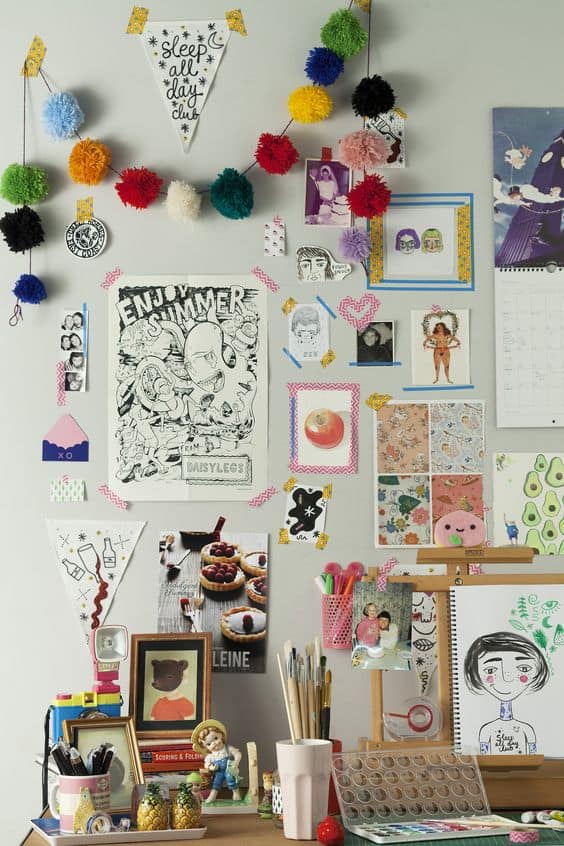
    1. Shrinkage

    The most common reason for early concrete cracks is shrinkage. The concrete mix contains a certain amount of water before it has hardened completely. Once it hardens, the mixture shrinks as the water dries up, which makes the concrete crack. As it's rigid, shrinking puts stress on the slab, which it can't handle, resulting in cracking. 

    Some builders add too much water to the concrete mix during construction, and when the moisture dries up, it creates pressure on the concrete slab. The best way to avoid this is to add optimal water to the mix.

    Mostly, these cracks are very narrow, just a hairline, and are barely noticeable, so they don't pose any significant problem. However, they do look unsightly if they're too prominent. 

    2. Expansion

    Concrete slabs expand when the weather is too hot, which causes stress, ultimately leading to cracks. During this expansion process, the concrete slab tries to push against any surface hindering its path. When there's resistance against such expansion, this makes cracks appear in the slab. 

    But this situation can be easily remedied using compressible material in isolation joints between two concrete slabs. 

    3. Settling

    Another reason for concrete cracking is due to "settling." If there's a tree near the concrete and it's removed for any reason, the area under the slab where tree roots were will lead to cracks. 

    This happens because as the tree roots decompose after the tree is removed, it leads to a void in the base of the concrete, which makes the whole slab settle. 

    4. Overloading 

    Overloading also causes concrete slabs to crack, which is quite apparent as anything that receives an excessive load than it can handle will obviously crack. The same happens with concrete. If the ground beneath the concrete receives too much pressure, the overload will result in cracks. 

    Now, most people are of the idea that overload pulverizes or crushes the concrete. However, it isn't so. It isn't the concrete but the ground beneath the concrete which can't handle the excessive weight. This mostly happens after the rain or snow as it softens the ground, which makes it susceptible to damage. Regardless, this isn't often, especially in residential units, as they don't usually experience that much weight. 

    Apart from these reasons, concrete cracks also occur due to premature drying, whereby the slab loses moisture quickly. This leads to the appearance of spider webs like cracks which are commonly known as crazing cracks. Other than this, crusting cracks are prevalent too, which occur during the stamping process. 

    How To Repair Cracks In Concrete?

    Concrete cracks occur more frequently than you think, and repairing them on time is wise. Otherwise, small cracks will transform into bigger ones that pose a problem later. 

    Small cracks aren't that big a deal as you won't trip or fall due to them, but they aren't striking to look at and taint the house's appeal. So, if you want the patio or walkway to look as fine as the day the house was bought, it's better to repair any holes or crevices in the concrete. 

    We have mentioned the general process of repairing concrete cracks below. As a side note, you must remember that repairing cracks in a concrete surface differs from fixing cracks in a foundation wall. So, if you’ve been wondering “how to fix a crack in a foundation wall,” then know that the steps differ for that. 
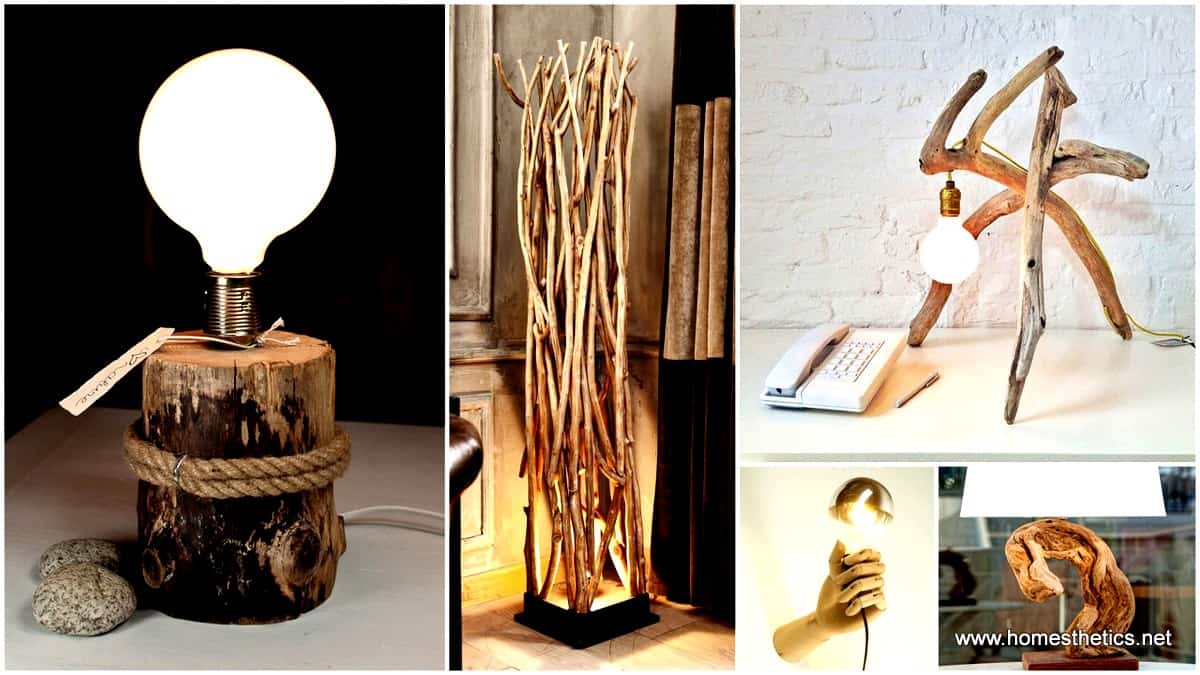
    Step 1: Choose The Right Repair Product First

    The first thing you need to do before starting the concrete crack repair work is to choose the right repair product. If you thought of repairing concrete cracks with concrete, you should know that this isn't how it goes, especially while filling narrow cracks. 

    Here, a ready-to-use concrete repair mix is ideal as they're easy to apply and don't require much guidance. You can use them on your own as they have easy applicator nozzles or come with caulking guns, making crack filling a piece of cake. 

    Some of the most commonly used ones are epoxy compounds, mortar mix, and latex patching material. Mortar mixes are perfect for ¼-inch or more significant gaps, while latex patching material, epoxy, and vinyl concrete patching compound are ideal for narrow, small cracks like hairline cracks. 

    Several brands of crack mixes are available in the market, and you should do thorough research before buying any. 

    Step 2: Prepare The Area With Concrete Crack

    After choosing the suitable patching compound, the next thing you need to do is prepare the cracked area. In this step, you'll require a chisel, a small hammer, and a scrubbing wire brush with which the dislodged concrete surface will be cleaned for the final repair. 

    Here, you'll need to use a hammer and the masonry chisel first to open the crack further to do away with the loose or crumbling concrete. Try to chip to the base to dislodge the whole crack to ensure nothing is left loose before the final process. Once you're done opening the base of the crack, clean it thoroughly with a wire brush, and then rinse it.

    Don't forget to wear protective gear like gloves or a mask as it's a dusty process. 

    Step 3: Repair The Cracked Area

    Lastly, apply your chosen repair mix to the clean crack and let it cure. Remember to follow the instructions mentioned on the repair mix to ensure the process is successful. Once you're done mixing the patching compound, apply it with a putty knife or a mason's trowel and make sure the product penetrates the crack well. Also, level it with the surrounding concrete, so the surface is perfectly even. 

    Afterward, let the product sit and cure according to the manufacturer's instructions. 

    How To Repair Narrow Concrete Cracks?

    Narrow cracks like the hairline cracks occur when the concrete slab loses moisture, which is quite common. Although they don't pose any risk and are barely noticeable at times, a timely repair should be done so that the crack doesn't widen. 

    Look at the steps below if you don't know how to patch a narrow crack. 

    Step 1: Clean the cracked area off any loose or crumbling debris with the help of a wire brush. Then, broom the area and wipe it clean with running water. 

    Step 2: Fill the cleaned area with a concrete crack filler. These are readily available online and come with a nozzle applicator for easy application. You can also use them with a caulking gun for precision. 

    Step 3: Once the crack is filled with crack filler, smoothen and even out the application with a putty knife. 

    Step 4: Let the filler stay and cure as per the manufacturer's instructions. 

    How To Repair Wide Concrete Cracks?

    Wide concrete cracks can signify structural damage to the ground or walls. These cracks usually occur in our driveways and can lead to problems if not repaired on time. Therefore, they need to be filled as soon as possible to ensure they don't widen any further and pose a safety risk. 

    Wide cracks, i.e., ¼-inch or more, should be filled with an appropriate patching compound to ensure the problem doesn't persist.  The patching compound is mixed with water and then applied with a masonry trowel to fill the cracked area. 

    If you don't know how to fill large concrete cracks, then the process below will help you accomplish that. 

    Step 1: Use a small hammer and a masonry chisel to undercut the concrete crack. Undercutting the sides of the cracked floor in the shape of an inverted "V" is ideal as the patching compound sets better into the crack that way. It creates a mechanical bond on top of a chemical bond between the concrete and the patching compound. 

    Step 2: Dislodge any crumbling or loose material and clean the undercutting with the help of a metal brush. Don't forget to rinse the area with running water. 

    Step 3: Follow the manufacturer's instructions on the patching compound of your choice and mix it well. 

    Step 4: Afterwards, fill the mixture of patching compounds with the help of a trowel into the crack. Pierce the trowel in the compound and let the compound penetrate the crack. Doing this will ensure the crack is filled up well and there are no air pockets. 

    Step 5: Level the crack up to the surrounding concrete surface to ensure there are no bumps or lows after the repair process.

    Step 6: Let the filling cure as per the time mentioned on the patching material. 

    Step 7: Paint the surface with appropriate concrete paint after the compound has dried up.

    How To Repair Cracks In Concrete Final Remarks

    How To Repair Cracks In Concrete Final Remarks

    Repairing cracks in the concrete surface is easy if only you know the proper steps that need to be followed. 

    The concrete crack repair can be easily accomplished using a suitable concrete patching compound after undercutting and cleaning the crumbling or loose concrete. Once the cracked concrete is filled and leveled with the surrounding surface, let it cure and set according to the manufacturer’s instructions.

    That was all about the cracked concrete repair process. We hope we were able to help you successfully carry out this job. 

    Repairing an old concrete surface can be challenging, but it isn’t impossible. 

    Concrete is one of the most versatile construction materials on the market. However, its quality can degrade over time due to damage from weather, sun, and physical impacts. 

    Concrete resurfacing can be used to repair the existing concrete by removing a thin layer of old concrete and replacing it with a new layer. In fact, this is one of the most effective ways of repairing old concrete to make it more durable. 

    So today, we will tell you all about concrete resurfacing, including the best concrete crack filler, types of cracks in concrete slabs, and best asphalt crack filler to help you make an informed decision. Now, let’s dive in! 

    What Is Concrete Resurfacing?

    Worker plastering the concrete cement during construction contractor using a float to sidewalk. What Is Concrete Resurfacing.

    Old concrete surfaces have a tendency to get damaged or cracked due to intense weathering and other external factors. However, it may not always be possible to replace them with new ones, mainly due to budget constraints. And here's where concrete resurfacing can come to your rescue.

    The damaged top layer is removed, and the cracks are repaired before a new layer of concrete is applied to the concrete. This new layer is made from a material known as a resurfacer. 

    Although resurfacers look like concrete, they are fundamentally different when it comes to the main composition. The compound is made from a special bonding agent that allows it to adhere well to old concrete. 

    On the contrary, if you apply a new layer of concrete without applying a resurfacing material, then the two layers will not bond well. Eventually, these thin layers will crack due to various external reasons, but resurfacers add an extra layer of protection as well as help with better bonding. 

    How Does Resurfaced Concrete Look Like?

    Despite having a different chemical composition, resurfaced concrete looks identical to an existing concrete surface. Resurfacing focuses on getting the cracked surfaces repaired and repairing the damages with a new layer of resurfacer. Hence, you can’t tell any major difference when you look at a resurfaced concrete slab. 

    Decorative Concrete Resurfacing Ideas

    The good news is that you can use some techniques while pouring the resurfacer to enhance the overall look. And here is a list of options you can try to enhance the looks of your concrete resurfacer:

    A. Texture

    If you are bored of the plain old texture of a concrete surface, you can alter the look of the resurfaced concrete by adding different textures to the new surface using simple tools. For instance, you can use sandpaper to create a coarse texture, especially on white concrete. 

    B. Color

    Besides altering the texture of the surface, you can change the color by adding color to the resurfacing material. Once you have mixed the color, apply the coat on the concrete surface and let it dry completely before adding more layers. 

    C. Lines And Patterns

    You can also add additional details by using different shapes and stamps on the wet, resurfaced layer. For example, you can decorate the resurfaced concrete surface by creating unique patterns while the top layer is still wet. Asymmetrical black lines on white concrete deck can enhance the aesthetics of your driveway or deck. 

    D. Finish

    Lastly, you can apply a layer of finish coat to give your concrete layer a sealed and uniform finish. This works exactly like paint which seals the surfaces and prevents corrosion from occurring. Besides, you can choose a glossy or matte finish. 

    How Can I Make My Concrete Resurfacing Last Longer?

    Normally, a resurfaced concrete surface can last for more than 20 years or more without needing much repairs or maintenance. In fact, resurfaced concrete is extremely durable, making it a good candidate for repairing old concrete surfaces. However, you can further prolong the longevity of the resurfaced concrete by following a few tips: 

    1. Repairs

    Before applying the resurfacer, you need to repair the damage on the existing concrete since the damage may intensify later on, thereby affecting the integrity of the resurfacer. Fill the cracks and let them dry completely before pouring the resurfacer onto the old concrete layer. 

    2. Cleaning

    You should always clean the existing surface before applying a layer of resurfacer. Resurfacer compounds are generally known for having a special ingredient that lets them bond with the existing concrete; however, dirt and dust can affect the bonding property of the compound. 

    Therefore, you should clean and remove any dirt from the surface, which will help prevent any impurities from interfering in the bonding process. 

    3. Finishing

    As soon as the resurfacer layer has completely hardened, we recommend applying a layer of finish coat since it seals the concrete surface and provides an additional layer of protection against harsh weather conditions and corrosion. And depending on your preference, you can go for a glossy or matte finish. 

    4. Inspection And Identification

    If you are planning to do a DIY resurfacing of the concrete driveway, then we highly suggest inspecting the area first before making your decision. Look around the concrete driveway and search for any damages or cracks. Most concrete damages require heavy-grade industrial tools for repairing, and using home tools can damage the cracks further. 

    So, you can call a professional and ask them to repair the cracks and damages before pouring the resurfacer onto the surface. In addition, you will need to use the correct resurfacer, which will work well with your concrete driveway, concrete overlay, and concrete garage floor. 

    5. Maintenance

    Resurfaced concrete surfaces usually require the least amount of maintenance, but they can definitely benefit from a little maintenance. One of the best ways to maintain the surfaces is by applying a thin coat of good-quality sealer. The sealer helps the resurfaced layer to last longer by sealing the porous holes and making it resistant to water. 

    Additionally, the sealer is capable of limiting UV rays and intense weathering damage. Some sealers are capable of providing resistance to chemicals that can easily corrode the new concrete. Hence, investing in a good-quality sealer can drastically improve the shelf life of the resurfaced concrete surface. 

    Can Old Concrete Be Resurfaced Frequently Asked Questions ?

    When Should You Resurface A Concrete Surface?

    There are several ways of knowing if your concrete surface needs to be resurfaced. For instance, if you notice deep cracks on the upper layer, then there’s a good chance that the underlying concrete is also damaged, so resurfacing it may be a good idea. You can also perform resurfacing to repair old pipes. 

    But if you haven’t done resurfacing before, we’d suggest contacting a contractor, who will get the job effectively and walk you through the maintenance aspects as well. 

    Should You Do The Resurfacing By Yourself?

    Although you can purchase a resurfacer from a local hardware store, it is not advisable since it is expensive, and you might pick the wrong resurfacer for the concrete surfaces. The concrete needs to be treated properly as well; therefore, we recommend getting in touch with a professional to get the job done. 

    Besides this, resurfacing requires you to own commercial-grade tools, which may not be readily available to you. 

    What Is The Best Concrete Crack Fixer?

    Epoxy coatings are the best concrete crack fixers on the market since they are cheap and easy to use. You can purchase the epoxy from a local hardware store and apply it to cracked concrete surfaces and floors. 

    After the epoxy has been applied correctly, it won’t take long to dry, which is another advantage. Nevertheless, you should let it cure properly according to the manufacturer's instructions for best results. 

    Epoxy can also be used to fill asphalt cracks and other materials similar to concrete, making it pretty versatile for DIY repairs around the house. 

    What Are The Types Of Cracks Observed In Concrete Surfaces?

    Generally, there are six types of cracks that can cause severe damage to your concrete slabs or surfaces, which include: 

    • Cracks formed due to premature drying 
    • Cracks formed due to the overloading of slabs 
    • Heaving cracks 
    • Plastic shrinkage cracks 
    • Settling cracks 
    • Expansion cracks 

    Is It Possible To Stain Resurfaced Concrete?

    Just like regular concrete floors, you can use stain on resurfaced concrete as long as you use concrete stain on the surface. 

    However, keep in mind that stains used for wood or any other surfaces are not compatible with concrete since the chemical composition is different. Hence, you should avoid using them as they can cause severe damage to the resurfaced concrete surface. 

    Instead, you can use a concrete stain of any color to add to the aesthetic of the otherwise boring plain concrete. Moreover, you can use different painting techniques and tools to create unique effects. 

    However, we’d suggest practicing it first on any unused or leftover concrete slabs (if available) or simple paper, as it can be difficult to remove the paint from the surface once applied. 

    Full length of man laborer using troweling machine while screeding floor in new building under blue sky. Male worker finishing concrete surface with floor screed grinder machine at construction site. Can Old Concrete Be Resurfaced Final Words.

    Can Old Concrete Be Resurfaced Final Words

    Concrete surfaces are prone to get damaged over time; however, you can still prolong their longevity by following a few tips. 

    For starters, always make sure to coat your old and new concrete surfaces with weatherproof paint as it will give the surface additional resistance to thawing and freezing cycles. Besides, try to keep heavy weights and objects away from them as they can easily form cracks on the surface. 

    And try not to use any appliances with strong vibrations near newly resurfaced concrete since they can cause irreparable damages, especially on walls and floors. 

    That said, we shall now say goodbye. See you next time! 

    Concrete crack fillers come in handy when you notice cracks on your concrete surfaces. But ever wondered why does cement crack over time? 

    Well, the primary reason is poor application techniques or improper mixing of the concrete in the initial stages. And if there are cracks on the road, they can be attributed to improper mixing of asphalt and concrete. In that case, you’ll need the best asphalt crack filler instead. 

    But this is only applicable when the damage is minimal. In other cases, you might have to get your concrete surface replaced completely. Or you can ask us a different question - can old concrete be resurfaced instead? Well, yes it can! 

    In any case, we need to first understand the reasons behind concrete cracking in greater detail, which is what this article is all about. We have also briefly discussed a few ways you can avoid the hassle of replacement and resurfacing in the long-run. 

    Why Does Concrete Crack?

    Closeup surface old and crack yellow cement wall texture background. Why Does Concrete Crack.

    If you want to know why concrete cracks, then you should first have some idea about its composition and mode of action. Cement is a mixture of different materials, such as limestone, chalk, clay, and traces of iron. 

    This mixture constitutes the powdery material, which is then combined with sand, aggregate stone, and water. The final product you get after all the mixing is known as concrete. 

    Consequently, the ratio of these materials can be altered slightly to change the properties of concrete. In any case, once you add water, a chemical reaction is triggered, which is known as curing. This curing process eventually hardens it if you leave it undisturbed for a while. 

    Once the concrete hardens, it adheres together firmly which provides stability to the structure. Furthermore, it becomes resistant to water, dirt, corrosion, or any other kind of damage. 

    Therefore, if it develops cracks, it is because the method of application was wrong or the mixing was done improperly. To expand on this aspect further, here are some of the most common reasons why concrete cracks. 

    1. Using Too Much Water In The Concrete Mixture

    It is crucial to maintain the ratio of water in the concrete blend. You can alter this proportion slightly to vary its properties, as we have said before. However, if you use too much water in the mix, it can develop cracks in the concrete. 

    Adding excess water leads to a phenomenon known as shrinkage. This is when the extra water starts to evaporate from the mix. As it dries, the concrete “shrinks” or reduces in volume, and the more it shrinks, the bigger cracks it produces. 

    Typically, concrete does not require a lot of water to cure. Construction workers may use it in excess quantities as it makes the mix easier to apply. If there is more water in the mix than is necessary, the concrete becomes unstable. 

    Such cracks are often observed shortly after the application of the concrete mix. To be more precise, it depends on the length of the curing process. The cracks often appear within a short time after the concrete has been cured. 

    To resolve this, you need to follow well-established guidelines regarding the ratio of water and cement that can be used. Avoid mixing excess water to ensure a proper concrete mix. It might require a little more effort to apply it that way. But, it is better to do it this way so that any accidents or cracks can be avoided later on. 

    2. Rapid Drying Of The Concrete Slab

    The curing process usually takes quite a while to complete. During this time, you need to keep the concrete surface sufficiently hydrated. That not only allows it to harden appropriately but also develops its tensile strength, which makes it resistant to internal stress. 

    If the concrete slab is not kept hydrated after application, it will dry up rapidly. This, in turn, makes it vulnerable to developing cracks. When it dries quickly, the surface shrinks in volume due to a loss of water. 

    Meanwhile, the interior of the concrete remains the same, as it does not lose water at the same rate. So, a difference in stress develops between the surface and the interior, which eventually leads to cracks. 

    Most of the time, the cracks that develop due to rapid drying are cosmetic in nature. But, if the ambient temperature is pretty dry and hot, the cracks may even become deep. In that case, you will need to repair them to avoid any structural damage. 

    To do that, proper curing of the concrete is essential. Make sure to keep the concrete’s surface moist by pouring water over it regularly. You need to follow this moisture curing procedure for some time after application. This will provide enough moisture for the concrete to be cured from the inside. 

    3. Improper Concrete Strength

    Concrete is available in different strengths based on the type of structure that is being built. For building heavy load-bearing structures, such as multi-storeyed buildings, you need concrete that has sufficiently high tensile and compressive strength. Conversely, if you are building smaller structures, then you need to use concrete that has a lower compressive and tensile strength. 

    So, if you use concrete having improper strength, then it will obviously crack. For instance, if you use low-strength concrete for a higher load-bearing structure, it will start to crack under extreme pressure and stress. Not only that, it might compromise the entire structural integrity, which will pose a serious risk. 

    Therefore, to prevent such cracks, make sure to use the correct concrete mix. You can consult with your local concrete contractors if you need help with this. They will first inspect the job site and based on that they will advise you on what concrete will be best for the task. 

    4. Lack Of Control Joints In A Concrete Slab

    Using control joints is a mechanism that helps in preventing any unwanted cracks and damages to the concrete. A control joint is a crack that is deliberately left in the concrete slab during application. Its primary function is to allow sufficient room for the concrete slab to contract or expand under different temperature conditions. 

    Thus, if you use a control joint, you can eliminate the risk of excess stress or compression in the concrete. If you don’t use a concrete joint, then the slab will not have any room to expand or contract when the ambient temperature changes. So, it will result in excess tensile buildup or compressive stress, which will ultimately crack the concrete. 

    Ideally, control joints should cover the depth of the slab. The distance between successive joints should be around two to three times the thickness of the concrete measured in feet. For instance, the control joints in a 5-inch thick slab should be placed every 10 to 15 feet. 

    5. Unsuitable Environmental Conditions

    Applying and curing concrete needs to be done under the correct environmental conditions, or else it will develop cracks and damages on the surface. Pouring cement in hot weather can dry it up too quickly. 

    On the other hand, if you undertake the process during the cold winter months, the concrete will become difficult to cure, as the water may freeze and crack the surface. The ground may remain frozen in such weather, which will further prevent the concrete from setting properly. Also, if the ambient conditions are dry or windy, that will evaporate all the moisture from the concrete surface, resulting in cracks. 

    Therefore, you should try not to pour concrete in hot and dry weather. If you don’t have a choice, keep the surface hydrated enough to facilitate the curing process. The best time to pour concrete is when the weather is slightly warm and humid. 

    Types Of Cracks In Concrete

    Types Of Cracks In Concrete

    Based on the causes, cracks in concrete can be of different types. Some of these cracks are not as serious as the others and can be easily resolved. The other types of cracks can be quite severe and can cause serious structural damage. Regardless of their type, it is best if you fix any crack as soon as possible to maintain the aesthetics and safety of the concrete structure. 

    The different types of concrete cracks have been discussed below. 
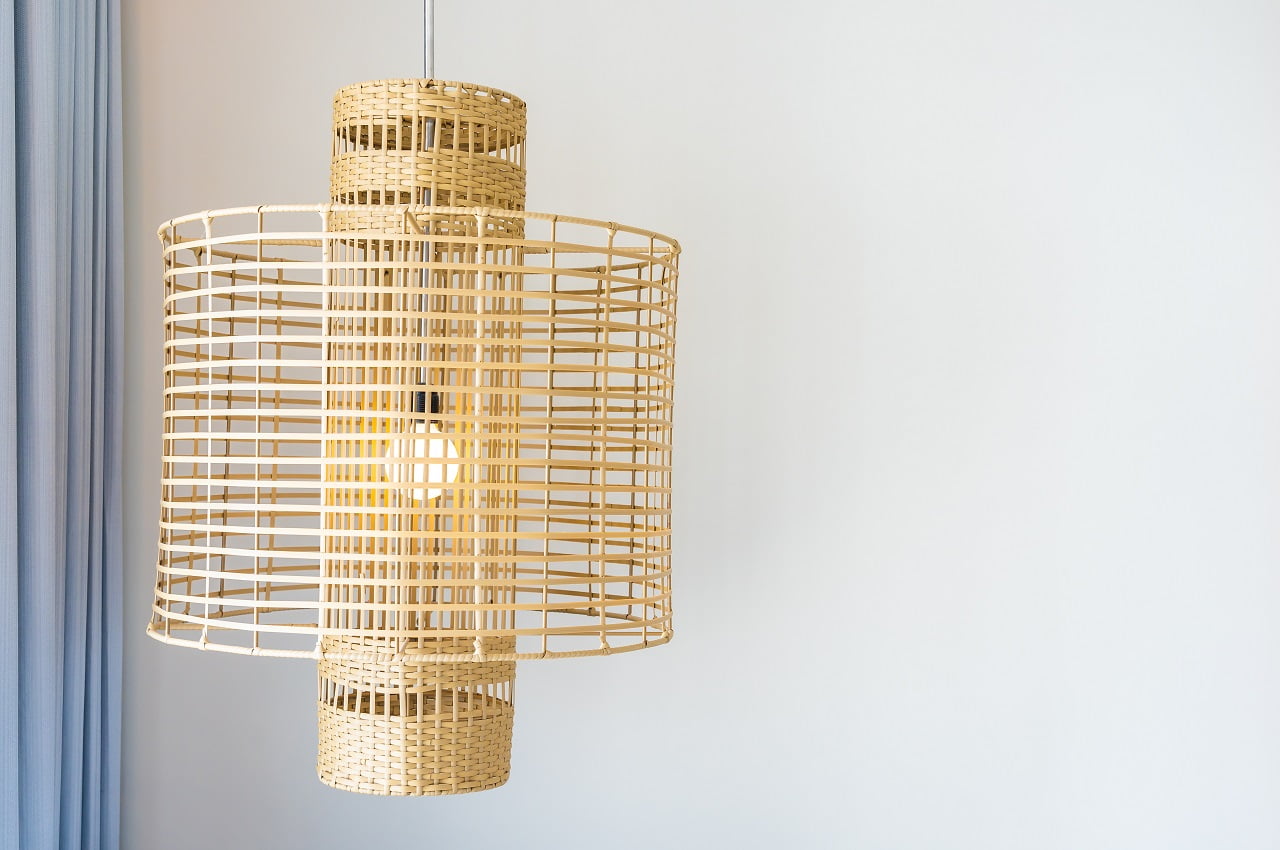
    1. Hairline Cracks

    Hairline cracks, also known as surface cracks, are relatively small cracks that develop on concrete. These cracks are only found on the surface and are usually not very deep or wide. They are very fine, like a strand of hair, and are almost indecipherable when viewed from a distance, hence the name. 
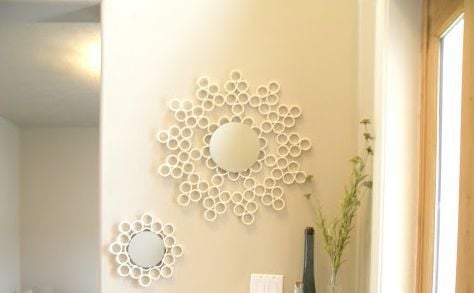
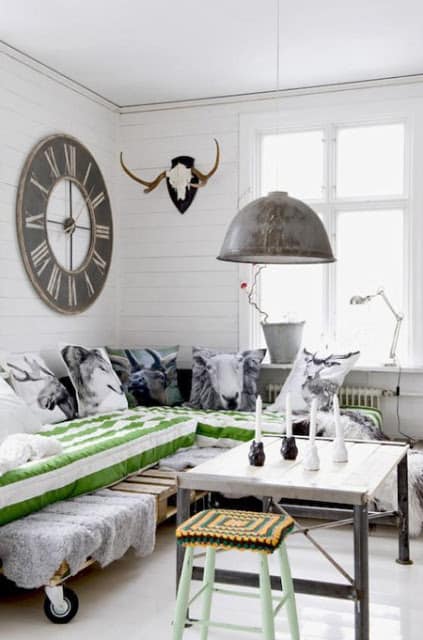
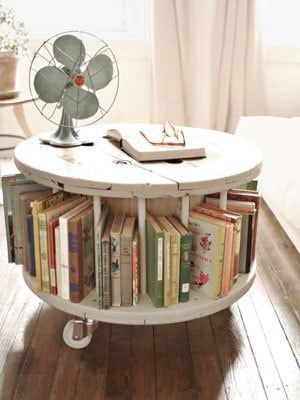
    Even if they are surface-level cracks and they don’t cause a lot of structural problems, you should get them fixed. This is to ensure that the cracks do not expand or become a serious concern over time. 

    2. Structural Cracks

    Structural cracks are wide cracks that usually run throughout the length of a concrete wall. They are caused due to structural faults or if there is too much stress in the concrete. 

    When these cracks appear, you should get them fixed as soon as possible. If you don’t do anything, the entire structural integrity of your building will be compromised, which can cause a serious accident. In extreme cases, it may cause the whole structure to collapse, which can lead to severe consequences, including loss of life. 

    3. Plastic Shrinkage Cracks

    Plastic shrinkage cracks generally appear when the concrete is in a liquid or plastic state. This implies that these cracks appear soon after application when the concrete hasn’t fully hardened yet. 

    When the concrete is in a plastic state, it contains a lot of water. The crack is initially small when it appears, but once the water keeps evaporating, the concrete starts to shrink, and eventually, the crack starts to widen. 

    Such a crack occurs if you use too much water in the concrete mix, as we have discussed previously. While it does not pose a serious risk initially, if it keeps expanding, it can weaken the internal structure of concrete and make it vulnerable to damage. 

    4. Settlement Cracks

    This type of crack usually occurs when the ground beneath the concrete structure has been compromised. If the soil is too soft or has not been compacted properly, a part of the concrete slab may sink into it abruptly. That can cause sudden stress in the concrete, which ultimately cracks it. 

    Such cracks are usually narrower at the bottom, and the width increases as you go upwards. They need to be addressed as soon as possible because they indicate weakness in the ground that holds the concrete slabs in place. Ignoring it will only increase the chances of a major accident. 

    cracked concrete on white wall texture background. Why Does Cement Crack Final Words.

    Why Does Cement Crack Final Words

    So, now you know the reasons why cement develops cracks. Cracked concrete is dangerous, especially if it appears in residential buildings, as it poses a great risk to life. Not only that, but it can also increase the costs of construction or repairs considerably. 

    That is why you should address any cracks in concrete immediately. And take measures to prevent them from appearing in the future. For that, you can follow the solutions we have discussed above. 

    Use steel rebar, wire mesh, and other supporting components to make the concrete even more resistant to cracking. You can also use specialized crack-resistant concrete that can withstand heavy loads and stress without any issues. 

    That brings us to the end of this guide. We hope you found this to be an interesting read. 

    Goodbye and take care!